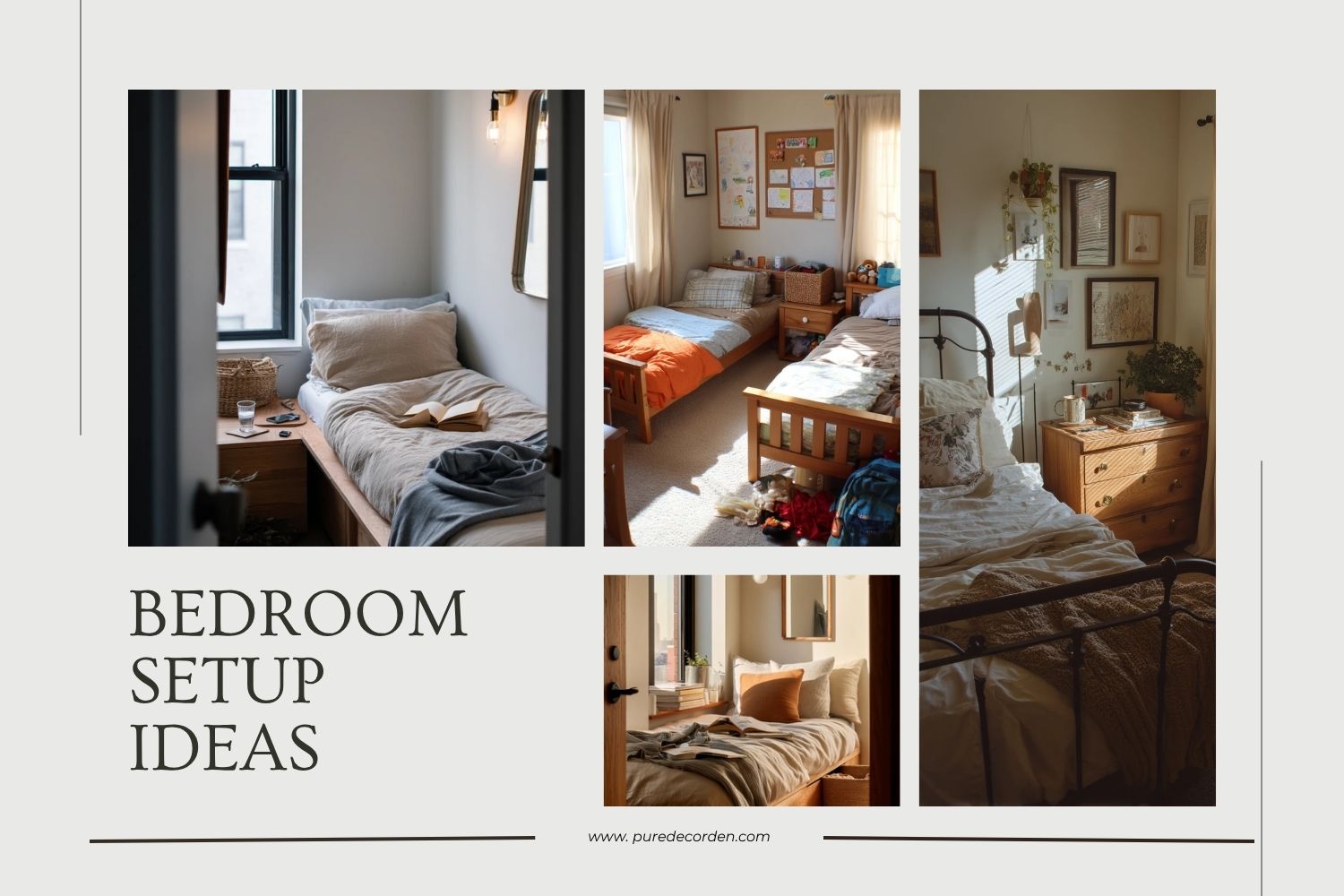

Looking for bedroom setup ideas that feel real, not staged. This guide shows practical layouts and easy styling moves you can copy, even in a small or narrow room.
Each section matches a common situation like a compact renter bedroom, a shared kids room, a work-from-home setup, or a cozy winter refresh. You will see what to place where, what to hang, and how to keep clear walkways.
You will also get simple “how to style it” tips using things people already own, like a full-length mirror, storage baskets, plug-in lamps, layered bedding, and small benches. Every setup includes a pro tip and a budget note so you can plan fast.
Save the ideas you like, then pick one change to do today. Small swaps like better lighting, a tighter nightstand, or a labeled toy basket can make the room feel calmer right away.
Intro: Compact Renter Bedroom Setup for a Narrow Room

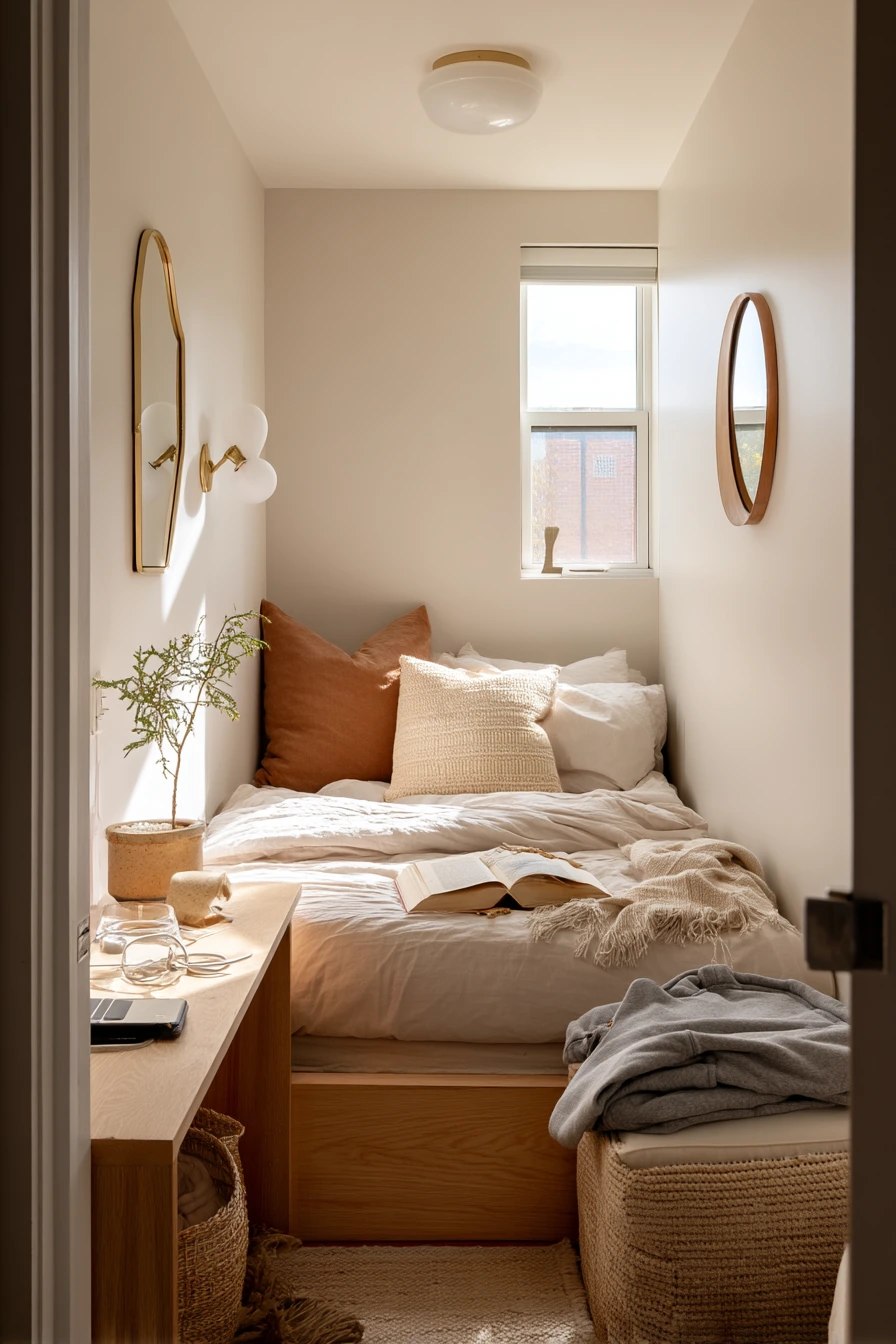
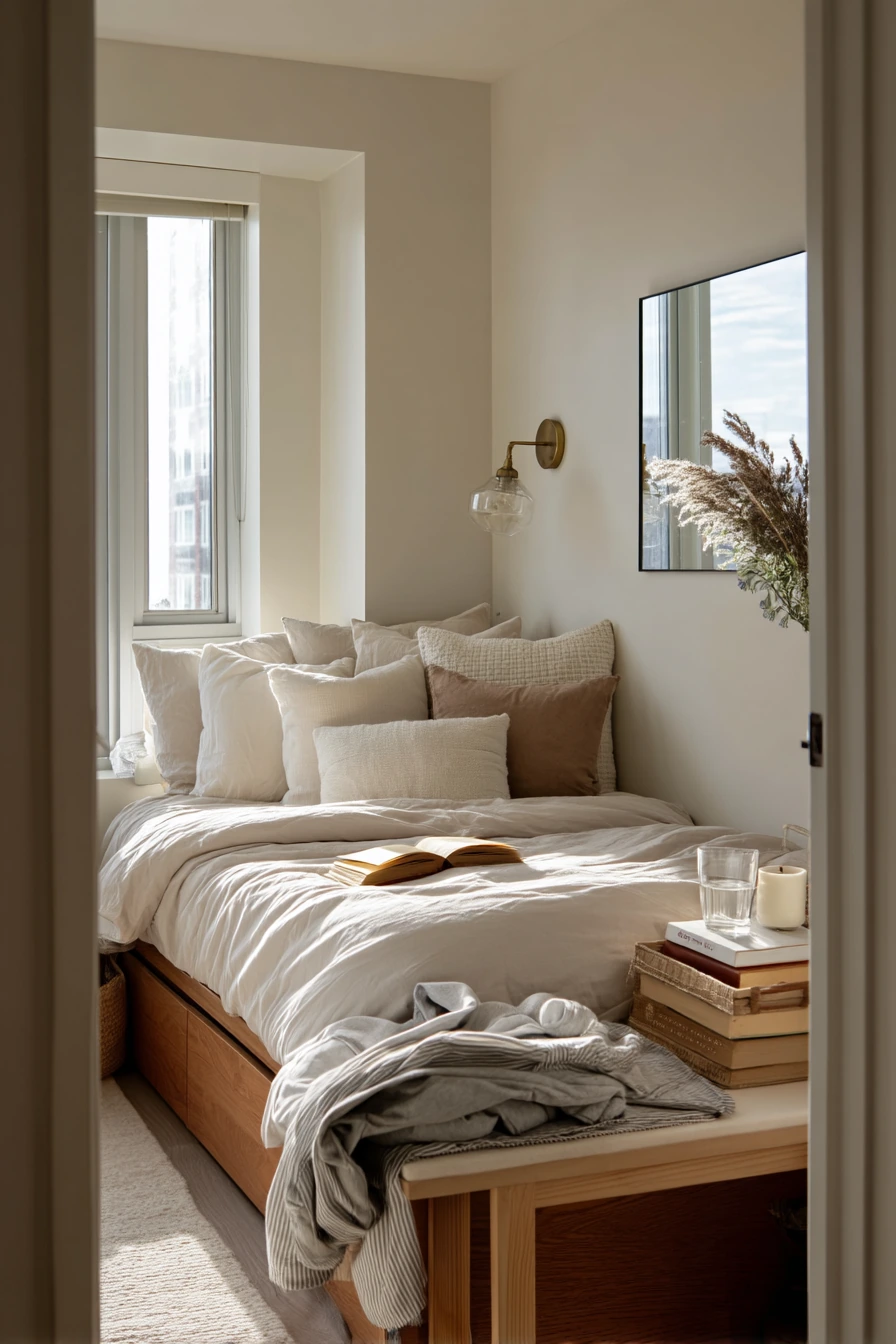
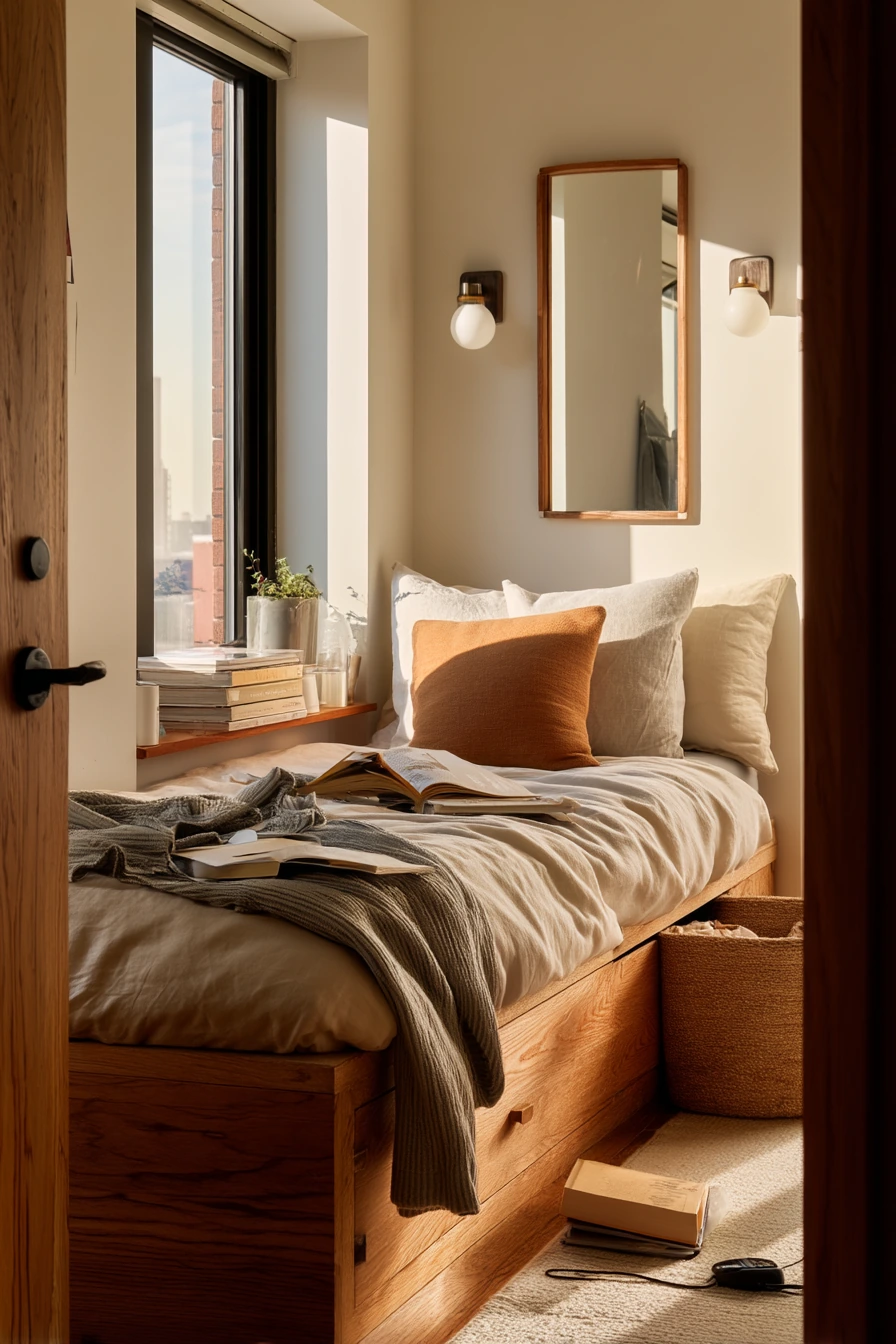
A narrow bedroom can still feel calm and useful when the layout is simple. Start with a low platform bed centered on the longest wall so you can walk on both sides. Keep the headboard wall clean and use wall-mounted reading sconces to free up the nightstand. A slim oak nightstand is enough for a water glass, a phone charging cable, and one half-read novel.
Use the doorway view to check the pathway. If you have to turn sideways to pass, remove bulk. A full-length mirror works best leaning near the closet or on the wall opposite the window to bounce soft morning light. Add under-bed storage baskets for extra sheets and off-season clothes, then place a small bench at the foot of the bed for a folded hoodie or tomorrow’s outfit.
How to style it: pick one calm bedding color and add texture with a knit or linen throw. Keep the top of the nightstand “one-minute tidy” with a small tray so the room looks put together even when it is lived in. If cords bother you, run the charging cable down the back of the nightstand and use a small cord clip.
- Choose a low bed frame to make the room feel wider
- Mount plug-in sconces at shoulder height for easy reading
- Use a narrow nightstand with a drawer for small items
- Slide labeled baskets under the bed for hidden storage
- Add a bench for seating and a drop zone
Pro Design Tip: Keep the bed and nightstand heights close so the wall sconces hit the pillow area, not your eyes.
Budget Considerations: Plug-in wall sconces and a basic platform bed are often cheaper than hardwired lights and bulky frames. Use matching baskets from one store to keep costs down.
1. Shared Siblings Bedroom Setup with Twin Beds
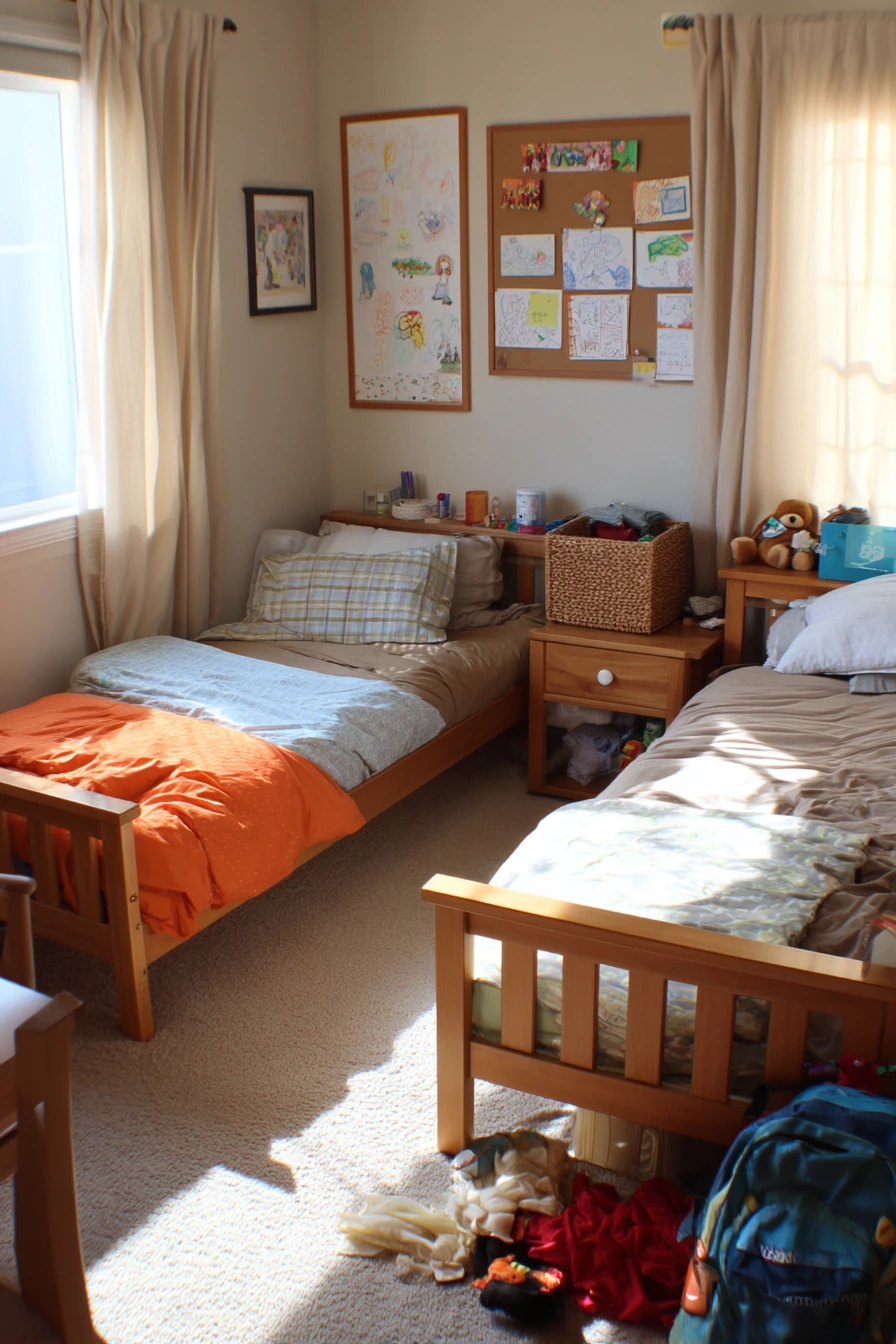

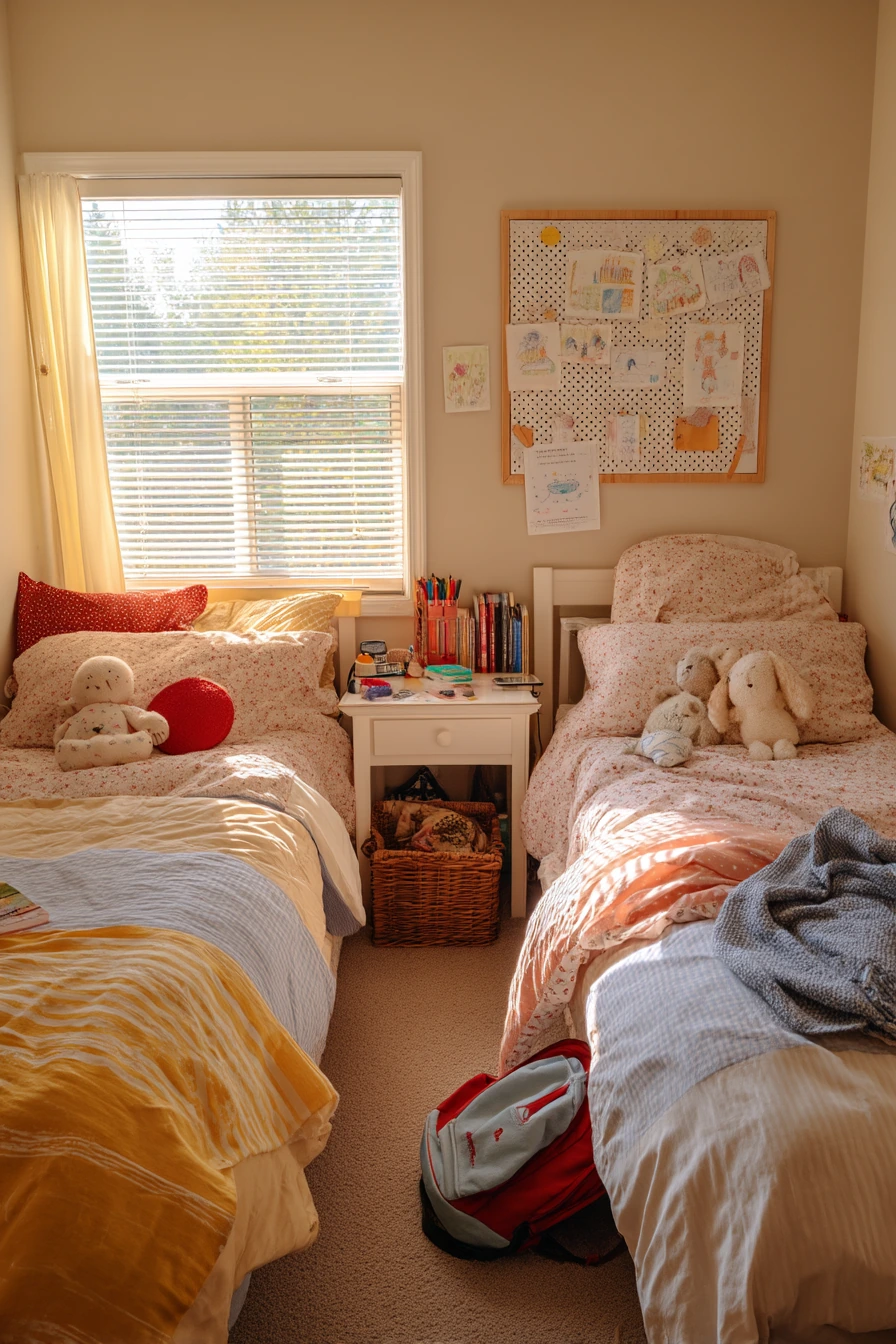
A shared bedroom works best when each child has a clear “my side” and there is still a shared center. Place twin beds on opposite walls or parallel with a walkway between them, then add one shared central nightstand. Use mismatched but coordinated bedding, like the same color family with different patterns, so the room feels fun but not messy.
Keep storage simple and labeled. A toy basket with a name tag cuts down daily arguments and makes cleanup faster. Add a pinboard with drawings near the shared zone so art has a home. If there is a small desk corner, keep it tight: one pencil cup, one task lamp, and a tray for homework papers. A “laundry chair” often happens anyway, so give it a purpose with one hook nearby for backpacks.
How to style it: repeat one color in both beds, like blue, green, or warm tan, then let each kid pick one accent pillow. Use soft afternoon window light with light-filtering curtains so the room stays warm. Keep stuffed animals in one bin so they do not take over the pillows.
- Pick twin beds with under-bed bins for extra clothes
- Use a shared nightstand with two charging spots
- Create a drawing wall with a pinboard and clips
- Add one labeled toy basket per child
- Set a small desk corner with a simple supply cup
Pro Design Tip: Keep the circulation path clear from door to closet by aligning bed edges and using one shared piece of furniture in the center.
Budget Considerations: Mix inexpensive bedding sets, then unify them with one matching throw or pillow on each bed. A basic corkboard is a low-cost “gallery wall” for kids.

2. Renter-Friendly Bedroom Setup with Peel-and-Stick Decor


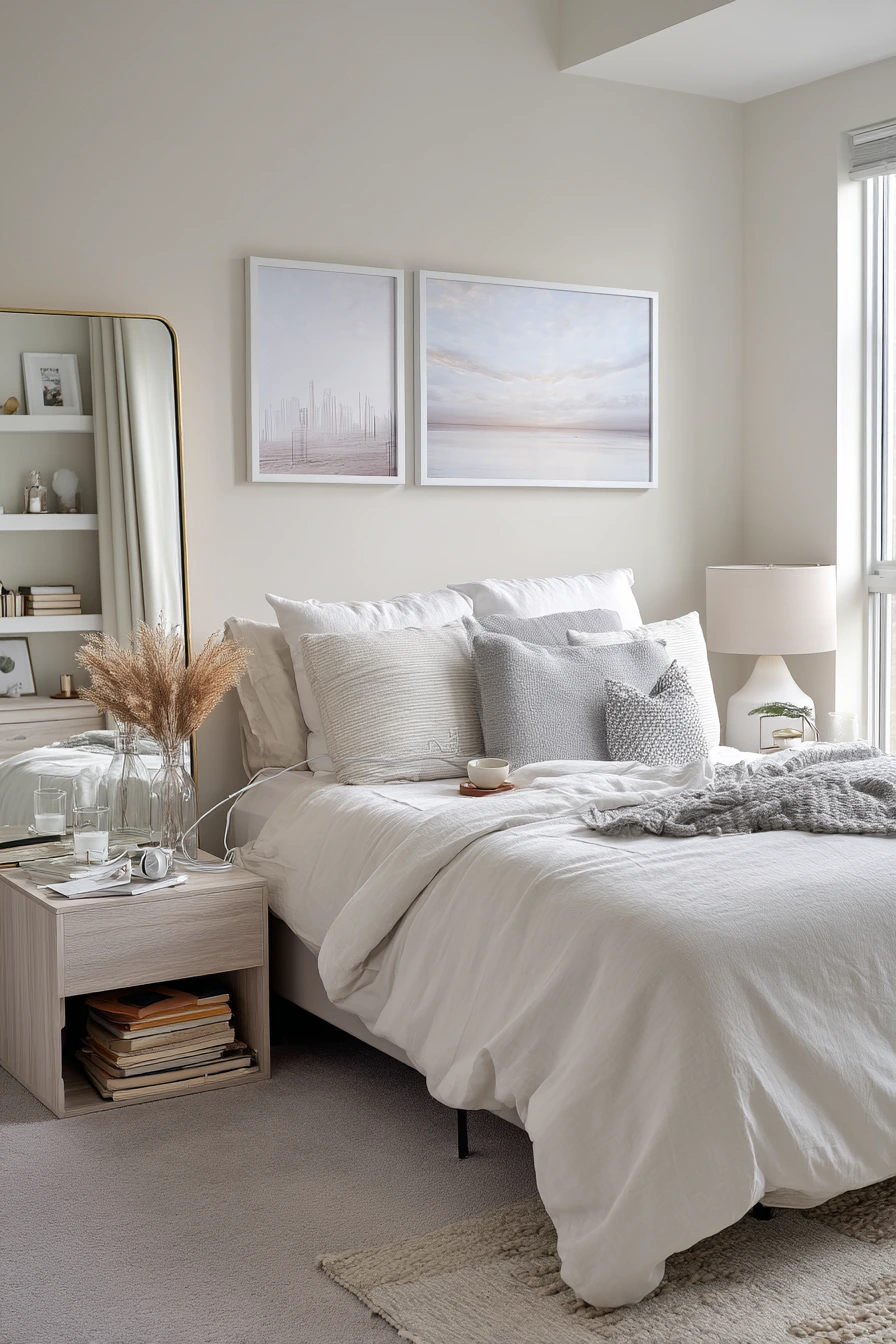
If you rent, you can still personalize the room without drilling. Peel-and-stick wall art gives you color and shape, but keep it to one main wall so it does not feel busy. Use no-drill shelves for light items like a small plant, a framed photo, or a candle. A leaning mirror is also renter-friendly and makes the room look brighter and bigger.
Choose a soft linen duvet for an airy look, then add one blanket at the foot for texture. Inexpensive oak-look side tables can warm up a plain room, especially if your walls are white or gray. Use a plug-in lamp instead of hardwired lights and aim for a warm bulb so the space feels calm in the evening. If you have wall-to-wall carpet, layer a compact rug over carpet to define the bed zone and soften foot traffic paths.
How to style it: keep bedside items intentional. Stack a few paperbacks, set down earbuds on a small dish, and keep a water glass on a coaster. Hide the charging cable with a clip or run it behind the table leg. With soft cloudy daylight, simple materials like linen, wood tones, and a clean diagonal layout look fresh without needing much decor.
- Use peel-and-stick art on one wall for focus
- Add no-drill shelves for light decor and storage
- Lean a full mirror to bounce daylight
- Layer a small rug over carpet to anchor the bed
- Choose warm plug-in lighting for evening comfort
Pro Design Tip: Place removable wall art where it frames the bed, then keep the other walls quiet so the room still feels restful.
Budget Considerations: Peel-and-stick wallpaper can add up; try one panel behind the bed or a few large decals instead of covering the full wall.

3. Warm Budget Bedroom Setup with Thrifted Finds

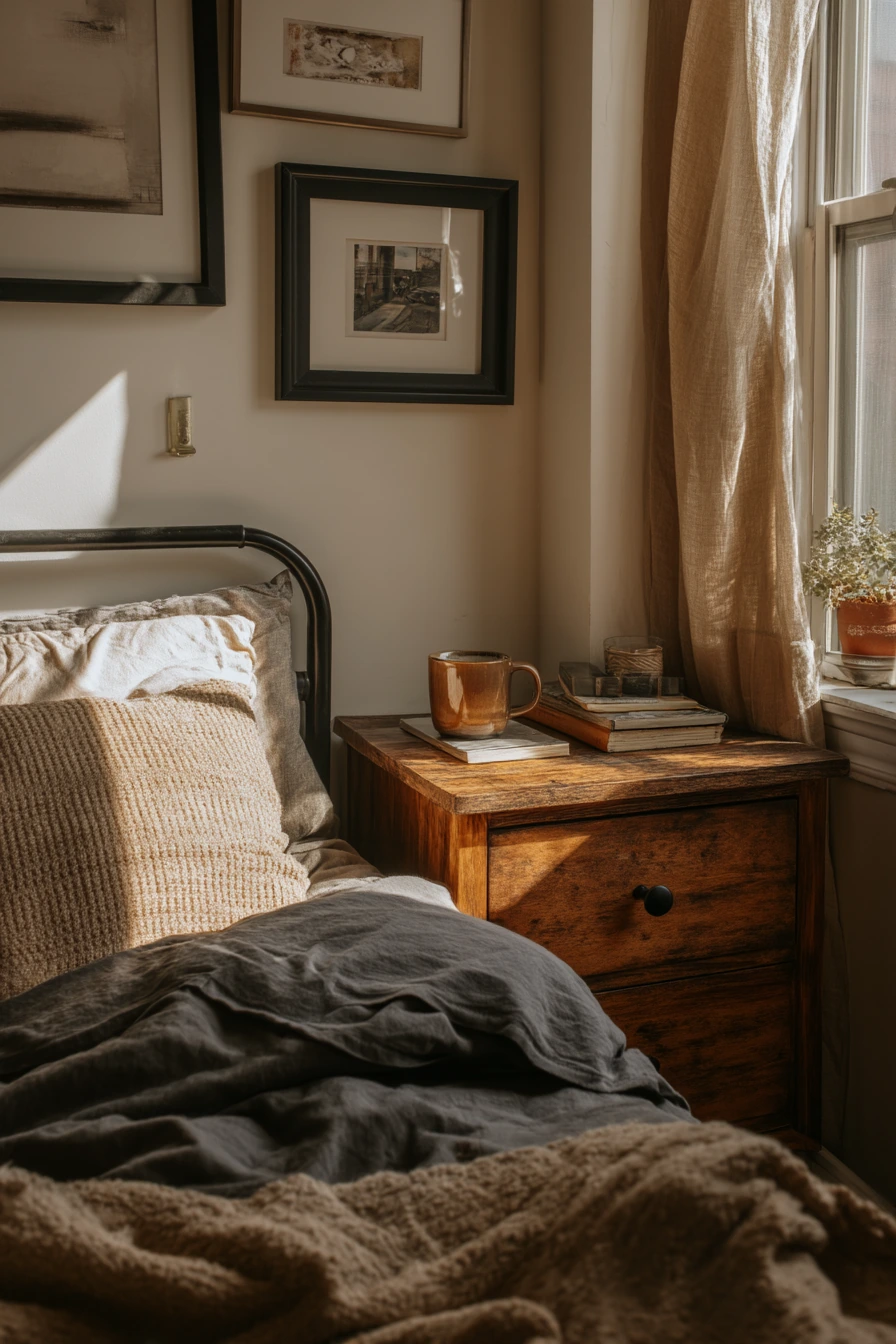
A budget bedroom can feel grounded when you use a few steady basics. Start with a simple metal bed frame. It is sturdy, easy to move, and often cheaper than wood. Pair it with a thrifted nightstand and a secondhand dresser. The goal is not a perfect match. The goal is a warm mix that still feels planned.
Use thrifted framed prints to add height and balance on the walls. Hang them in a small group so they read as one statement. Add a knit throw for texture and comfort, and choose linen-look curtains to soften the window light in late afternoon. A small plant on the windowsill brings in color and makes the room feel cared for.
How to style it: keep “real life” items contained. Folded laundry can live in a basket instead of on the bed. Put the remote in a small tray. If you see a mug ring on the dresser, add a coaster and call it done. Show one book spine on purpose on the nightstand for a cozy look. These small moves make the room feel lived-in but not cluttered.
- Use a metal bed frame for an affordable foundation
- Shop thrift stores for solid wood nightstands and dressers
- Create a simple wall with framed prints in a tight cluster
- Add soft curtains to warm up the window area
- Use baskets and trays to control everyday mess
Pro Design Tip: Repeat one finish, like black metal or warm oak, at least twice so mixed thrift pieces feel connected.
Budget Considerations: Secondhand furniture often needs small fixes. Set aside a little money for new knobs, felt pads, or a can of paint to refresh the pieces.


4. Nighttime Bedroom Setup for Couples with Warm Lamp Light

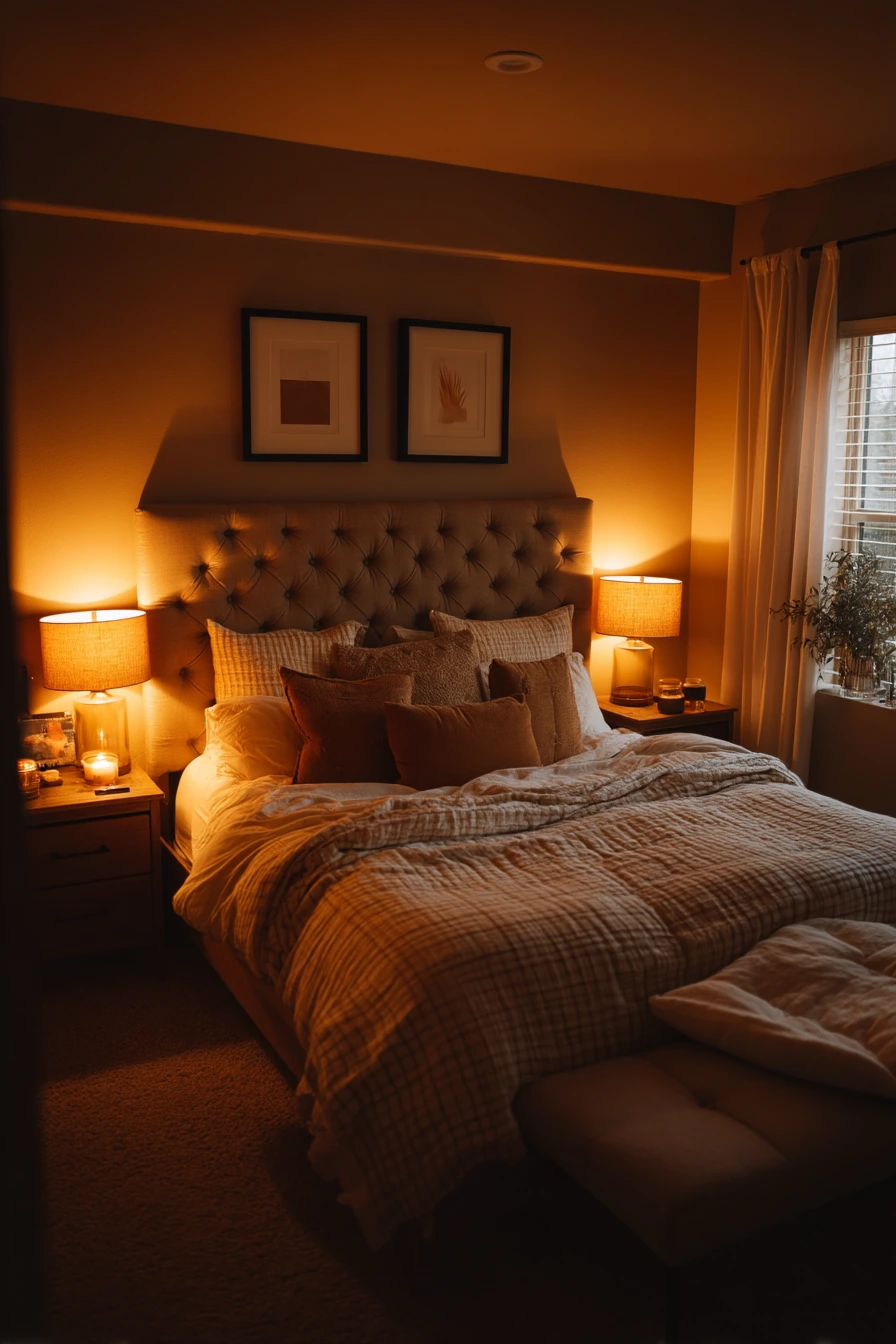
A couple’s bedroom should feel quiet at night. Start with an upholstered headboard for comfort and sound softness. Add two matching bedside lamps so both sides have equal light and the room looks balanced. Choose warm bulbs to create an amber glow that helps you wind down.
Layered pillows and textured bedding make the bed look finished without much effort. Use a simple system: two sleeping pillows each, one euro pillow or large cushion behind, then one smaller accent pillow if you want. Add a soft bench at the end of the bed for extra seating and a place to set a robe. Keep framed art above the bed simple and centered so the space feels calm.
How to style it: set out items you actually use, but keep them tidy. Put reading glasses in a small dish. Use a water carafe instead of multiple cups. Keep the phone on charge, but route the cord behind the nightstand. If you have a dog, tuck a dog bed near the window so it is close but not in the walkway. With lamp light only, textures like quilted covers, woven throws, and matte frames look rich and cozy.
- Use matching lamps to create symmetry and calmer light
- Choose warm bulbs for a softer nighttime mood
- Layer bedding with one main texture and one throw
- Add a bench for seating and quick storage
- Keep small personal items in trays, not loose on surfaces
Pro Design Tip: Match lamp height to headboard height so the light hits your book, not your eyes, when you read in bed.
Budget Considerations: You can get the “matched” look by buying two simple lamp bases and using the same shade on both, even if the nightstands are different.


5. Remote Worker Bedroom Setup with a Compact Desk Zone


When your bedroom is also your office, zoning matters. Place the bed beside a compact oak desk so the sleep area and work area are close but distinct. A desk that is just wide enough for a laptop and notebook will keep you from spreading out too much. Add an ergonomic chair because it is the one item that affects your body every day.
Use a cork board above the desk for reminders, notes, and a small calendar. Keep stacked books to one side so you still have open workspace. Blackout curtains pulled halfway let in soft morning window light while cutting glare on your screen. Add a narrow plant stand by the window to bring life into the room without taking up floor space.
How to style it: keep your desktop clear except for the items you use daily. If a charging cable crosses the desk, clip it to the back edge so it does not drag. Use one tray for small tech items. For the bed, choose calm bedding in one tone so your eye is not pulled in two directions. At the end of the workday, close the laptop, put the notebook away, and turn the desk lamp off. This simple reset helps the room feel restful again.
- Choose a small desk that fits the wall and leaves walking room
- Invest in an ergonomic chair for daily comfort
- Use a cork board to keep paper off the desk
- Control light with blackout curtains to reduce screen glare
- Add a slim plant stand to soften the work zone
Pro Design Tip: Face the desk toward natural light from the side, not straight on, so your screen has less glare and your face has better light for calls.
Budget Considerations: If a new ergonomic chair is too much, look for a used one and replace only the casters or seat cushion. A simple corkboard is a low-cost organizer.


6. Soft Blush Bedroom Setup with Gentle Layered Bedding


This bedroom setup is calm because the shapes are soft and the palette is light. A blush upholstered headboard adds warmth without being loud. Pair it with pale layered bedding, like white, cream, and light blush, to keep the look gentle. Use a curved mirror to break up straight lines and reflect diffused daylight from sheer curtains.
On the nightstand, choose one ceramic lamp for a smooth, quiet feel. Add a small jewelry tray so daily items have a home. A woven basket on the floor can hold a throw blanket or extra pillow and keeps the room tidy fast. The “lived-in” pieces matter here: a hair clip on the nightstand, an open paperback, a tissue box, and a cardigan draped over a chair. These details make it feel like a real space, not a showroom.
How to style it: limit contrast. Use warm whites instead of bright white, and pick one metal finish for hardware, like brass or black. Keep art minimal and choose soft lines or simple photography. If you want more depth, add one darker item, like a wood tone stool or a tan pillow, so the light colors do not feel flat.
- Use a blush headboard for warmth without heavy color
- Layer pale bedding for a soft, relaxed look
- Add a curved mirror to brighten and soften the wall
- Keep a jewelry tray to prevent nightstand clutter
- Use a woven basket for quick storage and texture
Pro Design Tip: Mix three textures in the same light color range, like linen, cotton, and a knit, to add depth without adding visual noise.
Budget Considerations: If an upholstered headboard is pricey, use a slipcovered headboard or a padded wall panel behind the bed for a similar soft look.


7. Teen Bedroom Setup with Posters, Shelves, and Subtle LEDs


A teen bedroom should be flexible and easy to clean. Start with a low bed to open up wall space for posters and storage. Create a poster collage on one wall, but keep the edges tidy so it looks intentional. Modular shelves work well because hobbies change. Add a beanbag for lounging, plus a simple desk for schoolwork.
Use a sneaker rack or a narrow shoe shelf near the closet to keep floors clear. If you add an LED strip, keep it subtle by placing it behind a headboard, under a shelf, or along the back of the desk, not around the entire room. Late afternoon window light mixed with a small desk lamp gives the space energy without being harsh.
How to style it: give everyday items a place. Put the game controller in a basket or drawer. Keep a school notebook in one desk tray. Add a water bottle coaster so the desk stays clean. Keep a laundry basket partially full, but place it in a corner so it does not block movement. Use one color theme, like black and white with one bright accent, to tie posters, bedding, and storage together.
- Choose low furniture to free up wall space
- Build a poster wall with a clean border or grid
- Use modular shelves to adapt as interests change
- Add a shoe rack to prevent clutter by the door
- Place LED lighting where it feels soft, not loud
Pro Design Tip: Keep one “quiet” wall with no posters so the room has a place for your eyes to rest.
Budget Considerations: Print posters at home or use magazine pages in inexpensive frames. Modular cube shelves are often cheaper than custom storage and can move with you.


8. Guest Bedroom Setup with Storage, Clear Pathways, and Comfort


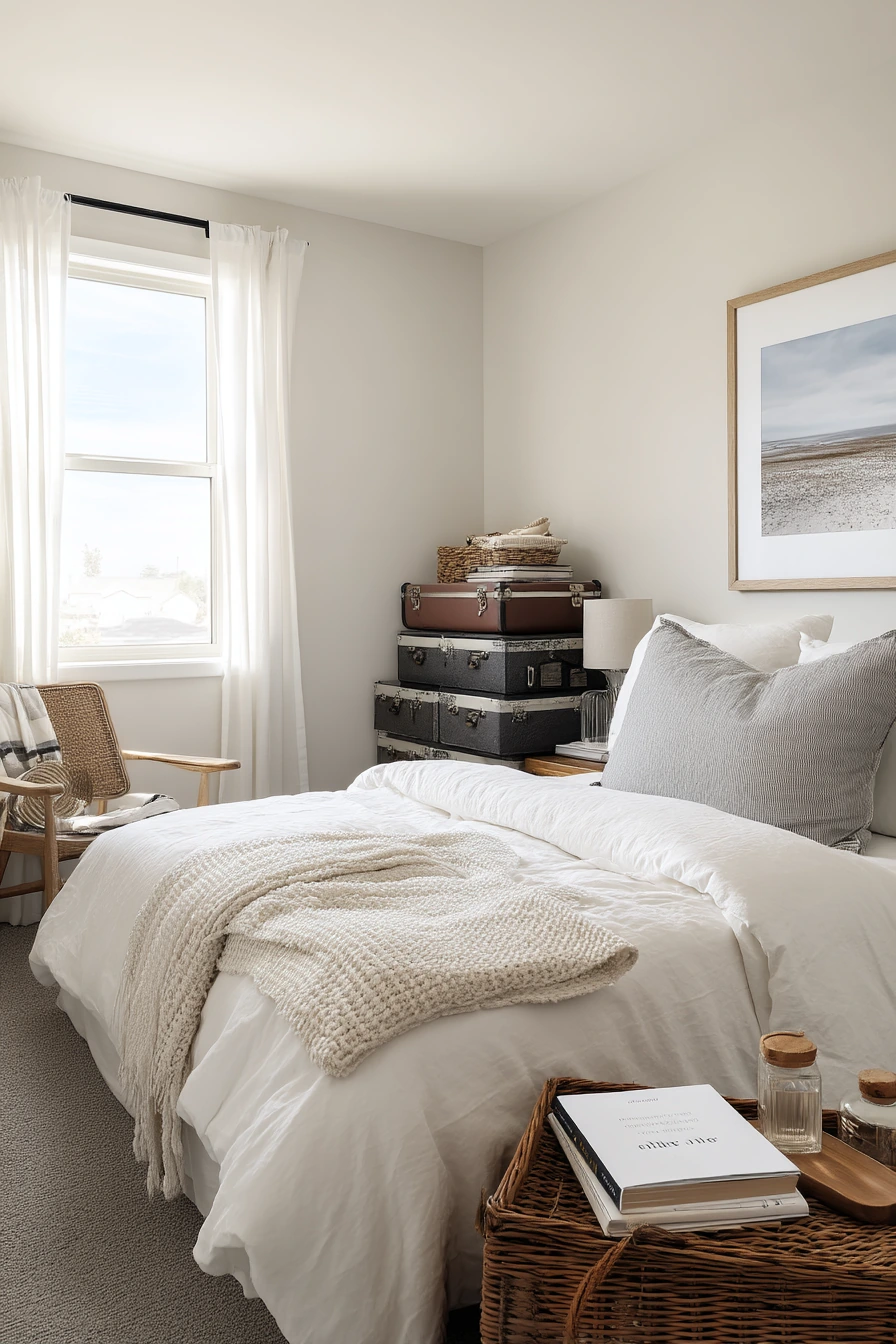
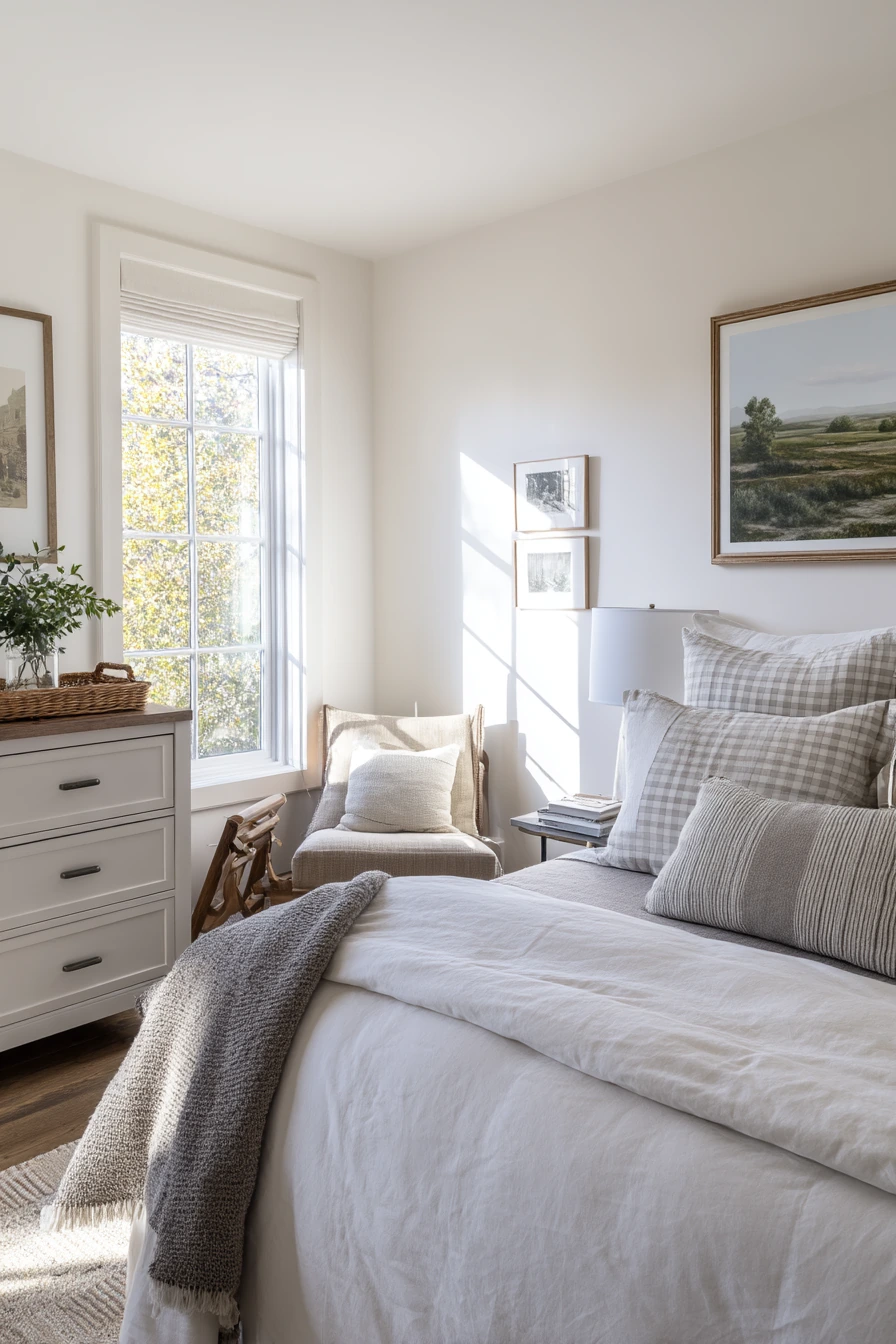
A guest bedroom often has to do more than one job. You can make it welcoming while still using it for overflow storage. Start with a queen bed and crisp but relaxed bedding. Keep the sheets simple and add one textured throw so it feels cozy. Place spare pillows in a basket so guests can choose what they like without digging in closets.
Plan for real guest needs. Add a small luggage rack so bags do not end up on the bed. A dresser gives storage and a flat surface for a toiletries tray. Keep a framed landscape print for calm wall decor that most people like. A reading chair by the window makes the room feel complete and gives guests another place to sit.
How to style it: keep your storage hidden. Use matching bins in the closet and avoid stacking random items on the chair. If you have unopened mail or papers, place them in one lidded box on a shelf, not on the dresser top. Put a book on the chair seat as a friendly touch, but keep the walkway clear from the door to the bed. Soft morning light helps the room feel clean and open, so use light curtains instead of heavy ones if privacy allows.
- Use relaxed bedding that is easy to wash and remake
- Add a basket for extra pillows and blankets
- Place a luggage rack to protect the bedding and save space
- Create a small toiletries tray with basics like tissues and lotion
- Keep a clear path from doorway to bed and closet
Pro Design Tip: Set up one empty drawer and two open hangers so guests feel like they can unpack, even for one night.
Budget Considerations: A folding luggage rack and a simple basket make a big difference without much cost. Thrift a solid reading chair and add a washable cover if needed.
9. Cozy Winter Bedroom Setup with Quilts, Throws, and Soft Light

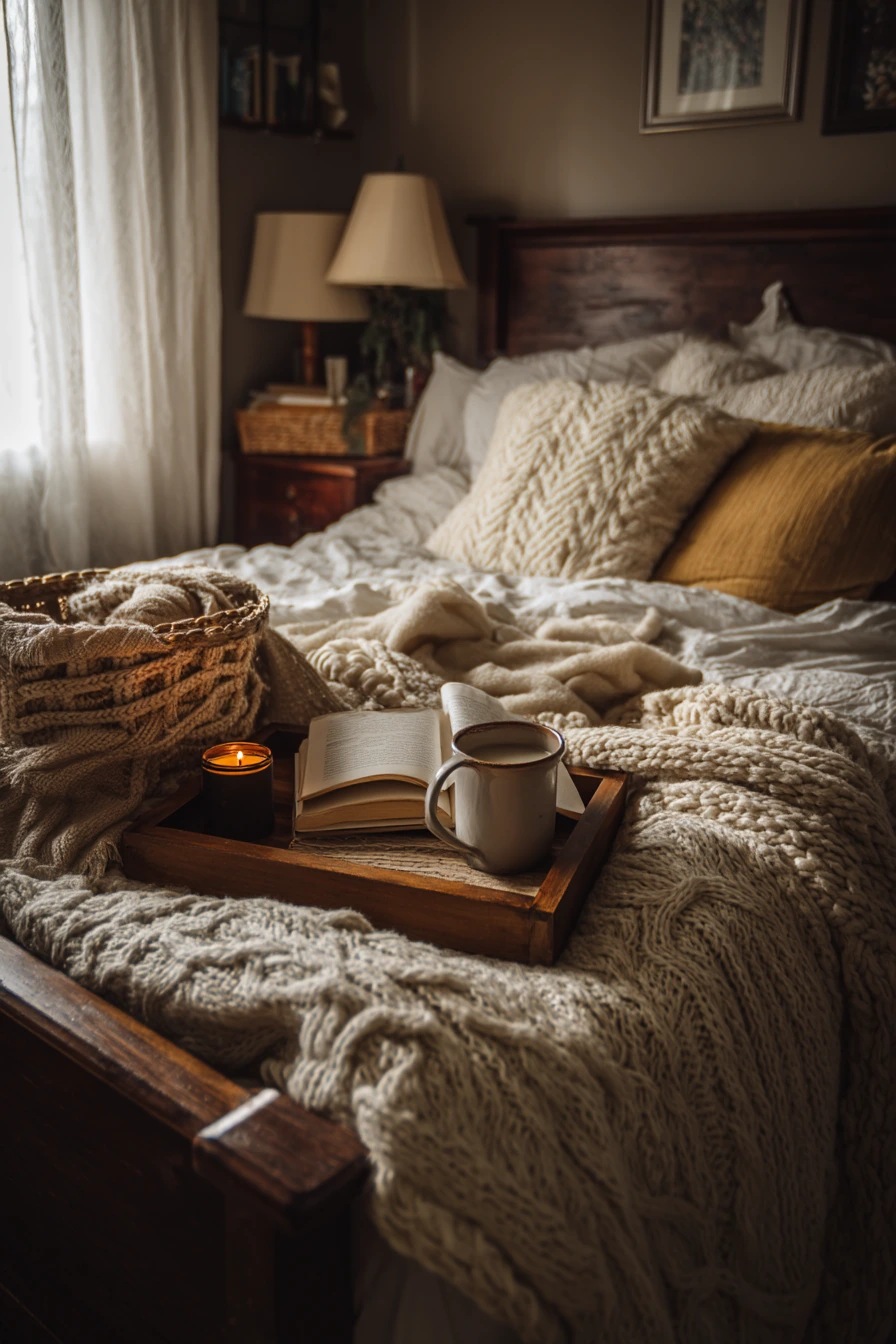
For cooler months, comfort comes from layers and warm light. Swap in a heavier quilt and add a wool throw at the foot of the bed. Use textured cushions in winter-friendly fabrics like knit, velvet, or brushed cotton. Keep curtains closed more often to block drafts and make the room feel snug.
Create a small bedside tray with a candle and a spot for a tea mug. Use one warm bedside lamp along with dim winter daylight so the room feels restful instead of dark. Keep extra blankets in a basket beside the bed so you can grab one without searching a closet. A slightly wrinkled duvet edge is normal in winter, so focus on neat corners and a clean bed surface instead of perfect lines.
How to style it: choose two main colors, like cream and warm gray, then add one deep accent such as forest green or rust. If wool socks collect at the footboard, add a small basket there too. Keep a current novel on the nightstand so the room invites a slow evening. If the air is dry, place a small water glass nearby and consider a simple humidifier on the dresser.
- Layer a quilt plus a wool throw for extra warmth
- Use a basket of blankets beside the bed for easy access
- Add a tray for tea, a book, and a candle
- Use one warm lamp to balance dim daylight
- Swap to heavier curtains to reduce drafts
Pro Design Tip: Use three layers on the bed, sheet, quilt, and throw, so you can adjust comfort without overheating at night.
Budget Considerations: Look for wool-blend throws and quilted coverlets on sale at the end of the season. A simple woven basket is an affordable way to store extra blankets.

10. Bedroom Setup Ideas FAQ (Common Questions Answered)
Questions come up fast when you are trying to plan a bedroom setup. These quick answers help you make choices about layout, lighting, storage, and styling without overthinking.
The main goal is a room that supports sleep and daily routines. Focus on walking space, easy-to-reach lighting, and a simple system for clutter like baskets, trays, and a small dresser.
Use the list below as a checklist. If you are coming from Pinterest, pick one idea and build from there, like adding wall-mounted reading sconces, under-bed storage baskets, or a layered bedding set.
- How do I set up a small bedroom with a narrow layout: Use a low bed, slim nightstand, wall lights, and keep one clear path from door to closet
- What is the best lighting for a bedroom setup: Mix soft window light in the day with warm bedside lamps at night
- How can renters decorate without holes: Use peel-and-stick wall art, no-drill shelves, and a leaning mirror
- How do I make a shared kids room feel fair: Give each child a labeled basket and matching space on a shared nightstand
- How do I keep a bedroom tidy when I work there: Use a tray for cables, close the laptop at night, and keep the desk surface mostly clear
Pro Design Tip: Before buying decor, fix the layout first, then add lighting, then add storage, and only then add extras like art and pillows.
Budget Considerations: Set a small monthly “room fund” for one upgrade at a time, like better bulbs, a basket set, or new curtains, so the space improves without a big spend.
The best bedroom setup ideas are the ones that fit your life. Start with a layout that keeps walking paths open, then add lighting that feels good in the morning and at night.
After that, use simple storage like baskets, trays, and a small bench to control daily clutter. Once the room works, styling is easy with layered bedding, a mirror for light, and a few personal items you actually use.
Pick one setup from this list and copy the parts that solve your biggest problem, like a narrow layout, shared space, work zone, or winter comfort. Small changes add up fast.