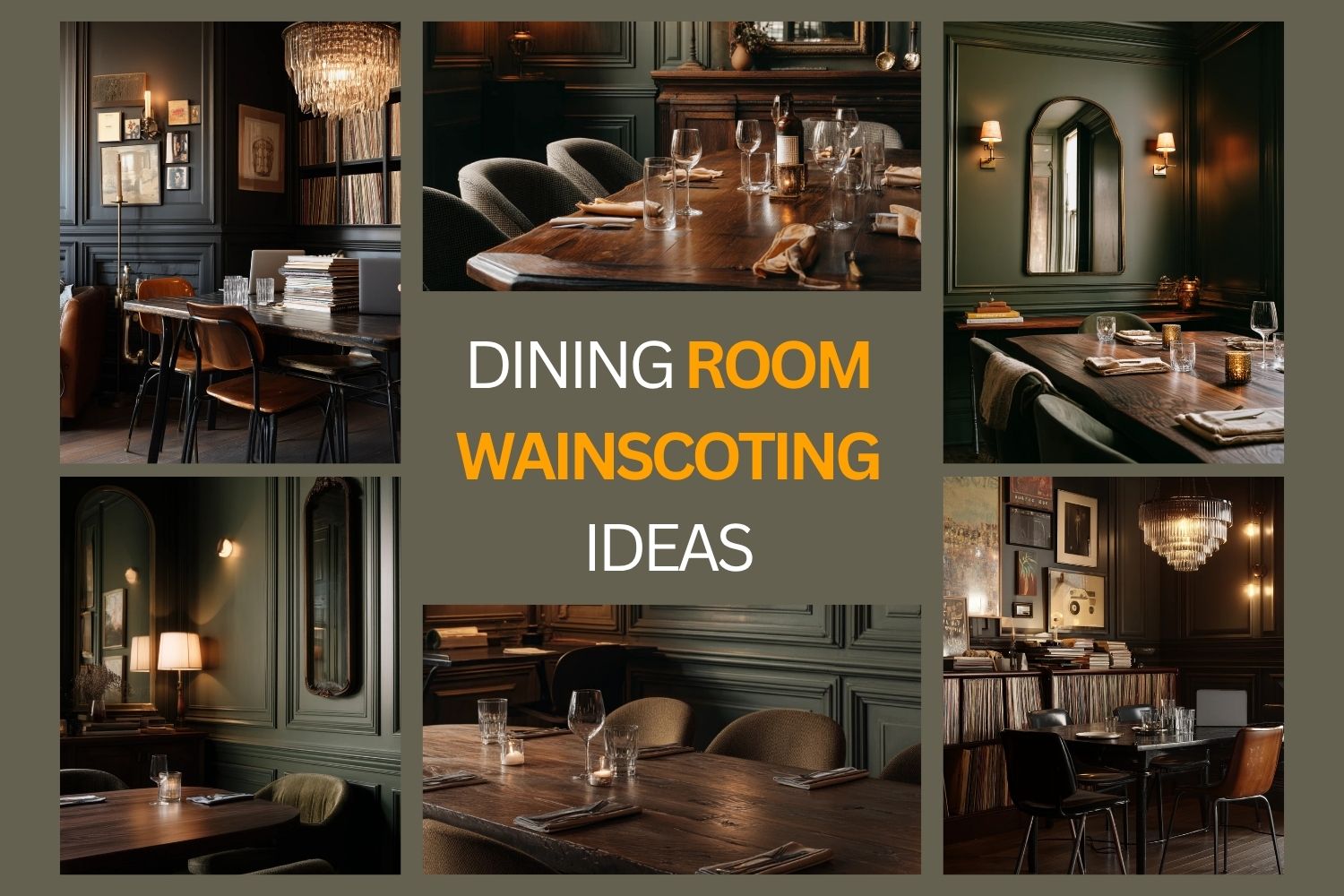

Dining room wainscoting ideas can change the whole feel of a space without a full remodel. Wainscoting adds texture, protects the wall, and helps your paint colors look more finished.
In this post you will see 10 practical styles, from crisp white chair rail looks to deep olive and charcoal painted panels. Each one is based on a real, lived-in room with everyday details like school papers on the table, a charging cable by the console, and a drop cloth in the corner.
You will also get simple styling ideas, paint and height tips, and ways to make wainscoting work in rentals and small dining nooks. If you came from Pinterest, use these sections like a checklist for your own dining room refresh.
Each idea includes a pro design tip and a budget note so you can plan the look without wasting time or money.
Intro
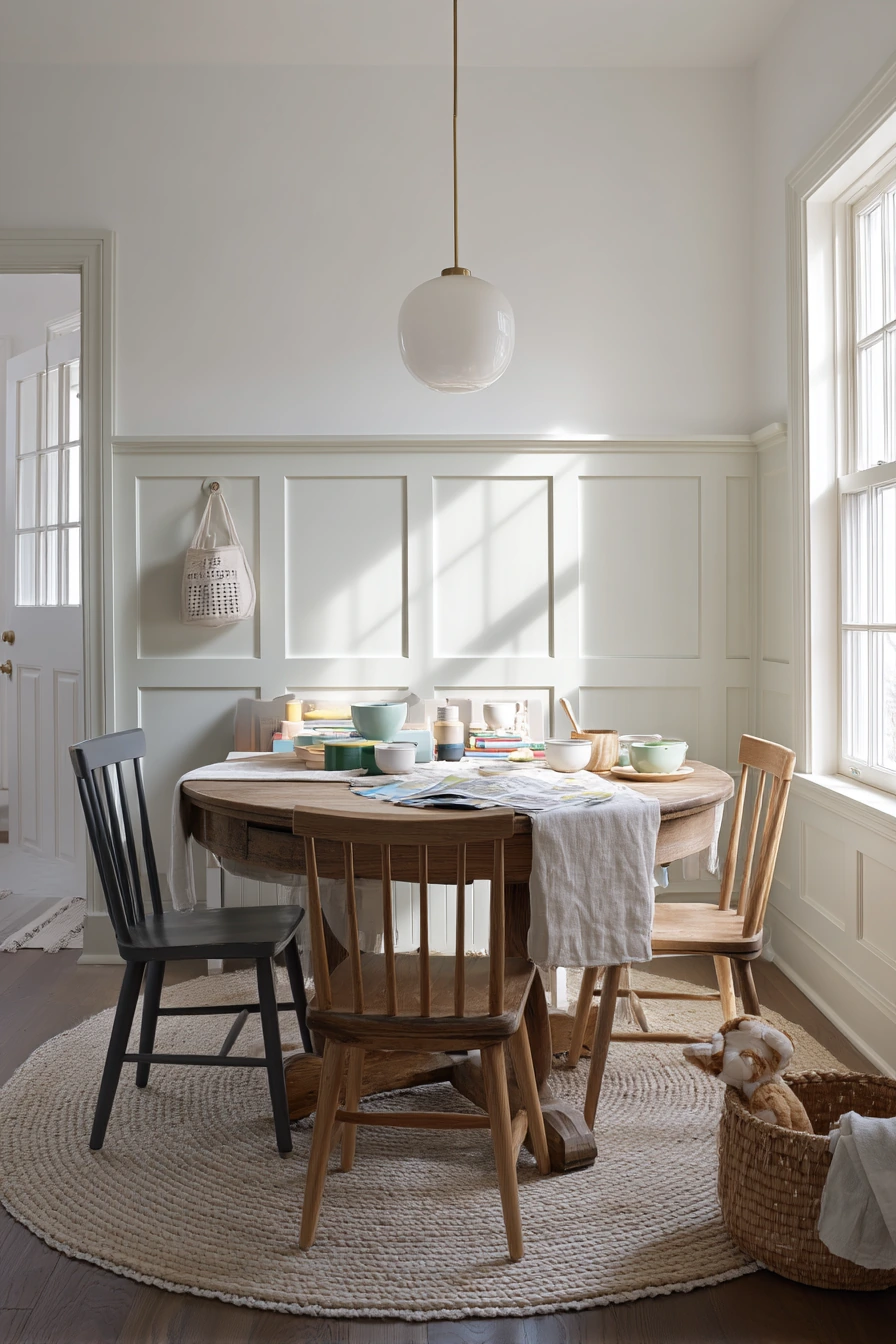
Wainscoting is the trim or panel detail on the lower part of a wall. In a dining room, it can help define the eating area, frame a sideboard, and hide scuffs from chairs.
The best dining room wainscoting ideas fit how you really live. If your table is also a homework spot, you need durable paint and wipeable surfaces. If you host, you may want raised panels that look more formal.
Before you start, decide on height and finish. Many rooms look balanced with wainscoting at about one third of the wall height, or lined up with window sills. Semi-gloss is easier to clean, while eggshell looks softer.
- Pick a wainscoting style: beadboard, picture-frame molding, or raised panels
- Choose a height that works with your furniture and windows
- Use durable trim paint on the lower wall for easy wipe downs
- Test your color in morning and evening light
- Plan the wall decor and lighting so the trim feels intentional
Pro Design Tip: Keep the chair rail or top cap level with a strong line in the room, like the bottom of a window, the top of a buffet, or the back height of dining chairs.
Budget Considerations: Paint and a simple chair rail give the biggest change for the least cost. Save raised panel details for one feature wall if you need to scale back.
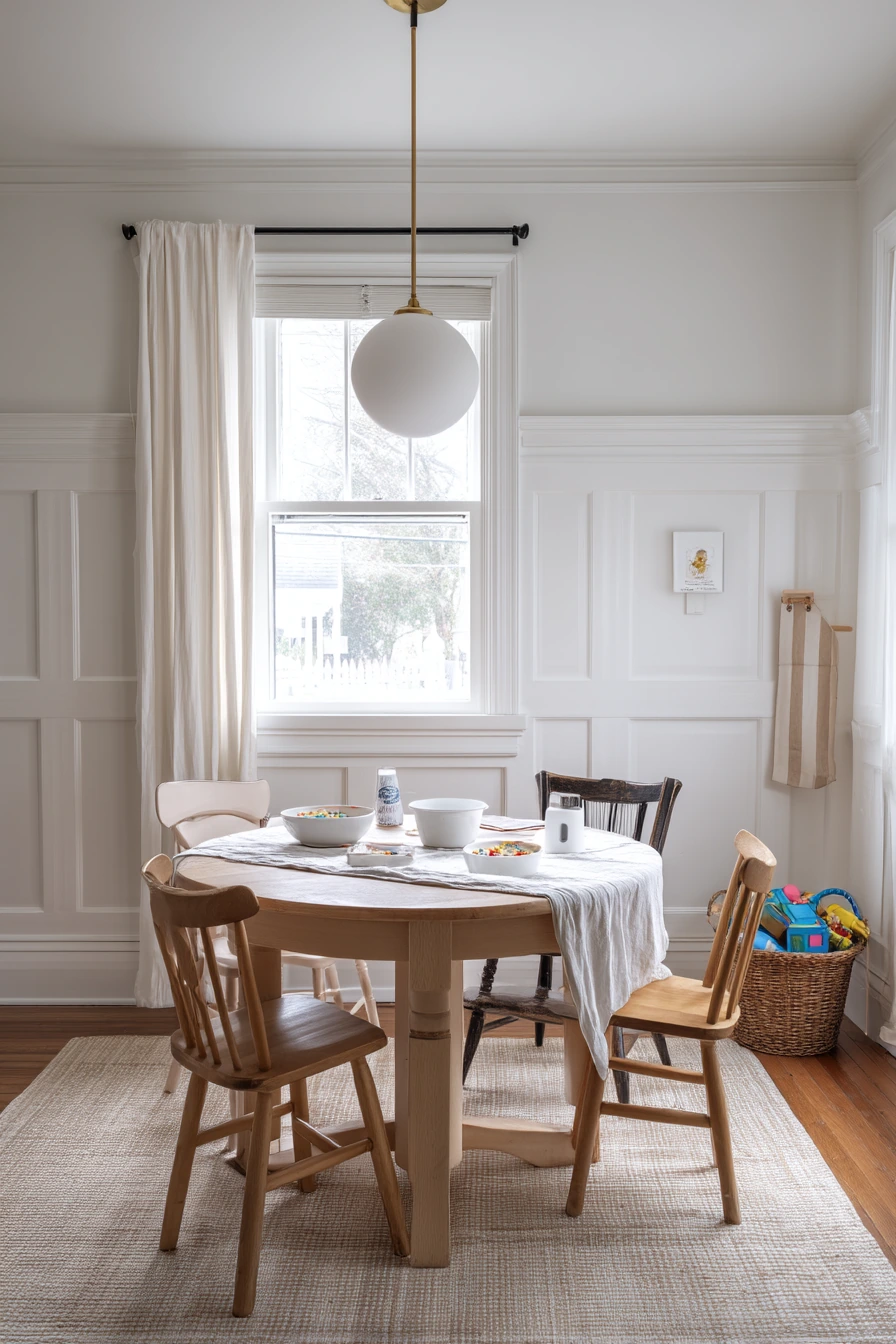
1. Crisp White Wainscoting for a Real Family Breakfast Room
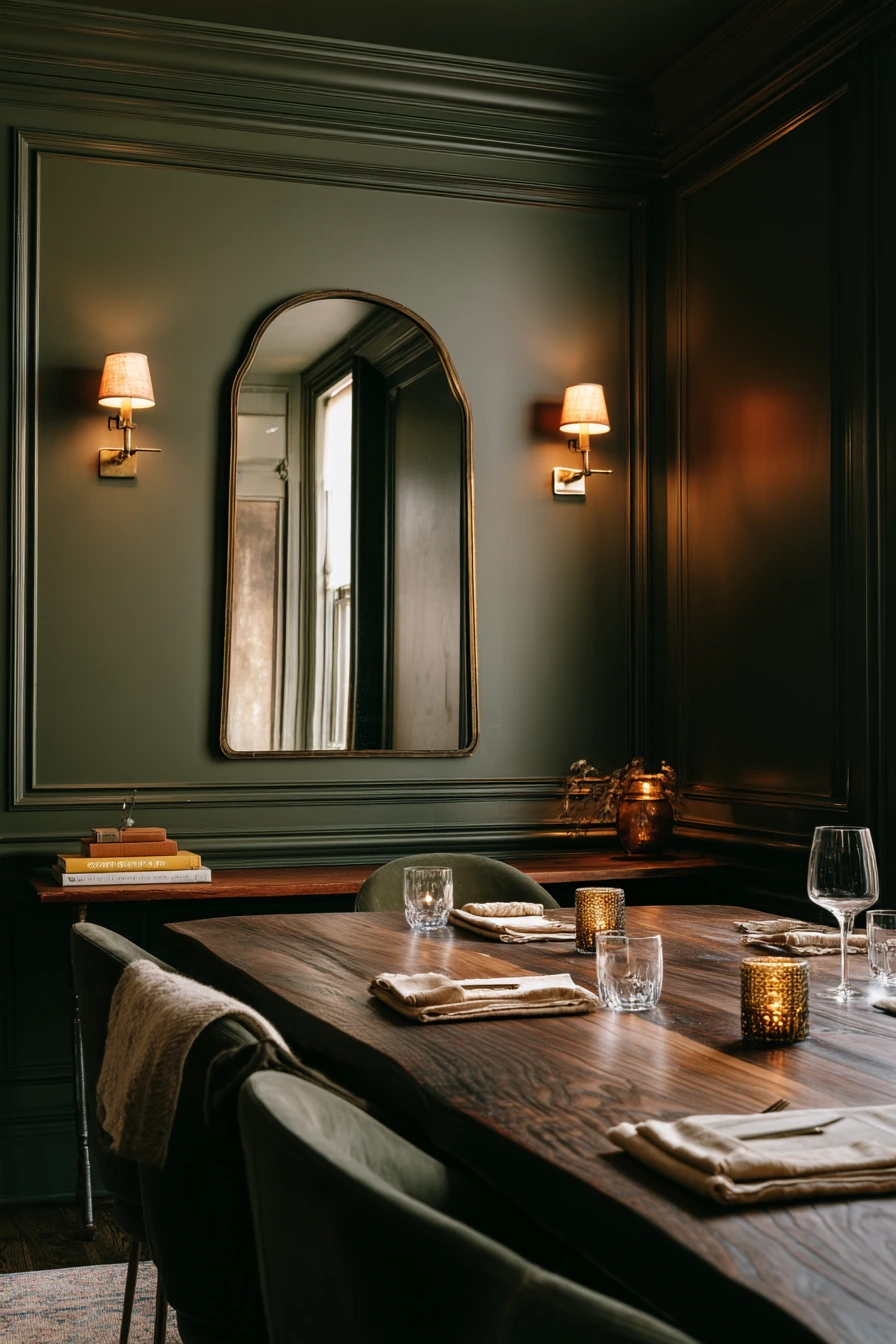
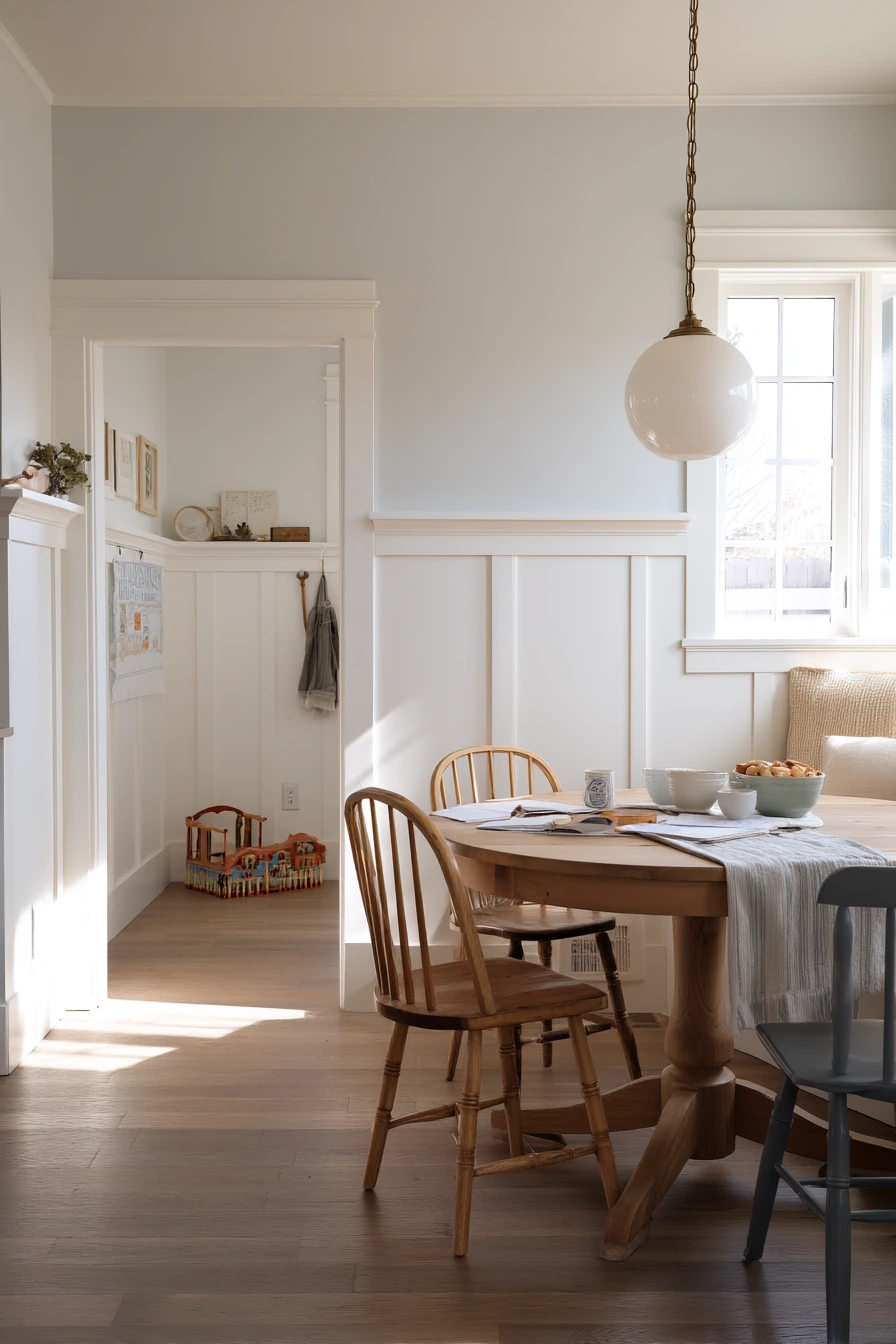
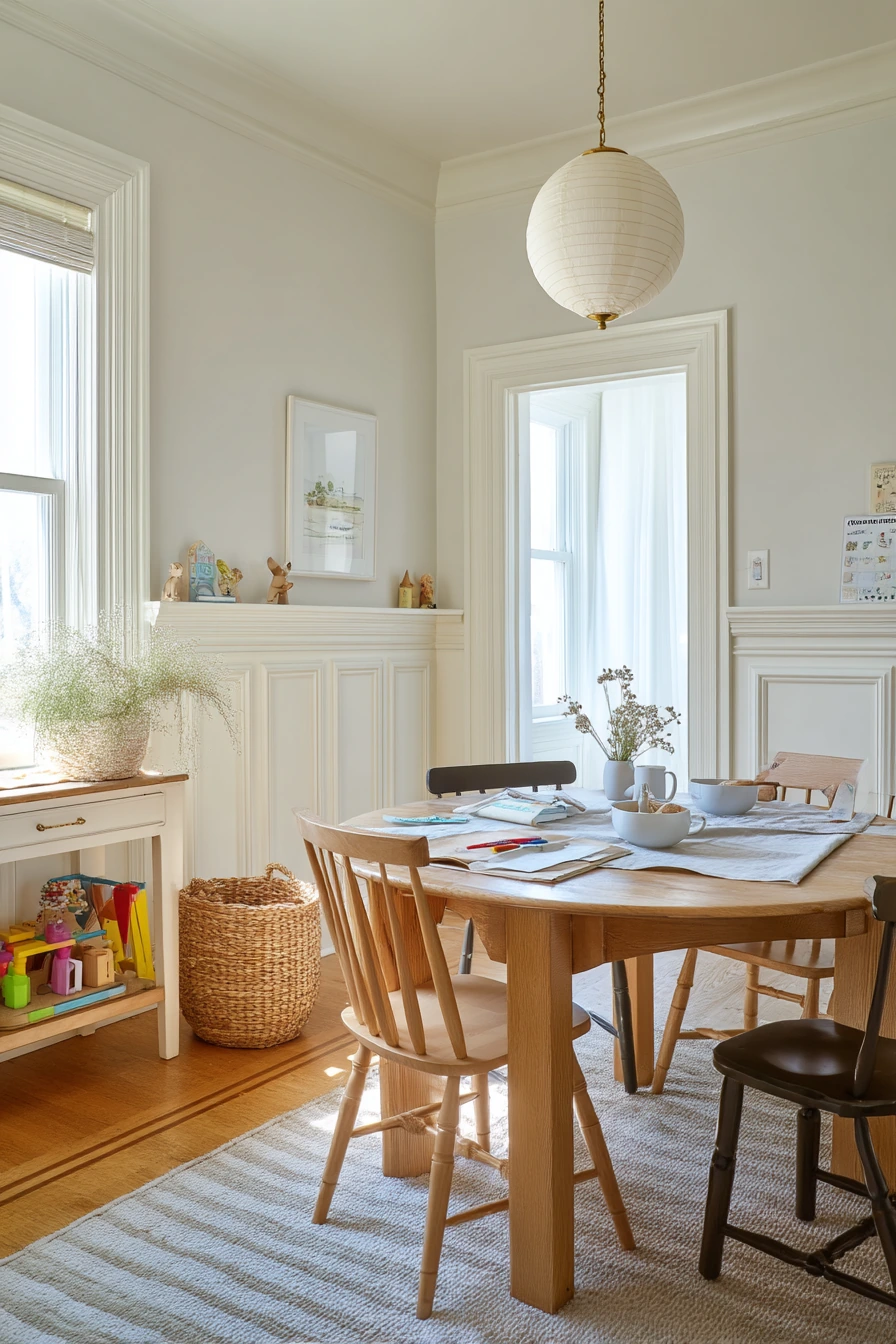
Crisp white wainscoting with a painted chair rail is one of the most classic dining room wainscoting ideas, and it works well in a busy family breakfast space. The bright lower wall makes the room feel calm and airy, even when the table has two cereal bowls, a half-finished coffee, and school papers spread out. White trim also helps mixed wood tones look more planned, like a round oak table with mixed wood chairs.
To style this look, keep the tabletop simple so the wall detail can shine. A linen runner adds texture without feeling fussy, and a simple brass pendant gives a warm point of light. If you have kids, tuck a toddler’s toy basket near the sideboard so the clutter looks contained and still within reach. The wainscoting protects the wall from chair bumps and little fingerprints, especially if you use a washable trim paint.
Color matters with white. Choose a white that matches your trim and ceiling so the chair rail does not look like a random stripe. In soft morning window light, a slightly warm white can feel more welcoming than a sharp blue white. If your upper walls are also white, change the sheen instead of the color, like semi-gloss on the lower wall and eggshell above.
- Pair white wainscoting with a round oak table to soften the lines
- Mix chairs on purpose by repeating one wood tone twice
- Use a linen runner and one small bowl for keys or mail
- Add a brass pendant to warm up the cool white paint
- Hide kid items in a woven basket by the sideboard
Pro Design Tip: Use a slightly higher wainscoting height in a breakfast room with lots of chair movement so the wall takes fewer hits.
Budget Considerations: If new paneling is not in the plan, mimic wainscoting with a chair rail and paint the lower wall. Use MDF trim for clean lines at a lower cost.

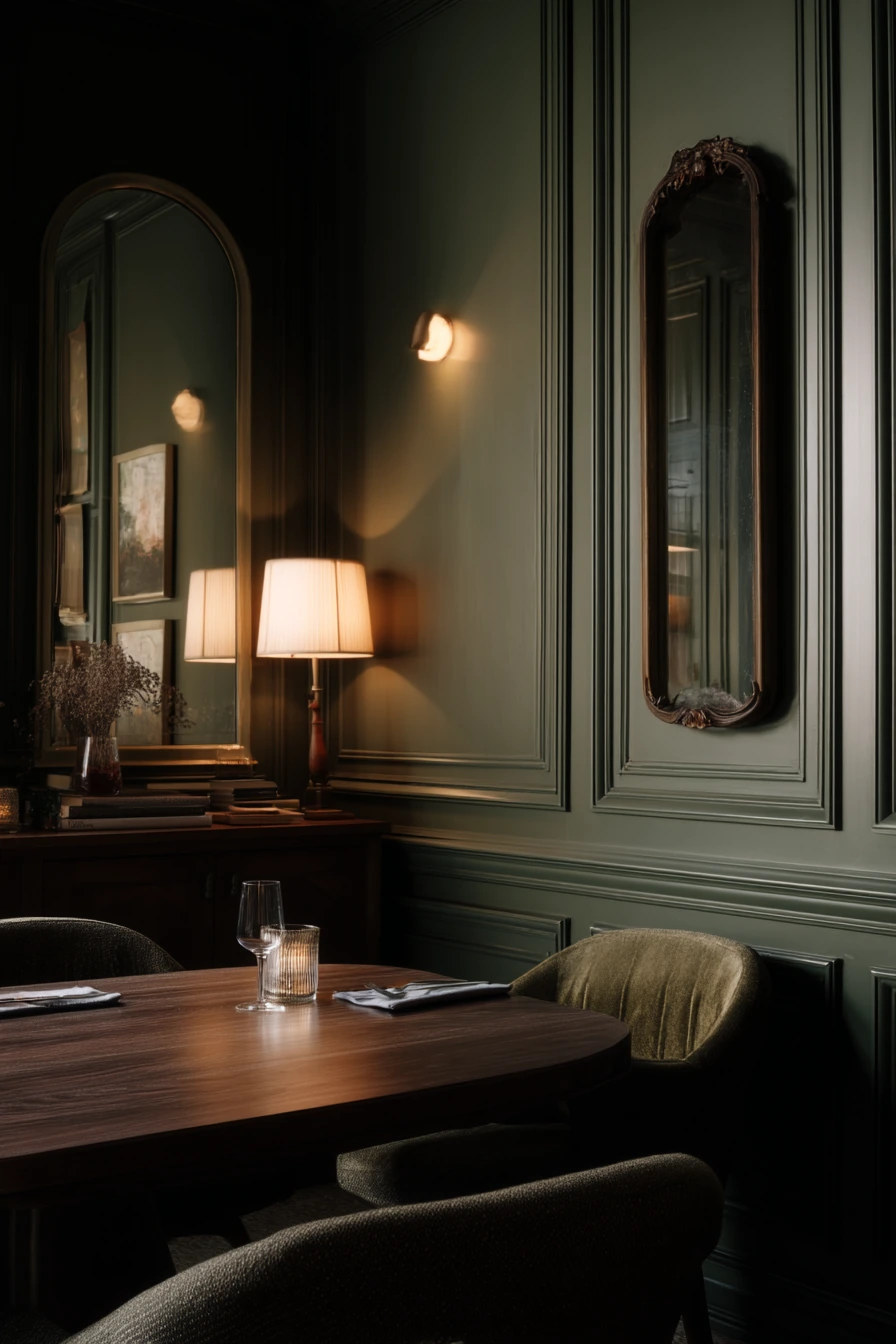
2. Deep Olive Wainscoting for a Warm, Intimate Dining Room
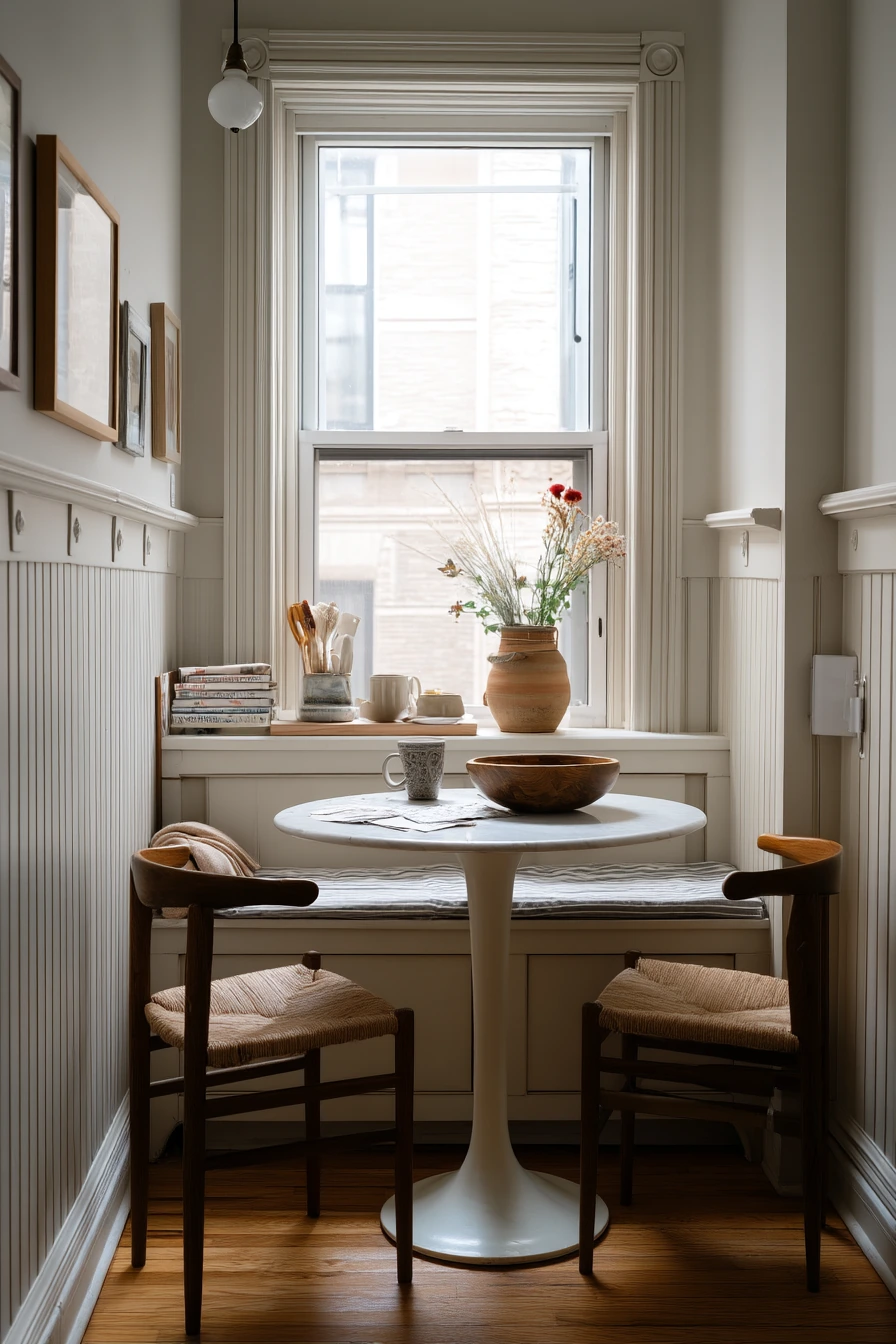
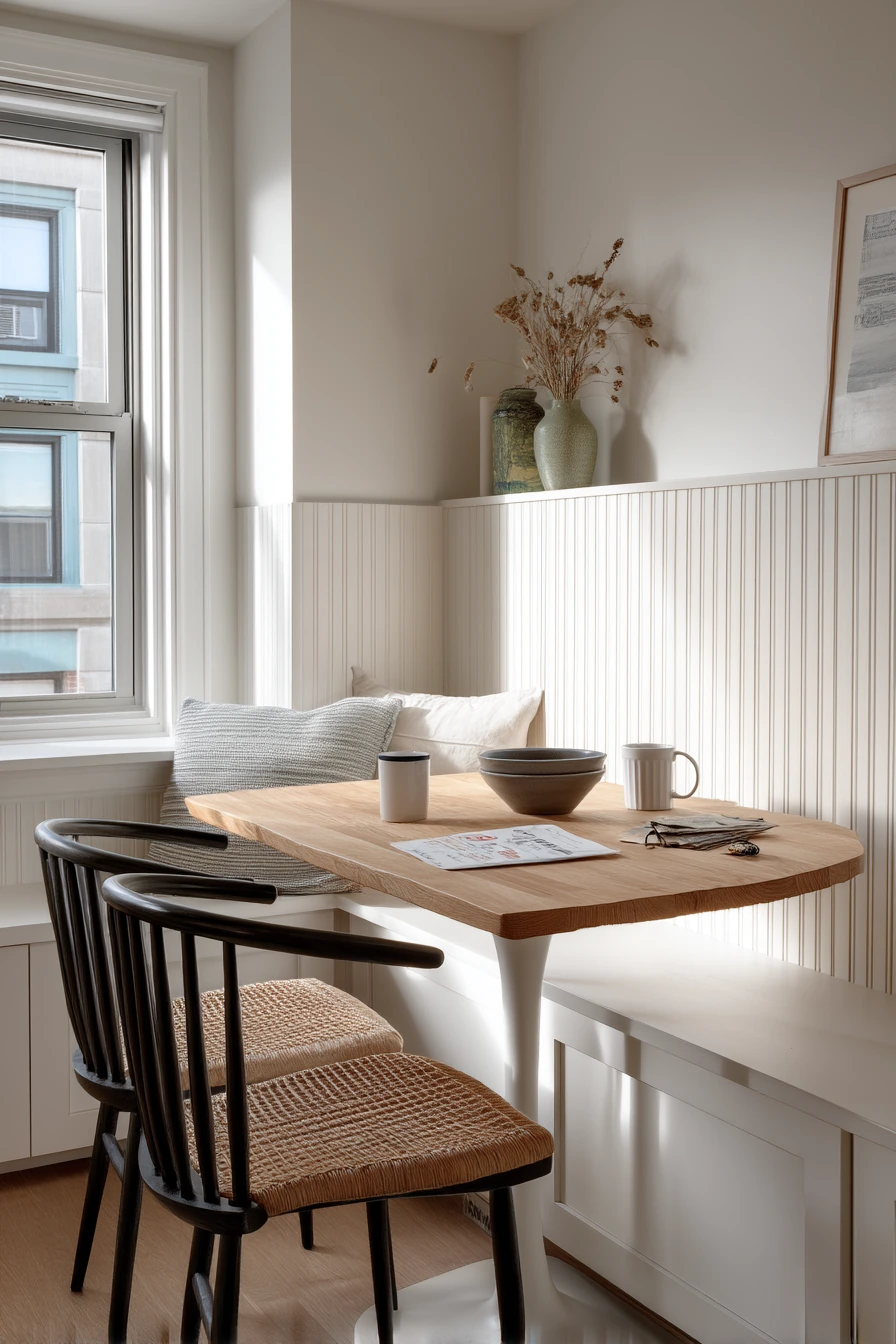
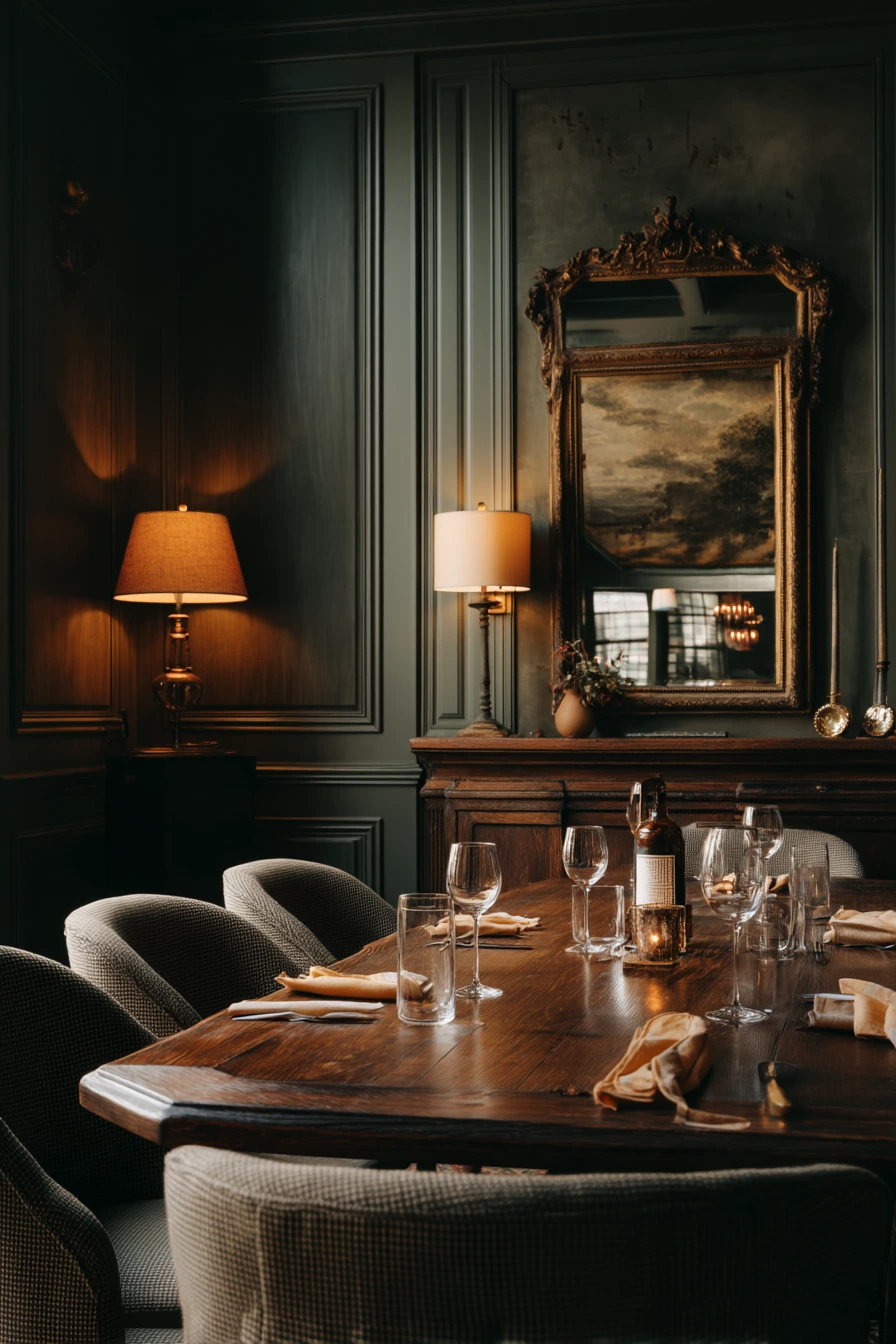
Deep olive wainscoting creates a grounded, cozy dining room that still looks refined. It works especially well with matte plaster upper walls, a walnut dining table, and curved upholstered chairs. In warm lamp light, olive reads rich but not harsh, and it makes everyday items like a wine glass, folded napkins, and even a charging cable near the console blend in instead of standing out.
For styling, keep the top half of the room calm so the color feels intentional. A vintage mirror that catches the warm glow can double the light and make the space feel larger. If you like a relaxed look, let one throw be slightly wrinkled on a chair. The key is to repeat the warm tones: walnut wood, brass accents, and creamy textiles help the olive feel soft rather than heavy.
When choosing paint, test it at night. Olive can shift toward brown or gray depending on bulbs. Use warm bulbs in lamps and avoid bright cool overhead lighting if you want a cinematic, dusky feel. A satin finish on the wainscoting is practical for wiping marks, while the upper wall can stay matte for contrast and depth.
- Pair olive wainscoting with walnut furniture for a rich tone-on-tone look
- Use warm lamps instead of bright overhead light for a cozy mood
- Hang a vintage mirror to bounce light and add character
- Choose cream napkins or chair fabric to balance the dark paint
- Keep cords and small items in a tray on the console
Pro Design Tip: To avoid a chopped look, match the wainscoting color to the baseboards and door trim for one solid band around the room.
Budget Considerations: Deep colors take more coats. If you want to save, paint only the wainscoting area olive and keep the upper wall a simple warm neutral you already have.
3. Slim Beadboard Wainscoting for a Compact Dining Nook
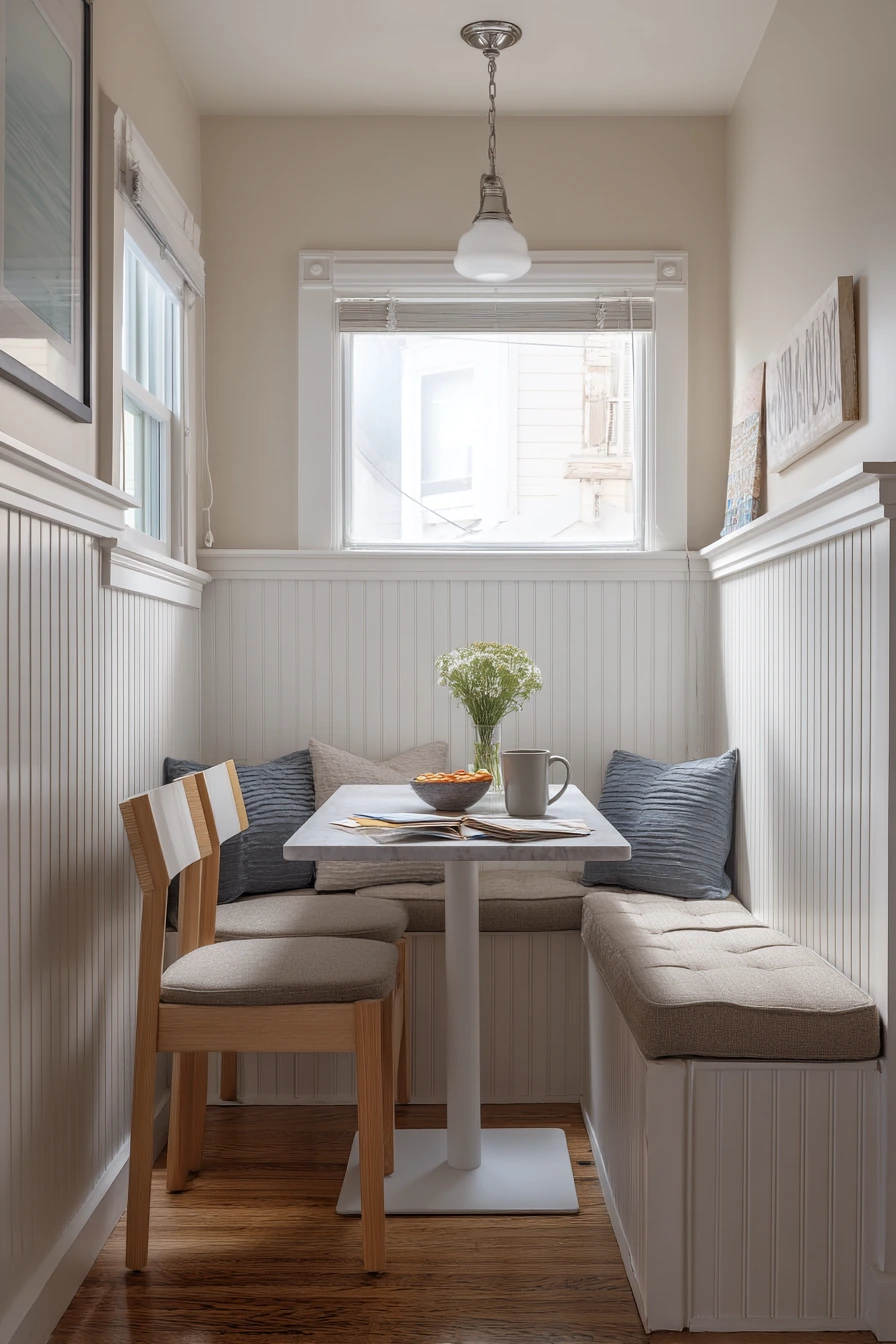
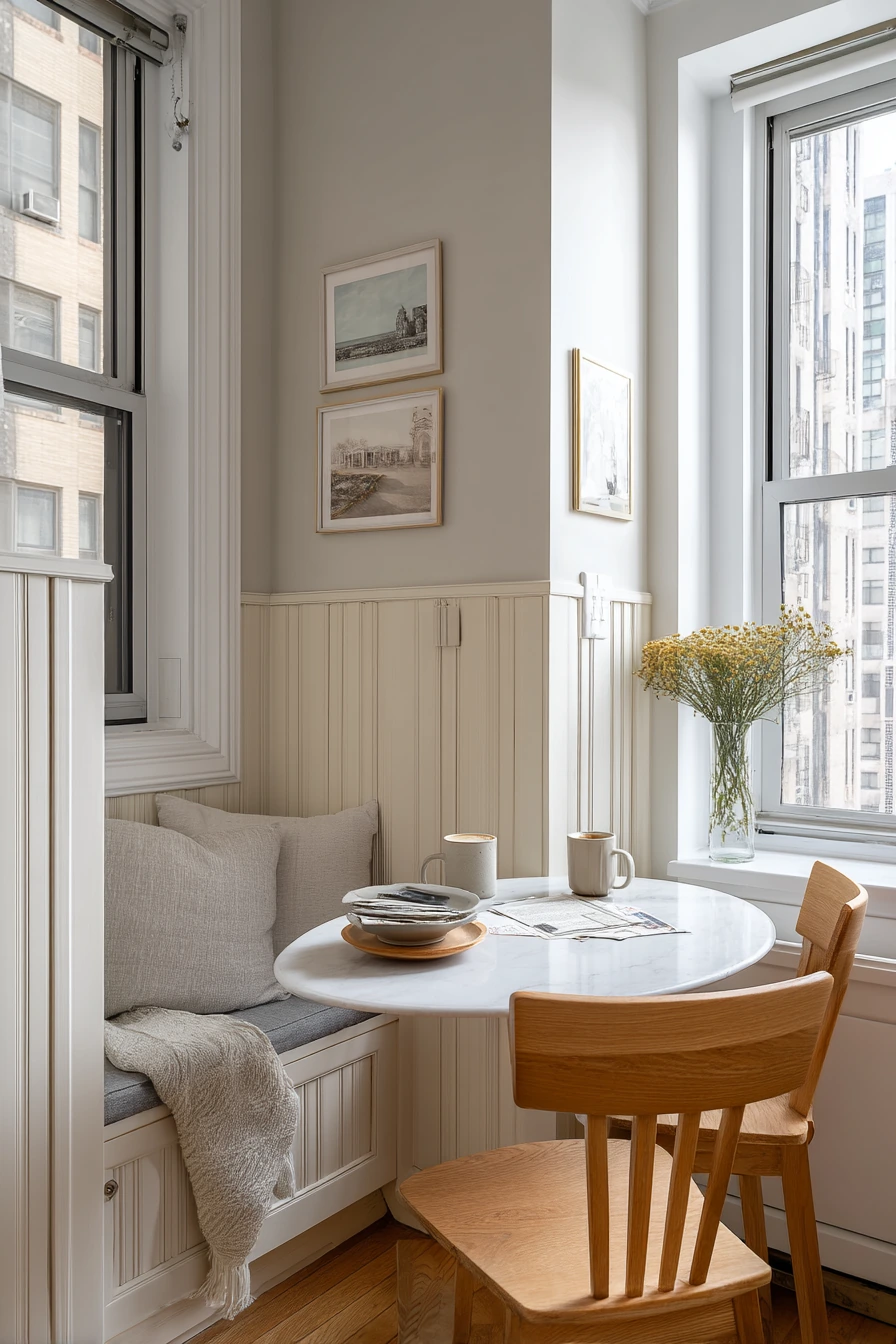
In a small apartment, slim beadboard wainscoting is a smart choice because it adds texture without taking up visual space. It fits well in a compact dining nook with a built-in bench, a pedestal table, and two armless café chairs. The vertical lines of beadboard can make the wall feel taller, which helps a tight corner look more open and bright but not sterile.
This style is also great for real life. A stack of mail, keys in a shallow bowl, a ceramic mug, and a folded grocery list can live on the bench and still look tidy. To style it, add one comfortable cushion on the bench and keep the rest simple. A pedestal table makes the space easier to move around, and it keeps chair legs from fighting with the beadboard detail.
Paint choices matter in a small nook. Light neutrals and soft whites reflect side window light and keep the corner feeling clean. If you want a little contrast, paint the beadboard one shade darker than the upper wall. Use a wipeable finish on the lower wall since benches and bags rub against it often. If the nook is part of an open plan, match the wainscoting color to nearby trim so it feels connected.
- Use slim beadboard to add texture without heavy trim
- Choose a pedestal table for better flow in tight spaces
- Style the bench with one cushion and one small throw
- Corral keys and mail in a bowl or lidded box
- Keep wall art small and simple so the nook feels calm
Pro Design Tip: Run beadboard behind the bench and stop it at a clean end cap so the lines look built-in, not like an afterthought.
Budget Considerations: Paintable beadboard panels are often cheaper than individual boards. If you are handy, you can install panels in a weekend and finish with basic trim pieces.

4. Removable Picture-Frame Wainscoting Ideas for Rentals
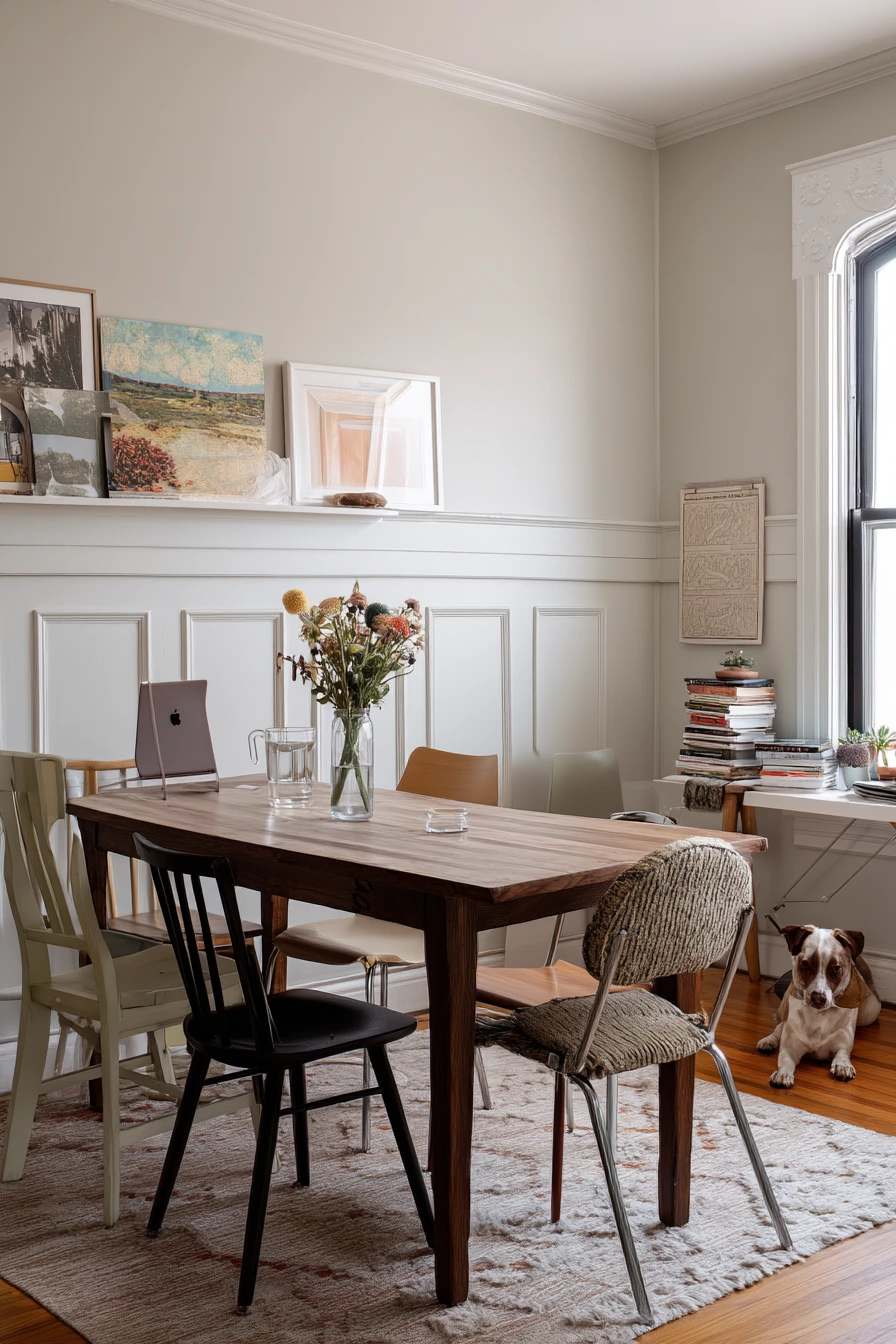
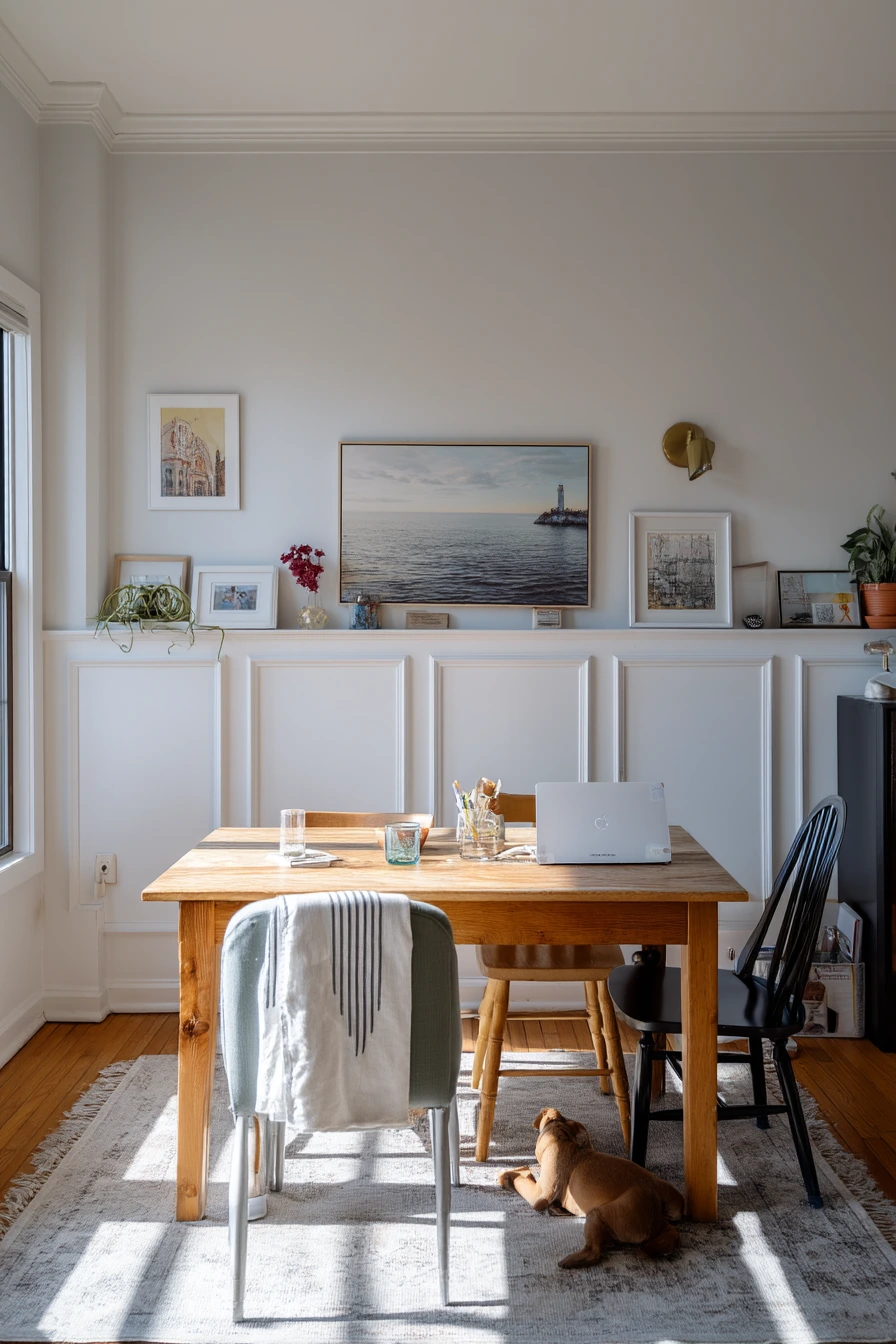
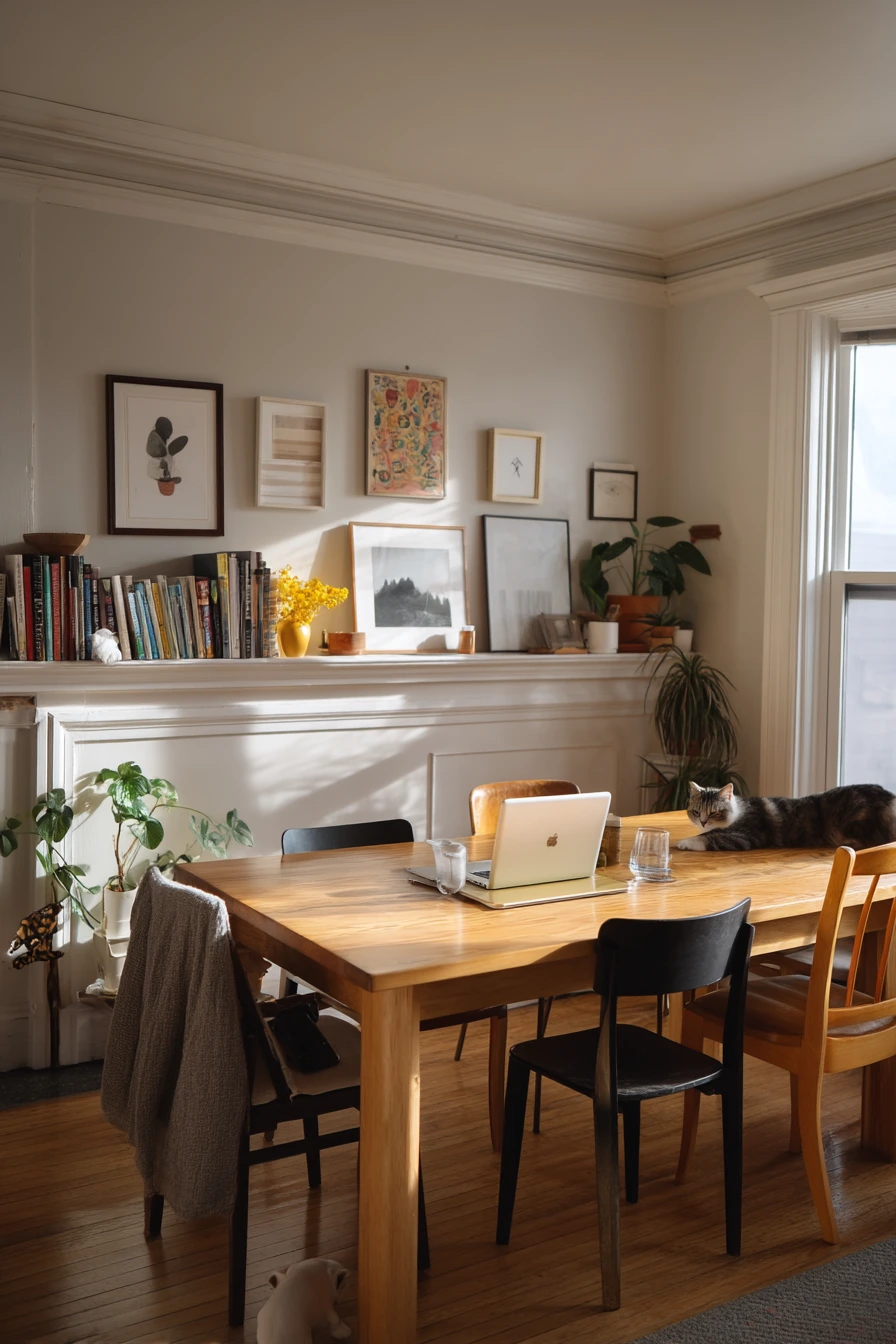
If you rent, removable picture-frame molding is one of the best dining room wainscoting ideas because it gives you the look of panels without permanent changes. With light greige walls, a thrifted oak table, mixed dining chairs, and a simple art ledge, the space feels styled but still practical. It also forgives real life items like a laptop sleeve, library books, a water glass, and a pet toy near the baseboard.
To get the effect, use lightweight trim to create rectangles on the lower wall and paint them the same color as the wall for a subtle raised look. This keeps the room bright in sunlit conditions and works well with softened edges and everyday mess. Style it with a narrow art ledge above the chair rail height so you can swap prints without new nail holes. Choose frames in similar tones so the wall does not get too busy.
Think about removal before you start. Use methods that are easier to reverse, and keep the pattern simple. Make sure your rectangles are evenly spaced and line up with the table and sideboard when possible. In a rental dining room, wainscoting looks best when it is clean and minimal, not overloaded with extra trim. Let the furniture do part of the work, like mixed chairs that share a similar seat height and finish.
- Plan a simple picture-frame grid that fits the wall width
- Keep the wainscoting paint close to the wall color for a soft look
- Use an art ledge to rotate prints and keep nail holes minimal
- Style the sideboard with a tray to hold daily items
- Choose mixed chairs with one repeating detail, like black legs or oak seats
Pro Design Tip: Measure from the center of the wall and work outward so the panel spacing looks balanced, even if the corners are not perfect.
Budget Considerations: Thin trim and basic paint are affordable. If you cannot paint, you can still add removable trim and leave it white for a subtle texture change.

5. Farmhouse White Beadboard Wainscoting with Warm Texture
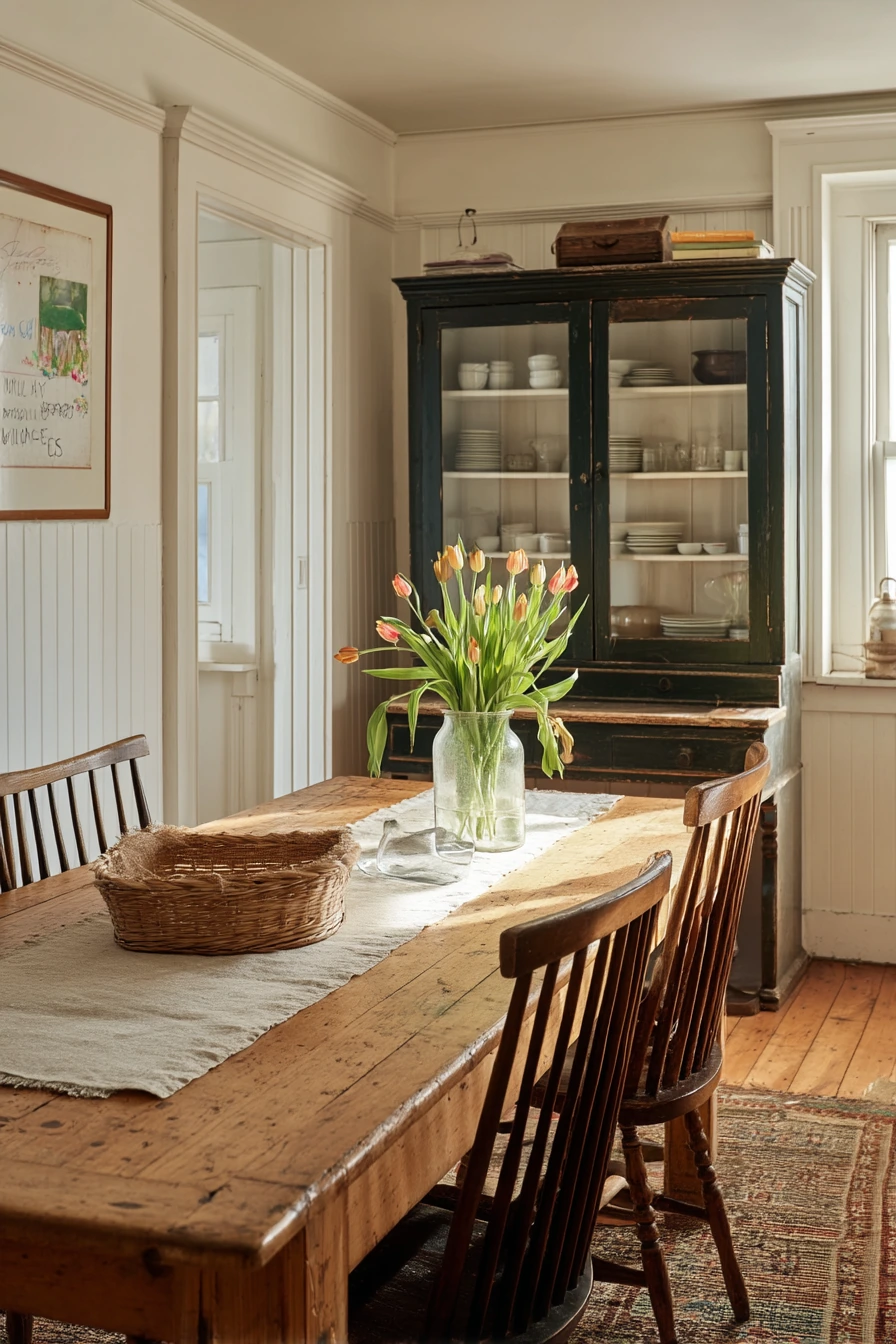
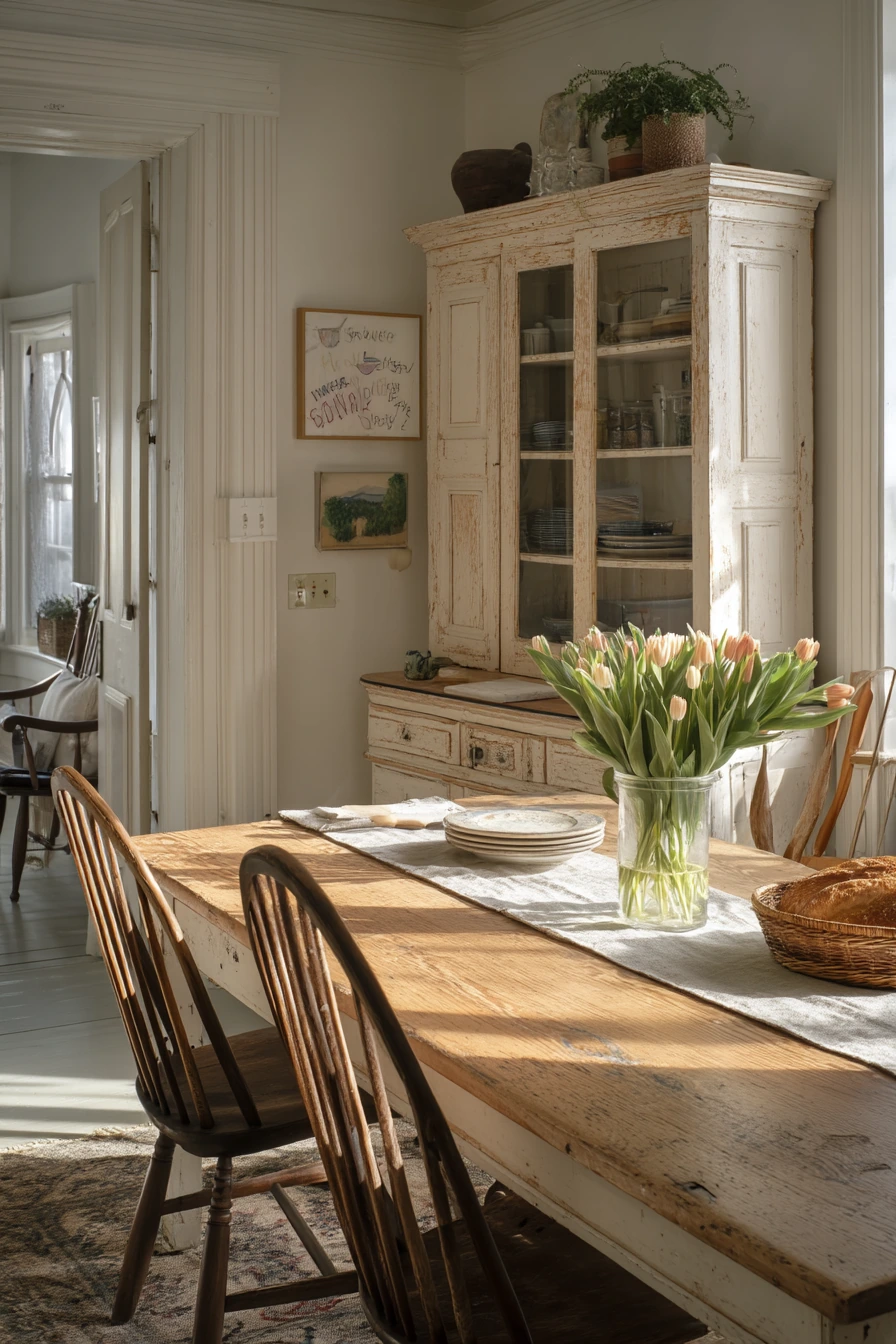
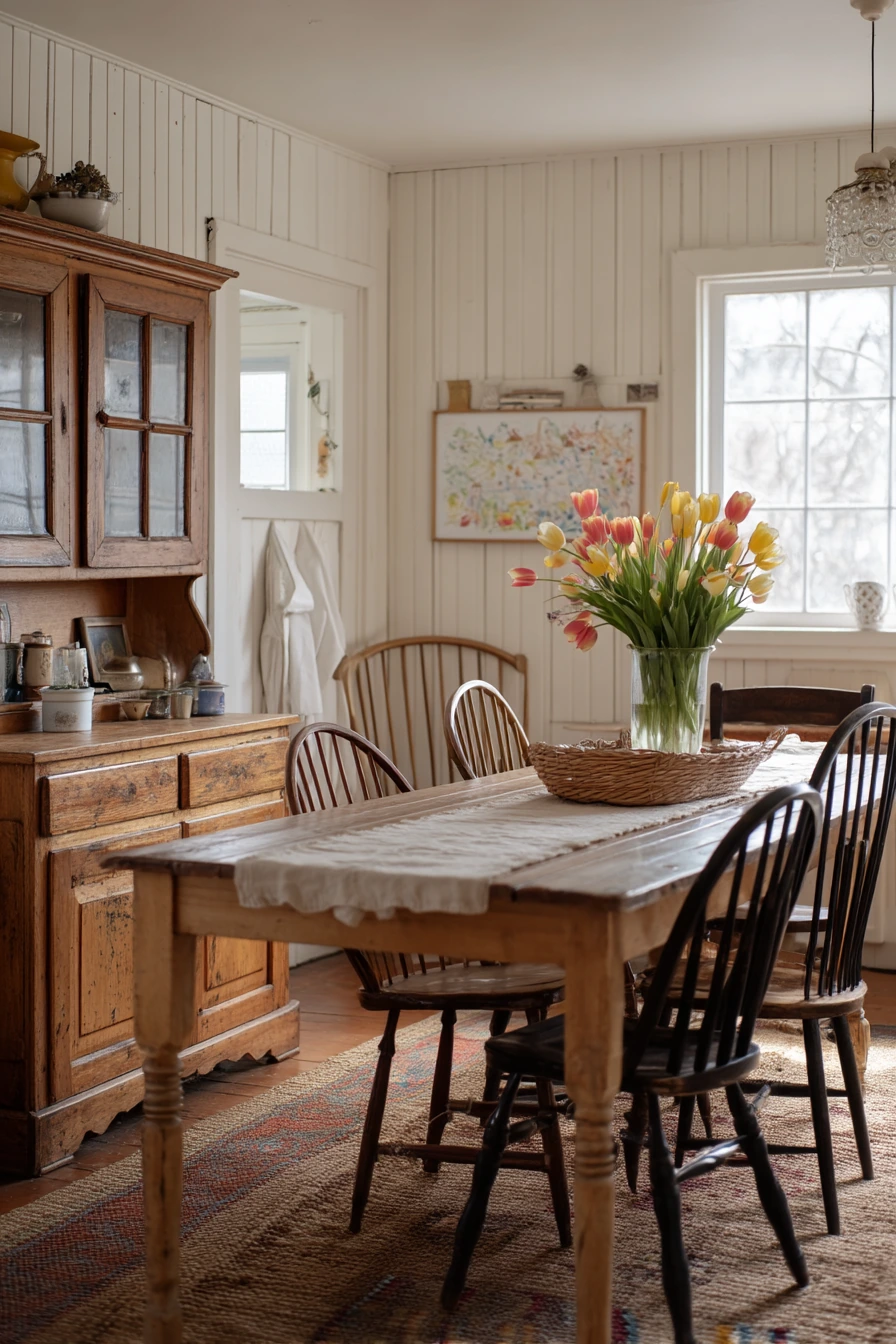
White beadboard wainscoting is a staple farmhouse look, but it feels best when it is paired with real texture and a little wear. A long pine table, Windsor chairs, a worn runner, and an old china cabinet create a room that looks collected over time. Everyday details like a vase of grocery-store tulips, a kid’s crayon drawing on the sideboard, a bread basket, and even a water ring on the table make the space feel honest and homey.
To style farmhouse beadboard, lean into natural materials. Use a runner that can handle spills, and choose a centerpiece that does not block sight lines, like low flowers or a simple bowl. If you have a china cabinet, keep the shelves partly open with a mix of dishes and baskets so it does not look too perfect. White wainscoting also helps highlight wood grain, so you can keep the pine table more rustic without the room feeling dark.
Beadboard can read traditional or modern depending on the finish. For a classic farmhouse look, use a soft white and a satin or semi-gloss sheen on the lower wall. If you want it less shiny, use eggshell and plan to wipe it more often. Warm afternoon light makes white beadboard glow, so add warm bulbs in the evening to keep the same feel. Small wall hooks or a narrow shelf can add function without clutter.
- Pair beadboard with Windsor chairs for a classic farmhouse shape
- Use a washable runner and keep a bread basket for daily meals
- Display kids art on the sideboard to make the room feel lived-in
- Mix tulips or grocery flowers with simple greenery for easy color
- Use baskets in the china cabinet to hide small items
Pro Design Tip: Balance the white beadboard with at least two warm wood tones so the room does not feel flat.
Budget Considerations: If installing beadboard is too much, you can get a similar look with beadboard wallpaper below a chair rail, then paint it for a seamless finish.
6. Pale Sand Wainscoting for a Breezy Coastal Dining Room
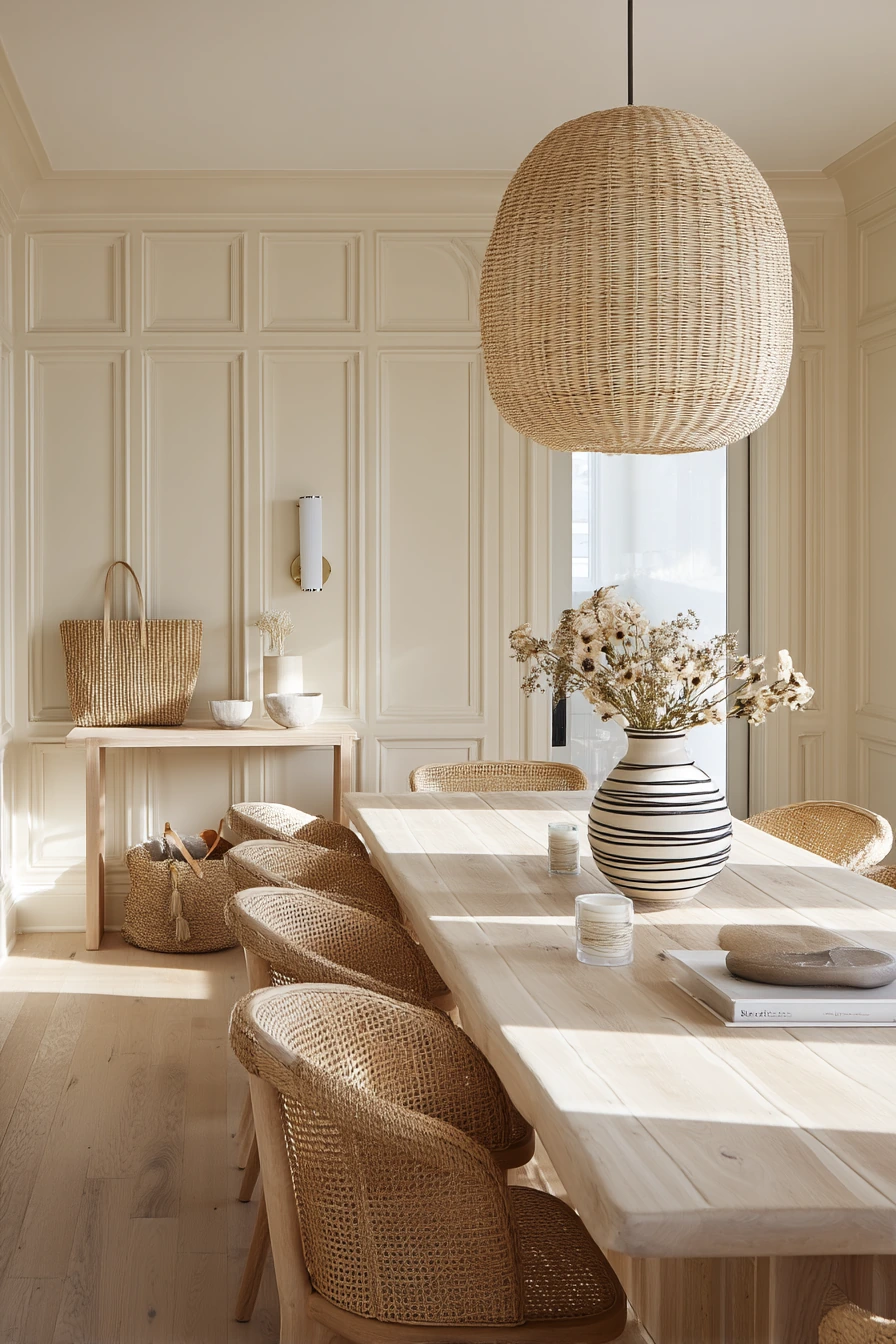
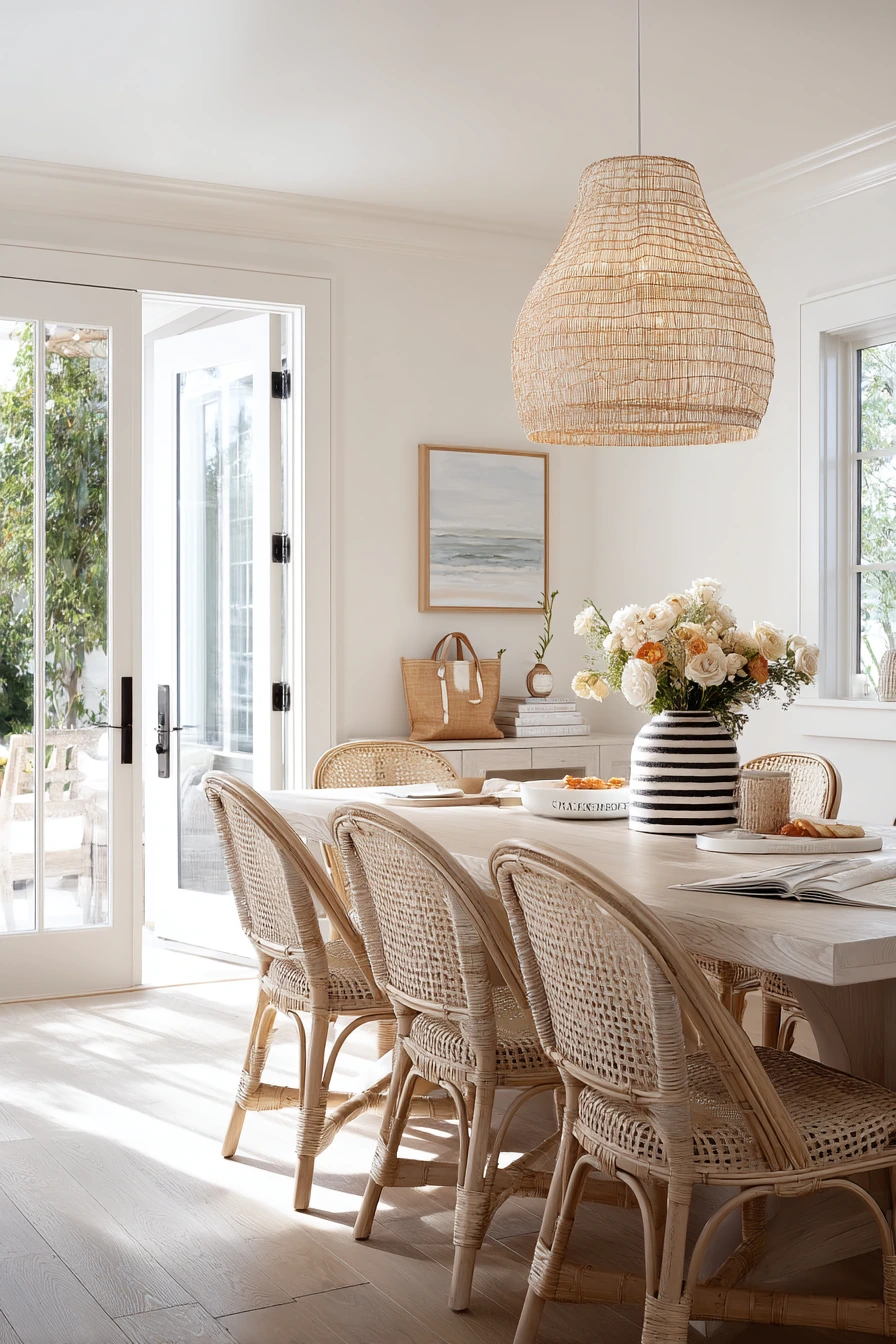
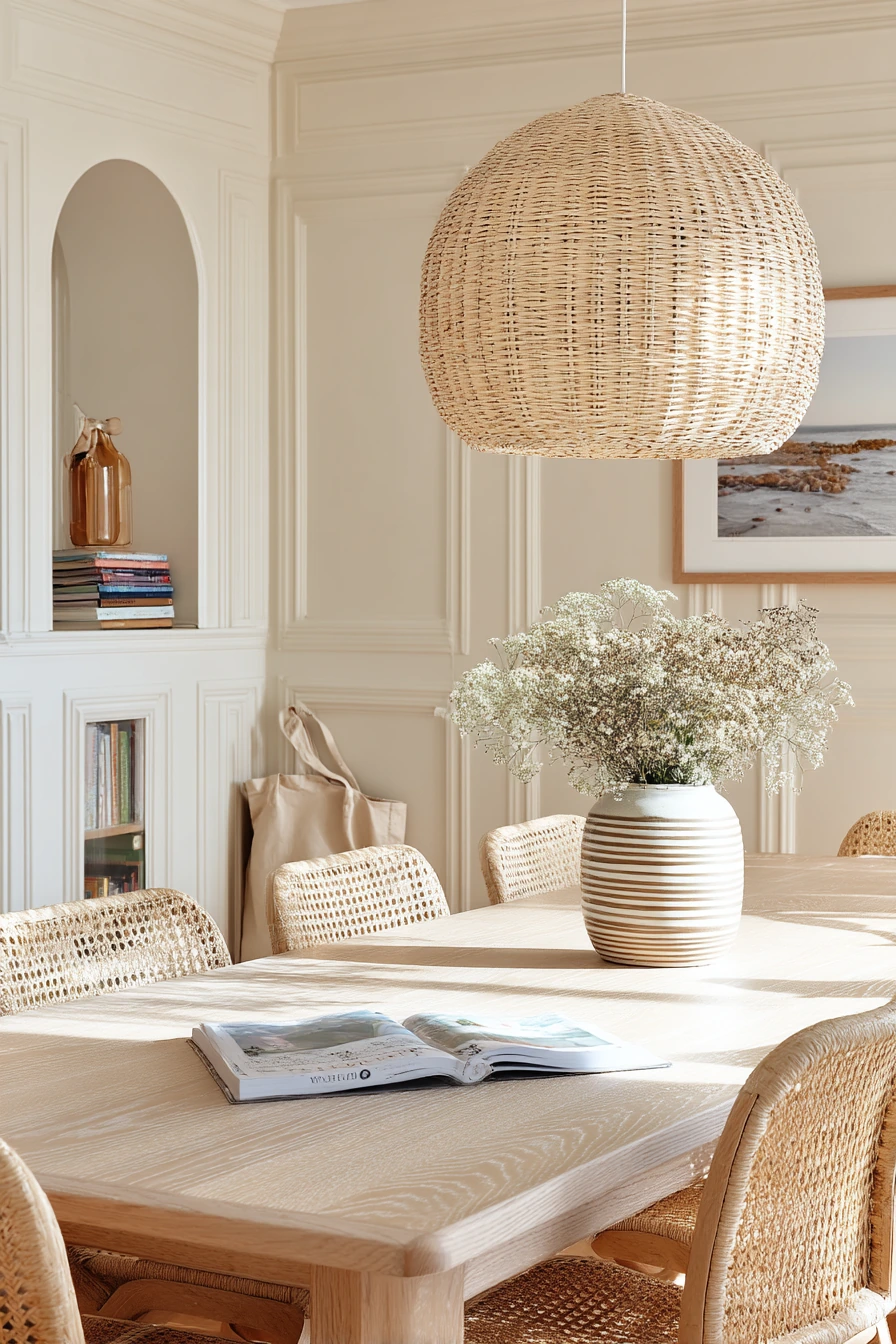
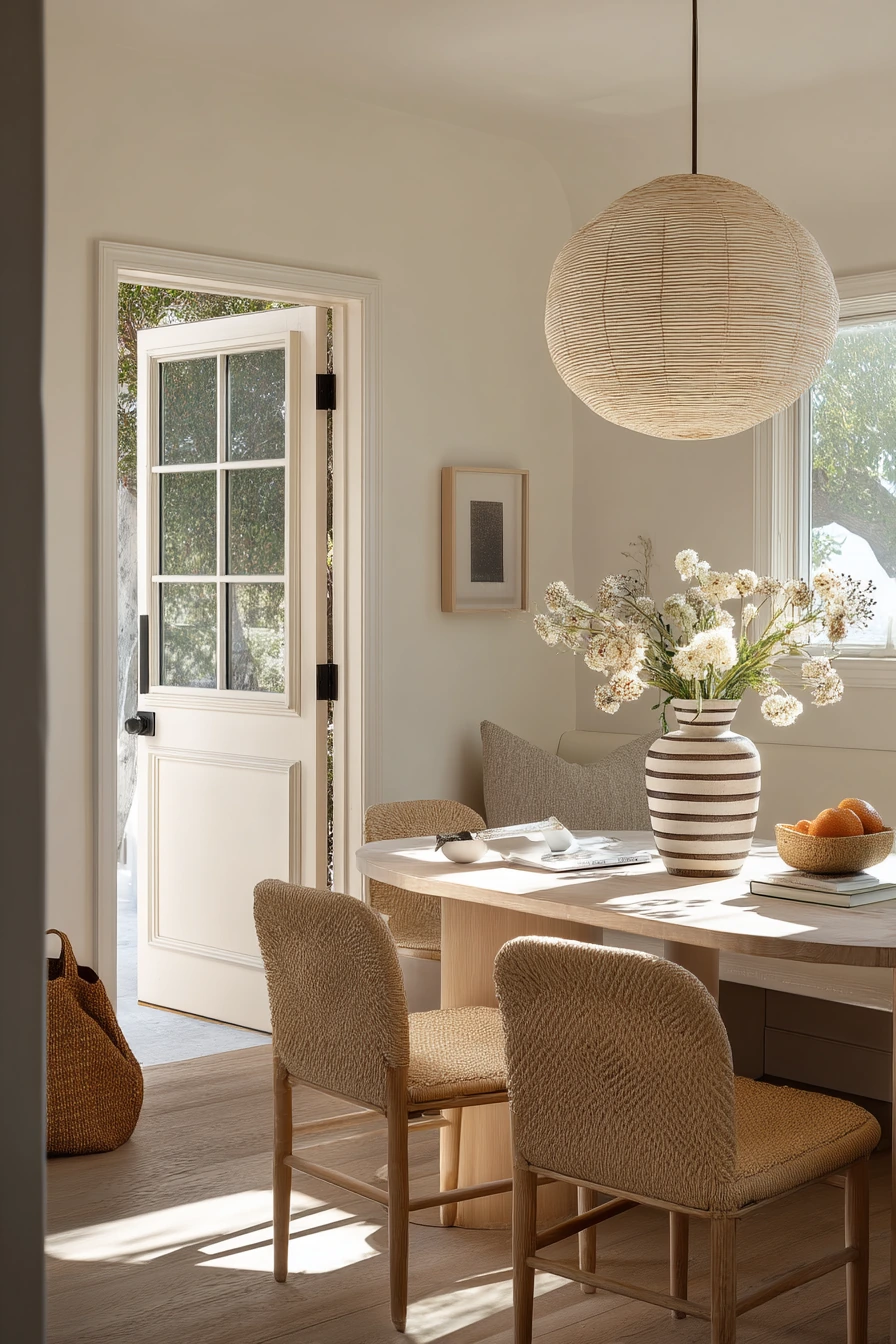
Pale sand-colored wainscoting is a softer alternative to bright white, and it is perfect for a breezy, sun-washed dining room. It pairs well with rounded cane chairs, a bleached wood table, and a woven pendant. The color feels warm in strong window light and still reads calm and airy. Real life items like a beach bag by the door, sunscreen on the console, a paperback open face-down, and salt-flecked flowers fit right in.
To style this look, keep the palette simple: sand, cream, and light wood. Add one striped ceramic vase or a subtle patterned runner to bring in movement without making the room feel busy. Cane chairs add texture, so you can keep wall decor minimal. If you want art, choose one large print with soft colors, or a small group of simple frames above the wainscoting line.
For paint, look for a sandy neutral with a touch of beige, not too pink and not too gray. In a bright room, very pale colors can look washed out, so test a few shades. A satin finish works well on the lower wall because it handles scuffs from chairs and bags. This style also works in open-plan spaces because it blends with many floor colors and does not fight with nearby rooms.
- Choose sand wainscoting to warm up a bright, white-heavy space
- Pair cane chairs with a light wood table for a relaxed feel
- Use a woven pendant to add texture overhead
- Style the console with a tray for sunscreen, keys, and small items
- Add striped accents in a vase or runner for gentle pattern
Pro Design Tip: Repeat the sand tone in at least one other place, like a rug or lampshade, so the wainscoting color feels tied to the room.
Budget Considerations: Cane chairs can be pricey. Save by mixing in secondhand chairs and adding matching seat cushions in a coastal fabric.
7. Charcoal Wainscoting for a Moody City Dining Room

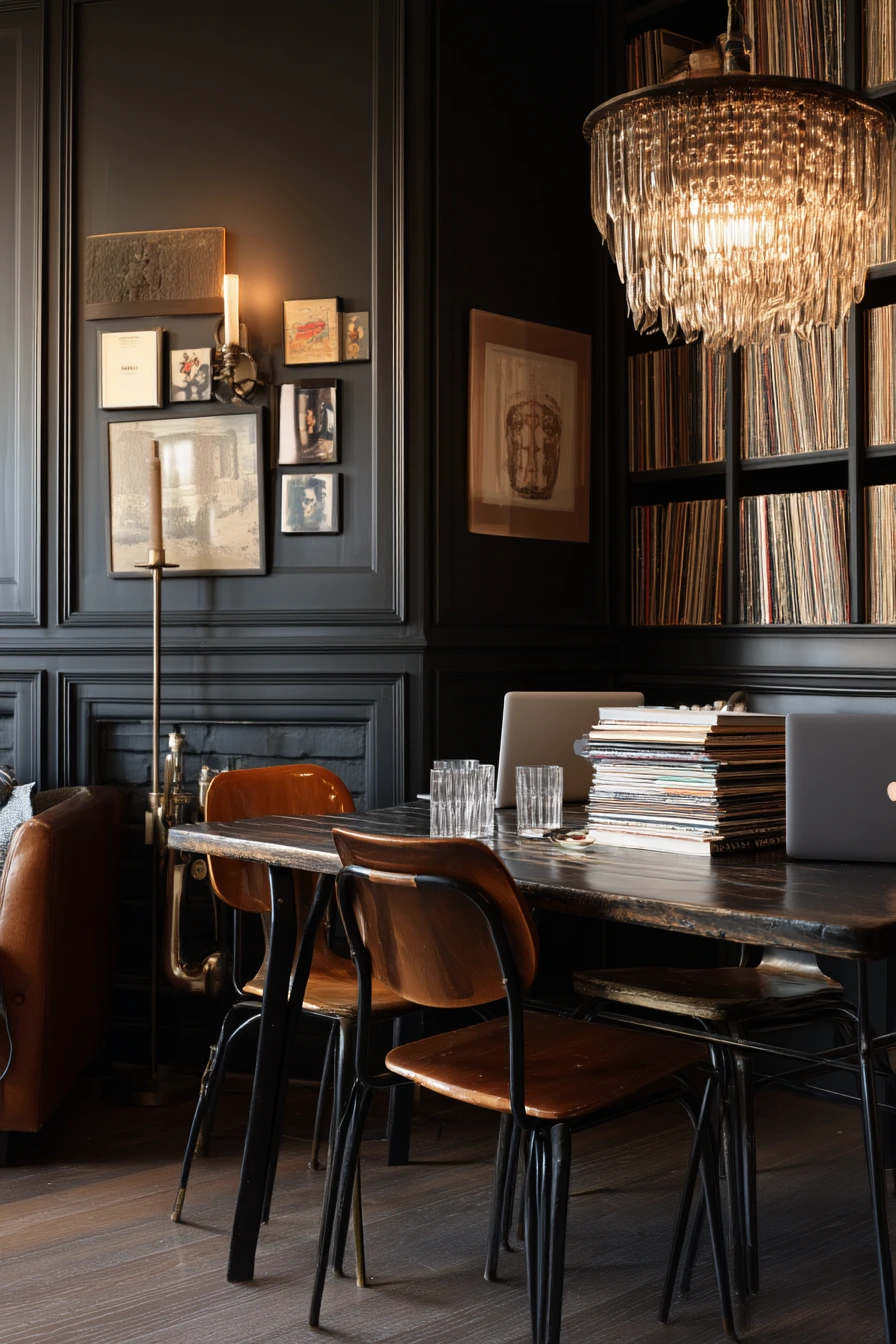
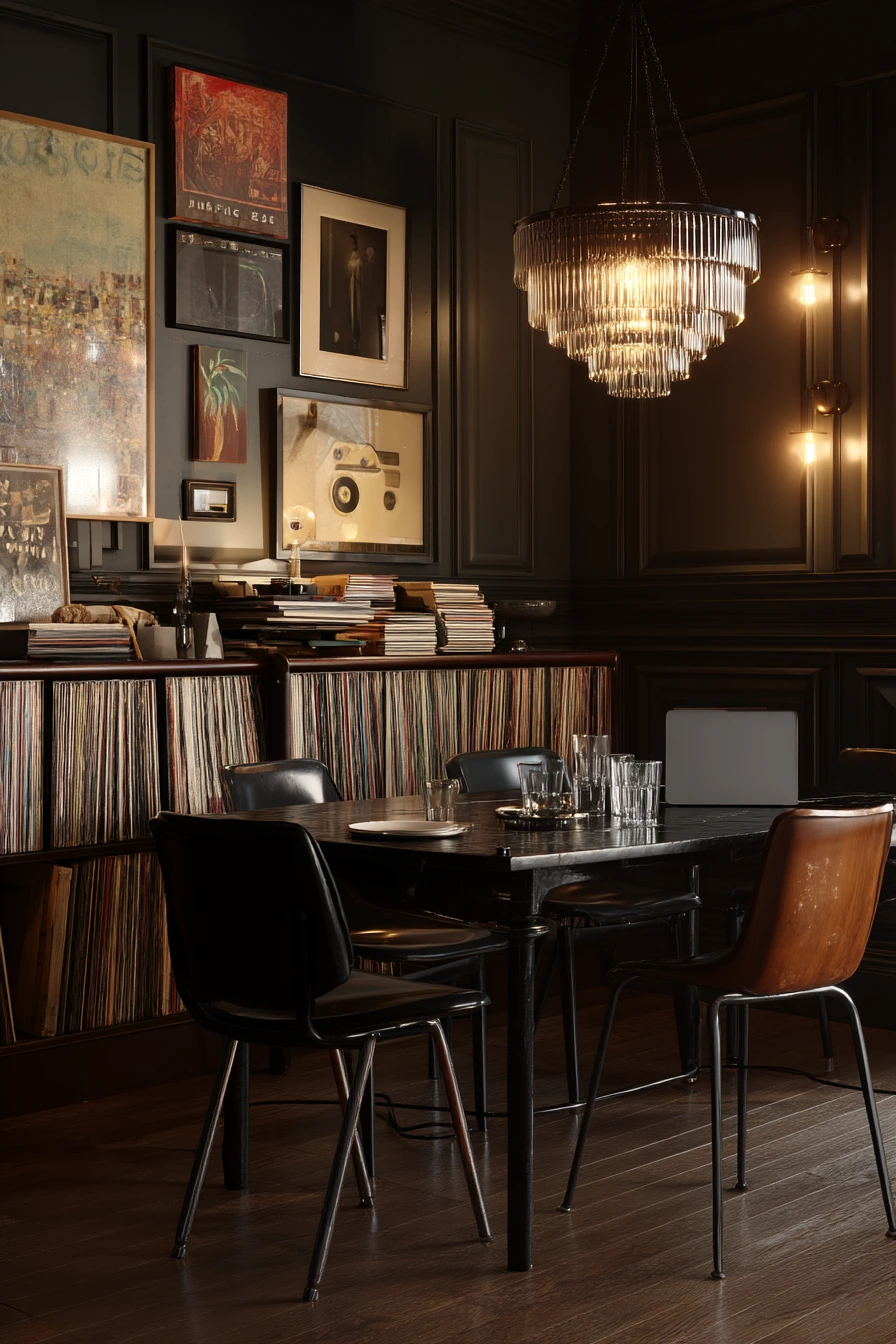
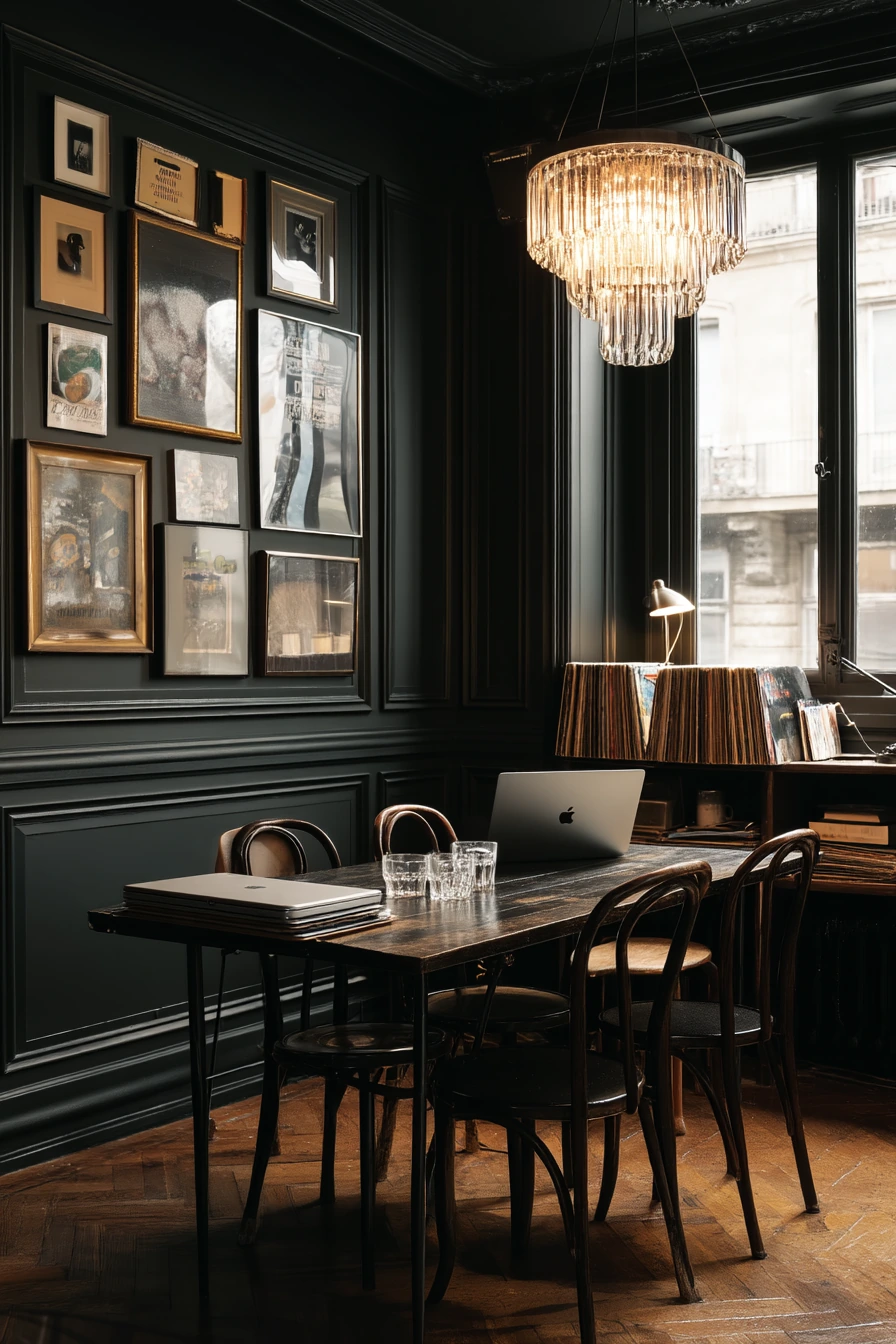
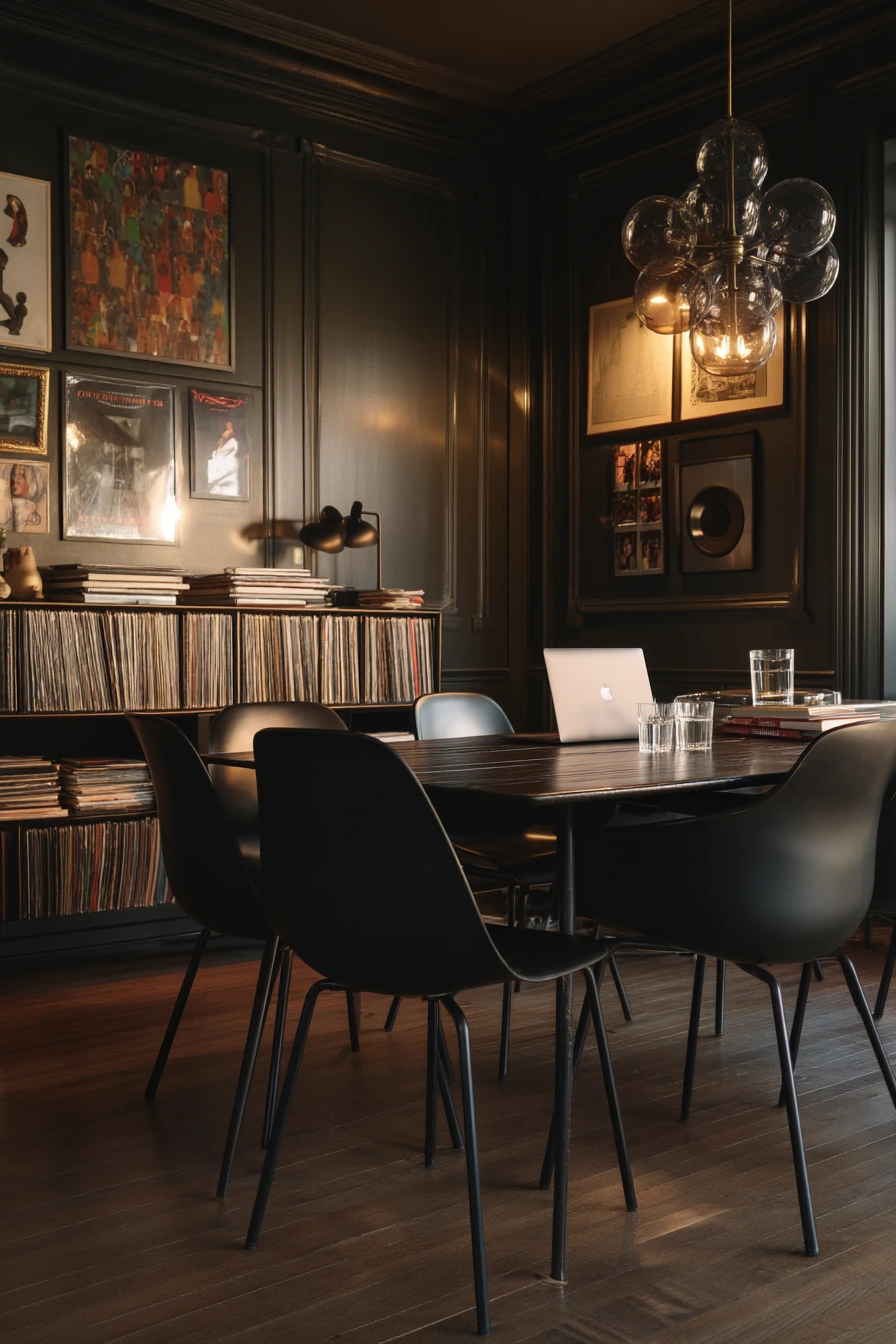
Charcoal wainscoting is a strong choice for a city dining room where you want a moody, intimate feel. It pairs well with black metal table legs, vintage bentwood chairs, and a smoked glass chandelier. In low evening light, charcoal looks rich and hides small marks better than lighter paint. It also helps a narrow gallery wall stand out without needing bright colors.
This look is also very real. A stack of records, two mismatched water glasses, a set of house keys, and a laptop on the sideboard can stay out and still look part of the scene. To style it, use a few warm accents so the room does not feel cold. Try a wood tabletop, brass candle holders, or a textured runner. Keep the gallery wall tight and consistent with black frames or dark wood to match the wainscoting.
Lighting is key. Practical lamps and a little street light spill can make charcoal feel cozy instead of heavy. Use warm bulbs and consider a dimmer if you can. If you are worried the color will shrink the room, keep the upper wall a lighter warm neutral and use crisp white trim at the ceiling. A satin finish on the wainscoting makes it easier to clean while still looking soft.
- Pair charcoal wainscoting with warm wood to add balance
- Use bentwood chairs for a vintage shape that feels light
- Keep a narrow gallery wall with matching frame colors
- Style the sideboard with a tray to hold keys and tech
- Add warm lamp light to soften the dark paint at night
Pro Design Tip: Paint the wainscoting, baseboards, and door trim the same charcoal to create a clean, modern band around the room.
Budget Considerations: Dark paint often needs extra prep for an even finish. Save by using a quality primer and repainting only the lower wall first, then expand later if you love it.

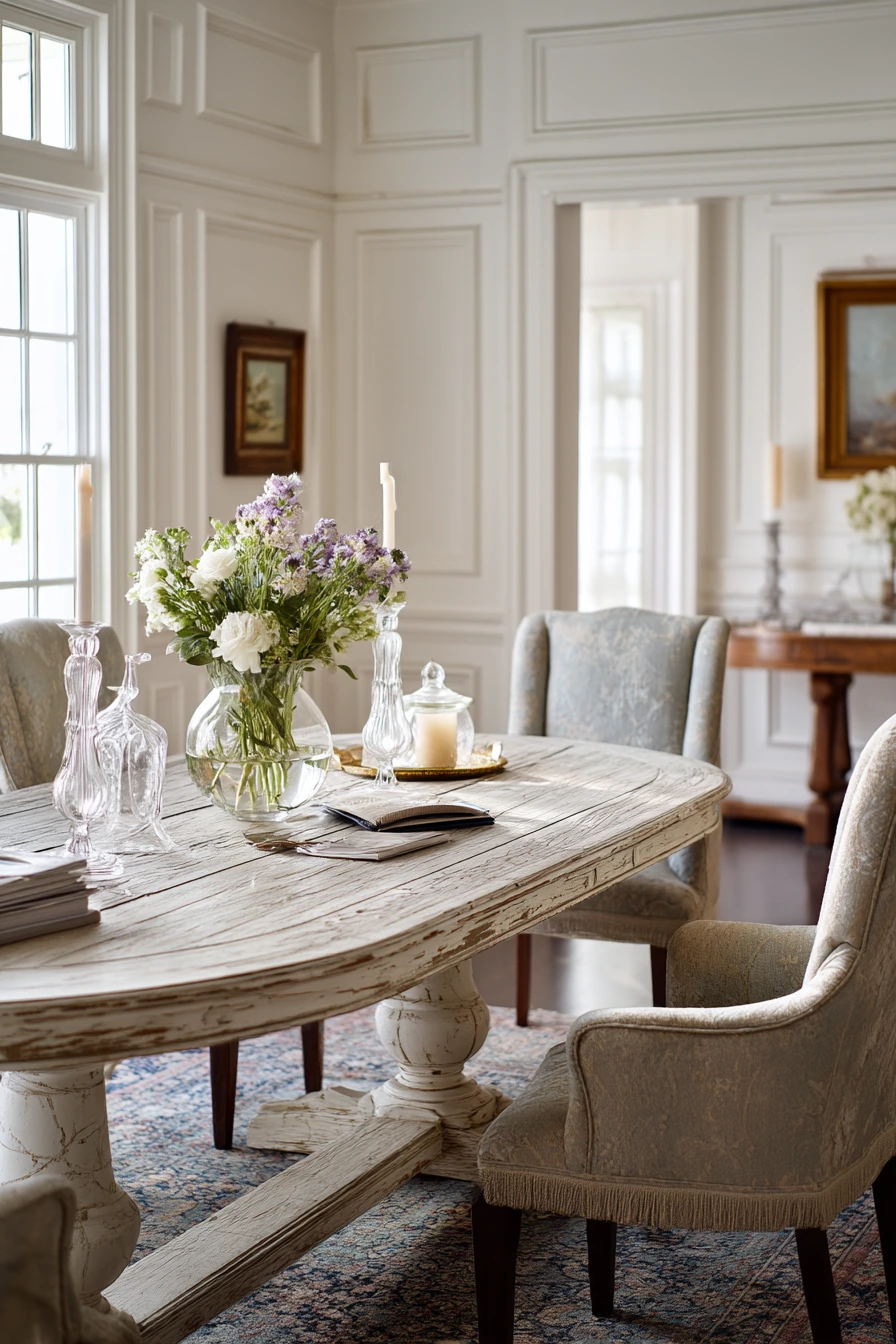
8. Classic Raised-Panel White Wainscoting for a Formal Look

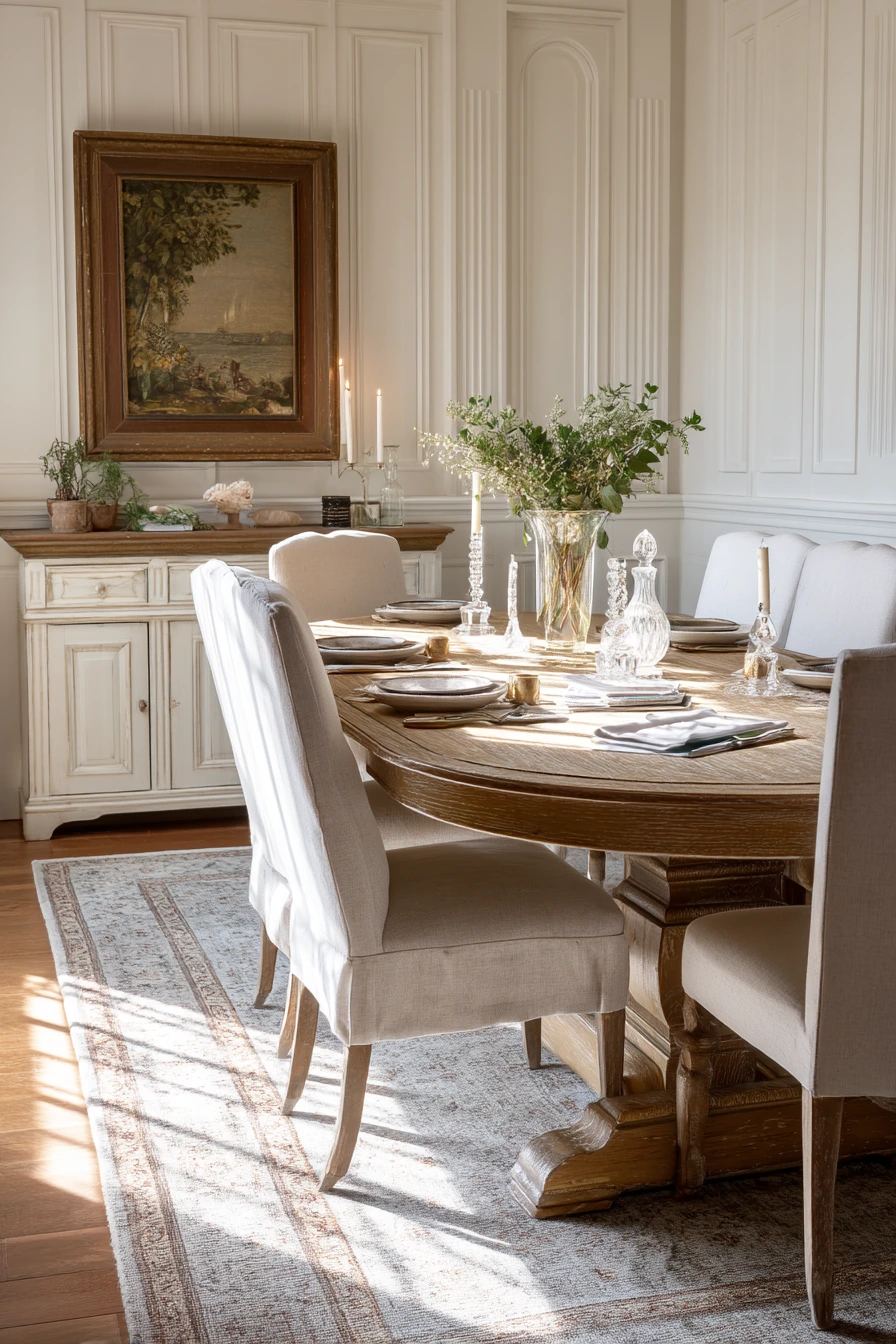
Classic white wainscoting with raised panel detailing brings an heirloom feel to a dining room. It works beautifully with an antique oval table, upholstered host chairs, and a softly aged rug. The room can still be lived-in, with a decanter, dinner candles, a folded mail pile, and a reading glasses case on the buffet. The raised panels add depth and make the space feel finished, even when daily items are out.
To style this look, focus on symmetry and soft layers. Center the table under the light, and keep the buffet top mostly clear with a few grouped items. Candles look right at home here, and they reflect well in glass and mirrors. Upholstered host chairs add comfort and make the room feel more formal without being stiff. If the rug is older, let its colors guide your napkins and art choices.
For paint, a classic white in satin is common because it highlights the panel edges and cleans well. If you want a more modern take, use a softer white and reduce the shine. Wainscoting height matters in a formal room. Taller panels can look grand, while shorter panels feel more traditional. If you have high ceilings, taller wainscoting can help the room feel balanced.
- Use raised panels for depth and a formal dining room feel
- Pair with an antique oval table to echo the classic lines
- Keep buffet styling simple with candles and one decanter
- Add an aged rug to soften the crisp white trim
- Choose upholstered host chairs for comfort and polish
Pro Design Tip: Align panel spacing with key furniture widths, like the buffet and windows, so the trim looks custom to the room.
Budget Considerations: Raised panel work can add up. To cut costs, do raised panels on the main wall and use simpler flat trim on the other walls.
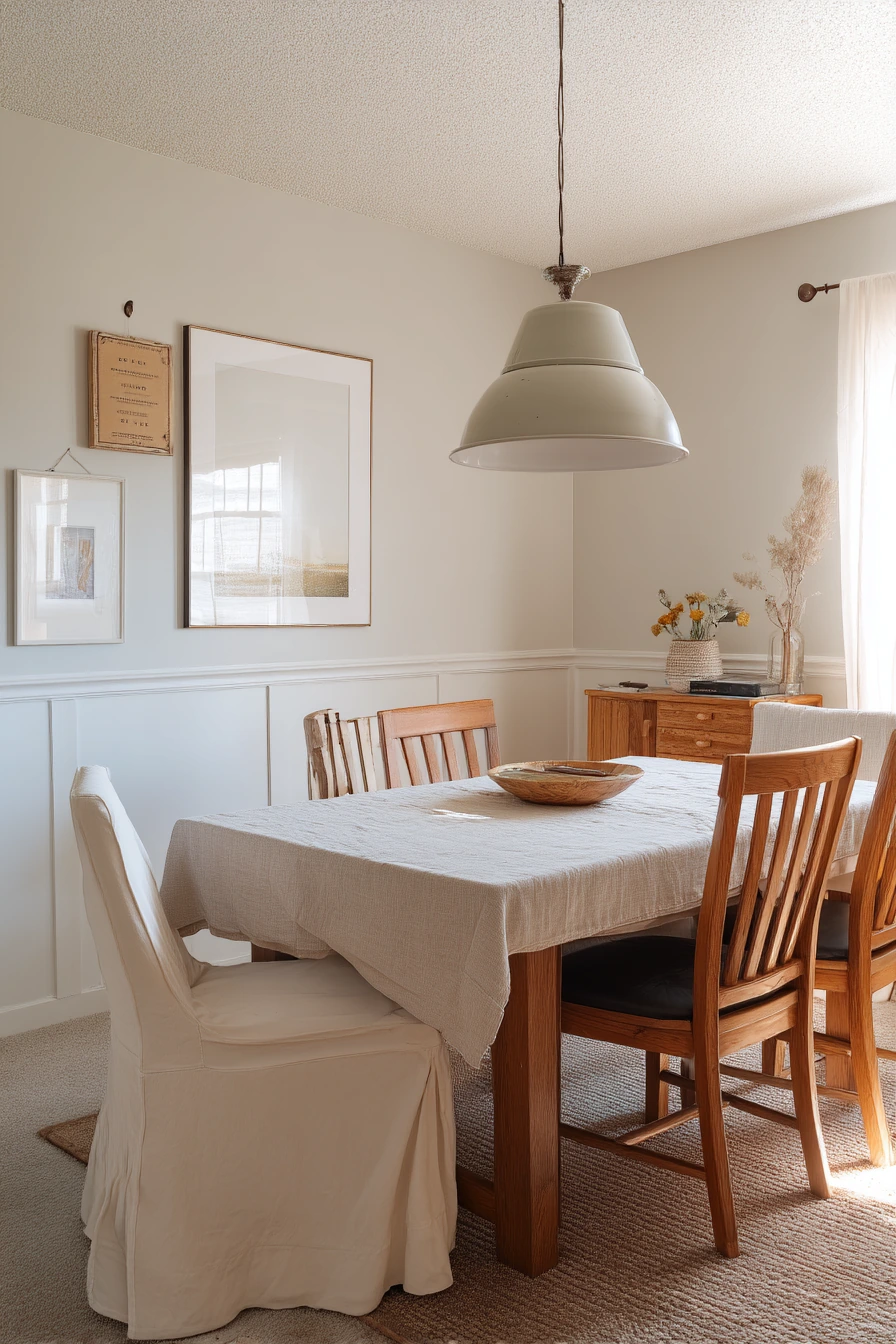
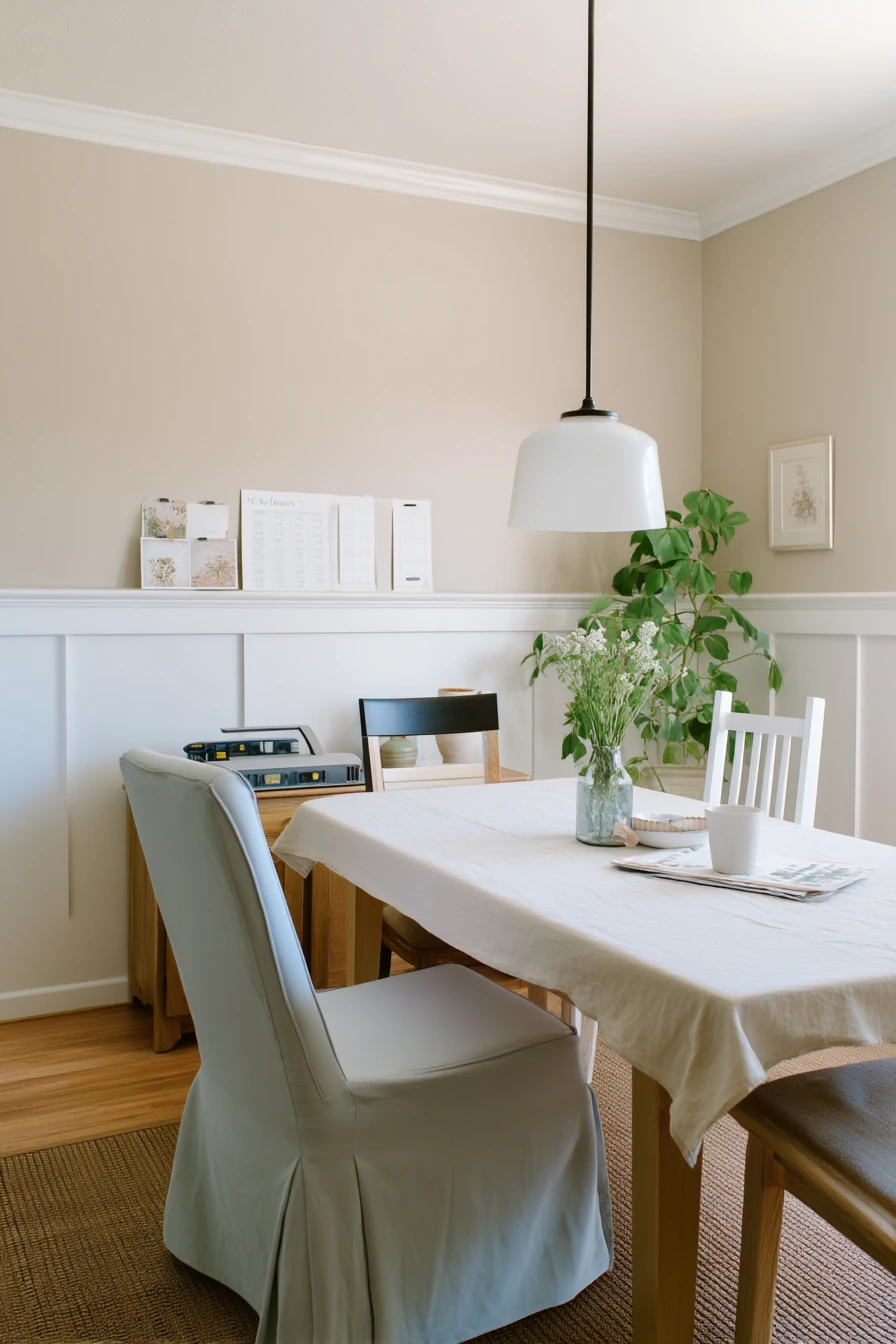
9. Budget Dining Room Wainscoting with Chair Rail and Fresh Paint
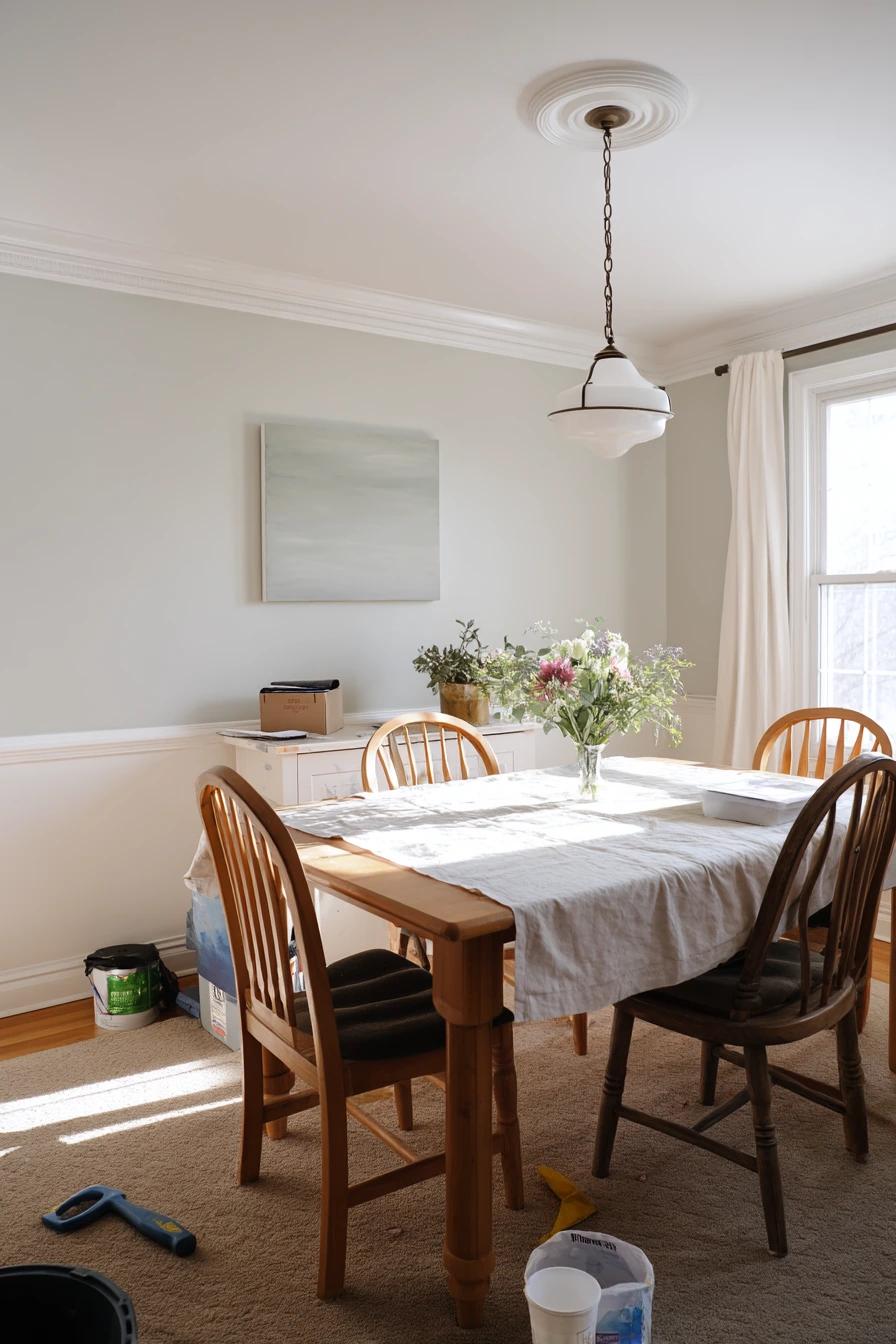
A budget-friendly dining room refresh can still look high end when the basics are done well. Painting the lower walls and adding a simple chair rail gives the wainscoting effect without full paneling. It works with a secondhand table, slipcovered chairs, and a thrifted pendant. The room can look practical and hopeful, even with a paint sample card on the sideboard, an open toolbox, a takeout cup, and a rolled drop cloth in the corner.
To style it, keep the color contrast clean. A light lower wall with a slightly warmer upper wall can make the space feel taller. Slipcovered chairs are great here because they soften the look and hide wear. Add one simple centerpiece, like a bowl of fruit, and keep the rest of the table clear. If you are still mid-project, use a tray to group tools and samples so the room feels less chaotic.
For DIY success, prep matters more than fancy materials. Patch holes, sand rough spots, and use painter’s tape for a crisp chair rail line. Choose a durable paint for the lower wall since dining chairs rub it daily. If you want extra detail later, you can add picture-frame molding inside the chair rail area after the paint is done. This staged approach spreads the cost and keeps the project manageable.
- Add a chair rail to create a clear wainscoting line
- Use two paint tones to make the room feel taller
- Choose slipcovered chairs for an easy, clean look
- Thrift a pendant light to upgrade the room fast
- Group project items on a tray to keep the space usable
Pro Design Tip: Run the chair rail around the whole room at one consistent height so the DIY looks professional, even with simple materials.
Budget Considerations: Shop clearance paint or use a color match from a sample card. Secondhand furniture and a new coat of paint often cost less than new trim work.
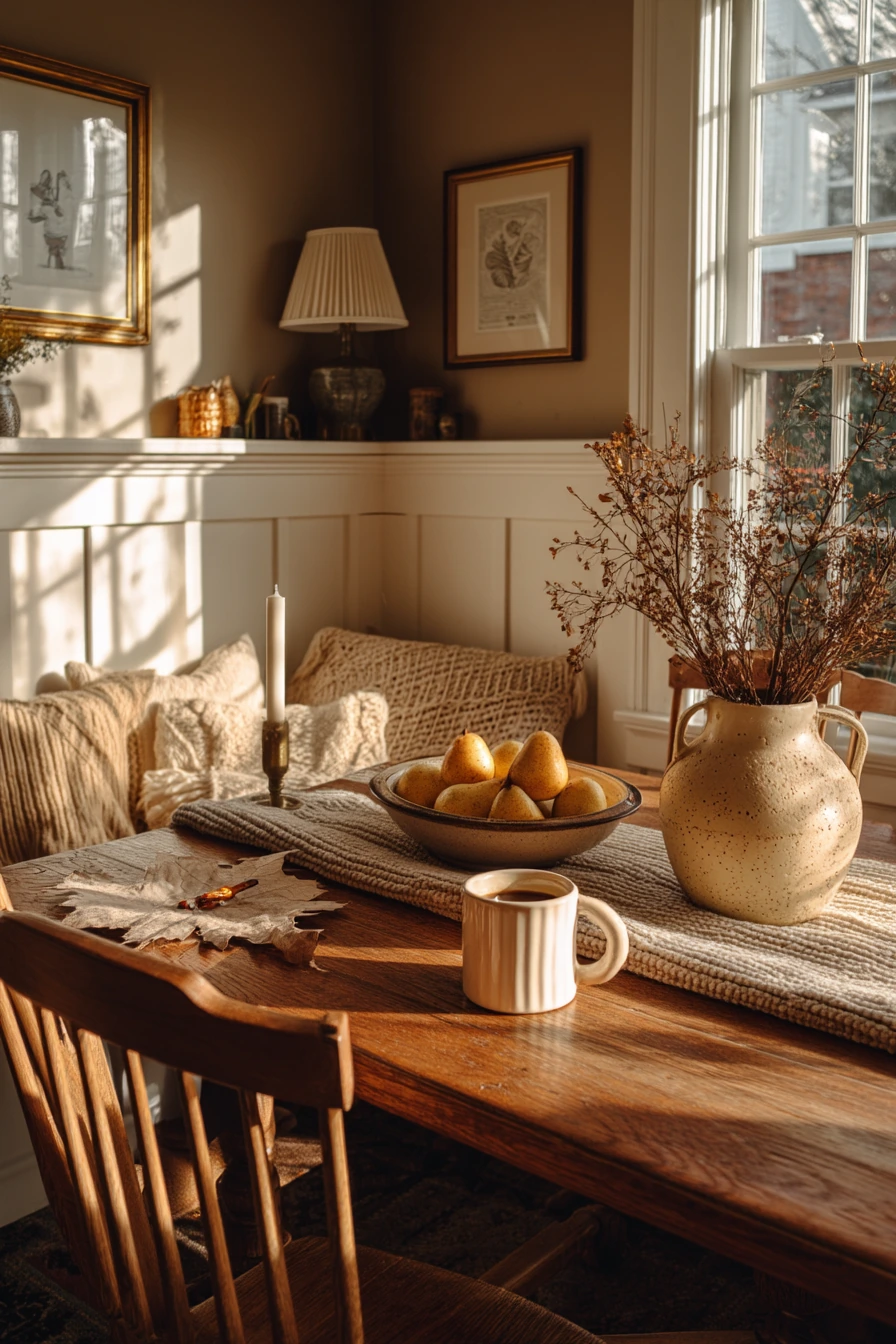

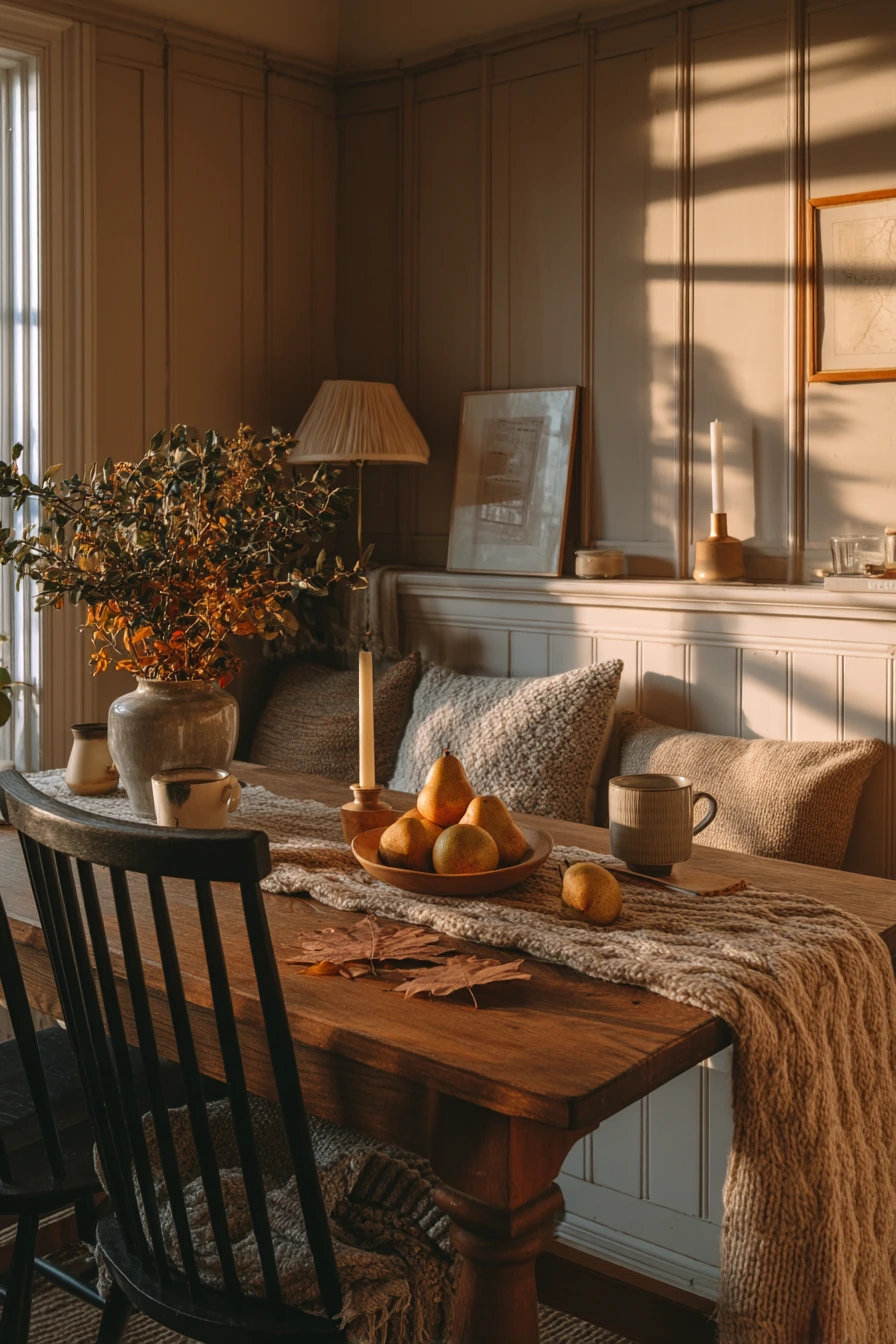
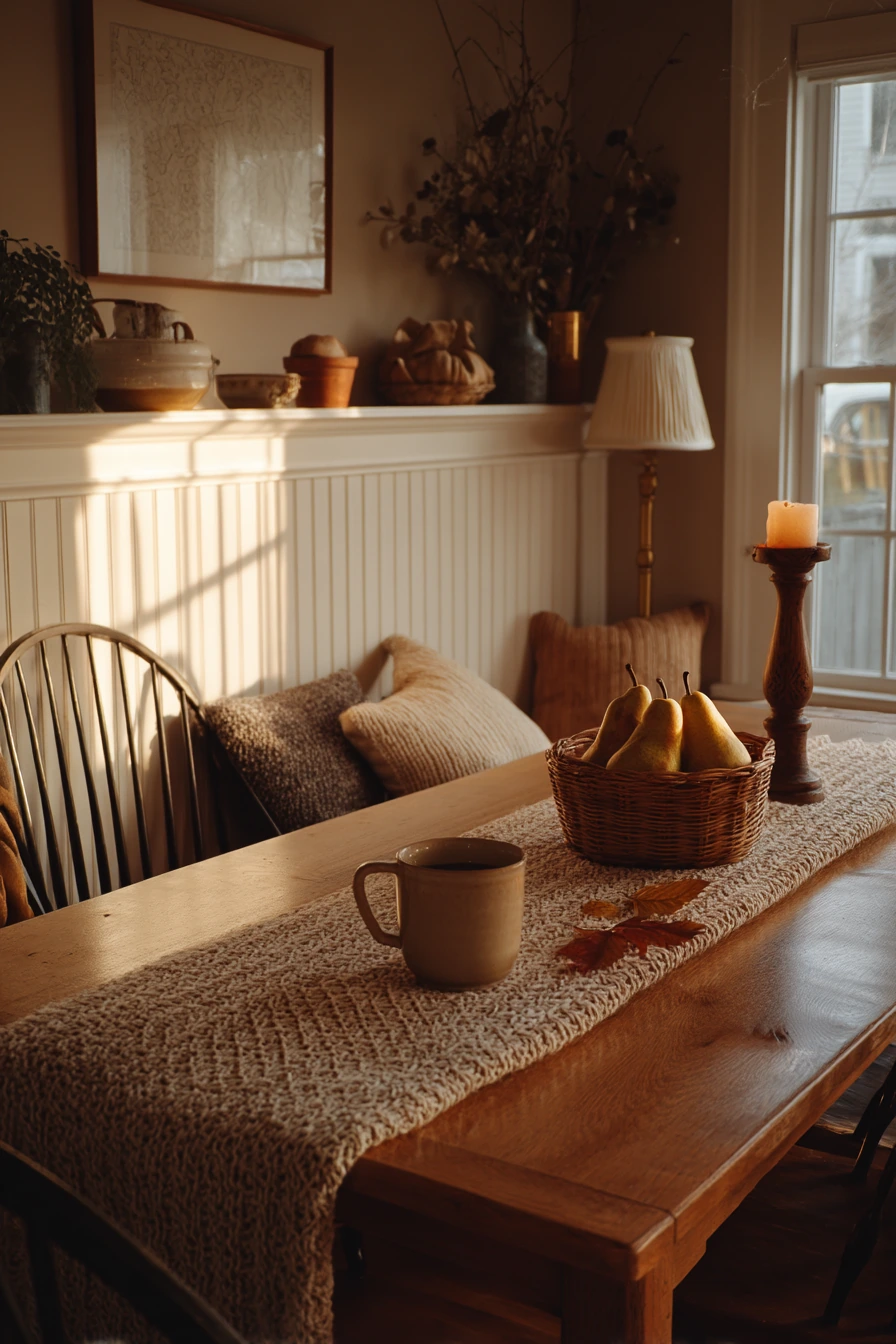
10. Cream Wainscoting for a Cozy, Hygge-Inspired Dining Room
Cream wainscoting with warm taupe upper walls creates a cozy dining room that feels soft and welcoming. It pairs well with an oak table, spindle chairs, and a low centerpiece of pears and branches. In golden hour light, the cream paint glows and the room feels quietly festive. Real life touches like a knit throw on the bench, a candle snuffer, a child’s leaf craft, and a mug with tea steam fit the mood.
To style this look, focus on texture. Add a knit throw, a simple runner, and a centerpiece that stays low so people can talk across the table. Spindle chairs bring a light, classic shape that works with many styles. Keep decor in warm tones, like pears, branches, and natural wood. A single lamp on in the corner helps the space feel warm after dark, even if the overhead light stays off.
When picking cream paint, test it against your table and flooring. Some creams look yellow next to oak, while others look gray. Taupe on the upper wall is a good partner because it feels calm and grown up. A satin finish on the wainscoting is practical for cleaning, but you can keep the upper wall in eggshell for a softer look. If you want more character, add a narrow ledge above the wainscoting for seasonal prints or small pottery.
- Pair cream wainscoting with taupe walls for a warm, cozy palette
- Use a low centerpiece like pears and branches for easy hosting
- Add a bench throw to bring in softness and comfort
- Light one lamp in the evening to keep the mood warm
- Display kids crafts in a frame so it looks intentional
Pro Design Tip: Use layered lighting, like a pendant plus one lamp, so cream wainscoting looks warm at night and not flat.
Budget Considerations: You can copy the cozy look with paint and textiles. Swap in budget spindle chairs or secondhand oak pieces, then spend a little on warm bulbs and a simple runner.
Dining room wainscoting ideas work best when they match your daily life, not just a perfect photo. Think about light, wall wear, and how you use the table.
Start with one clear plan: pick a style, set a height, and choose a paint color you like in both morning and evening light. Then add small styling touches that make the room feel easy to use.
FAQ
1. What is the best height for dining room wainscoting?
A common choice is one third of the wall height. You can also line it up with window sills or the back height of dining chairs for a balanced look.
2. Is beadboard or picture-frame molding better?
Beadboard adds texture and can make a wall feel taller. Picture-frame molding looks more tailored and is easier to customize with simple trim pieces.
3. What paint finish should I use on wainscoting?
Satin or semi-gloss is easier to wipe clean and works well on the lower wall. Use eggshell or matte above if you want a softer look.
4. Can I do wainscoting in a rental?
Yes. Many renters use removable trim methods and keep the design simple. Always check your lease and test your removal plan in a small spot first.
5. Do dark wainscoting colors make a room feel smaller?
They can, but good lighting and a lighter upper wall help. Dark lower walls often add depth and hide scuffs, which can be a plus.
6. How do I style a dining room with wainscoting without clutter?
Use one or two larger pieces, like a mirror or one main artwork. Keep the buffet top grouped with trays and limit small items.
7. What is the cheapest way to get a wainscoting look?
Add a chair rail and paint the lower wall a different color or sheen. This gives the same visual structure with minimal materials.
Choose one idea from this list and try it in your own space. A simple chair rail and the right paint can make a dining room feel finished fast.