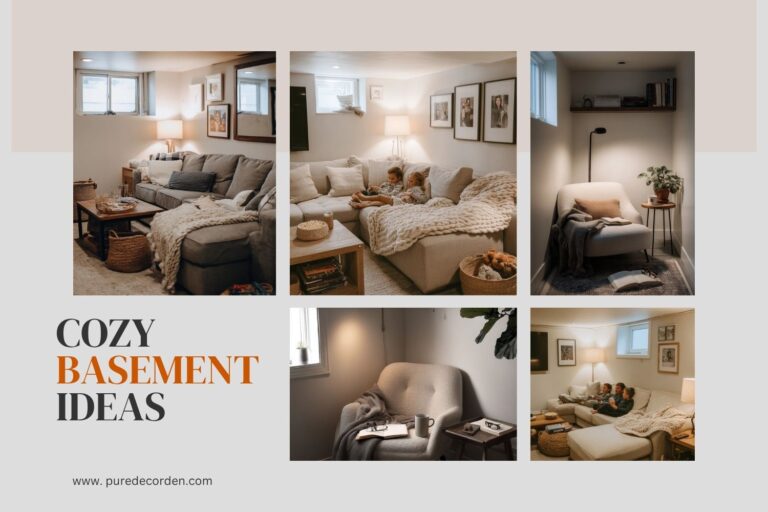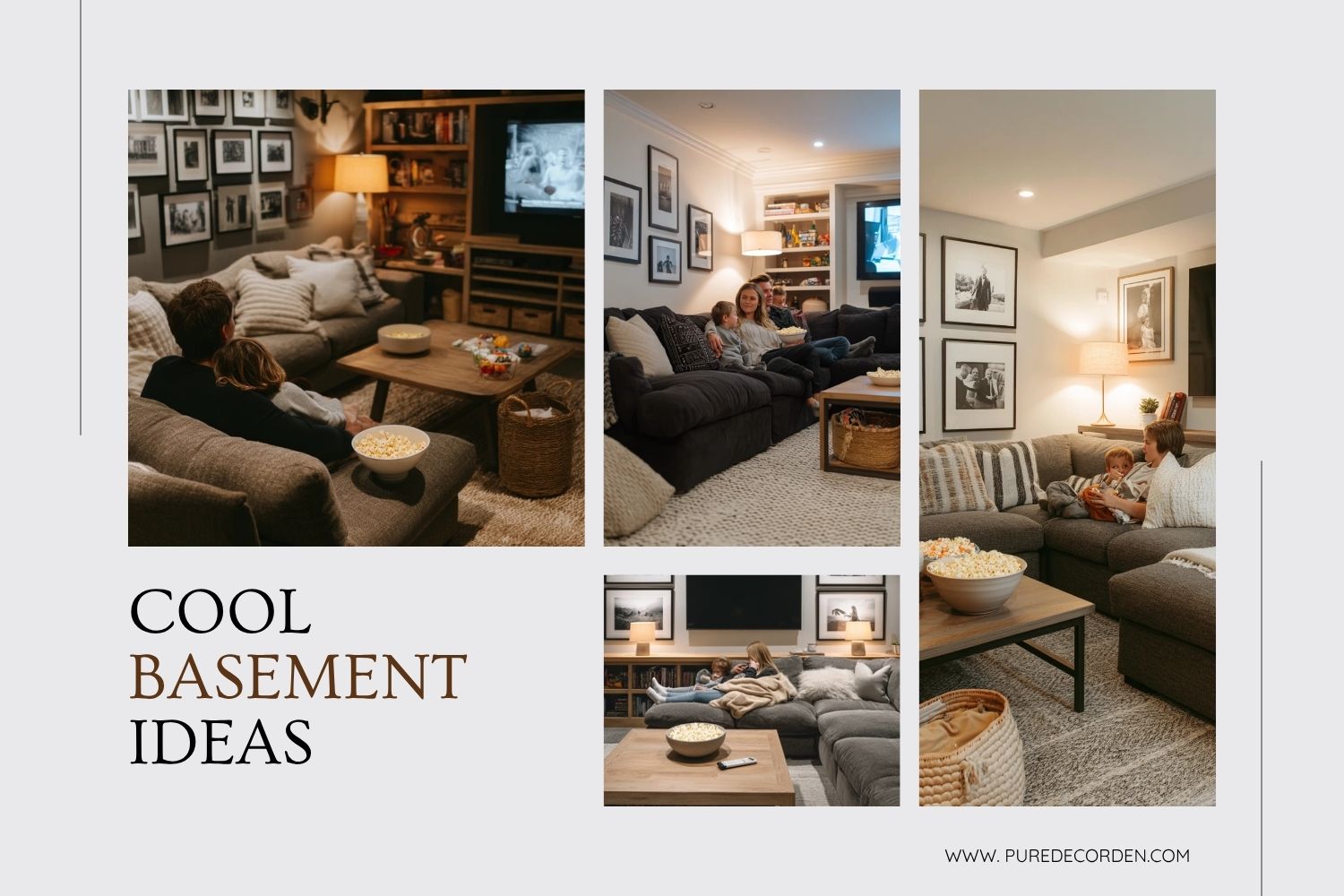

Looking for cool basement ideas that feel real, not staged. A basement can be a cozy living room, a quiet work-from-home nook, a teen hangout, or even a guest suite. The best part is you can design it around how your family actually lives.
This guide breaks down 10 finished basement ideas based on everyday scenes like a movie night on a deep sectional, a slim walnut desk with a laptop charger, and a compact wet bar with warm lighting. Each space includes simple styling steps you can copy without a big remodel.
You will also get practical tips for comfort, storage, and lighting, since basements often have small window wells and darker corners. Use these ideas to plan a layout, pick the right rugs and lamps, and keep clutter under control.
If you came from Pinterest, save the ideas that match your home and start with one small change, like adding a textured rug, a toy basket, or better task lighting. Small upgrades make a basement feel finished fast.
1. Cozy Basement Movie Night Living Room
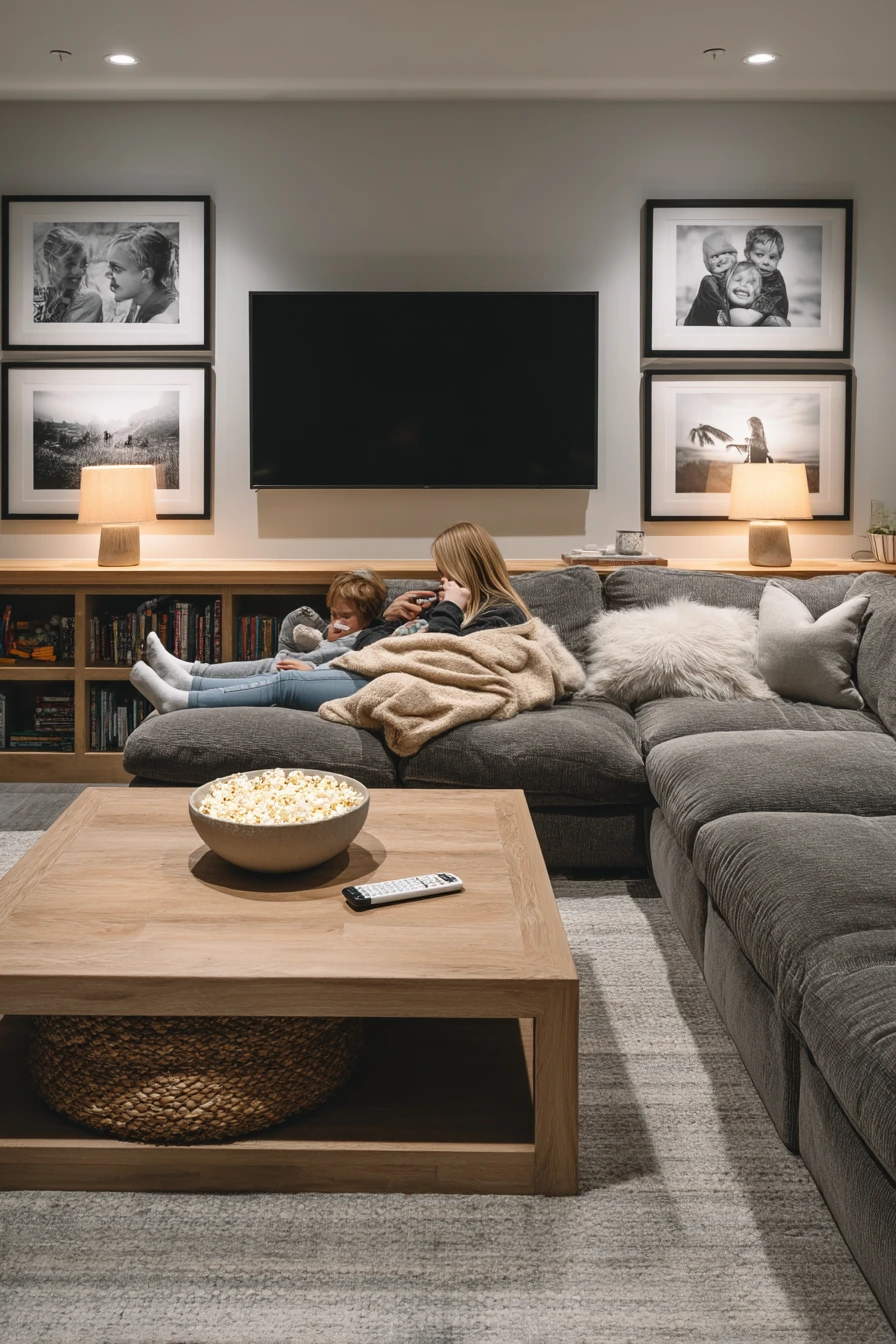
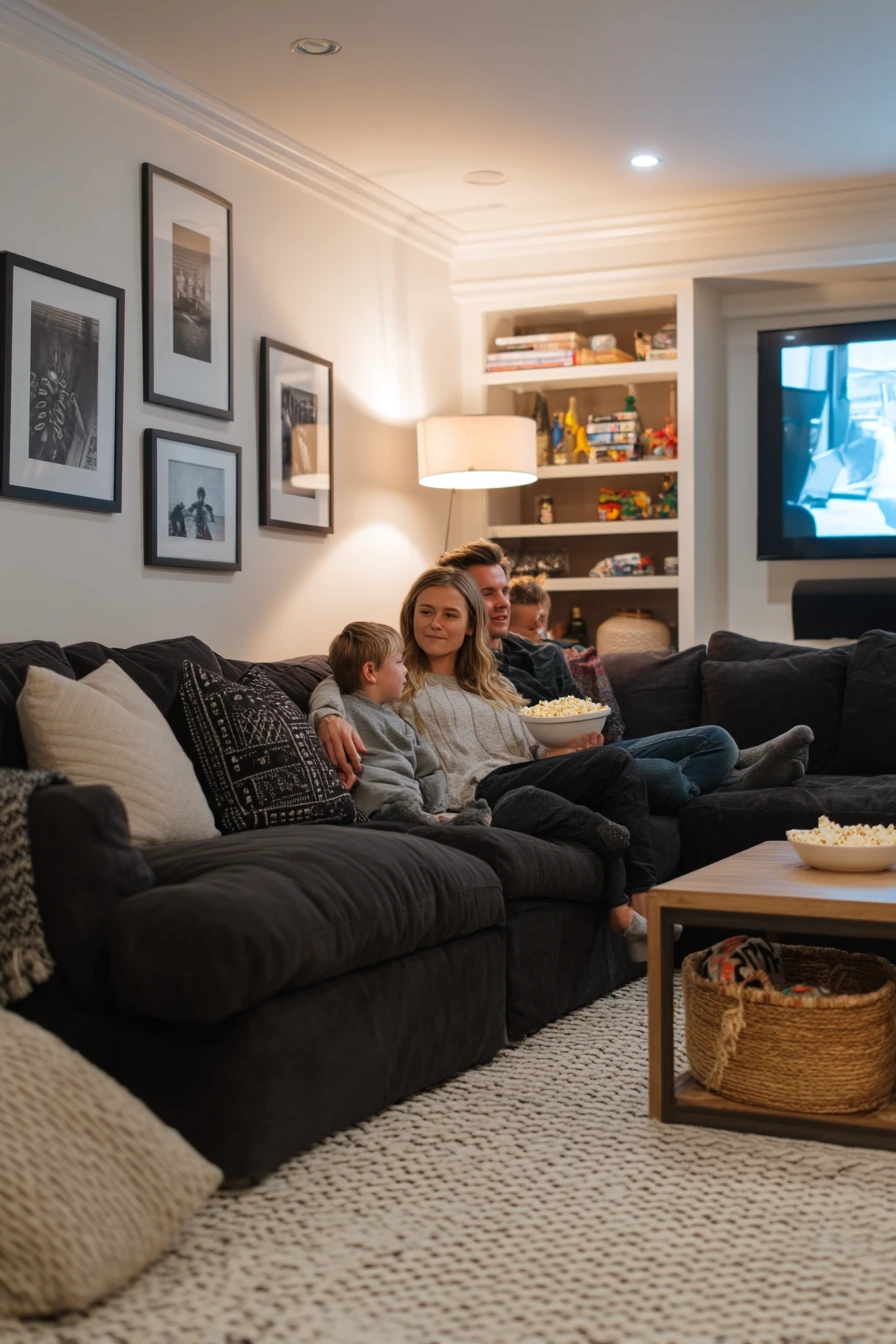
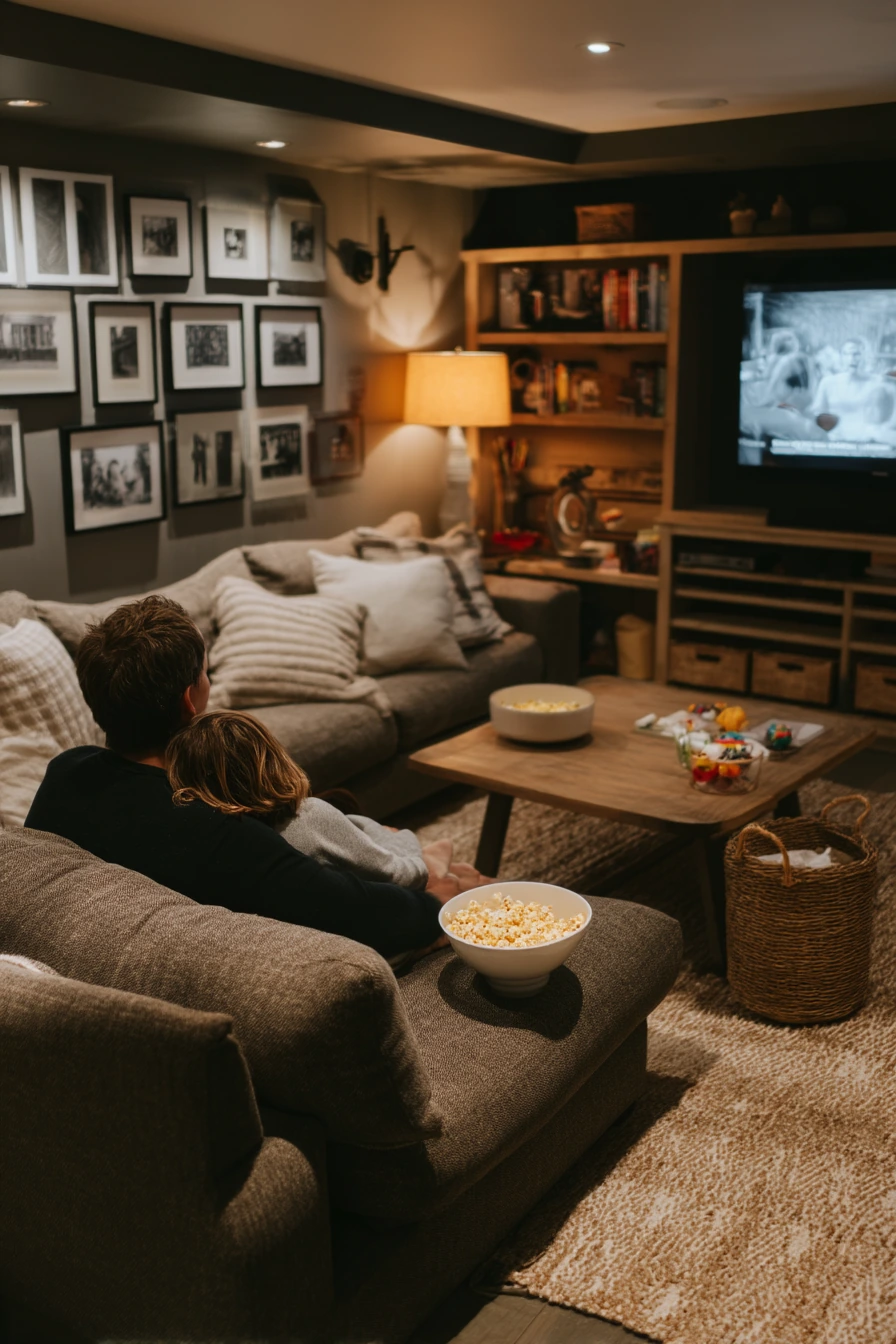
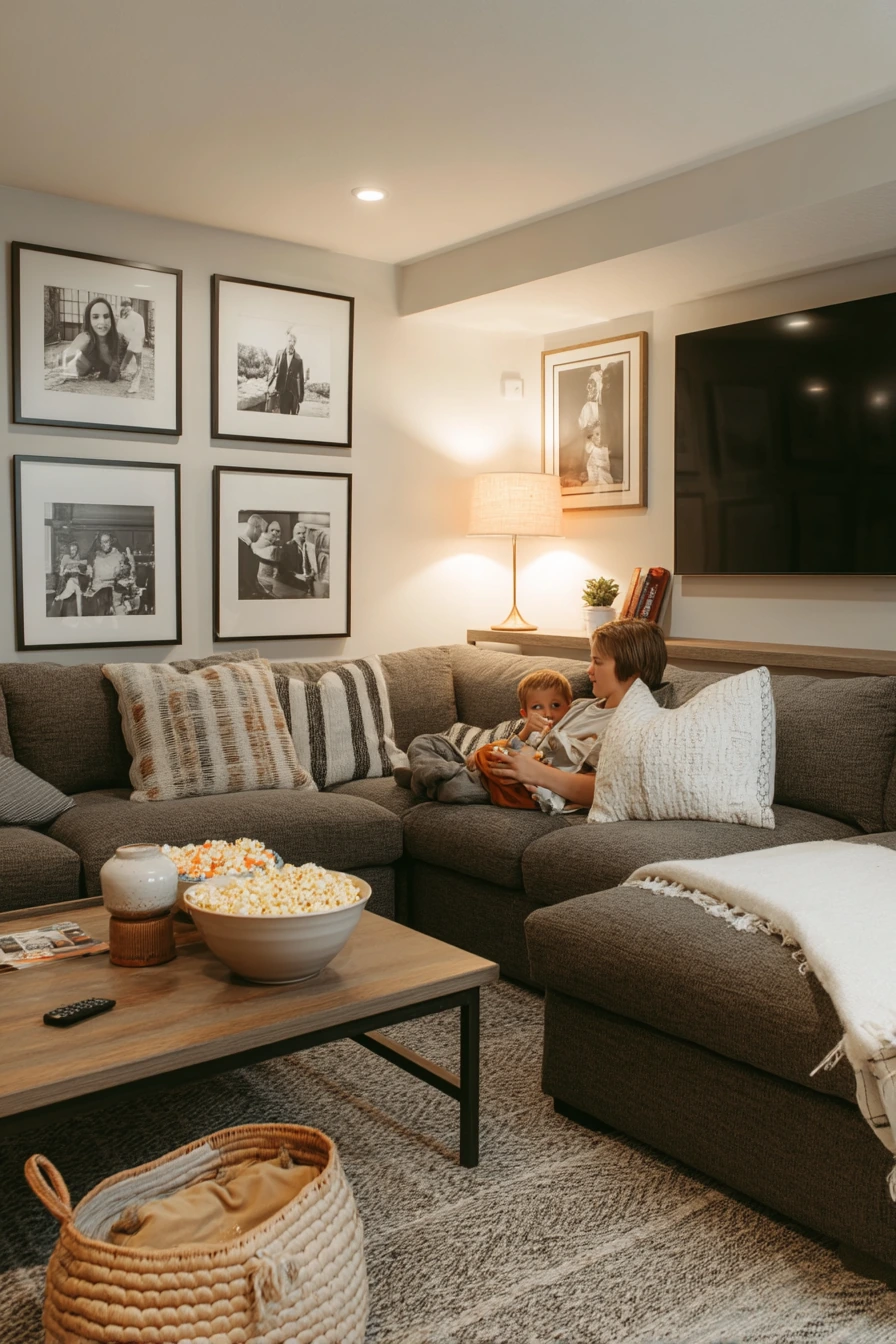
A family basement living room works best when it is built for real life. A deep sectional makes movie night easy, and a built-in media wall keeps the TV area clean. Add a low oak coffee table for snacks, remotes, and a half-finished popcorn bowl. A textured rug softens sound and makes bare feet happy.
Make the room feel lived-in, not messy. Use a toy basket tucked beside the sofa so cleanup takes one minute. Keep charging easy by running a cable along the back of the sectional and placing a small tray on an end table for phones. Add framed black-and-white family photos to bring warmth to the media wall and to balance the faint TV glow.
Lighting is what makes this space feel cozy. Mix warm lamps with dimmable bulbs so faces do not look harsh at night. If you have a high window well, use a simple shade to control glare. Choose fabrics that hide wear, like a performance weave on the sectional and a rug with a little pattern.
- Float the sectional a few inches off the wall to make the room feel bigger
- Use a lidded basket for toys and another small bin for blankets
- Pick a coffee table with rounded corners for kids
- Add a slim side table for drinks so spills stay off the sofa
- Hang photos in a tight grid for a calm, clean look
Pro Design Tip: Install LED bias lighting behind the TV or inside the media wall shelves to reduce eye strain and make the room feel more finished.
Budget Considerations: Built-in media walls can be costly; use ready-made cabinets and add trim and paint for a similar look at a lower price.
2. Compact Basement Work-From-Home Nook
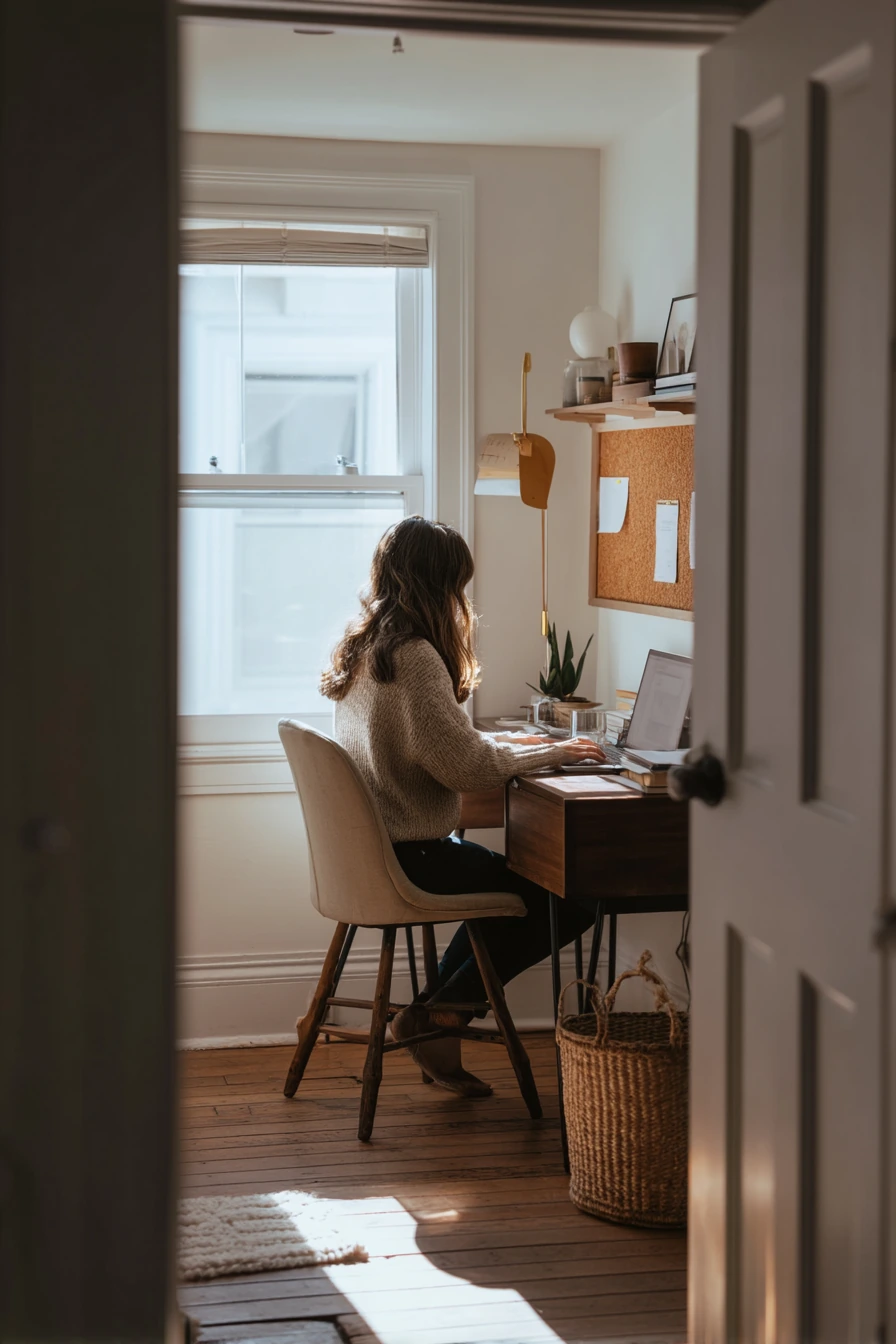
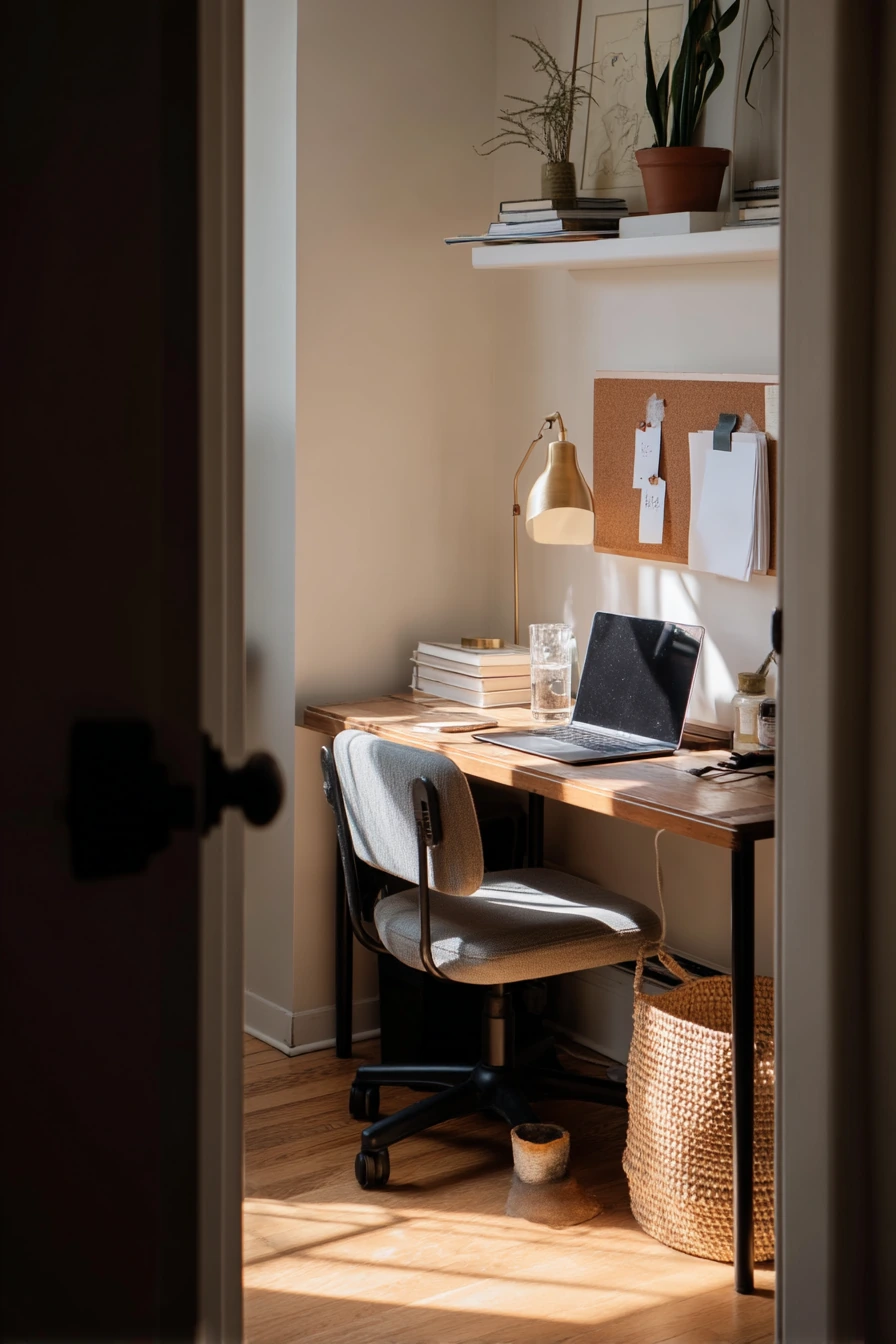
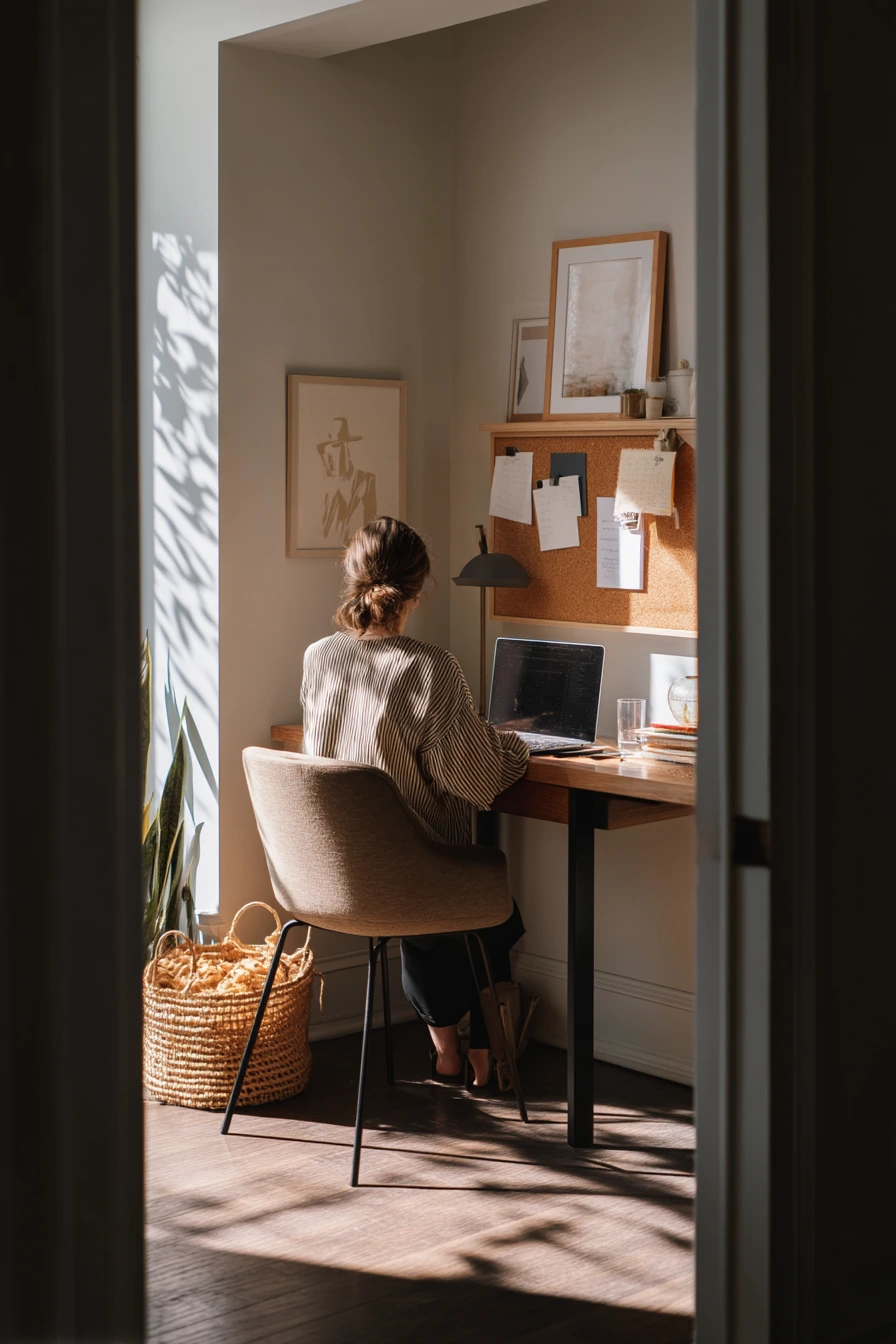
A compact basement work-from-home nook can be calm and practical if you keep it simple. Start with a slim walnut desk that does not block the walkway. Pair it with an ergonomic chair so you can work longer without back pain. A warm task lamp helps when daylight from a small window well is limited.
To keep the space quiet and focused, give every small item a home. Use a woven basket to store cords and chargers so the floor stays clear. Add a cork pinboard above the desk for notes, a short to-do list, and one photo that makes you smile. Stacked notebooks look nice, but keep only what you use weekly so the desktop stays open.
Style it like a real corner of the house, not an office cubicle. A small snake plant adds life and handles low light. Use pale painted walls to bounce light around the nook. If the doorway view shows the desk, keep the laptop charger tucked and place a water glass on a coaster for a neat, finished look.
- Choose a desk with one drawer to hide small tools
- Mount a power strip under the desk to reduce cable clutter
- Add a pinboard or small shelf at eye level for daily items
- Use a soft rug pad to make the chair roll better on carpet
- Keep one basket just for cords, adapters, and extra pens
Pro Design Tip: Use a wall sconce or clamp lamp instead of a table lamp to free up desk space in a tight corner.
Budget Considerations: If a new ergonomic chair is not in the budget, start with a seat cushion and lumbar pillow and upgrade later.

3. Cool Teen Basement Hangout Space


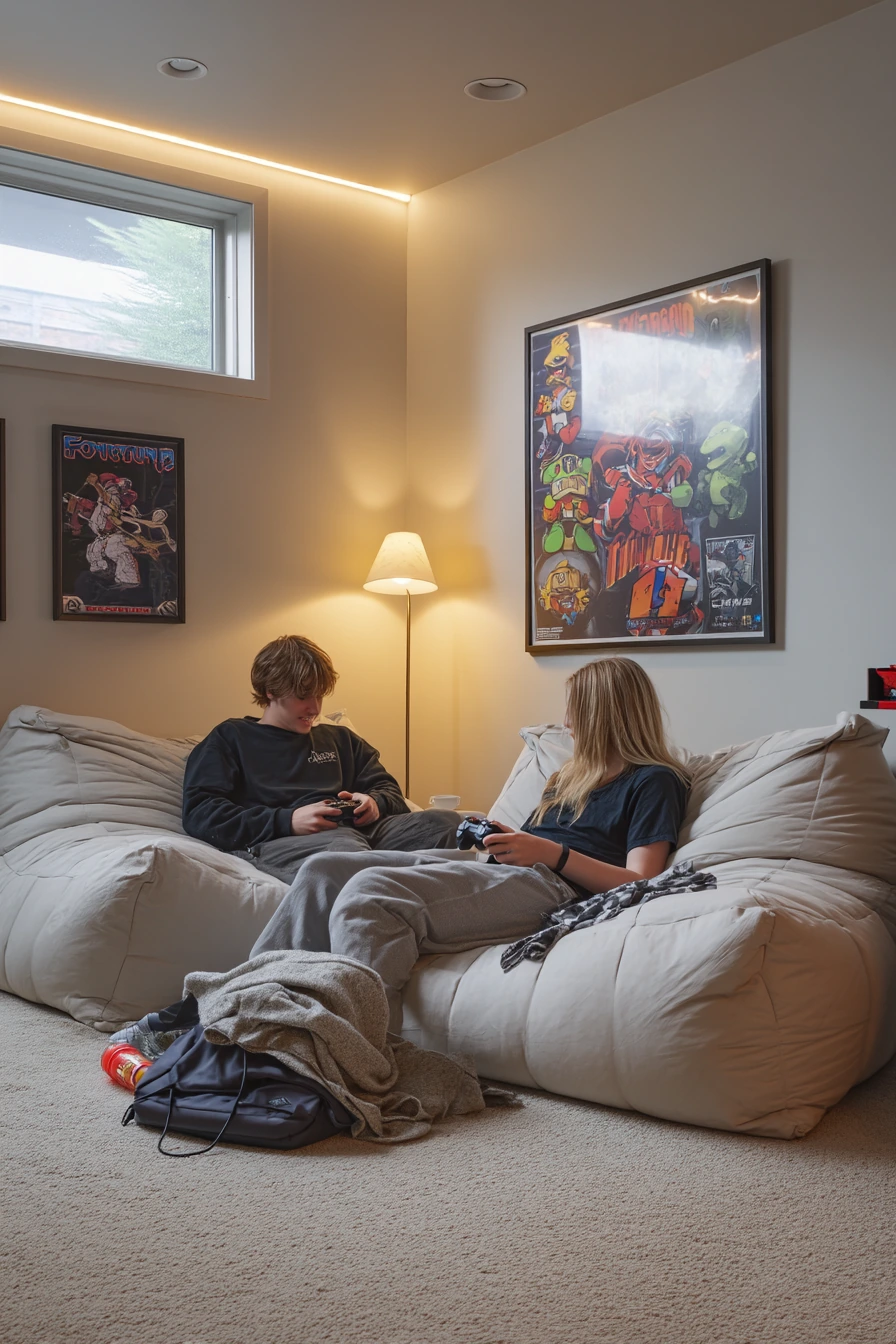
A cool basement hangout for teens should feel relaxed and a little flexible. A modular sofa is a smart base because it can shift for movie nights, homework, or friends stopping by. Add an oversized beanbag for extra seating that can move fast. A low arcade-style console cabinet gives the room a fun focus without needing a big screen wall.
Keep the vibe real, not perfect. A snack tray on the coffee table, a game controller on the rug, and a half-open backpack make the space feel used. The key is adding easy cleanup. Use a lidded bin for cables, extra controllers, and headphones. A wrinkled throw blanket is fine, but store two extras in a basket so the room is ready for guests.
Lighting matters more than neon. Use subtle LED accent strips behind a shelf or under the console cabinet, not across every wall. Mix it with a warm floor lamp and any soft daylight from a high window well. Add poster art in simple frames so it looks grown-up and does not damage the walls.
- Pick stain-resistant fabric for the sofa or add washable covers
- Use a small tray to keep snacks in one place
- Add hooks by the door for backpacks and jackets
- Choose a rug with pattern to hide crumbs and wear
- Keep one open basket for quick pickup at the end of the night
Pro Design Tip: Plan outlets for gaming early, then hide cords with a cord channel so the floor stays safe and clean.
Budget Considerations: Skip built-ins and use modular pieces you can rearrange, like a secondhand sectional and a used cabinet repainted.

4. Welcoming Basement Guest Suite
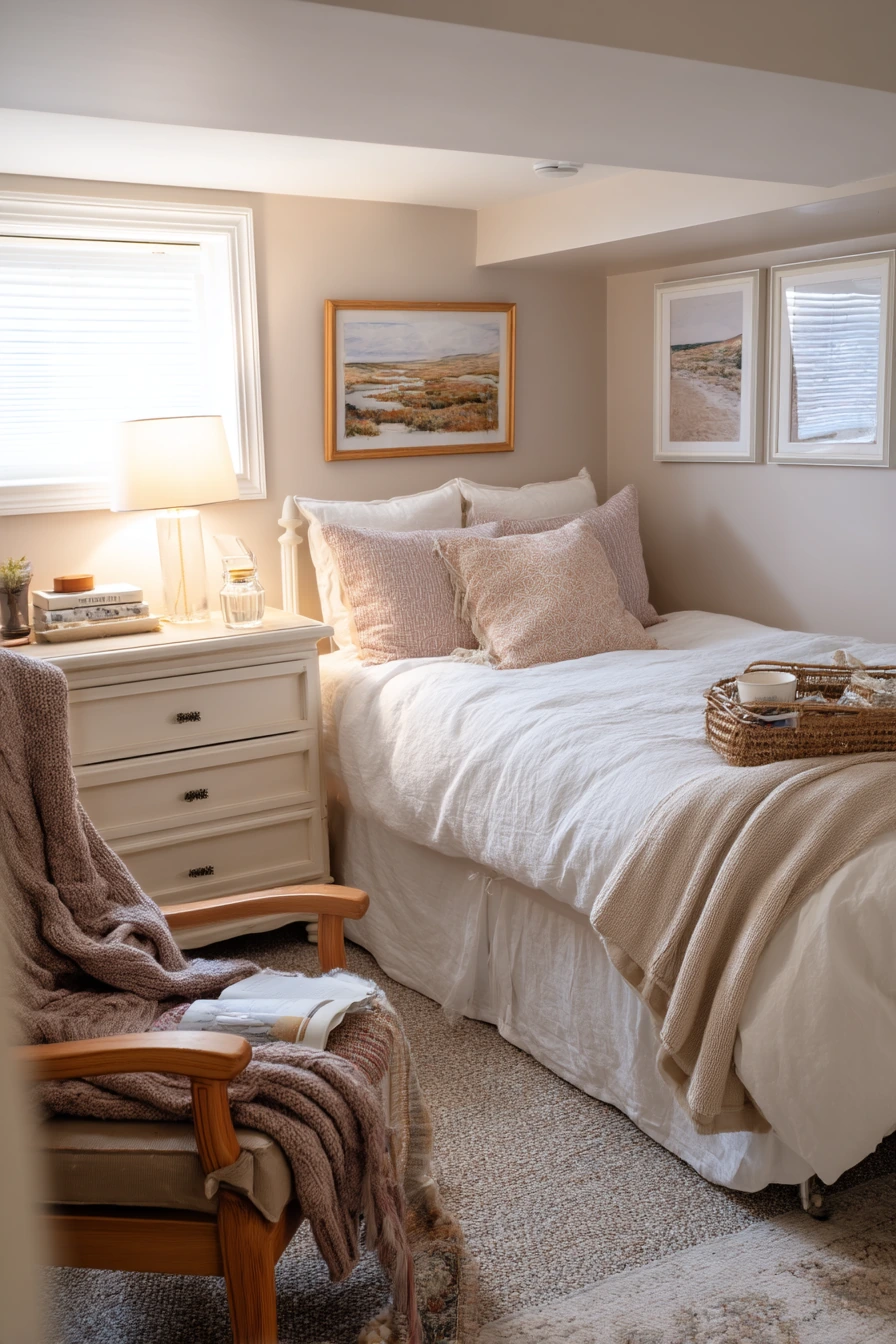
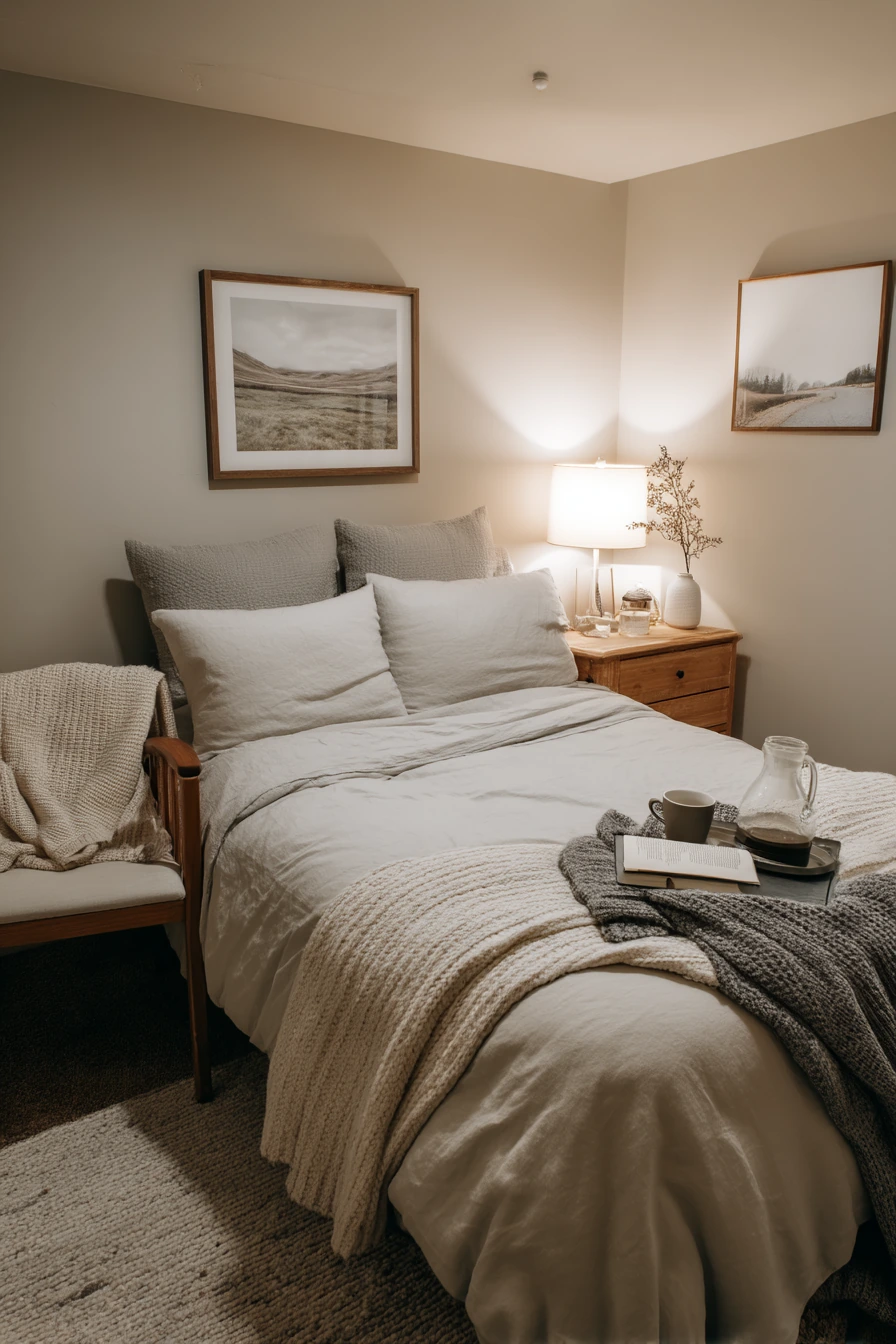
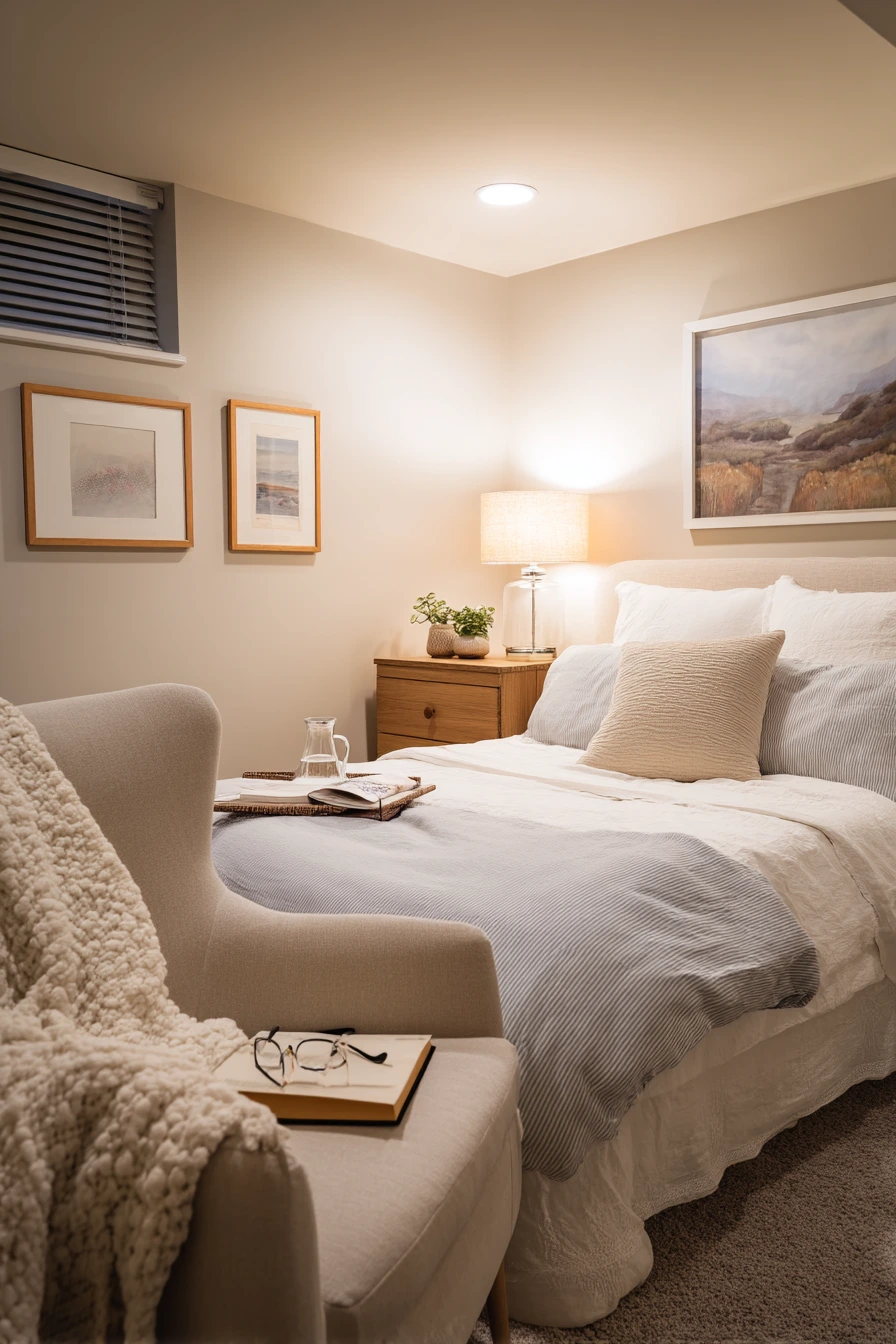
A basement guest suite feels welcoming when it has the basics plus a few thoughtful details. Start with a queen bed dressed in linen bedding for a soft, breathable look. Add a small reading chair so guests have a place to sit that is not the bed. A compact dresser gives them space for folded clothes and keeps luggage off the floor.
Style the nightstand like a mini hotel setup. A carafe and water glass is simple and useful. Add a warm bedside lamp so the room does not rely on overhead lights. Keep a paperback and reading glasses on the nightstand for a lived-in feel, even if the glasses are just a prop. A soft rug underfoot is a big comfort upgrade in a cooler basement.
Basement windows are often small, so make daylight work harder. Use light curtains that still give privacy. Hang framed landscape prints to add calm color without being loud. Keep surfaces mostly clear, but add one folded sweater on the chair to make the room feel ready and human.
- Use two pillows per person and one extra blanket in the dresser
- Add a small luggage rack or bench at the foot of the bed
- Place a mirror near the door for quick getting ready
- Use a dimmable lamp to adjust mood at night
- Keep a small basket with travel-size soap and tissues
Pro Design Tip: Layer lighting with one bedside lamp and one reading lamp so guests can control brightness without turning on overhead lights.
Budget Considerations: Linen bedding can be pricey; choose a cotton-linen blend or start with neutral cotton sheets and add one linen pillow cover.

5. Practical Basement Home Gym Room
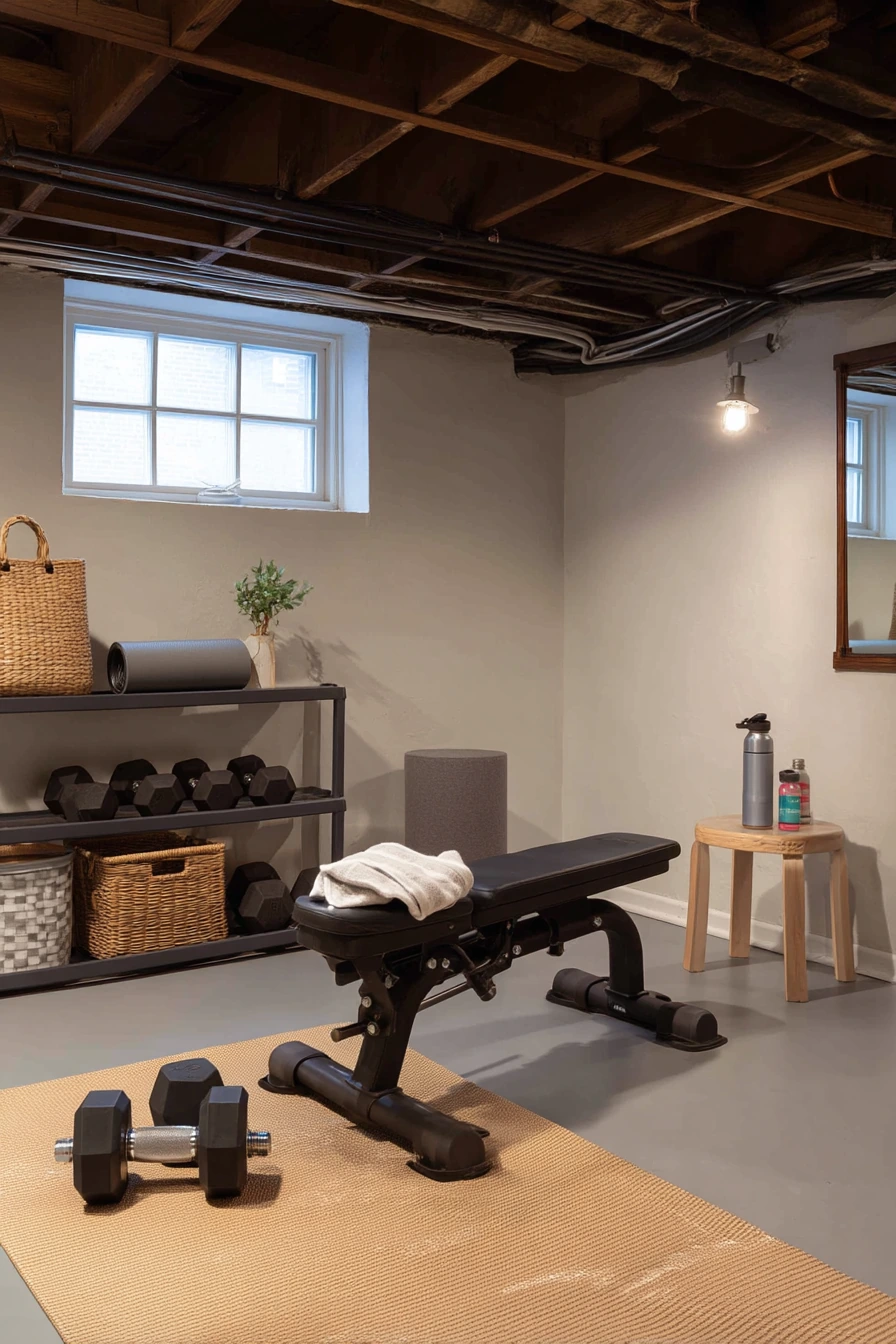
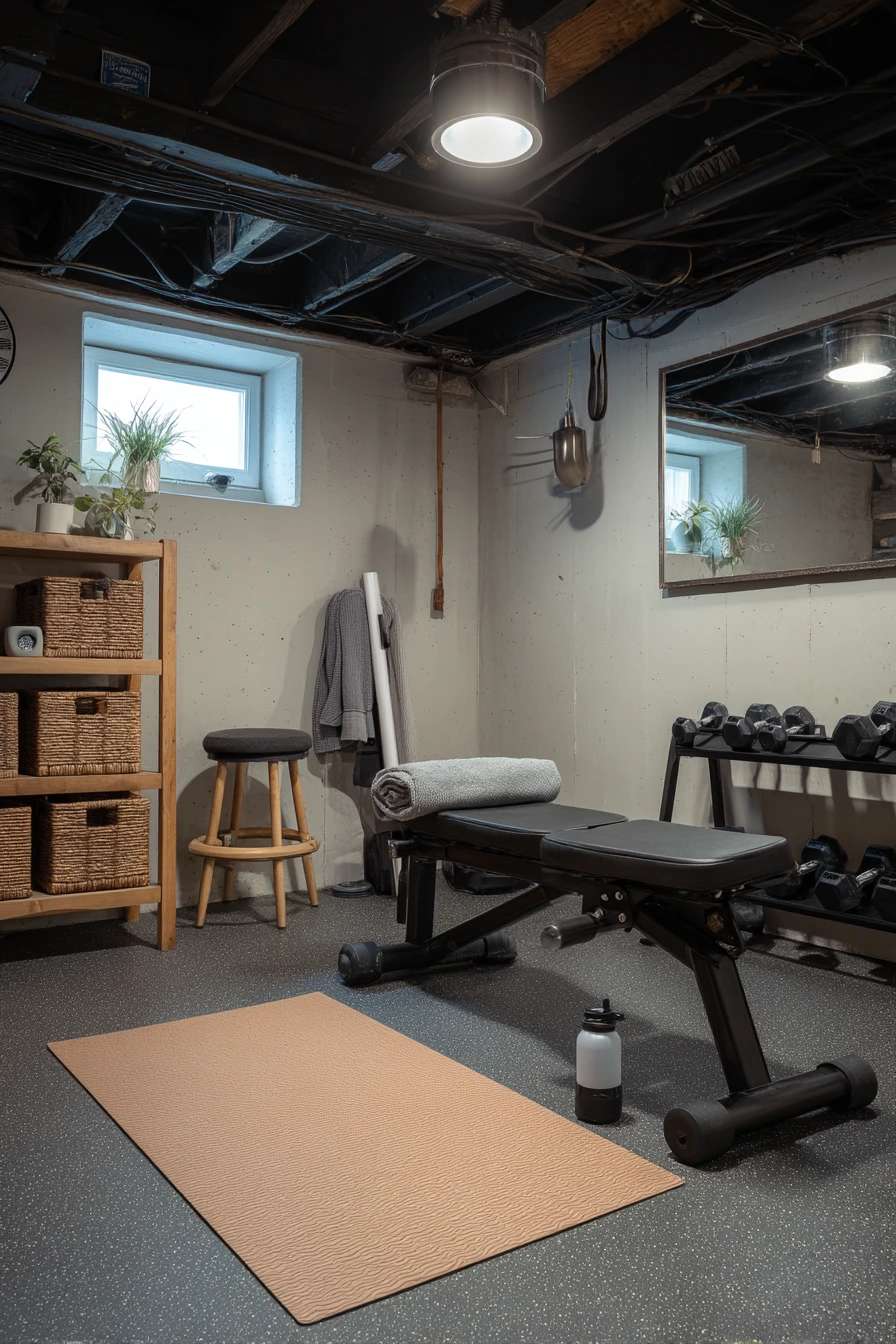
A basement fitness room works when it is simple, clean, and easy to use. Start with a sturdy adjustable bench, a set of dumbbells, and a yoga mat. Add a wall mirror to check form and to bounce light around the room. If your ceiling has exposed joists, painting them a dark color can make the space feel taller and more finished.
Plan storage so gear does not spread out. Use a shelf with baskets for bands, gloves, and small tools. Keep a foam roller and towel in the same spot every time. A stool is handy for holding a towel, but do not let it become a dumping zone. Put earbuds and a shaker bottle in a small tray so they do not end up on the floor.
Fresh air and lighting help you want to use the room. If you have an egress window, keep it clear and open when you can. Add a warm lamp in the corner for early mornings or evenings. A small fan or dehumidifier can make workouts more comfortable and protect equipment from moisture.
- Use rubber tiles under weights to protect the floor and reduce noise
- Store dumbbells on a low rack to keep the room safer
- Hang a hook rail for jump ropes and resistance bands
- Add a hamper for sweaty towels so the room stays tidy
- Keep a timer or small clock visible from the bench
Pro Design Tip: Mount a full-length mirror where it reflects the window light, not the lamp, so you avoid glare during workouts.
Budget Considerations: Mirrors and rubber flooring add up; start with one large mirror panel and a few heavy-duty mats in the lifting zone.


6. Playful Basement Kids Room and Laundry Zone

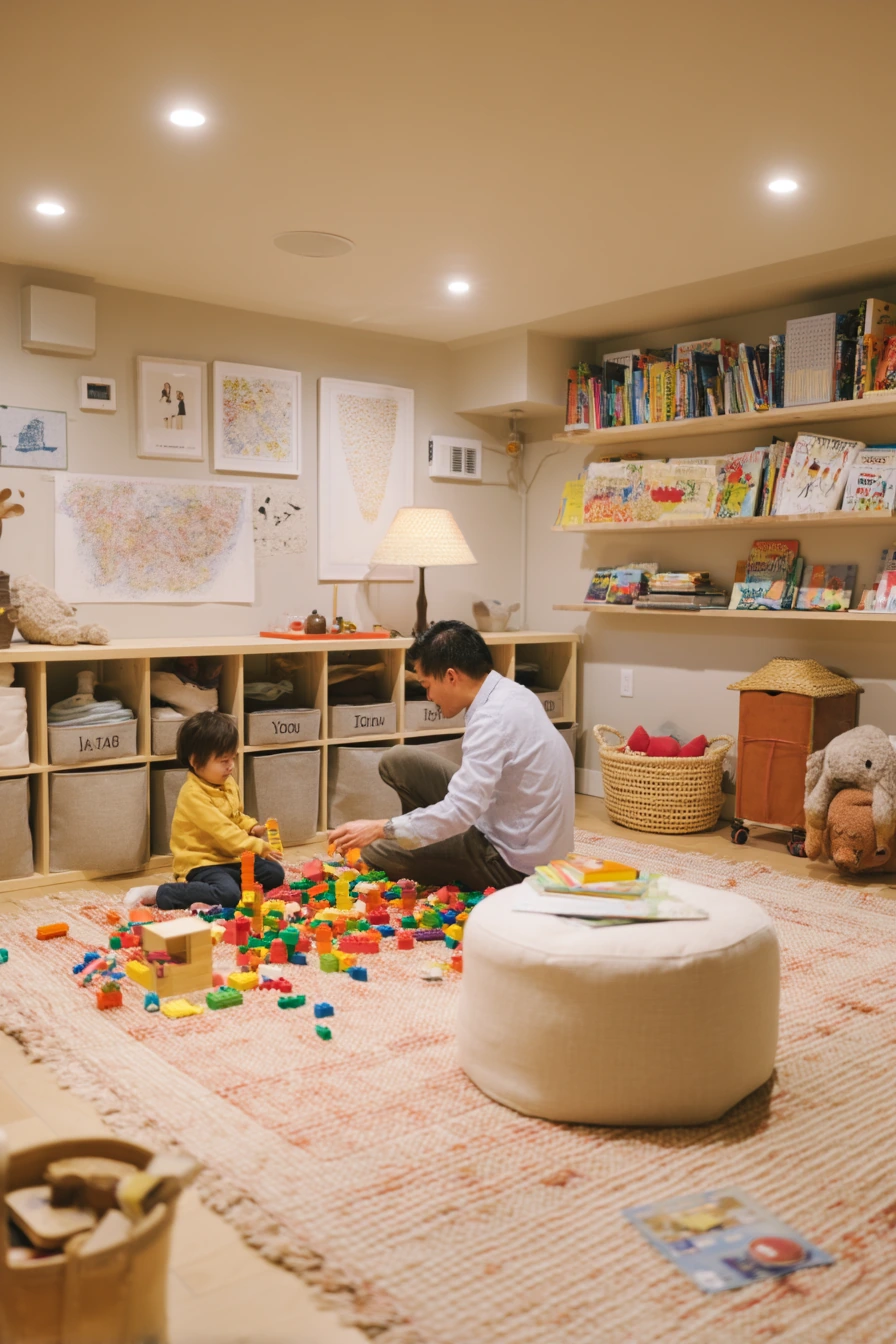
A basement kids room can be playful and still work for adults when you plan zones. Set up a soft rug as the main play area so building blocks and dolls stay in one place. Put low toy shelves along the wall so kids can reach items without asking. Nearby, create a simple laundry corner where a parent can fold clothes while keeping an eye on play.
Organization makes the room calmer. Use labeled bins for categories like blocks, cars, art supplies, and puzzles. Keep a stuffed animal basket for fast cleanup. Add a mini art wall with clipboards or frames so kid art looks neat and is easy to swap out. Picture books can stay open on the floor during play, but store them in a low bin at the end of the day.
Basements can feel dim, so focus on bright, warm lighting. Use warm ceiling lamps and take advantage of daylight from a window well. Choose washable textiles, since tiny socks and snack crumbs happen. Keep one ottoman or felt pouf for extra seating, and pick colors that hide scuffs, like soft gray, tan, or muted blue.
- Anchor the rug with a non-slip pad for safer play
- Place the toy shelves near the rug edge for easy reach
- Use clear labels with pictures for pre-readers
- Keep a small laundry basket in the playroom to catch stray clothes
- Rotate toys monthly to reduce clutter and keep interest
Pro Design Tip: Use a mix of open shelves and closed bins so the room looks tidy even when kids are mid-play.
Budget Considerations: Custom built-ins are not required; use cube storage units and matching bins, then upgrade labels and baskets over time.


7. Basement Entertaining Zone With a Small Wet Bar
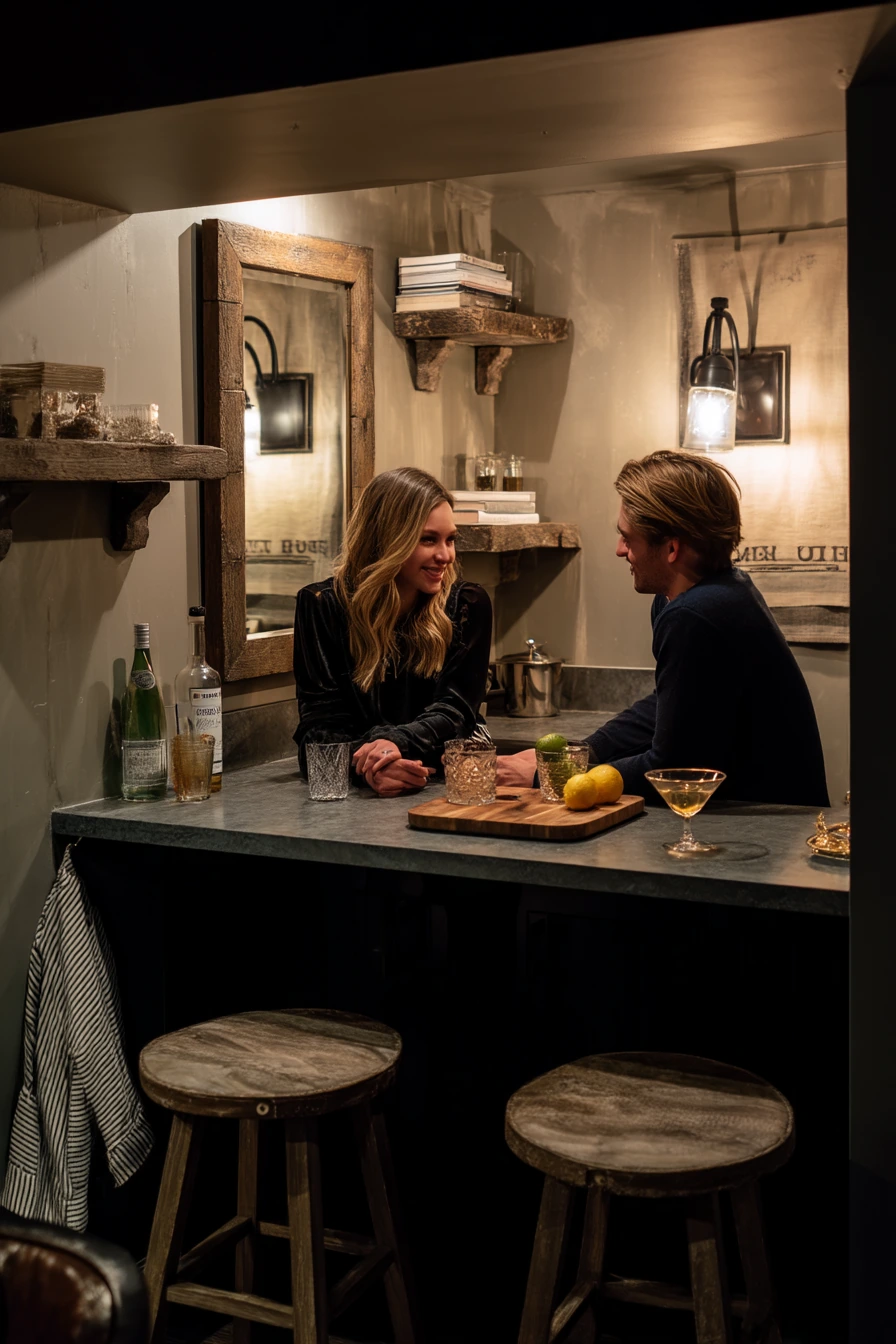

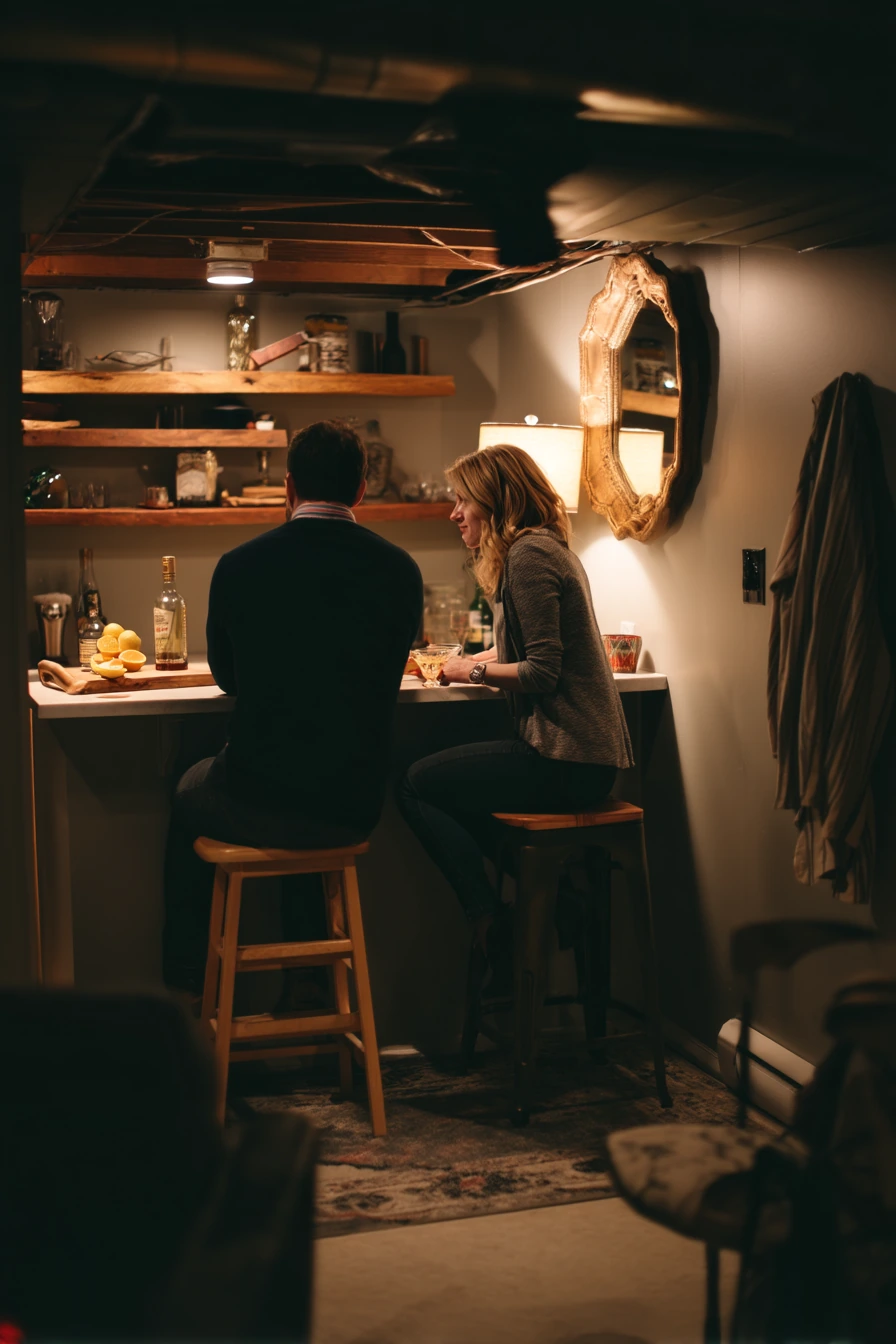
A basement entertaining zone feels special even in a small footprint. A compact wet bar gives you a clear place for drinks, ice, and glassware. Add backless stools so guests can perch without blocking the path. Style the shelves with a few bottles, stacked coasters, and a cutting board with citrus so the area looks ready but not overdone.
Make it feel warm and intimate with lighting. Under-cabinet lights help you see what you are doing, while a soft lamp glow keeps the room cozy. A vintage mirror behind the bar bounces light and makes the space feel larger. Keep one napkin folded loosely and an open bottle on display for a lived-in, friendly look.
Plan for real hosting moments. Add a hook or chair nearby where a jacket can be draped. Use a small tray to gather cocktail glasses so you can carry them safely. If you do not have plumbing, you can still create a bar feel with a mini fridge, a water pitcher, and a rolling cart for tools.
- Use a washable runner behind the bar to catch spills
- Store bar tools in one drawer or a lidded box
- Add one piece of art or a mirror to define the zone
- Keep a small bin for recycling and bottle caps
- Use warm bulbs so wood shelves look rich, not yellow
Pro Design Tip: Choose the bar height first, then buy stools with the right seat height so guests sit comfortably for longer chats.
Budget Considerations: A true wet bar needs plumbing; for less, use a cabinet with a bar sink bowl and rely on a nearby bathroom sink for rinsing.

8. Basement Creative Studio for Art and Sewing


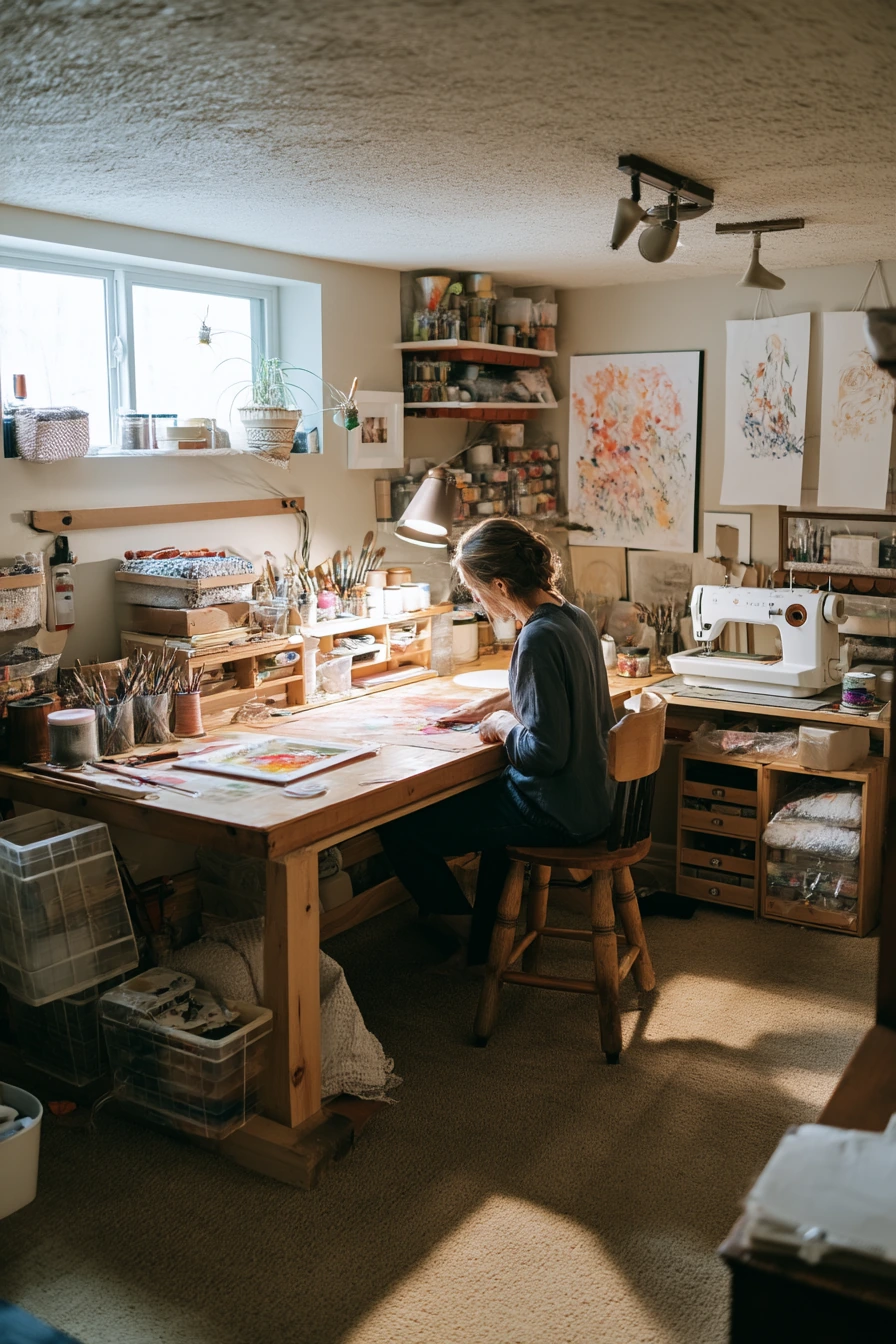
A basement creative studio can be quietly inspiring when it has good surfaces and smart storage. Start with a long worktable that fits your main task, like painting, sewing, or paper crafts. Keep jars of brushes, a thread spool tray, and scissors close, but group them so the table still has open space. A sewing machine can stay out if you use it often, otherwise store it on a lower shelf.
Give yourself a place for in-progress projects. Storage cubes work well for rolled paper, fabric scraps, and sketchbooks. Use a small tray for the items that travel, like glue, tape, and pens. A coffee mug ring on the table is normal, so protect the surface with a clear mat if it bothers you. Add a plant where it can cast soft shadows across the wall for a calm, creative feel.
Lighting is key in a basement. Use daylight from a small window when you can, then add a warm desk lamp aimed at the work area. If you paint, choose bulbs that show true color. Keep the floor clear so you do not trip over bins when carrying a canvas or a stack of paper.
- Use a pegboard or rail for tools you grab every day
- Keep one bin labeled for current projects only
- Add a washable rug to catch thread and paper scraps
- Store paint and glue in a closed bin if kids use the basement
- Hang one inspiration board to avoid cluttering the walls
Pro Design Tip: Set up your worktable so the main light comes from the side, not from behind you, to reduce shadows on your project.
Budget Considerations: A custom worktable can be expensive; use two filing cabinets and a solid door slab as a sturdy DIY tabletop.

9. Sound-Treated Basement Music Corner


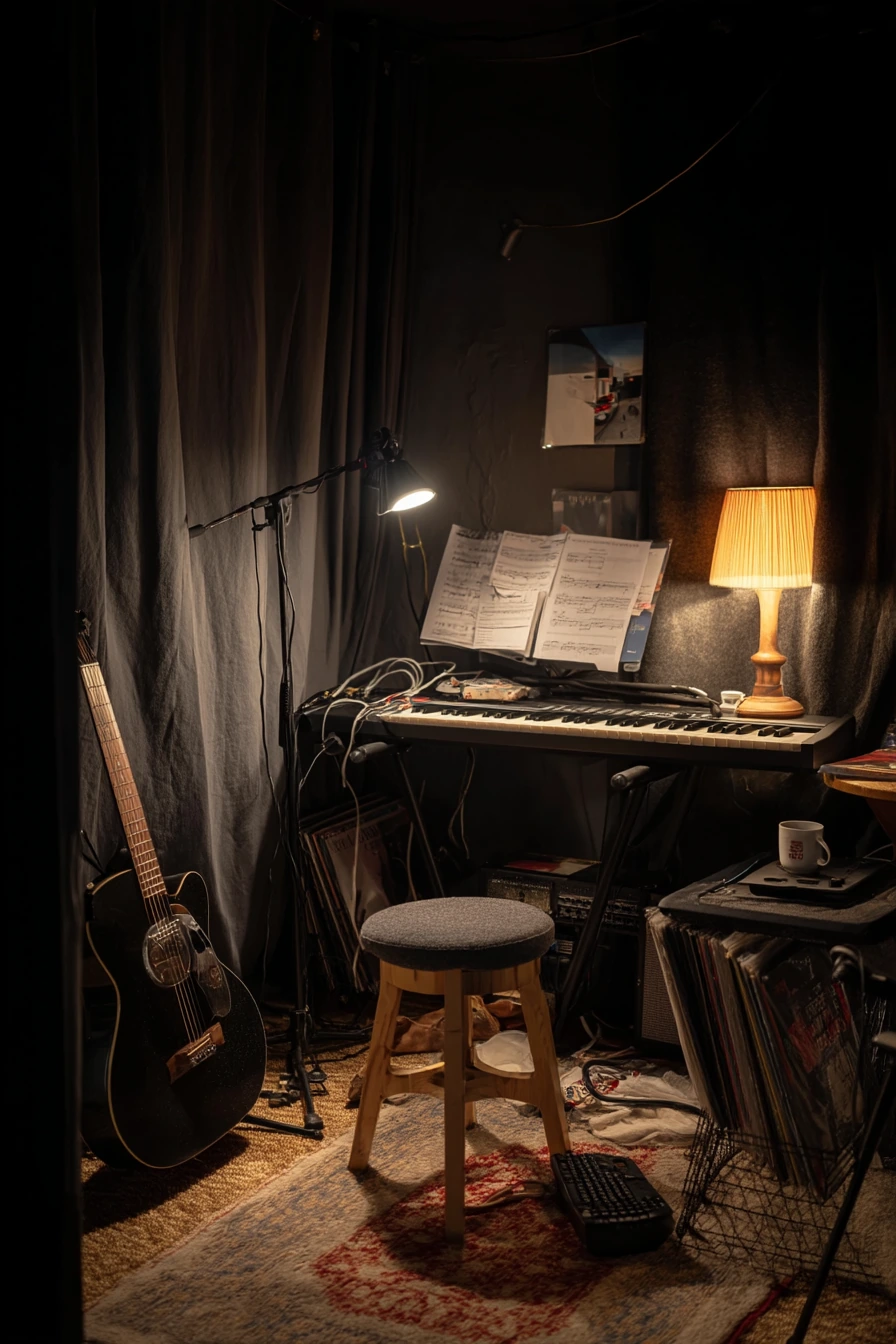
A basement music corner is a great use of a quieter level of the house. Set up a stool, an amp, and a keyboard against the wall to keep the center open. Add a soft rug to cut echo and to make practice more comfortable. Keep cables coiled and stored in a small bin so the space stays safe and easy to reset.
Sound control does not need to be fancy. Start with thick curtains, like blackout curtains, even if you pull them aside for a sliver of window light. Add a few soft pieces, like an upholstered ottoman and a fabric chair, to absorb sound. If you want more, you can add acoustic panels, but even bookcases and rugs help a lot in a family home.
Style the area so it feels personal. Keep sheet music clipped open on a stand, and store record sleeves in a low crate. A mug on an ottoman makes it feel like a late-evening practice spot, but use a lidded cup to protect gear. Use one warm practical lamp so the mood stays relaxed and not too bright.
- Place the amp off the floor on a small stand to reduce vibration
- Use cable ties and label cords for quick setup
- Add a small shelf for picks, capos, and tuners
- Use felt pads under the stool to protect the floor
- Keep a simple case or wall hook for the guitar to prevent damage
Pro Design Tip: Put acoustic panels at ear level on the wall you face while playing to improve sound without treating the whole room.
Budget Considerations: Acoustic panels can cost a lot; start with heavy curtains, a thick rug, and a bookcase, then add panels later if needed.

10. Serene Basement Reading Nook


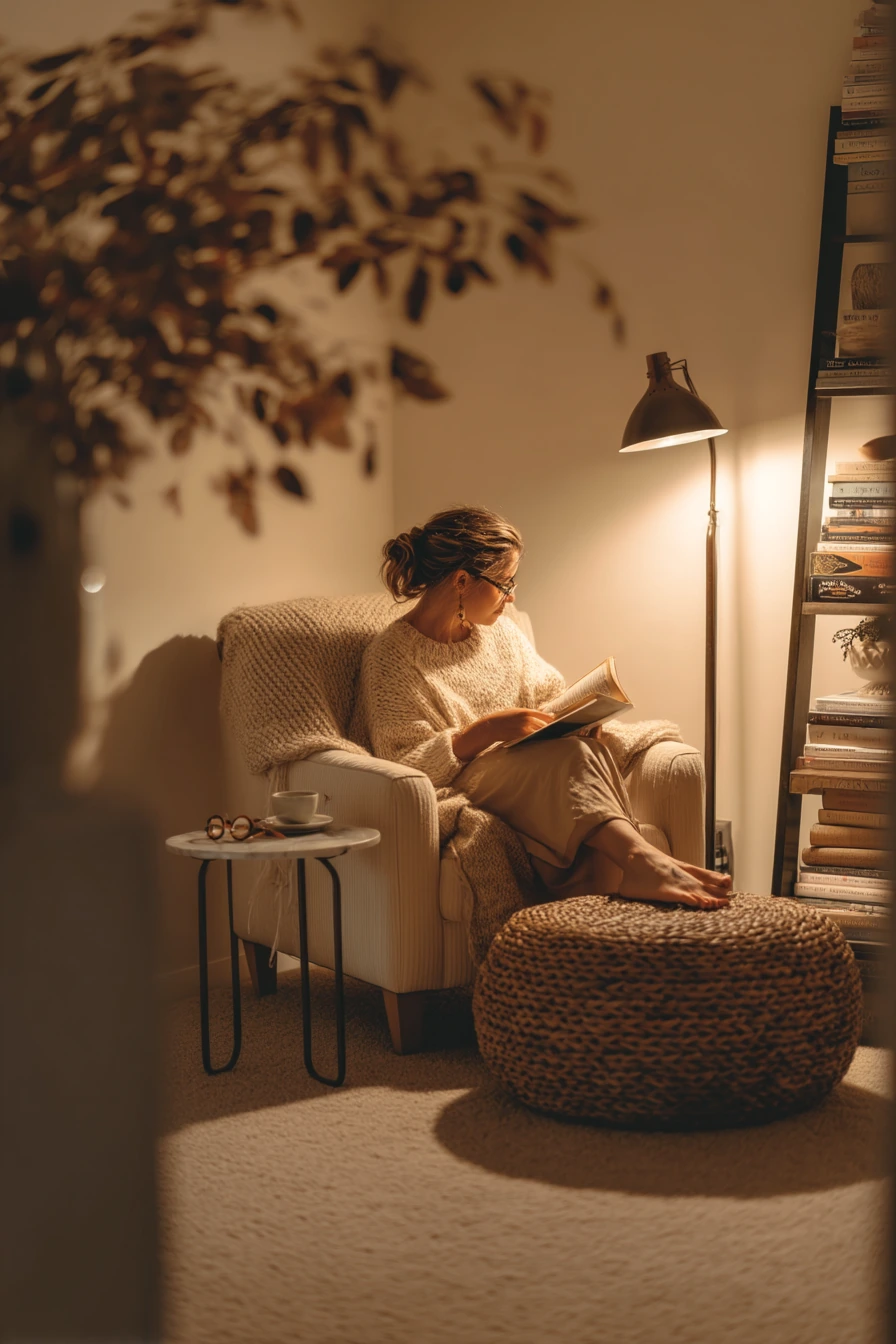
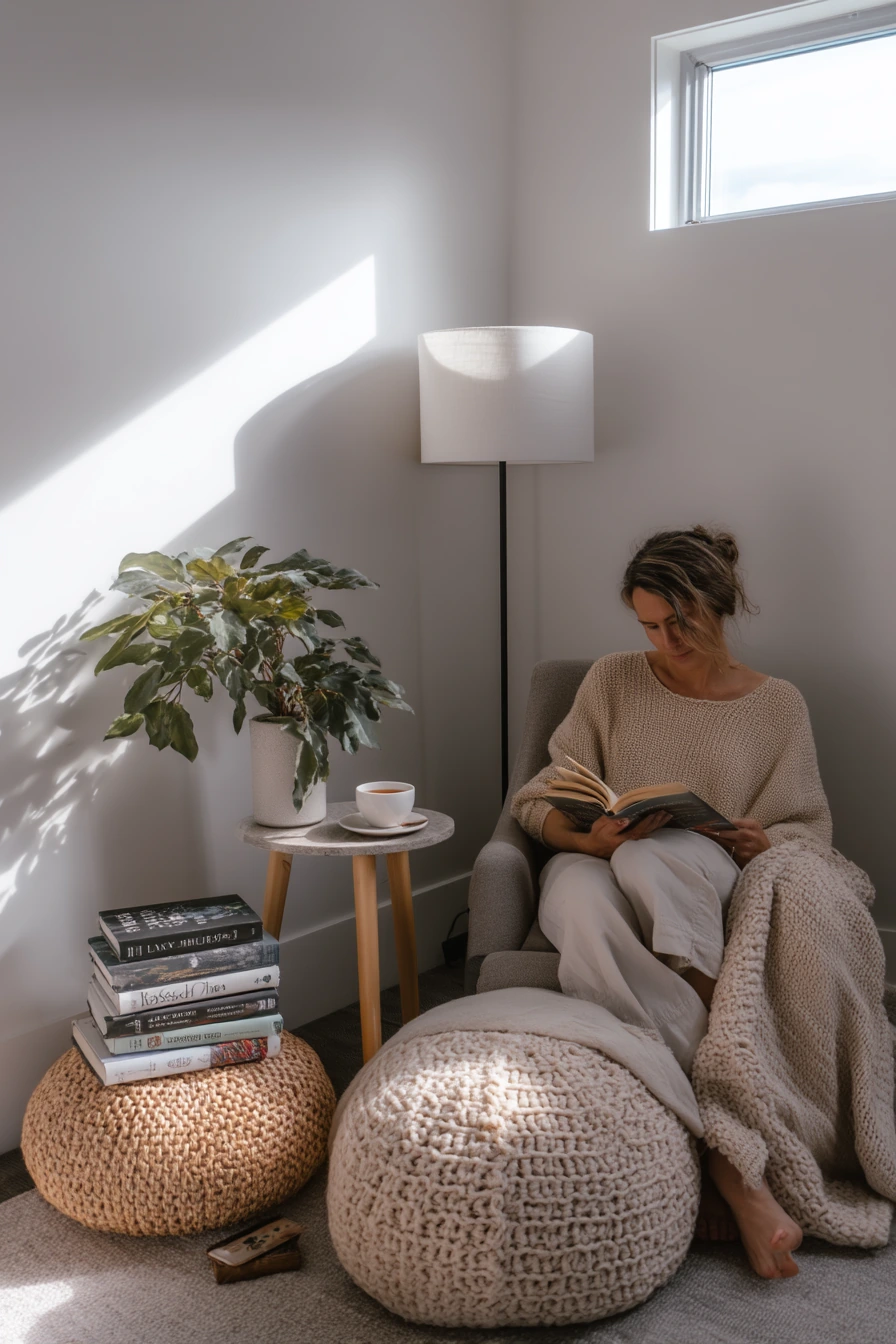
A serene basement reading nook is one of the easiest cool basement ideas to set up. Start with a comfortable armchair and a soft ottoman so you can put your feet up. Add a side table that is large enough for a tea cup, reading glasses, and a small plate. A knit throw can look slightly rumpled and still feel inviting.
Books and storage make the nook feel complete. Use a narrow bookshelf for your favorites and a woven basket for extra blankets or magazines. Stack a few novels on the floor only if it stays neat. If you have plant leaves near a window well, let them cast shadow patterns on the wall for gentle texture.
Lighting should be warm and focused. A floor lamp aimed at the pages prevents eye strain. If daylight is limited, choose bulbs with a warm tone and good brightness. Keep the color palette calm, like beige, warm gray, or soft green, so the nook feels restorative and not busy.
- Place the chair at an angle to create a cozy corner
- Use a small tray on the side table to hold tea and glasses
- Add a pillow with texture, like boucle or linen
- Choose a rug that feels soft even if it is small
- Keep a bookmark and pen in the table drawer for notes
Pro Design Tip: Use two light sources, a floor lamp and a small table lamp, so the nook feels warm without needing overhead lights.
Budget Considerations: An armchair can be a big cost; look for a used chair with good bones and add a new seat cushion and slipcover.
Cool basement ideas work best when they match your daily routines. A movie room needs cozy seating and storage, a work nook needs clean cable control, and a teen space needs flexible furniture that can handle a little mess.
Start with one zone and fix the basics first: lighting, a rug for comfort, and a simple storage plan. After that, add small styling details like framed photos, baskets, and warm lamps so the basement feels like part of the home.
FAQ
What is the first upgrade that makes a basement feel finished? Add layered lighting. A floor lamp and a table lamp instantly make the space warmer than overhead lights alone.
How do I make a basement living room feel cozy? Use a textured rug, soft throws, and warm bulbs. Keep clutter in baskets so the room feels calm.
What colors work best for a basement? Light neutrals and soft mid-tones help reflect limited daylight. Add warmth with wood, tan, and warm white lighting.
How can I hide cords in a basement office or media area? Mount a power strip under the desk or behind the media wall and use cord channels along the baseboard.
Do I need a wet bar to create an entertaining area? No. A cabinet, a mini fridge, and a tray for tools can give the same function without plumbing.
How do I reduce echo for a music corner? Add a thick rug, heavy curtains, and soft furniture. These absorb sound and improve the feel right away.
What flooring is best for a basement gym? Rubber tiles or heavy-duty mats in the lifting area protect the floor and reduce noise, and you can keep the rest as is.