
Cozy basement ideas can turn a dark, unused level into the most loved part of your home. With the right lighting, soft textures, and a few smart layout choices, a finished basement can feel just as welcoming as your main floor.
This post walks through 10 real-life basement zones, from a family movie lounge to a reading nook, teen hangout, and even a laundry room with a sitting spot. Each section includes easy styling steps you can copy from the photos.
You will also find practical tips for basements, like how to handle low ceilings, small egress windows, and mixed-use rooms. These ideas focus on comfort, storage, and everyday function.
Use this guide to plan one small corner or refresh the whole space, without buying all new furniture. Small changes like a warm lamp, a woven basket, or a better rug can make a big difference.
1. Cozy Basement Family Lounge for Movie Nights
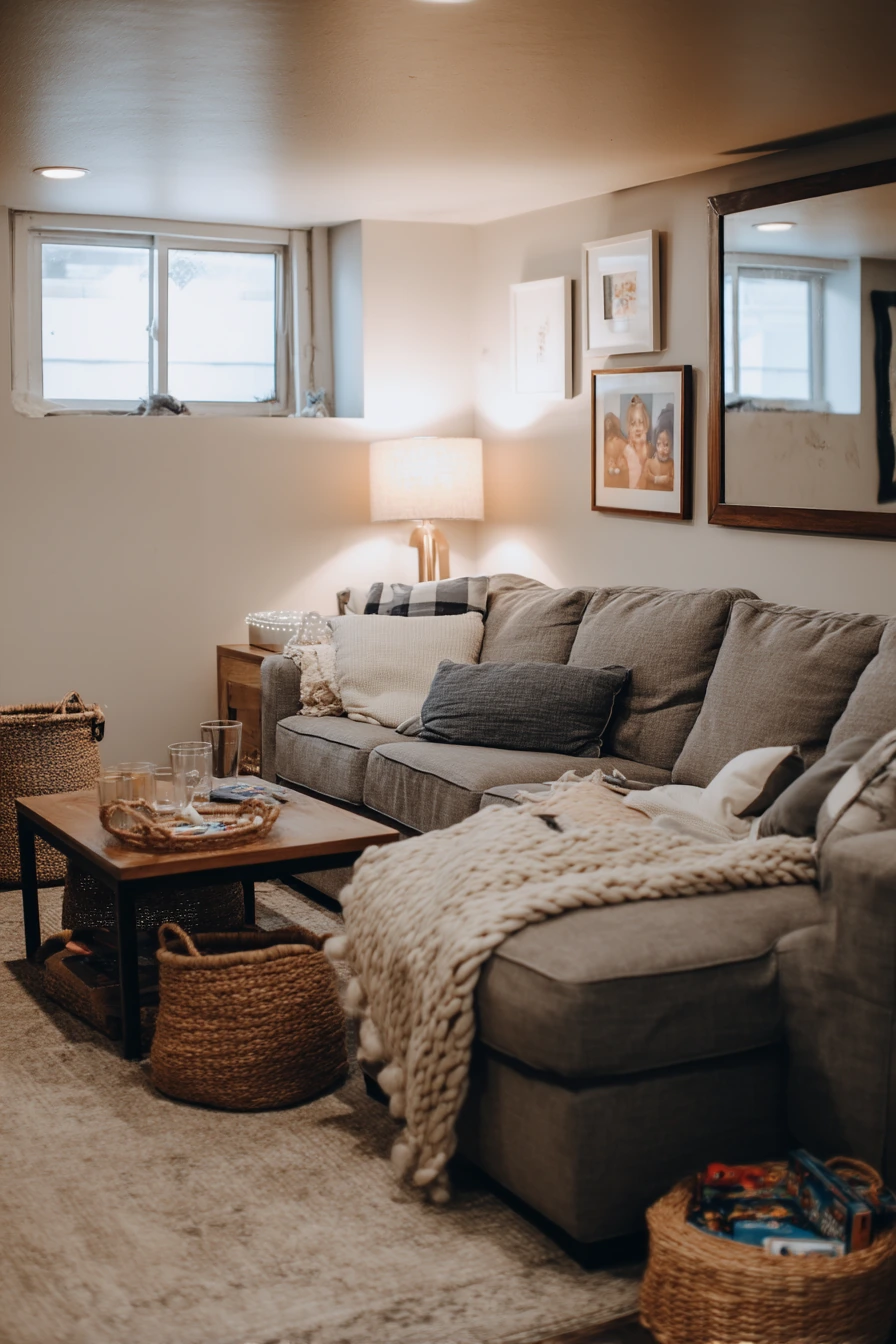

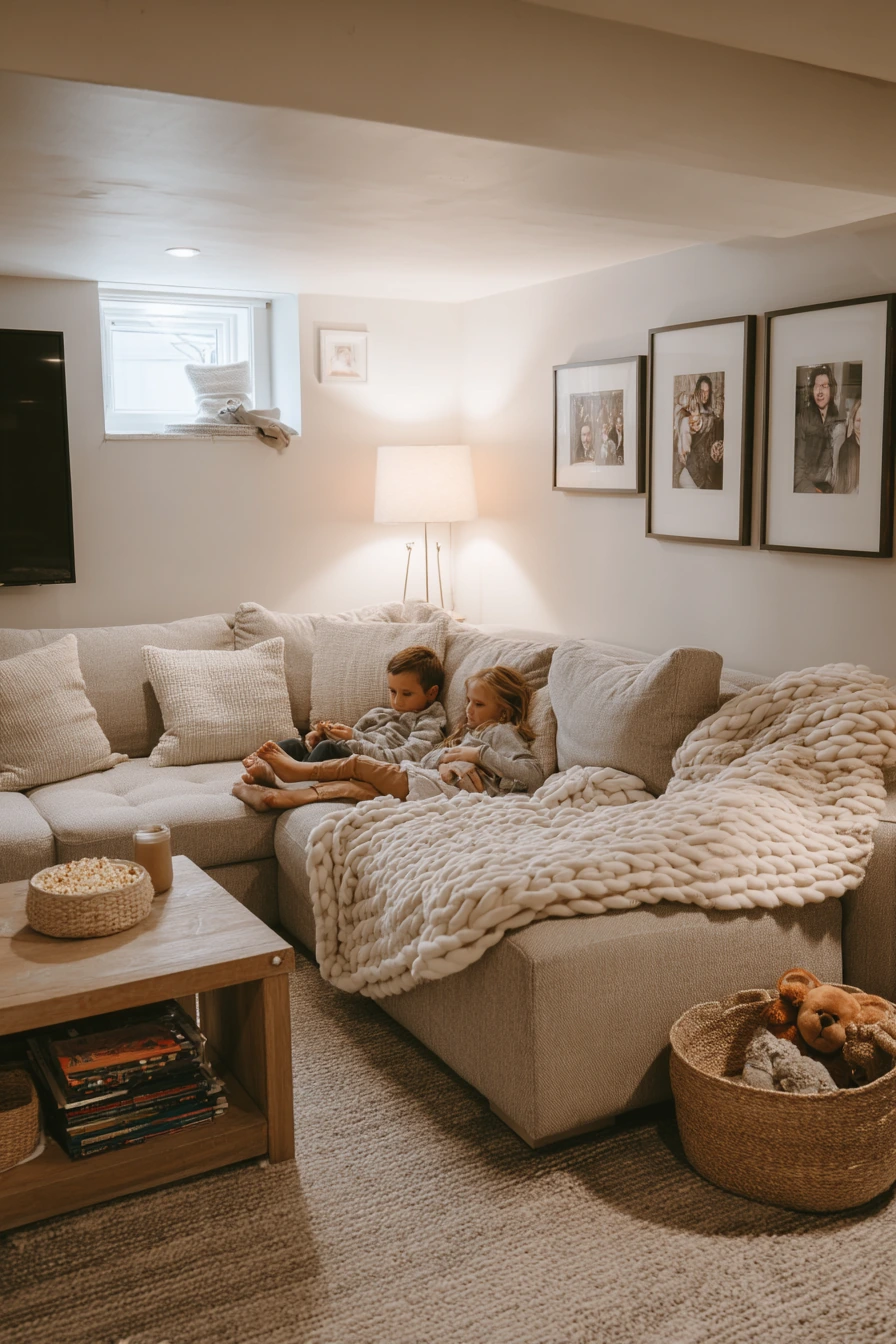
A cozy finished basement family lounge should feel relaxed, not staged. Start with a sectional that fits the room and leaves a clear path to the stairs and the egress window. Add an oversized knit throw and a soft rug to warm up the space and cut echo, which is common in basements.
Keep the coffee table low, like a simple oak piece, so kids can reach snacks and games. Use woven storage baskets under the table or beside the sofa for board games, extra throws, and a kid toy basket. A slightly spilled toy bin looks normal in a family space, but it still feels tidy when everything has a home.
Lighting makes or breaks basement comfort. Use warm table lamps for evening, and let any faint daylight from a small window do its job during the day. Add framed family photos to make it personal, and do not hide real life details like water glasses or a charging cable. Just route cords along the back of the sofa so they do not cross walkways.
- Choose a plush, medium-pile rug to soften concrete or LVP floors.
- Use a lidded basket for toys you want out of sight fast.
- Stack 3 to 5 favorite board games where kids can grab them.
- Keep a small tray on the coffee table for remotes and coasters.
- Add one dimmable lamp on each side of the sectional for balance.
Pro Design Tip: Layer three light sources in the lounge, like two table lamps plus a floor lamp, and use warm bulbs (2700K) to make basement walls look less gray.
Budget Considerations: A basic rug and two plug-in lamps often add more coziness than a new sofa. Check local resale shops for solid wood coffee tables and baskets.

2. Compact Basement Reading Nook for Quiet Time
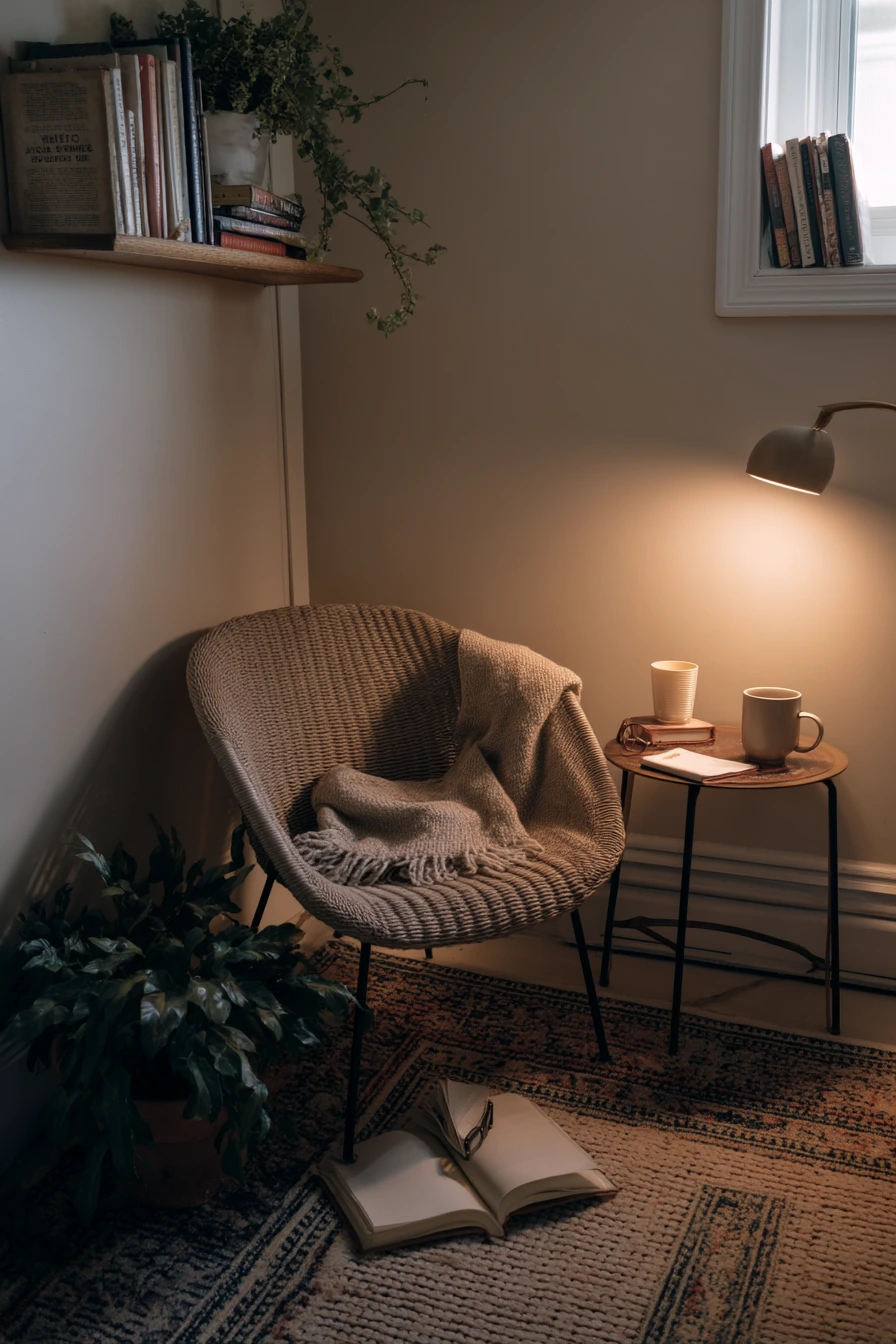
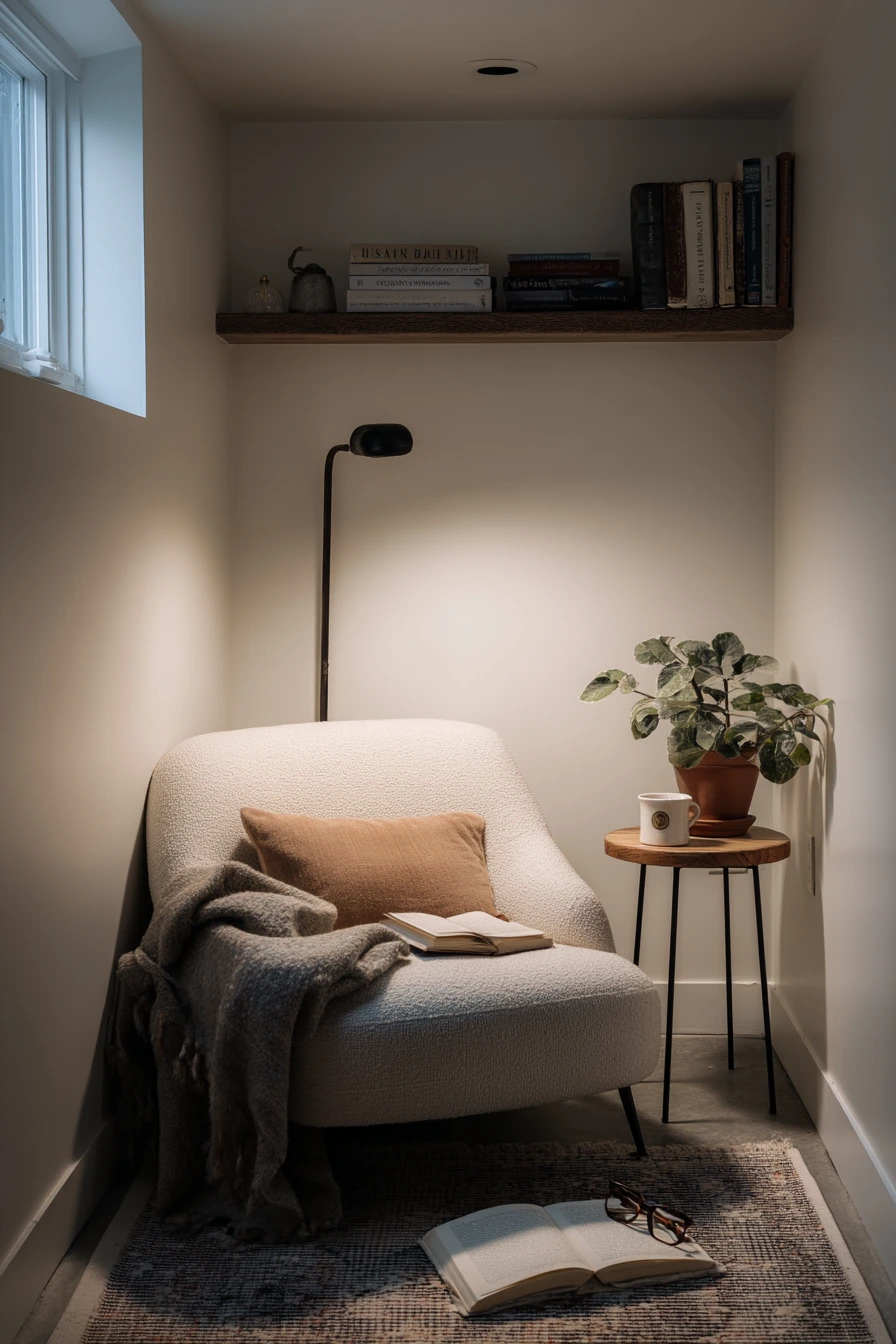
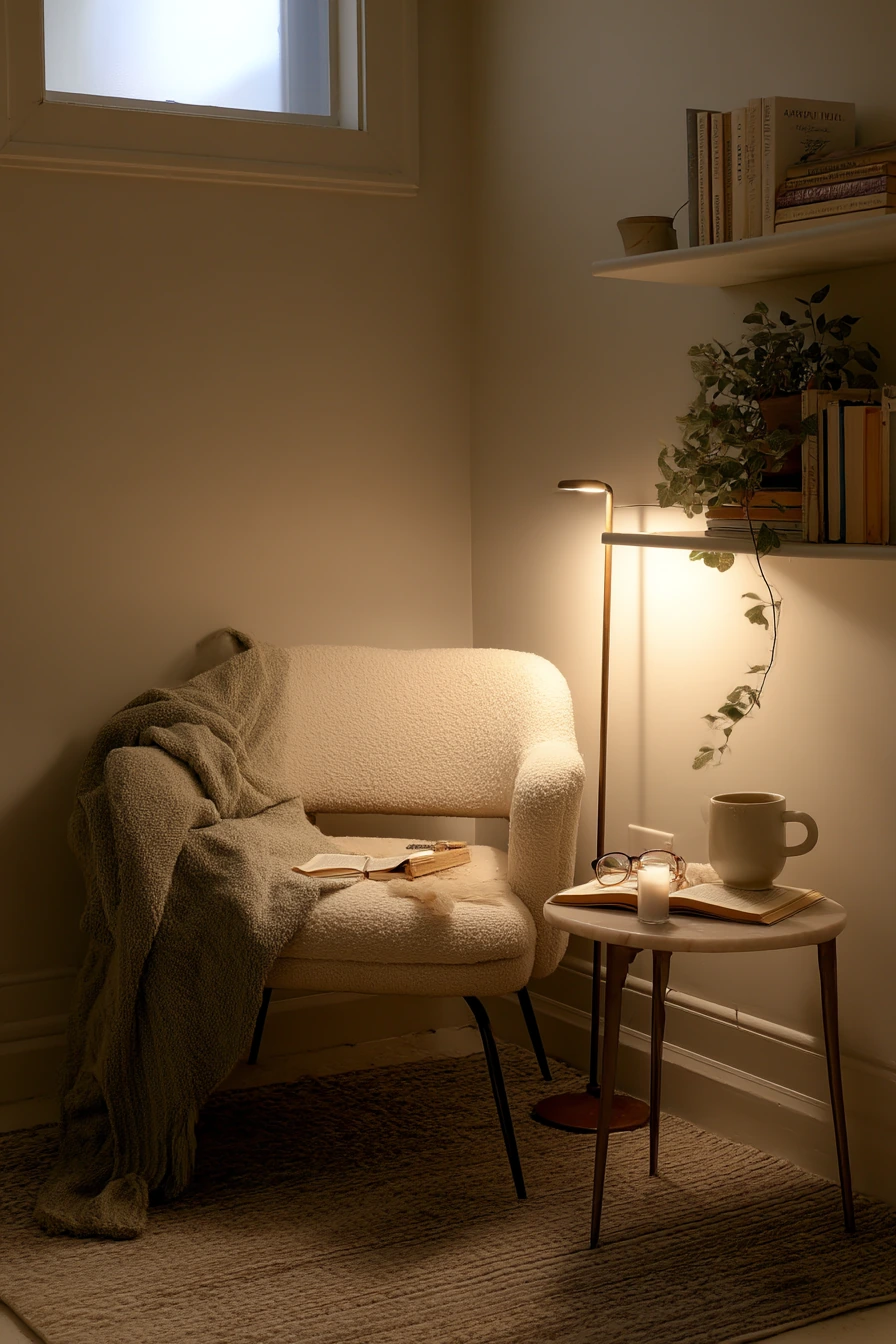
A compact basement reading nook is perfect for a renter or anyone who wants a calm corner without renovations. Start with one comfortable chair, like a boucle chair, and tuck it close to a slim floor lamp. The goal is to create a small pool of warm light that makes the corner feel safe and quiet.
Use a wall-mounted shelf for paperbacks so you do not need a big bookcase. Style it simply with a ceramic mug, a small stack of books, and a plant that can handle low light. If you have a tiny window well, let the cool daylight spill in, then balance it with the lamp glow so the space does not feel cold.
Make it feel lived-in with a blanket that has a slight wrinkle, plus a vintage side table for a notebook and reading glasses. An understated rug helps define the nook, especially in an open basement. Keep colors muted and textures varied, like boucle, wool, and wood, so the space feels cozy without clutter.
- Place the chair at a slight angle to the wall to feel less boxed in.
- Use a small side table that holds a mug and one book, not a pile.
- Add a pillow with texture to support your back while reading.
- Pick one plant in a simple pot to bring life to the corner.
- Hang a small print above the shelf to finish the wall.
Pro Design Tip: If the nook feels dark, use a plug-in wall sconce above the chair instead of a bulky lamp to save floor space and raise the light.
Budget Considerations: Wall shelves, thrifted side tables, and secondhand chairs can build this nook for less. If boucle is pricey, look for a slipcover or a textured throw to get a similar feel.

3. Cozy Basement Hangout for Teens and Gaming
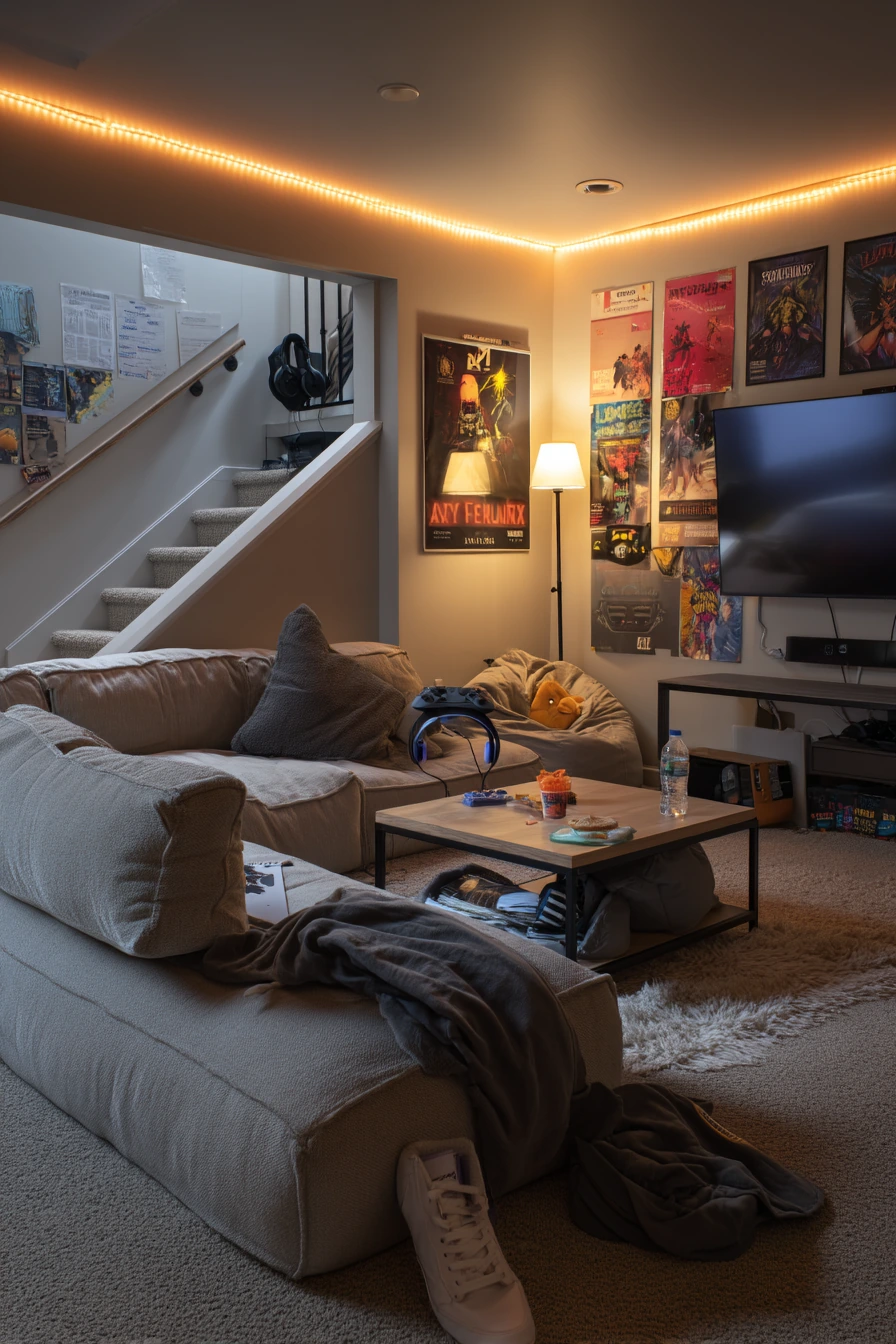
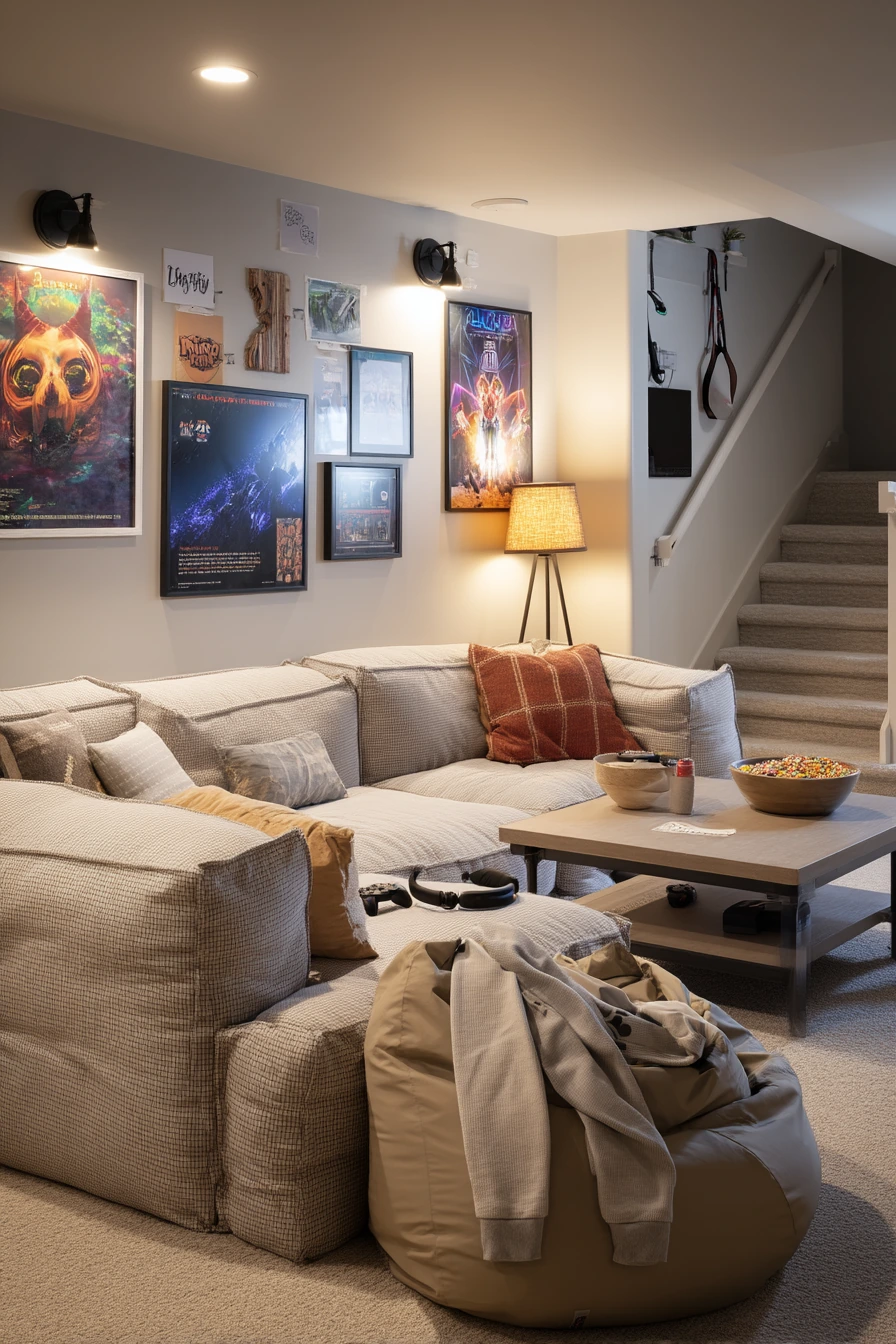
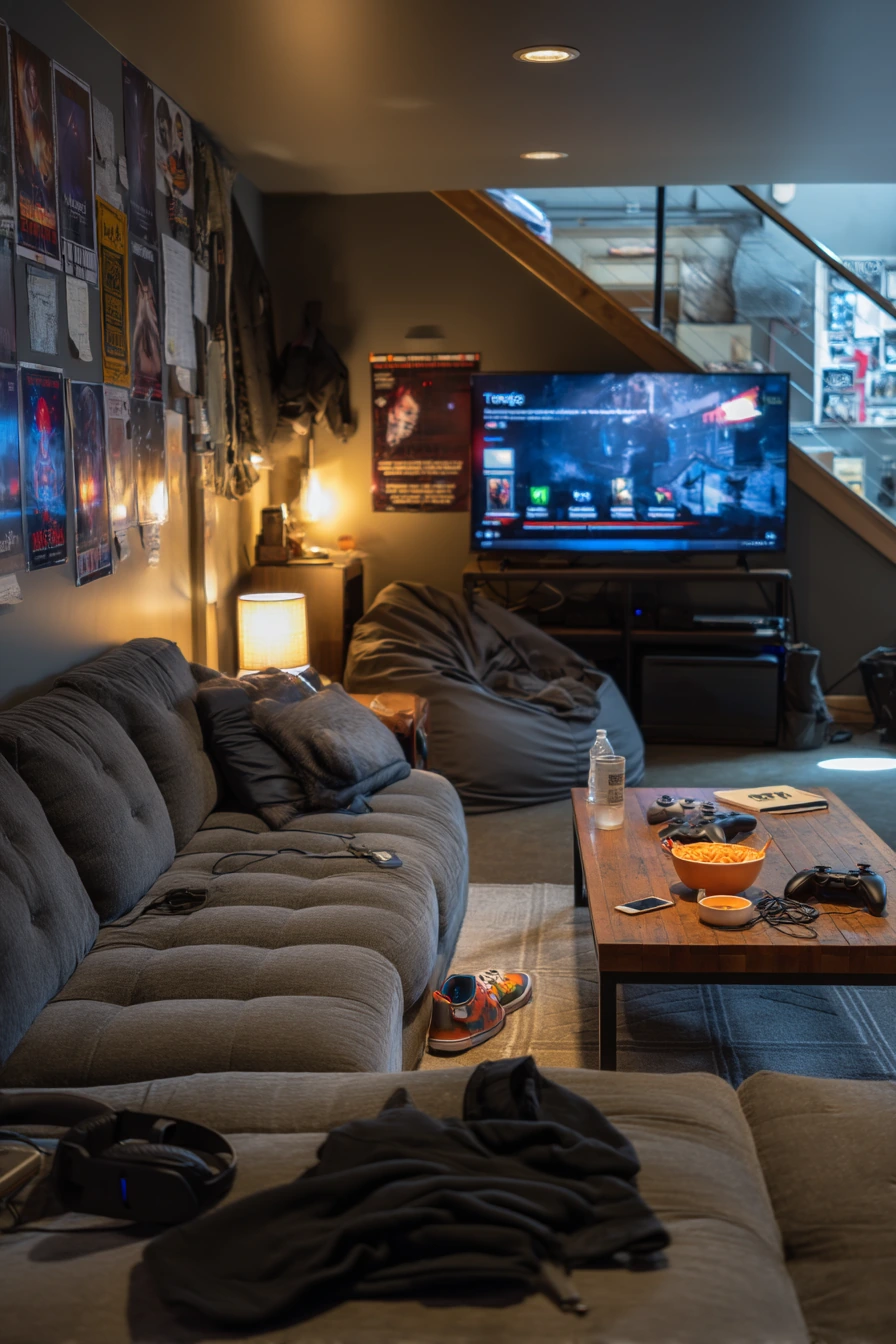
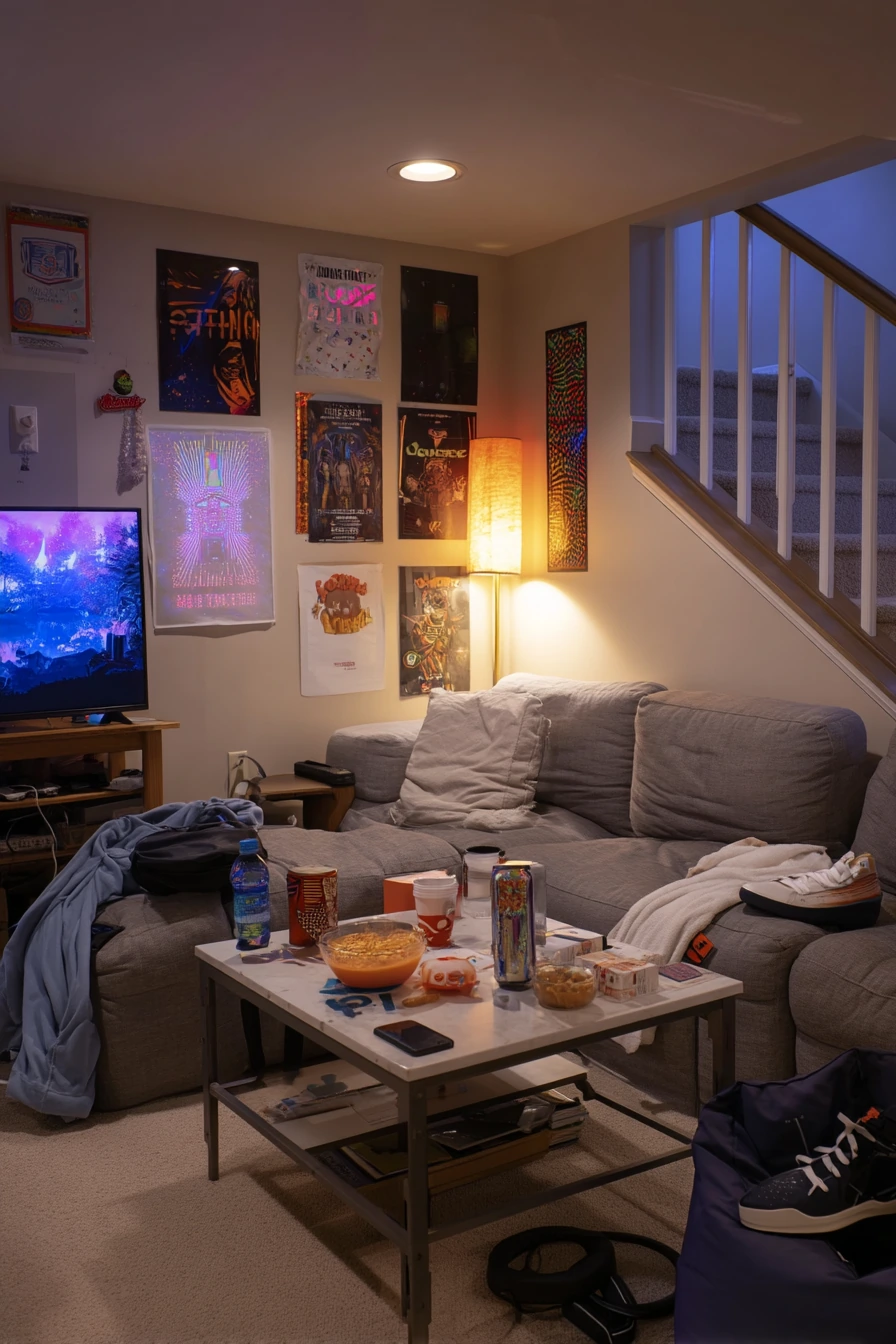
A cozy basement hangout for teens needs comfort, durability, and a layout that supports both gaming and talking. A modular sofa works well because you can move pieces for movie nights or group games. Face the TV, but keep a small open spot for a bean bag chair so friends can spread out.
Let the room look real. Posters pinned with tape, a hoodie on the armrest, and a sneaker near the coffee table are normal in a teen zone. The trick is to set boundaries with simple storage. Add a tray or bowl for game controllers, a basket for headphones, and a spot for charging cords so cables do not tangle on the floor.
Lighting should feel moody but not harsh. Keep an LED strip subtle, like behind the TV or under a shelf, and pair it with a soft amber lamp. If you get dim daylight from the stair landing, use it during the day and rely on warm lighting at night. Add a snack bowl, a water bottle station, and a small rug to reduce noise and make the space feel finished.
- Use a washable rug or rug pad for easy cleanups.
- Mount a power strip under the coffee table to hide cords.
- Store games in one bin so the room resets fast.
- Choose a coffee table with rounded edges for safety.
- Limit wall decor to one poster area to avoid visual clutter.
Pro Design Tip: Put the TV on a swivel mount so the sofa and bean bag can both see, and keep the screen at eye level when seated to reduce neck strain.
Budget Considerations: Use peel-and-stick LED strips and basic poster frames. A used modular sofa or sectional is often cheaper than buying new pieces.
4. Basement Wellness Corner for Yoga and Strength
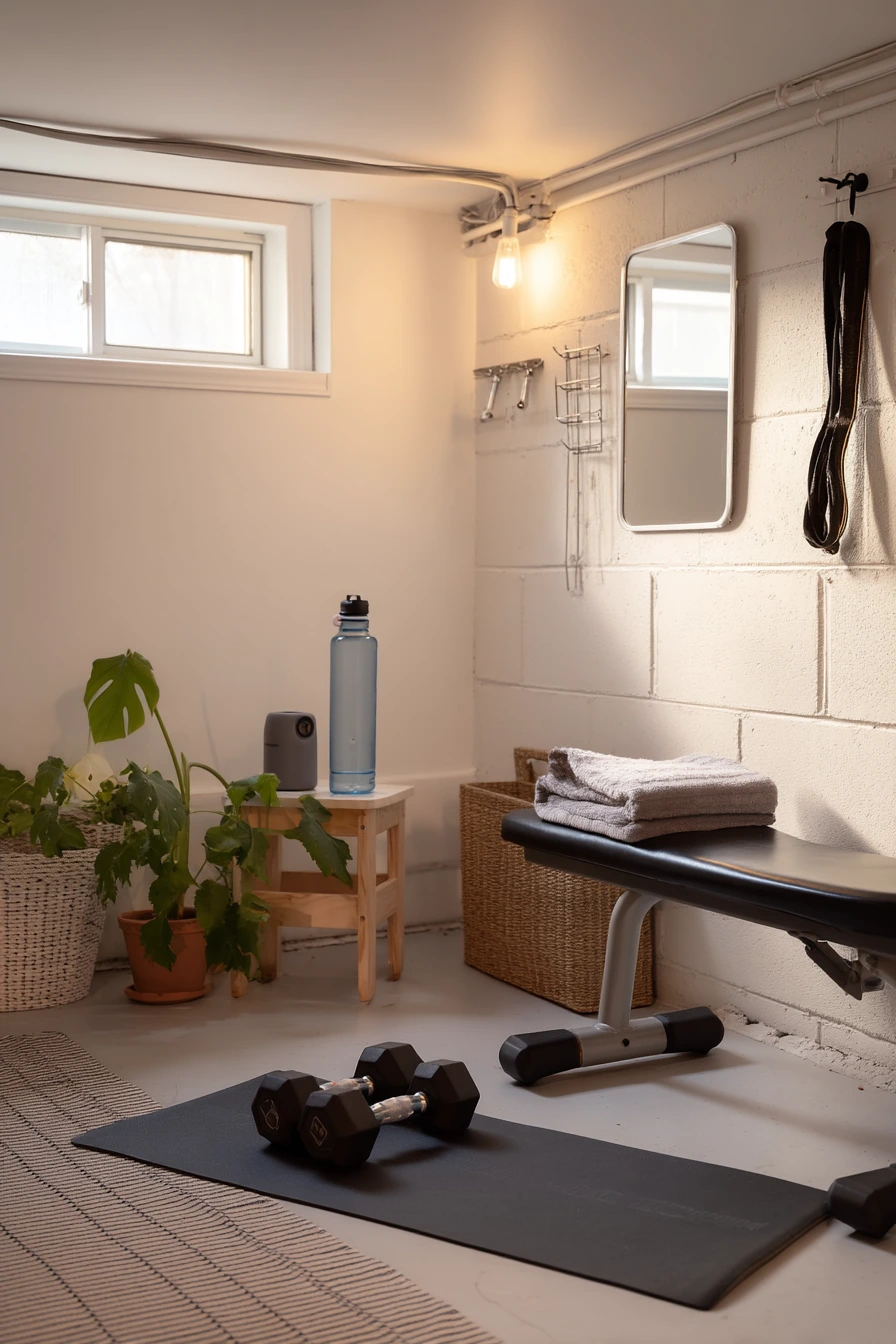
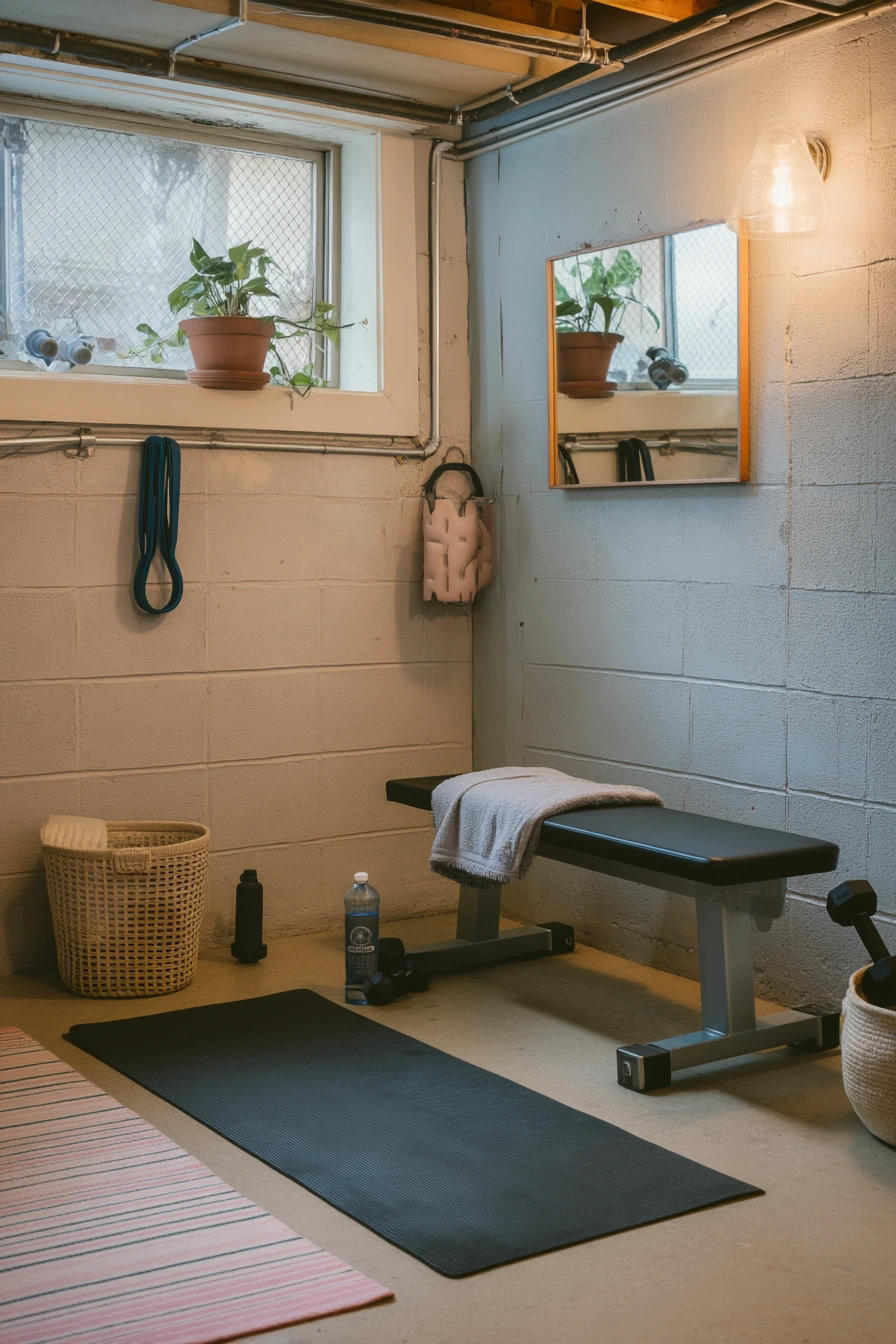
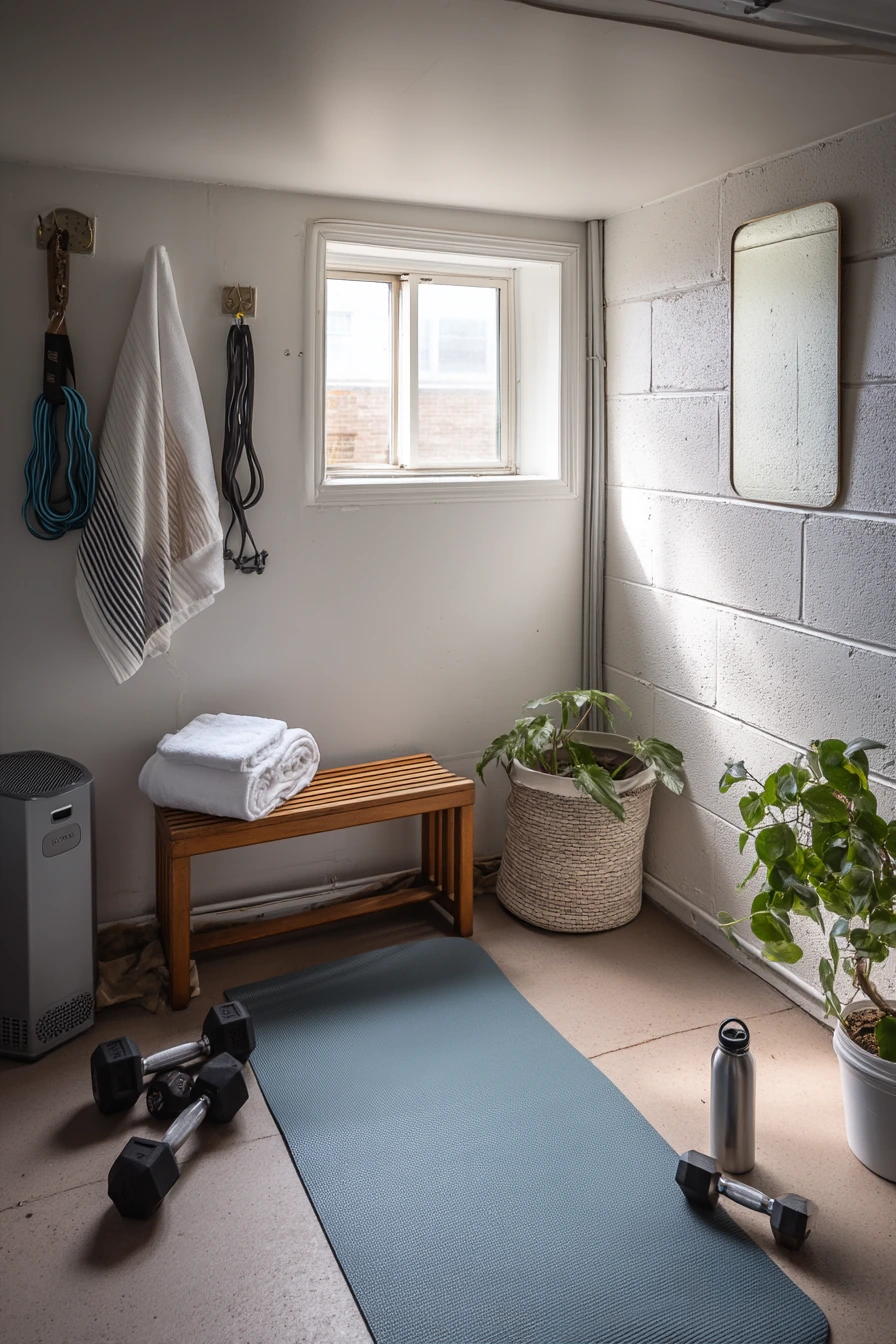
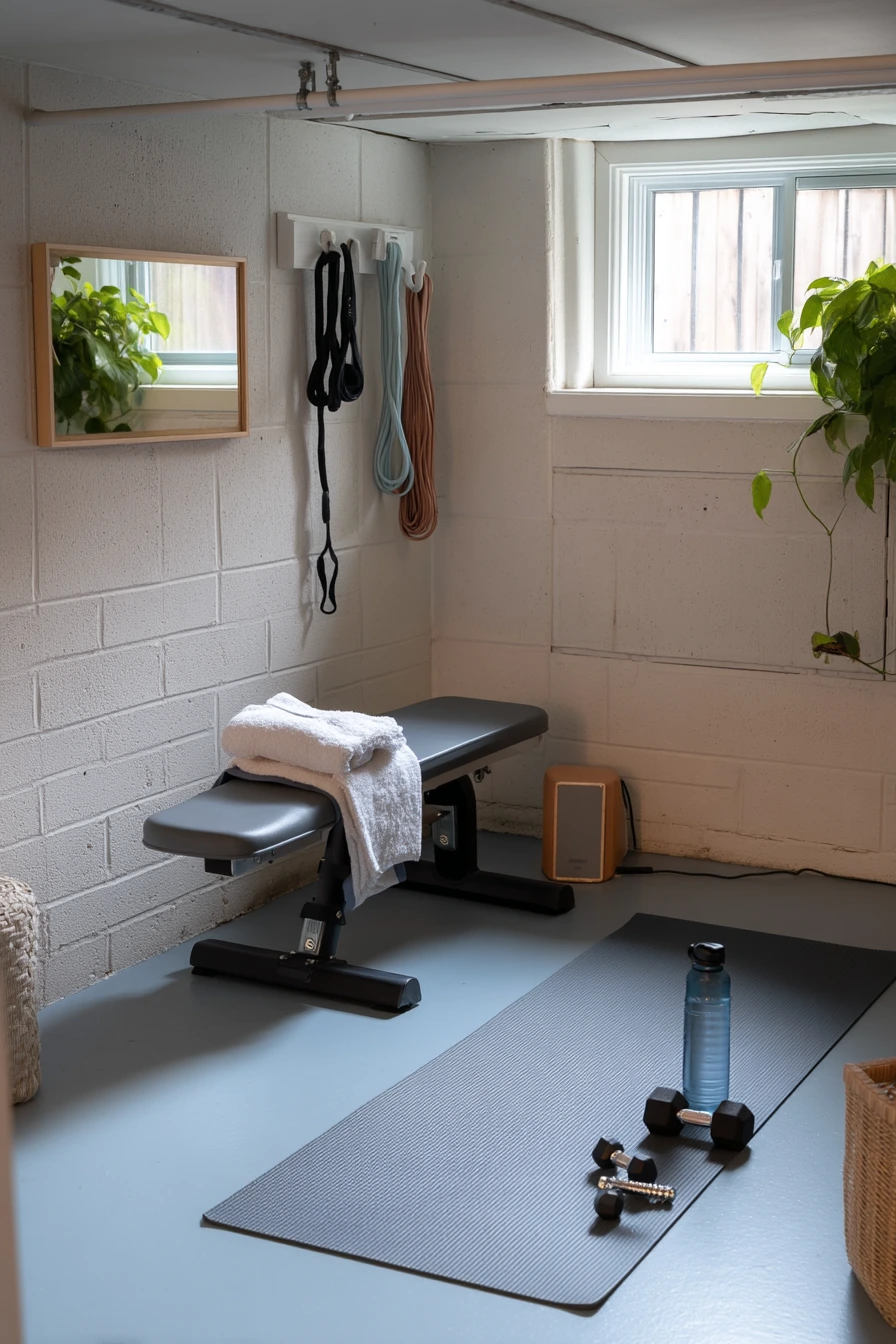
A functional basement wellness corner can fit into a small space and still feel restorative. Start with a yoga mat area that is always ready, not folded away. Place dumbbells and a compact bench nearby, and keep resistance bands on a simple peg rail so you can grab them quickly.
Basements often have painted cinderblock walls, so lean a mirror against the wall instead of mounting it. This is renter-friendly and helps the corner feel brighter. Add a folded towel and a water bottle on a small shelf or stool. A small speaker is useful for guided workouts, but keep the volume low if the room shares walls with bedrooms.
To make it cozy, add one houseplant near the window well and a warm lamp in the background. Morning window light can make the space feel clean and fresh, even in a lower level. If laundry is nearby, a basket at the edge of the frame is fine. The key is to keep workout tools in a tight zone so the rest of the basement stays calm.
- Use interlocking foam tiles under the mat to reduce cold floors.
- Hang bands and jump ropes on hooks to avoid tangles.
- Keep a small bin for wipes and hair ties.
- Add a slim shelf for towels and a spare water bottle.
- Use a timer or small clock so you do not check your phone.
Pro Design Tip: Place the mirror where it reflects the window or lamp, not clutter, so the corner feels twice as bright and more open.
Budget Considerations: A used mirror, basic peg rail, and secondhand dumbbells are usually affordable. If you need flooring, start with one mat plus foam tiles only in the workout area.
5. Cozy Basement Guest Bedroom That Feels Restful
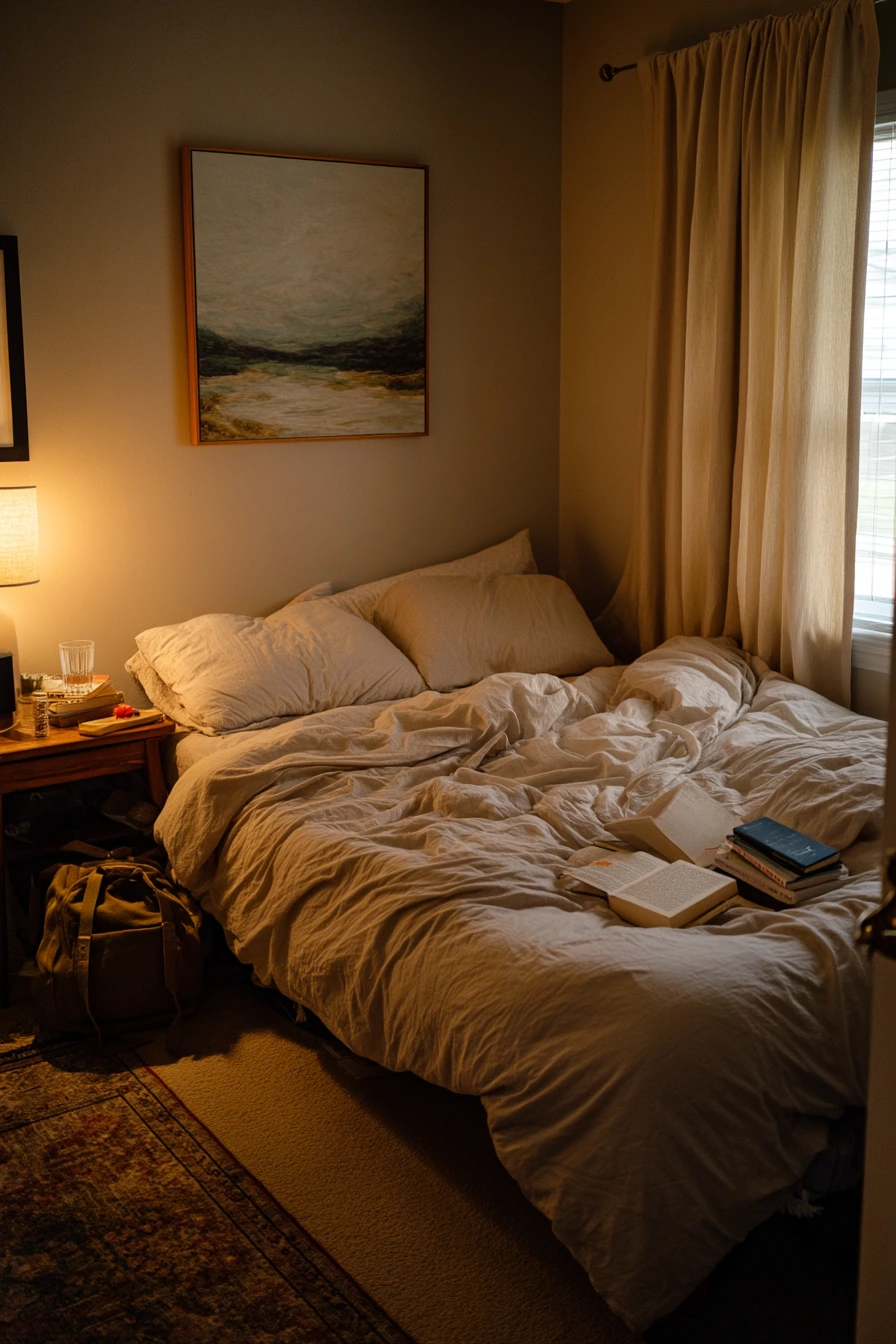
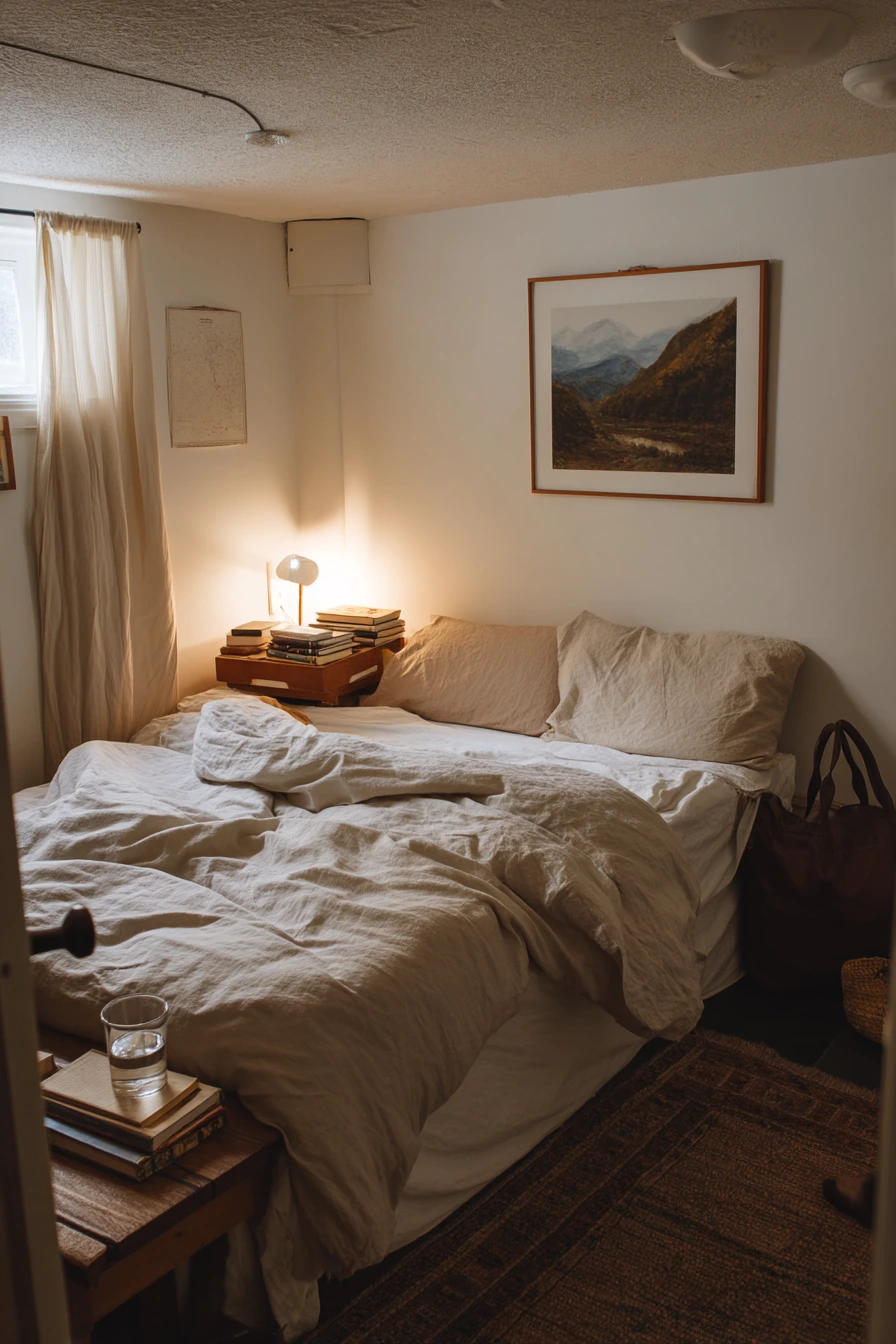
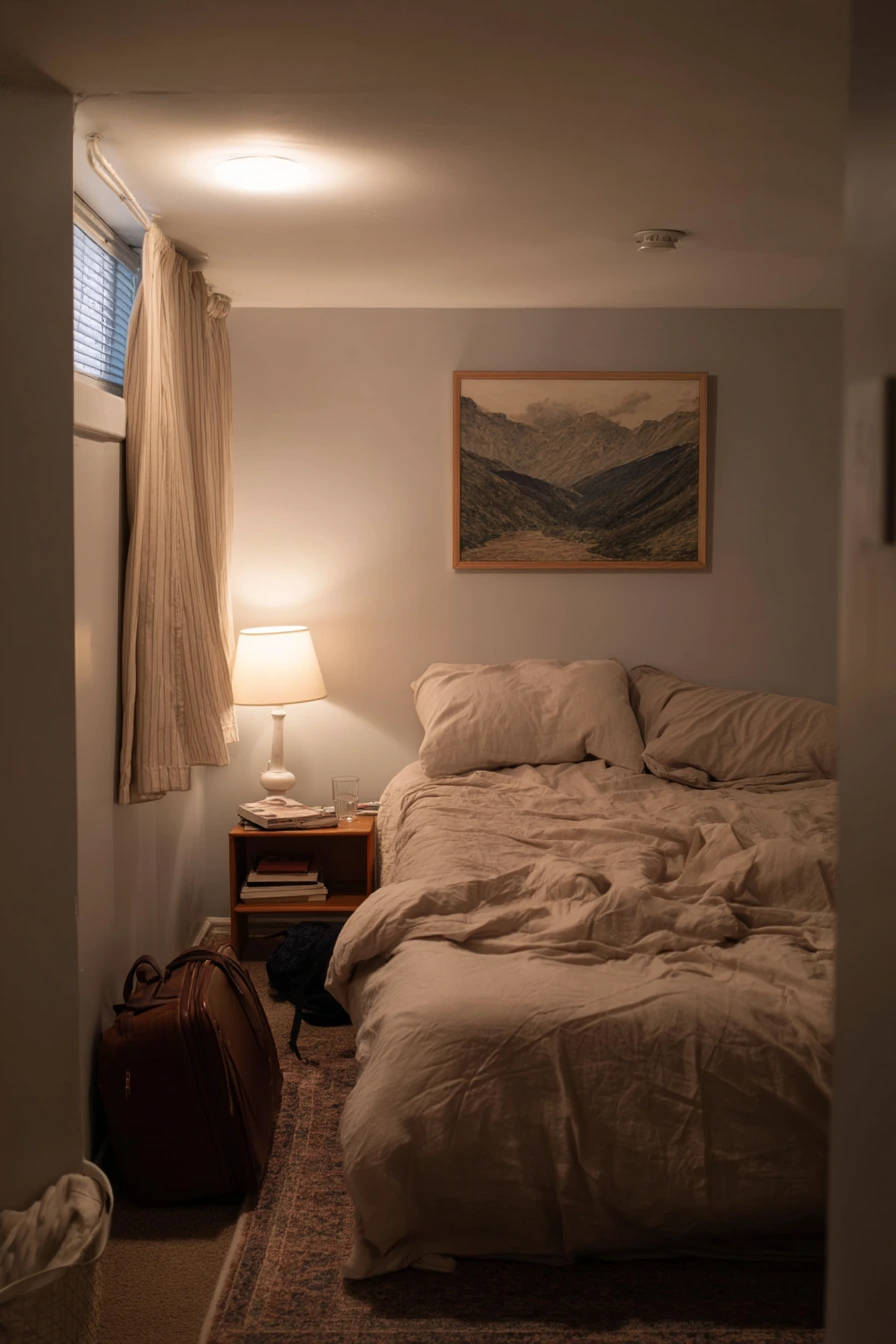
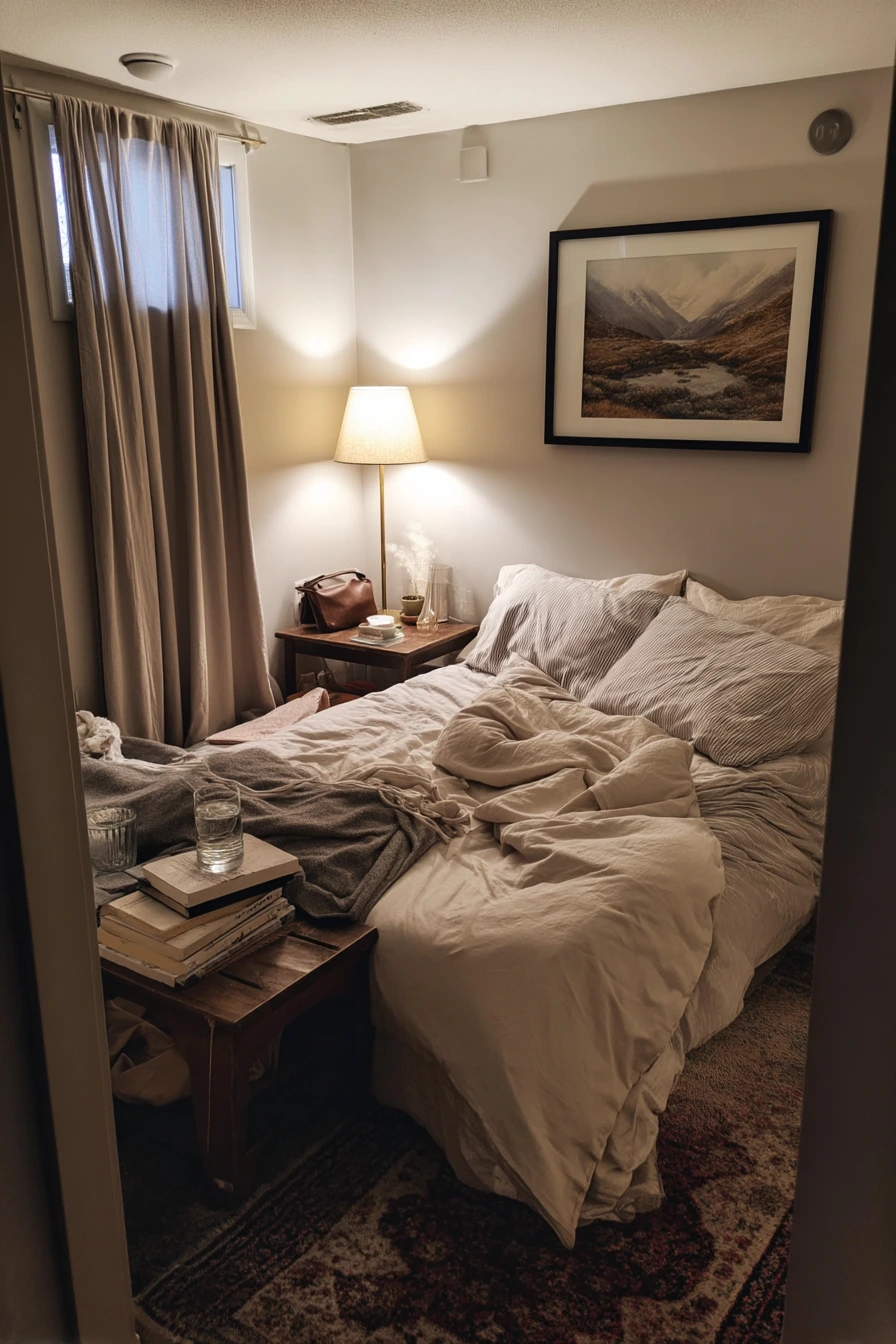
A cozy basement guest bedroom should feel calm and easy for visitors. Start with a queen bed dressed in breathable linen or cotton, and do not worry if the duvet looks slightly rumpled. A room feels more welcoming when it looks like it can be used right away.
Use warm bedside lighting instead of a bright ceiling light. A thrifted nightstand is perfect for a stack of novels, a half-full water glass, and a phone charger. Add framed landscape art to make the walls feel finished, and choose a soft area rug so guests do not step onto a cold floor in the morning.
Basement windows are often small, so handle light carefully. Use blackout curtains for sleep, but leave them partly open during the day to let in diffused daylight. A travel bag by the wall and slightly uneven pillows look normal. The goal is comfort, not perfection. Add one extra blanket in a basket, and keep the room simple so guests can unpack without moving decor.
- Provide a small luggage stand or clear bench space.
- Put a carafe or water bottle on the nightstand.
- Add a full-length mirror if the room has no closet mirror.
- Use a hamper or basket so clothes do not pile on a chair.
- Keep one outlet free for chargers with a short extension cord.
Pro Design Tip: Use two bedside lamps if possible, even if they do not match, so couples can read and move around without turning on overhead lights.
Budget Considerations: Shop secondhand for nightstands, lamps, and framed art. If a new rug is too costly, layer a smaller soft rug beside the bed where feet land.
6. Cozy Basement Playroom with Smart Storage
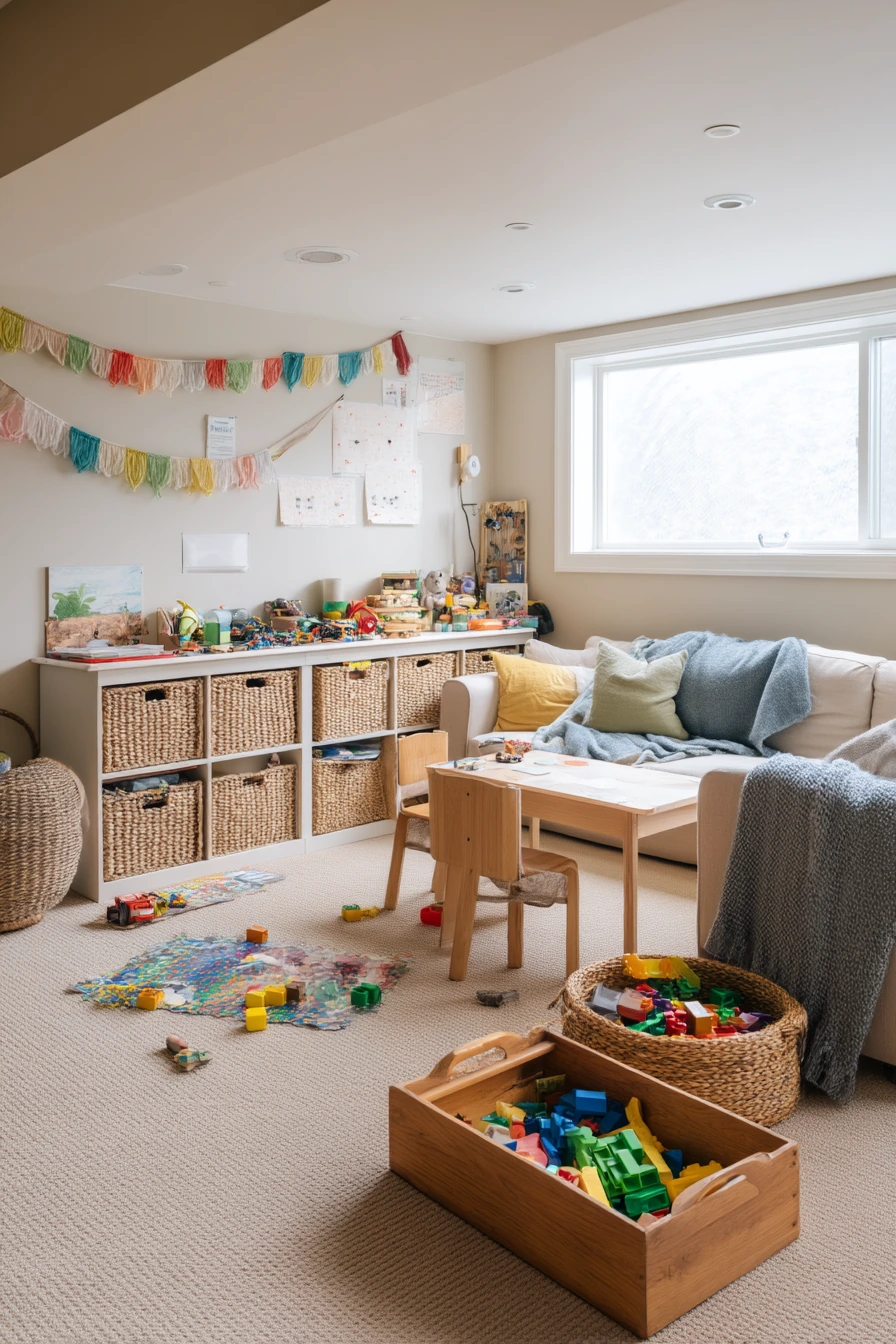
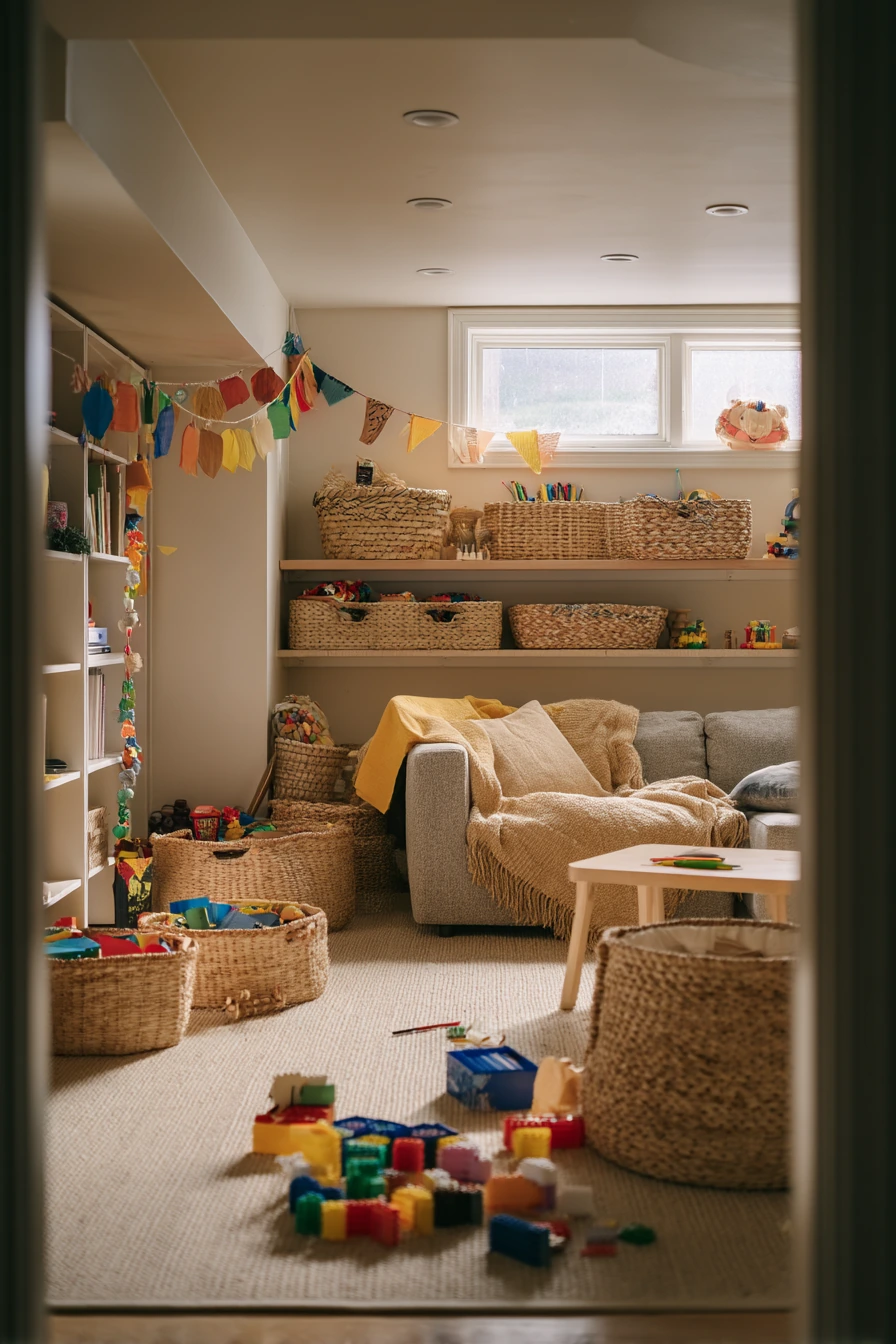
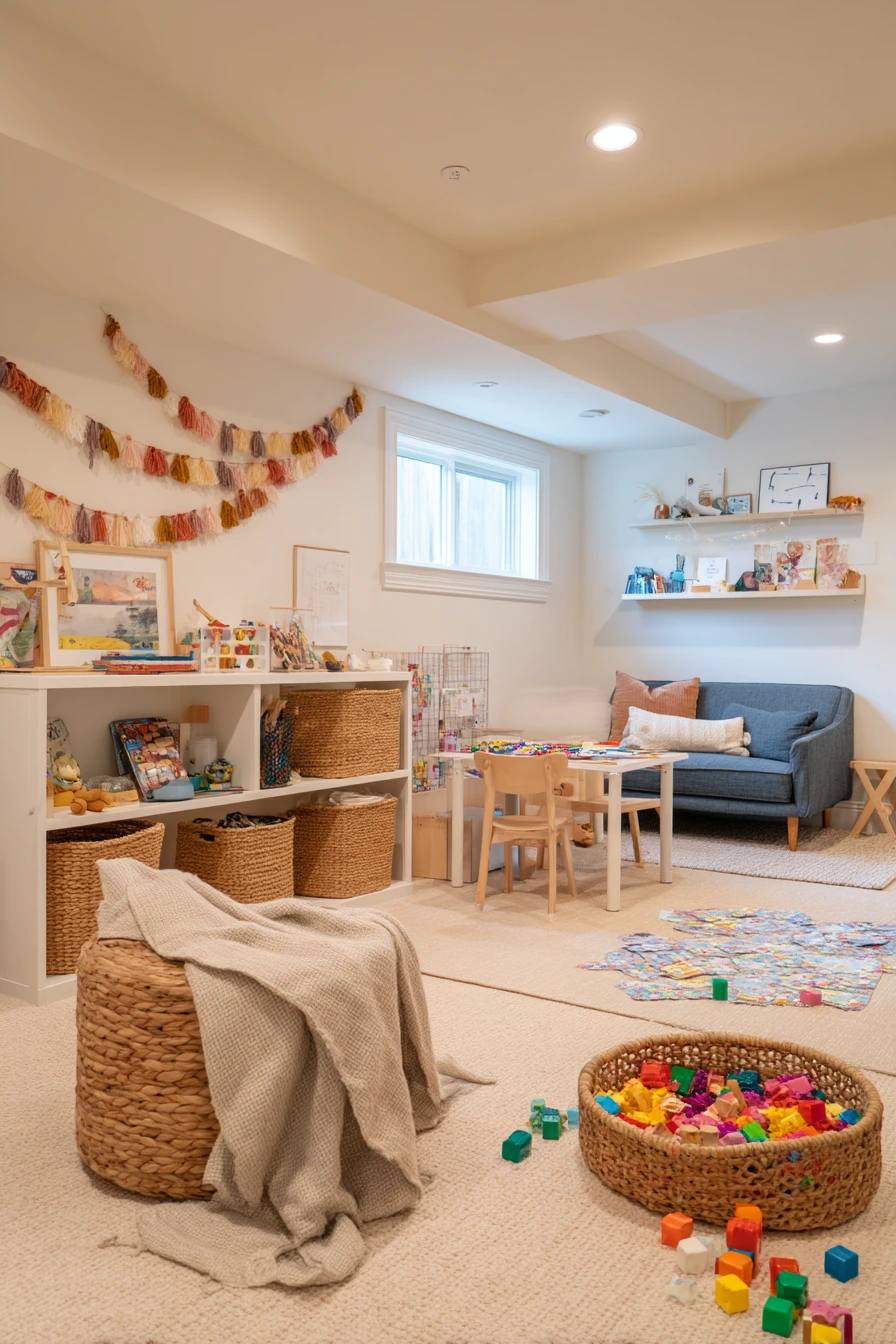
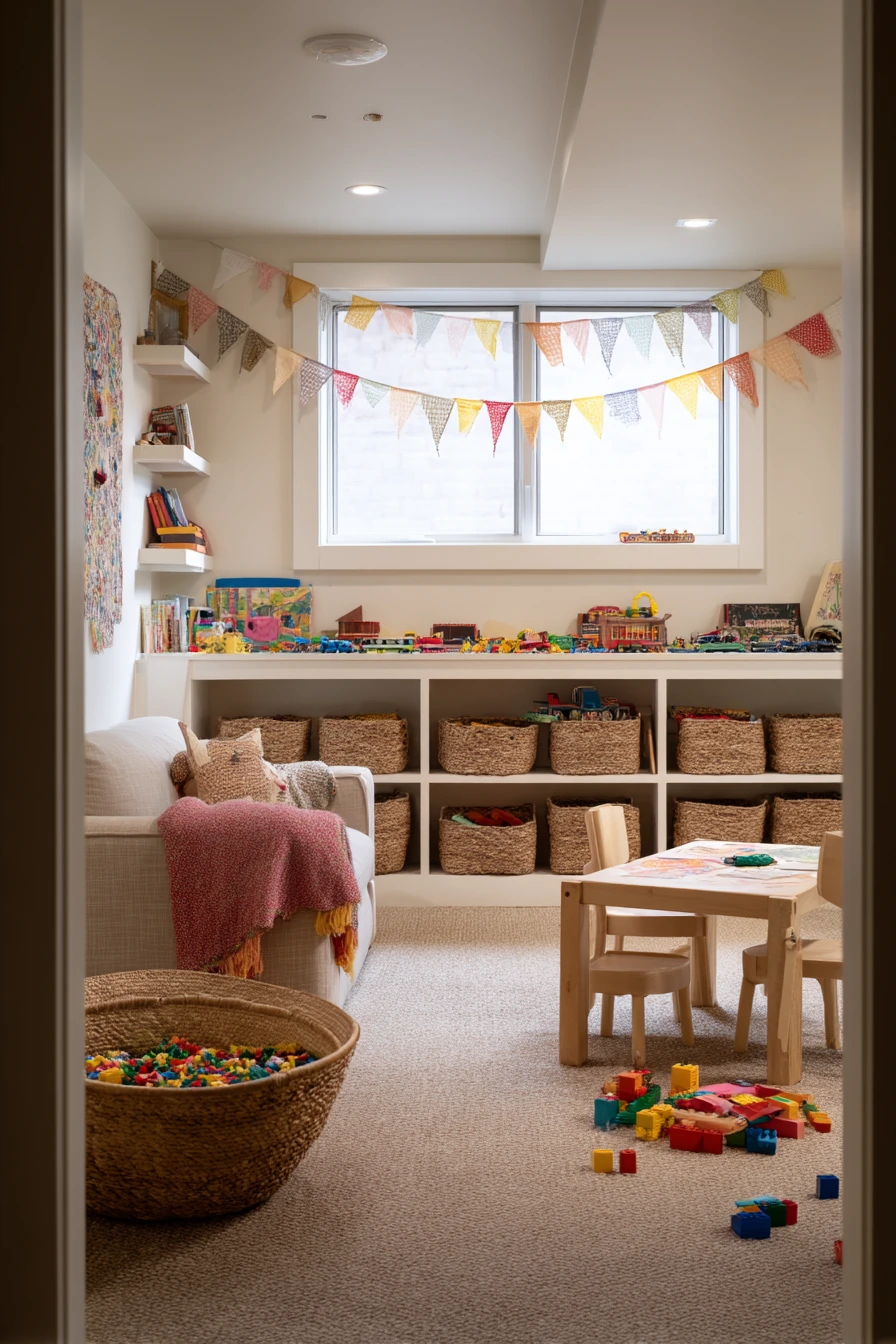
A family basement playroom works best when it is both playful and organized. Start with low shelves so kids can reach toys on their own. Use woven bins to group items by type, like blocks, dolls, cars, and art supplies. This helps the room reset fast before dinner or guests.
Set up a small craft table with crayons and paper, and add a child-sized chair that is easy to move. A mini sofa or floor cushions create a cozy spot for reading or quiet play. Scattered blocks and a puzzle left half-finished are normal, but the room should still have clear zones so nothing feels chaotic.
Warm overhead practical lights plus daylight from an egress window keep the room cheerful. Add a felt garland or one simple wall decoration to make it fun without overwhelming the space. Keep a blanket tossed over the back of the mini sofa for comfort during story time. If the playroom shares space with adult areas, choose storage that looks like furniture, not just plastic tubs.
- Label bins with words or simple picture icons for easy cleanup.
- Keep a lidded bin for tiny pieces like LEGO or beads.
- Use a wipeable mat under the craft table for paint days.
- Rotate toys monthly and store extras in a closet or tote.
- Add one basket for library books so they do not get lost.
Pro Design Tip: Plan the storage wall first, then place the mini sofa and craft table, so the main path stays open and the room feels larger.
Budget Considerations: Cube shelves and woven-style bins have affordable options. You can also use matching fabric bins to make inexpensive shelving look more finished.
7. Cozy Basement Entertainment Corner for Cards and Snacks
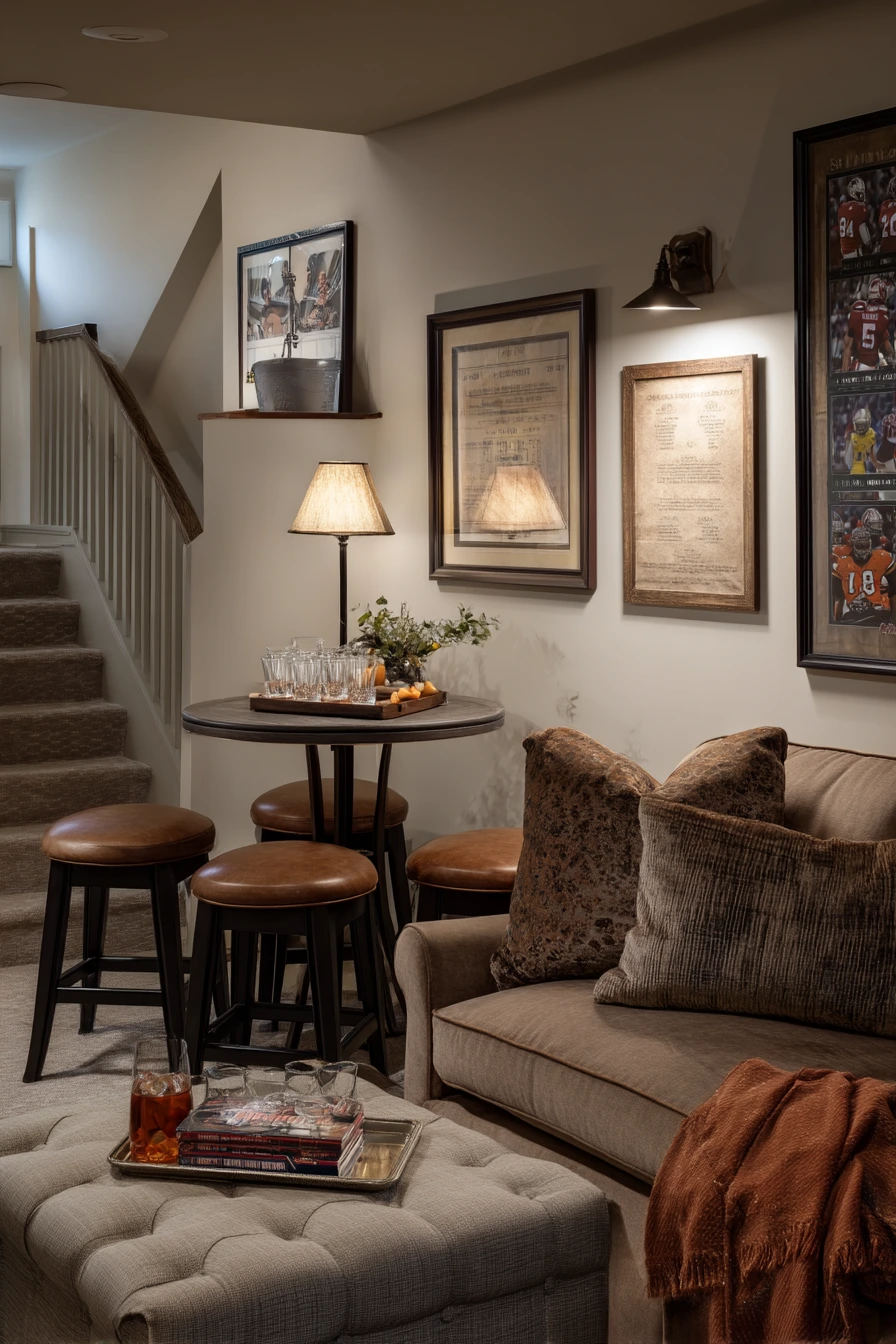
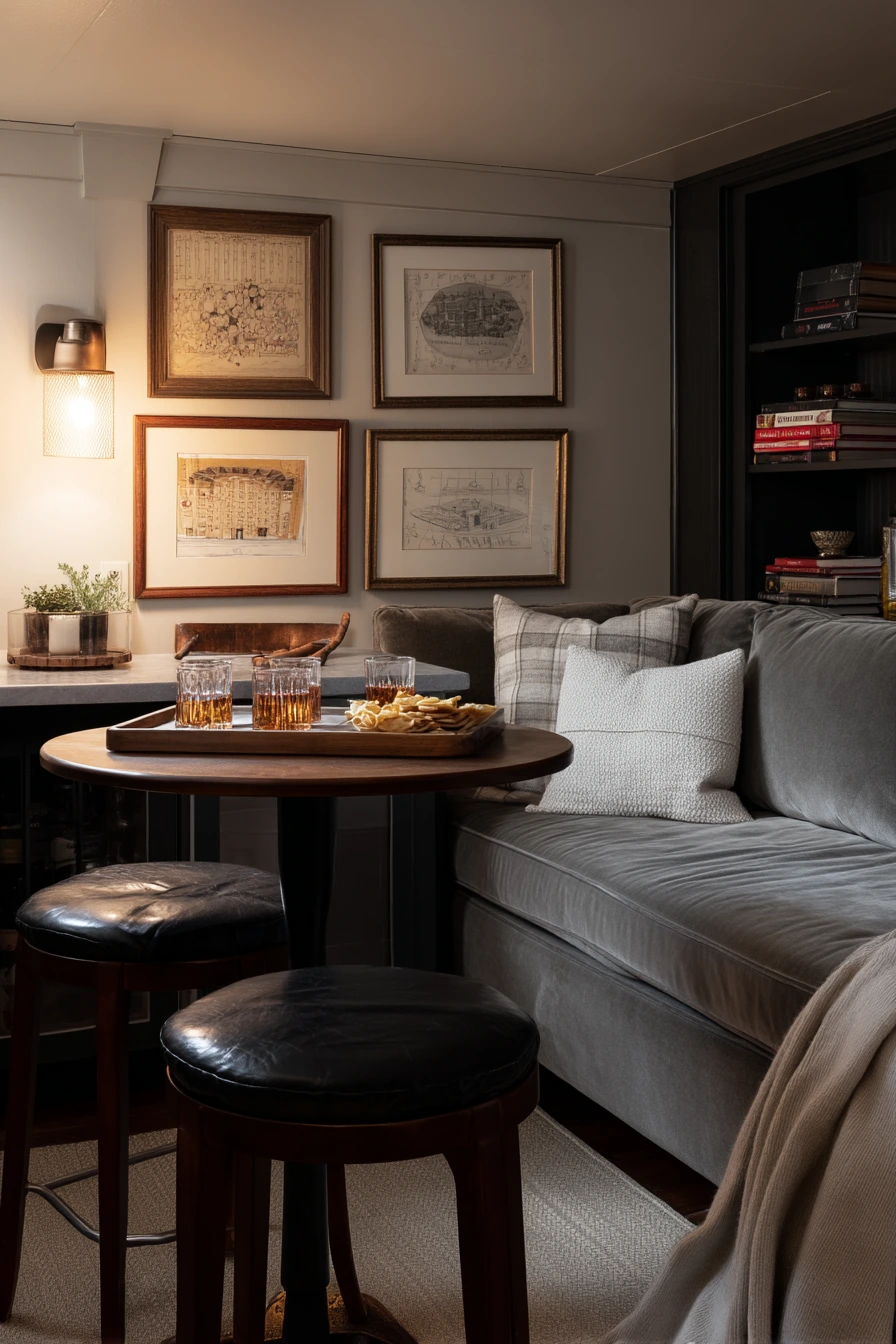
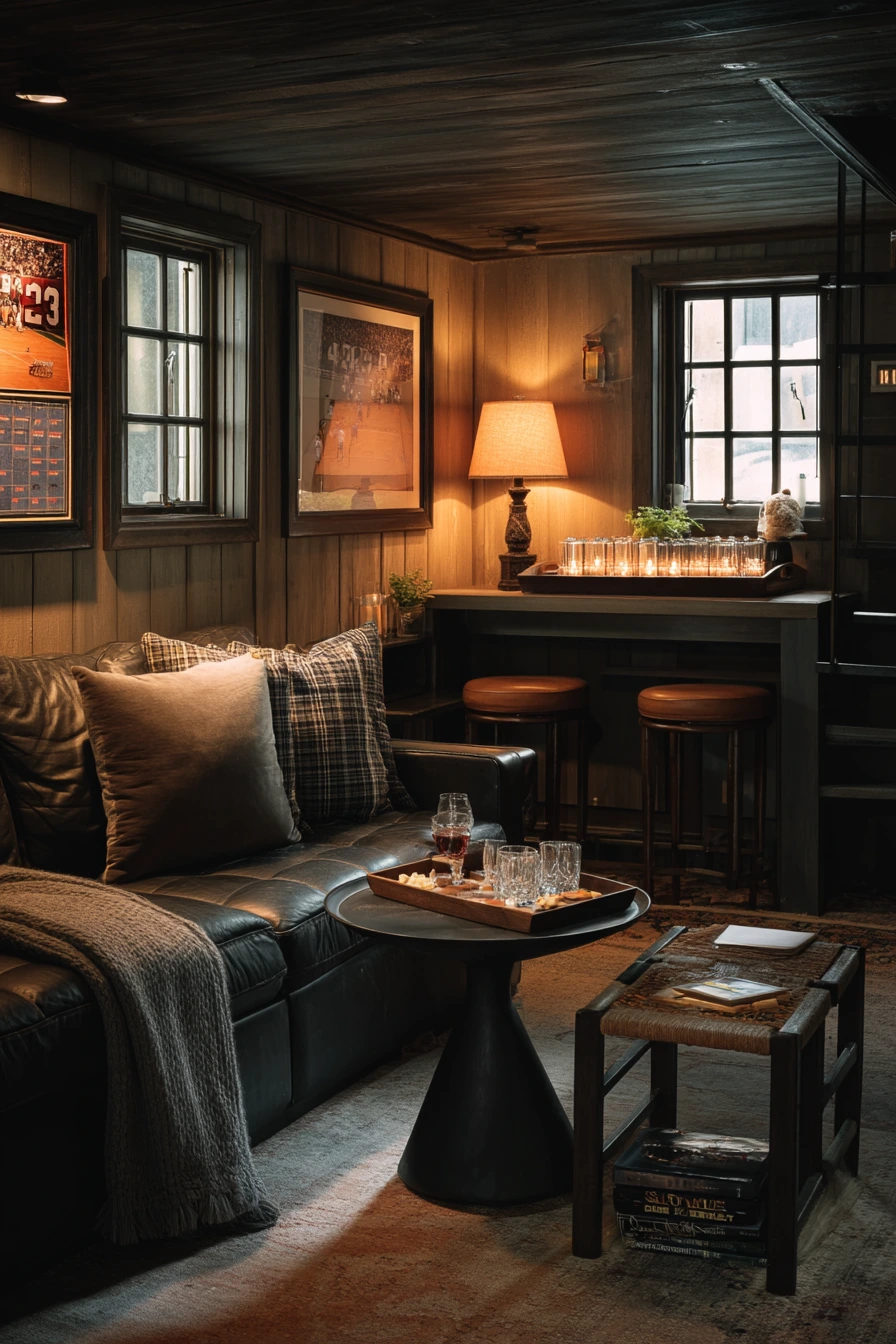
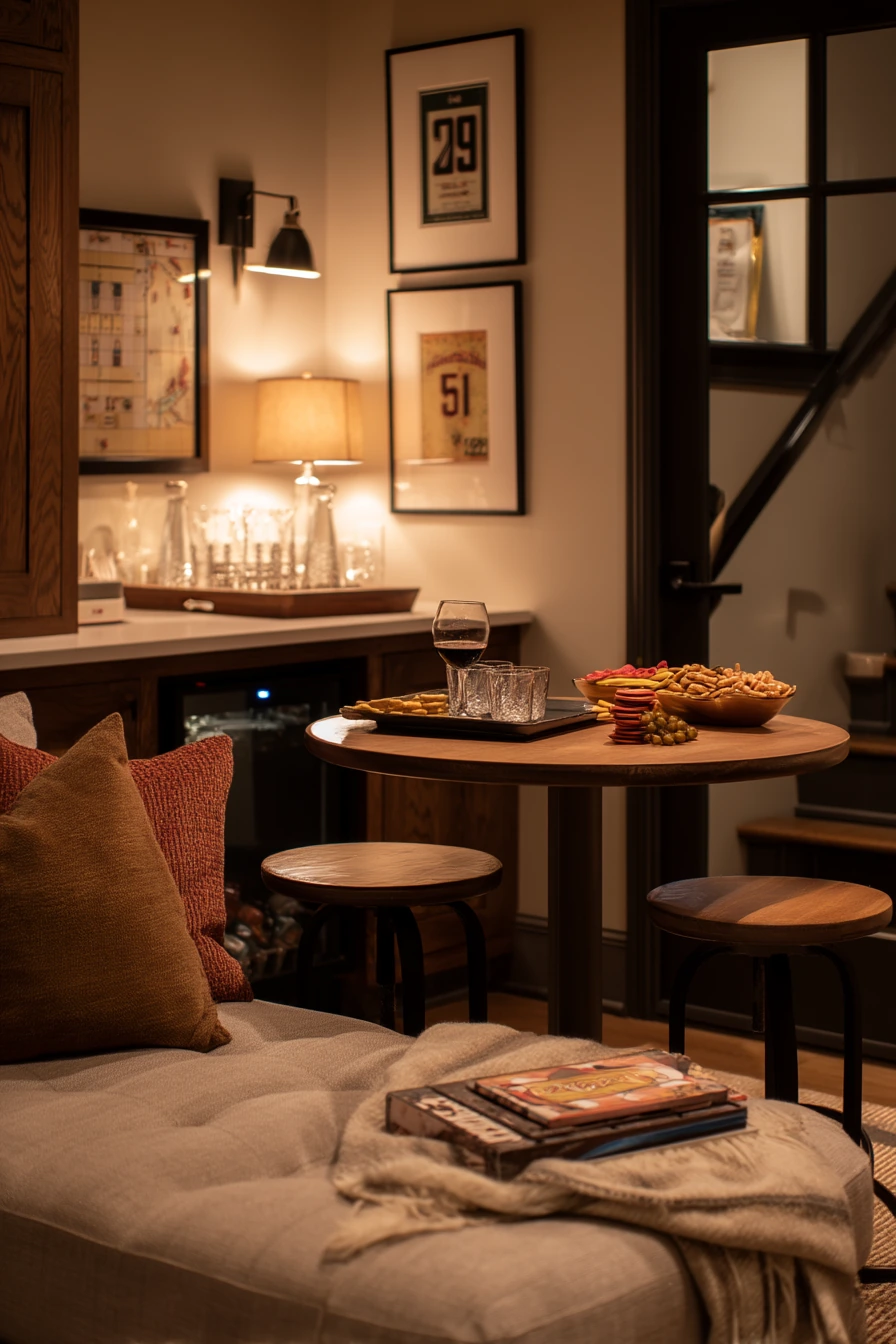
A cozy basement entertainment corner is a great way to host without building a full bar. Start with a small bar cabinet for glasses and a tray of snacks. Add two stools for quick chats, plus a round table set for cards so the space invites people to sit down.
Warm lamps are key here, especially if the basement has limited daylight. Skip candles if you have kids or pets, and use candleless warm lamps instead. Framed sports memorabilia or a few personal prints help the corner feel collected. A stack of board games nearby makes it easy to start an activity without digging through closets.
Make the seating feel snug with a folded throw on the sofa edge and a soft rug under the table. One wine glass on the table can look realistic, but keep coasters close by to protect wood. If you have soft window spill from the stairs, aim the seating to catch it. This corner should feel like a small destination inside the basement, even if the rest of the room is multi-use.
- Use a small lamp on the bar cabinet for a warm glow.
- Keep a tray to gather snacks and reduce mess.
- Store napkins and cards inside the cabinet for quick setup.
- Add a narrow wall shelf for extra glasses if storage is tight.
- Choose stools with backs for longer game nights.
Pro Design Tip: Hang one larger piece of wall art or memorabilia at eye level to anchor the corner, then keep the rest minimal so it feels cozy, not busy.
Budget Considerations: A thrifted cabinet or small dresser can become a bar with a simple tray and glass storage. Use matching inexpensive glassware to make it feel pulled together.
8. Cozy Basement Laundry Room with a Sitting Spot
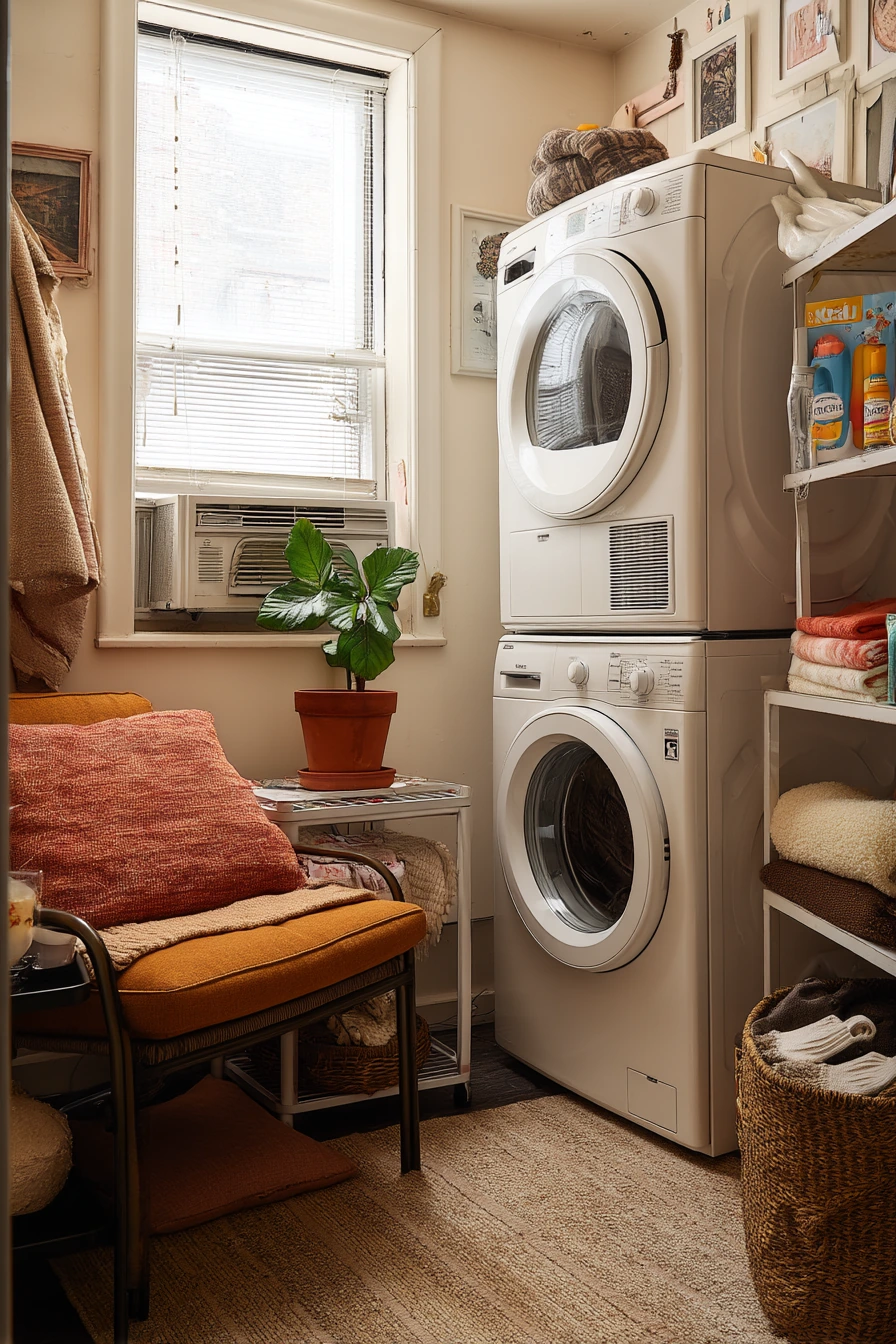
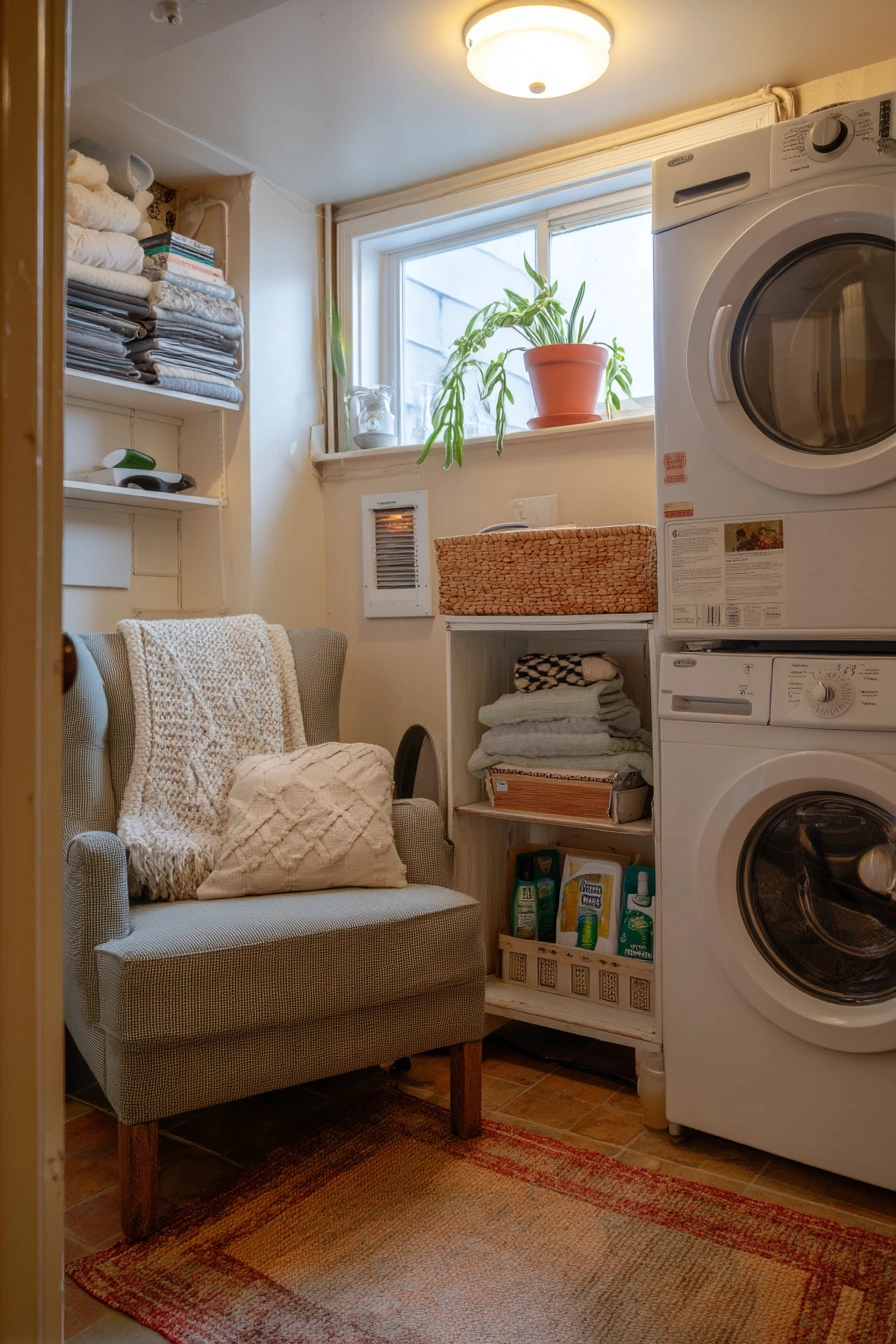
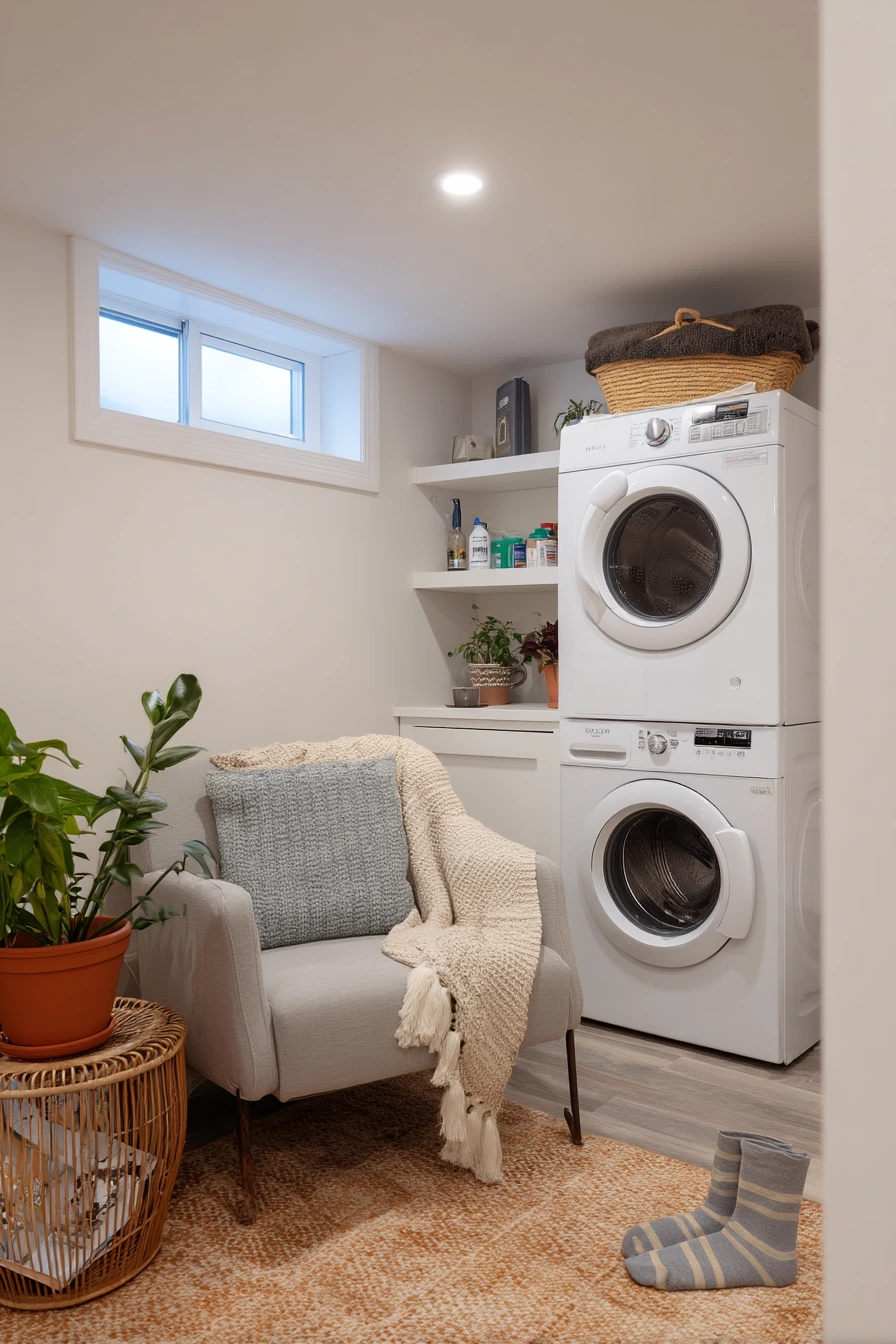
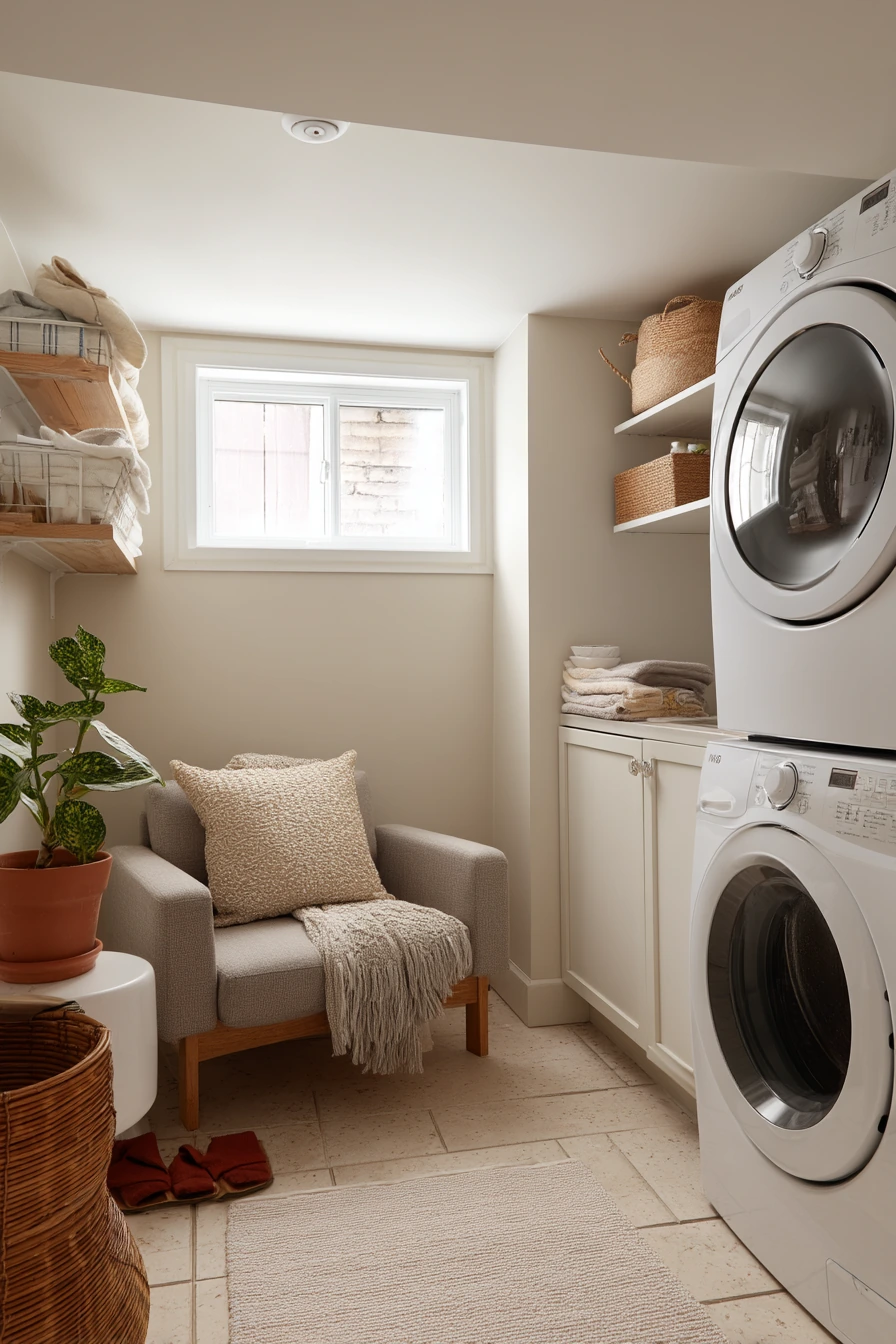
A finished basement laundry room can feel less like a chore zone when you add a cozy sitting spot. Start with a compact armchair that fits beside the stacked washer and dryer without blocking doors. Drape a knit blanket over the chair to soften the look and make the space feel lived-in.
Keep function first. Use a utility shelf with detergents lined up neatly, and add a small rug to make standing at the machines more comfortable. A magazine basket or small bin by the chair gives you something to do during a cycle. If you have a plant in a terracotta pot, place it where it catches window daylight without getting splashed.
Hide the bulky items. Keep the ironing board folded away, and use a hamper for socks and small items so they do not scatter. Warm under-cabinet light helps at night, while cool window light keeps the room feeling clean during the day. This hybrid space works best when every item has a clear home and the sitting area stays simple.
- Use hooks for lint roller, mesh bags, and drying rack clips.
- Add a small lidded bin for lost socks and change.
- Place a tray on the chair side table for a drink and phone.
- Choose a low-pile rug that can handle spills.
- Keep one empty basket for clean laundry to reduce piles.
Pro Design Tip: Use one consistent container style, like matching clear bins or matching baskets, so open shelving looks calm even when full.
Budget Considerations: A secondhand chair and a small rug can transform the room fast. If under-cabinet lighting is costly, try plug-in LED light bars with adhesive backing.
9. Cozy Basement Work-From-Home Office Setup
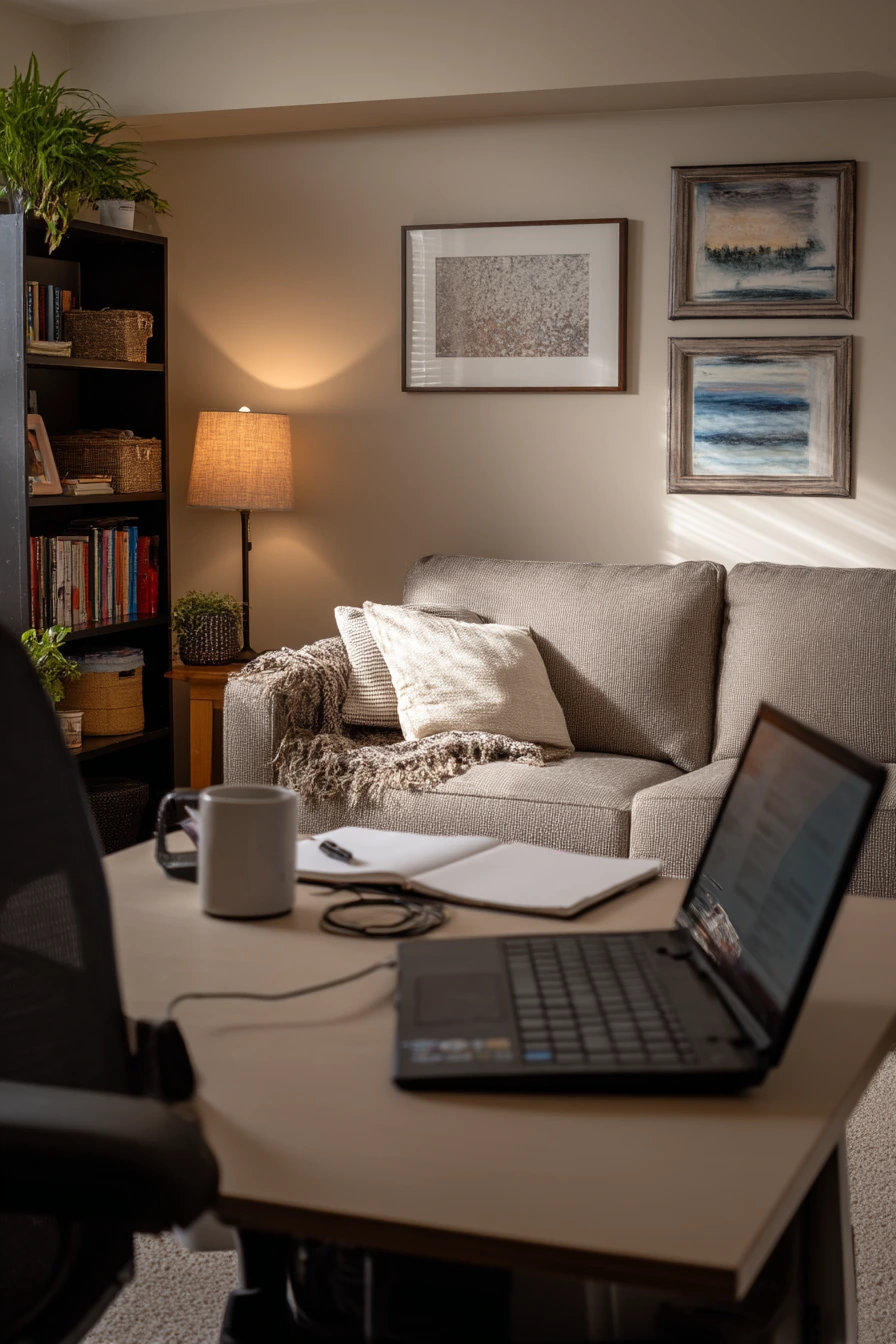
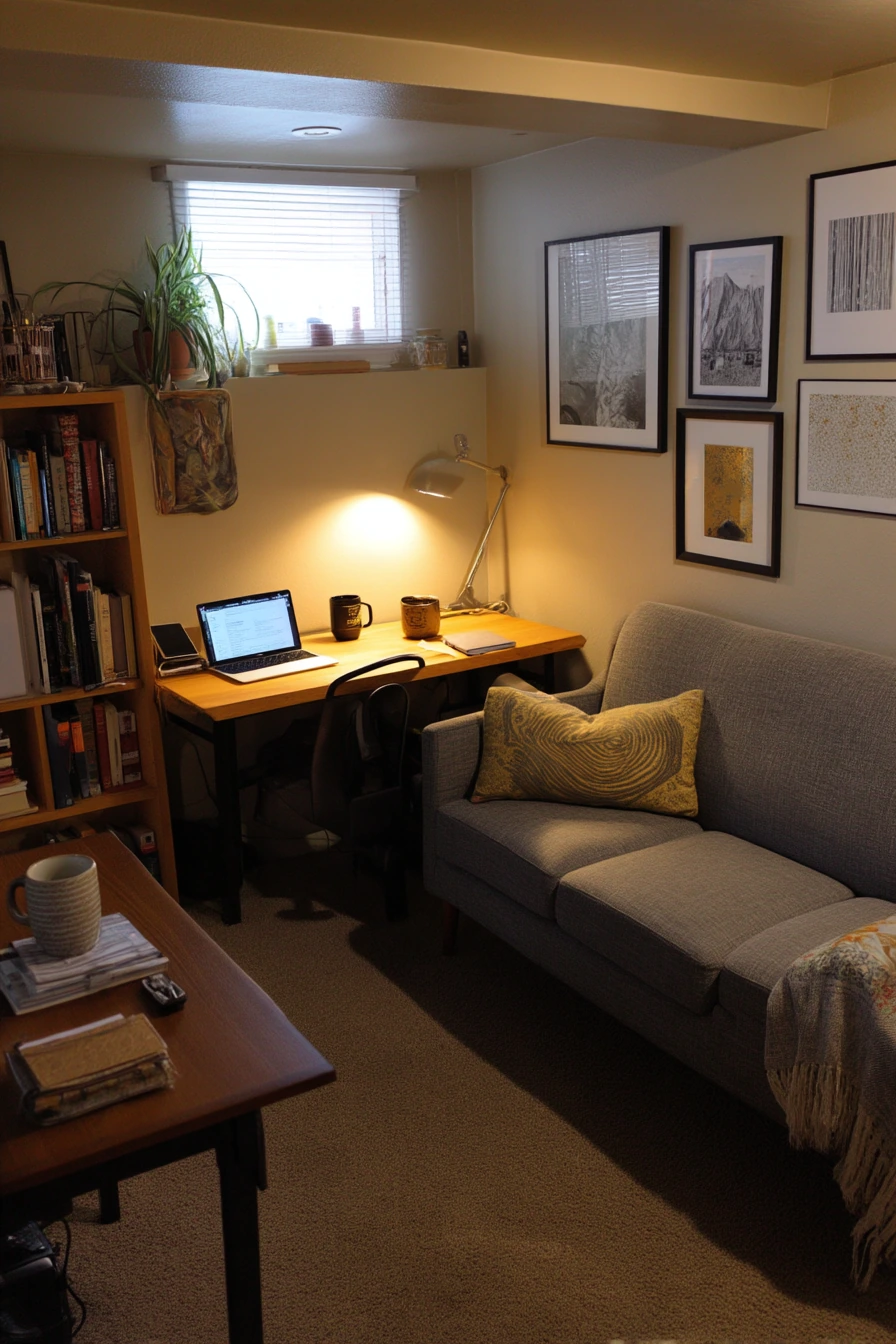
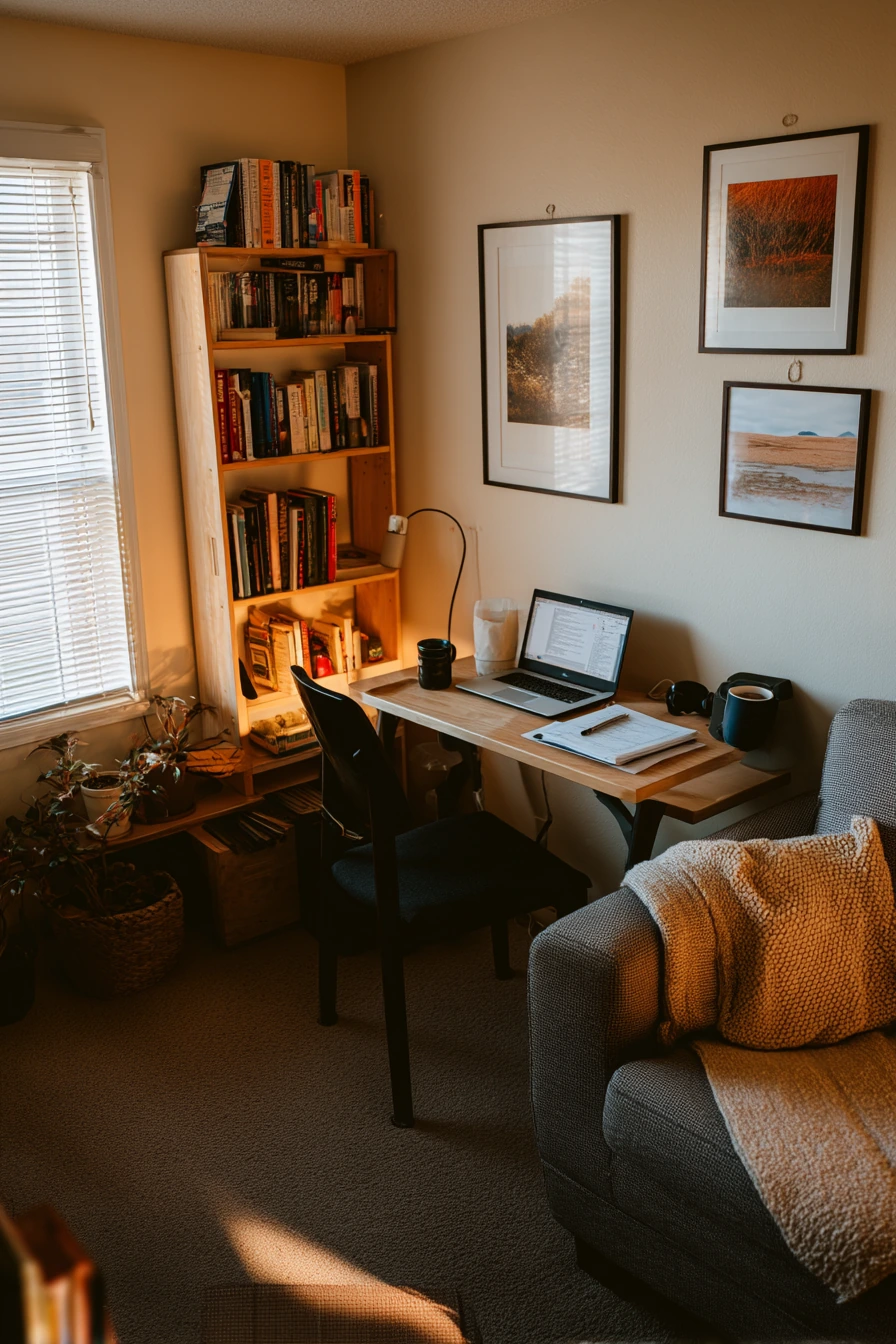
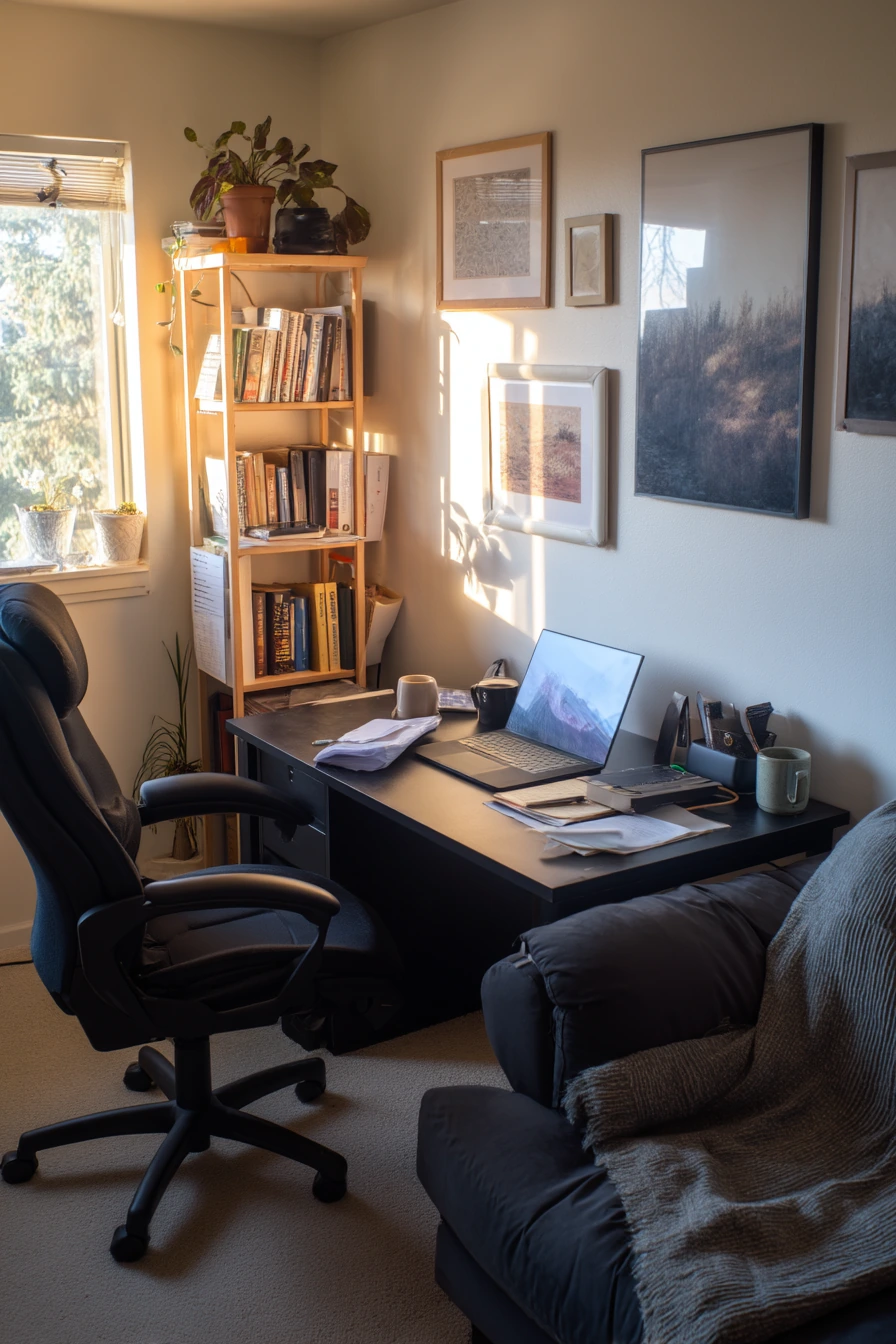
A quiet basement work-from-home setup should support focus and comfort. Start with a simple desk and an ergonomic chair, then keep the surface clear except for a laptop, notebook, and pen cup. A visible charging cable is fine, but guide it along the desk leg so it does not snag your feet.
To make the office feel cozy, add a nearby loveseat for breaks. A textured throw and a small pillow make it inviting without turning it into a nap zone. Use framed prints and a bookshelf with mixed books and binders to add texture and keep supplies close. A coffee mug can sit on a coaster, but avoid leaving food in the basement since pests can be an issue.
Light matters in a basement office. Use soft daylight from a small window when you can, and add a gentle desk lamp glow for task work. A small plant that casts shadows brings life to the corner. If the space feels plain, add one warm wood element, like a shelf or picture frame, to balance cool basement walls.
- Use a desk mat to reduce noise from typing.
- Add a small file box for papers instead of stacks.
- Place a footrest if your chair is high.
- Use a blackout shade if glare hits the screen.
- Keep a small basket for chargers and tech extras.
Pro Design Tip: Position the desk so the window light hits from the side, not behind the screen, to reduce glare and improve video calls.
Budget Considerations: A basic desk and a good used office chair are a smart spend. You can upgrade the look with inexpensive frames and a throw instead of buying new furniture.
10. Cozy Basement Seating Area with an Electric Fireplace
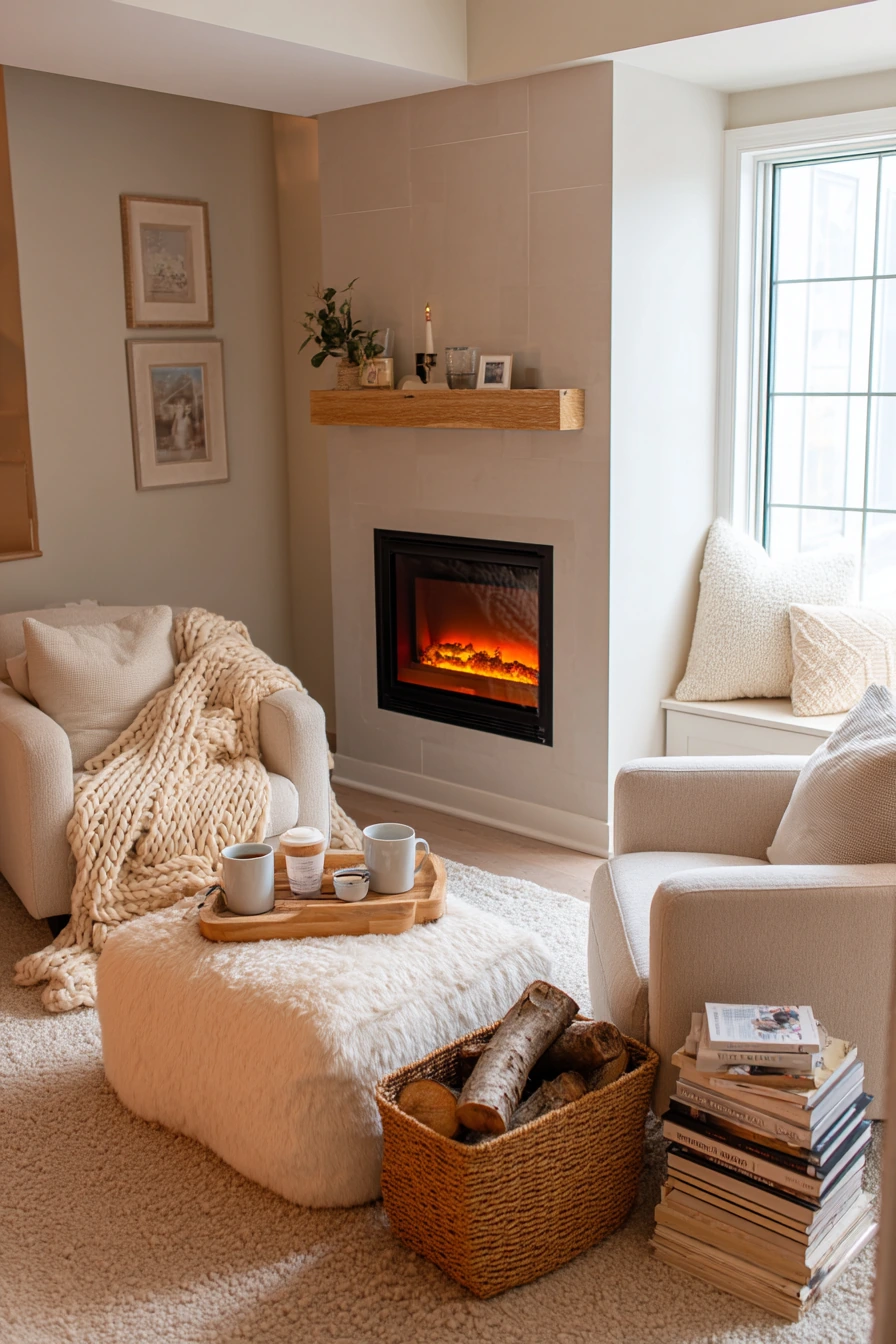
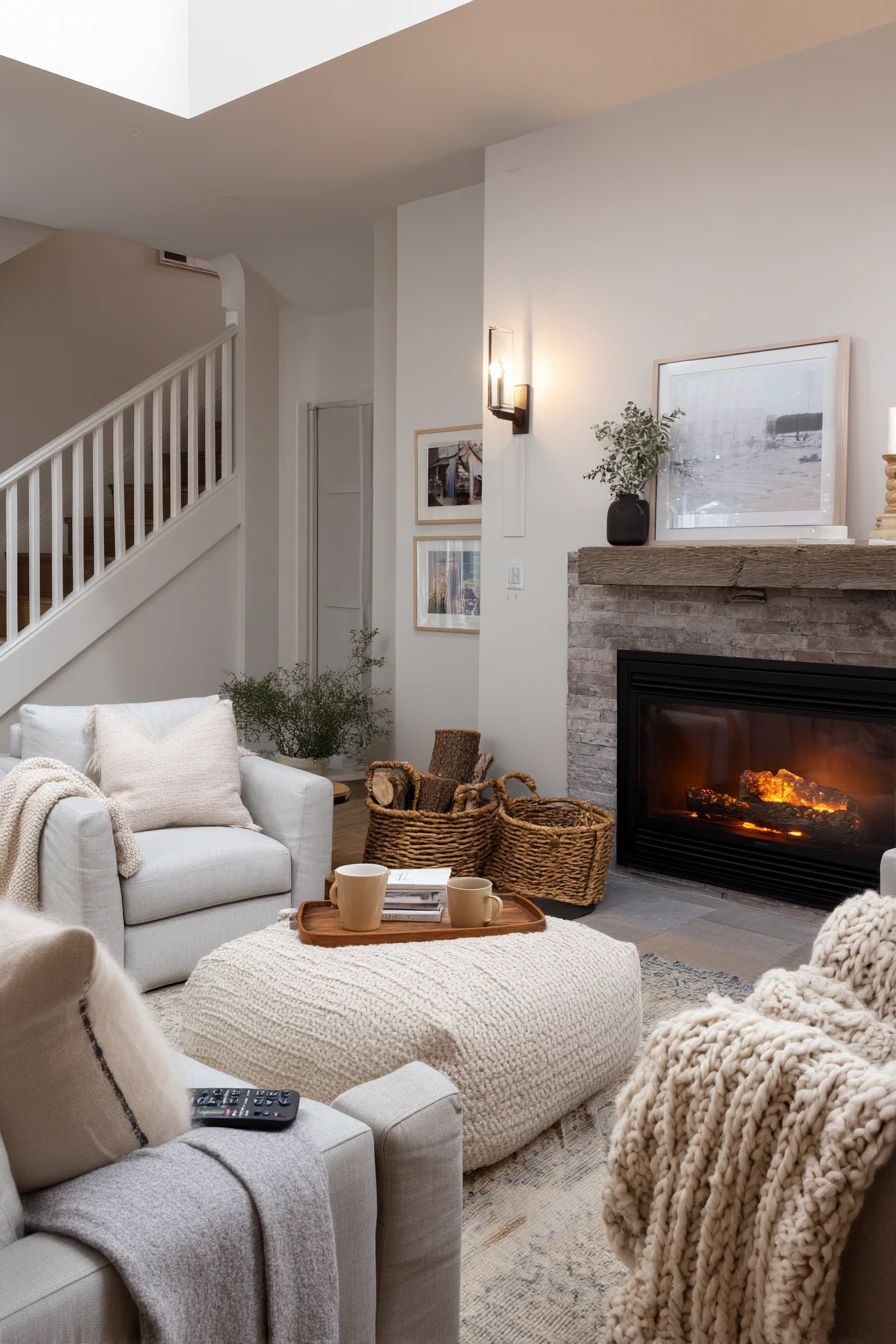
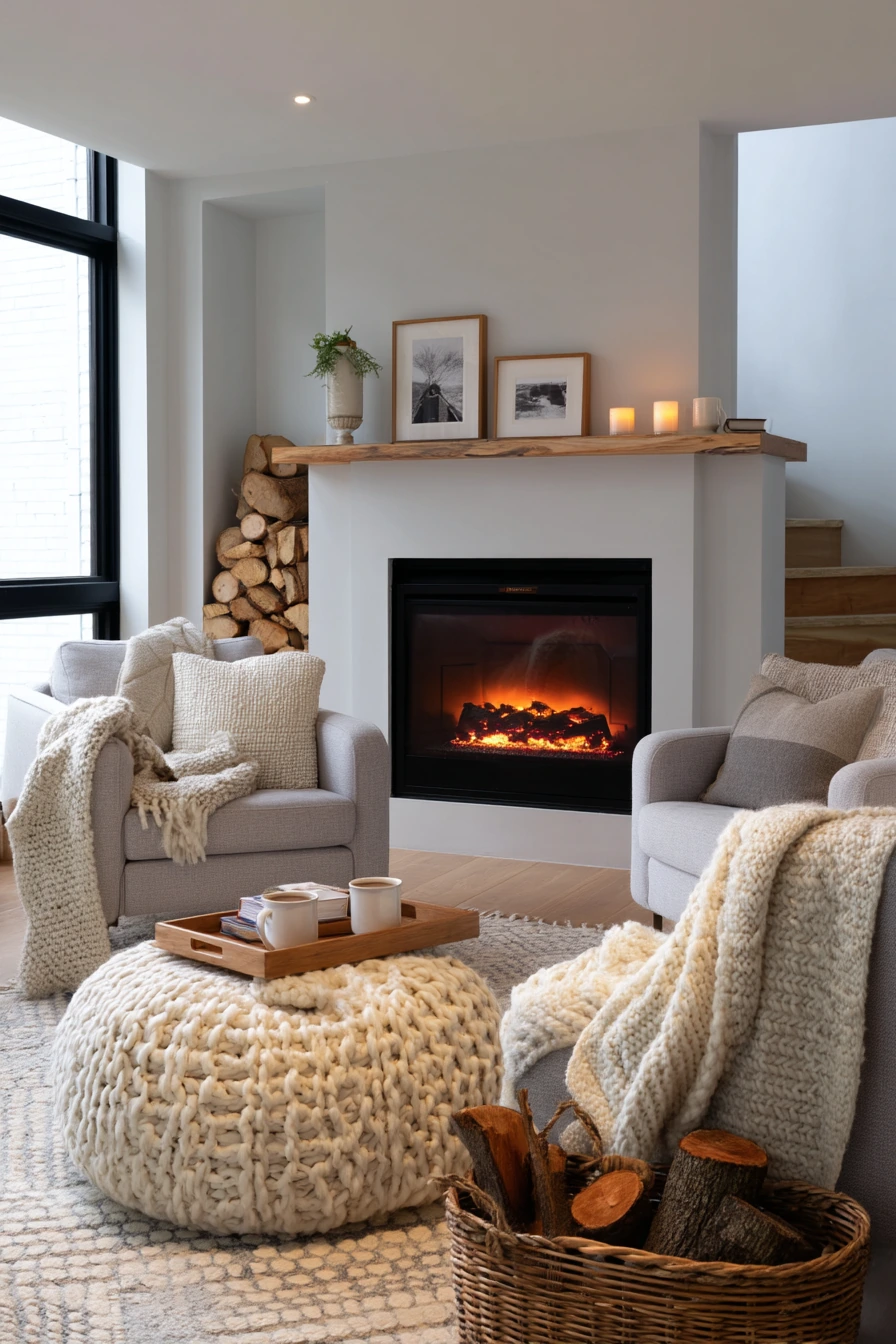
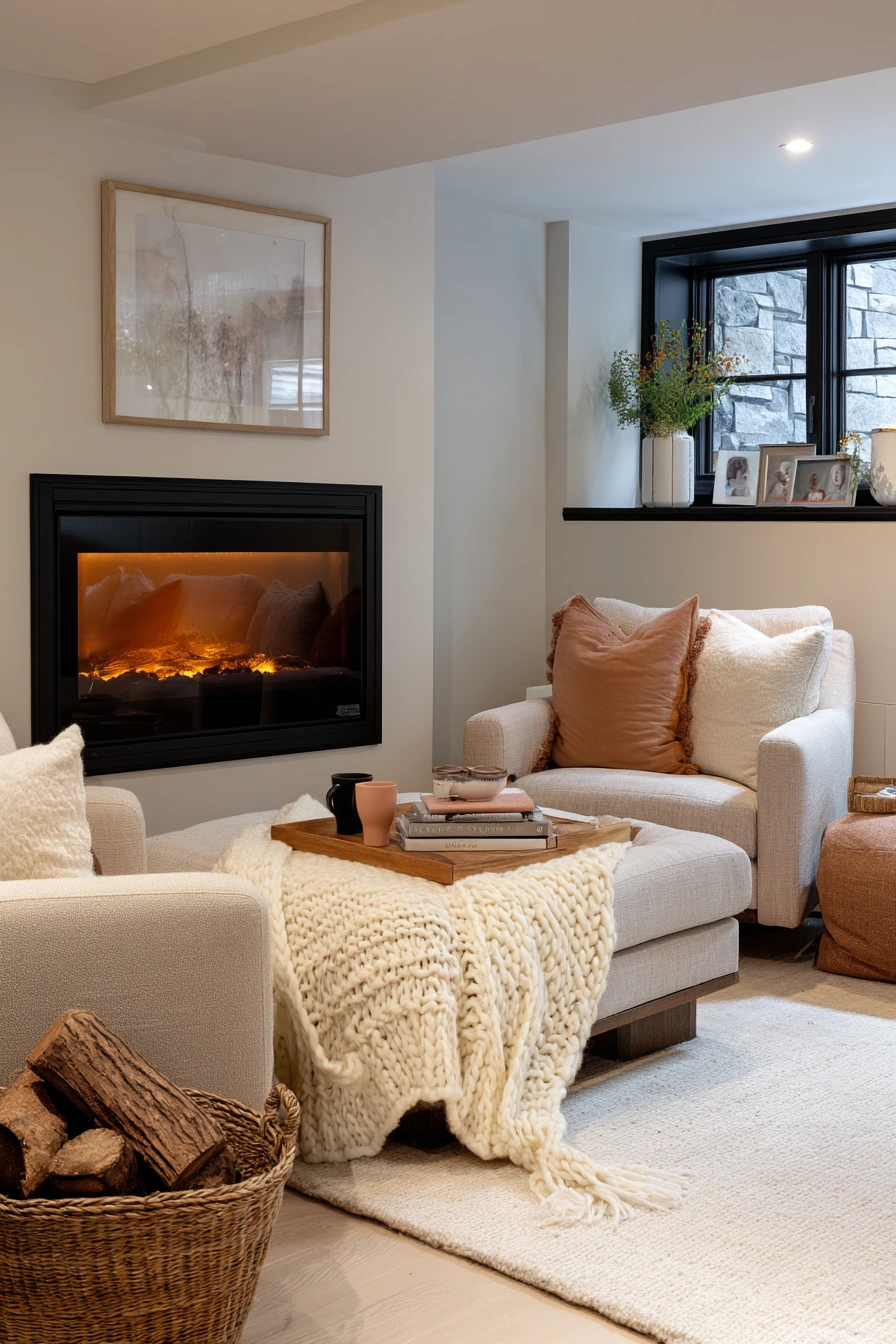
A warm basement seating area around an electric fireplace creates a true gathering spot. Arrange two armchairs and a small sofa so the fireplace is the focal point, then place an ottoman where feet can rest without blocking the path. A soft rug helps the seating feel like one zone, not scattered pieces on a hard floor.
Style the room with comfort items you will actually use. Add a chunky knit blanket, a wood tray with tea mugs, and a remote on the cushion. A basket of logs can be decor, even with an electric unit, because it adds texture and a hearth-like feel. Stack a few art books on the coffee table or ottoman tray for easy browsing.
Mix natural window light from the stairwell with amber practicals for a cozy glow. Family photos should be subtle and not too small, so the wall does not look busy. If the hearth has reflections, keep the area neat so the shine looks calm. This kind of basement corner is great for winter evenings, but it also works year-round as a quiet spot for reading or tea.
- Use warm bulbs in lamps to match the fireplace glow.
- Keep seating 6 to 8 feet from the hearth for comfort.
- Add a small side table by each chair for mugs.
- Use a basket to store throws and extra pillows.
- Choose one statement texture, like a chunky knit, then keep the rest simple.
Pro Design Tip: Anchor the fireplace wall with one larger piece of art or a simple mantel shelf, then repeat the wood tone in a tray or side table for a cohesive look.
Budget Considerations: Electric fireplaces range widely in price. If you are on a budget, start with a small insert or a freestanding unit and spend the rest on a good rug and warm lamps.
Cozy basement ideas work best when you focus on comfort, light, and simple storage. Start with one zone, like a family lounge or reading nook, and build from there.
Add warm lamps, soft rugs, and baskets that hide clutter fast. Keep the space lived-in, but make sure every item has a place.
When your basement supports real daily routines, it becomes a room people choose, not a room they avoid.
FAQ
How do I make a basement feel less dark? Use warm lamps in multiple spots, choose light rugs, and place mirrors to bounce window light. Avoid relying on one ceiling fixture.
What is the best flooring for a cozy basement? LVP or sealed concrete works well, then add large rugs for warmth and sound control. Use a thick rug pad to reduce the cold feel.
How can I reduce echo in a finished basement? Add a rug, curtains, soft furniture, and fabric baskets. Even one wall hanging or bookshelf can help break up sound.
How do I decorate a basement with a small egress window? Keep window treatments simple, like a shade plus curtains, and use nearby lamps for balance. Place plants where they can catch the small daylight.
How do I set up a teen basement hangout that stays tidy? Use a few clear bins for controllers, cords, and games. Create one snack zone and one charging zone so items do not spread.
What colors make a basement feel cozy? Warm whites, soft beige, muted greens, and warm wood tones help. Use darker colors in small doses, like pillows or art, to avoid making the room feel smaller.