Indoor garden ideas can turn everyday rooms into calmer, cleaner-feeling spaces, even if you rent or live small. A few well-placed plants also make a room look finished without buying lots of decor.
This guide shows indoor garden setups for real life: a city apartment living room by a tall window, a family kitchen herb sill, a humid bathroom corner, and more. Each section includes simple styling steps, care tips, and a pro design tip plus a budget note.
You will learn how to group pothos, monstera, fiddle leaf fig, herbs like basil and rosemary, and easy picks like snake plant, ZZ plant, and succulents. You will also see how to work around everyday clutter like books, charging cables, mail stacks, and kid items.
Use these ideas to plan one small plant zone at a time. When it feels good and works with your routine, you can add the next spot.
1. Living Room Window Plant Cluster for Renters


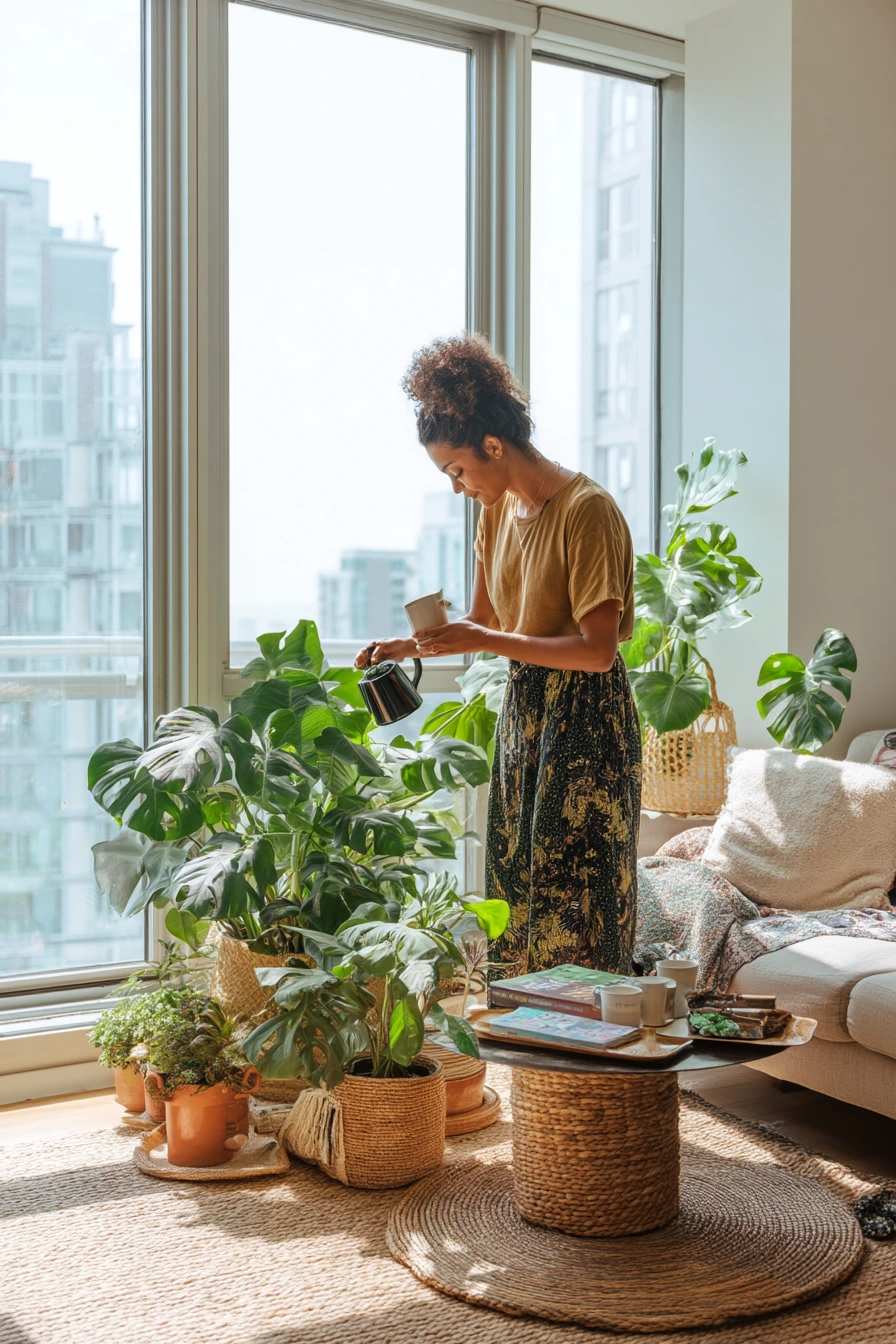
A tall window is prime space for an indoor garden. Start with a clustered group so it looks full and intentional, like layered pothos, monstera, and a fiddle leaf fig. Use terracotta and woven baskets to add texture and hide plastic nursery pots.
Keep it lived-in, not staged. A small brass tray can hold pruners, a plant mister, and a ceramic mug without feeling messy. If you have paperback books and a slightly wrinkled throw on the sofa, let them stay. The mix of soft window light and plant shadows on the rug makes the whole room feel calmer.
For care, place the fiddle leaf fig closest to the bright window, then monstera slightly back, and pothos trailing from a lower pot or stand. Water on a set day so you do not forget. Protect the floor with a saucer or waterproof liner inside baskets.
- Group plants in odd numbers (3 or 5) for a natural look.
- Use one tall plant, one medium, and one trailing plant for height layers.
- Add a narrow plant stand to lift smaller pots into the light.
- Hide cords by running the phone charging cable behind the sofa leg.
- Rotate pots every two weeks to keep growth even.
Pro Design Tip: Repeat one material in the cluster, like terracotta or woven baskets, so different plant shapes still look like one set.
Budget Considerations: Use nursery pots inside thrifted baskets, and propagate pothos cuttings in water to fill gaps for free.

2. Kitchen Windowsill Herb Garden for Daily Cooking
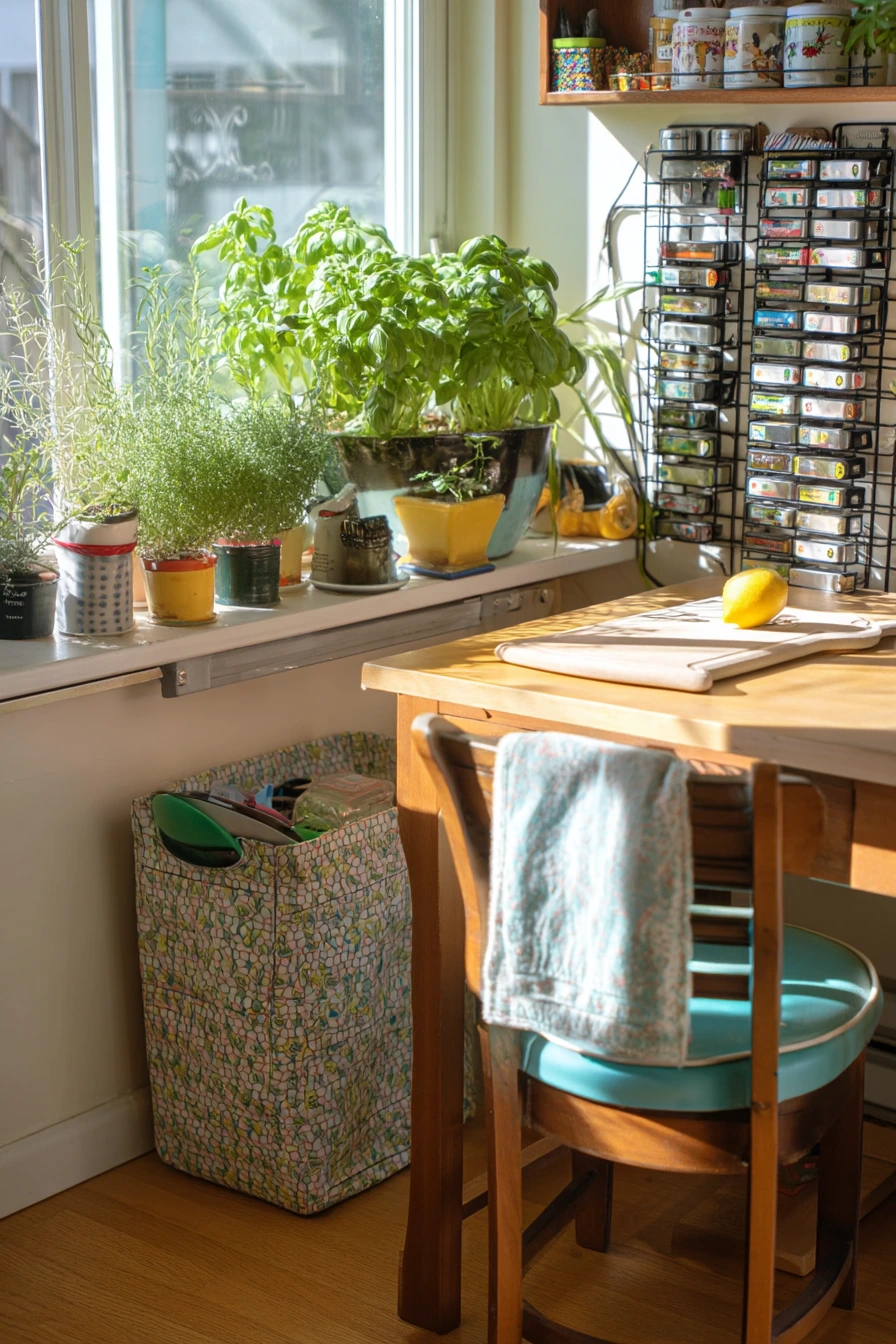
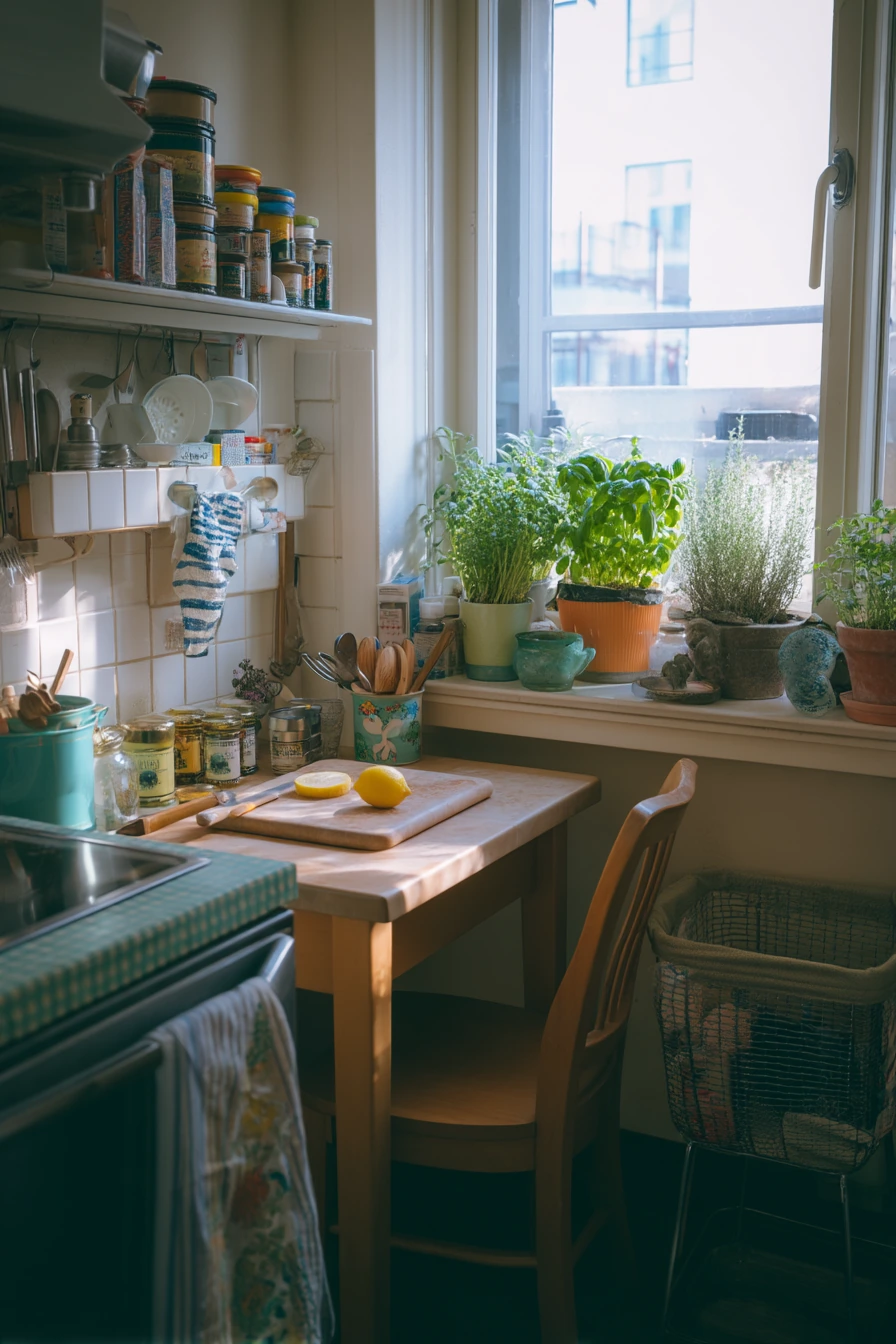
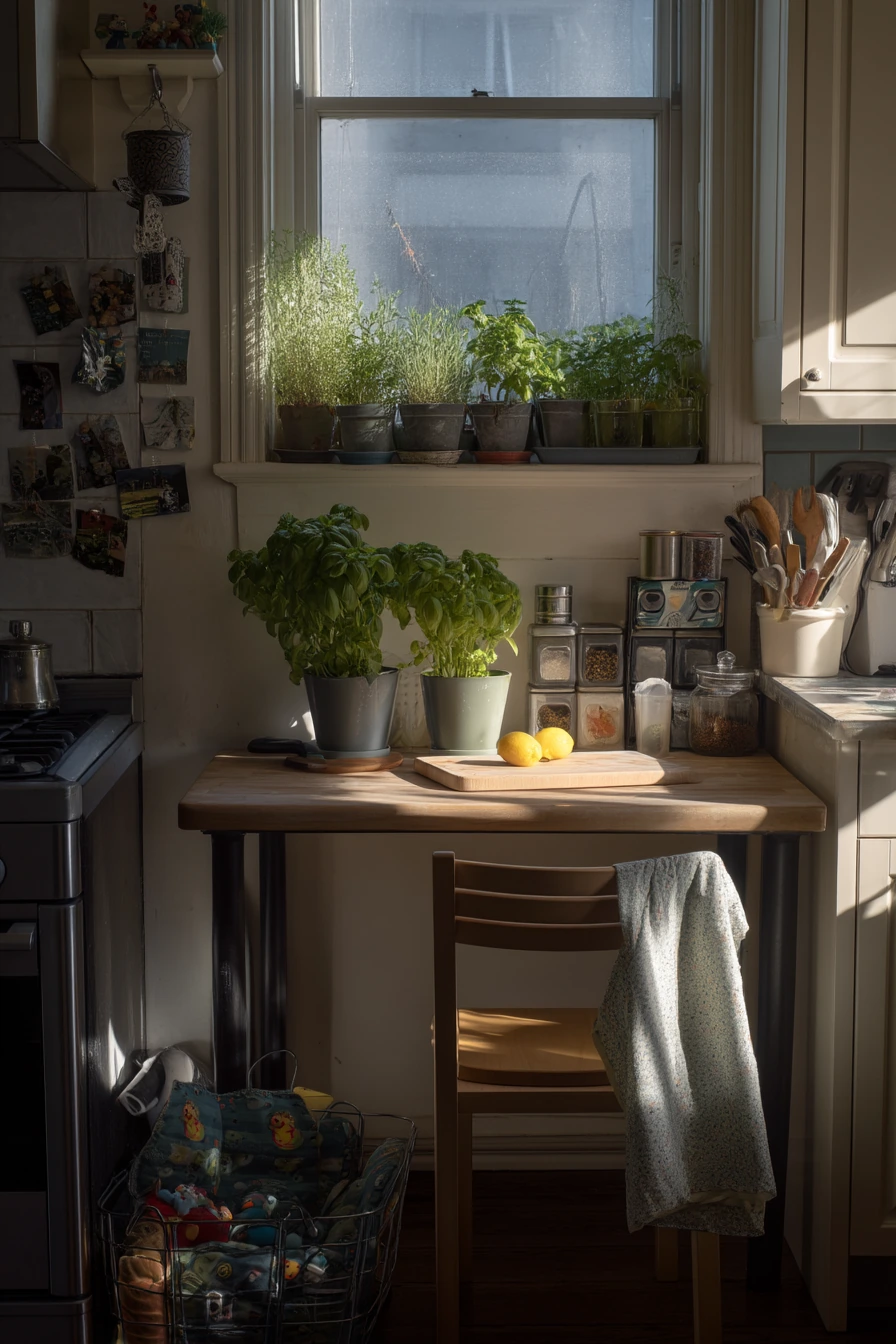
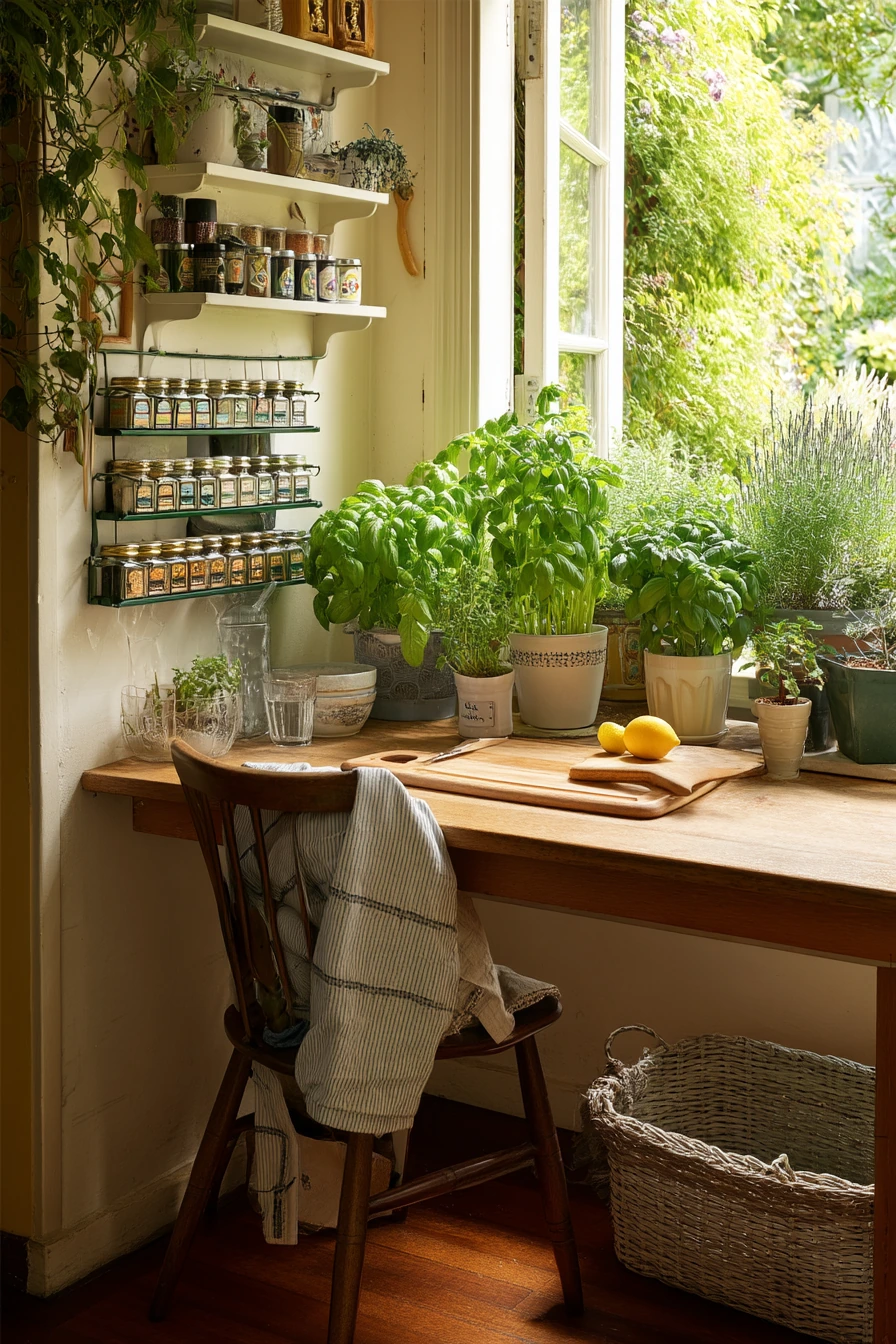
A narrow herb garden on a sunny sill is one of the most useful indoor garden ideas, especially in a compact family kitchen. Basil, mint, and rosemary add scent and flavor, and they look good in mismatched pots. Keep it practical and close to where you cook.
Style the area like a working station. Set a cutting board nearby and leave a half-sliced lemon in a small dish for a casual, fresh look. Magnetic spice tins on the fridge or backsplash help the herb zone feel connected to the kitchen. A dish towel draped over a chair and a kid toy basket tucked near the table keeps it honest and family-friendly.
For plant health, give herbs at least 6 hours of bright light if possible. Water when the top inch of soil feels dry. Pinch basil often to keep it bushy, and keep mint in its own pot so it does not take over. Turn pots every few days so stems do not lean.
- Place a tray under the pots to catch water and protect the sill.
- Label herbs with simple tags so kids can help pick the right leaves.
- Keep scissors in a cup so harvesting is fast.
- Use smaller pots for the tightest sill spaces.
- Wash and reuse food jars as mini planters for starters.
Pro Design Tip: Use one color family for pots (warm clay, cream, or black) so mismatched shapes still look tidy together.
Budget Considerations: Buy one herb plant at a time, then take cuttings and root them in water to grow more without extra cost.
3. Bathroom Indoor Garden for a Humid, Spa Feel
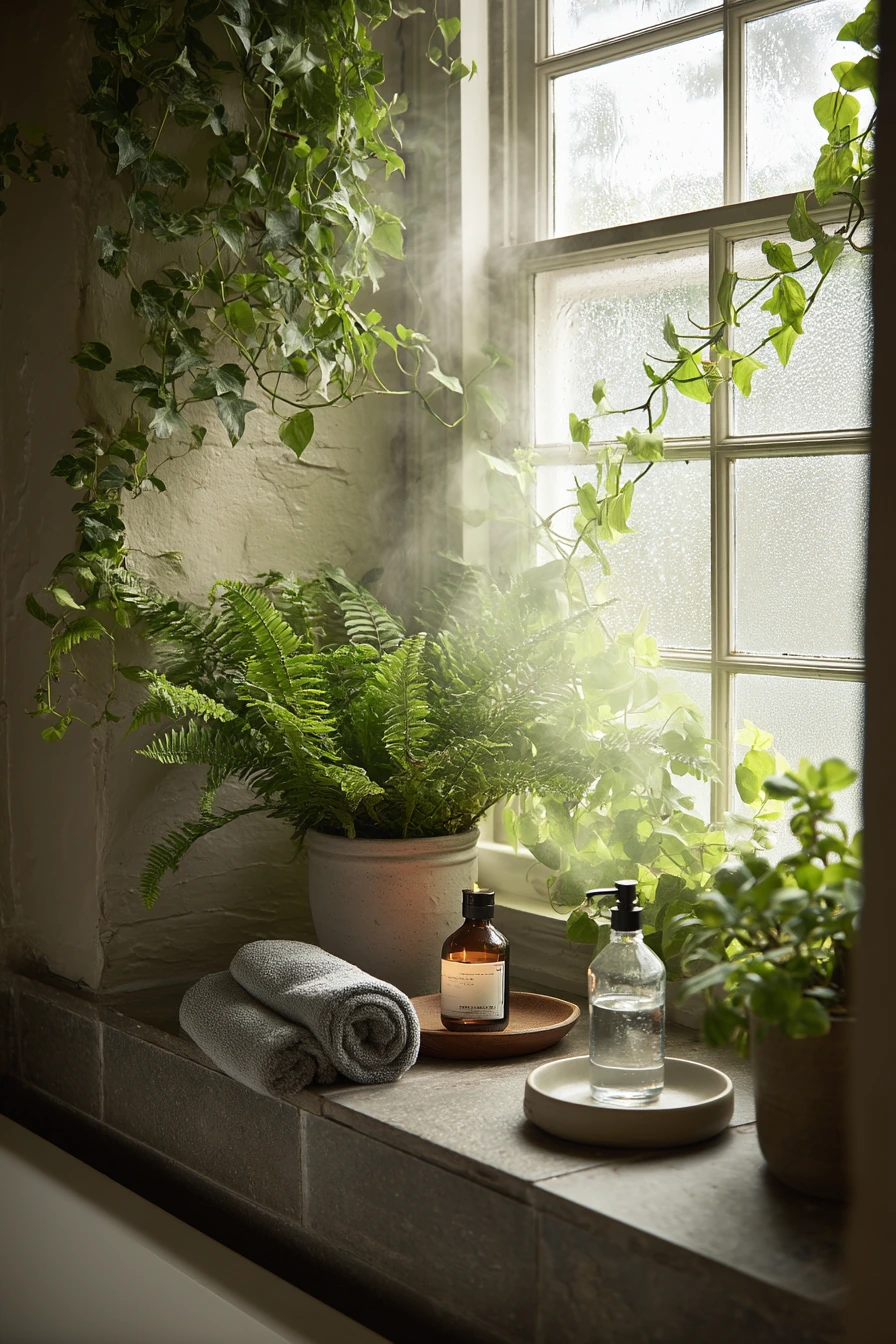

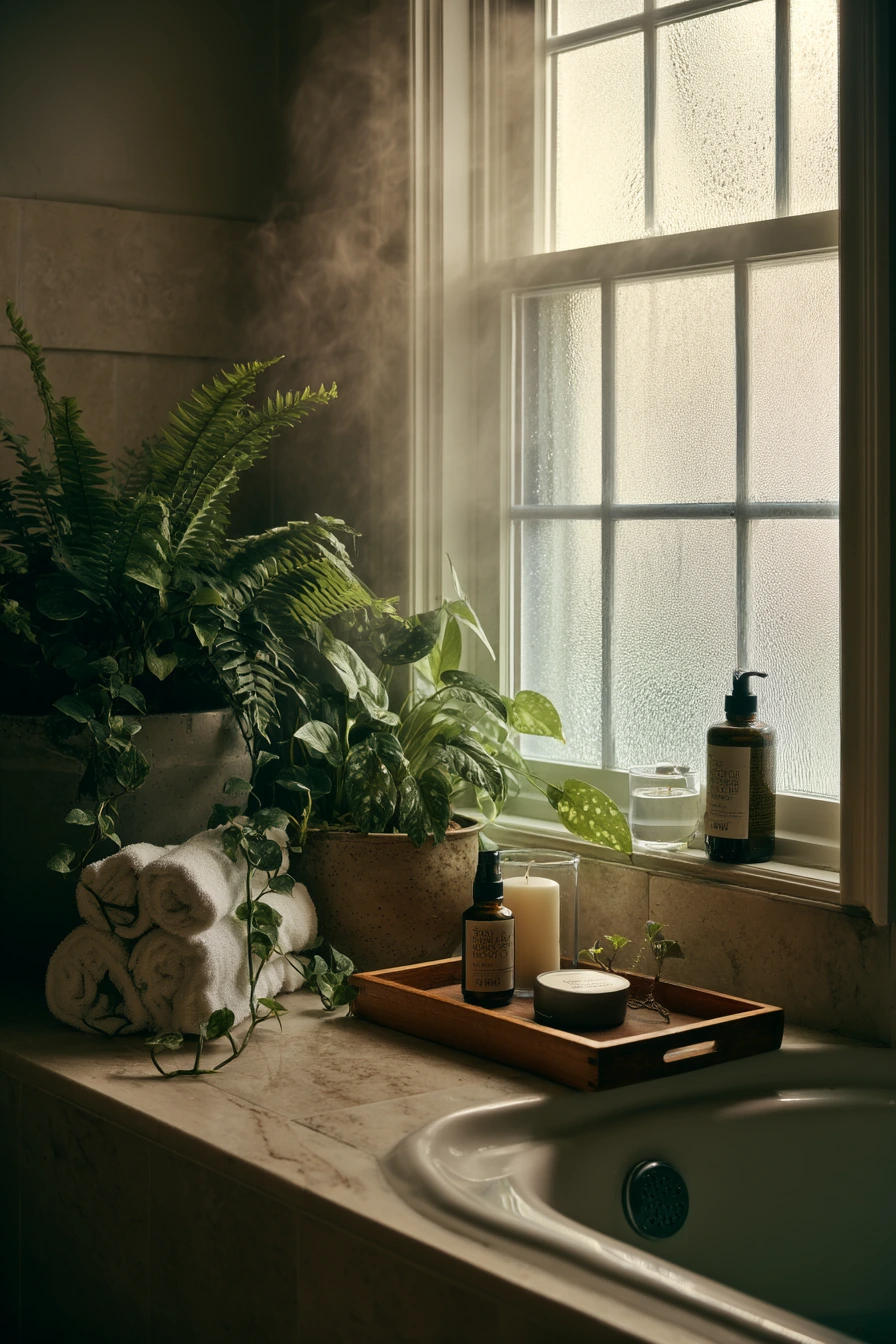
A small primary bathroom can become a calm indoor garden moment with the right plants. Fern, peace lily, and trailing ivy like humidity, so they do well near a frosted window. The steam-soft atmosphere after a shower helps many tropical plants.
Keep the styling simple and clean. A bath tray with a candle, rolled towels, and one skincare bottle looks neat without feeling like a showroom. A water glass on the sink can stay out if you place it on a small coaster. Pale stone and wood accents pair well with green leaves and make the room feel softer.
For care, make sure the bathroom has some airflow to avoid mildew. Water less often than you think, since humidity slows drying. Wipe leaves now and then so they stay glossy and can breathe. If light is low, move the plants to a brighter spot for a few hours each week.
- Use a waterproof saucer under each pot to protect counters.
- Choose pots with drainage holes to avoid root rot.
- Hang ivy or let it trail from a shelf for a relaxed look.
- Keep a small towel just for drying drips after watering.
- Pick one scented candle so it does not compete with plant fragrance.
Pro Design Tip: Match pot finishes to bathroom hardware, like matte black pots with black faucets, for a pulled-together look.
Budget Considerations: Start with one fern and one pothos cutting in a jar; add a peace lily later when you find one on sale.

4. Bedroom Nook Indoor Garden for Reading and Rest

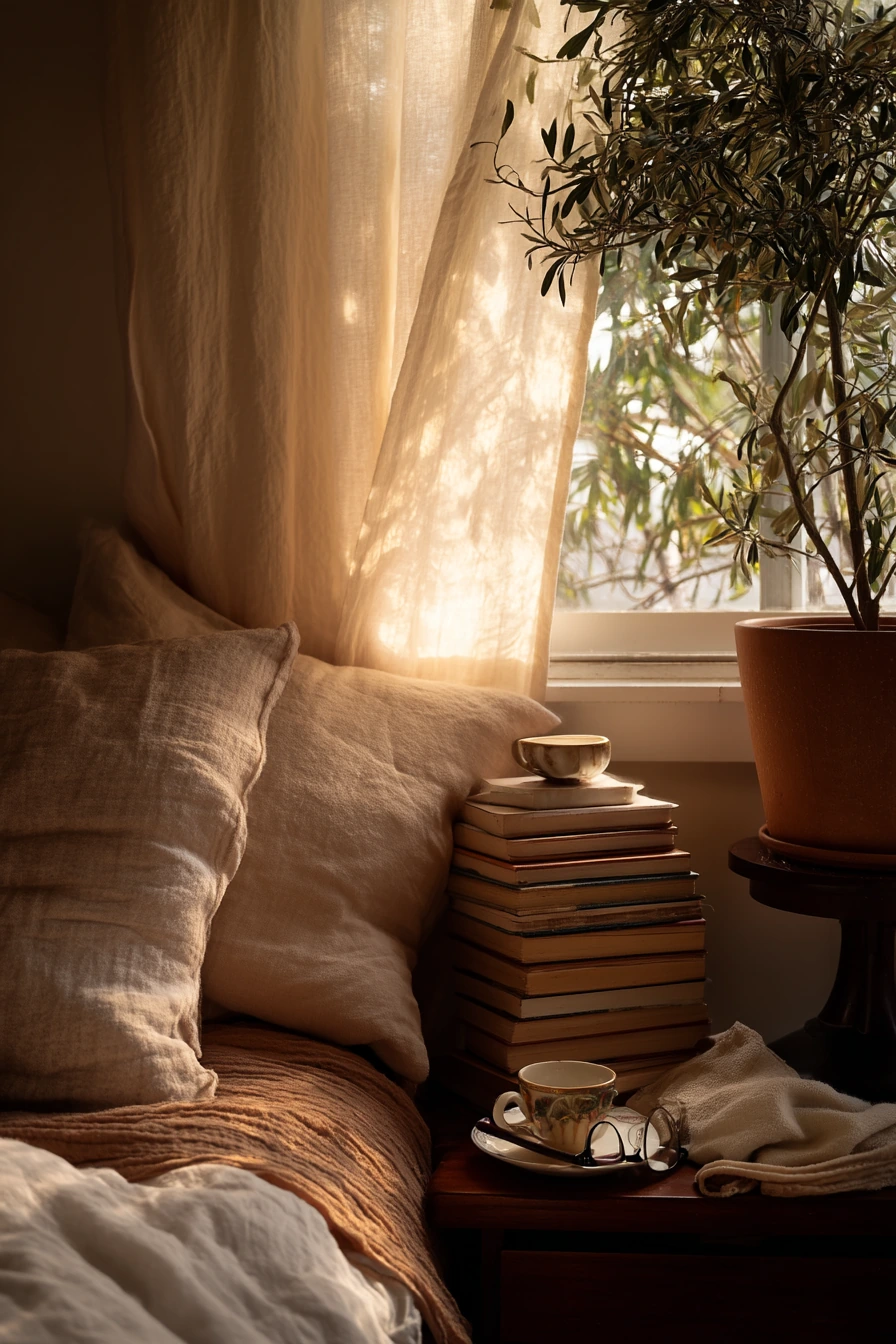
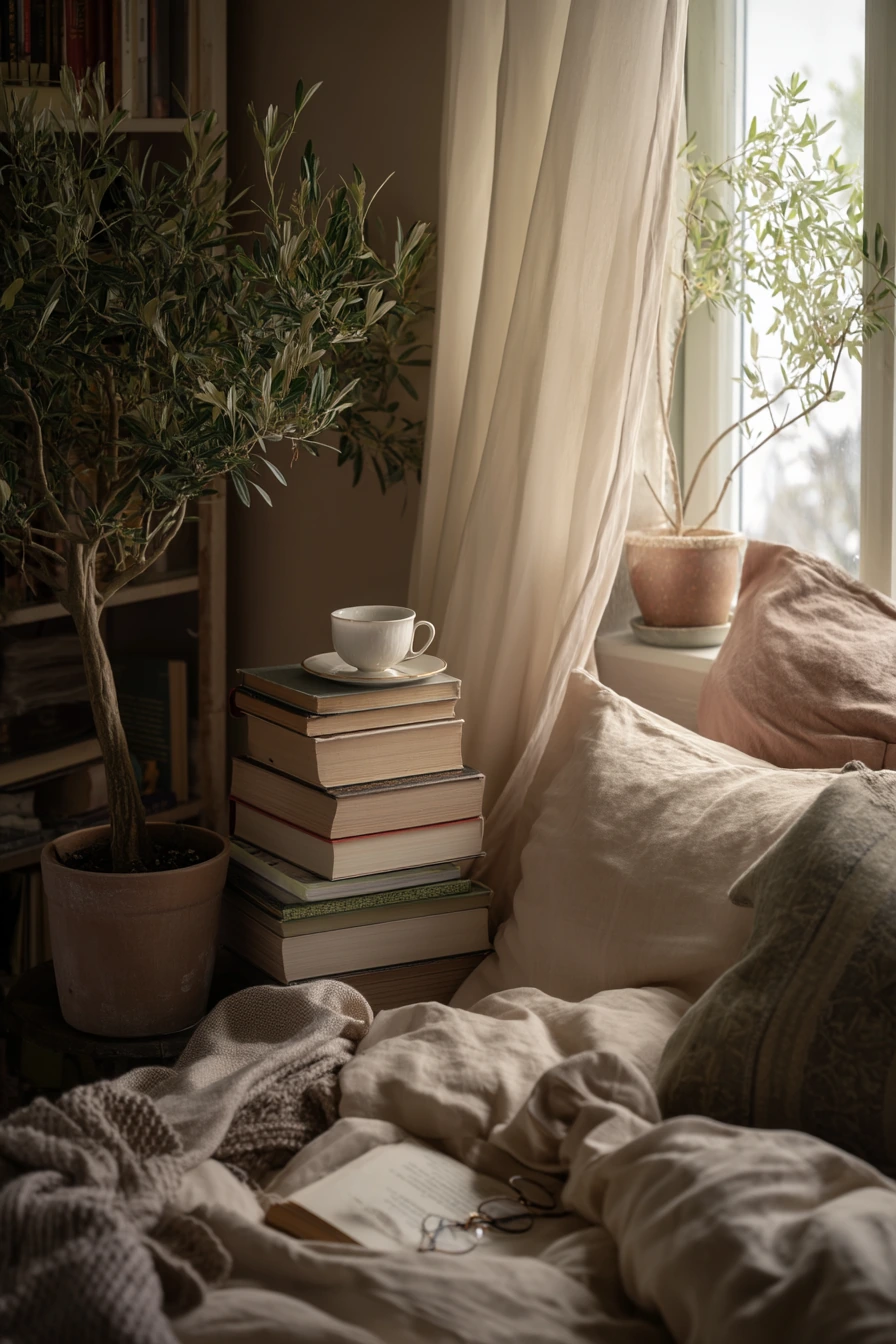
A quiet bedroom nook is perfect for an indoor garden that supports rest. Place a tall olive tree by the window, then add a compact plant stand with one or two smaller plants. The mix of soft curtain movement and warm afternoon light makes the space feel airy.
Style it around your routine. Stack a few novels, set reading glasses on the nightstand, and keep a ceramic teacup nearby. Linen bedding and a half-folded blanket look relaxed and real. Plants add gentle structure, so the corner feels like a spot you want to use, not just walk past.
Olive trees need bright light and do best close to the window. Water when the top few inches of soil are dry and do not let it sit in water. If your room is dim, swap the olive for a rubber plant or dracaena, which handle lower light better. Keep leaves dust-free so the plant stays healthy.
- Place the tallest plant slightly off-center, not in the middle of the window.
- Use a plant stand to keep pots off the floor and easier to vacuum around.
- Add one small lamp for evening reading without moving the plants.
- Keep the nightstand top clear except for 2 to 3 items.
- Choose one calm pot color to match linen bedding.
Pro Design Tip: Use a thin curtain that filters light; it softens the view and keeps the plant corner looking gentle all day.
Budget Considerations: If an olive tree is pricey, use a smaller tabletop olive or a thrifted faux olive and add one real easy-care plant for the same look.

5. No-Drill Dining Area Hanging Planter Indoor Garden

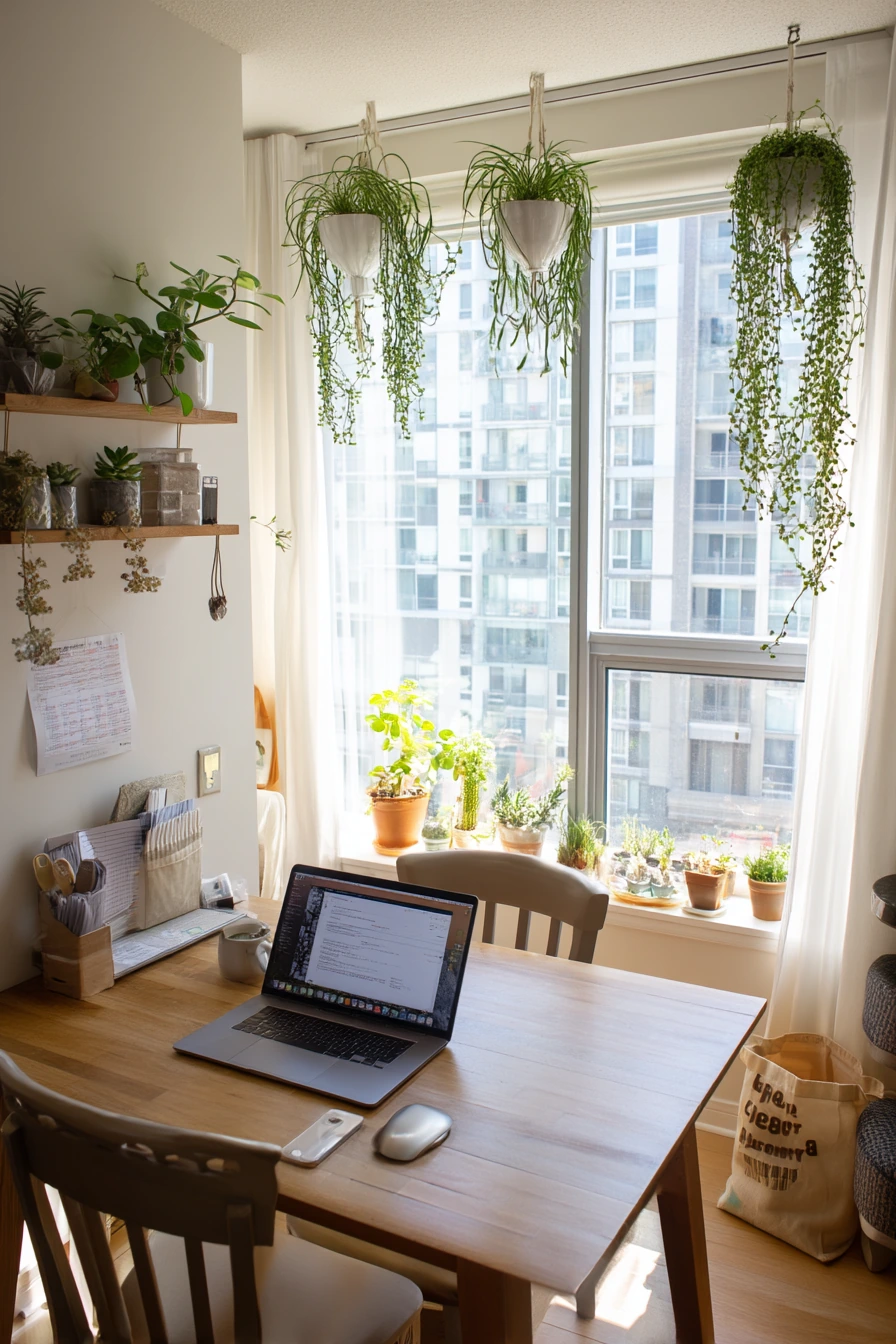
If you rent, a no-drill indoor garden can still look built-in. Use hanging planters from a tension rod, over-the-door hook, or ceiling-safe adhesive hooks rated for weight. Add a wall-mounted plant rail that uses removable strips if your walls allow it.
Choose plants that look good from a distance. Spider plants, string of pearls, and small succulents give you different shapes without taking up table space. In a dining area with an extendable table, laptop, mail stack, and a reusable grocery tote, hanging greenery keeps the room practical and green.
Keep one chair pulled out and the setup still works. Just make sure plants do not drip onto the table. Water over the sink, let pots drain fully, then hang them back up. For string of pearls, use bright light and water only when the beads look slightly soft, not firm.
- Hang plants at two heights to create a simple layered look.
- Use lightweight plastic pots inside decorative cachepots for safety.
- Pick a narrow rail so it does not bump heads near the table.
- Keep a small tray for plant tools so they do not mix with mail.
- Add one small succulent on a shelf to tie the look together.
Pro Design Tip: Keep the hanging line consistent by using the same style of hanger, then vary only the plants for visual interest.
Budget Considerations: Make simple macrame hangers from cord and use cuttings from spider plants to fill extra pots over time.


6. Home Office Desk Garden for Focus and Calm
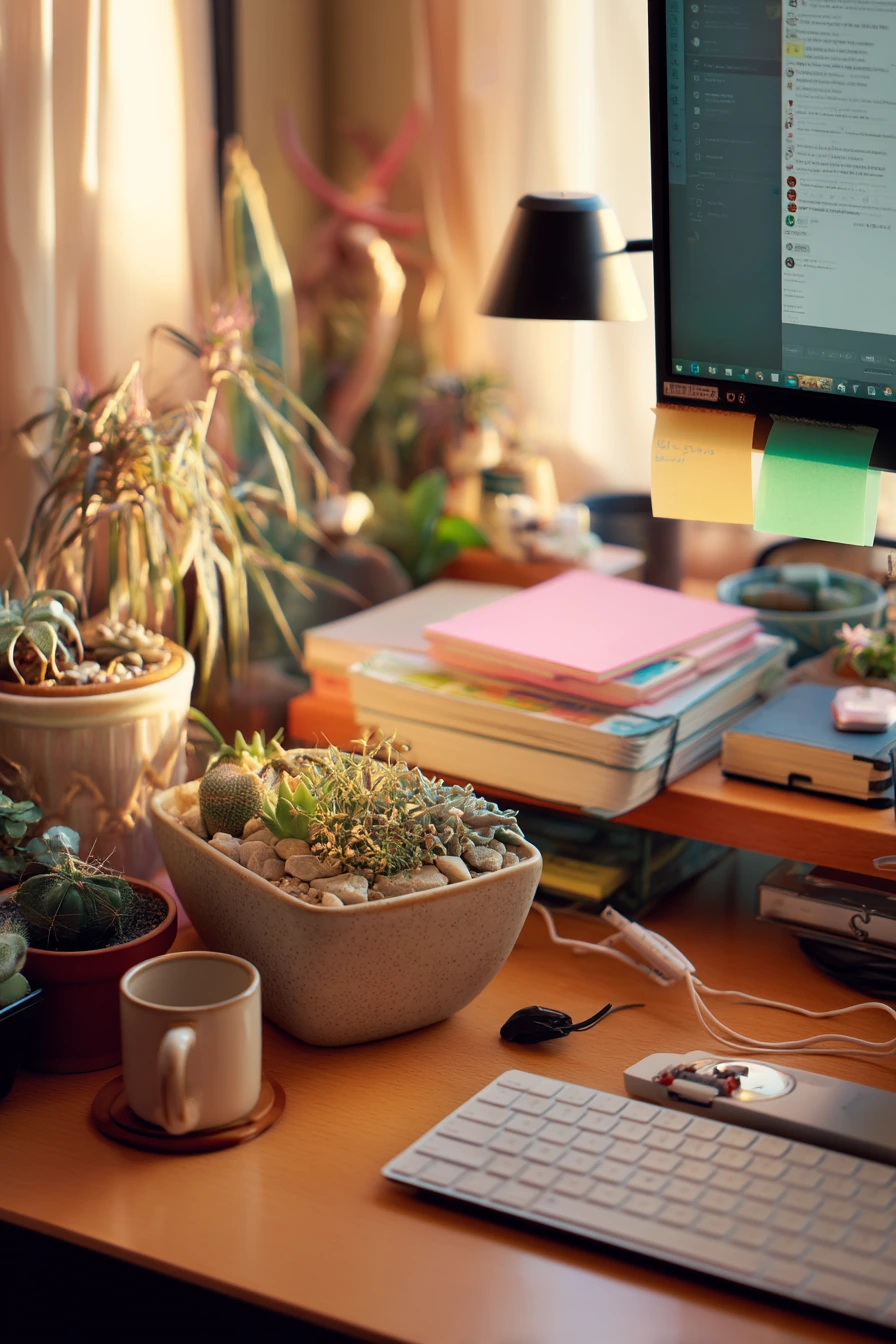
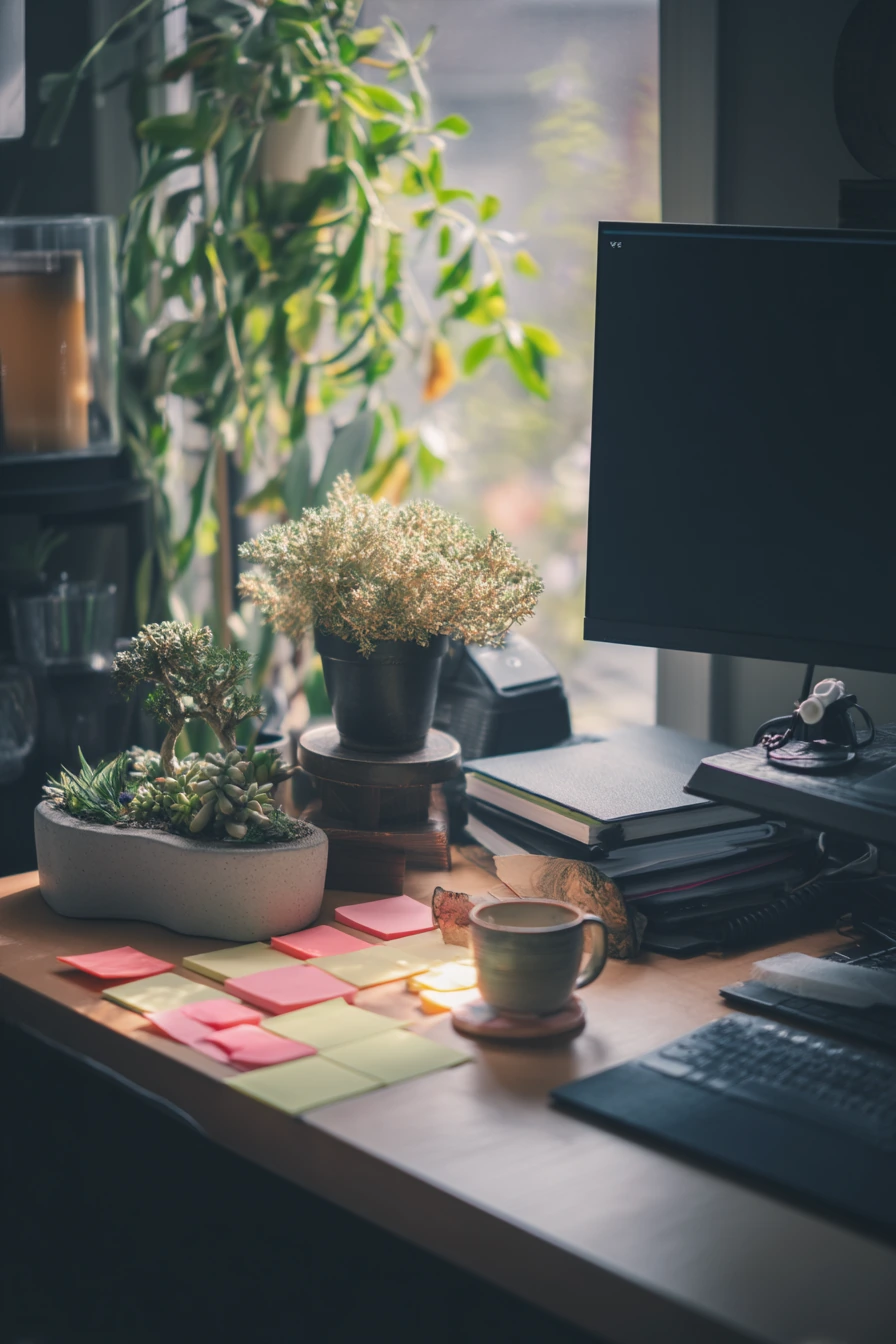
A home office desk garden can make work feel steadier, especially with a remote worker setup. Keep it compact so it does not crowd your keyboard or monitor. Succulents, a small ZZ plant, and a tiny bonsai give variety without needing constant care.
Let the office look real. Notebooks, a pen cup, sticky notes, a charging cable, and even a coffee ring on a coaster can stay. Plants soften the hard edges of screens and tech, and warm lamp light mixed with daylight gives the space a calm, grounded feel.
Place the ZZ plant slightly back from direct sun and water it sparingly. Succulents need the brightest spot, so put them near the window or under a small grow light if needed. Bonsai care depends on the type, but most prefer consistent light and careful watering. Keep a small watering can nearby so you do not overpour.
- Use a shallow tray to group small pots and catch soil crumbs.
- Pick one plant with a strong shape, like a ZZ, as the anchor.
- Keep plant height below the monitor so it does not block sightlines.
- Wipe leaves once a week to reduce dust in the workspace.
- Set a weekly calendar reminder for watering checks.
Pro Design Tip: Choose planters that match your desk style, like matte ceramic for a clean look or warm clay for a softer office.
Budget Considerations: Start with one ZZ plant and two small succulents; add a bonsai later if you enjoy the routine and have the light for it.


7. Stair Landing Indoor Garden with a Slim Bench


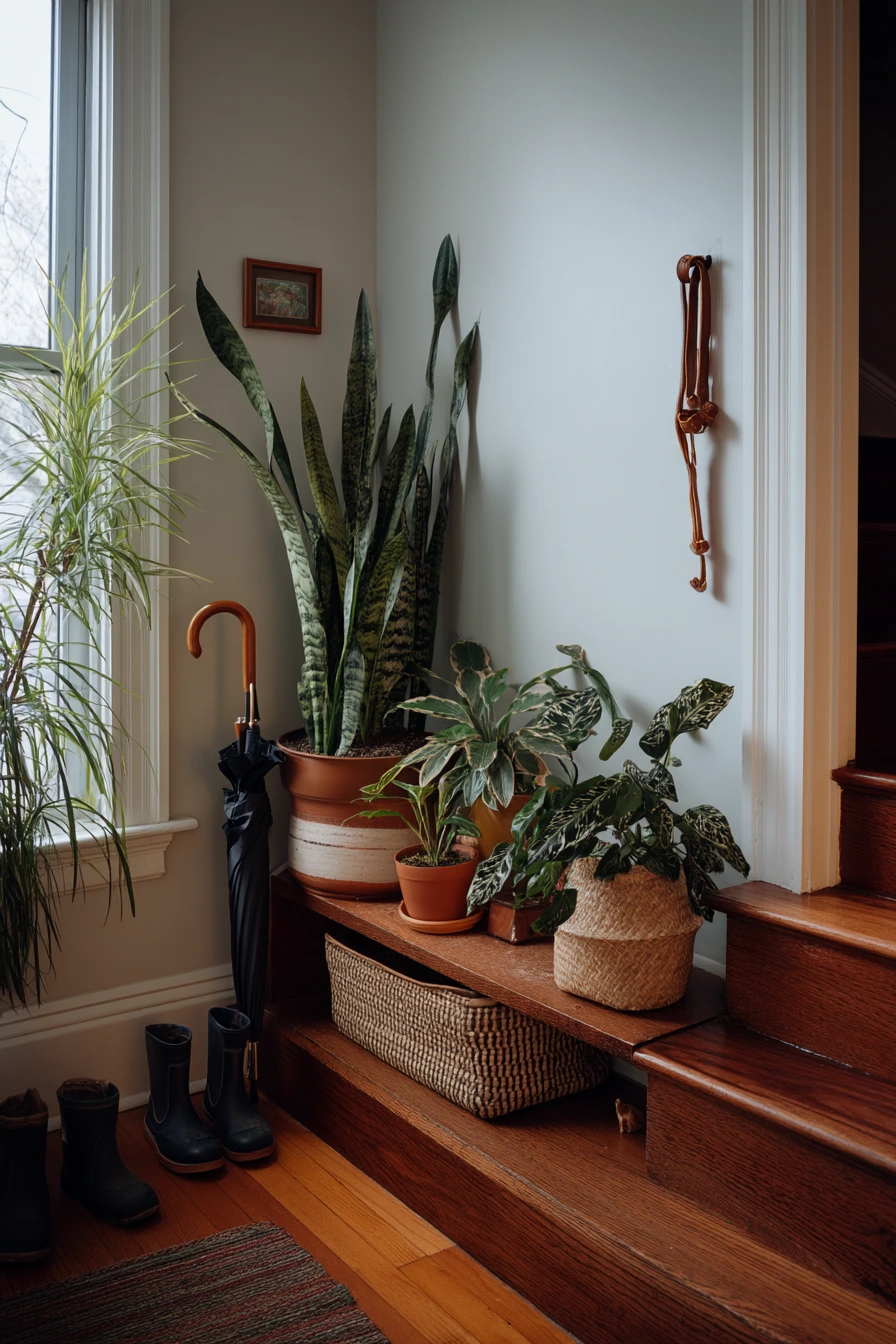
A townhouse stair landing is often wasted space, but it can become a strong indoor garden zone. Use a slim bench for layered plants so you keep the walkway clear. Snake plant, calathea, and trailing pothos give you upright lines, pattern, and soft drape.
Style it like part of daily life. A woven basket for shoes, a dog leash on a hook, and an umbrella by the wall can stay. Plants make these practical items feel more intentional. Soft noon light from a nearby window is usually enough for snake plant and pothos, while calathea prefers brighter, indirect light.
Keep safety in mind. Make sure pots are stable and not easy to knock over. Use heavier planters on the bottom and lighter ones on top. Water plants over a sink or tub, then return them to the bench once they stop dripping. If your stair area is dry, mist calathea or use a small pebble tray.
- Use a bench with a lower shelf for extra pots and better layering.
- Place the tallest plant at the back corner to frame the landing.
- Add one small wall hook strip for leash and keys to reduce clutter.
- Choose a runner rug that can handle leaf drop and soil bits.
- Keep one plant in a basket to add warmth and texture.
Pro Design Tip: Repeat the curve of trailing pothos with one other soft element, like a rounded basket, to balance sharp stair lines.
Budget Considerations: Use a secondhand bench and propagate pothos cuttings to build fullness without buying many plants.

8. Breakfast Nook Indoor Garden for a Bright Morning Mood


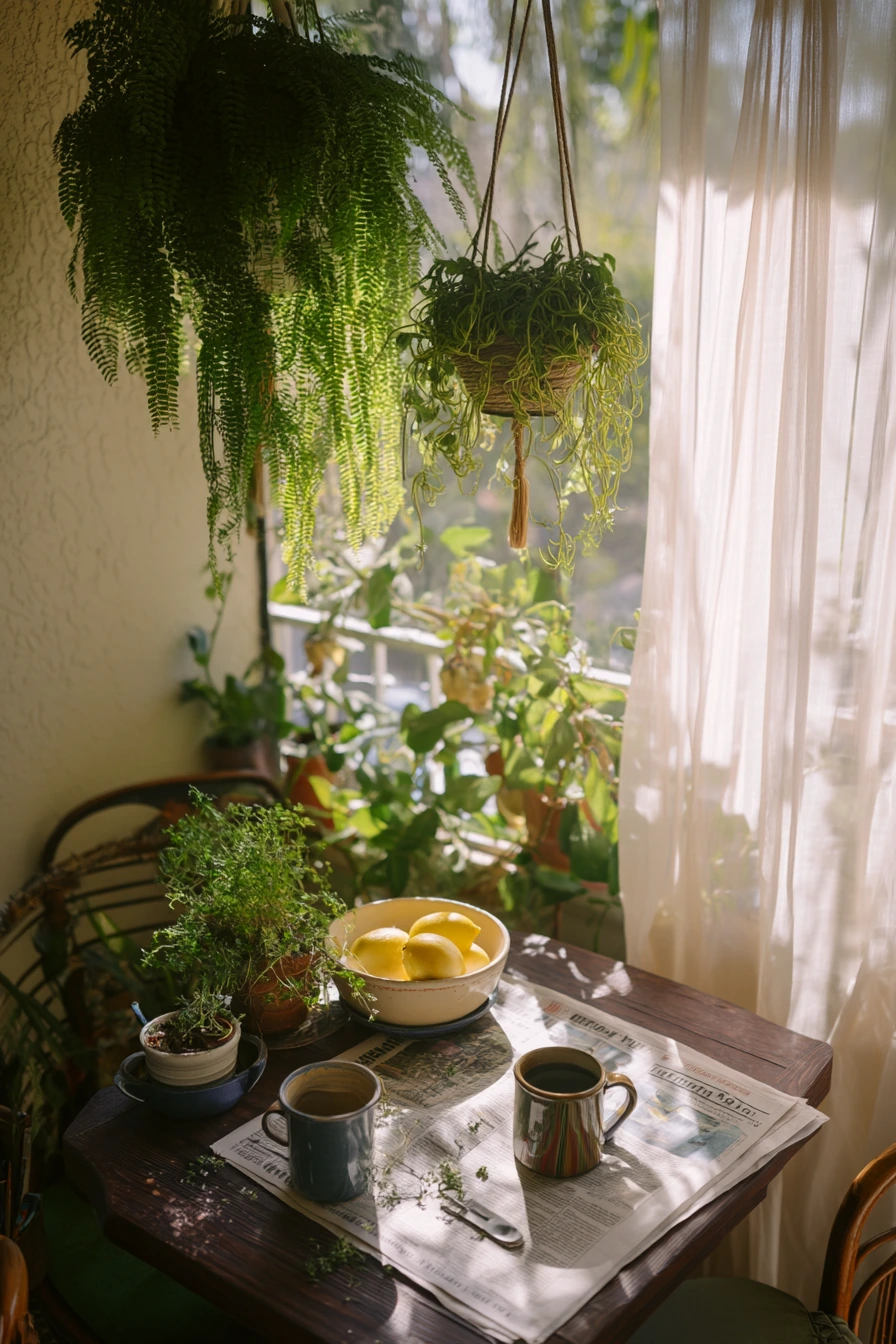
A small breakfast nook can feel like a mini greenhouse when you add a clustered indoor garden. A hanging fern brings height, while a table centerpiece of herbs adds scent and a useful, fresh look. Sunlit sheer curtains help the space feel light without glare.
Keep the styling casual and real. A folded newspaper, two mismatched mugs, and a napkin with crumbs makes the scene feel lived-in. Add a lemon bowl for color and to tie in with the herb theme. Plants should support the routine, not get in the way of coffee and breakfast.
Choose plants that handle bright, indirect light. Ferns like more moisture, so check the soil often and water before it dries out fully. For herb centerpieces, use pots with drainage and set them on a small plate. If the table is used a lot, move the herb pot to the sill after meals to protect it from spills.
- Hang the fern high enough so it does not brush heads when you stand.
- Use one low herb pot so it does not block views across the table.
- Keep a small cloth nearby to wipe water rings fast.
- Pick mugs in similar tones to reduce visual noise.
- Rotate the centerpiece plant weekly so it grows evenly.
Pro Design Tip: Use one repeated accent color, like yellow from lemons, in a small item such as a napkin or bowl to make the green look brighter.
Budget Considerations: Grow herbs from grocery store starter pots and split them into smaller containers instead of buying multiple new plants.

9. Budget Living Room Shelf Indoor Garden with Cuttings

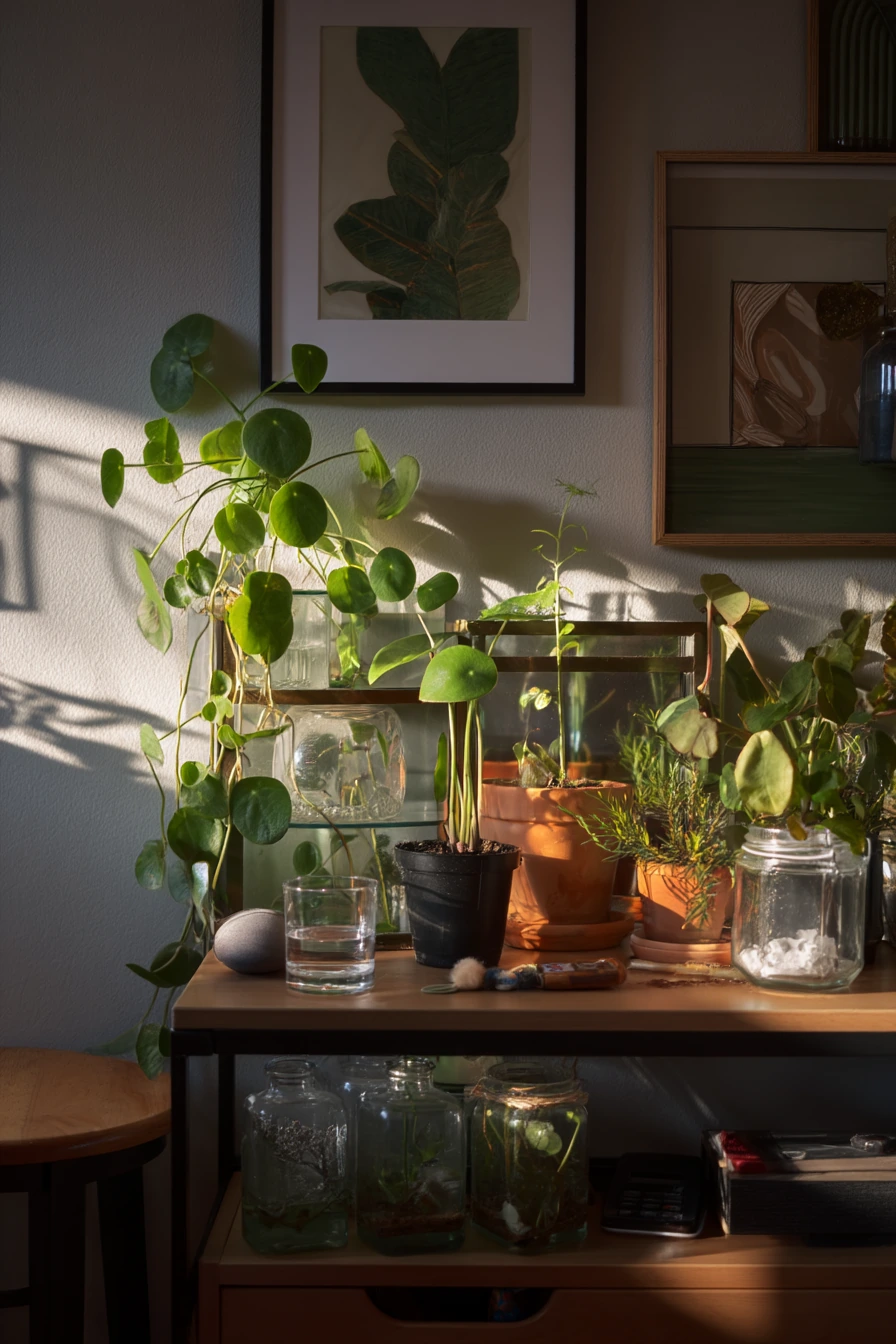
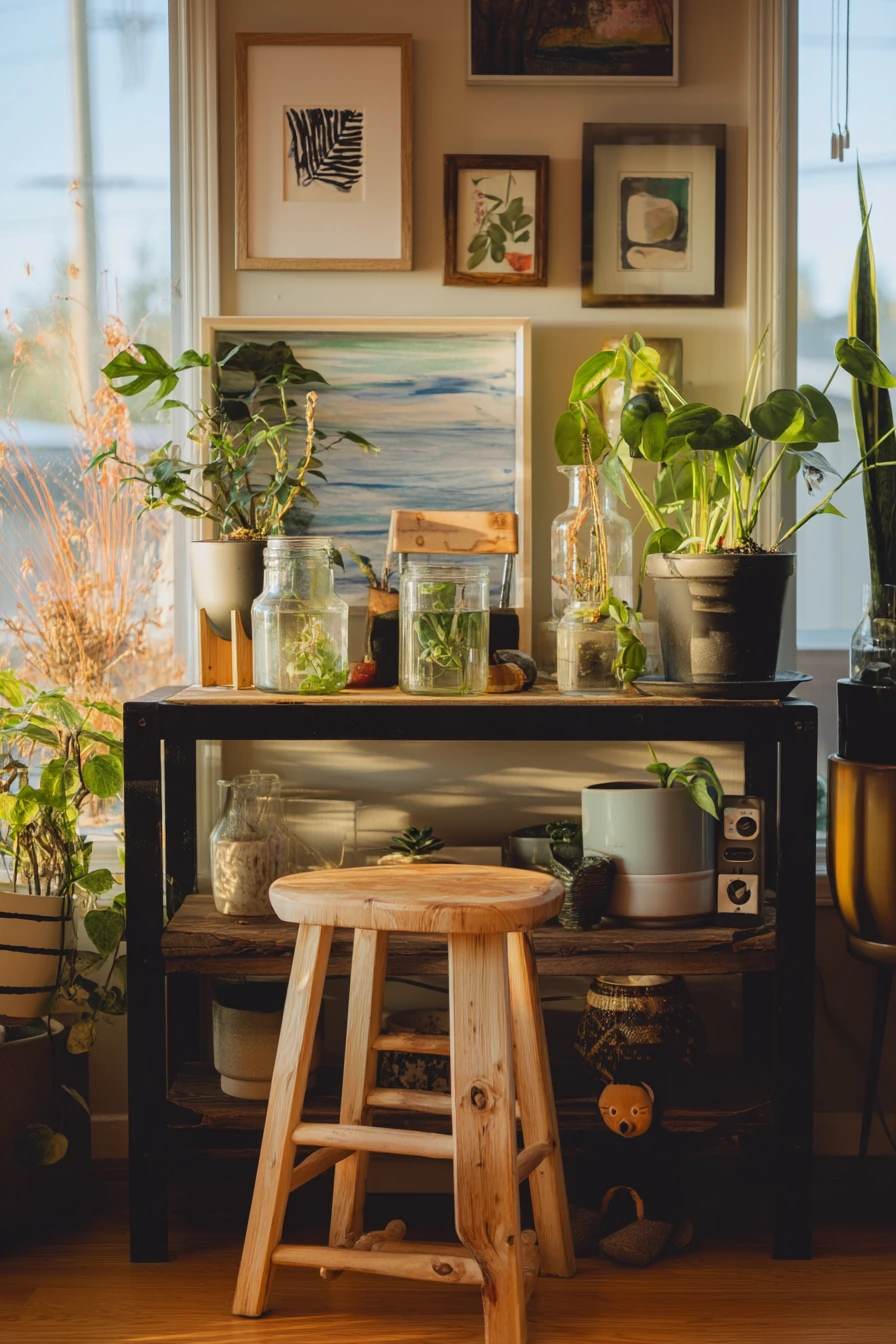
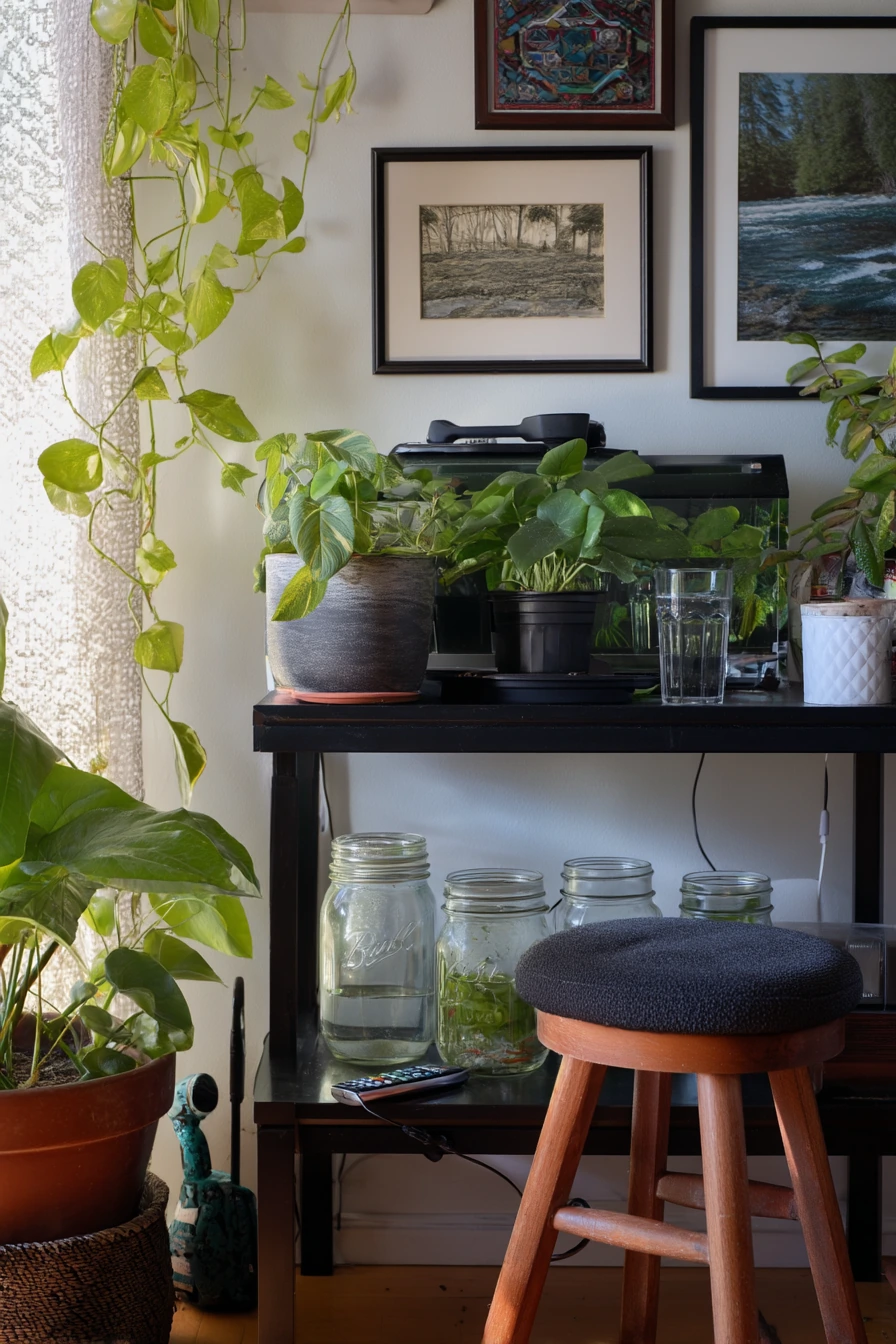
A living room shelf is a great place for indoor garden ideas on a budget. Use thrifted pots and propagated cuttings in glass jars to build a full look over time. A thrift store stool can hold one extra plant and give you height without buying a plant stand.
Make it feel layered, not perfect. Lean framed art behind the plants to add color and cover blank wall space. Let real-life items like a remote control, a dog toy, and a water glass on the side table exist without ruining the style. Late afternoon light is ideal for showing leaf texture and making the shelf feel warm.
For easy care, choose forgiving plants for shelves, like pothos, philodendron, and snake plant. If the shelf is far from the window, use plants that handle lower light, or add a small grow light hidden under the shelf above. Change water in propagation jars weekly and rinse the glass so it stays clear.
- Mix pot sizes so the shelf does not look flat.
- Use books as risers to lift small plants closer to light.
- Keep jars in a tray to prevent water rings on wood shelves.
- Group items in threes to make the shelf look planned.
- Leave some empty space so the plants can stand out.
Pro Design Tip: Place the darkest leaves near lighter framed art so the contrast helps the plants read clearly from across the room.
Budget Considerations: Check thrift stores for planters and frames, and ask friends for cuttings to fill the shelf without spending much.
10. Entryway Seasonal Indoor Garden Refresh
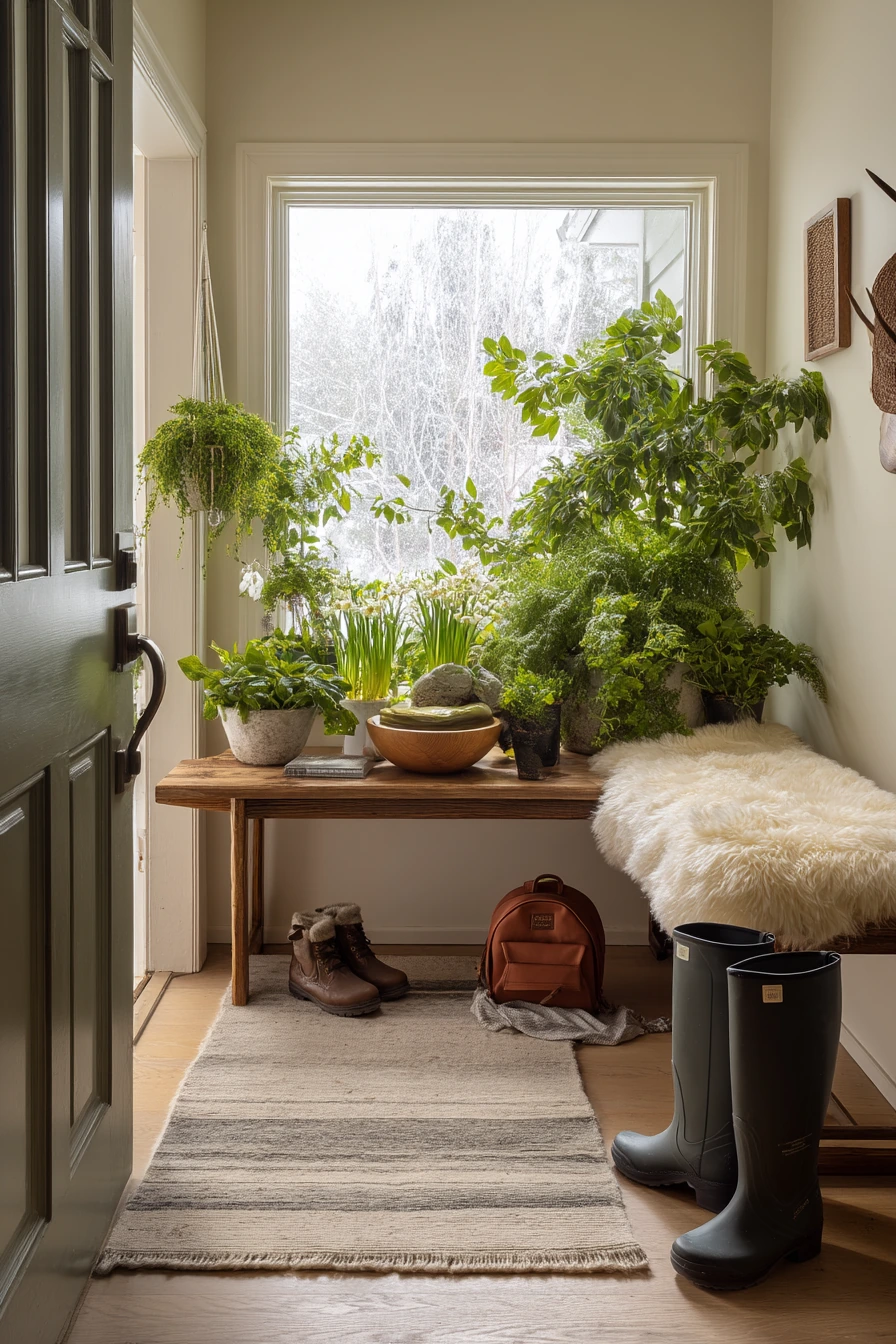
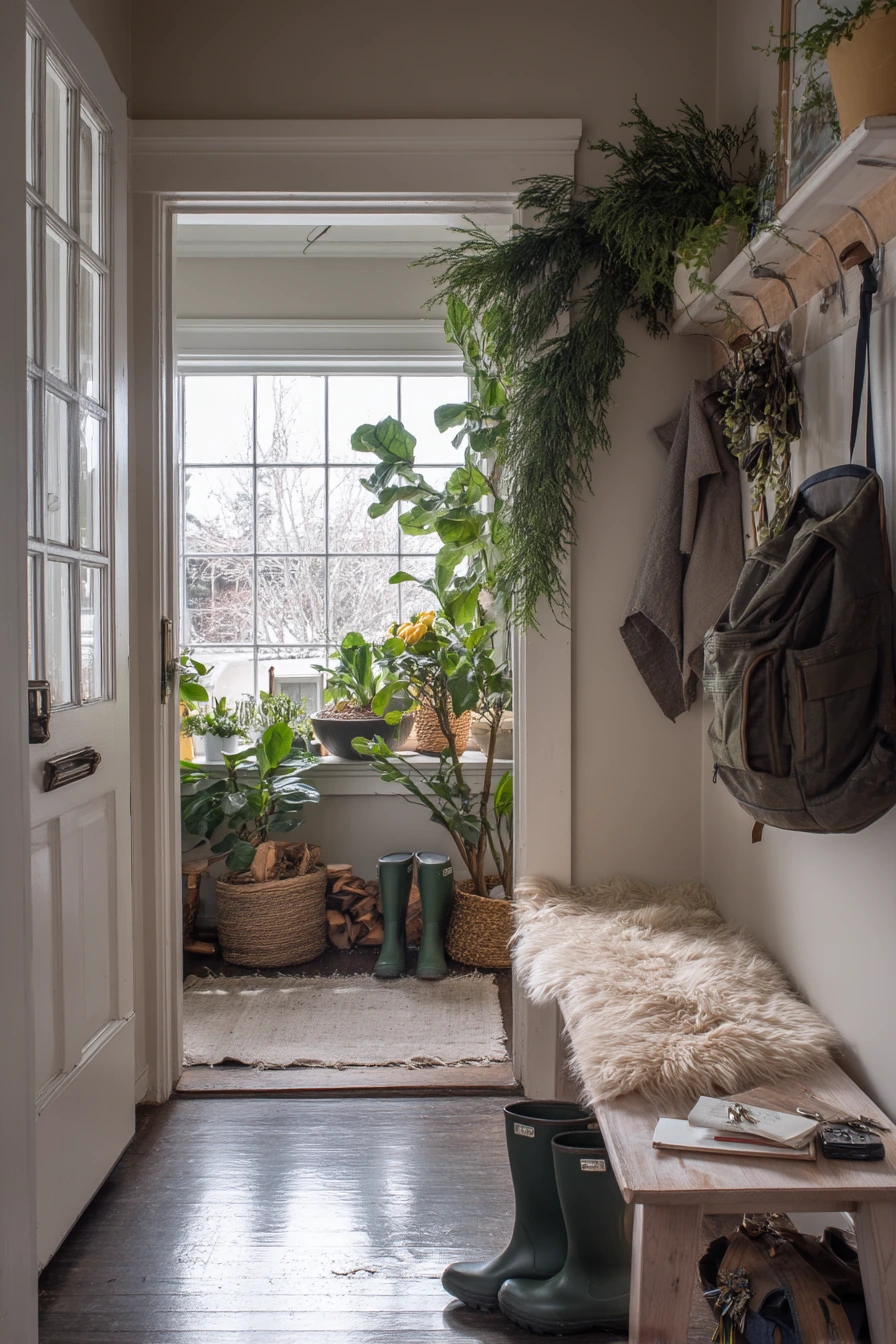
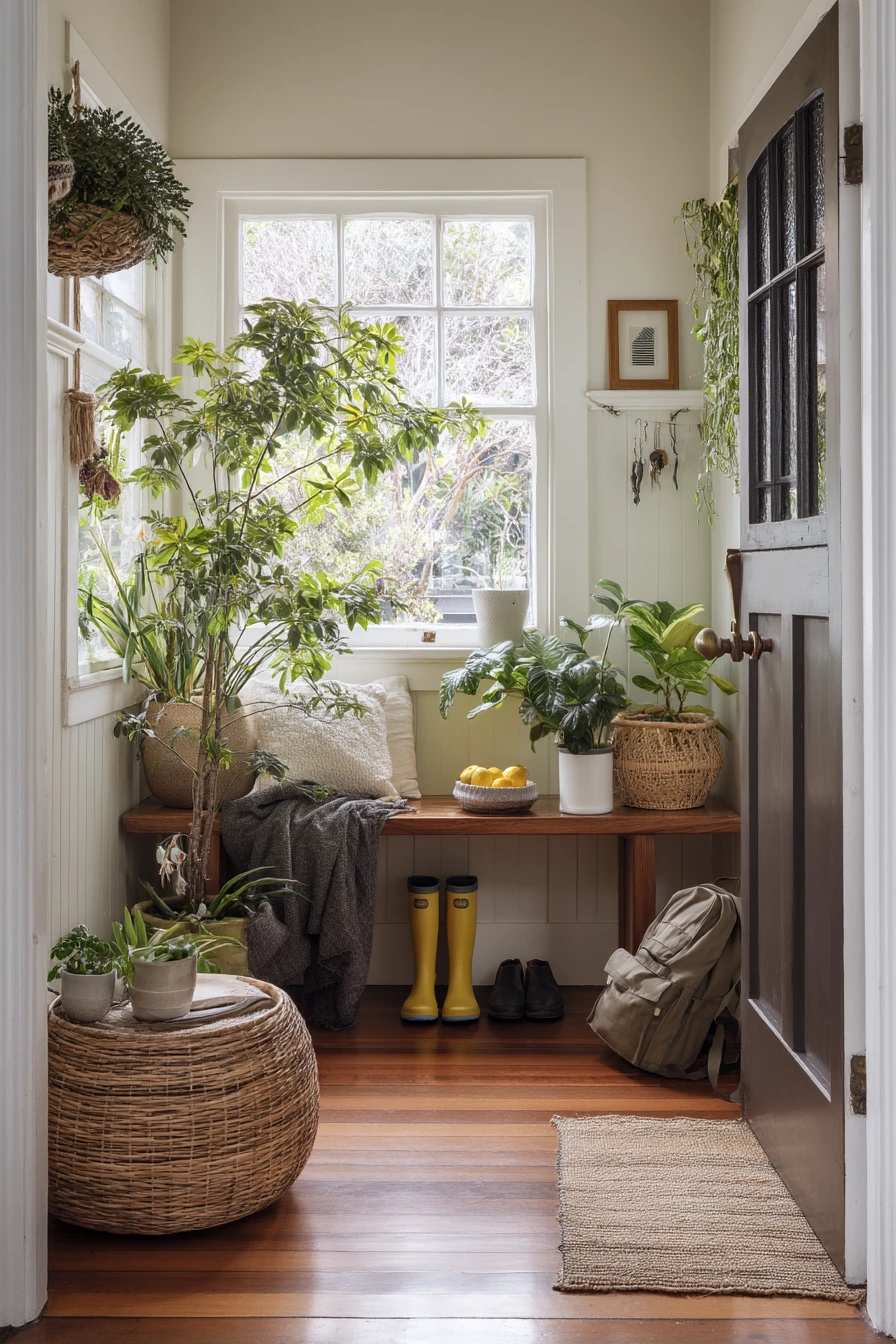
An entryway is the first place you see, so a seasonal indoor garden refresh can change the mood of the whole home. Mix evergreen branches with houseplants for a simple, earthy look. Add paperwhites for a soft scent and a little height on a console or bench.
Keep it welcoming and real. A citrus bowl adds color, while a wool throw on a bench makes the space feel warm. Rain boots by the door, keys, mail, and a child’s backpack are part of daily life, so design around them instead of trying to hide everything. Soft overcast daylight works well here because it is gentle and even.
Choose sturdy plants for a high-traffic area. Snake plant, pothos, and rubber plant handle bumps and lower light better than fussy options. Keep branches in a tall vase with water and replace them when they dry. For paperwhites, follow the bulb instructions and place them where they will not get knocked over when people come in.
- Use a tray or basket for keys and mail so surfaces stay clear.
- Place the tallest arrangement at the far end of the bench to keep the path open.
- Add a small hook row so backpacks and leashes are off the floor.
- Choose one scent source, either paperwhites or citrus, not both strong.
- Use a doormat that can handle soil bits and fallen needles.
Pro Design Tip: Match the vase height to the wall space; a taller vase helps the entryway feel taller without adding furniture.
Budget Considerations: Clip evergreen branches from your yard or buy one bundle and split it into two smaller vases for the same seasonal look.

Indoor garden ideas work best when they fit your real routine and your real rooms. Start with one spot you use every day, like a window corner, a kitchen sill, or a desk.
Use simple layers, easy-care plants, and a few repeat materials like terracotta, woven baskets, or clear glass jars. Add small habits like weekly leaf wipes and regular watering checks to keep it going.
FAQ
What are the easiest indoor plants for beginners? Pothos, snake plant, ZZ plant, spider plant, and many succulents are good starters because they handle missed waterings.
How do I stop indoor plants from making a mess on shelves and floors? Use saucers, waterproof liners inside baskets, and trays under grouped pots. Water over the sink when you can.
What if my apartment has low light? Pick low-light plants like ZZ plant and snake plant, keep windows clean, and consider a small grow light for shelves that sit far from daylight.
How often should I water common houseplants? Check the soil first. Many plants need water when the top inch is dry, while succulents need longer dry time between waterings.
Can I do an indoor garden without drilling holes? Yes. Use tension rods, over-the-door hooks, and removable wall strips for lightweight rails or small planters.
How do I style plants in a busy family space? Put plants on trays, shelves, or hanging spots so they are not in the way. Let kid items and daily clutter exist, then contain them in baskets.
Which plants work best in a bathroom? Ferns, peace lilies, ivy, and pothos often do well with humidity, as long as the bathroom has some light and airflow.
Pick one idea from this list and try it this week. Once the first plant zone feels easy, adding the next one will be much simpler.