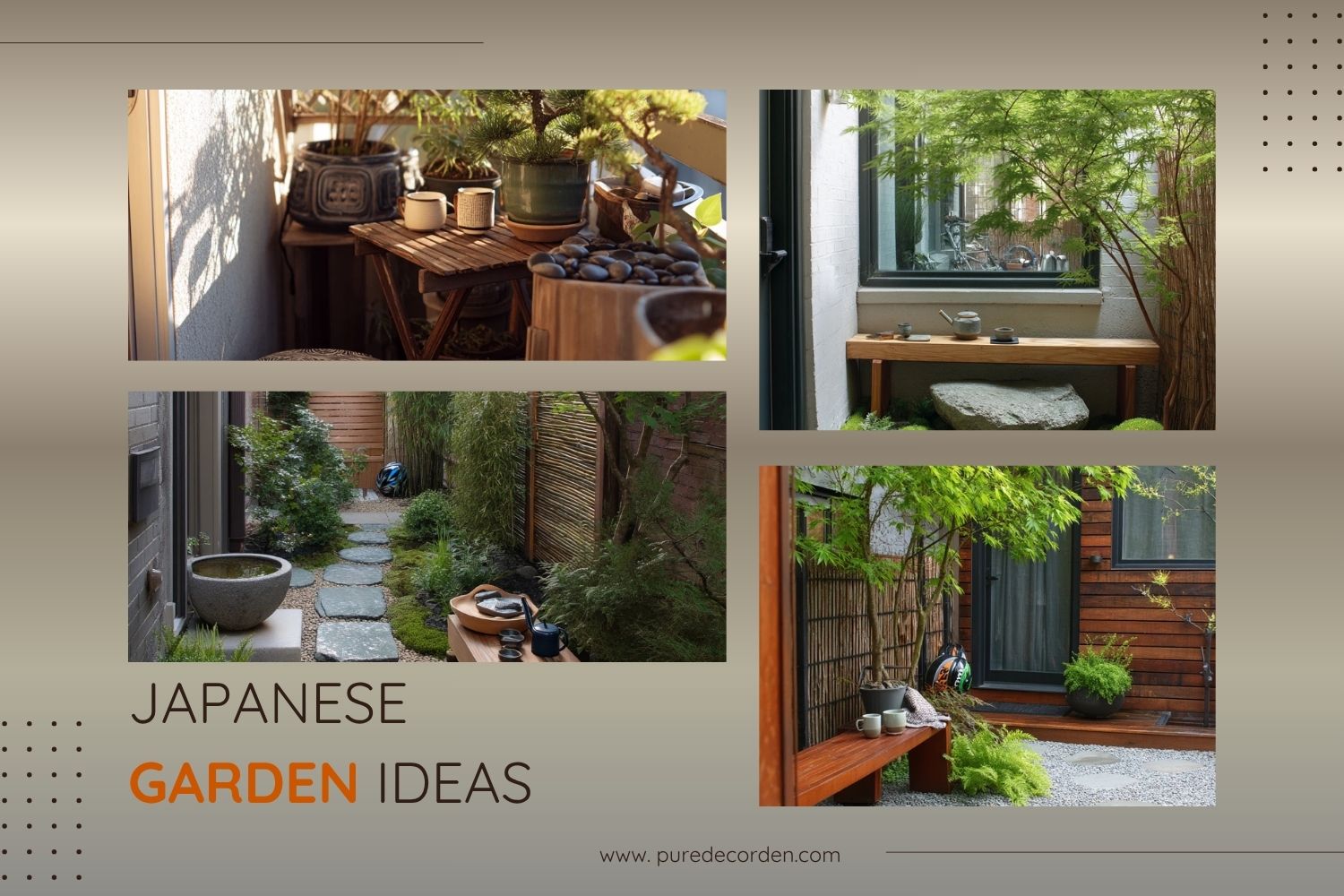

Japanese garden ideas work well in small, real homes because they focus on calm shapes, simple plants, and a few strong materials like gravel, stone, and wood.
In this guide, you will see 10 space-smart layouts, from an urban townhouse courtyard to a renter balcony and a narrow side yard. Each one uses details like stepping stones, a stone basin, bamboo screening, and a dwarf maple to make a quiet retreat.
You will also get simple “how to style it” steps, plus a pro design tip and a budget note for every space so you can plan with confidence.
Use these ideas to turn quick Pinterest saves into a plan you can build and keep up with week to week.
1. Small Townhouse Courtyard Japanese Garden
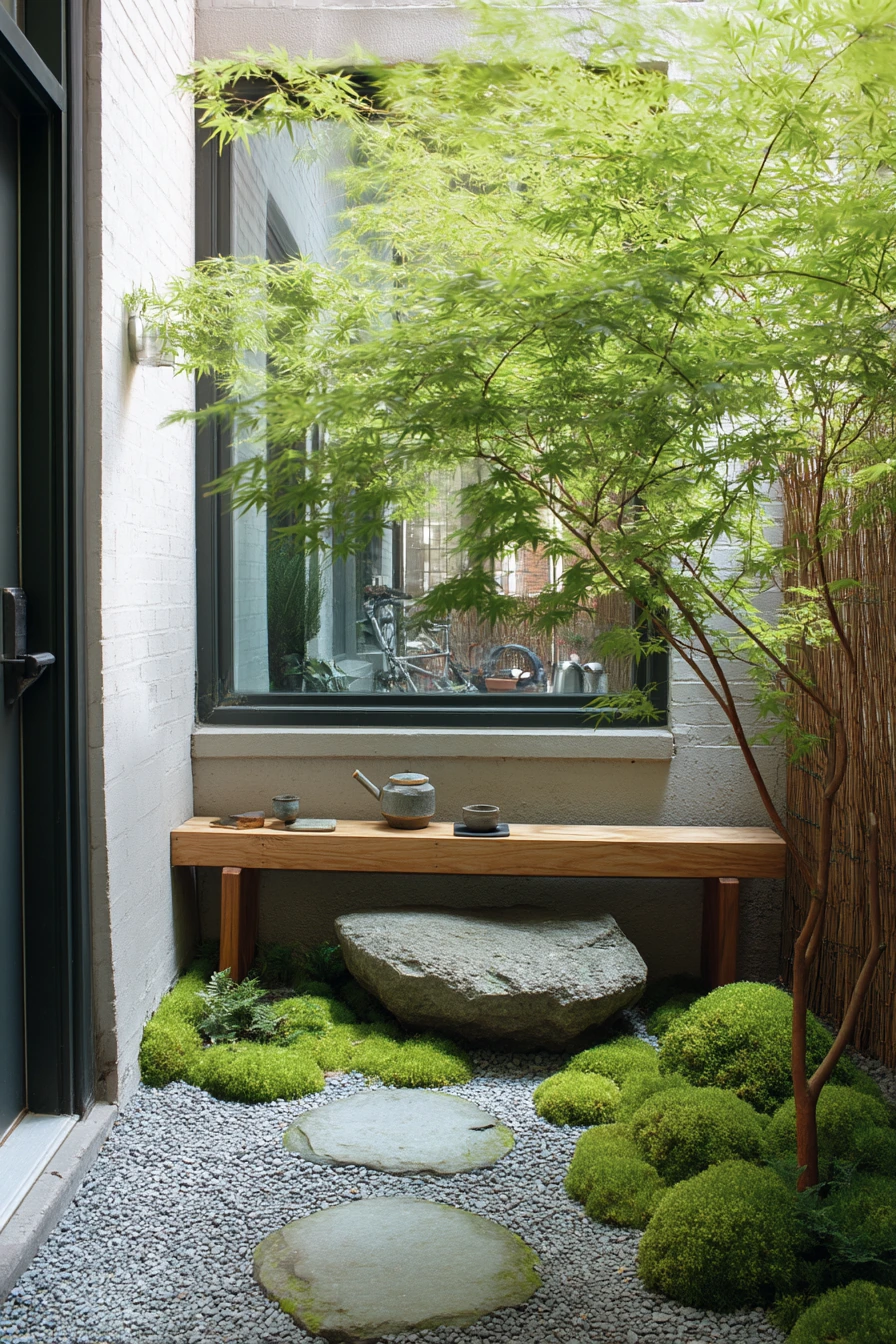

A small courtyard can feel like a private retreat when you keep the layout simple and tactile. Start with gravel stepping stones that lead from the door to a shallow stone basin. Add a dwarf maple for soft color and height, then keep the ground calm with clipped moss or moss-like groundcover. Bamboo screening makes the space feel finished and also hides close neighbors.
For a lived-in look, keep one cedar bench and let it earn its place. Two tea cups on a small tray make the garden feel used, not staged. A watering can and gardening gloves on the bench are also practical because you will water often in a compact courtyard. If you keep a bike near the door, tuck the helmet by the entry so the garden stays tidy.
How to style it: use two or three materials only, like gravel, stone, and cedar. Repeat the same stone tone in the basin and stepping stones so it feels calm. In morning light, wet the gravel lightly with a watering can for a clean, dew-kissed look before guests come.
- Lay stepping stones in a gentle curve, not a straight line
- Place the stone basin where you can see it from the kitchen window
- Use bamboo screening on the noisiest side for a hush effect
- Pick one dwarf maple and prune for an open shape
- Add a cedar bench with a small tray for tea cups and tools
Pro Design Tip: Leave a clear “negative space” zone of gravel (about one third of the courtyard) so the maple and basin stand out and the area feels bigger.
Budget Considerations: Stone basins can be pricey; use a simple carved bowl or a low stone pot on a flat paver to get the same feel for less.


2. Renter Balcony Japanese Garden Ideas


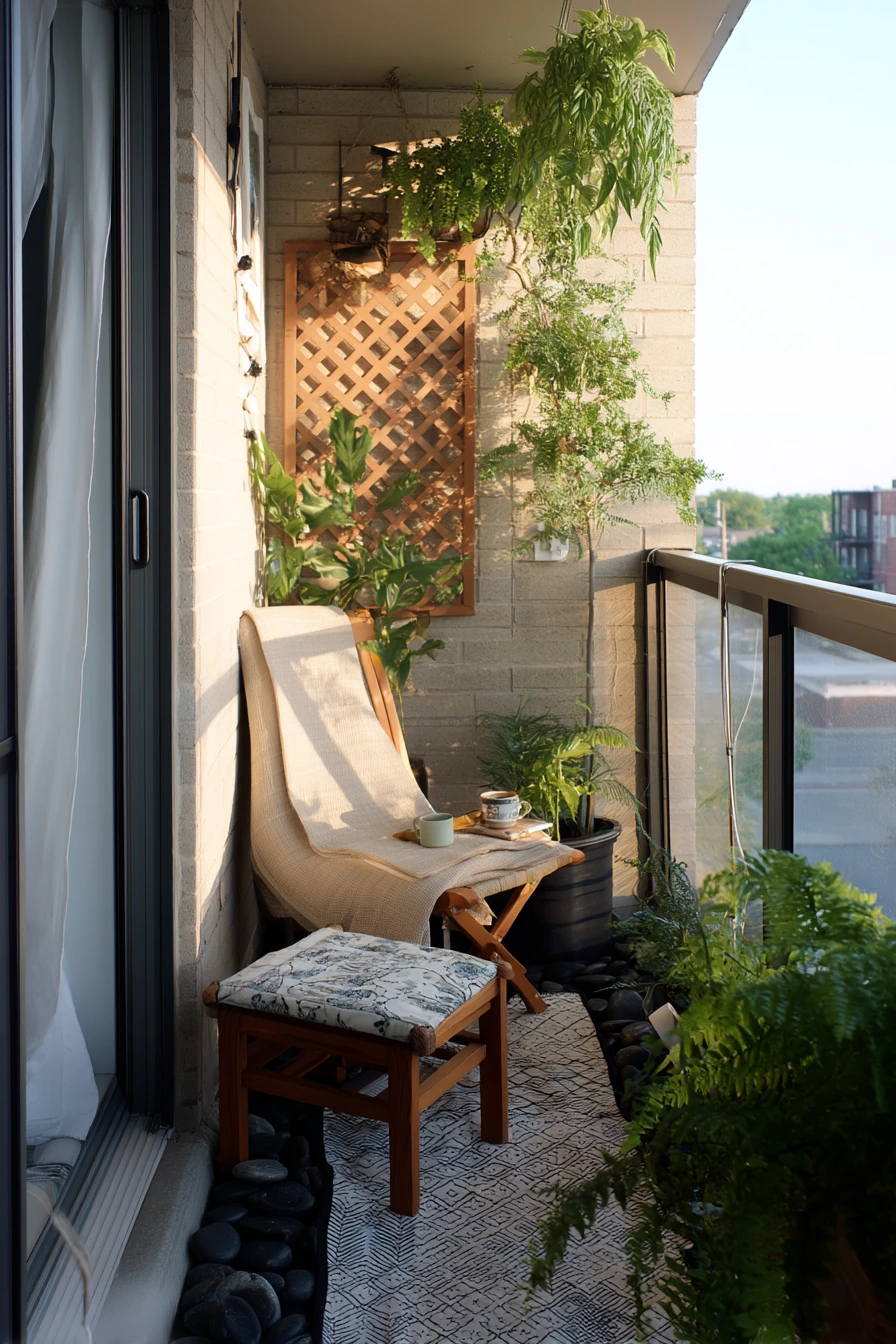
A renter balcony can still feel like a tiny Japanese garden if everything is movable. Use planters you can carry, then create a base layer with black river stones in shallow trays or planter saucers. A slim lattice screen adds privacy without blocking air. Choose a potted pine for structure and a fern for soft texture so the planting looks balanced.
For styling, treat the balcony like a calm outdoor room. A small koi-pattern stool works as a side table for an herbal tea mug. Add a folded blanket for late-afternoon sitting. Keep plant tags in a small box and tuck a charging cable by the door so the space stays neat and does not look like storage.
How to style it: keep colors simple. Black stones, a dark stool, and green plants look clean against most balcony floors. If wind is strong, group planters in the corner and tie the lattice to the railing with removable zip ties. Water in the morning so leaves dry faster and the balcony stays clean.
- Use lightweight planters with trays to protect the floor
- Layer black river stones in shallow bins for a tidy ground feel
- Choose one potted pine as the main “tree”
- Add a slim lattice screen for privacy and vine support
- Keep one small stool for tea, a book, or pruning shears
Pro Design Tip: Mix one upright plant (pine) with one arching plant (fern) and one low filler in the same visual line to create a mini landscape that reads well from indoors.
Budget Considerations: River stones add up fast; buy one bag for the visible top layer and use cheaper pea gravel underneath in trays.

3. Family Patio Japanese Garden with Stepping Stones

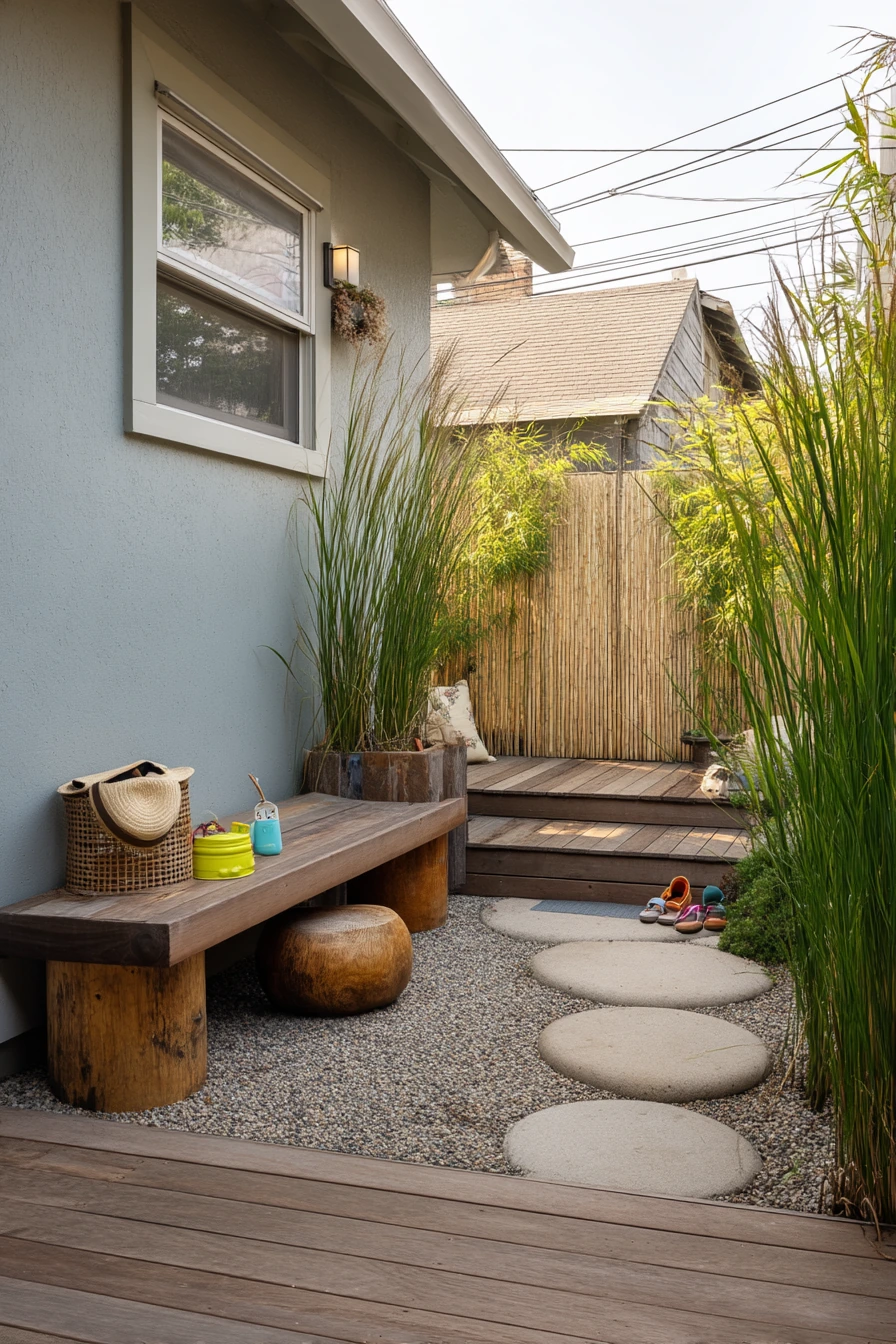
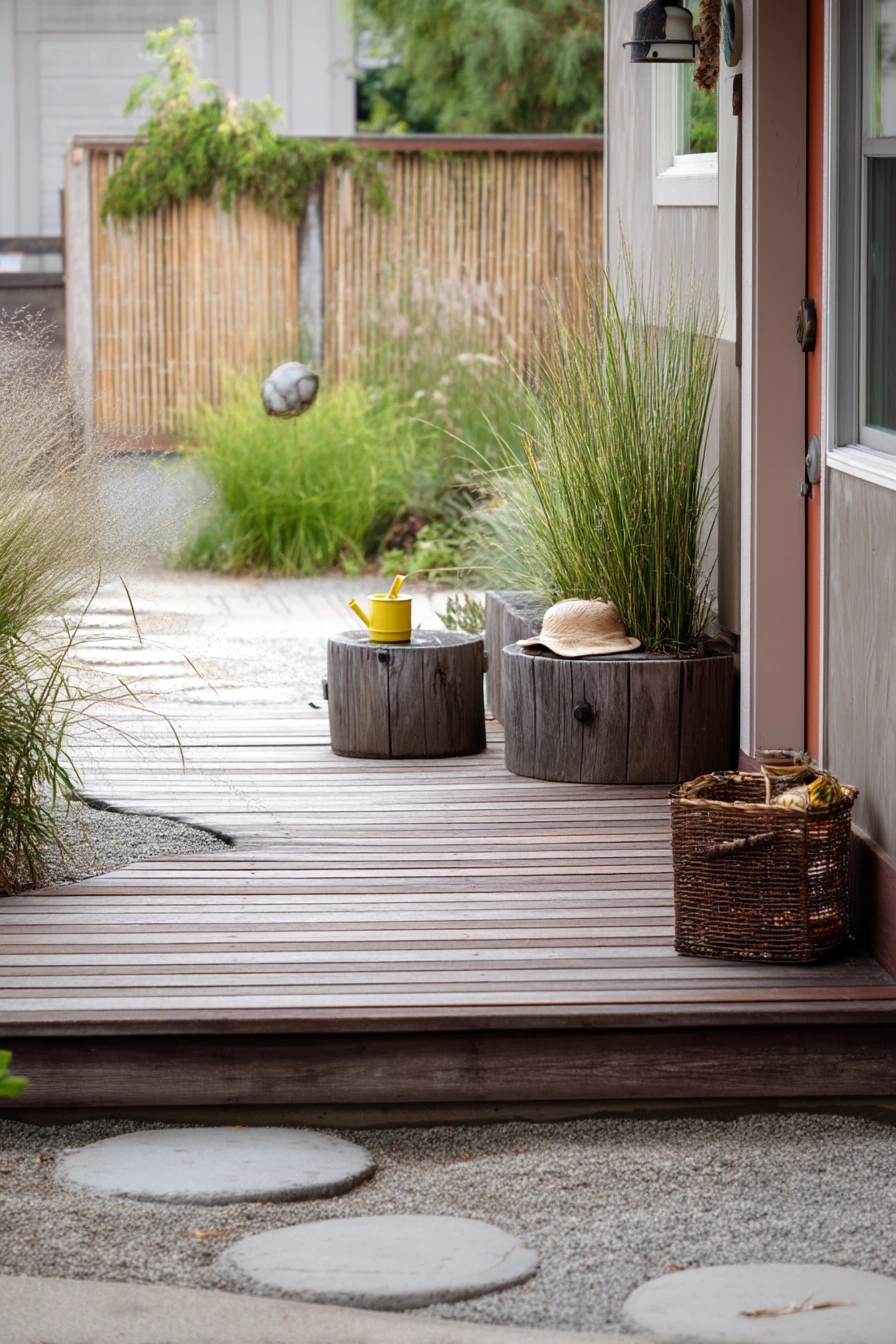
A suburban patio can hold Japanese garden ideas without feeling too formal for family life. Start with a low deck or existing slab, then add rounded stepping stones that connect the door to a small seating spot. Weathered cedar planters soften the edges and give you control over soil and plant size. Ornamental grasses bring movement and hide toys when you need a quick reset.
A small raked gravel patch is the key detail that makes the patio feel calm. Keep it in a corner or along one side, framed by edging so it does not spread. Tuck a bench under bamboo so there is a quiet place for one adult to sit while kids play. Use lived-in cues in a tidy way: a kid toy basket that has a lid, a half-finished lemonade on a tray, a sun hat on the rail, and muddy shoes lined on a boot mat.
How to style it: keep the main path clear, then give kids a “drop zone” so clutter does not take over. Choose one or two grasses, not five kinds, so it stays simple. Rake the gravel in quick, wide lines once a week. This small ritual keeps the space feeling cared for.
- Set rounded stepping stones 18 to 24 inches apart for easy walking
- Use cedar planters to control plant spread near play areas
- Frame the raked gravel patch with metal or stone edging
- Place a bench under bamboo for shade and a calm seat
- Add a lidded toy basket so cleanup takes one minute
Pro Design Tip: Keep the gravel patch visible from the main door so the calm texture is the first thing you see, even when the patio is busy.
Budget Considerations: Bamboo screens and mature bamboo can cost more; consider clumping bamboo in smaller pots or use tall ornamental grass for a similar look.
4. Kitchen-Side Garden Nook with Stone Lantern
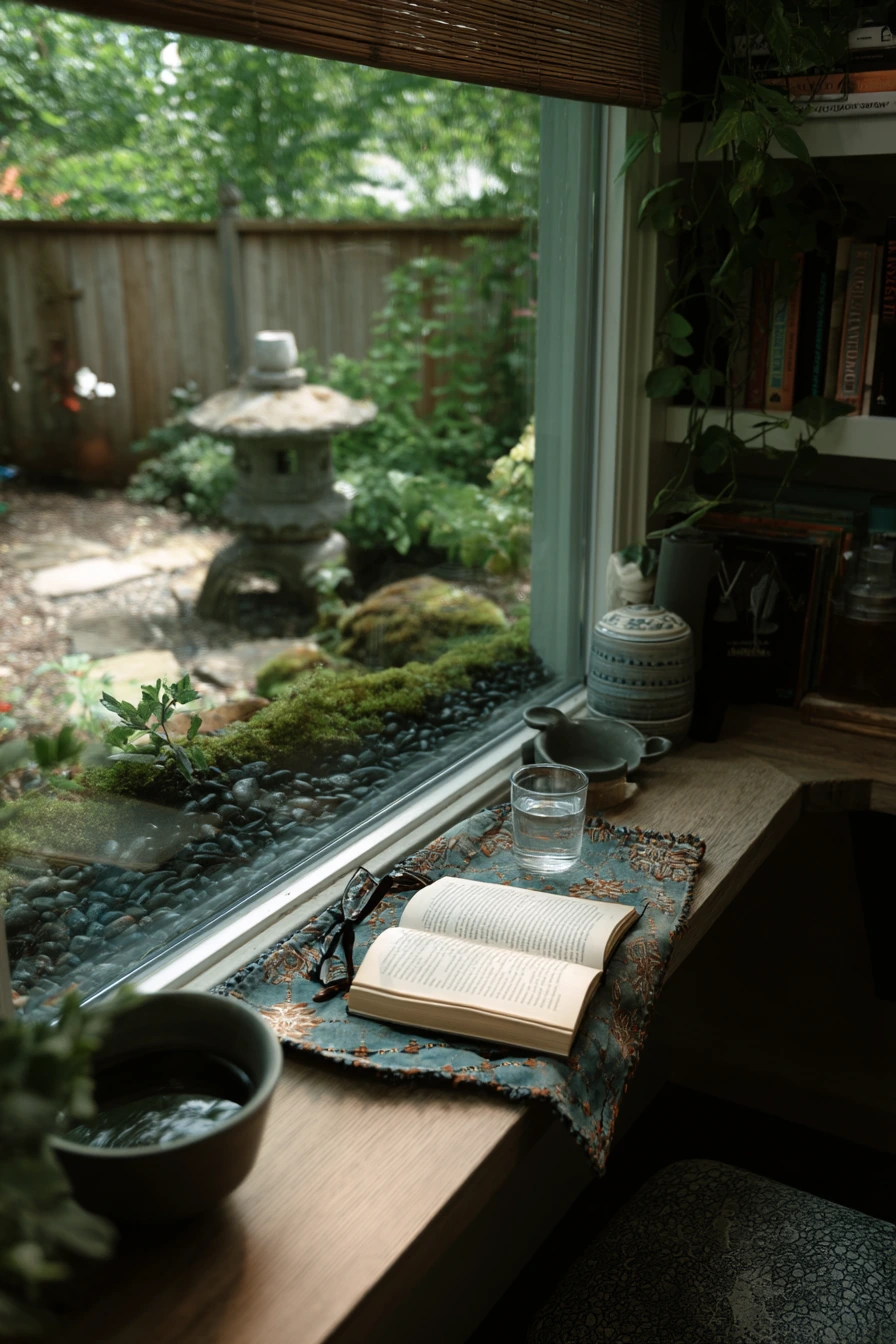
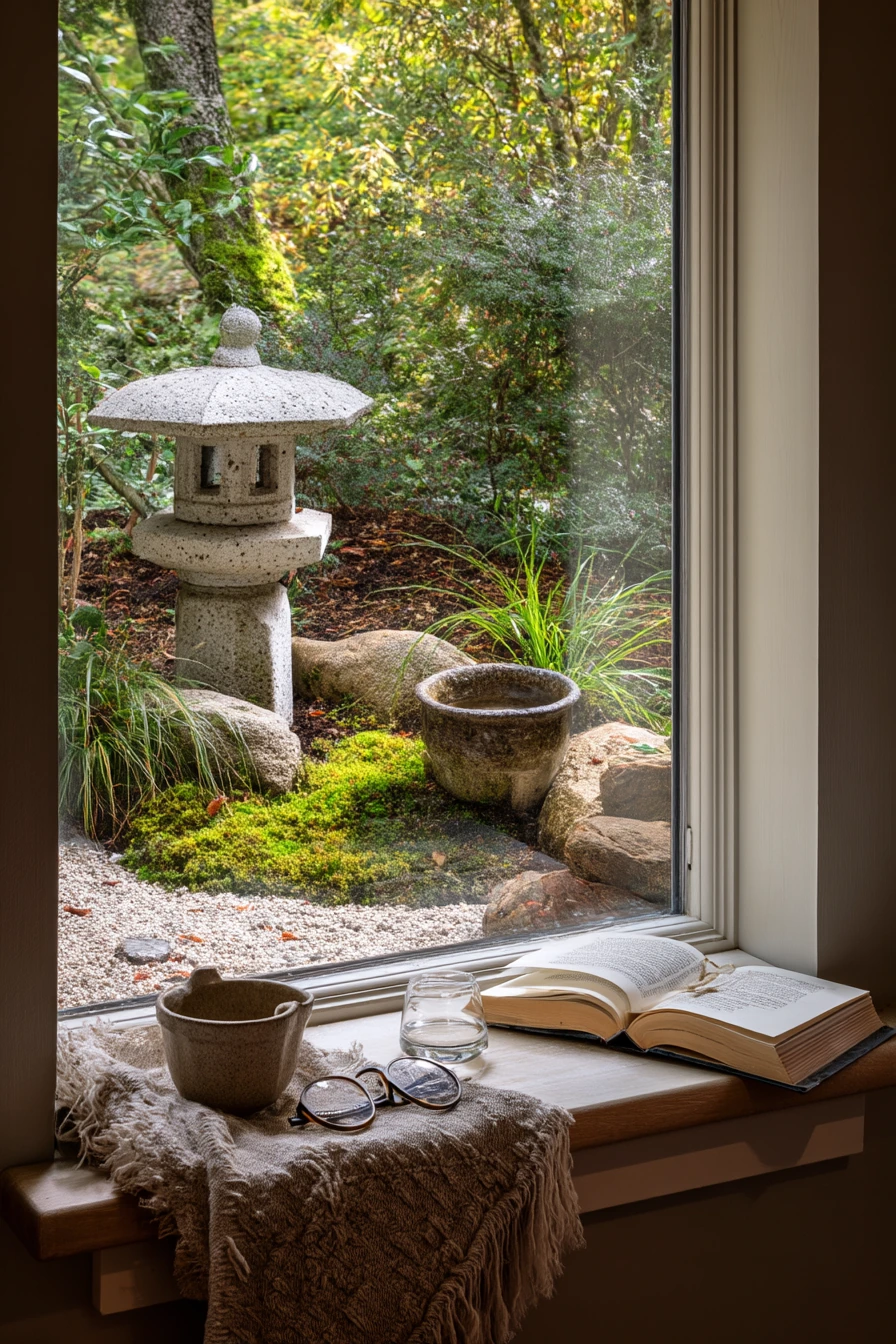
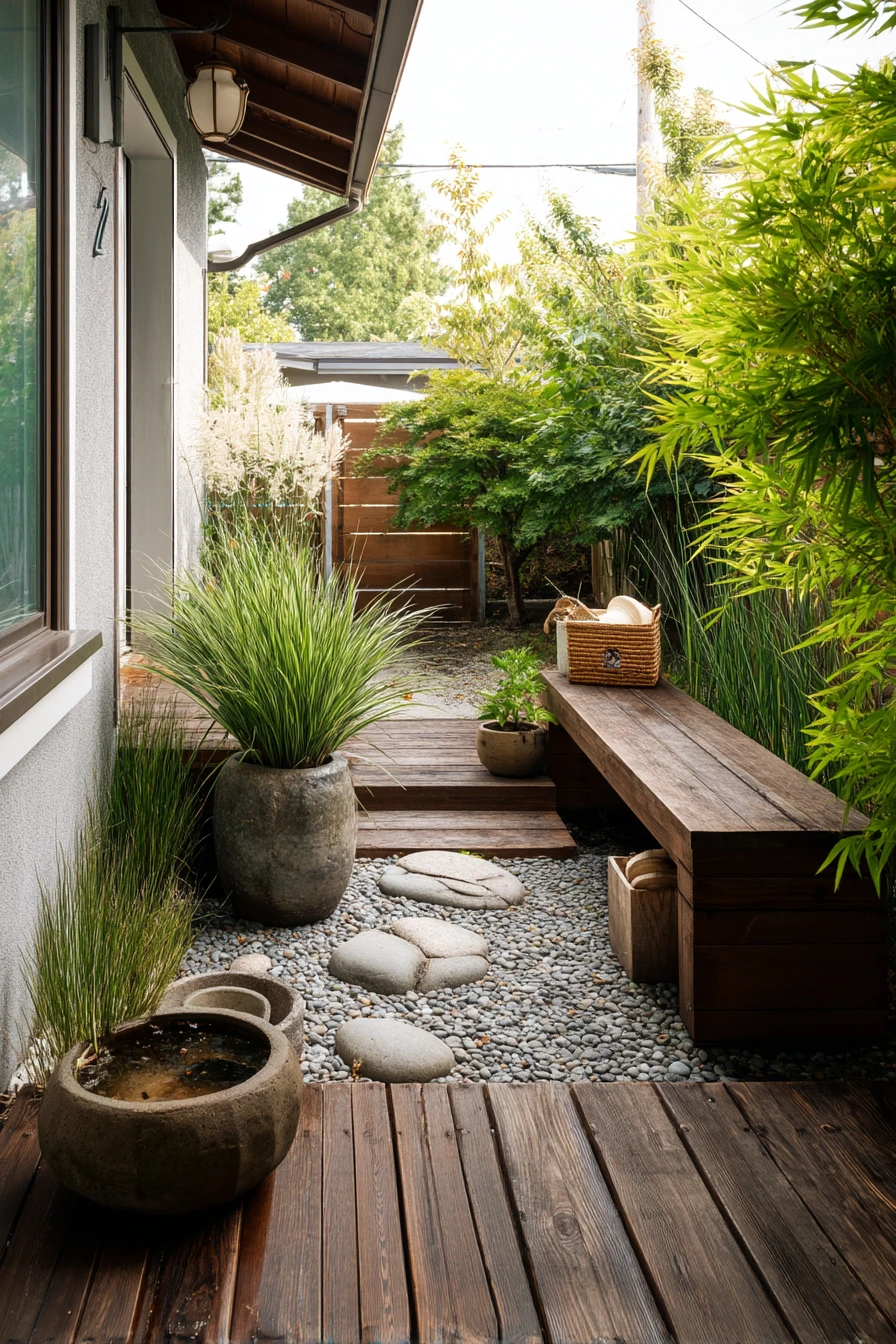
A kitchen-side nook is perfect for a small, ritual-focused Japanese garden. Because you see it many times a day, the goal is a clean view with a few meaningful items. Place a stone lantern as a steady focal point, then add mossy edging to soften the border between gravel and planting. A low maple brings gentle color and a light canopy without blocking the window.
Include a ceramic water bowl and a narrow gravel path that you can see through the glass. The path does not need to go far. It only needs to suggest a walk and guide the eye. Lived-in details make the scene warm: an open book and reading glasses on the inside sill, a tea towel nearby, and a half-drunk water glass that shows this is a real home, not a display.
How to style it: keep the lantern slightly off-center so it feels natural. Use one stone color family, like soft gray, in both the lantern and any edging stones. If you want birds, set the water bowl where you can see it from the sink. Refresh the water often so it stays clear.
- Place the stone lantern where it is visible from the kitchen window
- Use moss or low groundcover to soften hard edges
- Add a low maple and prune to keep the view open
- Lay a narrow gravel path to guide the eye, even if it is short
- Set a ceramic water bowl on a flat stone for stability
Pro Design Tip: Design the nook like a picture frame by keeping the window view uncluttered and using one strong focal point (the lantern) with two supporting elements (maple and water bowl).
Budget Considerations: Real stone lanterns can be expensive and heavy; look for cast stone or smaller lantern styles that still read well from indoors.
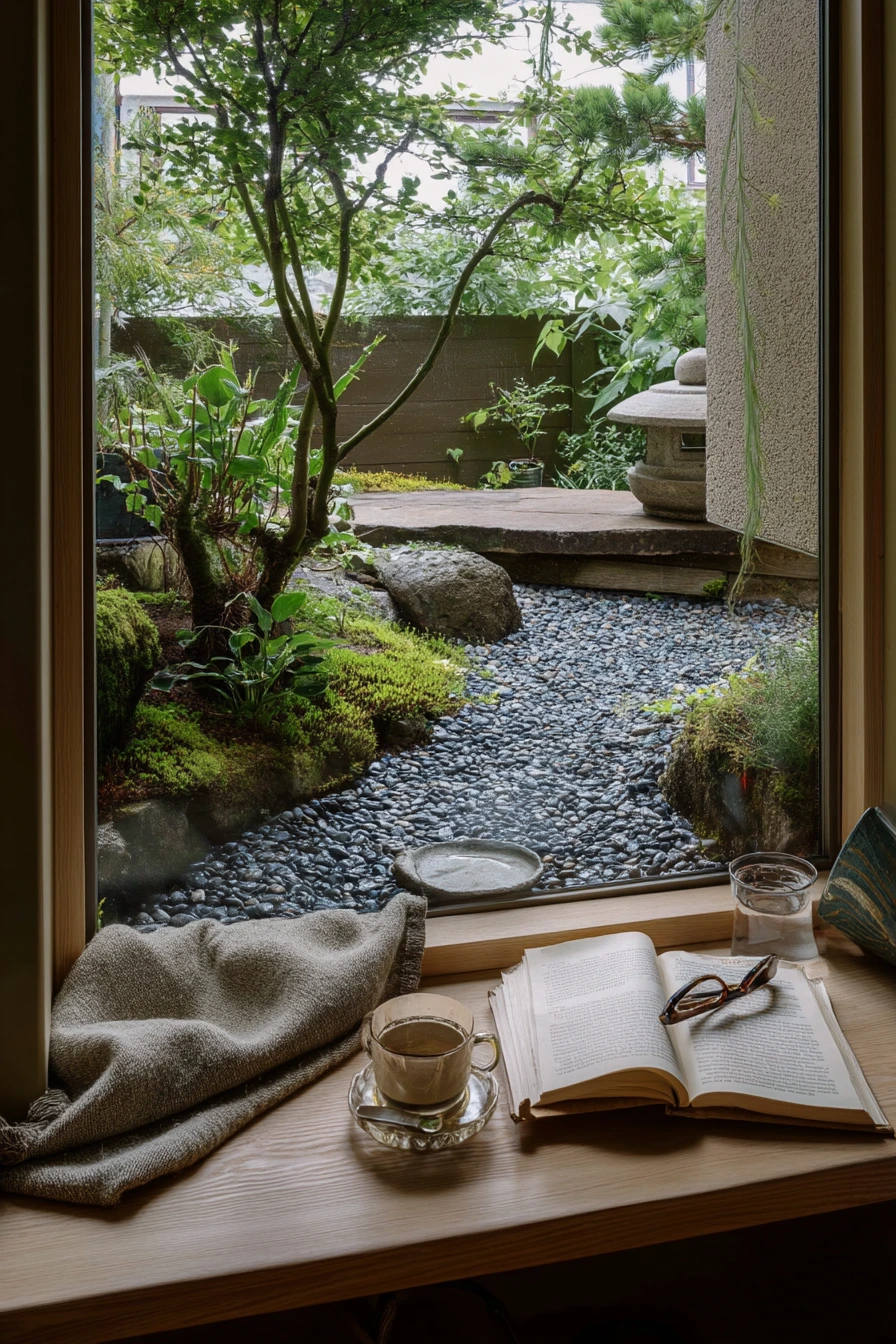
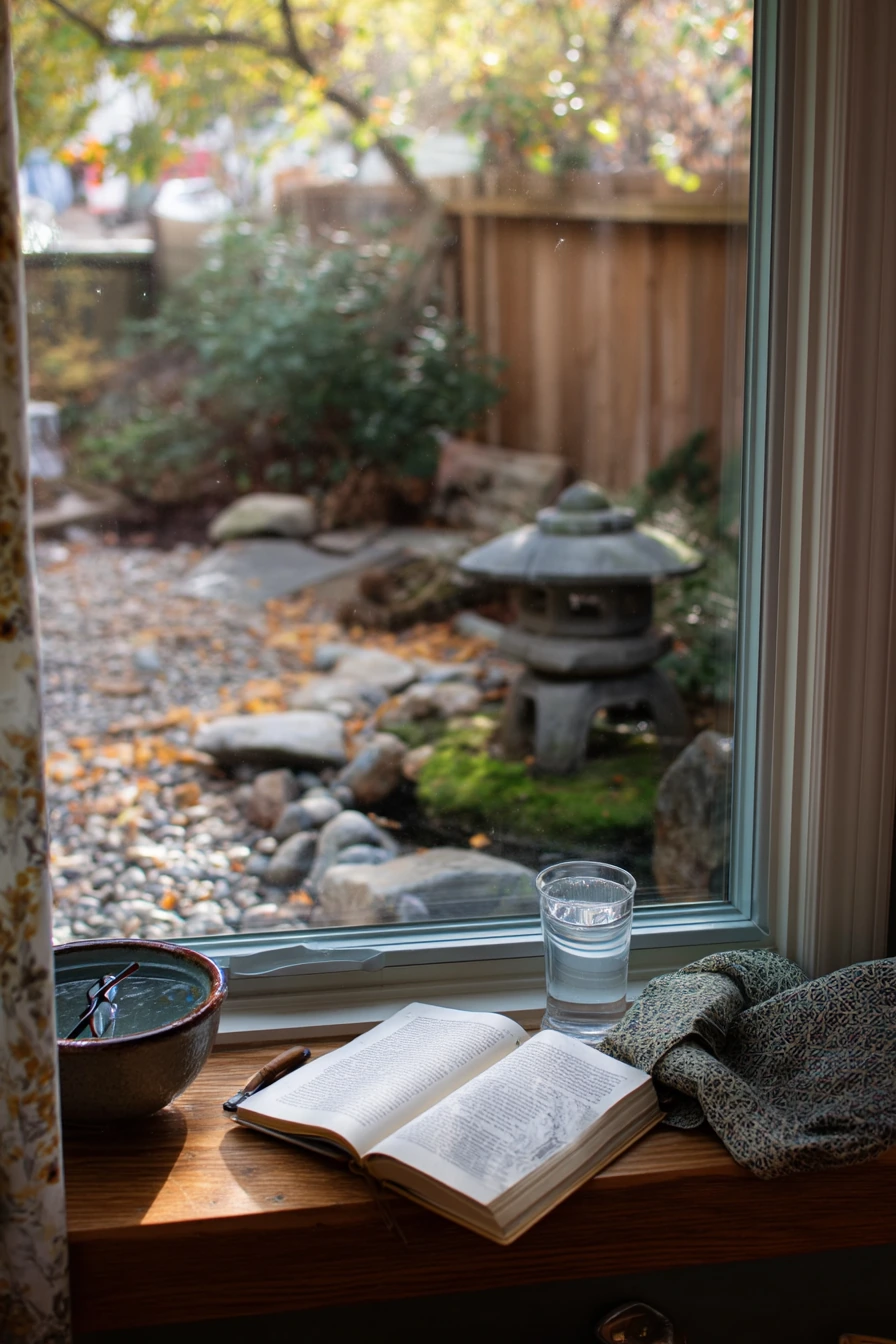
5. Narrow Side Yard Japanese Garden with Slate Pavers
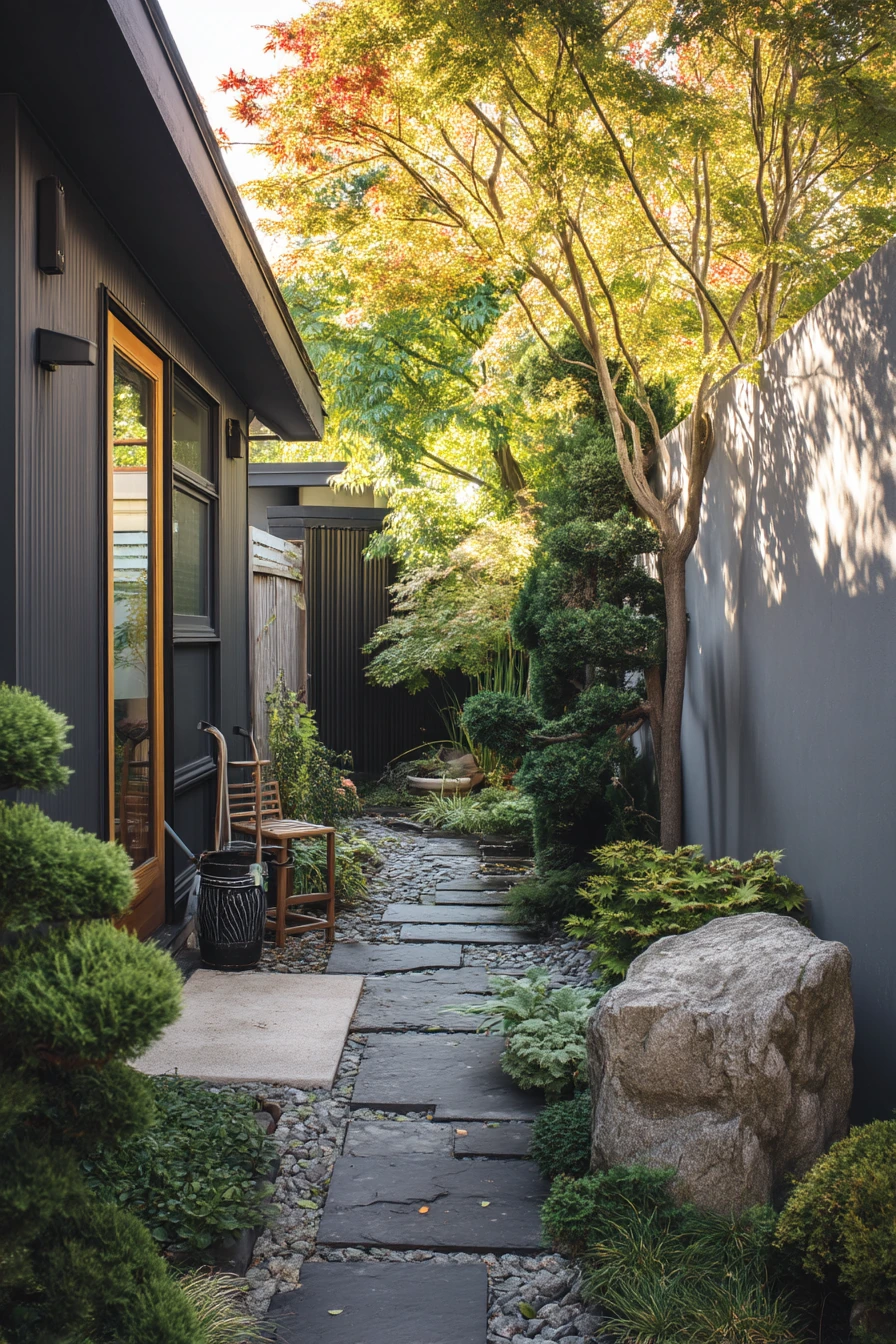
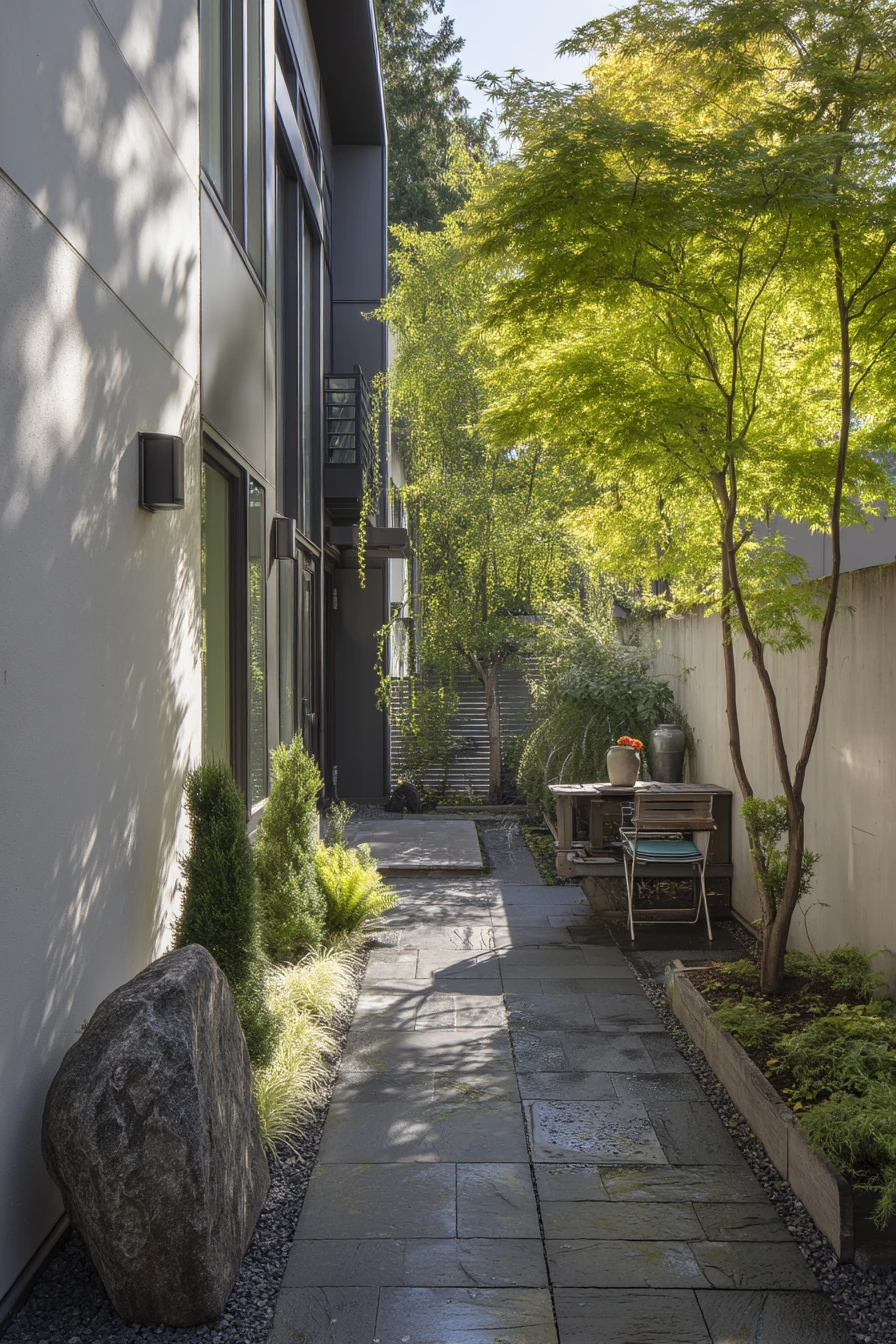
A narrow side yard behind a modern home can feel special with restraint. Use clipped evergreens to create a clean line and keep the space from looking messy. Add dark slate pavers for a strong path, then fill the rest with pea gravel for drainage and a soft crunch underfoot. One boulder is enough. It adds weight and a natural anchor without crowding the walkway.
Let a slender maple do the soft work. In cool morning light, its long shadows will make the yard feel wider. Place the maple where it can be seen from a doorway or a hallway window. Keep lived-in cues organized so the space stays meditative: a garden rake leaning by the fence on a hook, muddy footprints washed off the slate, a hose coiled neatly on a reel, and a market tote on a chair near the back door.
How to style it: keep the fence line clean and avoid too many plant types. Use one evergreen shape repeated, like small clipped mounds or narrow columns. If the side yard is shaded, choose shade-tolerant evergreens and keep the maple pruned higher so light reaches the ground.
- Use slate pavers as a straight, simple walkway
- Fill gaps with pea gravel for drainage and a clean look
- Choose one boulder and give it breathing room
- Repeat clipped evergreen forms to reduce visual noise
- Plant a slender maple for shadow and seasonal color
Pro Design Tip: Match the paver width to the yard width so the path feels intentional, then keep the planting band narrow and consistent on one side.
Budget Considerations: Slate can be costly; use concrete pavers in a charcoal tone and add real slate as small accent pieces near the boulder.
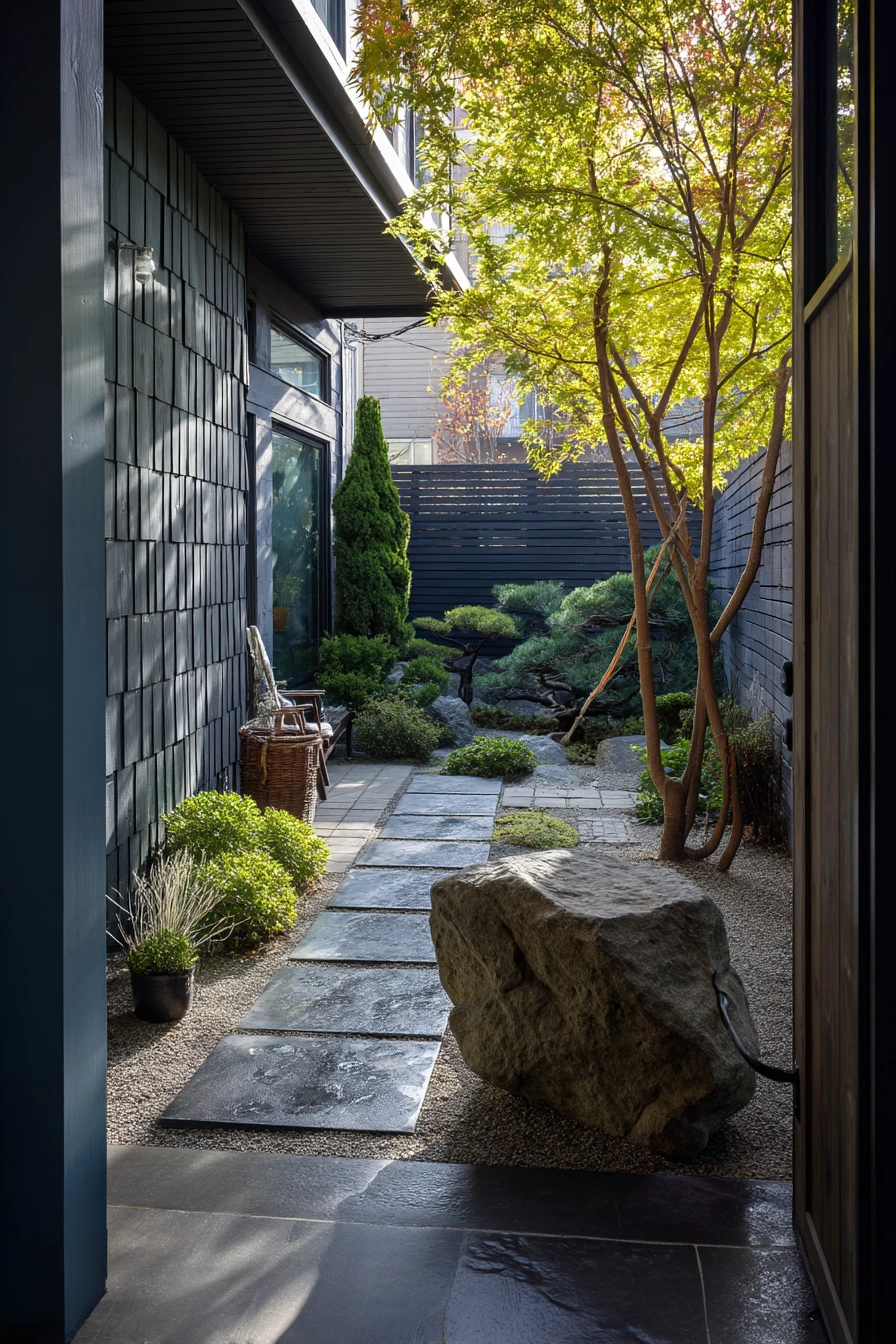
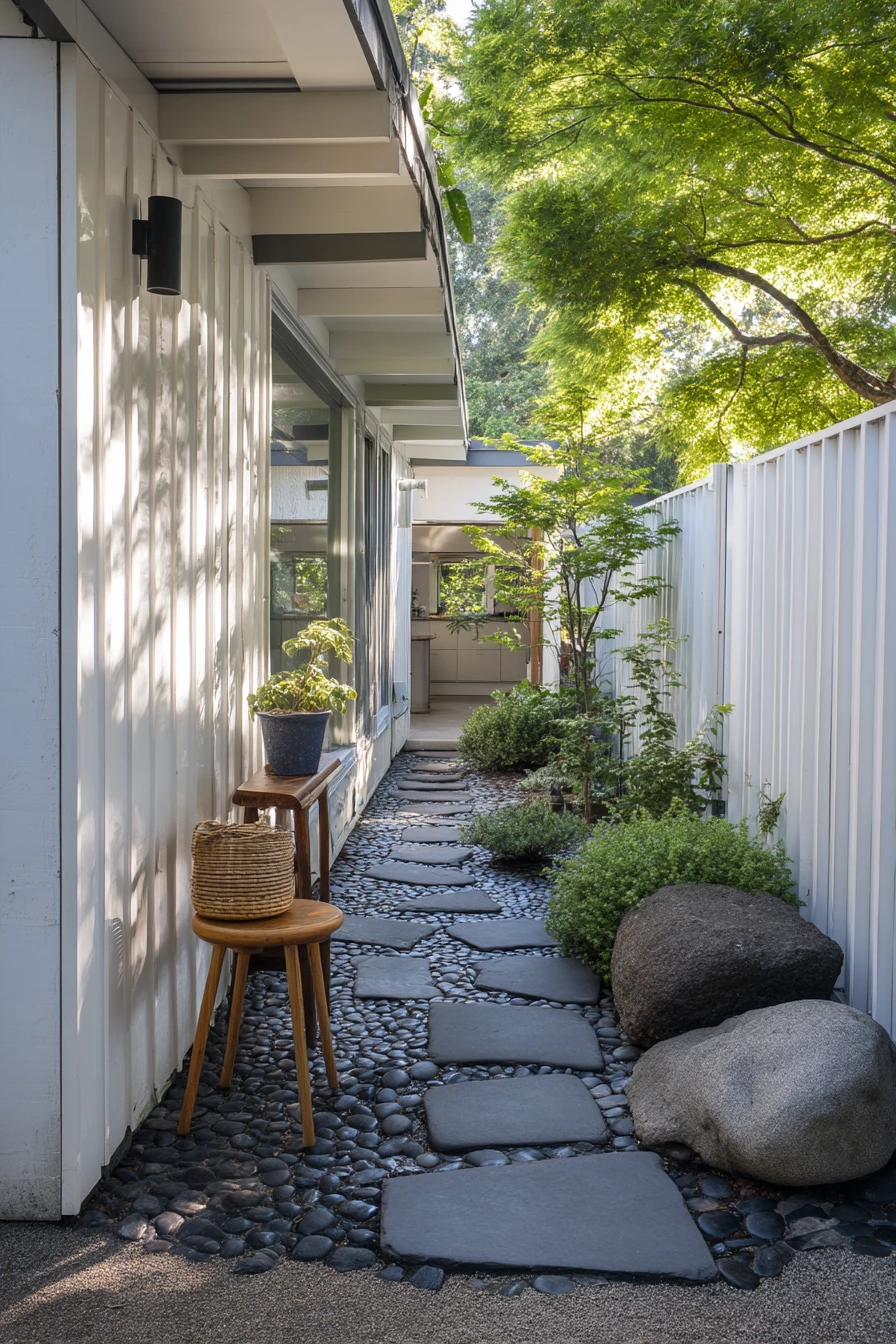
6. Rainy Backyard Japanese Garden with Stone Basin
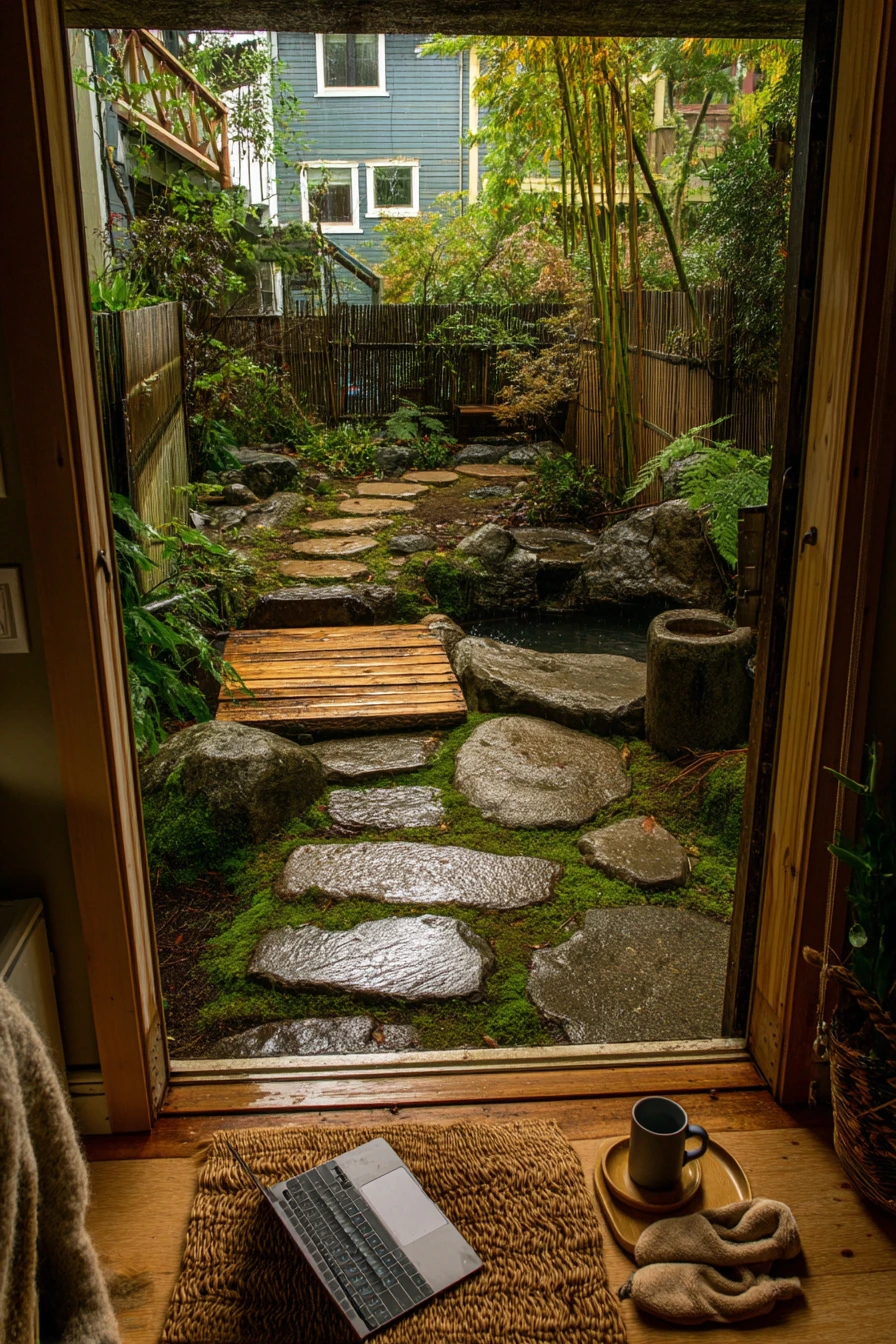

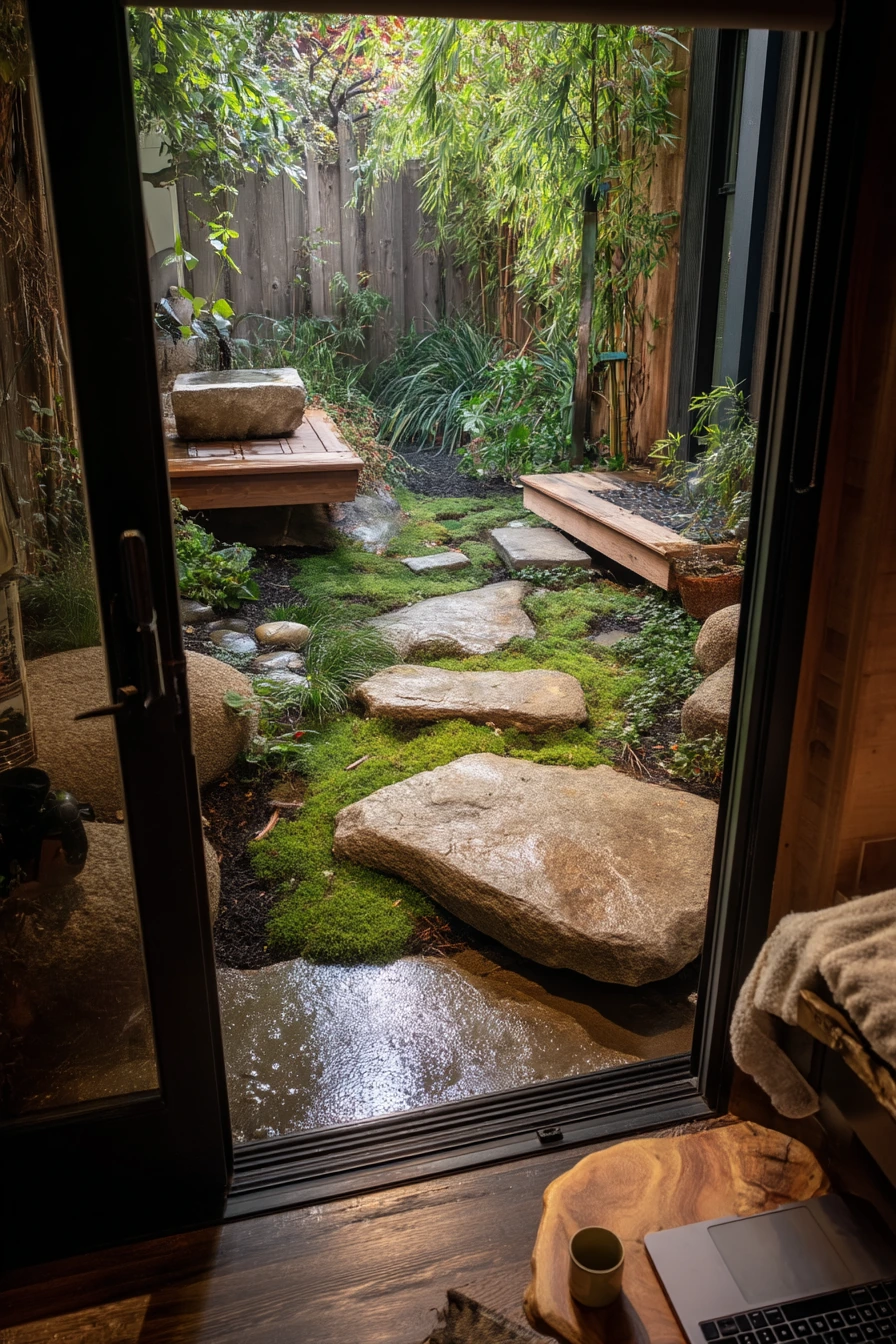
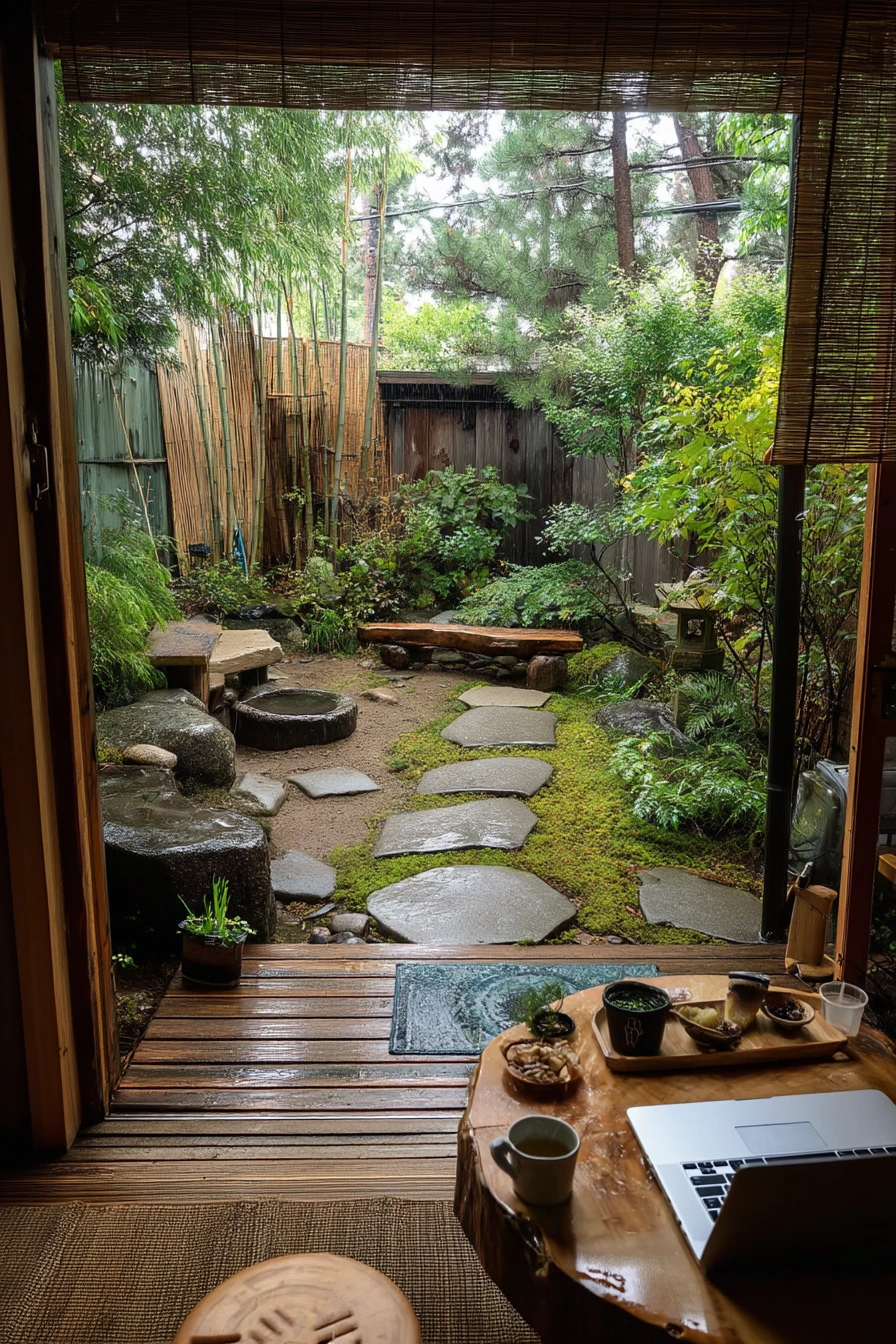
A small backyard seen from a sliding glass door should look good in all weather, especially rain. Wet stepping stones, bamboo, and mossy pockets create an atmospheric scene that feels calm while you work from home. Place a stone basin where it can catch rainwater and reflect light. A low wooden deck gives you a dry spot to step out and resets the transition from indoor to outdoor.
Because this view is part of daily life, keep the layout easy to maintain. Moss works best in sheltered areas with consistent moisture, so tuck it near stones and along shaded edges. Bamboo adds vertical privacy, but keep it controlled in planters or choose clumping varieties. Lived-in cues can stay simple and real: a laptop on the table, socks on the floor inside, a mug ring on a tray, and a blanket slightly wrinkled after a break.
How to style it: design for what you see from the couch. Put the basin and the best moss in the center of that sight line. Use warm wood tones on the deck to balance the cool gray of stone and gravel. On rainy days, clear leaves from the basin so the water looks clean and still.
- Set stepping stones with good grip and stable bases
- Place the stone basin where it collects rain and catches light
- Use bamboo for privacy but keep it contained
- Create moss pockets in shaded, damp areas near stones
- Add a low deck as a dry threshold outside the door
Pro Design Tip: Build the view in layers from inside to outside: deck edge, stepping stones, basin focal point, then bamboo backdrop for depth.
Budget Considerations: Moss installation can be slow and pricey; start with small plugs in the best spots and let it spread over time.
7. Budget Front Yard Japanese Garden for New Homeowners
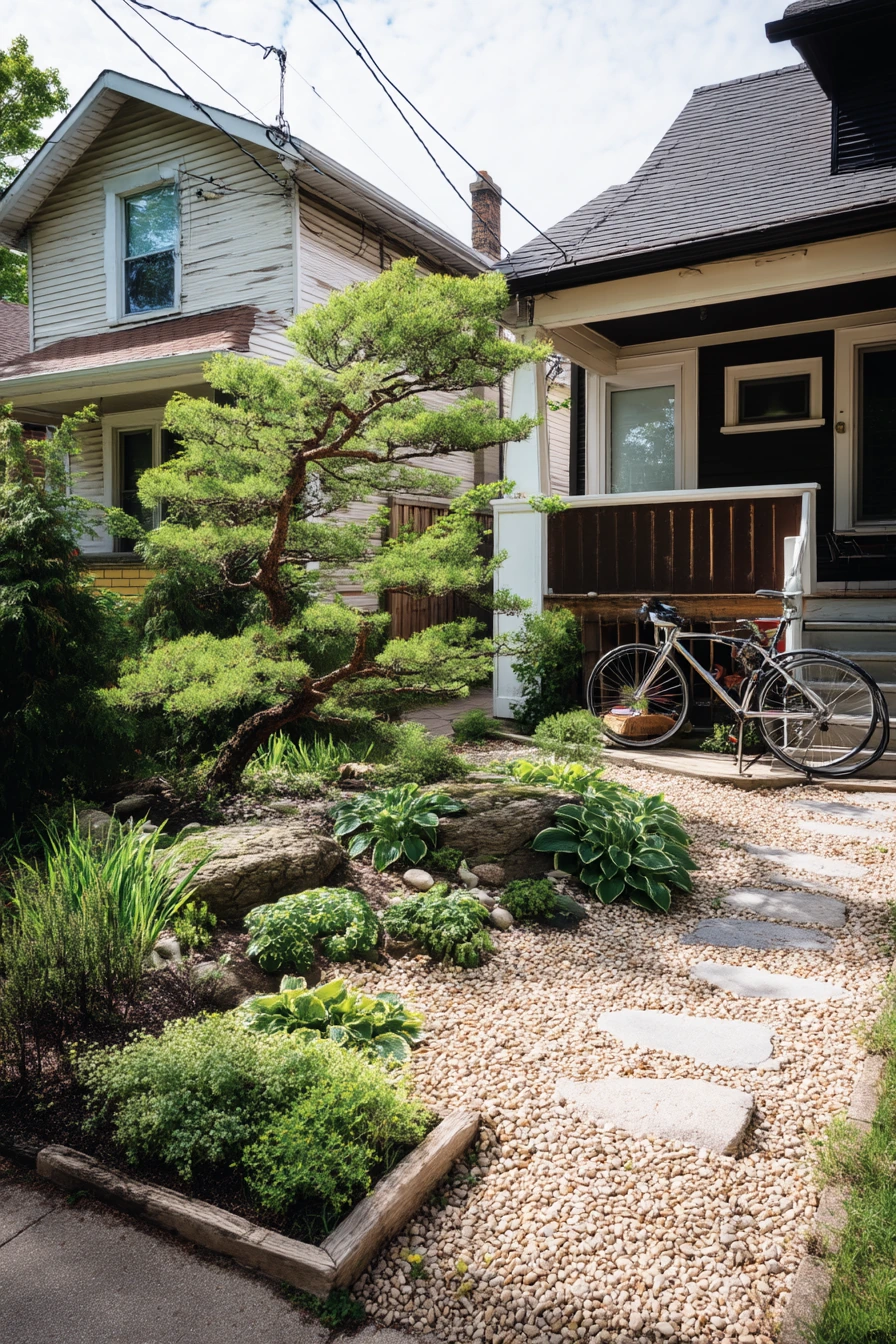
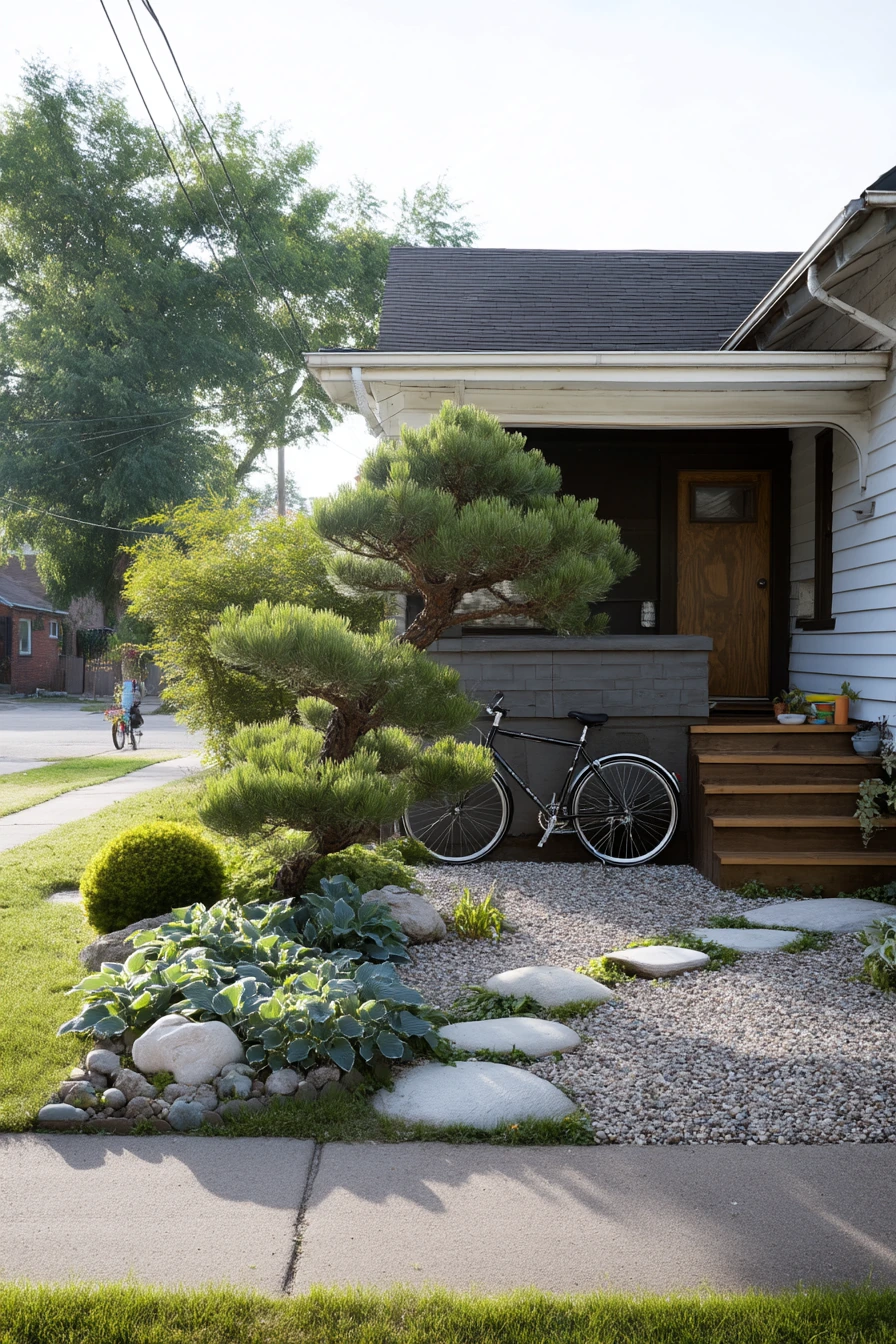
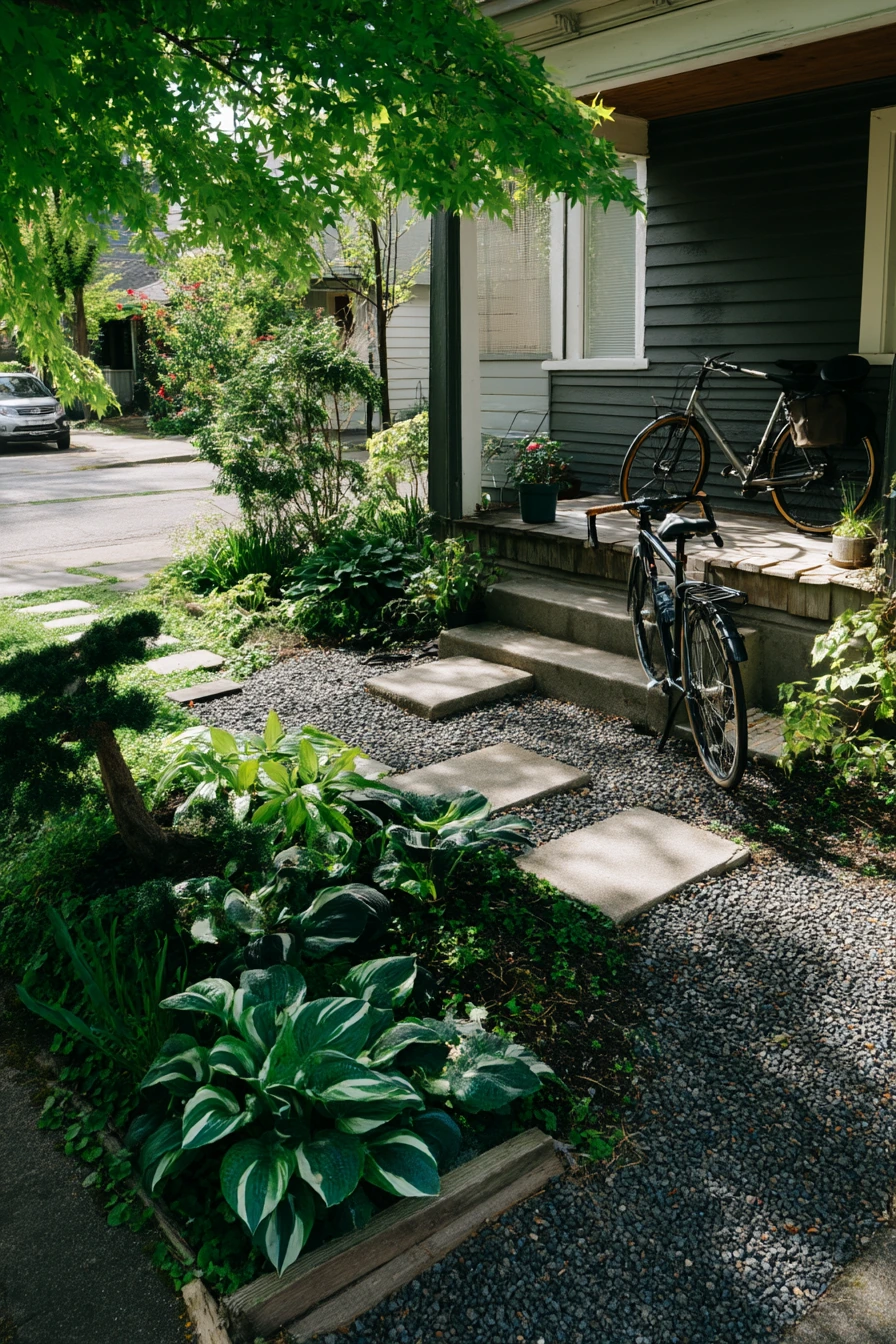
A modest front garden can use Japanese garden ideas without a big spend. Gravel mulch is a simple base that looks clean and reduces weeds. Add one sculptural pine as the main feature, then keep the rest low with compact hostas or other shade plants that look neat. Simple stepping stones make a clear path and protect the gravel from getting kicked around.
Use a reclaimed timber border to frame the bed and keep gravel in place. This also gives the front yard a finished edge, which boosts curb appeal. Lived-in cues fit well in a new home: paint swatches on the porch, a delivery box by the steps, garden gloves on a hook, and a bicycle leaning nearby. The goal is to make the garden feel friendly, not strict.
How to style it: stick to three main elements. One pine, one ground plant, and one path material. Prune the pine slowly, a little at a time, so it stays healthy. If your porch is close, add one small pot near the door for seasonal color, but keep the main bed simple.
- Use gravel mulch to create a clean, low-care base
- Plant one pine as the focal point and keep its shape tidy
- Add compact hostas for a soft edge and easy coverage
- Lay simple stepping stones for a clear walking line
- Frame the bed with reclaimed timber to hold gravel in place
Pro Design Tip: Place the pine slightly off-center and angle it toward the front door so the garden feels welcoming and not static.
Budget Considerations: A large pine can be expensive; buy a smaller plant and train it over a few years with light pruning and simple staking.

8. Winter Japanese Garden Ideas for a Quiet Backyard
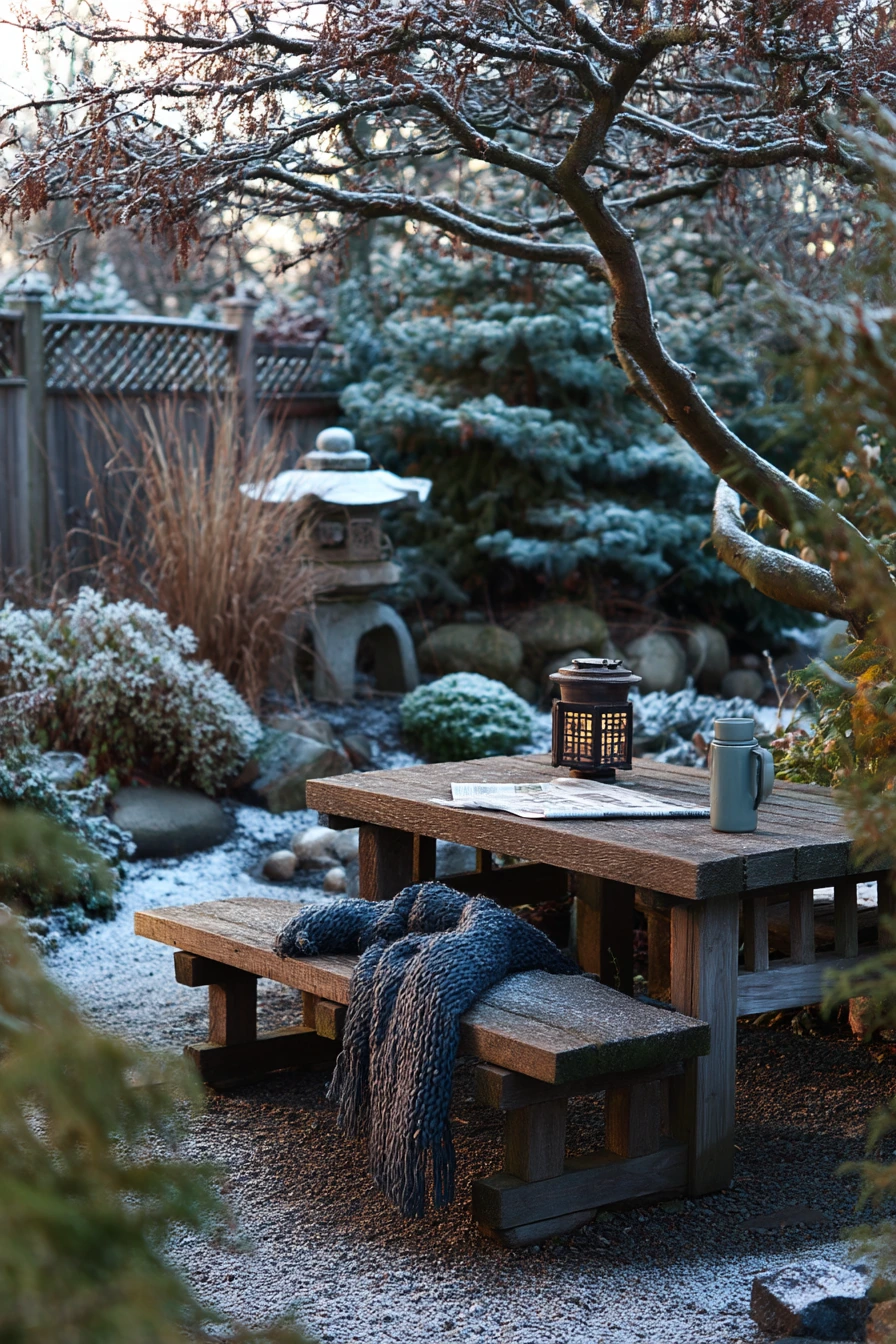
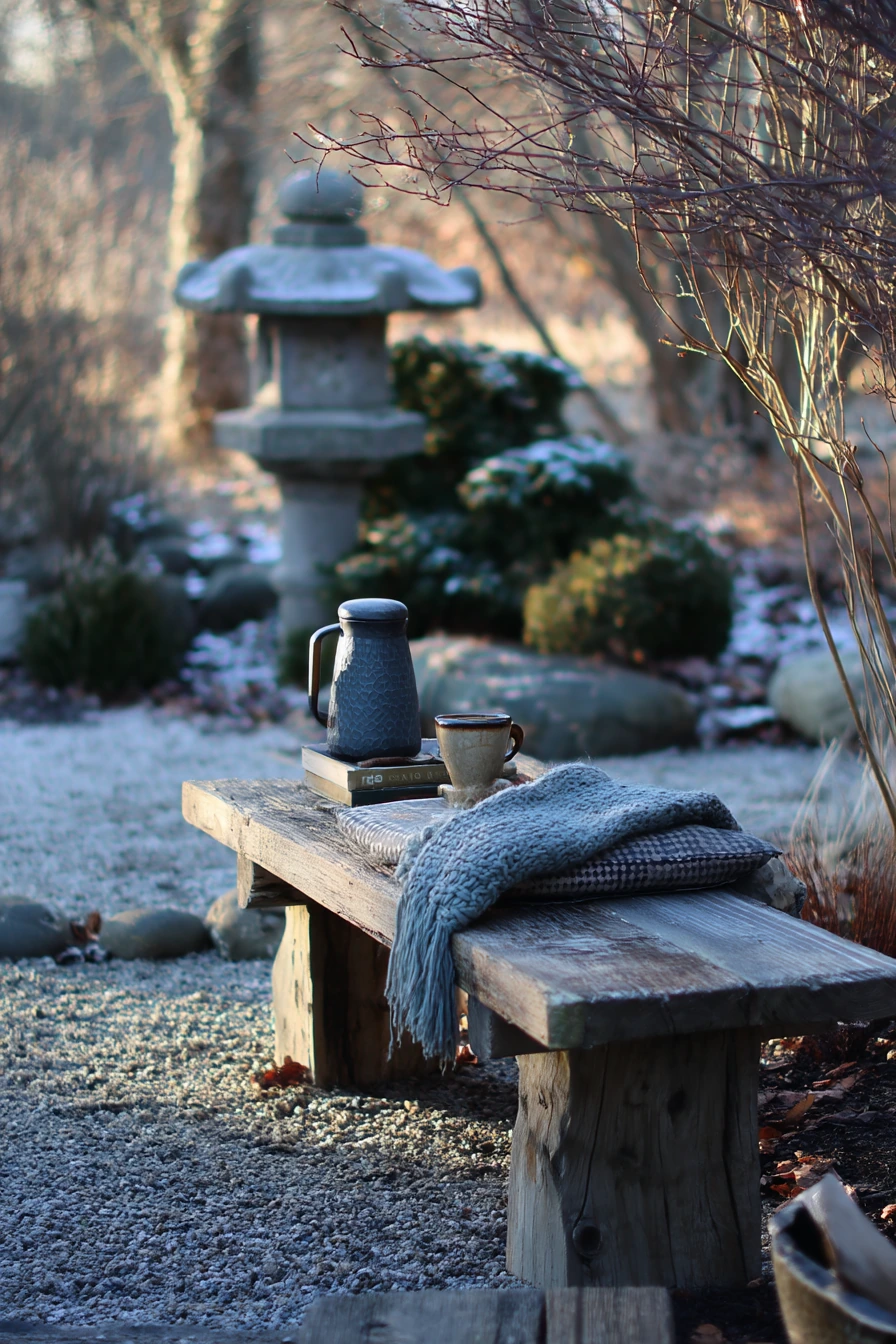
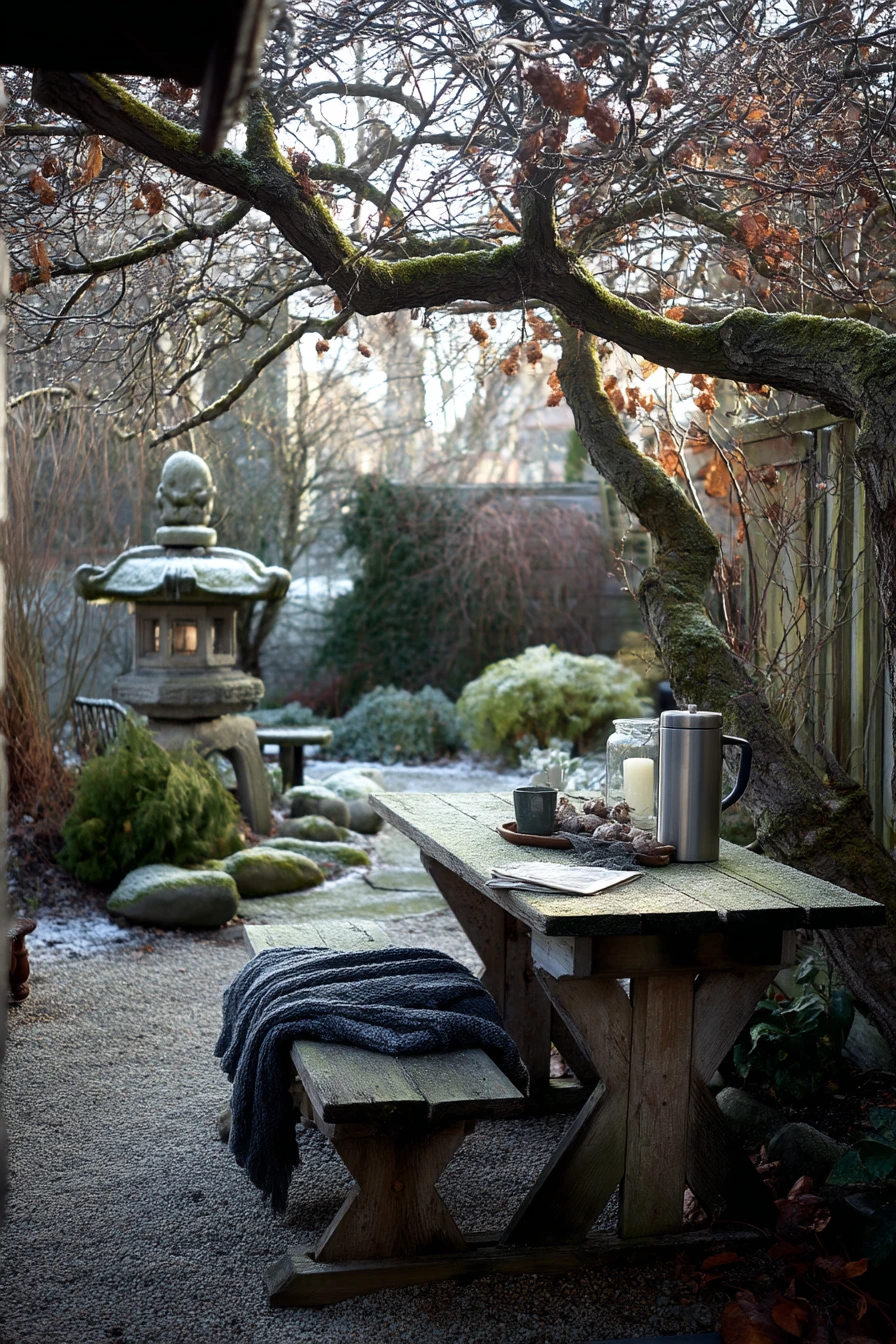
A winter backyard can still feel like a Japanese garden when you plan for bare branches and strong shapes. Bare maple branches give a clear outline against the sky. Evergreen mounds hold the structure when flowers are gone. Dark gravel looks crisp with frost and helps the garden feel grounded even in cold light.
A stone lantern becomes more important in winter because it reads well in a simple landscape. Add a small bench with a wool cushion so there is a reason to step outside, even for five minutes. Lived-in details bring warmth: a ceramic thermos, a knit scarf draped over the bench, a newspaper folded on a table, and boot prints in the frost that show the space is used.
How to style it: highlight contrast. Place the lantern near dark gravel and a pale stone so you can see its shape. Use a small outdoor lamp or a warm porch light to add a gentle glow at dusk. Keep plants trimmed so snow and ice do not bend branches in odd ways.
- Choose evergreens with rounded forms for winter structure
- Use dark gravel to make frost and snow stand out
- Place a stone lantern where it is visible from indoors
- Add a bench and cushion for a simple winter pause spot
- Prune the maple to keep a clean, airy branch pattern
Pro Design Tip: Plan one winter focal view from a main window and keep that area extra simple so branch lines and lantern shape read clearly.
Budget Considerations: Outdoor lighting can add cost; start with one warm, weather-rated lantern light near the bench instead of a full lighting plan.
9. Japanese Garden in Progress: DIY Gravel Path and Moss

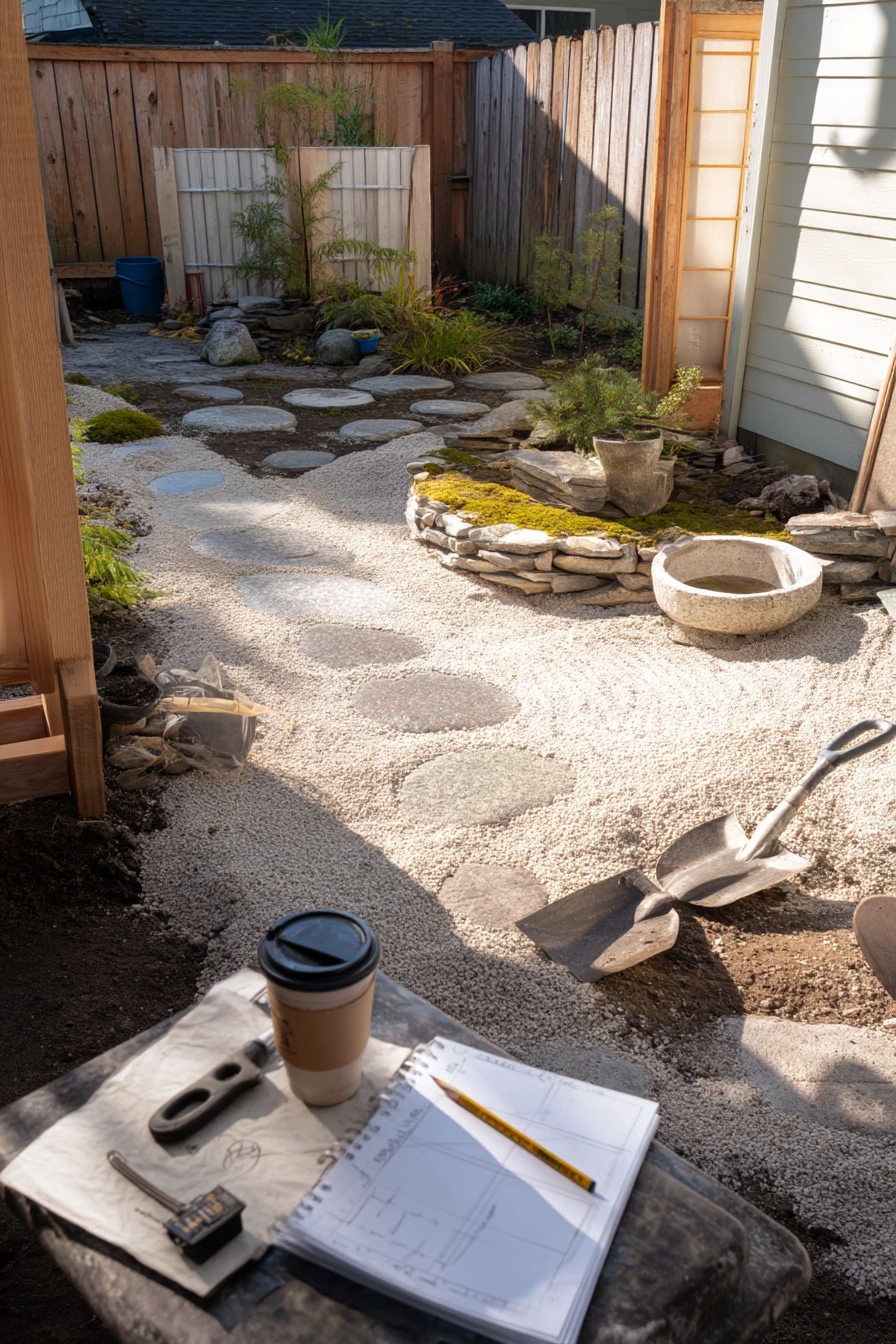
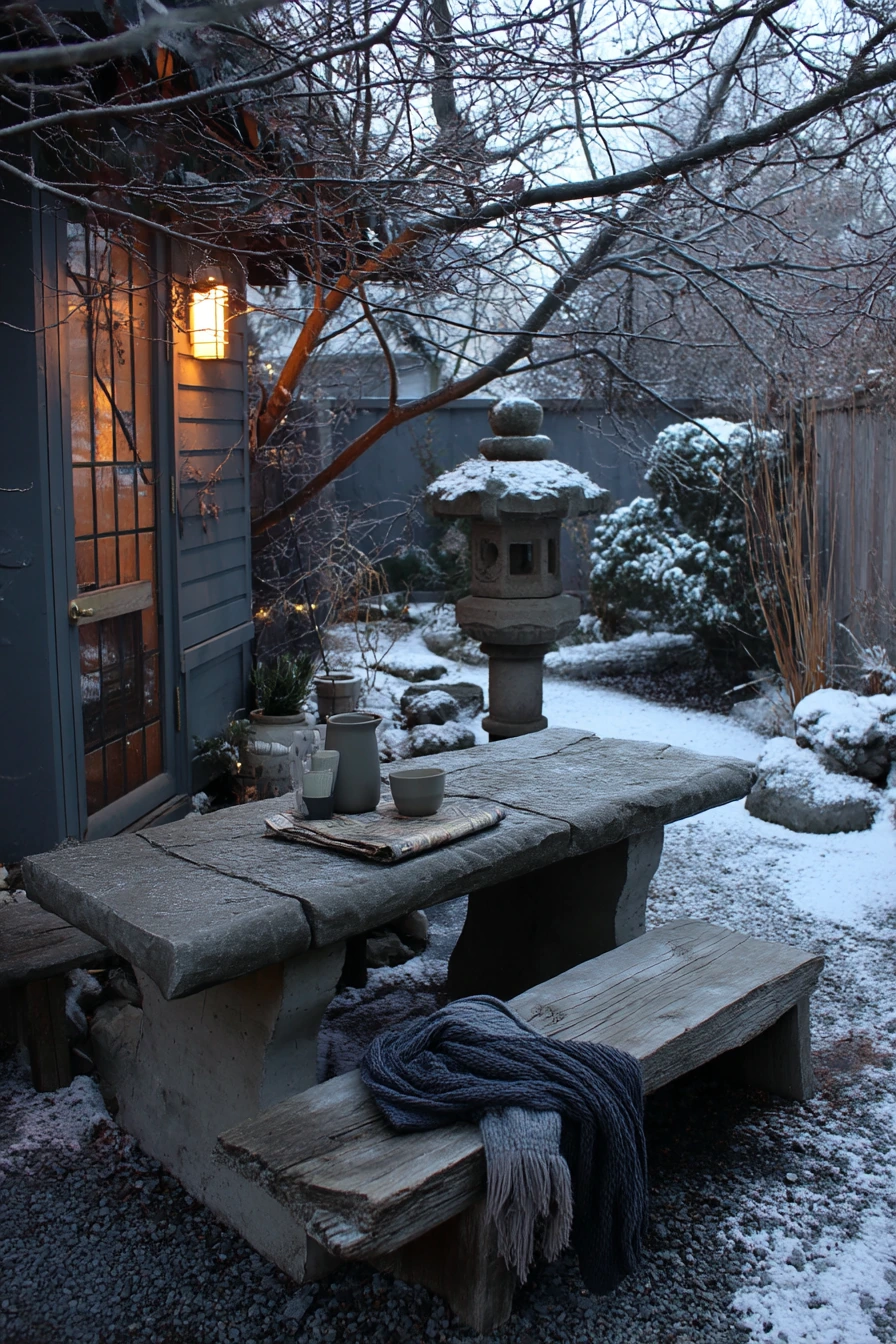
A garden in progress can still look good if you keep work zones tidy. A fresh gravel path is a strong start because it sets the route and the scale of the space. Add stacked stone edging to hold gravel in place and to create clean lines for planting. Moss plugs are a smart choice for hands-on homeowners because you can place them in small groups and let them fill in over time.
A small cedar screen can hide tools and also create a backdrop for a newly placed basin. Put the basin on a stable base so it does not tilt after rain. Lived-in cues belong here and can be part of the story: a shovel, work gloves, a tape measure, an iced coffee cup on a paver, and a sketchbook open on a chair. This makes the space feel real and also helps you track what you planned.
How to style it: keep one “clean corner” for photos and motivation. Sweep stray gravel back onto the path at the end of each work session. Use your sketchbook to mark where stones will go next, then place a few marker rocks so you do not lose the plan.
- Compact the path base before adding fresh gravel
- Use stacked stone edging to prevent gravel spread
- Place moss plugs in shaded, moist pockets near stones
- Set a cedar screen to hide tools and add privacy
- Stabilize the basin with a flat stone pad and level it
Pro Design Tip: Finish one small area fully (path edge plus moss plus one focal stone) before starting the next, so the garden looks intentional even mid-project.
Budget Considerations: Buying stone in small batches costs more; price larger yard deliveries for gravel and look for local stone yards with off-cut piles.


10. Evening Patio Japanese Garden with Paper Lanterns
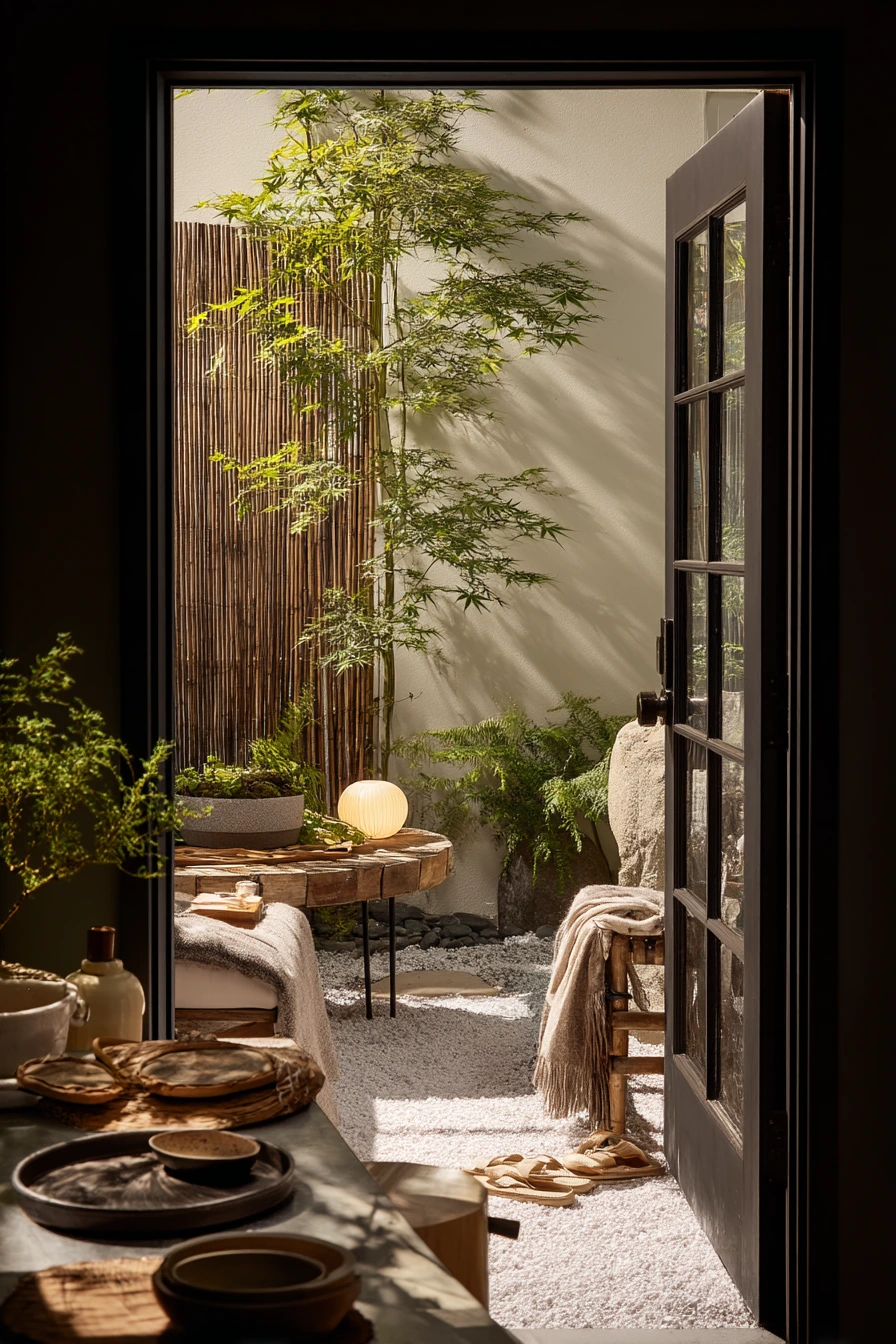

An evening patio can feel calm after dinner with soft light and simple textures. Paper lanterns add a gentle glow and make the space usable when kids are asleep. Bamboo planter screens give privacy and also create a clean wall for shadows. Add a water bowl as a quiet focal point, then use gravel for a neat base that reflects warm light.
A maple tree is perfect here because it throws delicate shadows across the wall. Keep the patio uncluttered so the light pattern stands out. Lived-in details can stay close to the home: dinner plates drying on the counter inside, sandals by the door, a child’s chalk in the corner, and a throw blanket on the chair for cool nights.
How to style it: use lighting in layers. One lantern near the door, one near the seating, and one low light near the water bowl. Choose warm bulbs so skin tones and wood look natural. Keep the gravel clean by using a small hand broom and a tray for outdoor items.
- Hang paper lanterns at different heights for soft, even light
- Use bamboo planter screens to add privacy and a shadow backdrop
- Place a water bowl where it reflects lantern light
- Add gravel to brighten the patio and reduce mud
- Plant a maple to cast gentle evening shadows
Pro Design Tip: Put the brightest light behind the seating area, not above it, so the patio feels calm and you can still see the maple shadows.
Budget Considerations: Outdoor-rated lanterns and cords can cost more; start with one quality set and add more later, or use solar lanterns in key spots.


Japanese garden ideas can fit almost any home when you focus on a few strong choices: a clear path, one focal point, and calm materials like gravel, stone, and wood.
Pick the layout that matches your space, then add small lived-in details so it feels like part of your daily routine.
Start small, keep it tidy, and let the garden grow into its shape over time.
FAQ
What are the basic elements of a Japanese-style garden? A simple path, stone or gravel, a focal piece like a basin or lantern, and a small set of plants with clear shapes.
Can I make a Japanese garden on a balcony? Yes. Use movable planters, stone trays, and a slim screen for privacy, then keep the plant palette small.
What plants work best for small Japanese garden ideas? Dwarf maple, pine in a pot, ferns, hostas, ornamental grasses, and low groundcover like moss where conditions allow.
How do I keep gravel and stepping stones looking clean? Edge the gravel area, sweep often, and rake lightly once a week. Reset stones if they wobble.
How can I add privacy without building a fence? Try bamboo screening, lattice panels, or tall planters placed in a line.
Is a stone basin required? No. A water bowl, a simple stone pot, or even a shallow dish on a flat rock can give a similar calm focal point.