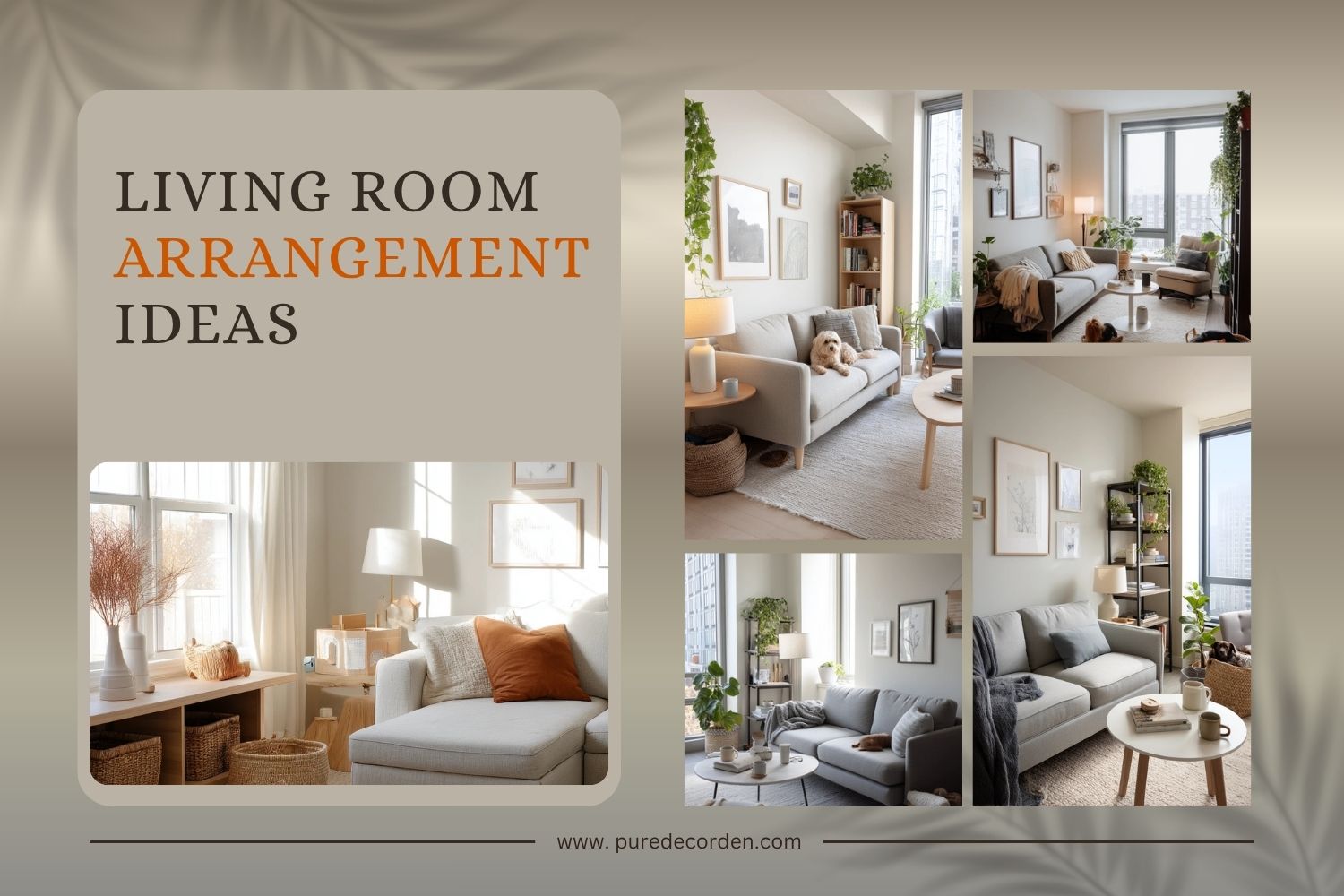

Good living room arrangement ideas help you use every inch of space. The right layout makes the room easier to walk through, easier to clean, and more comfortable to sit in every day.
In this guide, you will see 10 real-life layouts, from a small apartment with a slim sofa and round coffee table to a family room with an L-shaped sectional and a play corner. Each one uses simple zoning, smart furniture sizes, and everyday styling details.
You will also get quick “how to style it” steps, plus one pro design tip and one budget note for each layout. Use these ideas to plan your own room, even if you rent or share the space with kids or pets.
Pick the layout that matches your home, then copy the spacing, the rug size ideas, and the storage tricks. Small changes like moving a sofa off the wall or adding a narrow bookcase can make the room feel more open.
Intro: Small Apartment Living Room Layout With Clear Zones


This small apartment living room arrangement works well for a young couple and their dog because it creates clear zones without adding bulky pieces. Start with a slim sofa floating slightly off the wall. That gap makes the room feel less tight, and it gives you a clean path behind the seating.
Place a round coffee table in the center to keep corners from blocking your knees as you walk by. Add a compact accent chair to complete the seating group, then use a narrow bookcase to define the edge of the living zone. A tactile wool rug anchors everything and helps the space feel calm, not scattered.
Style it with a ceramic lamp on a side surface and a trailing pothos on the bookcase for soft texture. Keep framed art leaning casually instead of hanging a lot of holes. For lived-in comfort, keep two mugs on the table, a charging cable tucked in a small tray, a folded throw on the sofa arm, and a dog toy basket near the bookcase so toys have a home.
- Float the sofa 4 to 10 inches off the wall to add air
- Choose a round coffee table for easier movement in tight paths
- Use one narrow bookcase to mark a “living” boundary
- Pick a wool or low-pile rug that hides crumbs and hair
- Keep one basket for dog toys to stop floor clutter
Pro Design Tip: Keep the front legs of the sofa and chair on the rug so the seating reads as one zone, even in a small room.
Budget Considerations: If a new slim sofa is pricey, look for a secondhand apartment-size sofa and replace the legs to make it look lighter.


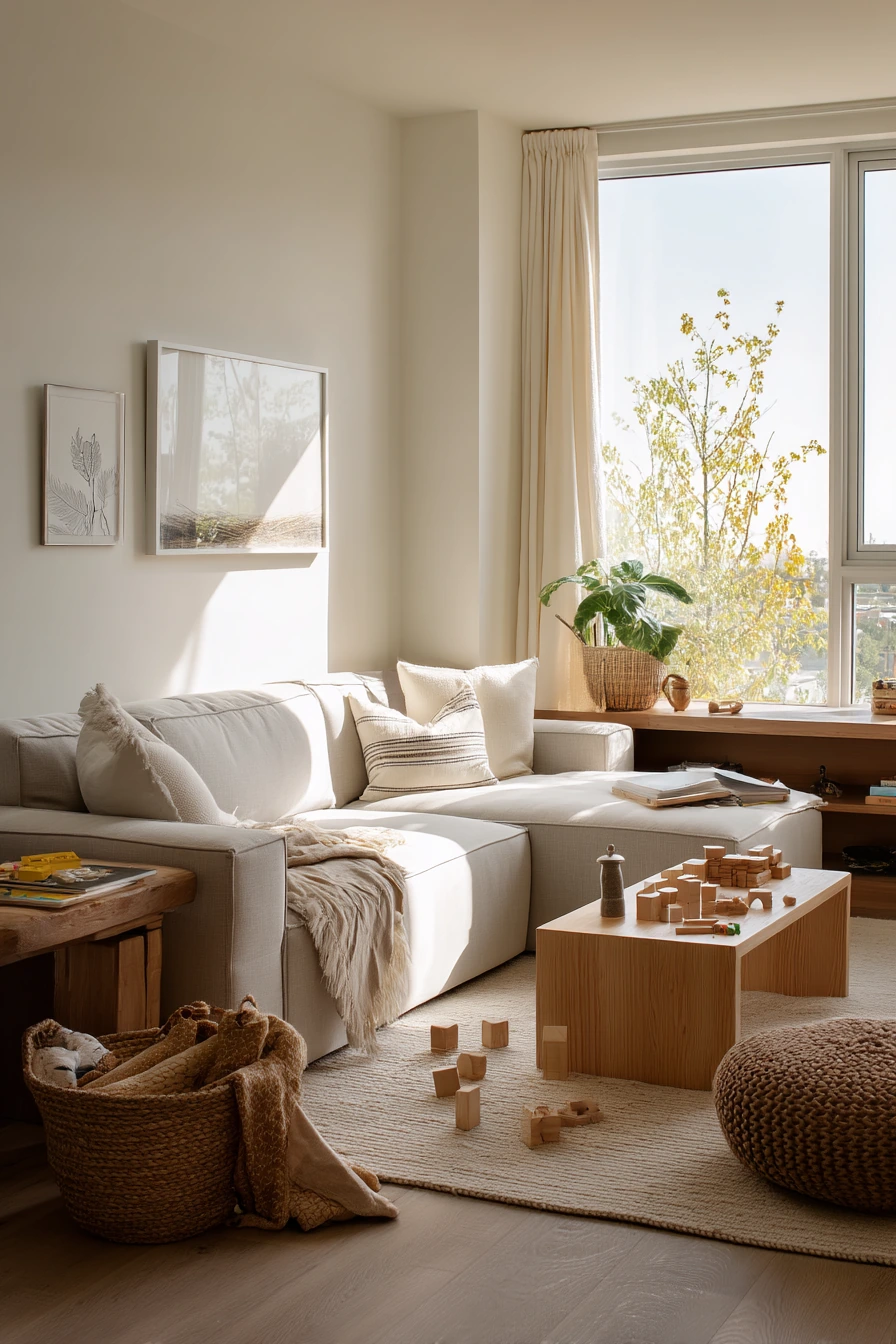
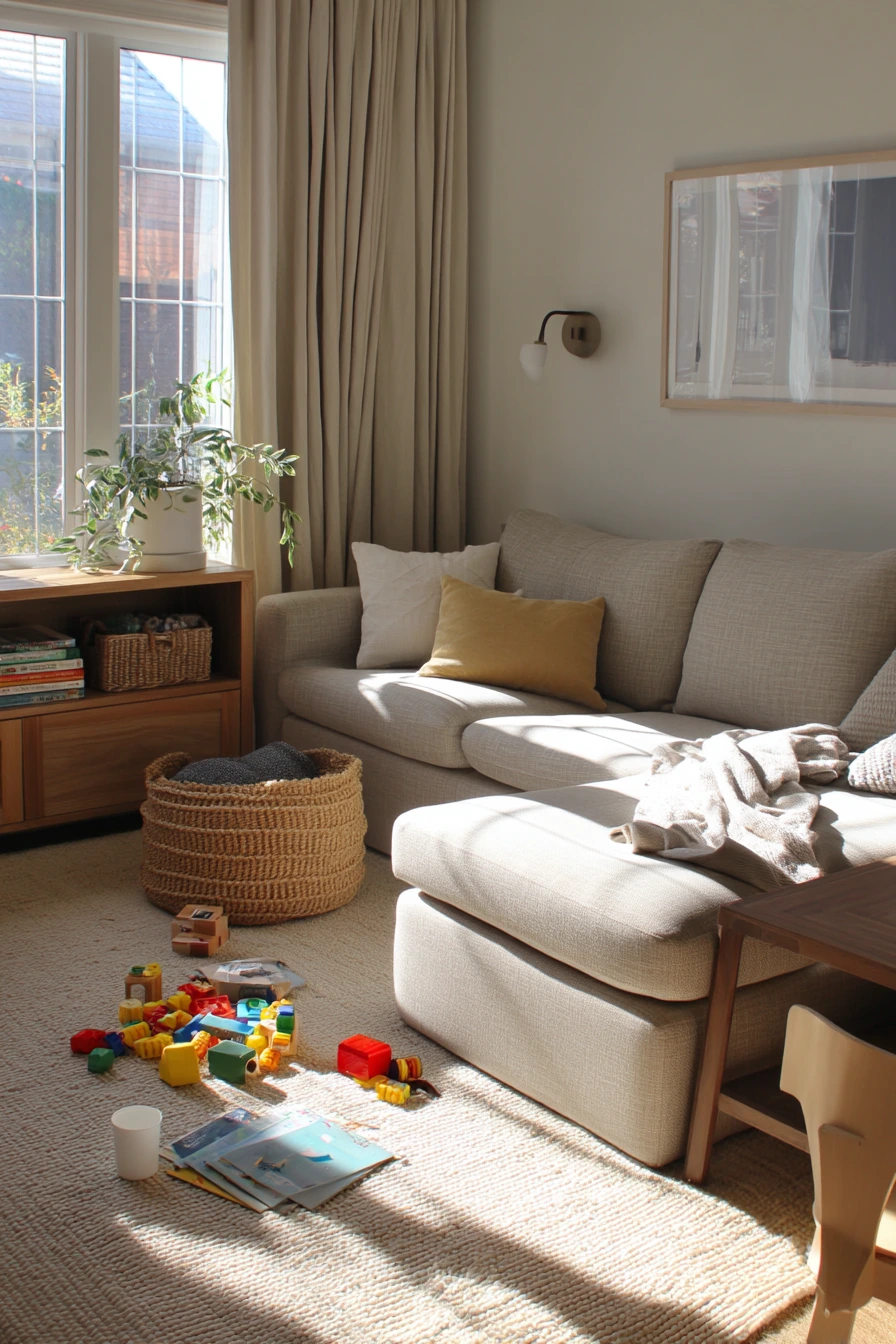
1. Family Living Room Arrangement With Sectional and Play Corner


This family living room arrangement idea fits a busy home because it supports two activities at once: relaxing and playing. Center the layout on an L-shaped sofa facing a low media console. Keep the console low so the room feels open and the TV does not dominate the wall.
Near the window, set up an open play corner with a woven toy basket, a floor cushion, and a small kids’ table. The key is to keep the play area close enough that adults can watch from the sofa, but not so close that toys spill into the main walkway. A washable rug ties both zones together and makes cleanup easier.
Warm oak accents help the space feel grounded. Add a sturdy side table that can handle spills and bumps. Let plants cast soft shadows on the wall for a gentle, lived-in look. Keep picture books in a low bin, and accept a few daily signs of life like a sippy cup, scattered blocks, and a blanket half-folded. The goal is a room that works, not a room that stays perfect.
- Face the sectional toward the media console for a clear “TV zone”
- Place the kids’ table by the window for good light and easy cleanup
- Use one large washable rug to connect seating and play
- Store toys in one woven basket to reset the room fast
- Choose a side table with rounded edges for safety
Pro Design Tip: Leave a 30 to 36 inch path from entry to seating so kids and adults can move through without stepping over toys.
Budget Considerations: If a washable rug is expensive, use an indoor-outdoor rug that wipes clean and still feels soft underfoot.
2. Renter-Friendly Living Room Layout for a First Apartment


This renter-friendly living room arrangement is built for flexibility. Start by centering the sofa on a large rug. A bigger rug makes the room feel more finished, and it helps your seating look intentional even if the apartment has awkward walls.
Add lightweight nesting tables instead of one heavy coffee table. They move easily when you have friends over or when you want more floor space. Use a slim floor lamp for light without needing a bulky end table. For storage, choose a freestanding shelving unit instead of wall-mounted pieces so you avoid drilling and can take it with you later.
Keep the look soft with neutral textiles, removable curtain panels, and peel-and-stick art. A potted olive tree or similar floor plant adds height and life without permanent changes. For a real first-apartment feel, plan small landing spots: a tray for a mail stack, a coaster for a water glass, and a hook bowl for a laptop charger. Add a thrifted throw for color and warmth.
- Use a large rug to make the seating area feel bigger
- Pick nesting tables so you can shift the layout fast
- Choose a slim lamp to save floor space
- Use a freestanding shelf for storage without wall holes
- Hang removable curtains to soften light and add privacy
Pro Design Tip: Keep the shelving unit on the wall that gets the least foot traffic so the room feels wider and safer to walk through.
Budget Considerations: Peel-and-stick art and removable curtain panels are low-cost upgrades that make a rental feel personal without losing a deposit.


3. Conversation-First Living Room Arrangement for Hosting


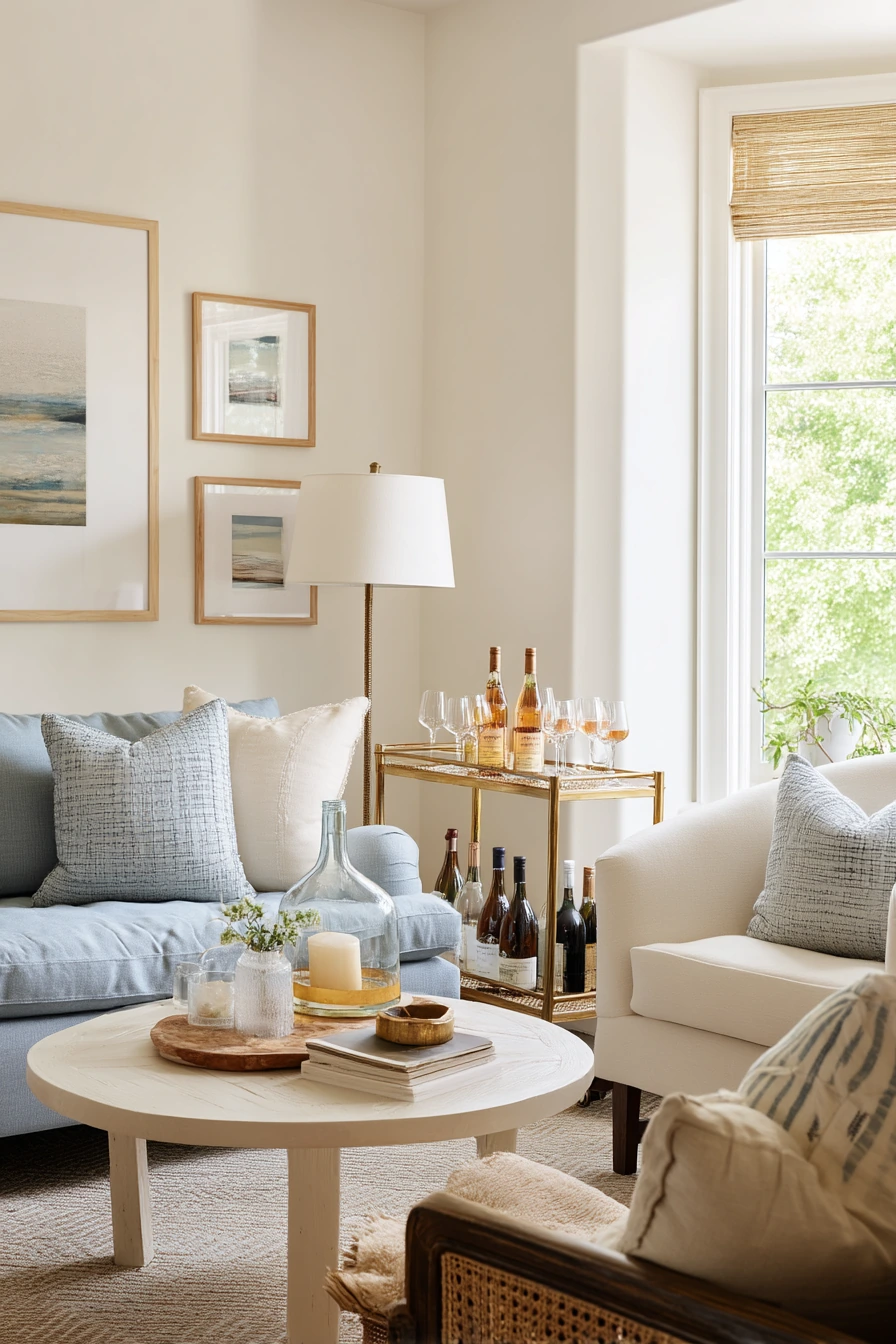
A conversation-first living room arrangement is great for a couple who hosts often because everyone can see and hear each other. Place two compact sofas facing each other across a round coffee table. The round shape keeps the center open, and it helps guests slide in and out without bumping sharp corners.
Angle one or two accent chairs inward to close the circle. Keep a textured rug under all seating to reduce noise and make the room feel warm. Add linen cushions for comfort and an easy, relaxed look. A brass lamp gives focused light in the evening, which makes the room feel inviting without needing bright overhead lighting.
Tuck a bar cart near the window so drinks are easy to grab but not in the main traffic lane. Style the coffee table with art books and a simple candle tray. Let the room show real use: wine glasses on coasters, a half-open novel on the armrest, and a throw that is slightly wrinkled. These small cues make the space feel welcoming, not staged.
- Face sofas toward each other for better talk and eye contact
- Use a round coffee table to keep the center easy to move around
- Angle accent chairs inward to complete the seating circle
- Place a bar cart near the window, not next to the entry
- Use layered textures like linen and a thick rug for comfort
Pro Design Tip: Keep the distance between the two sofas about 42 to 54 inches so it feels social but not cramped.
Budget Considerations: A bar cart can be a small used console or rolling utility cart; style it with a tray and glassware to elevate it.

4. Balanced Living Room Layout With Media Zone and Reading Chair


This balanced living room arrangement idea suits a quiet household because it creates a simple triangle: TV, sofa, and reading chair. Place the media console on one side wall, then center a deep sofa on the rug so the room feels steady. Keeping the sofa centered helps the space look calm even when small items are out.
Set a reading chair by the window for natural light. Add a small side table for a tea mug and reading glasses, and keep a knit blanket nearby. A tall bookshelf adds storage and makes the room feel complete without adding clutter. Warm wood and soft boucle give comfort without feeling heavy.
To style it, keep stacked paperbacks on the side table or a low shelf. Put the remote in a small tray so it is easy to find. Use one larger piece of art or a short set of frames to avoid visual noise. This layout works because each seat has a purpose: the sofa for relaxing, the chair for reading, and the media area for simple entertainment.
- Center the sofa on the rug to anchor the whole room
- Place the media console off to one side to keep balance
- Create a window reading spot with a chair and small table
- Add one tall bookshelf for storage and height
- Use trays to contain small daily items like a remote
Pro Design Tip: Use a floor lamp or swing-arm lamp near the reading chair so the chair works at night, not just in the morning.
Budget Considerations: Boucle chairs can be costly; look for a similar shape in textured woven fabric or add a boucle pillow to a basic chair.


5. Narrow Living Room Arrangement for a Townhouse Walkway

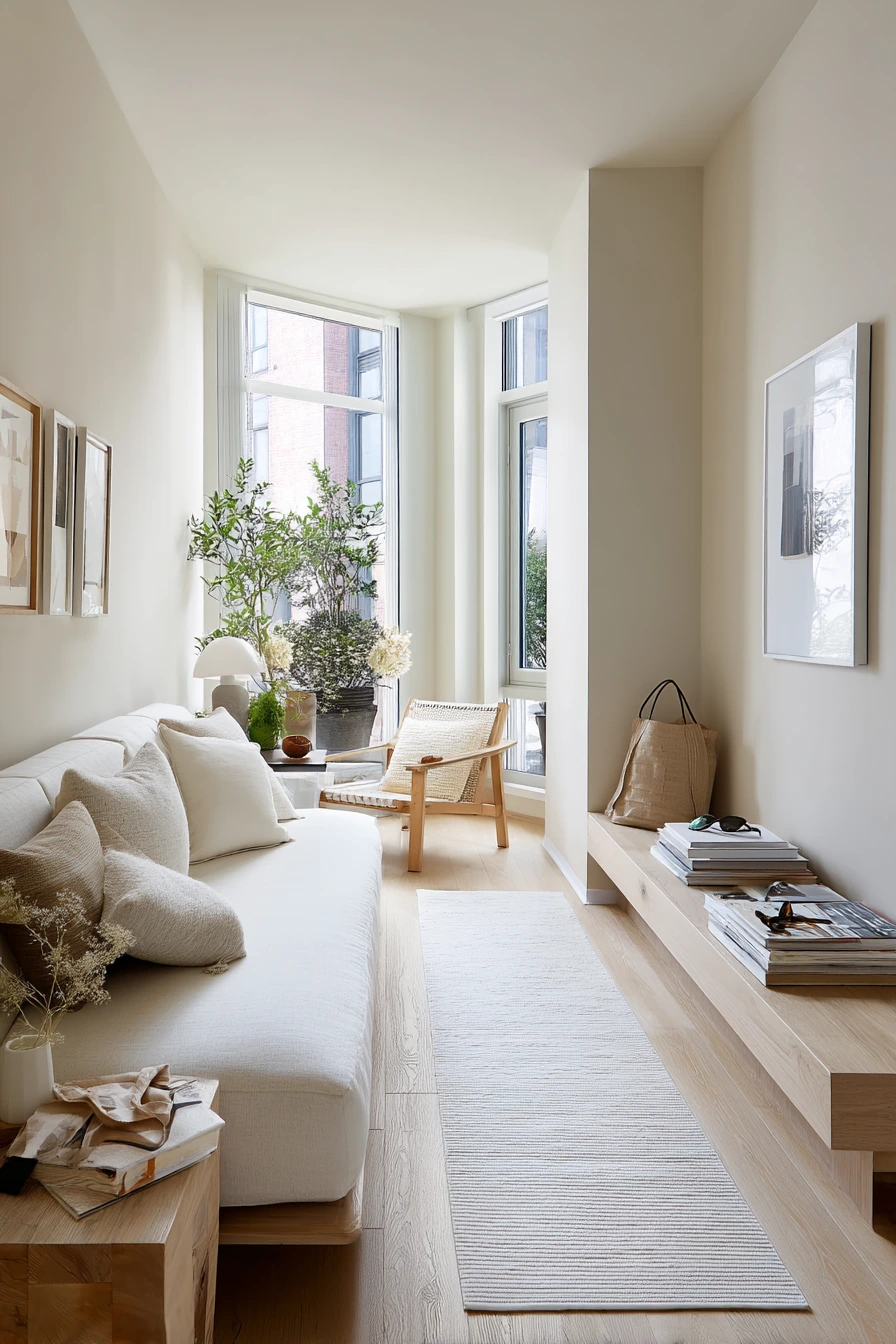
A narrow living room arrangement needs a clear path from the entry to the window. Choose a low-profile sofa so the room feels taller and less boxed in. Pair it with a bench-style coffee table, which is easy to move around and can double as extra seating when needed.
Add a slim lounge chair instead of a wide armchair. Keep it close to the sofa but not in the main lane. A long runner rug supports the “hallway” feel and helps your eyes travel down the room. Use wall-mounted art to bring interest without using floor space, and choose pale oak surfaces to keep the look light.
For styling, create small drop zones that stop clutter from spreading. Put a compact plant stand by the window or near a corner. Near the entry, place a small tray on the coffee table for sunglasses and a phone cable. Keep stacked magazines in one neat pile. A tote bag by the door is normal, but giving it one consistent spot keeps the room from feeling messy.
- Pick a low sofa to make the room feel more open
- Use a bench coffee table for flexible seating and movement
- Choose a slim chair so the walkway stays clear
- Add a runner rug to guide the main path
- Keep wall art vertical to draw the eye up
Pro Design Tip: Measure your main traffic lane first, then place furniture after; aim for at least 30 inches of clear space.
Budget Considerations: If a runner rug is expensive, layer two smaller rugs end-to-end with similar tones to mimic a long runner.


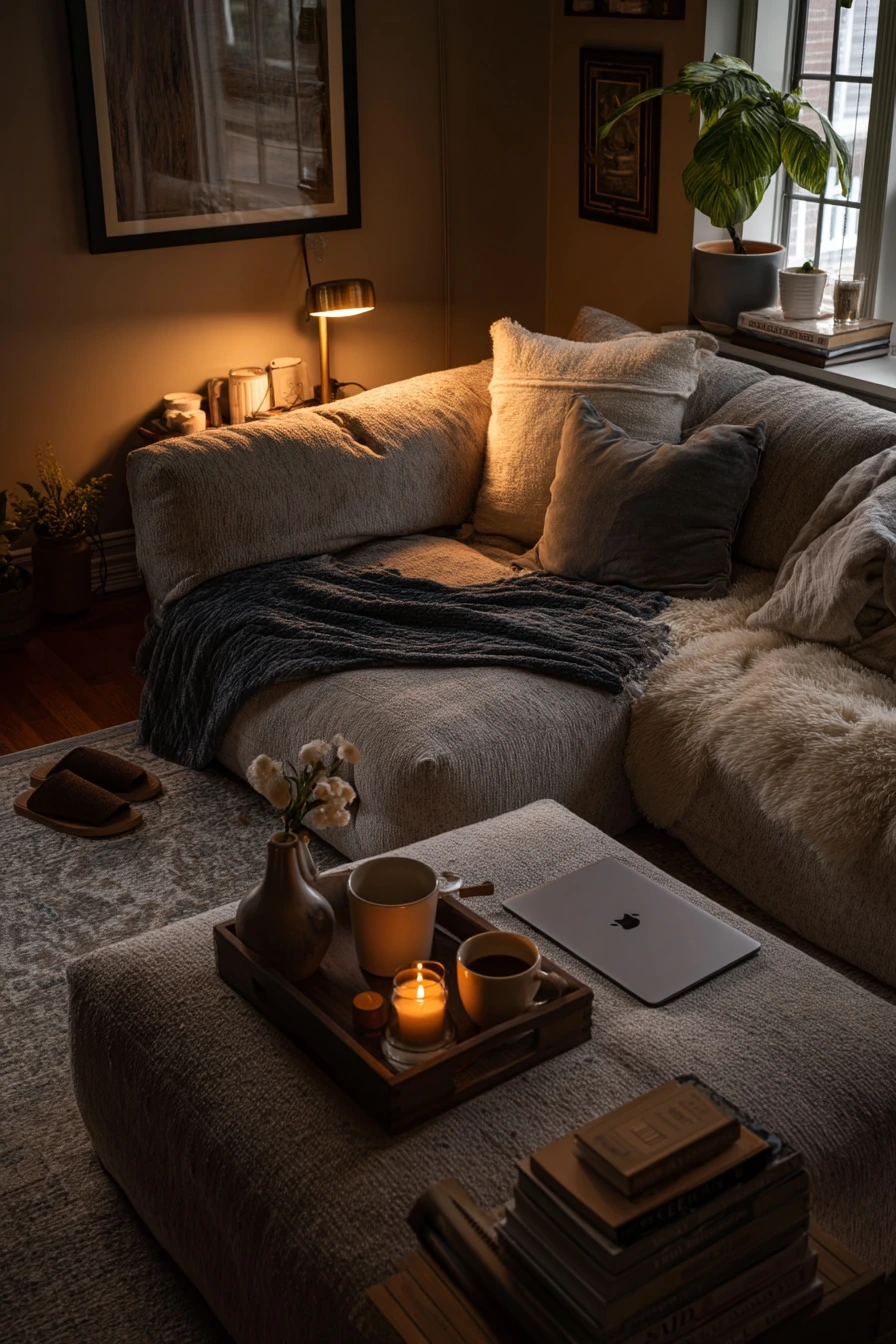
6. Cozy Living Room Layout for One Person and Nighttime Relaxing


This cozy living room arrangement is designed for a single professional who wants to unwind after work. Use a modular sofa wrapped around a small ottoman to create a snug “nest” feel. The ottoman works as a footrest, an extra seat, or a soft table with a tray.
Lighting matters here. Use a reading lamp instead of overhead lights to keep the room calm at night. Add a candle tray on the ottoman or a side surface, and keep a low stack of books to make the space feel personal. A plush rug underfoot adds comfort and helps soften sound, which is great in apartments.
Style it with one velvet pillow and a heavy throw for texture. Add a ceramic vase for a simple, clean detail. Let the room look lived in: a tea cup on a coaster, a laptop on standby, a blanket draped loosely, and one slipper visible. The goal is comfort that still looks tidy, with a few items that show real daily use.
- Wrap a modular sofa around an ottoman for a close layout
- Use lamp light only for a softer evening mood
- Place a tray on the ottoman to hold a cup and candle safely
- Choose a plush rug for warmth and sound control
- Limit decor to a few textured pieces to avoid clutter
Pro Design Tip: Keep one “reset basket” nearby for quick cleanup of chargers, mail, and small items before bed.
Budget Considerations: If a modular sofa is out of reach, fake the look with a loveseat plus a matching armless chair or ottoman.

7. Studio Apartment Living Room Arrangement With Work-From-Home Zone


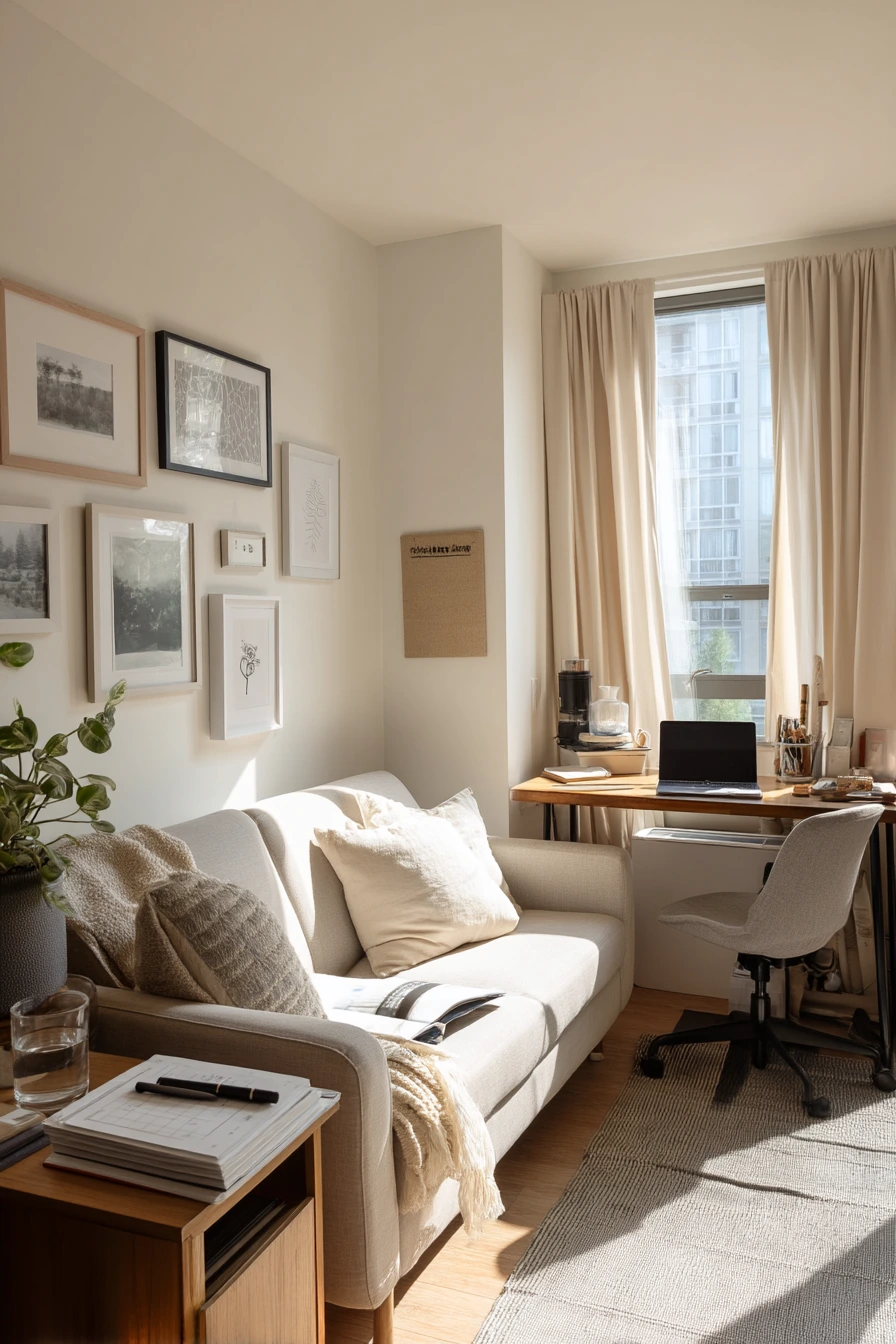
A multi-use living room arrangement is essential in a studio apartment, especially for a remote worker. Start with the sofa facing a small desk tucked into a corner. This keeps the desk from becoming the first thing you see when you enter, while still giving you a clear work spot.
Use a rolling task chair that can slide under the desk when you are done. Add a compact sideboard to divide work from rest. That one piece helps you create a line between “office” and “living room” without building walls. Linen curtains and a simple rug keep the room calm, and framed prints add interest without taking floor space.
For daily function, set up tools that reduce visual mess. Keep a notebook open only during work hours, then store it in the sideboard after. Use a pen cup, a water glass, and a mail organizer so small items do not spread onto the sofa. A floor plant softens the desk corner and makes the work zone feel less harsh.
- Put the desk in a corner so it does not take over the room
- Use a rolling chair that tucks away after work
- Add a sideboard to separate work items from relaxing space
- Keep wall art simple to avoid busy visuals in a studio
- Use organizers for chargers and mail to protect your calm zone
Pro Design Tip: Point your desk toward a wall or window, not toward the sofa, so work tasks feel contained and easier to “turn off.”
Budget Considerations: A compact sideboard can be a basic cube shelf with bins; add a wood top or tray to make it look more finished.

8. Pet-Friendly Living Room Layout With Easy-Clean Surfaces

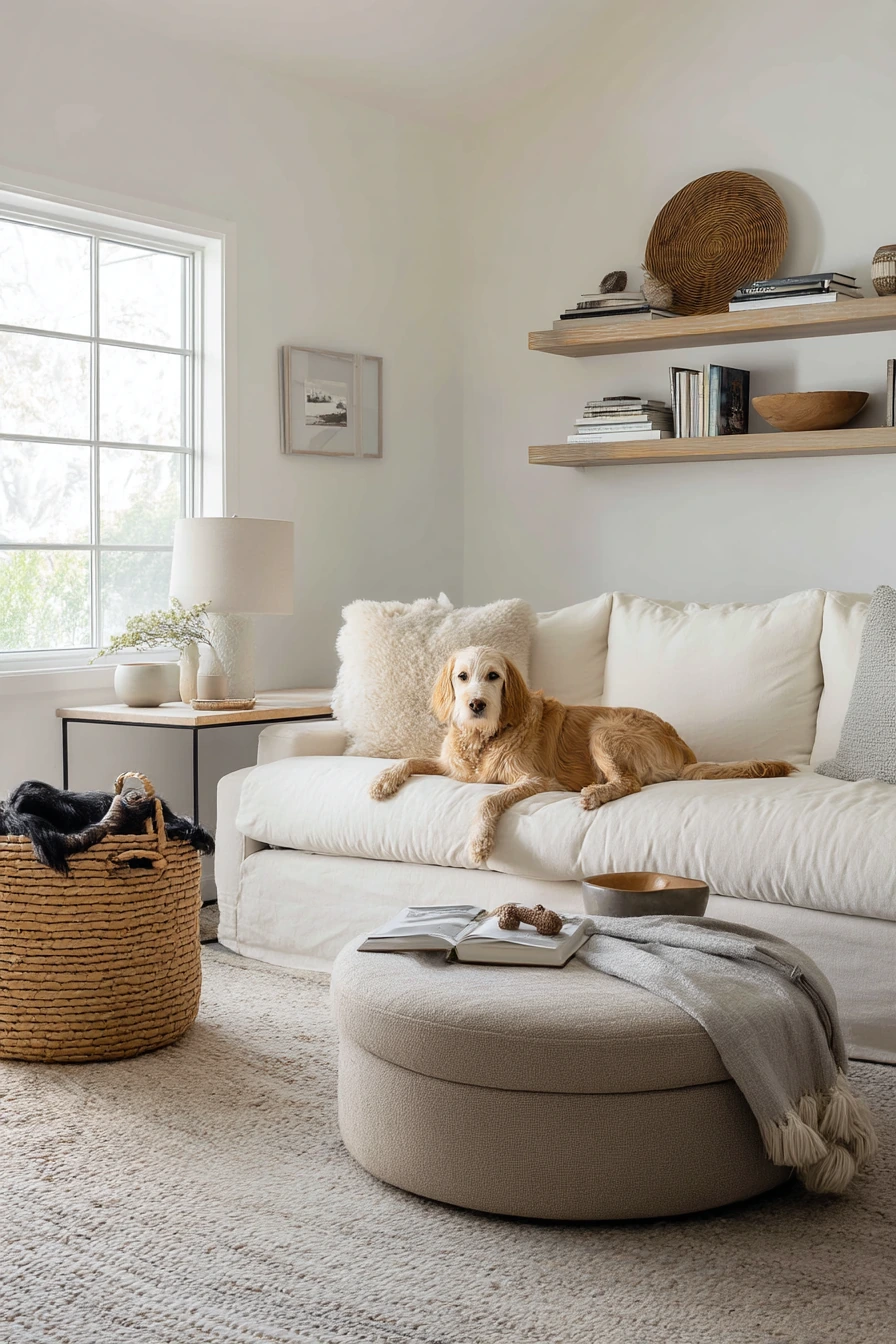
A pet-friendly living room arrangement should feel comfortable and still be easy to maintain. Choose a durable slipcovered sofa so you can wash covers as needed. A round ottoman is a safer choice than a hard-edged table, and it is kinder if a dog jumps up or bumps into it.
Use an easy-clean rug, like a low-pile or washable style, so hair and dirt do not get trapped. Keep low shelving for storage so you can reach items quickly without leaving fragile decor in reach of a wagging tail. Add a wood side table and a sturdy lamp that will not tip easily.
Plan your entry side with pet routines in mind. Place a basket for leashes near the door so walks are smooth. Keep a muddy paw towel in the same spot. Let the room show real life: a dog bed in a corner, a chew toy in the toy bin, a water bowl on a mat, and a book left open on the sofa. With the right layout, pet items look intentional, not messy.
- Choose a slipcovered sofa for easy washing
- Use a round ottoman to reduce sharp edges and bumps
- Pick a low-pile rug that vacuums fast
- Keep leash storage near the entry for better routines
- Use sturdy lamps and tables that handle daily wear
Pro Design Tip: Use a small tray or boot mat under the water bowl to protect floors and keep the area looking neat.
Budget Considerations: If a washable rug is too much, buy a rug pad plus an affordable flatweave rug; replace only the rug later if it wears out.


9. Early Autumn Living Room Arrangement for a Simple Seasonal Refresh
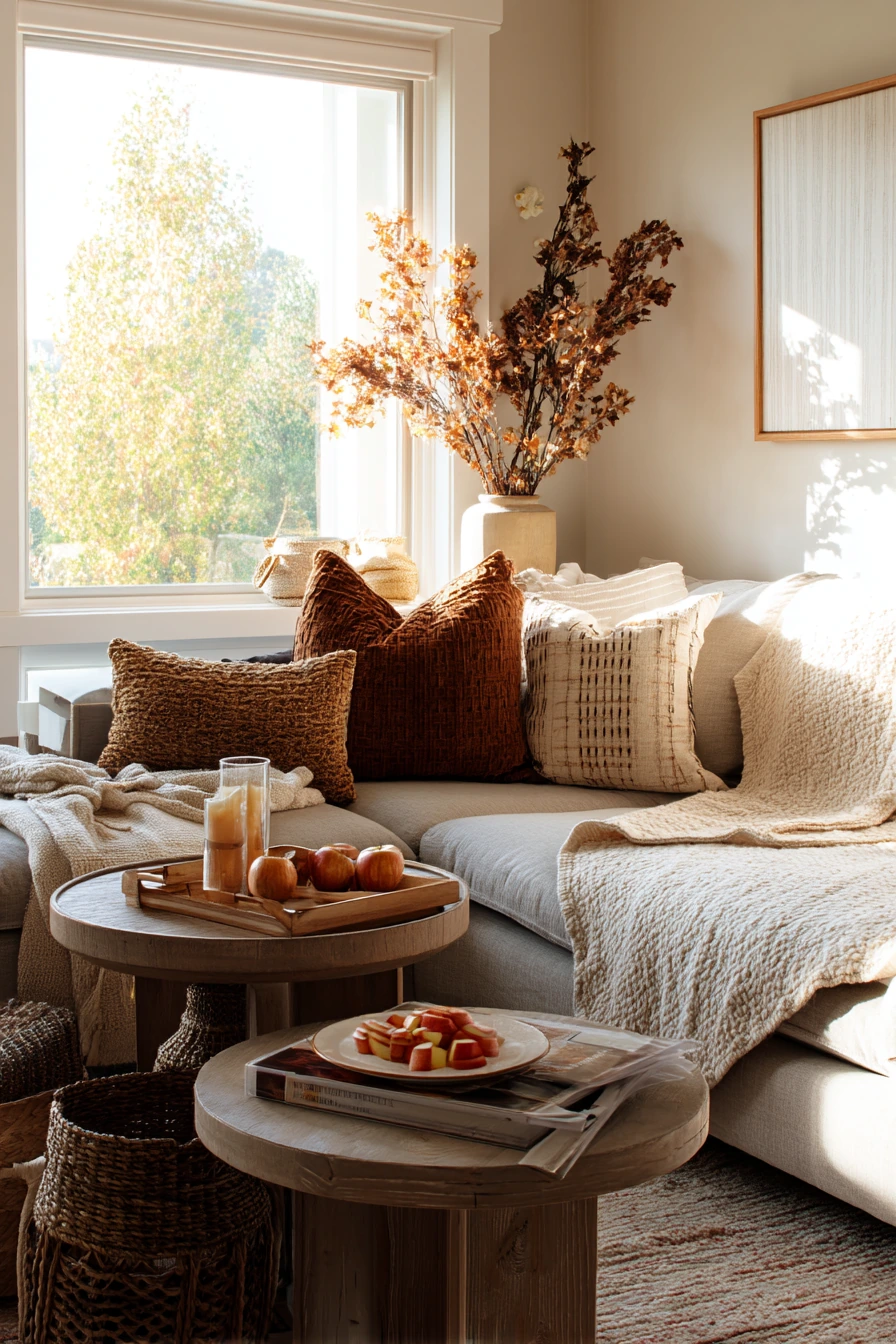

This seasonal living room arrangement idea gives a family home a fresh look for early autumn without changing major furniture. Start by shifting the sofa slightly to open the center of the room. Even a small move can improve flow and create a better spot for kids to play or for everyone to gather.
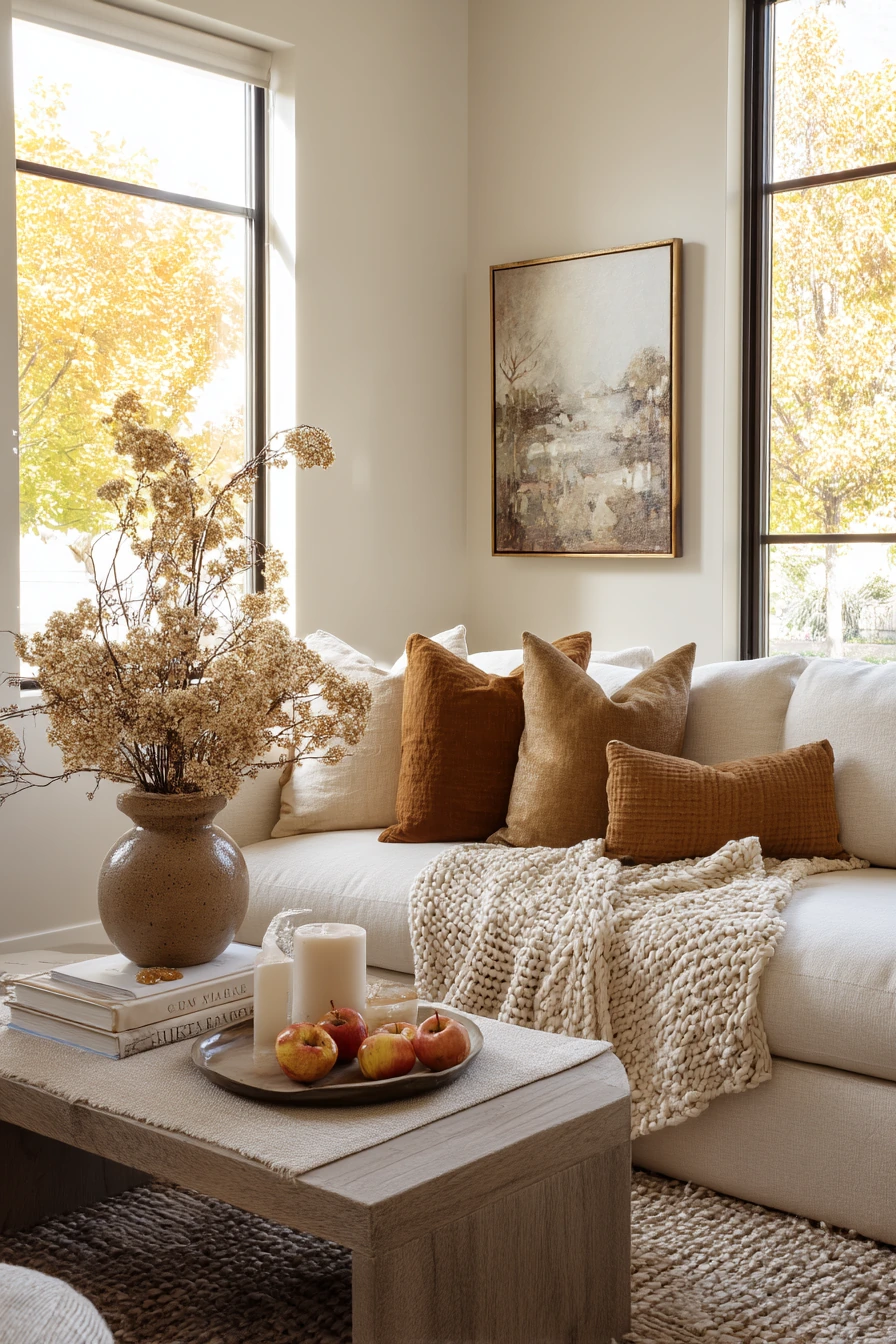
Add a pair of nesting tables so you can pull surfaces closer for snacks, then tuck them away again. Create a reading nook by the window with a chair and a small lamp. Style the sofa with burnt umber pillows and a cream knit throw for warmth. Use dried branches in a simple vase and layered art to add a seasonal feel without going overboard.
Keep the room realistic and functional. A plate with apple peels, a kids’ blanket, a small book stack, and candle matches can stay out if they are grouped neatly on a tray. Golden late-afternoon light works well with warm tones, so keep window coverings light to let that glow in. The goal is a cozy refresh that still supports everyday family life.
- Shift the sofa to open the center for better flow
- Use nesting tables for flexible surfaces during busy hours
- Build a window reading nook for quiet time
- Add warm pillows and a knit throw for seasonal color
- Group small clutter on a tray to keep it looking tidy
Pro Design Tip: Repeat one autumn tone in three places, like pillows, a vase, and art, so the refresh feels planned, not random.
Budget Considerations: Swap pillow covers instead of buying new pillows, and clip branches from your yard for free seasonal decor.

10. FAQ: Living Room Arrangement Ideas People Ask About
These common questions come up when people try new living room arrangement ideas. Use the answers as quick rules, then adjust based on how you walk through your room and how you actually live in it.
If your space has kids, pets, or work-from-home needs, focus on zoning first. A rug, a shelf, or a sideboard can define areas without making the room feel chopped up. When you are stuck, start by placing the largest item, usually the sofa, and build from there.
Keep it simple. Most rooms look better with fewer, better-sized pieces rather than many small ones. When in doubt, clear a walkway, add storage for daily items like chargers and remotes, and choose easy-clean materials.
- What is the best way to arrange furniture in a small living room?
- Should a sofa be against the wall or floating?
- How do I choose the right rug size for my seating area?
- Where should I put a TV in a living room layout?
- How can I add a play area without making the room messy?
Pro Design Tip: Take a photo of your room from the entry; if the first view looks crowded, remove one piece or move it away from the walkway.
Budget Considerations: Rearranging is free; spend only on the one item that fixes the biggest problem, like a larger rug or closed storage.
The best living room arrangement is the one that matches your daily routine. Start with clear walkways, then set zones for sitting, playing, working, or reading.
Use the layouts above as templates and copy the parts that fit your home, like a floating sofa, a narrow bookcase, nesting tables, or a leash basket by the door. Small changes can make the room feel calmer and easier to use.
When your layout works, styling becomes simple. Add light, texture, and a few storage habits, and your living room will stay comfortable even on busy days.