
Looking for living room painting ideas that feel doable in a real home, not a showroom. The right painting can make a small apartment look taller, help a busy family room feel calmer, and pull mismatched furniture into one clear style.
This guide shares 10 painting and wall art setups you can copy, based on everyday rooms with linen sofas, deep sectionals, fireplaces, and compact media benches. You will see renter-friendly options like removable hooks and art ledges, plus layered gallery walls and one big statement canvas.
Each section includes simple steps, styling ideas, and a clear Pro Design Tip and Budget Consideration. Use these tips to choose size, placement, and color so your wall art looks intentional, even with kids’ toys, charging cables, and daily clutter.
Save the ideas you like, then start with one wall. Small changes like moving art up a few inches or swapping frames can make the whole living room feel finished.
1. Renter-Friendly Oversized Canvas Above a Linen Sofa
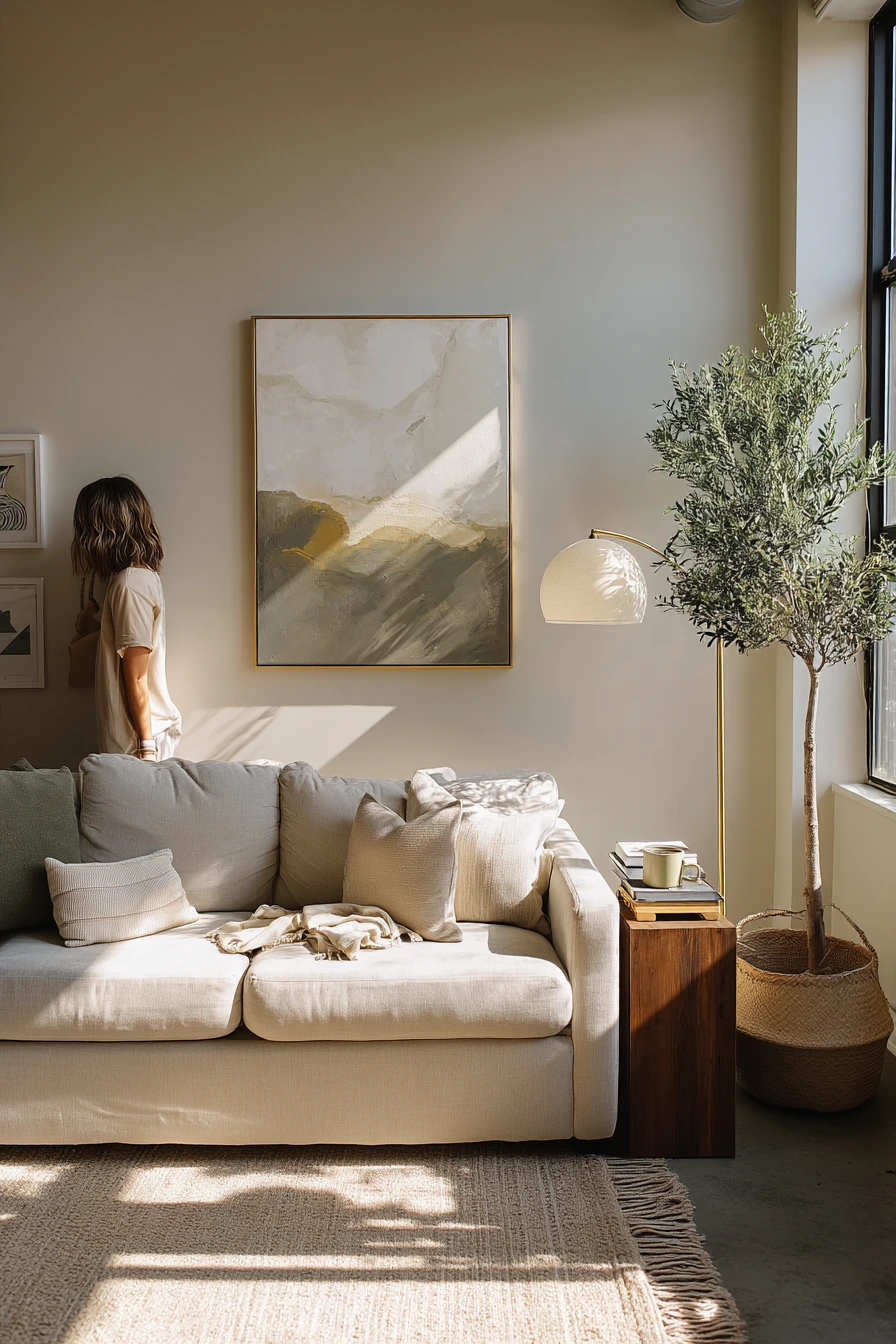

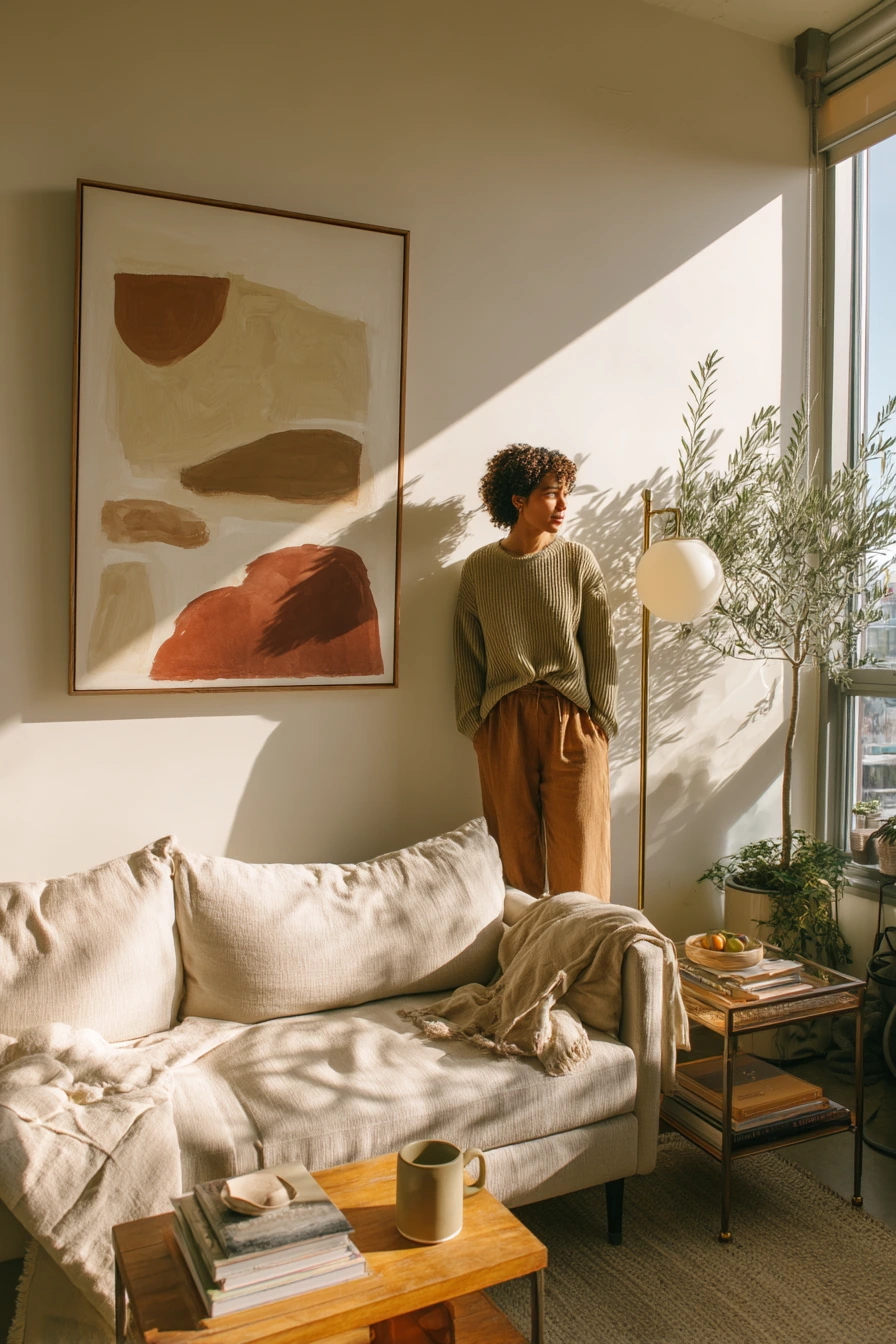
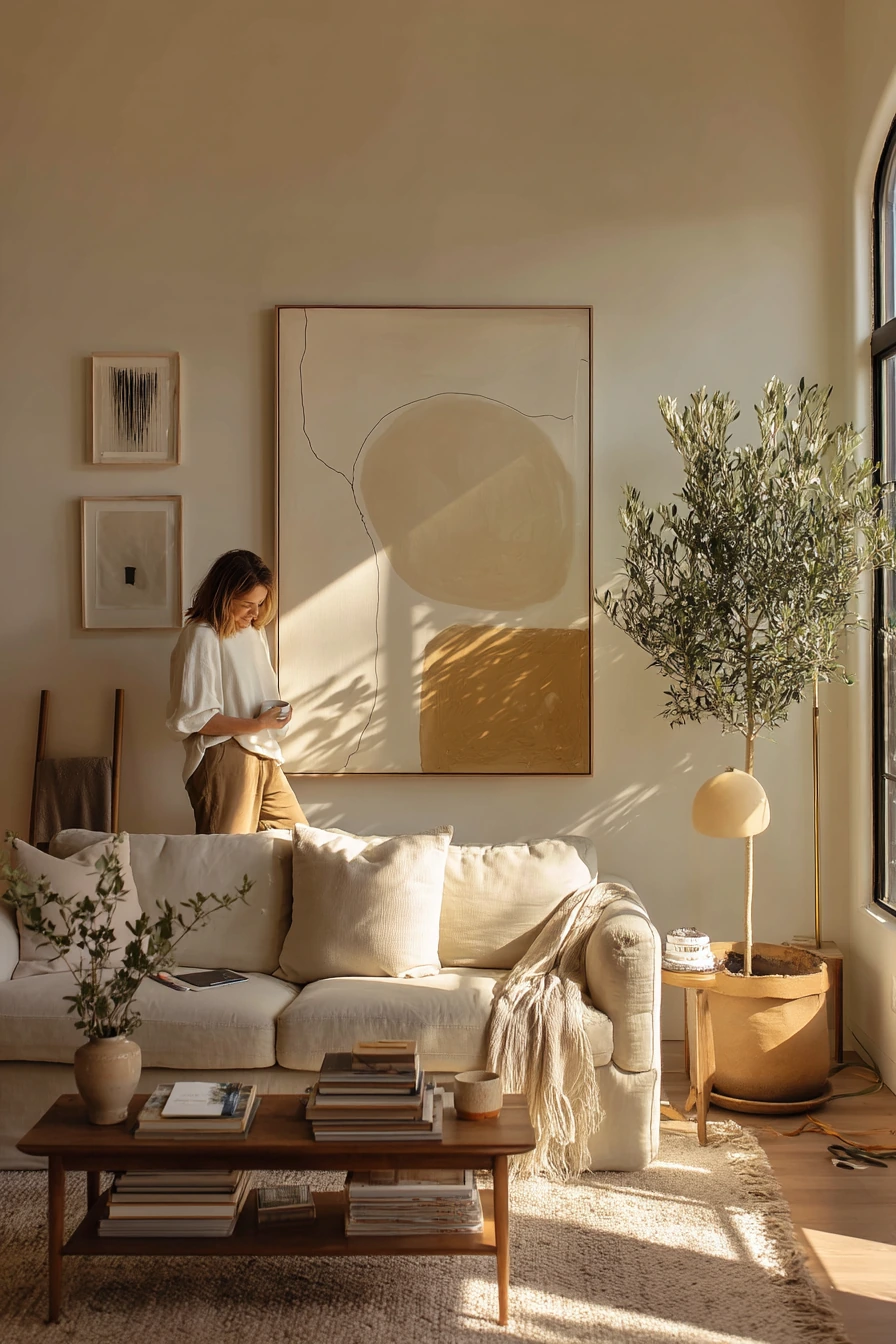
An oversized abstract canvas can be the fastest way to add style in a compact city living room. It works well with muted oat walls, a linen sofa, and warm accents like a slim brass floor lamp and a walnut side table. The key is scale: one large piece can look cleaner than many small frames, especially when your room is tight.
To place it, center the canvas over the sofa and keep the bottom edge about 6 to 8 inches above the back cushion. If you have a phone charging cable draped near the sofa, hide it with a cord cover painted to match the wall. Keep the look relaxed with a slightly wrinkled throw and a soft woven rug, then add one potted olive tree to cast gentle shadows and soften the corners.
Choose art with a few colors that repeat what is already in the room. For example, pull oat, cream, and warm gray from the sofa and rug, then add a small touch of black to match book spines or lamp details. Natural afternoon window light will make matte textures look calm and lived-in, so avoid glossy glass if glare is an issue.
- Pick a canvas that is about two-thirds the width of your sofa.
- Hang at eye level, not near the ceiling, even in tall rooms.
- Use a simple frame or no frame for a modern renter look.
- Style the side table with stacked art books and one ceramic mug.
- Balance the wall with one floor lamp on the opposite side.
Pro Design Tip: Use painter’s tape to mark the canvas outline on the wall first, then step back to check height from the doorway and from the sofa seat.
Budget Considerations: Large art can be pricey, so look for printable downloads, poster-size art, or a thrifted canvas you can reframe in an affordable float frame.
2. Layered Gallery Wall Above a Deep Sectional for Busy Family Rooms
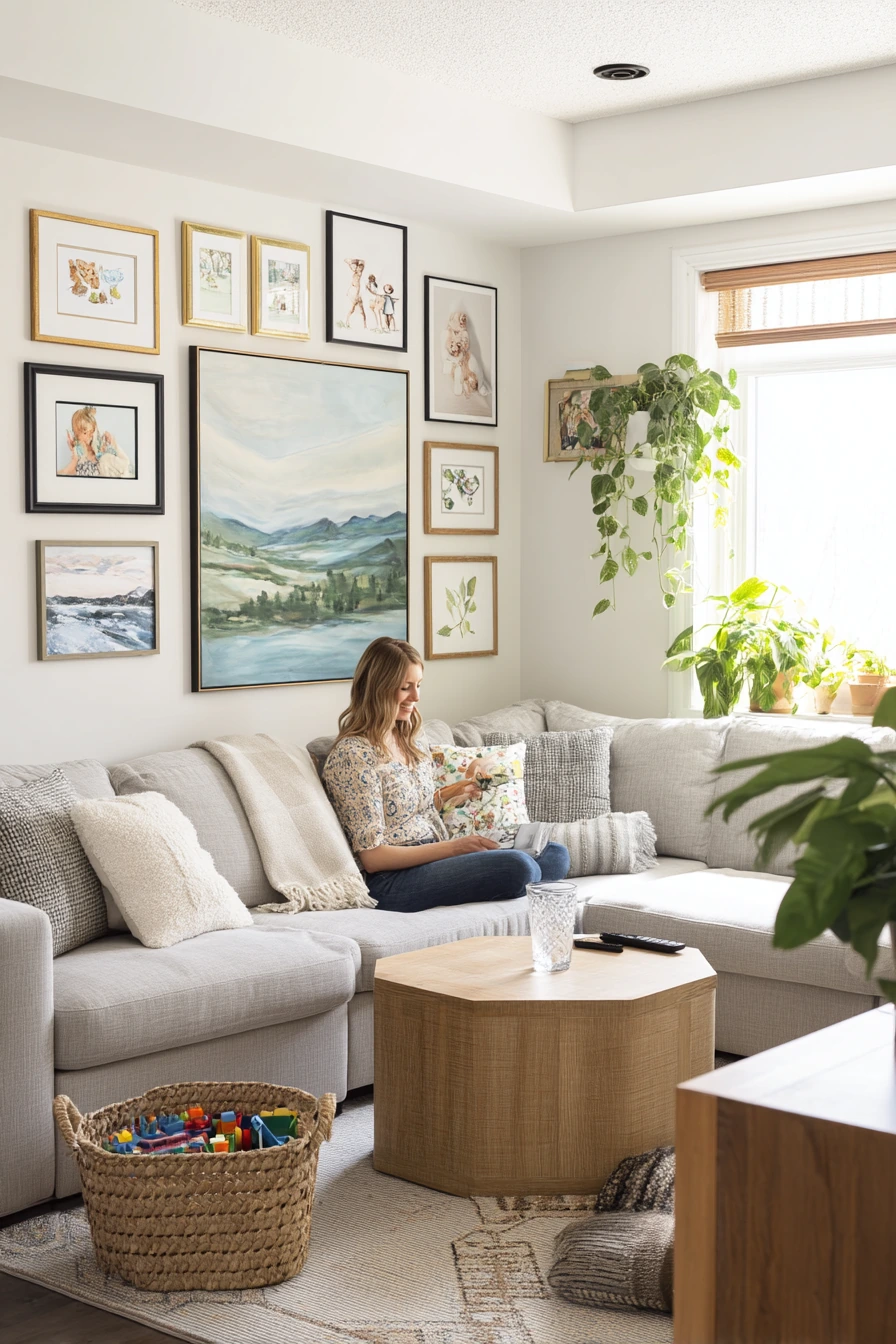
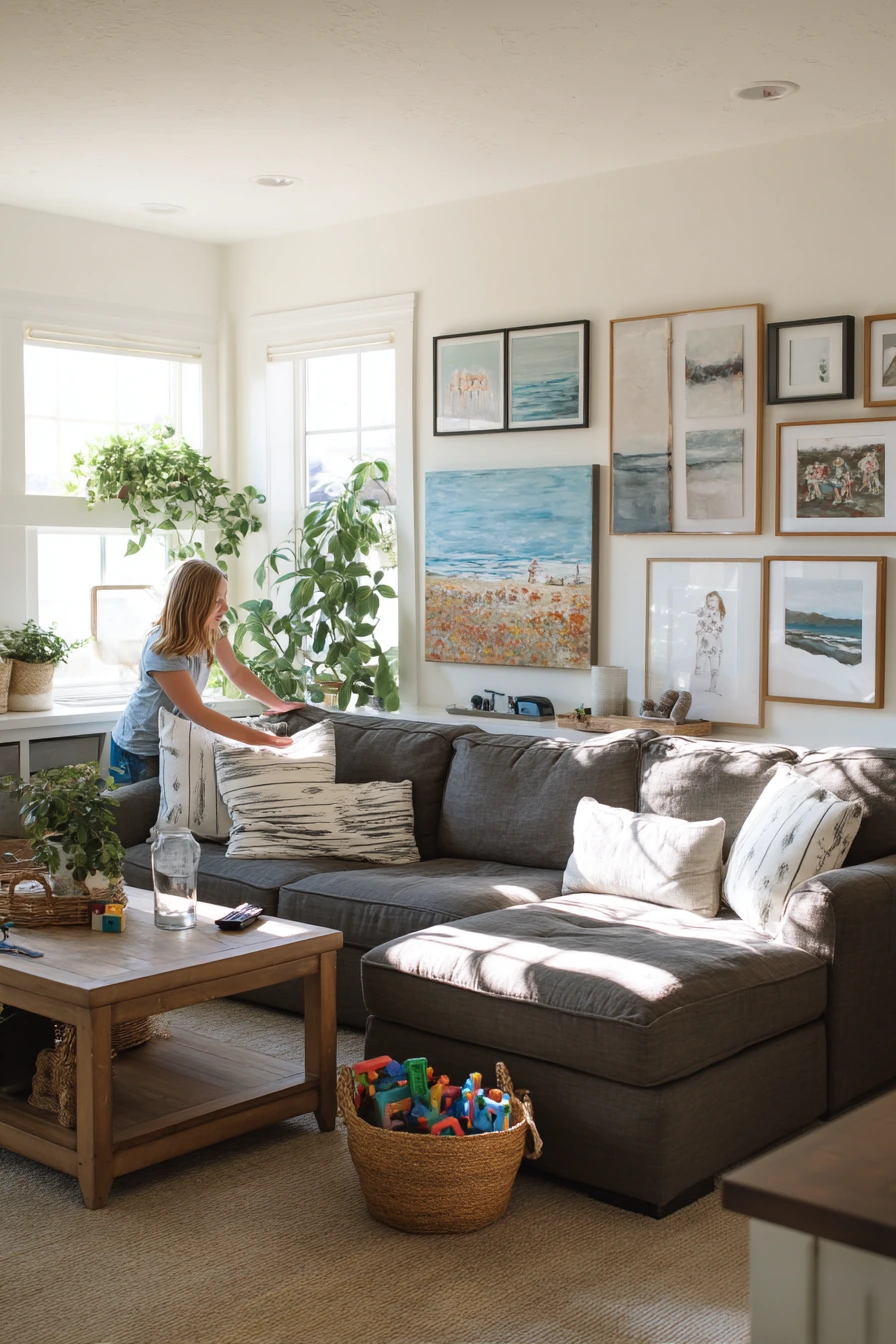
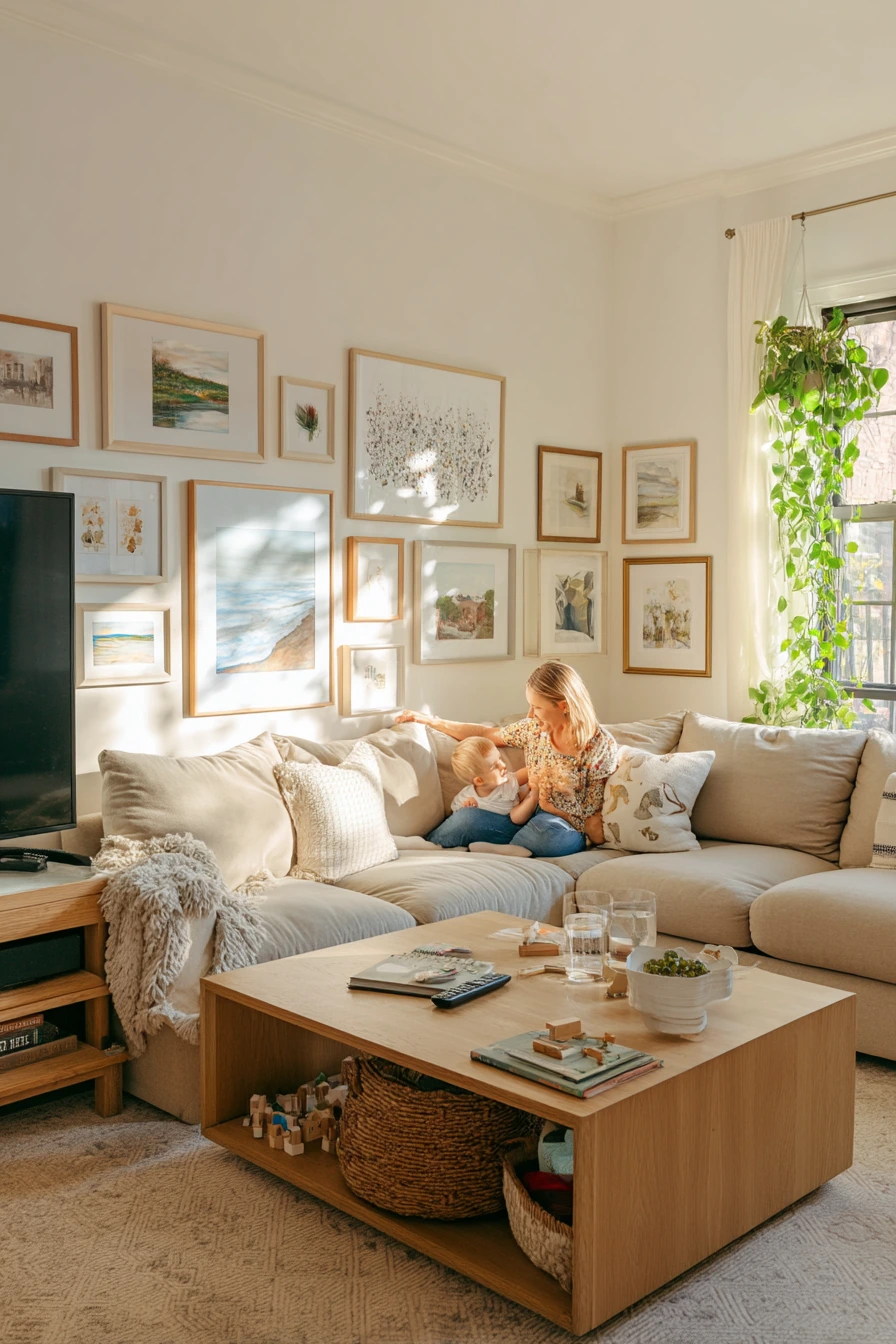
A layered gallery wall is a smart living room painting idea when your space needs warmth and personality. In a family room with warm white walls, an oak media console, and a deep sectional, mixing one large painting with smaller framed prints gives structure without feeling too formal. It also lets you grow the wall over time, which helps when your budget is spread across kid needs and daily life.
Start by choosing the “anchor” piece. Hang the large painting slightly off center if your sectional has a chaise, then build around it with smaller frames. Keep spacing consistent, about 2 inches between frames, so it looks tidy even when a toy basket is half tucked under the coffee table and the remote control is always out. Add one framed family photo to make it feel personal, and place a trailing pothos on the sill to bring in movement and soften sharp corners.
Late-morning window light is great for a gallery wall because it shows details without harsh shadows. If glare is a problem, skip glass on a few frames or use matte acrylic. Keep the coffee table styling simple: a water glass, folded throw, and one small tray can make the room feel cared for without looking staged.
- Choose a simple color theme for frames, like black and light oak.
- Mix art types: one painting, a few prints, and one photo.
- Keep the bottom row of frames 6 to 8 inches above the sofa.
- Repeat one color from the art in pillows or a throw.
- Use command strips for lighter frames if you are renting.
Pro Design Tip: Make paper templates of each frame, tape them to the wall, and adjust until the group feels balanced from left to right.
Budget Considerations: Buy frames in sets and swap in your own prints; you can also thrift frames and spray paint them the same color for a matched look.

3. Moody Landscape Painting Leaning Behind a Boucle Chair Reading Corner
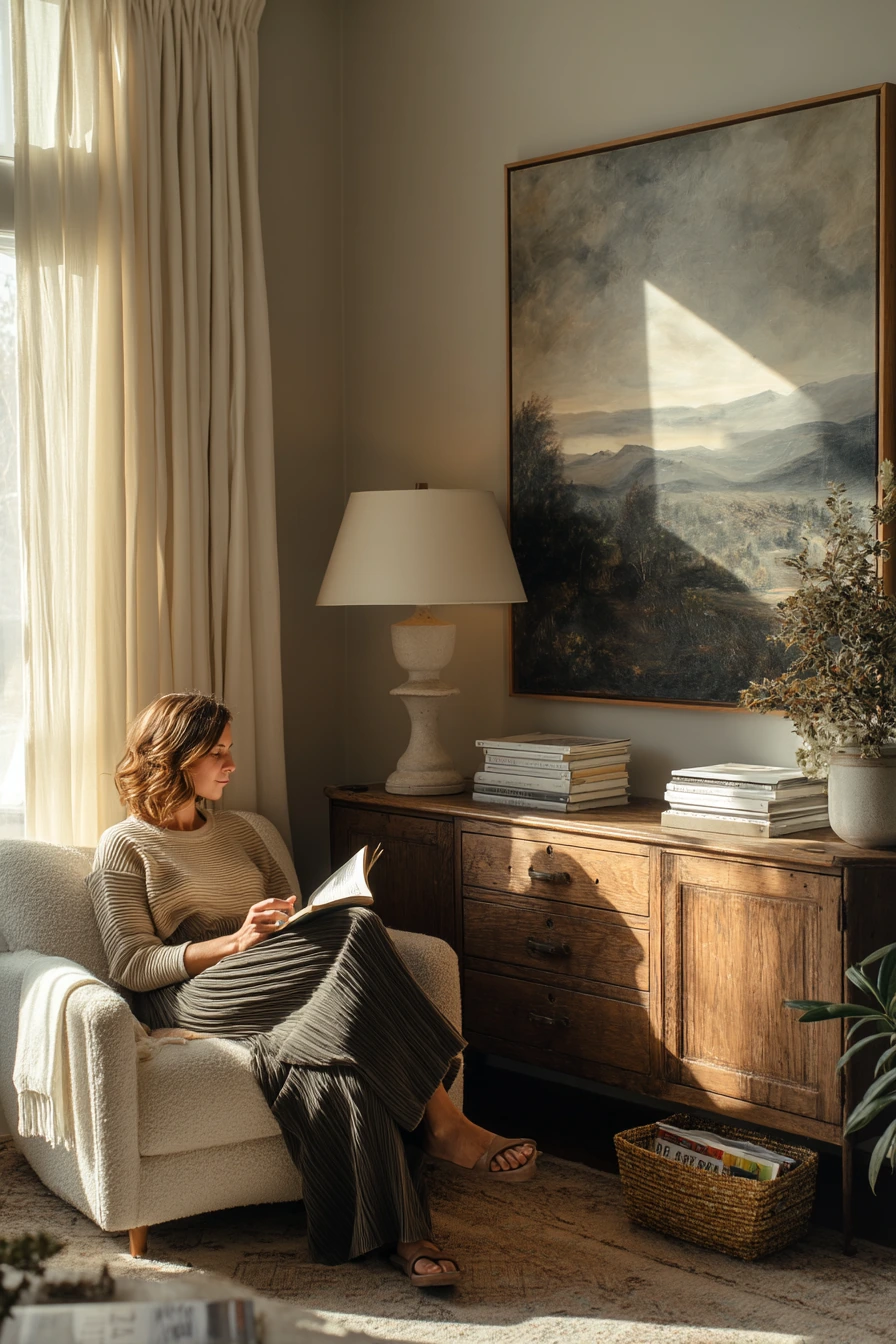

A quiet reading corner looks more intentional when you add one oversized moody landscape painting, even if you do not hang it. Leaning a large piece on a console behind a boucle armchair creates a relaxed, layered look that works well in a suburban living room. It also avoids extra wall holes, which is helpful if you like to switch things around often.
To style it, keep the corner simple and tactile: linen curtains, a stone lamp, stacked novels, and reading glasses on the console. A half-full teacup and a wool throw with gentle creases make the space feel used, not perfect. If you have plant shadows on the wall, choose art with deep greens, charcoal, and soft brown so the natural shadows blend into the scene instead of fighting it.
For placement, the painting should be wider than the lamp and tall enough to sit above the chair back. Angle it slightly toward the seat so it feels connected to the reading spot. Add a small basket of magazines to fill the lower area and keep paper clutter contained. Soft winter daylight pairs well with moody art, but add a warm bulb in the lamp so evenings feel cozy.
- Pick a landscape with one strong horizon line for calm.
- Use a console or low cabinet as the “base” for leaning art.
- Keep decor to three items: lamp, books, and one small object.
- Add texture with boucle, wool, and linen for a layered look.
- Place a small basket nearby to collect magazines and mail.
Pro Design Tip: Lean art on a non-slip pad or museum putty so it stays steady and does not scratch the wall.
Budget Considerations: Oversized art is easy to fake by enlarging a photo print or buying a large poster, then using an inexpensive frame with a wide mat.

4. Bright Contemporary Painting Above a Modular Sofa in a Kid-Friendly Space
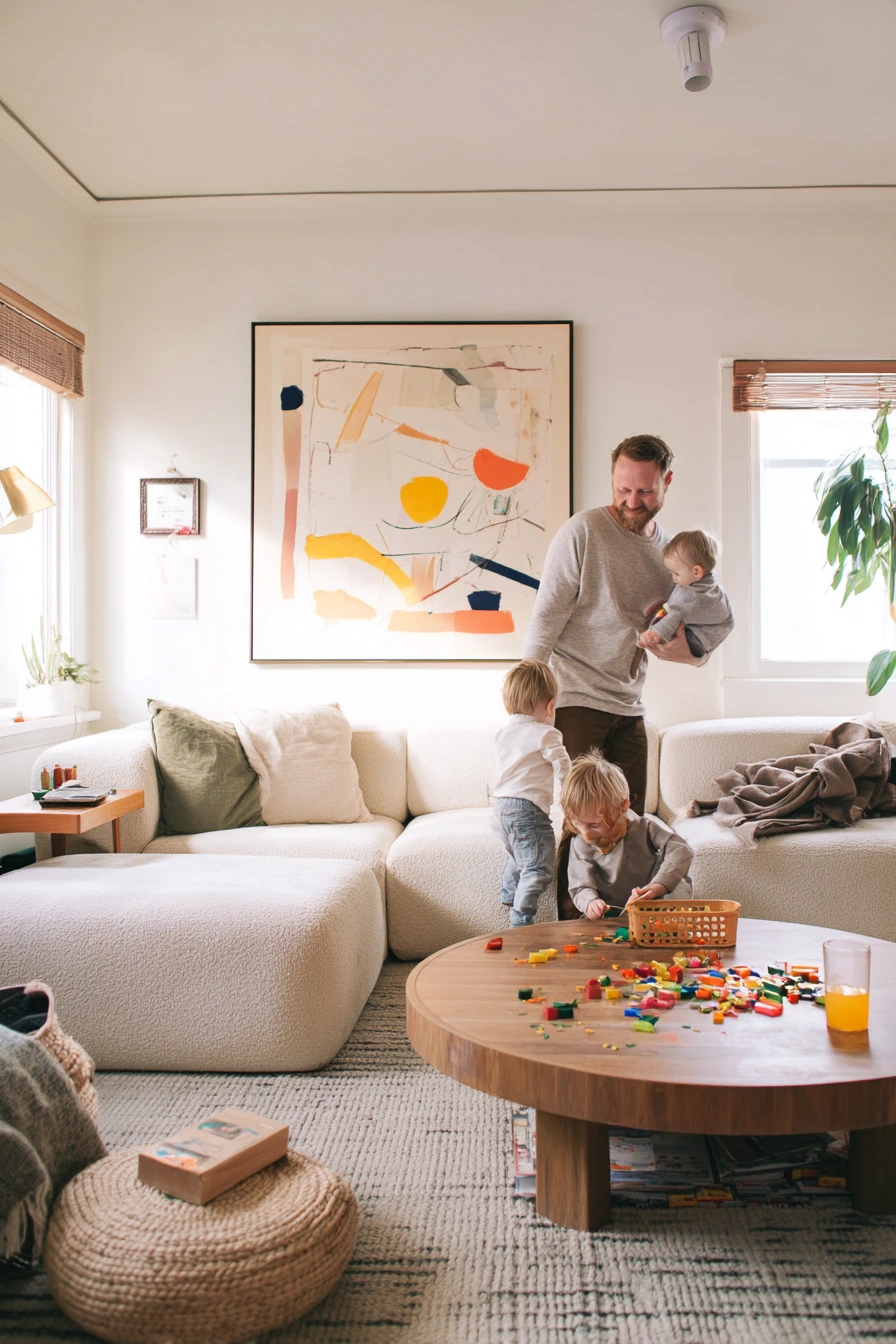

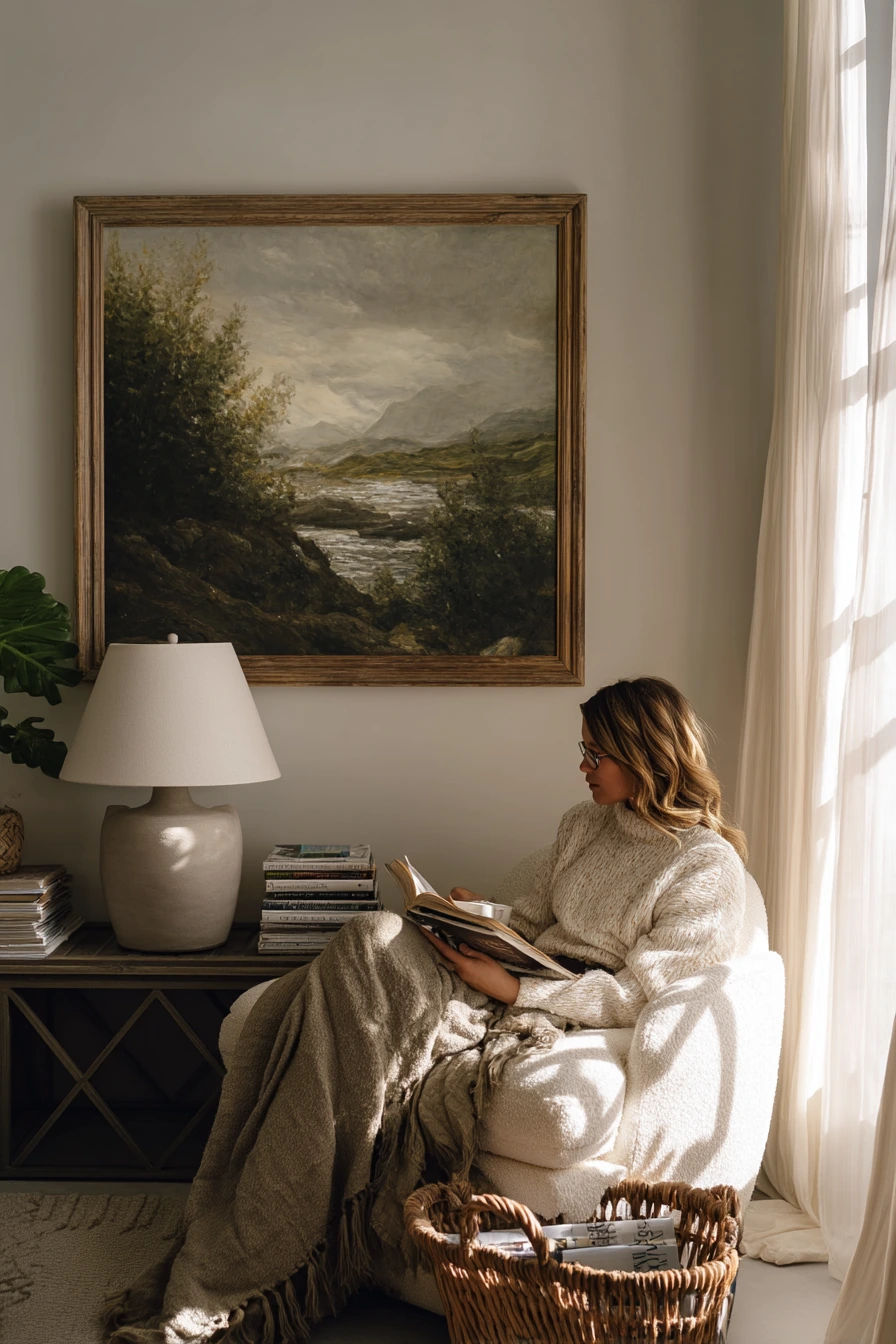
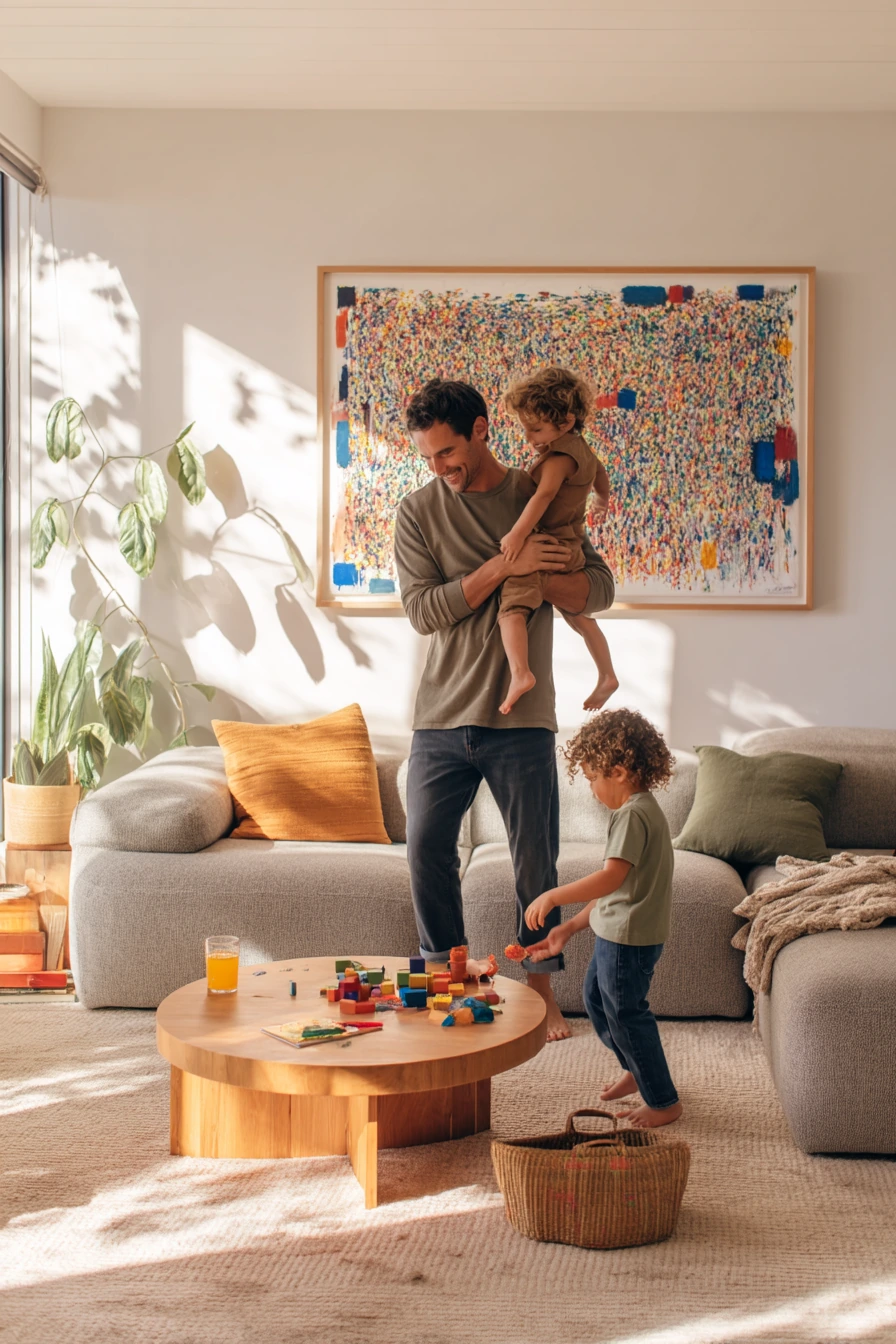
A bright contemporary painting can bring energy to a family living room without making it feel messy. Over a modular sofa, one colorful piece creates a clear focal point, which helps the room feel organized even with picture books, scattered building blocks, and a juice glass on the table. If your base is neutral, like a sofa in gray or beige, bold art becomes the “color plan” for the whole room.
Pull a few shades from the painting and repeat them in small doses, like sage accent pillows, a knitted throw, or a basket liner. Use a round wood coffee table to soften sharp edges, especially if you have toddlers. Keep the floor practical with a sun-faded rug that hides small marks and still looks soft in warm morning light.
Hang the painting securely and slightly higher than you would in a no-kid room, but not so high that it floats. Aim for the center of the art to be near adult eye level when standing. If you want extra safety, choose a lightweight canvas and a sturdy wall anchor. Add one plant near the window for gentle shadows and a calmer feel, but keep it out of reach if little hands are curious.
- Choose art with 3 to 5 main colors, not a rainbow mix.
- Repeat one color in pillows and one color in a throw.
- Use closed baskets to hide crayons and small toys fast.
- Keep table decor low so it does not compete with the painting.
- Pick a wipeable frame or sealed canvas for easy cleaning.
Pro Design Tip: When art is bold, keep nearby patterns simple so the painting stays the star and the room feels calmer.
Budget Considerations: Look for large canvas prints on sale, or buy a simple poster and mount it on foam board for a lightweight, kid-safe option.

5. Small Apartment Art Ledge with Layered Frames and Painter’s Tape Planning
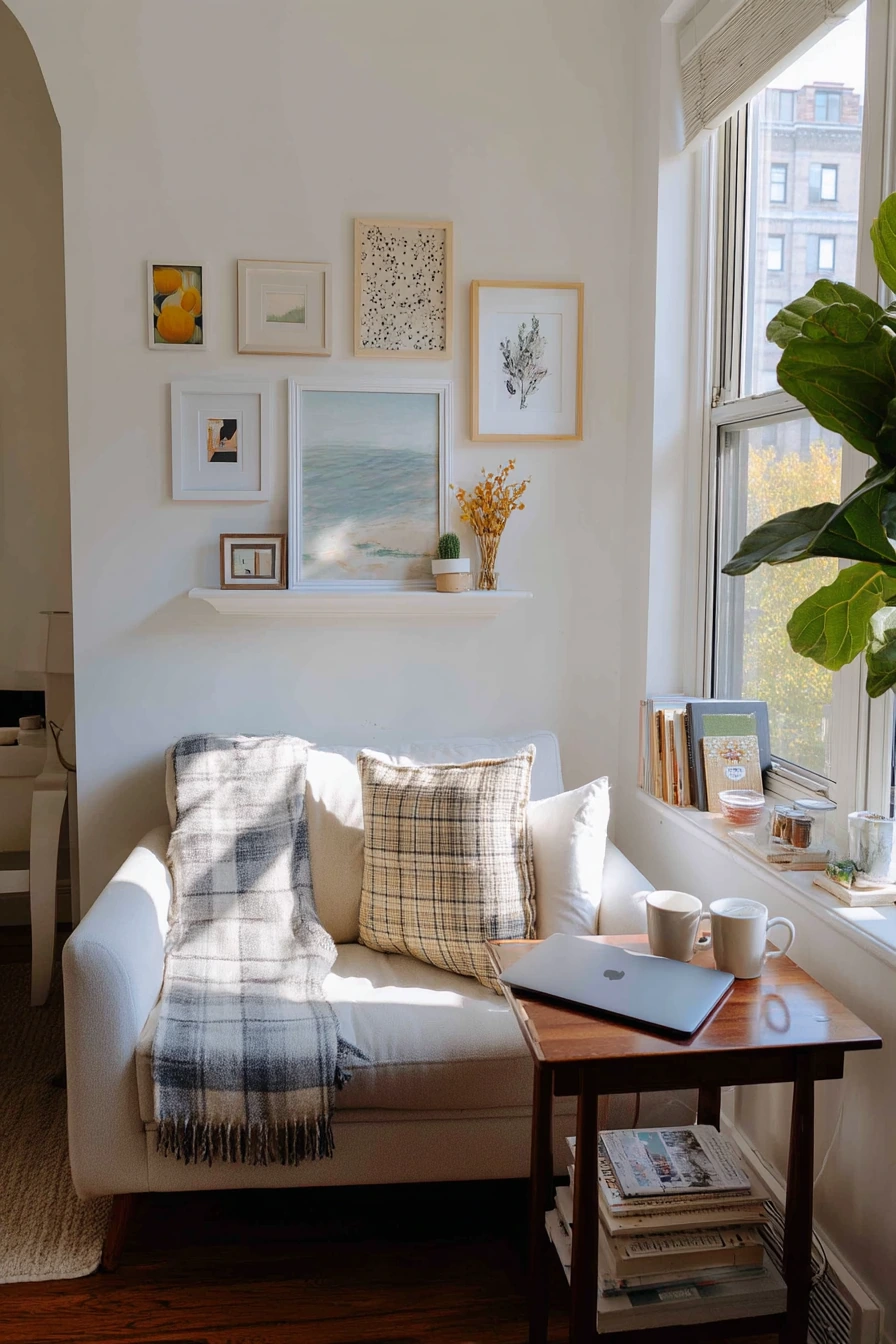

An art ledge is one of the best living room painting ideas for small spaces because it gives you impact without committing to one layout. In a small apartment living room, a renter-friendly ledge above a compact loveseat lets you layer several framed paintings plus a loose canvas. It also makes it easy to swap art when you get tired of the colors or find a new thrifted piece.
Plan the layout with painter’s tape before you install anything. Mark the ledge length and the height above the loveseat, then test a few frame sizes on the floor first. Keep the tallest piece near the center and overlap smaller frames in front for depth. A thrifted side table, two coffee cups, a folded plaid throw, and a stack of mail will still look fine when the wall has a clear, tidy line.
Because this setup sits near daily clutter like a laptop charger, keep the ledge styling minimal. Add one small object, like a simple vase, and keep the rest as art only. Place a fiddle-leaf fig by the window to add height and balance the long horizontal ledge. Cool daylight makes whites look crisp, so choose warm-toned frames if the room feels too cold.
- Install the ledge 8 to 10 inches above the loveseat back.
- Layer frames by size: tall in back, small in front.
- Limit the palette to two frame finishes for a cleaner look.
- Leave a little empty space so the wall does not feel crowded.
- Use painter’s tape to plan spacing and avoid extra holes.
Pro Design Tip: Add a small lip ledge with enough depth for frames to lean safely, then secure the biggest frame with museum putty.
Budget Considerations: A basic picture ledge is inexpensive, and you can fill it slowly with thrift-store art, kids’ drawings, or free prints.


6. Minimalist Large Painting to Anchor a Modern Sofa Without Feeling Bare

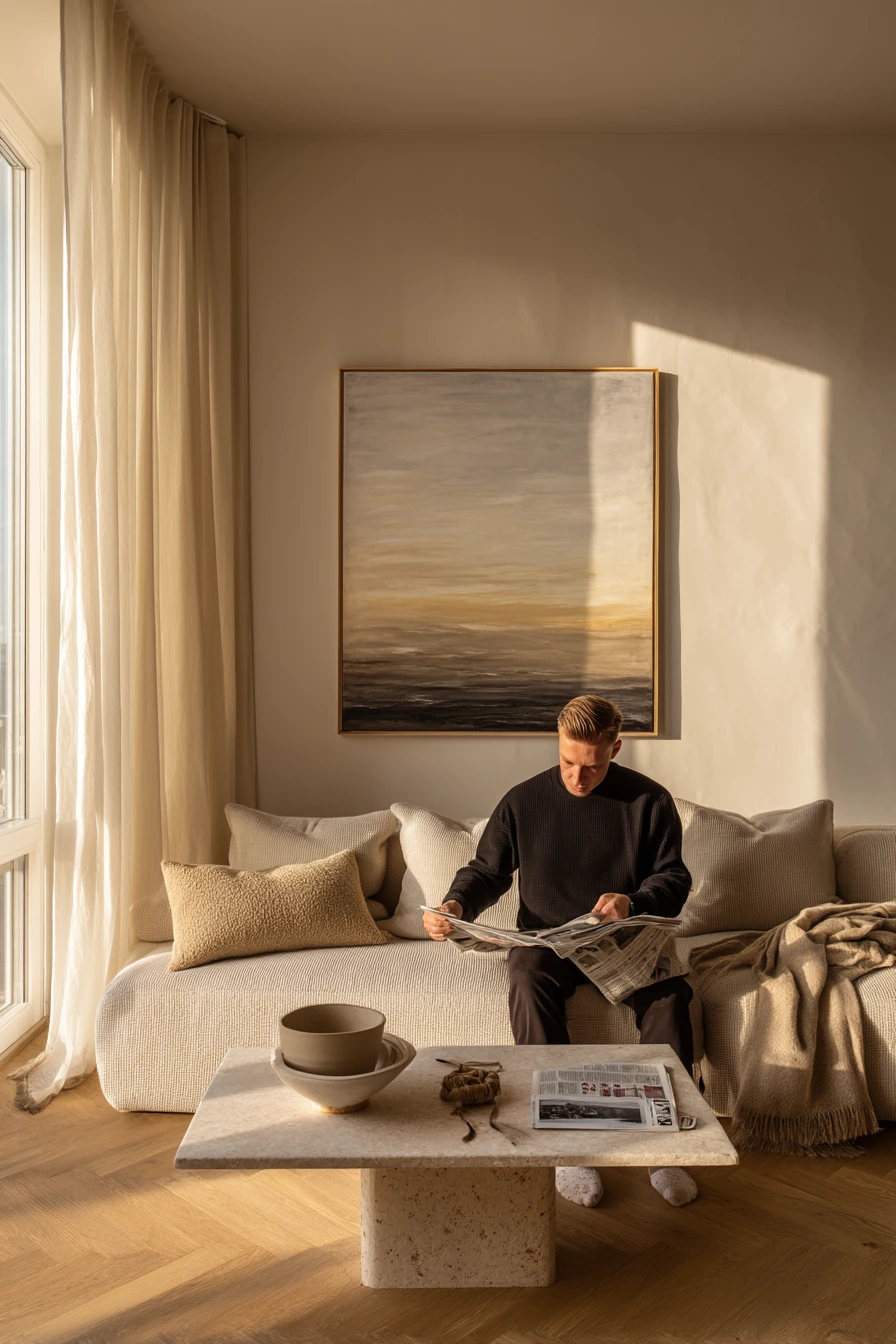
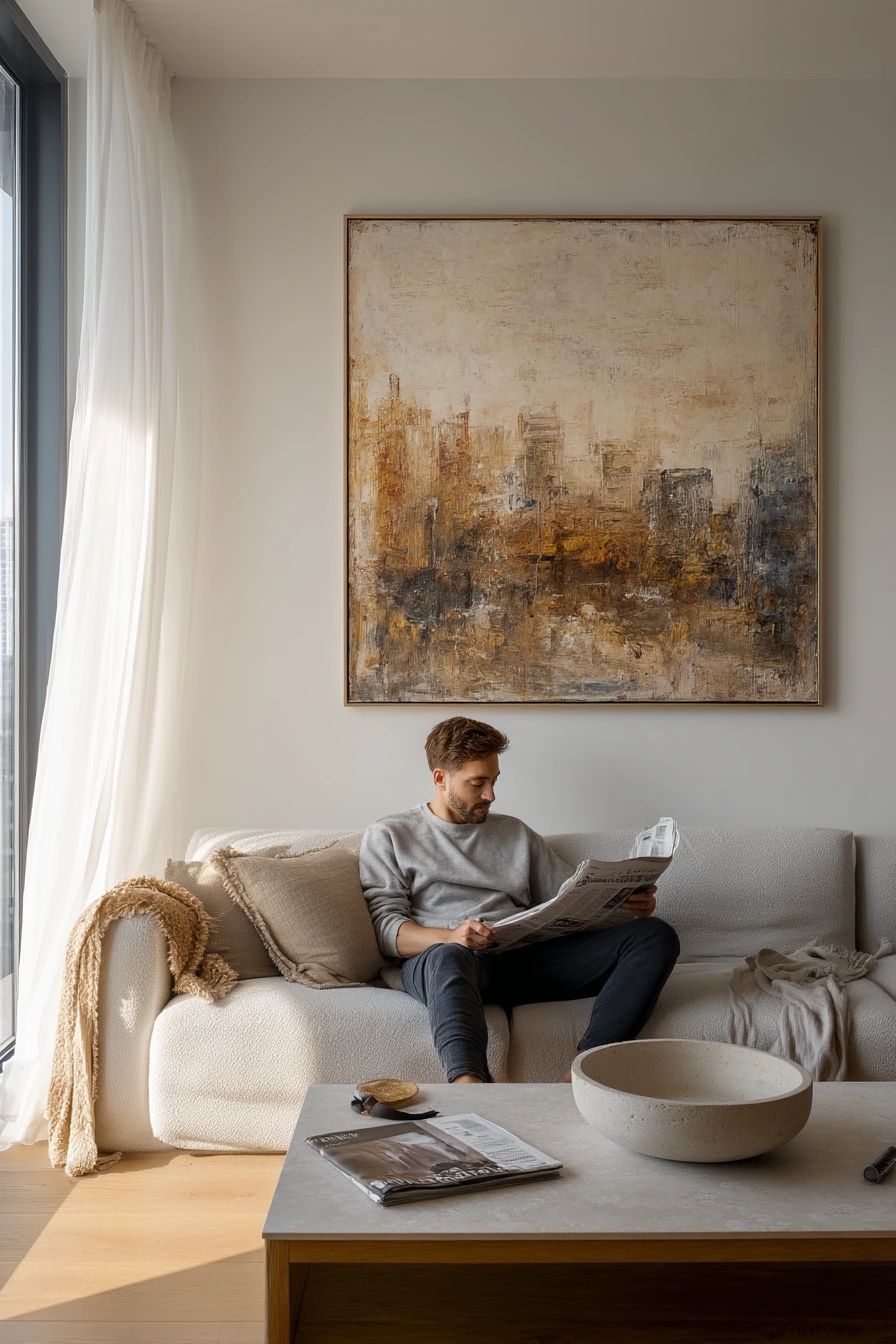
A calm modern living room can still feel warm if you anchor it with one large painting. When the sofa is low-profile and the room has clean lines, a single piece adds focus without adding clutter. This idea works well with a travertine coffee table, a ceramic bowl, wool pillows, and sheer curtains moving near the window in golden-hour light.
Choose art with soft contrast, like muted neutrals, clay tones, or gentle black lines. That keeps the room minimalist but not empty. Place the painting so its center is near eye level when you stand, and keep it wide enough to relate to the sofa. If you have everyday items like a newspaper, keys, or a charging cable near the armrest, use a small tray or a slim basket to keep the surface neat so the painting looks intentional, not random.
Style the coffee table with one open design magazine and a simple bowl, then stop. Negative space is part of the look. Add texture through fabric, not extra decor: a softly rumpled throw and a wool pillow make the room feel lived-in. If the wall is bright, consider a slightly darker painting so it does not disappear in daylight.
- Pick one large piece instead of several small ones.
- Match the art’s tone to the room’s materials, like stone and wool.
- Keep nearby decor low and simple to avoid visual noise.
- Hide cords with a wall-matching cord cover or clips.
- Use warm bulbs at night so the art still feels soft.
Pro Design Tip: In minimalist rooms, choose art with visible texture, like brushstrokes or linen canvas, so the wall has depth even in neutral colors.
Budget Considerations: If a large original is out of reach, buy a big print and upgrade the look with a wide mat or a simple wood frame.

7. Eclectic Mix of Paintings and Vintage Frames for a Collected Look
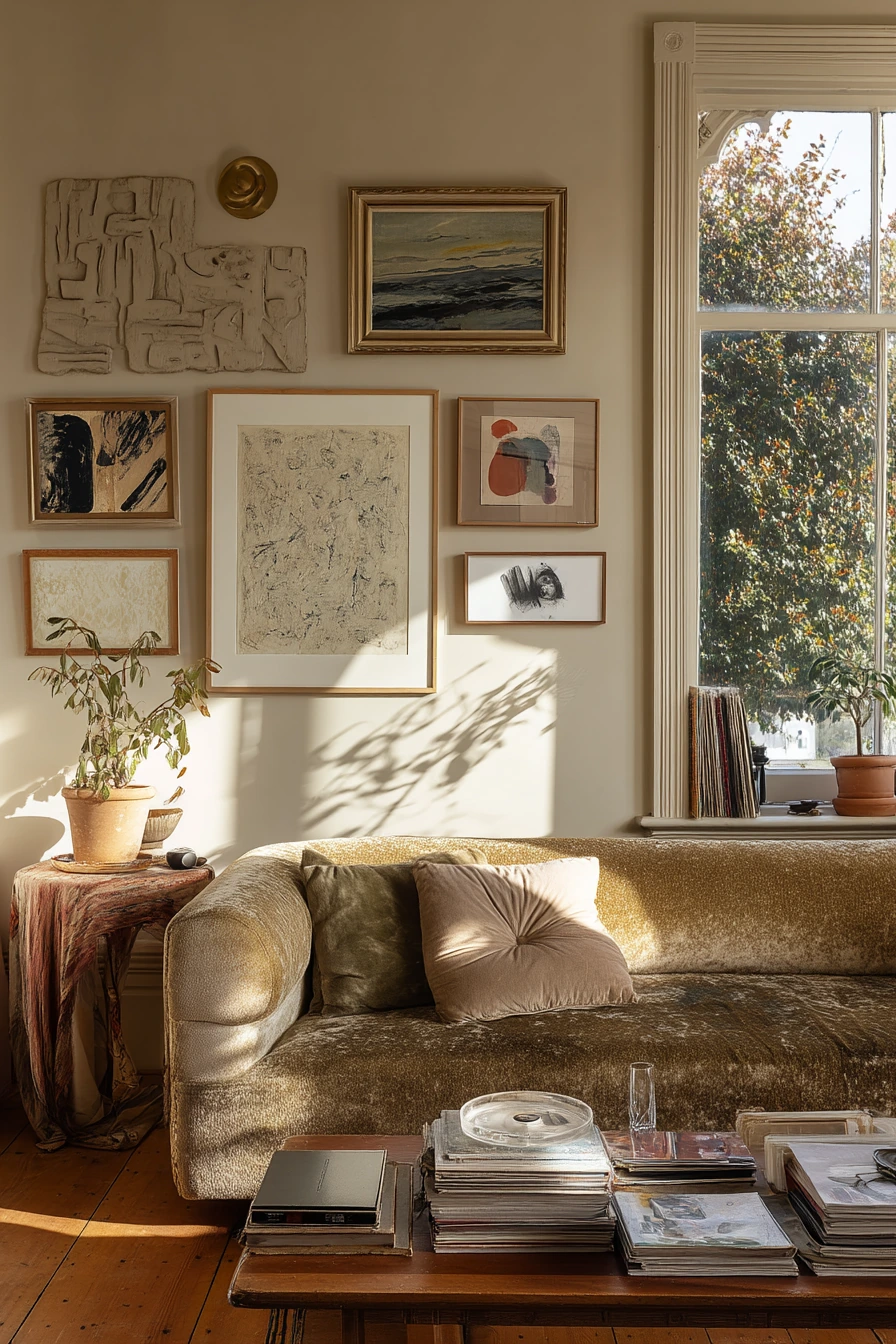
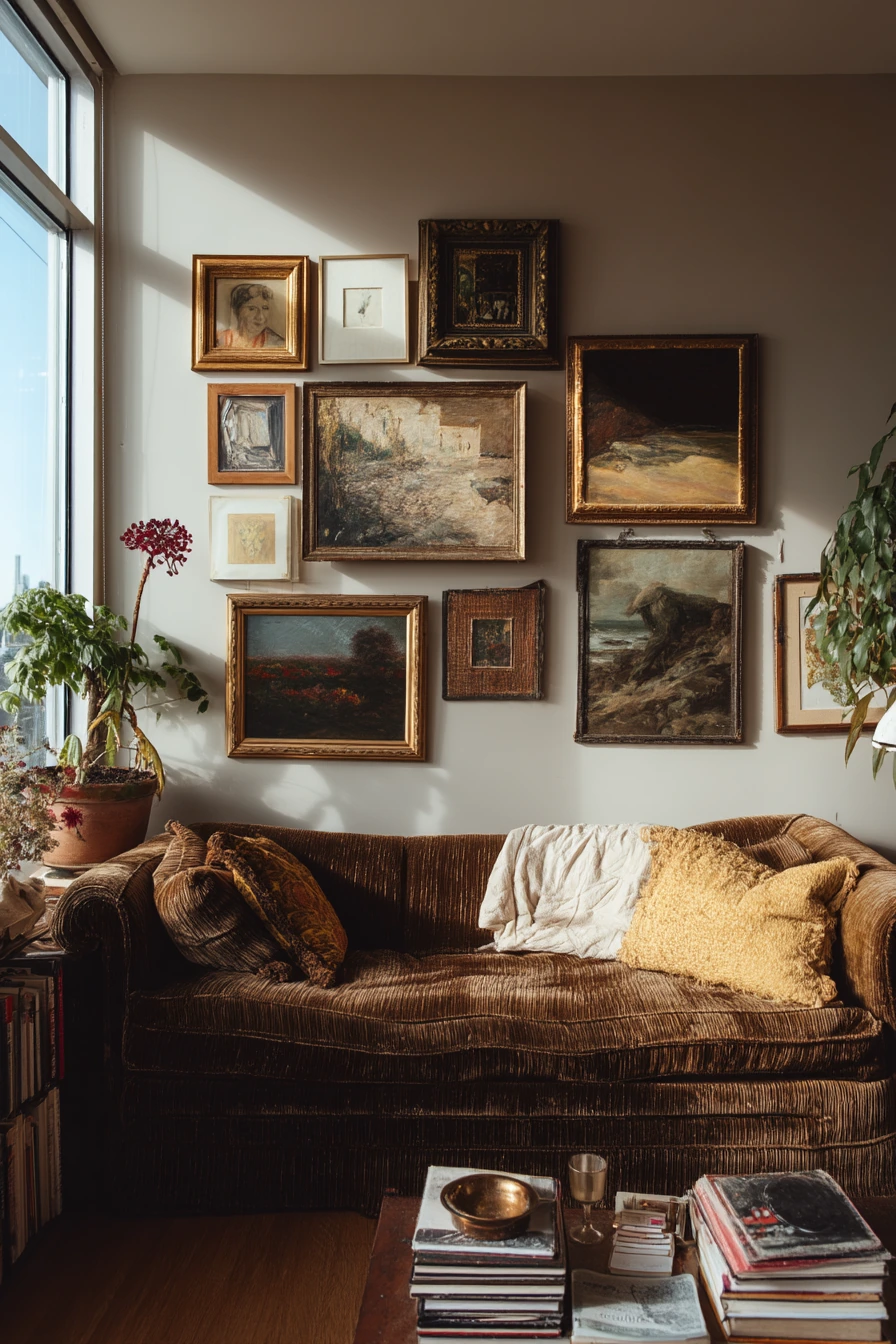
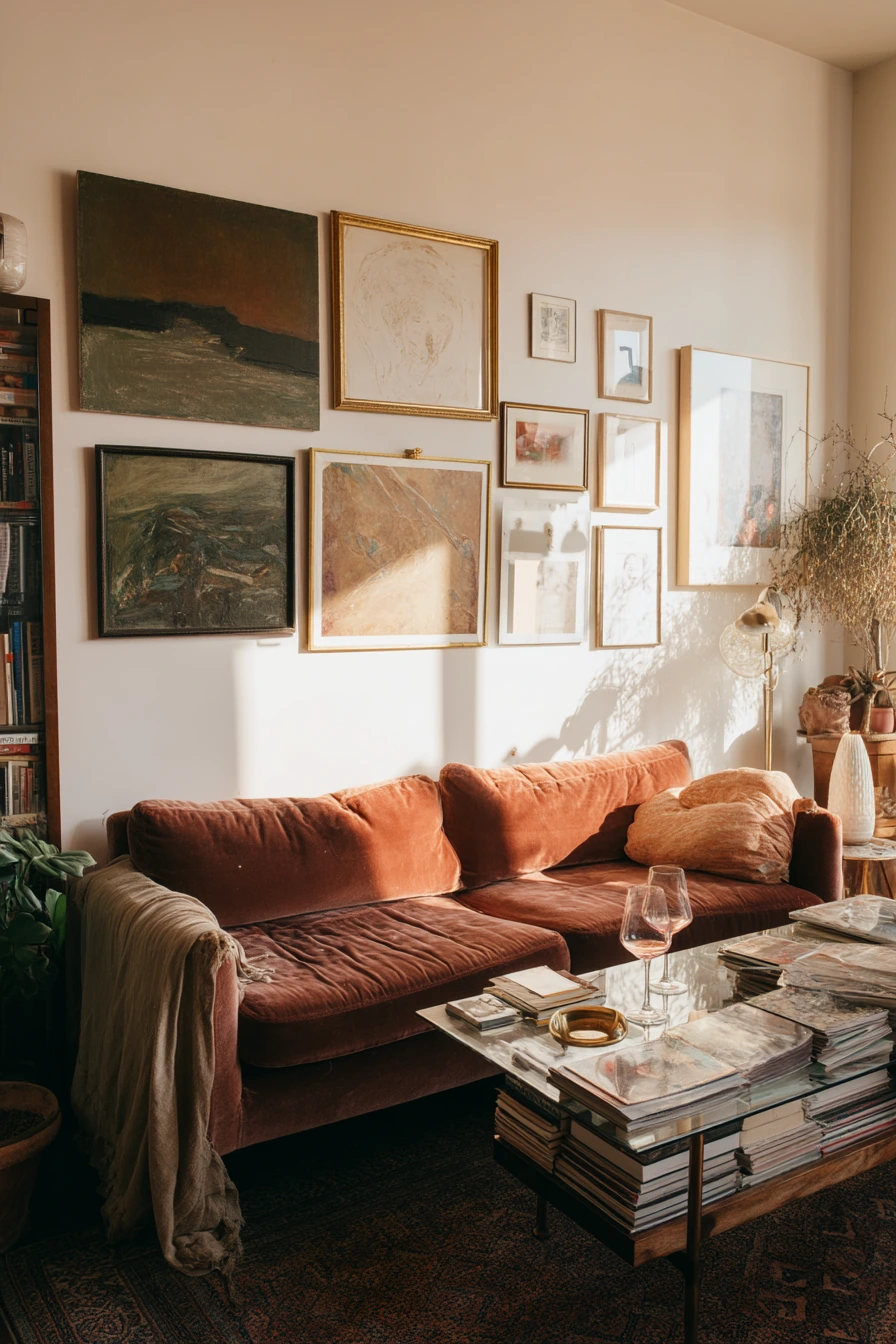
An eclectic living room painting wall is perfect if you love color, history, and a collected feel. Above a worn velvet sofa, a layered mix of paintings, vintage frames, and a small sculptural print wall can look magazine-ready while still feeling lived-in. The trick is to create a loose order so it feels intentional, not chaotic.
Start with a theme that connects the pieces. It can be a shared color, like warm rust and deep green, or a shared mood, like old-world portraits and modern abstracts together. Keep the sofa area grounded with texture: a slightly wrinkled linen throw, stacked art catalogues, and a ceramic planter. Small real-life items like a brass ashtray, a wine glass, or a vintage record sleeve can stay, but group them so they read as one moment instead of clutter.
Use late afternoon window light to your advantage. It makes mixed frames feel richer and helps different art styles blend. When hanging, keep the overall group shape simple, like a rectangle or an oval cluster. If you add a sculptural print or tiny object, place it near the center so the eye lands there, then moves around the wall.
- Mix frame styles but repeat one finish, like brass or black.
- Keep spacing consistent even when the art styles vary.
- Include one “odd” piece, like a small sculptural print, for depth.
- Balance the wall with a plant or floor lamp on one side.
- Style the sofa area with books and one tray to group small items.
Pro Design Tip: Lay all pieces on the floor first and take a photo; you will spot gaps and awkward spacing faster on your phone than on the wall.
Budget Considerations: Thrift stores and estate sales are great for vintage frames; you can replace the art inside with affordable prints to match your colors.
8. Seasonal Swap: Warm Landscape Painting Above the Fireplace for Fall


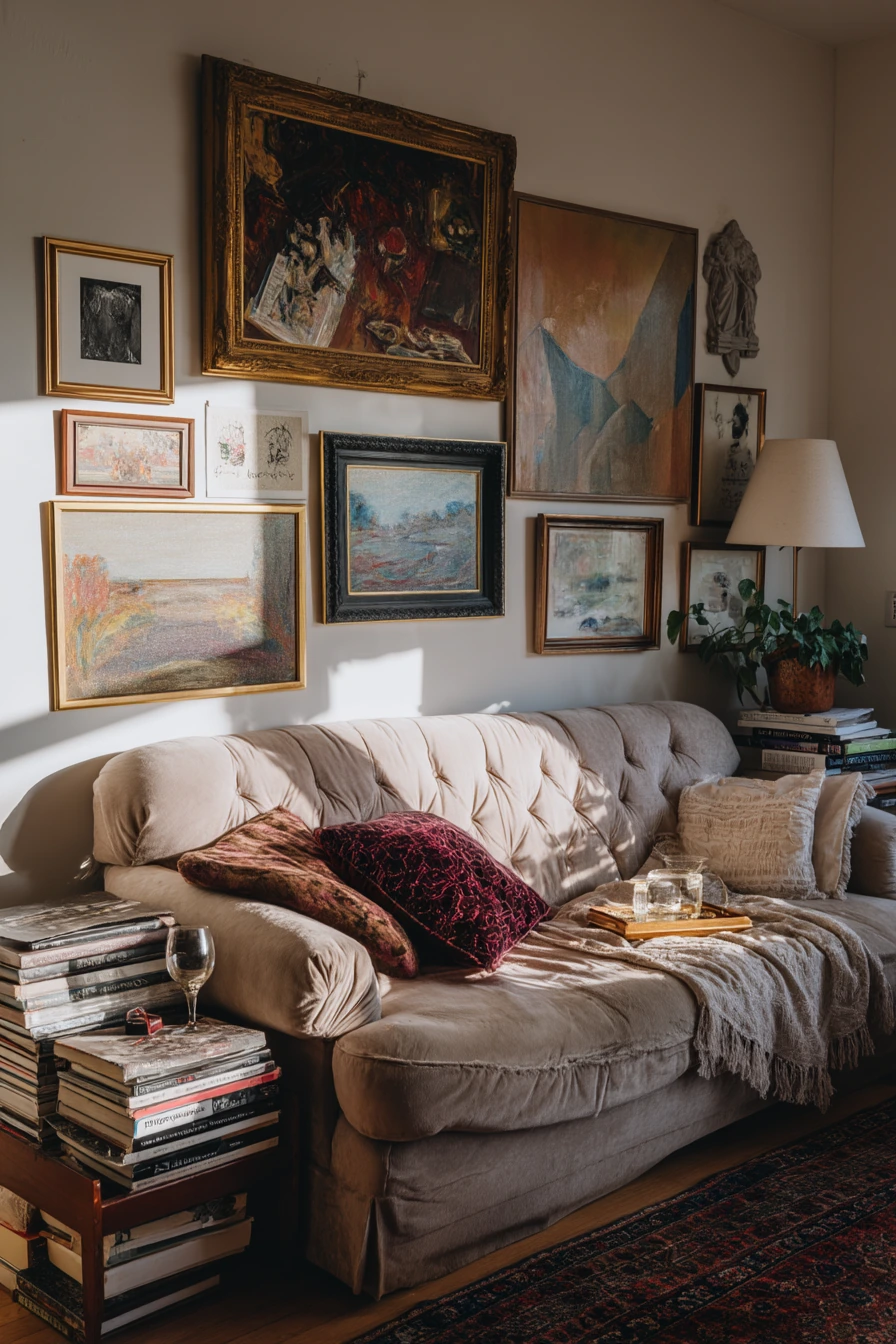
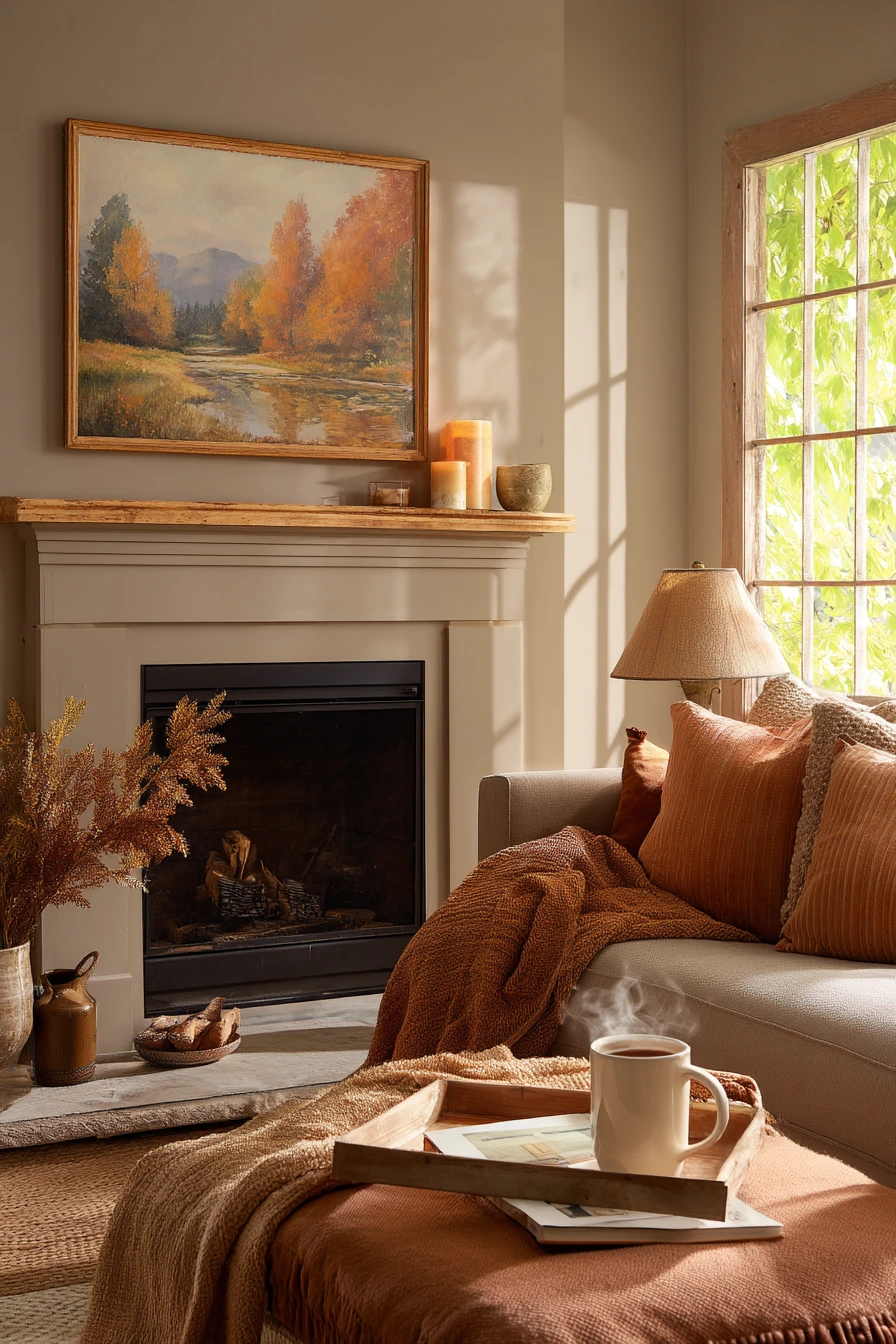
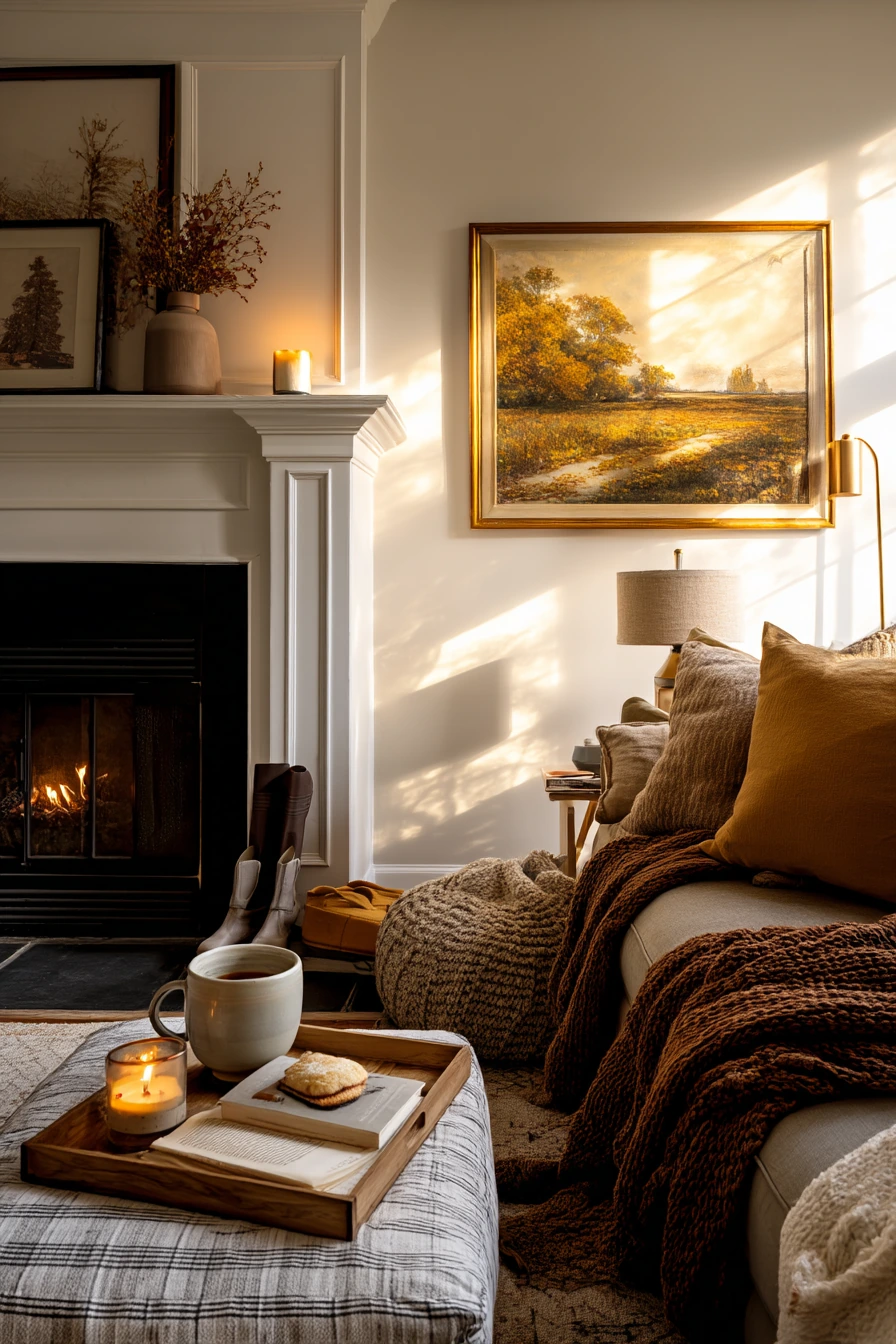
Swapping one painting seasonally is an easy way to refresh your living room without buying new furniture. In autumn, a warm-toned landscape painting above the fireplace makes the whole space feel snug and earthy. It pairs well with burnt clay pillows, stacked blankets, and candlelight on the mantel.
To style this look, treat the painting as the color guide. Pull warm clay, tan, and muted green into the room through pillows and throws. Add two books open on the ottoman for a relaxed, real-home feel, and keep a mug with tea steam nearby for a cozy corner moment. A boot tray near the door helps the room stay clean, which matters more when you are spending more time inside.
When hanging above a fireplace, keep safety in mind. Use proper anchors and check heat exposure. If the mantel gets warm, choose a framed print under glass or a canvas that can handle mild temperature changes. Mix amber lamp light with fading window light for depth, and keep mantel decor low so it does not block the art.
- Choose a landscape with warm tones for fall and winter.
- Keep mantel decor simple: candle, small vase, and one book stack.
- Repeat clay tones in pillows for a pulled-together look.
- Use layered blankets to add texture and make seating feel inviting.
- Place functional items like a boot tray so the room stays tidy.
Pro Design Tip: If the fireplace is the focal point, keep the painting slightly wider than the firebox opening so the wall feels balanced.
Budget Considerations: Seasonal art swaps can add up, so store one or two prints and rotate them; budget frames with interchangeable mats make changes quick.
9. Budget-Friendly Colorful Painting Hung with Removable Hooks in a Narrow Room
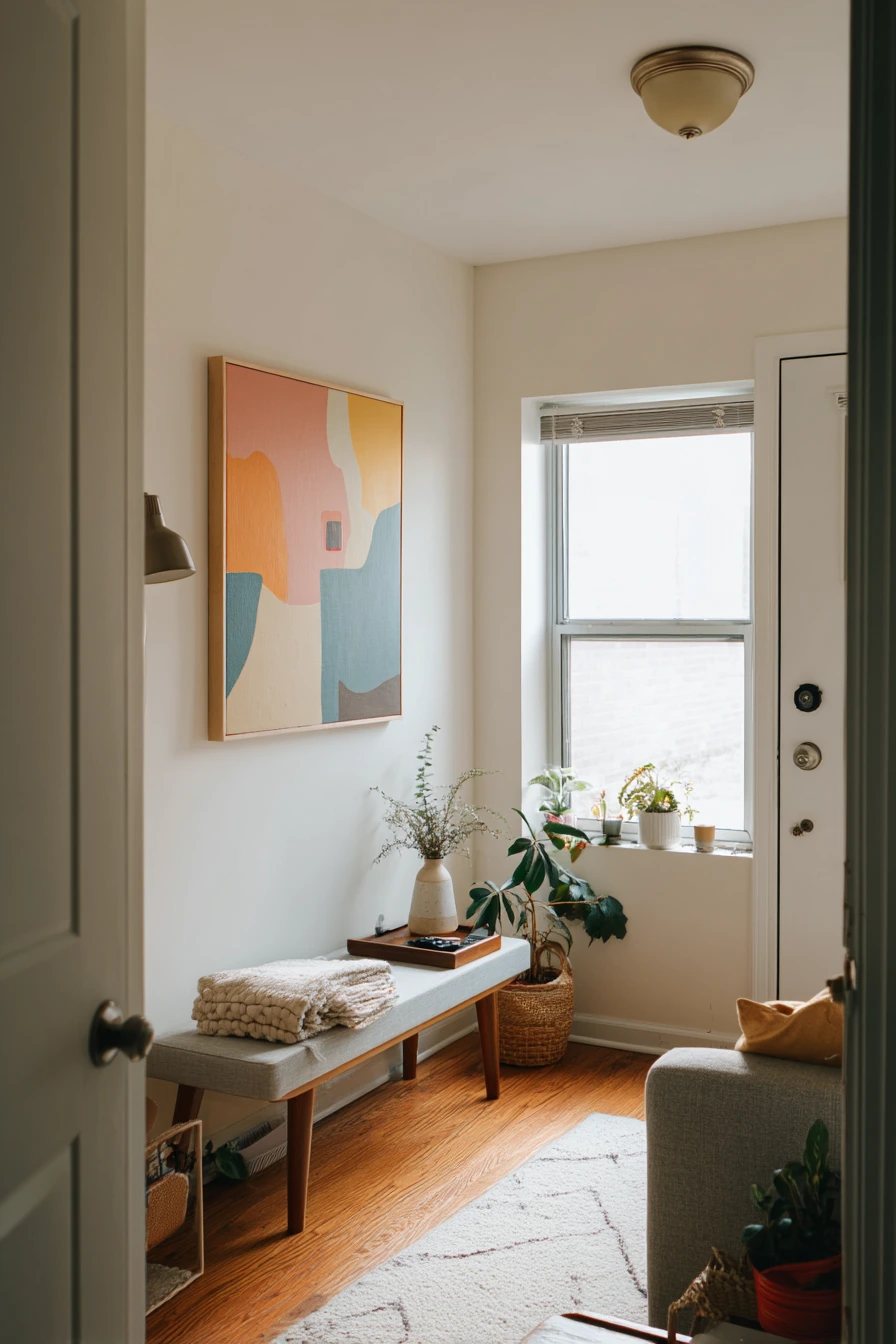

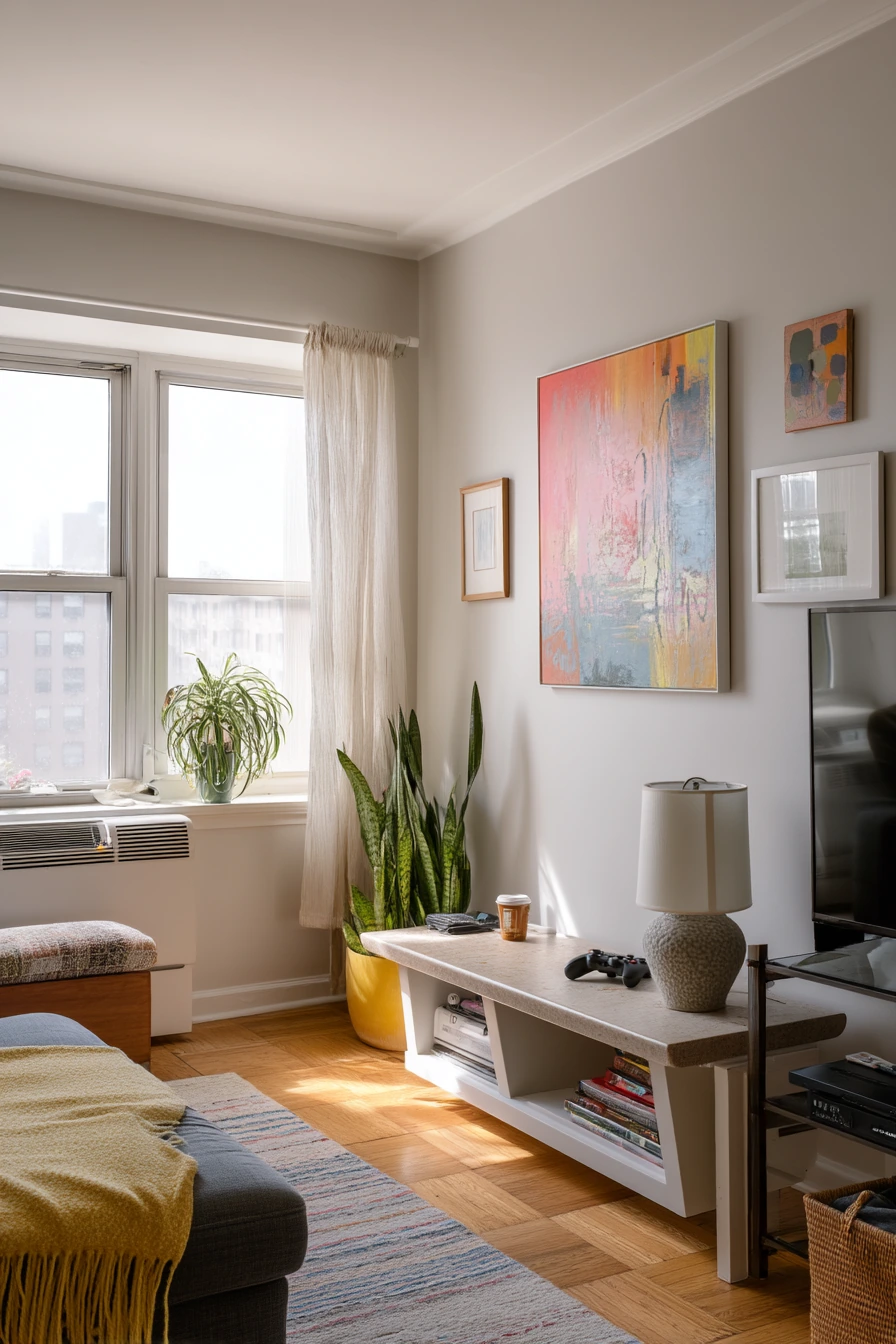
In a narrow living room, wall art can make the space feel less like a hallway. A colorful painting above a compact media bench adds personality without taking up floor space. For a first-time renter, removable hooks are a smart budget-friendly option, especially when you are not allowed to drill.
Start by measuring the media bench and pick a painting that is about two-thirds its width. Hang it so the bottom edge sits 6 to 10 inches above the top of the bench. Keep the area tidy with small systems: clip a peel-and-stick lamp cord neatly, hide extra cables, and use a small tray for keys. A thrifted ceramic vase and one small plant on the sill add softness without clutter.
Because cloudy-day window light is flatter, choose art with clear shapes and strong color blocks so it still reads from across the room. Add a folded throw and a shoe basket by the entry edge to keep the narrow space functional. If you game, tuck the controller into a basket so the media area looks clean when friends come over.
- Use removable hooks rated for the art’s weight.
- Center the painting over the bench, not over the TV, if they are separate.
- Choose bold colors to brighten a narrow room.
- Keep cords controlled with clips or a painted cord cover.
- Add one plant and one vase for a finished look.
Pro Design Tip: In tight rooms, hang art slightly lower than you think; it pulls the eye into the seating zone and makes the space feel wider.
Budget Considerations: Removable hooks, thrifted frames, and secondhand art are renter staples; set a small monthly “art fund” so you can upgrade slowly.

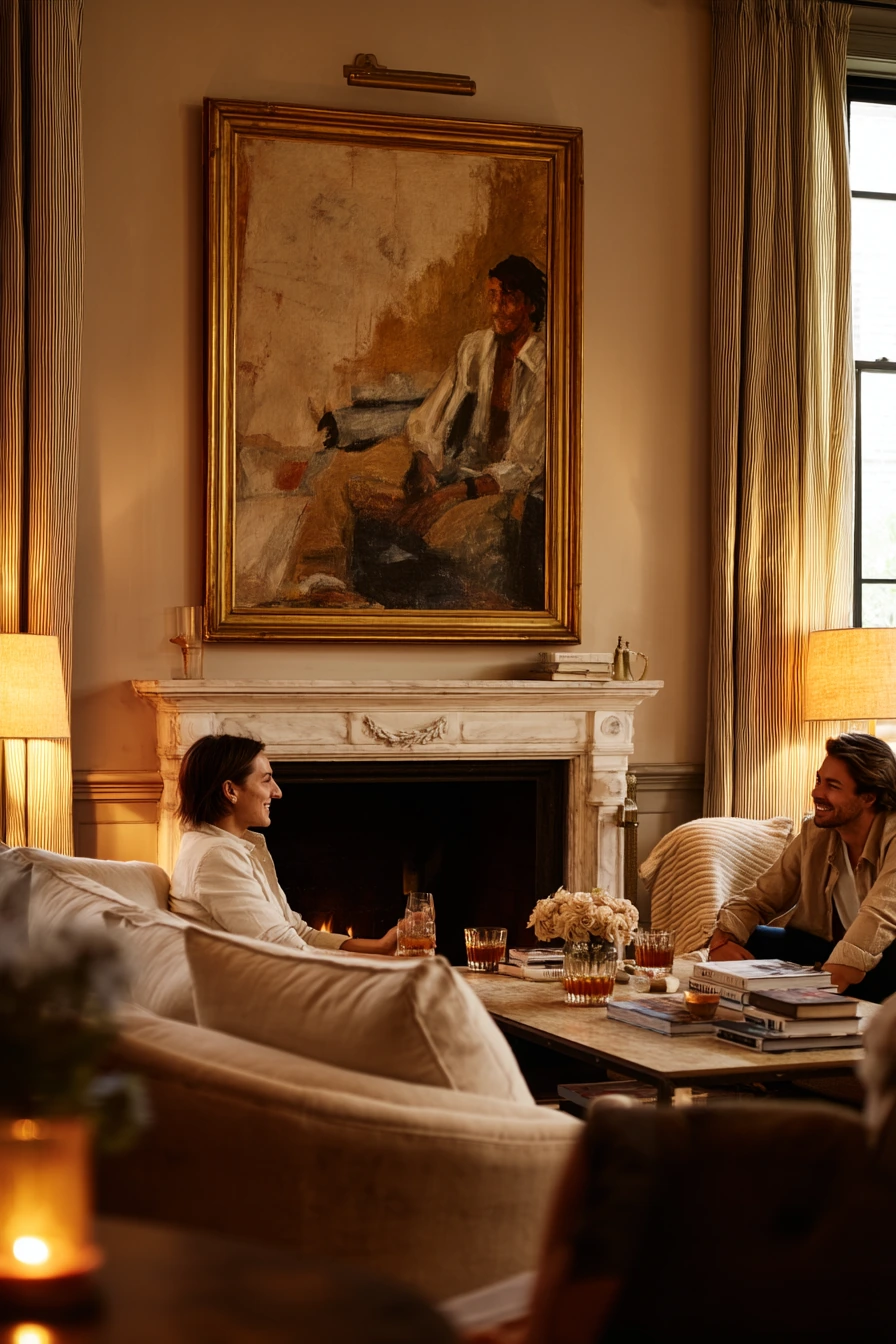
10. Centered Figurative Painting Above a White Fireplace for a Polished Look


A centered figurative painting above a white plaster fireplace gives a living room a polished, calm focal point. It feels elevated, but still believable for everyday life, especially when friends are over and the room has signs of use like stacked coasters, a stray napkin, and half-open linen curtains. This is a strong choice if you want your living room painting ideas to look mature and balanced.
Start by choosing a piece that matches the fireplace scale. A medium-to-large painting works best, centered on the mantel line. If you have a curved sofa, the soft shape pairs well with a softly luminous artwork. Keep the mantel styling minimal: a small bouquet and one or two art books is enough. Too many objects will compete with the painting and make the fireplace look busy.
Lighting matters here. Warm lamplight plus fading dusk from the windows can make a figurative painting glow, so use bulbs around 2700K and avoid harsh overhead lights. Add a folded cashmere throw to bring in texture. For hosting, keep a small tray for drinks and coasters so the room stays neat while still feeling relaxed.
- Pick art that is 60 to 75 percent of the mantel width.
- Center the painting with the fireplace, not with nearby windows.
- Keep mantel decor low so the artwork stays visible.
- Repeat one tone from the painting in textiles like throws or pillows.
- Use warm lamps to reduce glare and make colors look richer.
Pro Design Tip: Leave at least 4 to 6 inches between the top of the mantel objects and the bottom of the painting so each layer feels intentional.
Budget Considerations: If an original figurative painting is expensive, look for limited edition prints and spend a bit more on a good frame to get the same polished effect.

Good living room painting ideas come down to the same basics: right size, smart placement, and a few repeated colors. You can go big with one canvas, build a flexible gallery wall, or keep it renter-friendly with ledges and removable hooks.
Start with the wall you see most often, usually above the sofa or fireplace. Use tape to test height, then add simple styling like books, a plant, and one tray to keep daily items contained.
FAQ
1) How high should I hang a painting above a sofa?
Keep the bottom of the frame about 6 to 8 inches above the sofa back, and aim for the center of the art near eye level.
2) What size painting looks best in a living room?
A good rule is 60 to 75 percent of the furniture width below it. Bigger usually looks more intentional than too small.
3) Can I make a gallery wall look neat in a busy family room?
Yes. Use consistent spacing, repeat frame colors, and include one large anchor piece to organize the layout.
4) What are the best renter-friendly ways to hang art?
Try removable hooks for lighter pieces, picture ledges for layering, and leaning art on a console to avoid wall holes.
5) How do I choose art colors that match my room?
Pull 2 to 3 colors from your rug, pillows, or sofa, then choose art that repeats those tones with one accent color.
6) How do I reduce glare on framed art?
Use matte acrylic, avoid placing art directly opposite a bright window, and add warm lamps to balance the light.