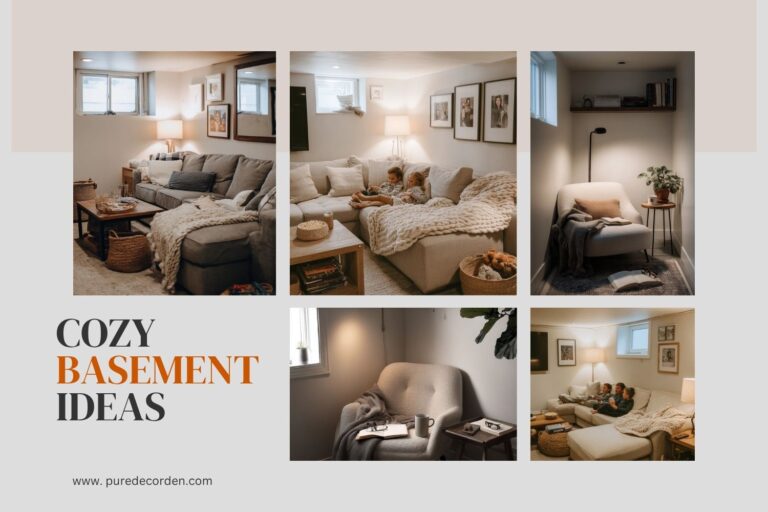
Basement door ideas matter more than most people think. The right door can hide storage, block noise from a media room, and make a basement hallway look finished instead of forgotten.
This post walks through 10 door styles that work in lived-in homes, from a navy storage door by the laundry nook to a barn door for a busy rec room. Each idea includes simple styling steps you can copy, plus a pro design tip and a budget note.
If you found these images on Pinterest, use this guide to choose the best basement door for your space, your traffic flow, and your budget. You will also learn small details that help, like hardware choices, paint colors, and how to handle scuffs and everyday mess.
Whether you need a space-saving pocket door, a chalkboard playroom door, or a sturdy workshop door with an iron latch, you will find a realistic plan you can do this weekend.
Intro: Navy Storage Door by the Laundry Nook


A basement landing often turns into a drop zone. A newly painted navy door that conceals storage beside a stacked laundry nook can make the whole area feel calmer. Navy hides fingerprints better than bright white, and it looks good with practical brass lever hardware. If the door sits near kid’s rain boots, a vacuum, and labeled canvas bins, the color helps the space feel intentional instead of messy.
Start by deciding what the door is hiding. If it is cleaning supplies or games, add shallow shelves inside so items do not topple. Outside the door, use one small shelf for folded games and a tray or hook strip for quick-grab items. A half-full water glass on the rail is real life, so add a slim rail tray or a small wall shelf at the landing to prevent spills. If you have faint scuffs on painted trim, touch up with a small artist brush and keep a labeled paint jar nearby.
How to style it: keep the area simple and useful. Put labeled canvas bins on one shelf, line up boots on a washable mat, and tuck the vacuum in the same corner every time. If there is soft window light from the stairwell, hang a small mirror on the side wall to bounce light into the landing. Choose warm metals like brass to balance the cool navy.
- Pick a navy with a gray base for fewer harsh contrasts in low basement light.
- Use a brass lever so you can open it with full hands, like laundry baskets.
- Add a boot tray and a washable runner to catch drips from rain boots.
- Label bins by category: games, seasonal, tools, and sports.
- Keep one hook for a small handheld vacuum or dustpan.
Pro Design Tip: Paint the door and the trim the same navy for a built-in look that hides scuffs and makes the storage door feel planned.
Budget Considerations: If a new solid door is not in the budget, paint your existing hollow-core door and upgrade only the lever to brass for a noticeable change.


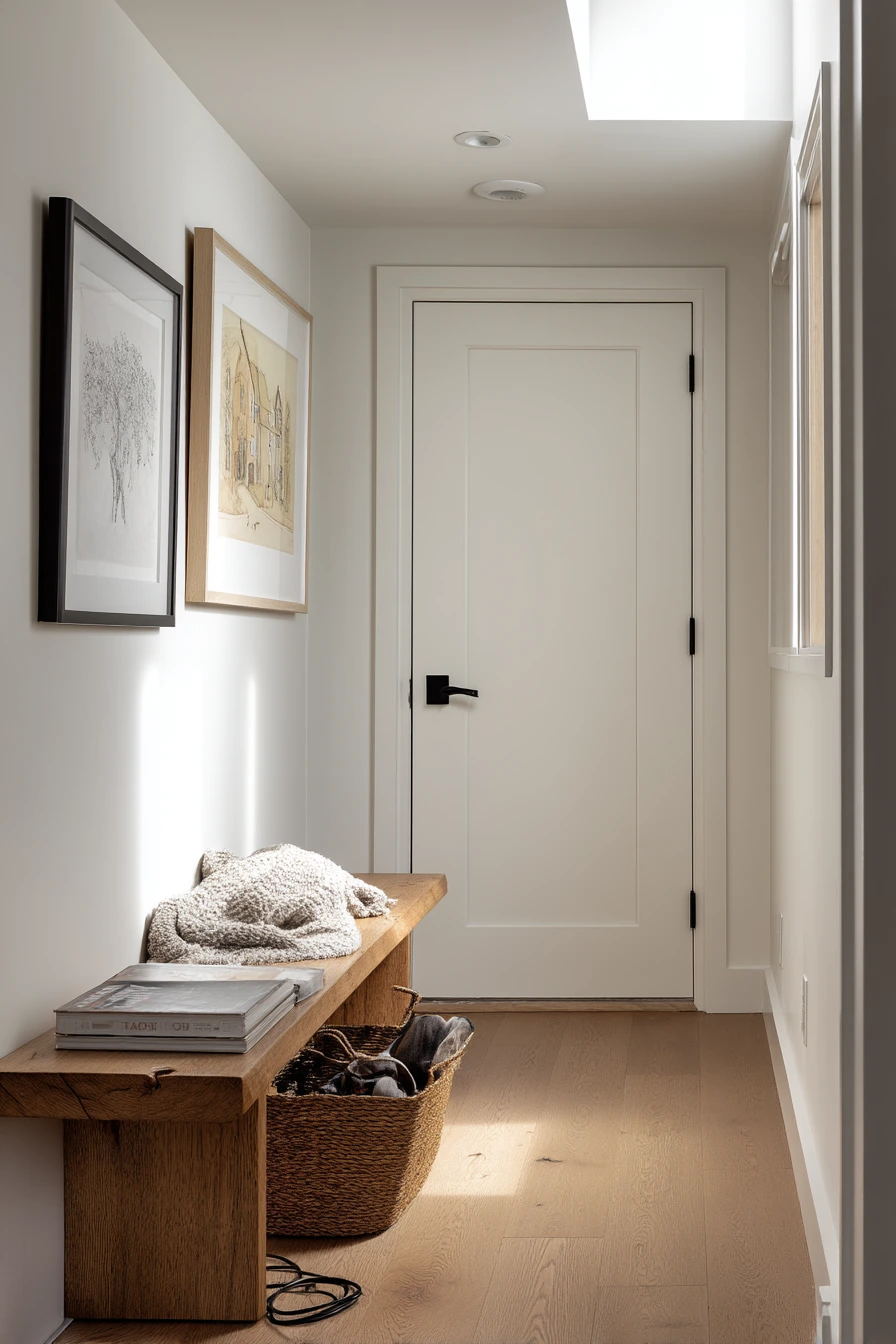
1. Flush White Basement Hallway Door with Black Hardware


A flush white door with black hardware is a clean choice for a finished basement hallway. It works well when the hallway already has warm oak furniture, framed school art, and a simple bench. A subtle shadow gap around the door makes it look modern, even if the rest of the home is traditional. This style also photographs well for listings because it reads as bright and tidy.
To keep it feeling lived-in, add small, real details nearby. A charging cable curling beside a paperback is common in family spaces, so give it a home with a slim console that has a drawer or a lidded basket. Place a shoe basket under the console or at the end of the bench to catch daily clutter. If sunlight slices through a small egress window, keep the wall color light so the beam makes the space feel wider.
How to style it: choose one wood tone, like warm oak, and keep the rest simple. Use matching black hooks or a black tray for keys to tie in with the black lever or knob. If you have one slightly wrinkled throw on the bench, make it look intentional by folding it in thirds and placing it in the same spot every time. Hang framed school art in a neat row to add personality without making the corridor feel busy.
- Use matte black hardware to hide fingerprints better than glossy finishes.
- Pick a flush door for a smooth look and easier cleaning.
- Add a narrow oak console to warm up white walls and doors.
- Use baskets to hide chargers, mail, and small toys.
- Keep art frames the same color for a calmer hallway.
Pro Design Tip: Use a consistent reveal or shadow gap on all hallway doors so the basement feels like a finished level, not a mix of parts.
Budget Considerations: You can keep your existing door and swap to black hinges and a black lever; paint the door a fresh white for a similar effect.

2. Barn Door Basement Storage Room in a Busy Rec Room


A soft-weathered barn door on black track hardware is a strong basement door idea for a rec room. It is easy to slide open when hands are full, and it can hide a storage room without needing swing space. In a room with a pool cue rack, board games, and a child’s toy truck, the barn door adds texture and helps the space feel organized.
To make it work day to day, plan for noise and clearance. Barn doors are not fully sound tight, so use them for storage rooms, craft closets, or utility spaces that do not need privacy. Make sure the door clears baseboards and any nearby furniture, like a side table that might show a coaster ring. If a knit blanket slips off a sofa arm, add a small basket near the sofa so the room looks picked up fast.
How to style it: keep the door finish slightly weathered so it hides bumps. Use black hardware if the room already has dark accents, like a cue rack or lamp base. Add a warm lamp glow nearby to make the wood tone look rich, and let faint daylight spill in so the room does not feel heavy. Inside the storage room, add shelves and clear bins for games and sports gear so the door is not hiding a pile.
- Measure wall space so the door can slide fully open without hitting art or switches.
- Choose a soft-weathered finish to disguise dents and fingerprints.
- Use a floor guide to keep the door from swinging out.
- Store board games upright in bins so they do not bow over time.
- Add a small rug to catch dirt near the doorway.
Pro Design Tip: Use a wide, flat pull handle and place it at kid-friendly height so children can help open and close the storage room.
Budget Considerations: If a full barn door kit is too much, look for a basic black track set and use a solid-core slab door stained or painted for a similar look.


3. Pocket Door for a Basement Media Room and Utility Corridor


A slim pocket door is a smart basement door idea when you need to hide a dark utility corridor near a quiet media room. Because it slides into the wall, it keeps the space around a sectional sofa and projector screen clear. This is helpful in basements where walkways are narrow and furniture is large.
Pocket doors work best when the wall is built for one. If you are remodeling, plan the framing early so you do not run into plumbing or wiring. In a finished media room, small clutter shows, like a popcorn bowl, a remote on the armrest, and charging cables on a low table. Use a lidded box or a low basket for cords so the room still feels restful. Keep lighting soft, with one lamp and dim stairwell spill, so the screen area stays cozy.
How to style it: choose a door that blends in, like a simple slab in the same color as the walls. Use a recessed pull that is easy to grip. If the corridor behind it is dark, paint the first few feet a lighter color and add a motion-sensor light. That way, opening the door does not reveal a gloomy tunnel. Keep blankets stacked in one spot and add a tray for the remote so the room feels tidy even on movie nights.
- Use a solid-core pocket door for less sound transfer.
- Add a soft-close pocket door kit for smoother daily use.
- Hide cables in a box on the low table to reduce visual clutter.
- Install a motion light in the utility corridor for safety.
- Choose a recessed pull that feels comfortable in your hand.
Pro Design Tip: Match the door color to the wall and keep trim minimal so the pocket door disappears and the media room feels larger.
Budget Considerations: Pocket door installs can cost more because of framing; if you cannot open the wall, consider a bypass sliding door on the surface instead.


4. Hidden Basement Door Built Into Floor-to-Ceiling Shelving


A concealed door integrated into floor-to-ceiling shelving is one of the most effective basement door ideas for a craft zone. When the door blends into the shelving, the room looks like a custom built-in wall, not a hallway with random doors. This works well in a family craft area with jars of paint, folded paper stacks, and a scissors cup, where you want storage to look calm.
The key is alignment. The shelf lines and the door seams need to match so the hidden door is not obvious. Use push-latch hardware or a hidden pull so you do not break the clean look. If toddler art is taped crookedly to the wall, you can still keep things neat by dedicating one “gallery spot” with a cork strip or magnetic rail. A tea mug and one open notebook feel real, so add a small washable mat or coaster near the work surface to protect finishes.
How to style it: group supplies by task. Put paint and messy items on one shelf with a tray, paper on another shelf with vertical dividers, and tools like scissors in a cup that stays put. Keep labels simple. Let gentle daylight from a tiny window do the work, and add one warm task lamp so colors look true at night. If the hidden door leads to storage, keep that space organized too, so opening it does not reveal chaos.
- Line up shelf trim across the door to hide the door edges.
- Use push-to-open latches for a clean front without knobs.
- Create one kid art display zone to avoid tape marks everywhere.
- Store paper upright to prevent curled corners and wrinkles.
- Add a small tray for paint jars to catch drips and spills.
Pro Design Tip: Use the same paint color and the same cabinet-style toe kick across the shelving and door so it reads as one built-in wall.
Budget Considerations: Custom built-ins can be pricey; a lower-cost option is an IKEA shelf wall with a simple door panel trimmed to match.


5. Affordable Basement Landing Door Painted Matte Sage
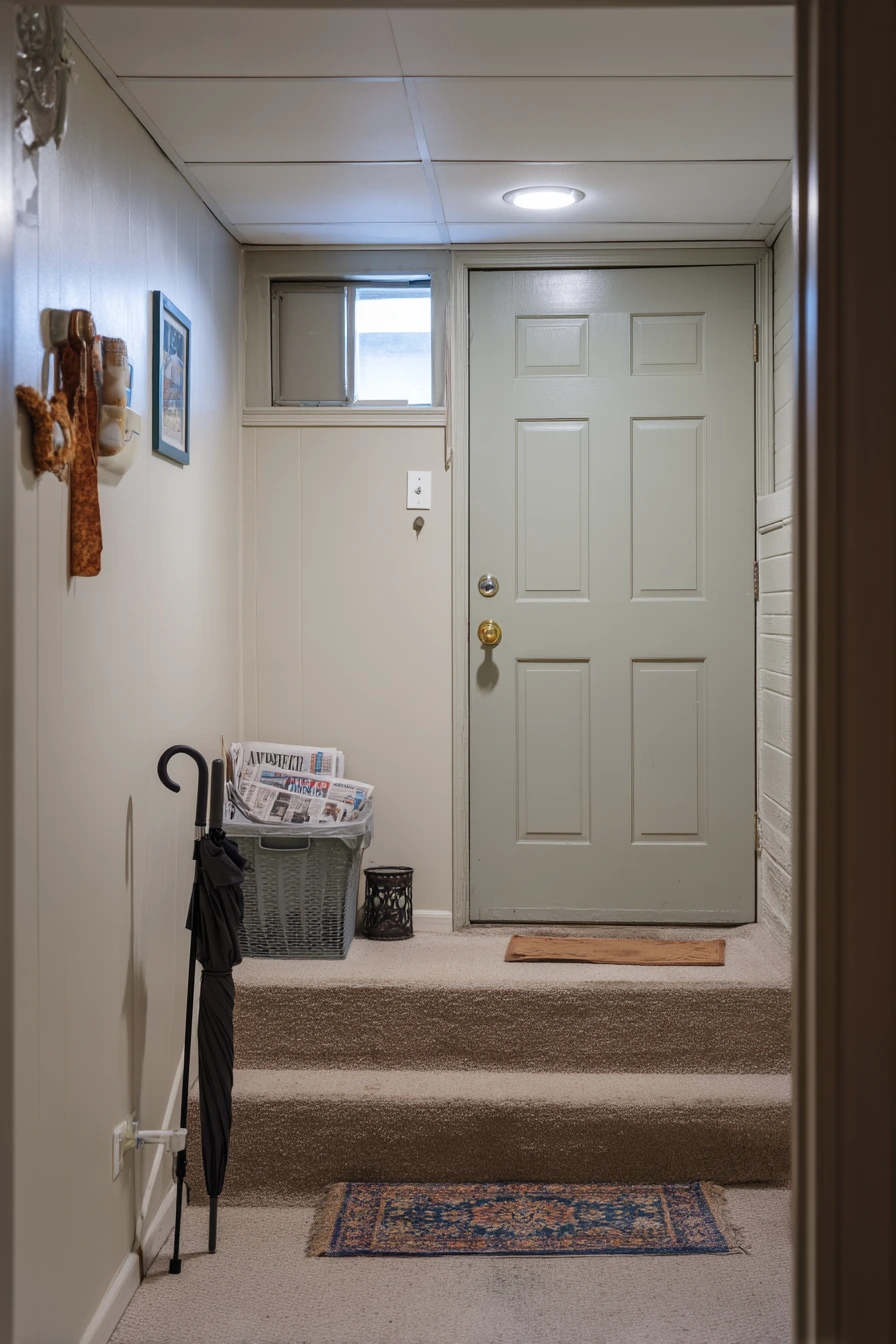

An older suburban basement stair landing often has a basic hollow-core door that feels dated. Painting it matte sage and adding fresh trim is a simple basement door idea that looks updated without a full renovation. Sage is soft, works with many flooring types, and hides small marks better than bright white.
This landing is also a functional spot. A doormat, umbrella stand, laundry basket, and newspaper stack need a plan so they do not block the stairs. Start with a small mat that fits the landing, then add one vertical storage piece like an umbrella stand or a narrow bin. Put a pet leash on a hook near the door so it is always in the same place. If faint drywall texture shows, that is fine. Keep paint finishes consistent so the walls still look clean in soft overcast window light.
How to style it: keep the palette calm. Sage on the door, white trim, and a few black or brass accents looks balanced. Use one basket for laundry and one for papers so stacks do not spread. If the landing is tight, choose wall hooks instead of a coat rack. Add a small picture or a simple calendar to make the space feel lived in, but avoid too many small items that collect dust.
- Choose a matte or eggshell sage to reduce glare and show fewer bumps.
- Replace old trim with simple square trim for a cleaner look.
- Add a leash hook and one key hook to stop daily searching.
- Use a lidded bin for newspapers and mail to cut visual clutter.
- Pick a low-profile doormat so the door clears it easily.
Pro Design Tip: Paint the door, jamb, and stop the same sage to make a basic hollow-core door look more solid and custom.
Budget Considerations: This is mostly paint and trim; keep your current door and spend on a better knob or lever if you want one upgrade.


6. Chalkboard Door for a Basement Playroom


A chalkboard-painted door is a practical basement door idea for a lively playroom. It turns a plain door into an activity spot, and it can hide fingerprints and small dents. White doodles and magnets add personality, and kids can change the look without new decor. In a room with toy baskets, tiny sneakers, picture books, and a half-built block tower, the chalkboard door fits the everyday feel.
To keep it from becoming visual noise, set a few rules. Use one section for drawing and another for notes, like a weekend plan or simple chores. Keep chalk in a lidded jar on a nearby shelf so it does not scatter. If wall decals are slightly crooked, that is fine, but try to limit the number so the door still feels like the feature. Warm afternoon light from the stair opening can highlight chalk dust, so keep a small microfiber cloth nearby for quick wipe-downs.
How to style it: pair the door with simple storage. Use matching toy baskets and a low book ledge so cleanup is fast. Add a small side table for snacks, like a juice box, but pick one that wipes clean. If you want magnets, use magnetic primer under the chalk paint or attach a thin metal sheet to the upper panel area. That way, you can display art without taping the walls.
- Use chalk markers for less dust and clearer lines.
- Keep a dedicated chalk container to avoid mess on the floor.
- Add a low shelf near the door for books and small toys.
- Set a simple “erase day” so the door stays readable.
- Use a washable rug to catch crumbs and chalk bits.
Pro Design Tip: Paint a thin border frame around the chalk area so it looks intentional and helps drawings stay within the space.
Budget Considerations: Chalk paint is low cost; you can upgrade later with a new lever or add magnetic primer only on the top half to save money.


7. Solid Wood Door Beside Wine Shelves in an Entertaining Nook


A solid wood door beside open wine shelves can make a basement entertaining nook feel warm and finished. Wood adds depth that painted doors do not always give, especially in basement light. When you have a decanter, two glasses, linen napkins, and a corkscrew left out, the door becomes part of the “bar wall” and helps the corner feel like a destination.
Think about what the door leads to. If it is a pantry, a small storage room, or a mechanical space, keep the outside polished and the inside organized. Soft amber lamp light can make the wood grain look rich, while cool dusk from a window well keeps the space from feeling too dark. If a folded sweater sits on a stool, add one hook or a small basket nearby so items do not land on the bar area.
How to style it: match the wood tone to one other element, like a stool, floating shelf, or console. Keep countertop items in a tray so the area looks neat even when used. Stack a few cookbooks or a small recipe stand on one shelf for a lived-in look. Use hardware that matches the rest of the basement, such as black or aged brass, and consider a latch that feels substantial.
- Use a solid wood or veneer door for better weight and sound control.
- Keep bar tools in one tray to avoid scattered items.
- Add a small lamp to warm up the wood tone at night.
- Use a wine shelf layout that leaves breathing room for glassware.
- Choose hardware that matches nearby shelving brackets or light fixtures.
Pro Design Tip: Repeat the door wood tone in one other spot, like a floating shelf, so the door looks like part of a designed set.
Budget Considerations: Solid wood can be expensive; consider a wood-look fiberglass or veneer slab door and spend on good hardware for a similar feel.


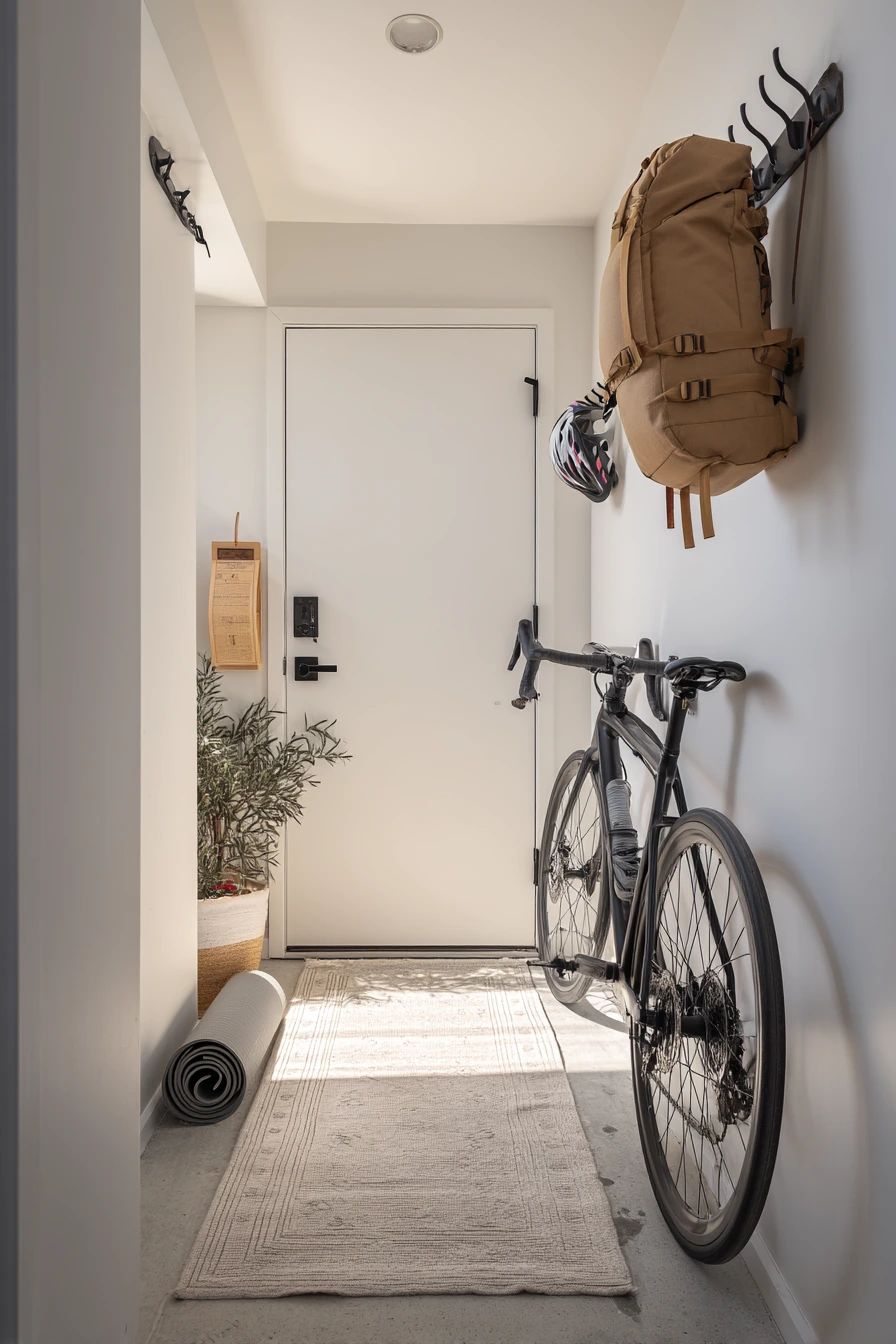
8. Space-Saving Door for a Narrow Basement Corridor


A narrow basement corridor needs a door that does not steal walking space. A space-saving door with a slim black handle keeps things simple and easy to use. In a compact home, this is the kind of choice that makes the hallway feel airy instead of cramped, especially with natural stairwell light.
First, decide what “space-saving” means in your layout. If you cannot change framing, a reverse-swing door or an outswing door can free up corridor space, but check local code and clearance. If you can remodel, a pocket door is the top option. Keep the hallway organized with wall hooks, a compact shoe tray, and a defined spot for a bike helmet and rolled yoga mat. A mail pile can take over fast, so add a small wall file or a basket with a lid.
How to style it: use one pale rug runner to soften footsteps and brighten the space, but choose a low-pile rug so crumbs are easy to vacuum. Add one plant for gentle shadows, and keep the pot simple. Use matching black hooks and the same slim handle style on nearby doors to reduce visual noise. If the corridor ends at the door, consider a small art print or mirror on the door-facing wall to make the end view nicer.
- Use a slim handle that does not snag clothing in tight hallways.
- Add wall hooks to keep items off the floor.
- Choose a shallow shoe tray so the path stays clear.
- Use a wall basket for mail to prevent piles on the floor.
- Pick a light runner rug that is easy to shake out and clean.
Pro Design Tip: Keep door casing simple and paint it the same color as the wall to reduce contrast and make a narrow corridor feel wider.
Budget Considerations: If you cannot change the door type, a slim lever, new hinges, and a fresh paint job can improve function and style for low cost.

9. Sturdy Workshop Basement Door with Iron Latch

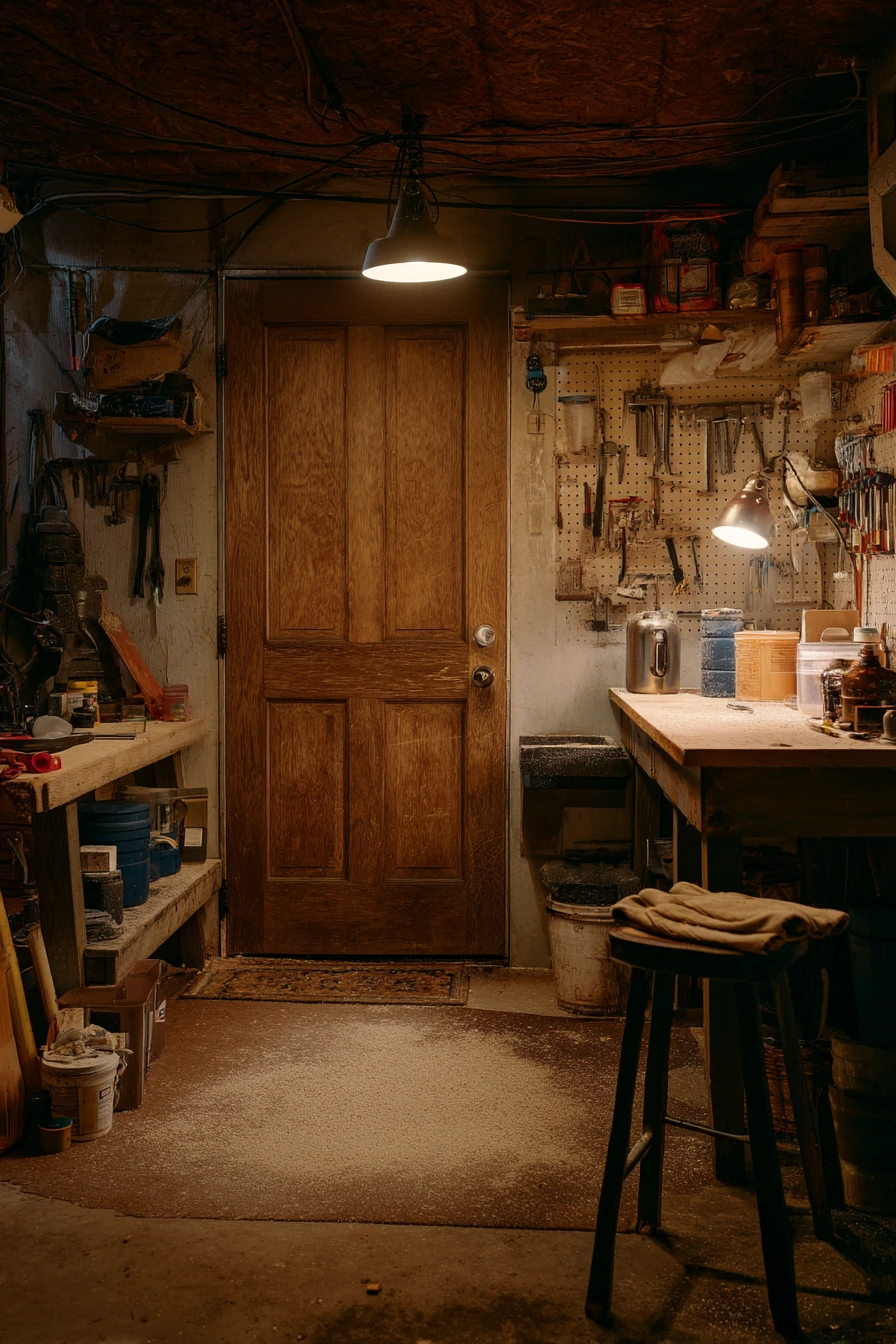
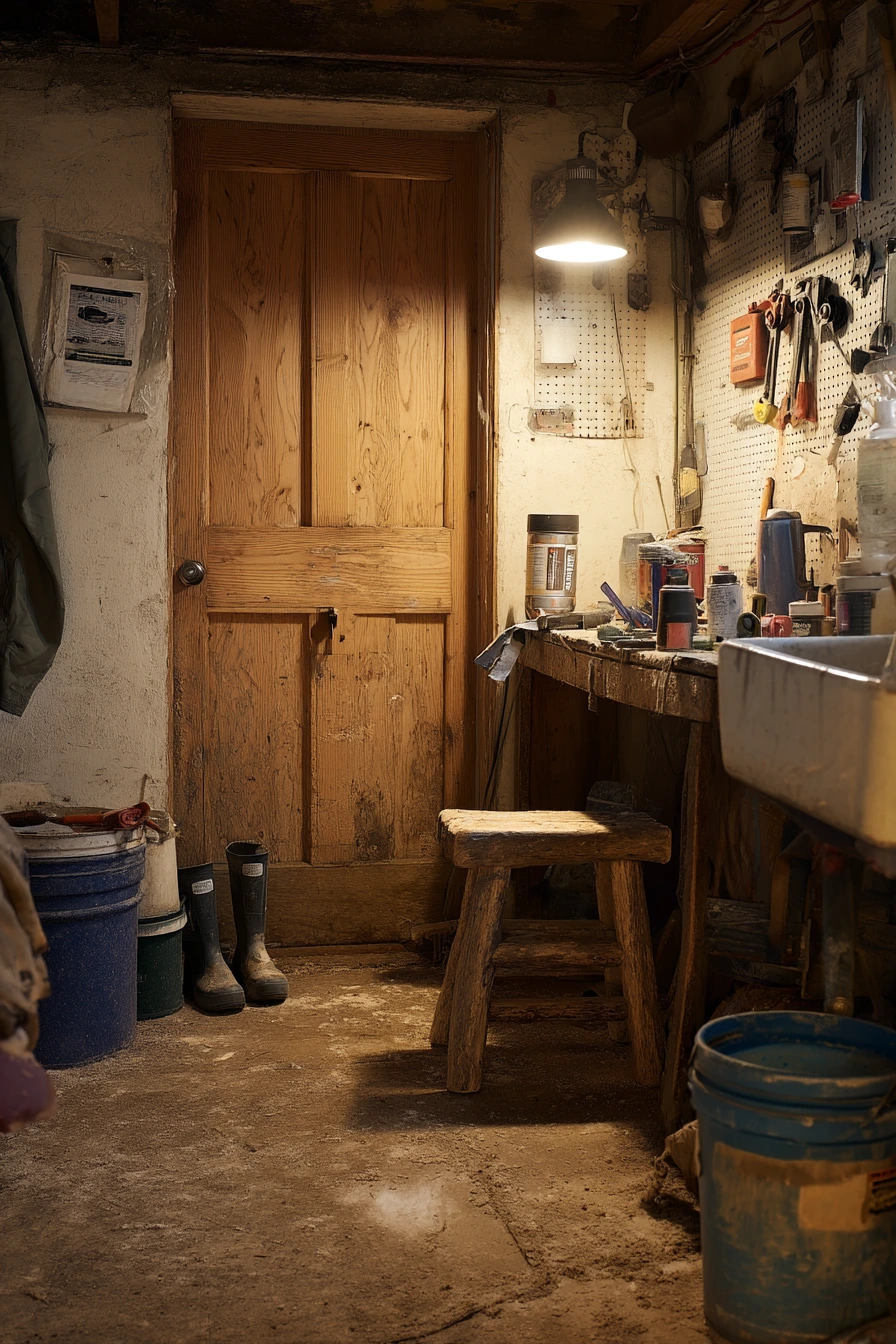
A basement workshop needs a door that can handle bumps, dust, and daily use. A sturdy wood door with a simple iron latch fits a rugged space with pegboard tools, a utility sink, and a bench that always has something on it. This door style feels honest and practical, and it helps keep noise and mess away from the rest of the basement.
Function comes first. If you use loud tools, consider a solid-core door and weatherstripping to reduce sound. Add a sweep at the bottom to keep sawdust from drifting into the hallway. Keep the area near the door clear so you can carry lumber safely. Items like gloves, a thermos, and one folded rag can stay out, but give them zones. A small hook strip near the door is great for hearing protection and a dust mask. Use a warm task lamp plus dim daylight so the workspace feels safe and clear.
How to style it: keep it simple and durable. Choose a door finish that does not mind scuffs, like a stained wood or a dark paint. Use iron hardware that matches tool storage and pegboard hooks. If paint cans and rags are out, add a metal tray or a rolling cart so they are not on the floor. A small stool can live under the bench when not in use.
- Install weatherstripping to limit dust and noise transfer.
- Add a door sweep to keep sawdust from spreading.
- Use an iron latch that is easy to open with work gloves.
- Keep a hook near the door for safety gear and a shop apron.
- Add a washable mat by the utility sink to catch drips.
Pro Design Tip: Paint the inside face of the door a lighter color than the workshop walls so you can see dirt, grease, and wear early and clean it fast.
Budget Considerations: Reuse an old solid door from salvage and add an affordable iron latch; spend extra only if you need sound control or fire-rated requirements.

The best basement door ideas are the ones that match how your family uses the space. A navy storage door can calm a messy landing, while a flush white door with black hardware keeps a hallway clean and simple.
If your basement is busy, focus on easy function first, like levers, clear walkways, and storage that fits behind the door. Then add small styling details, like baskets, a runner, or matching hardware finishes.
Before you buy anything, measure your clearance, think about noise needs, and decide what you want to hide. Small changes like paint, trim, and new handles can make a big difference.
FAQ
1. What is the best basement door for saving space? Pocket doors and sliding barn doors save the most floor space. If you cannot reframe, consider reversing the swing or using an outswing door where allowed.
2. Should basement doors be solid core? Solid-core doors are better for sound and feel sturdier. They are a good choice for media rooms, workshops, and utility areas.
3. What paint finish works best on basement doors? Satin or eggshell is easy to clean and hides small flaws. Matte can look great but may show marks more easily in high-touch areas.
4. How do I make a hollow-core door look nicer? Paint it a fresh color, upgrade the lever or knob, and replace old trim. Painting the door and trim the same color can also help it look more custom.
5. Are barn doors good for basement bathrooms? Barn doors do not seal tightly, so they are not ideal for bathrooms where you need privacy and sound control. A hinged or pocket door is usually better.
6. How can I hide a utility room door in a finished basement? Use the same wall color on the door and trim, keep the profile simple, or integrate the door into built-in shelving for a concealed look.
7. What hardware finish is easiest to maintain in a basement? Matte black and brushed brass hide fingerprints well. Choose a finish that matches nearby hooks, lights, or shelving brackets for a consistent look.