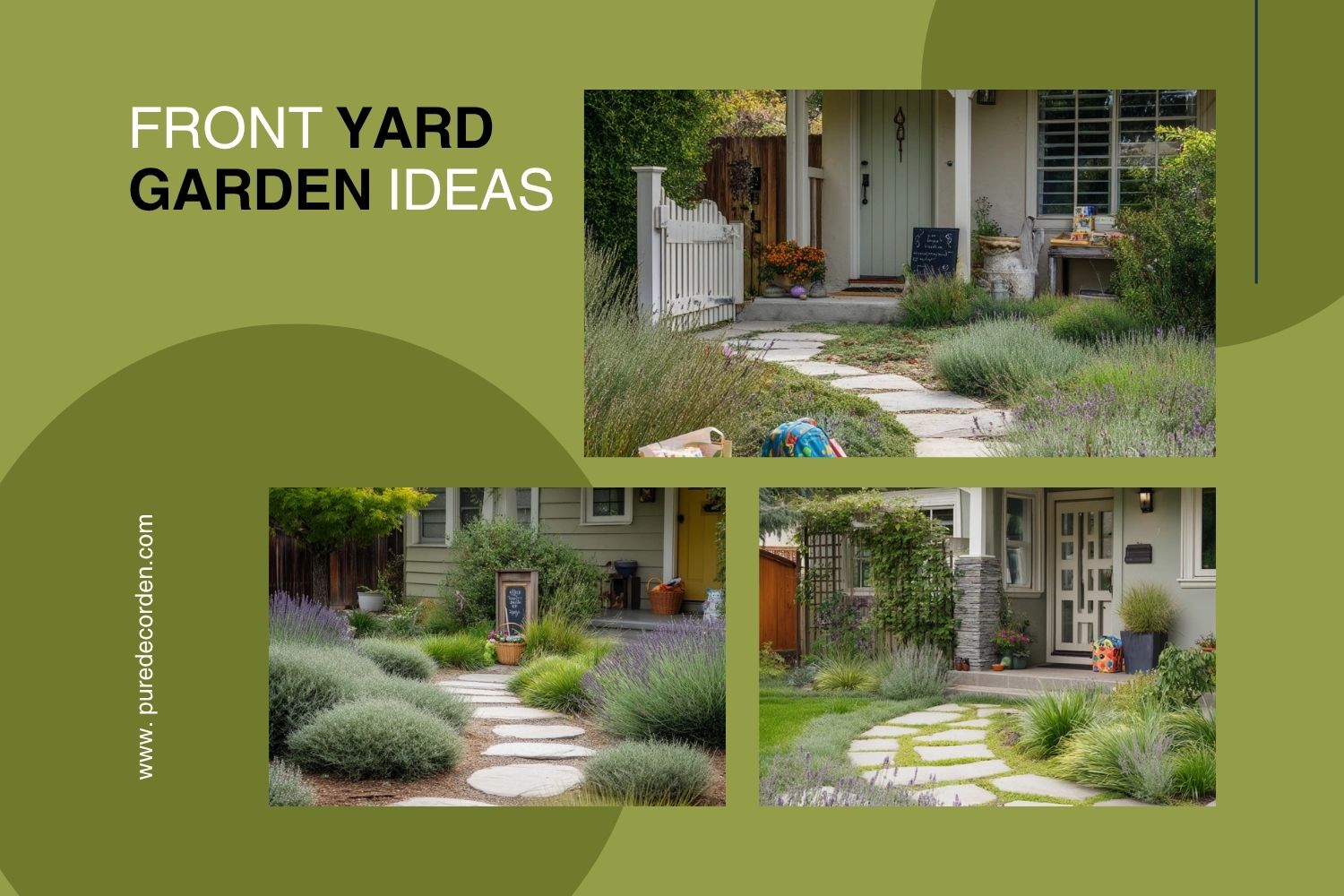

Front yard garden ideas can make your home look welcoming, add color, and improve curb appeal without needing a big yard.
This post shares 10 simple front yard garden layouts inspired by real life scenes, from cottage borders with hydrangeas and lavender to compact city planters and drought-tolerant gravel beds.
Each idea includes easy plant picks, small styling details, and a clear plan so you can copy the look, even if you are busy, new to gardening, or renting.
Use these designs to choose a style that fits your light, your time, and your budget, then build a front yard that feels lived in and cared for.
1. Cottage Walkway Garden With Hydrangeas and Roses


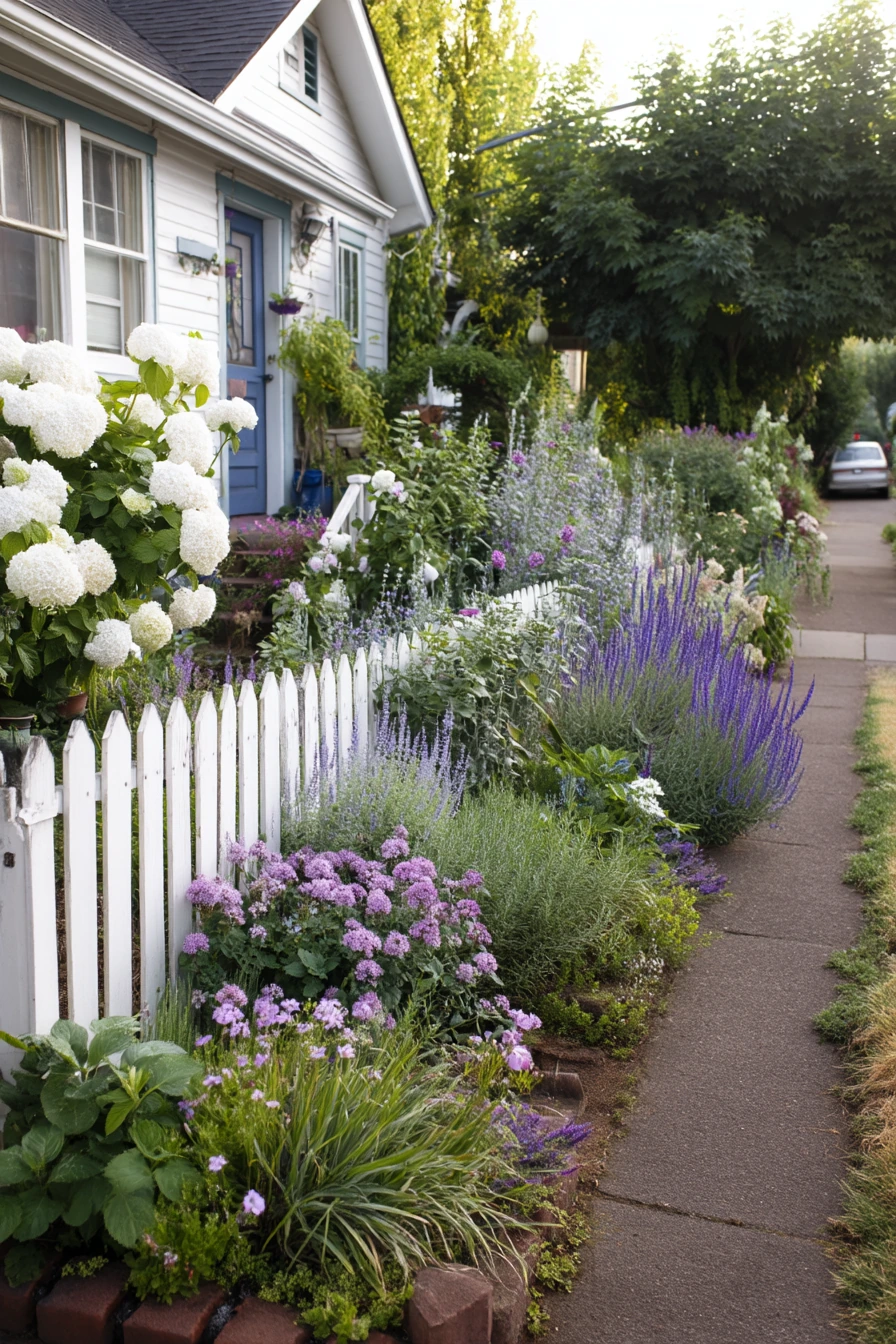
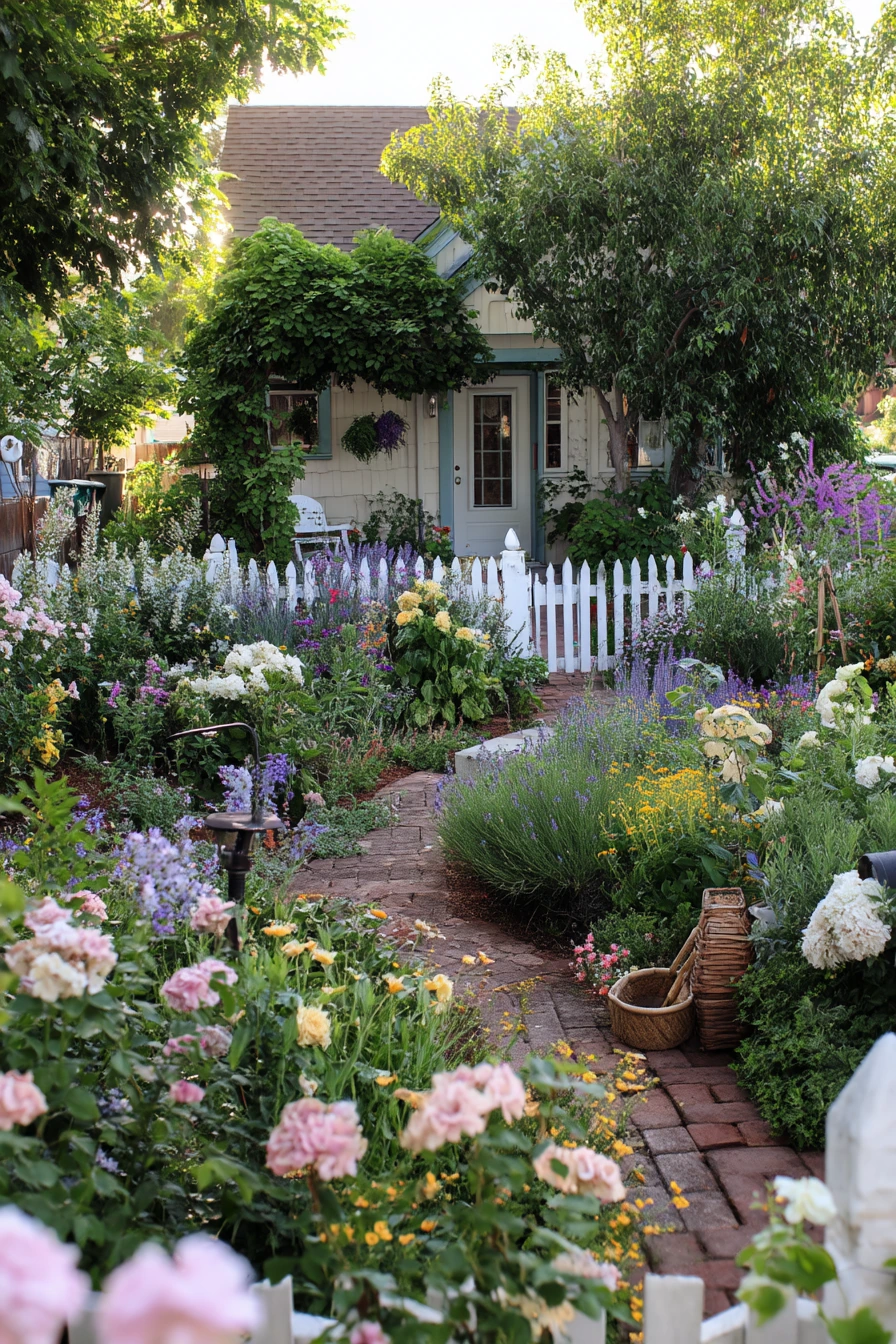
A narrow brick walkway is perfect for a layered cottage garden. Keep the path clear and let the plants soften the edges. Start with taller shrubs like hydrangeas toward the fence, then add mid-height blooms like salvia, and finish with low edging plants like lavender. Climbing roses on a white picket fence give height without taking up bed space.
To make it feel like a real family front yard, add a few practical touches near the steps: a woven hose basket for quick watering, muddy clogs that can stay outside, and a bench with an open garden journal. These small details make the garden look used, not staged, and they also help you stay consistent with care.
How to style it: repeat colors so it looks calm from the sidewalk. For example, use purple (lavender, salvia) in several spots, then let hydrangeas carry the big blocks of color. Place the kid’s soccer ball near the mailbox area, not in the middle of the garden, so the yard still looks tidy. Water early in the morning so foliage dries fast and stays healthy.
- Plant hydrangeas 3 to 4 feet apart so they can fill in without crowding.
- Use lavender along the path edge to keep feet off the soil.
- Train climbing roses with soft ties to avoid cane damage.
- Mulch well to keep weeds down in tight borders.
- Add a small bench so you can pause and spot problems early.
Pro Design Tip: Keep the tallest plants along the fence line and step down in height toward the walkway so the border reads clearly from the street.
Budget Considerations: Hydrangeas and roses can cost more in large sizes; buy smaller plants and let them grow, or swap in budget-friendly shrubs like spirea for quick fill.
2. Compact Urban Front Yard With Raised Cedar Planters


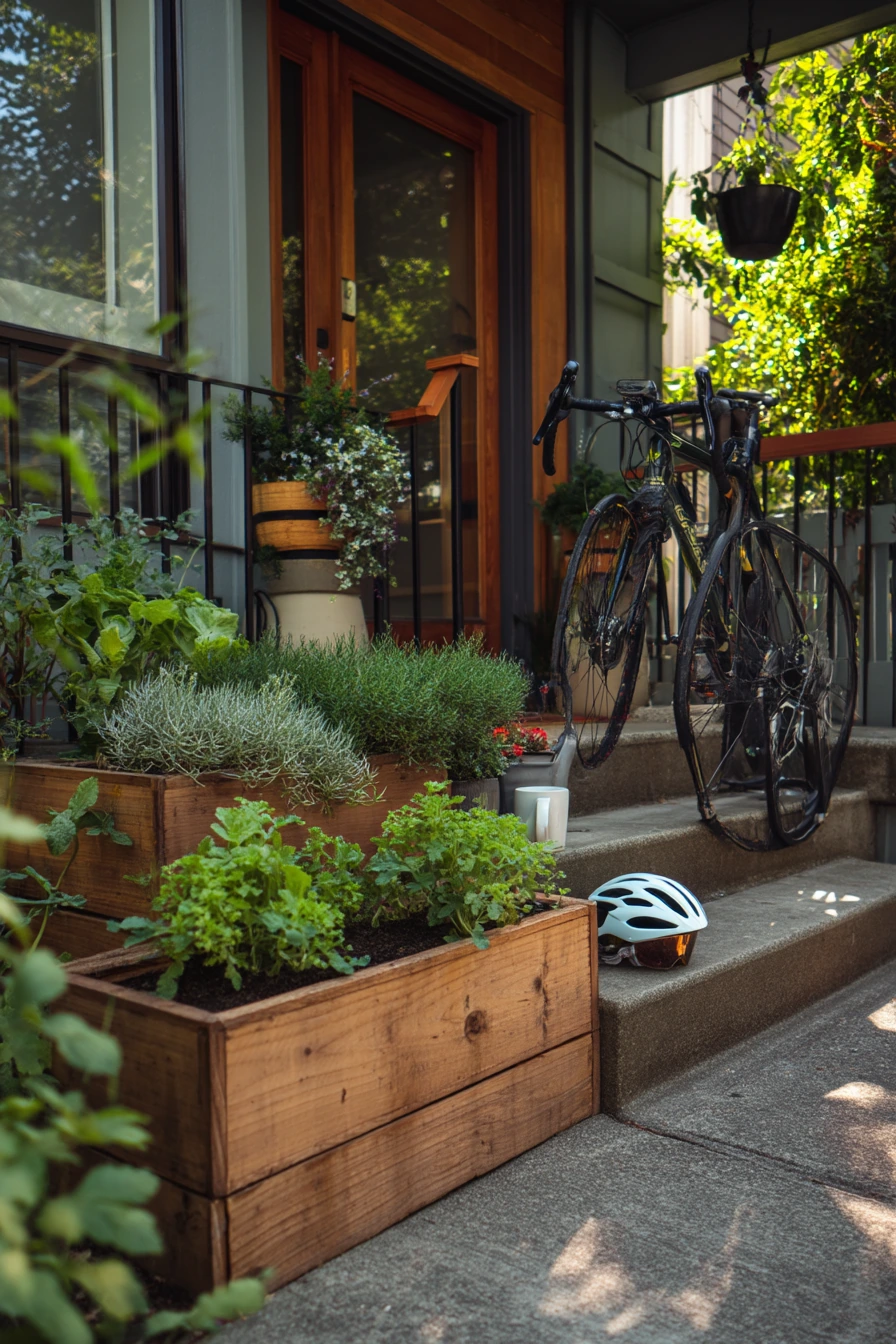
In a compact city front yard, raised cedar planters give you clean lines and better soil fast. Arrange planters to frame the stoop like a green welcome mat. Use boxwood for structure, then fill gaps with herbs you can snip on the way inside. Dwarf fruit trees in containers or small beds add height and a useful harvest without needing a big lawn.
Keep it renter friendly by relying on pots for color. Choose a few tough bloomers that handle heat off pavement, and group them near the steps for easy watering. Everyday items make the space feel honest and useful, like a bicycle helmet on the rail, a ceramic mug on the steps, and a simple charging cable tucked safely inside the doorway.
How to style it: use a tight color palette so the small space does not feel busy. Try white and purple flowers, then match pots in one neutral color. Place herbs closest to the path so you brush them and smell them. Add a narrow mat at the stoop to catch dirt and keep the entry neat. Water in the early morning for crisp shadows and less evaporation.
- Use cedar or composite planters for a clean look and long life.
- Pick one evergreen shape, like round boxwood, and repeat it.
- Grow basil, thyme, and rosemary for fragrance and easy care.
- Choose dwarf fruit trees like lemon or fig if your climate allows.
- Set drip trays under pots to protect steps and sidewalks.
Pro Design Tip: Keep the tallest elements at the sides of the stoop and the lowest near the center so the entry looks wider and more balanced.
Budget Considerations: Raised cedar planters add up; start with two matching planters by the steps, then add more over time using affordable fabric grow bags hidden behind pots.

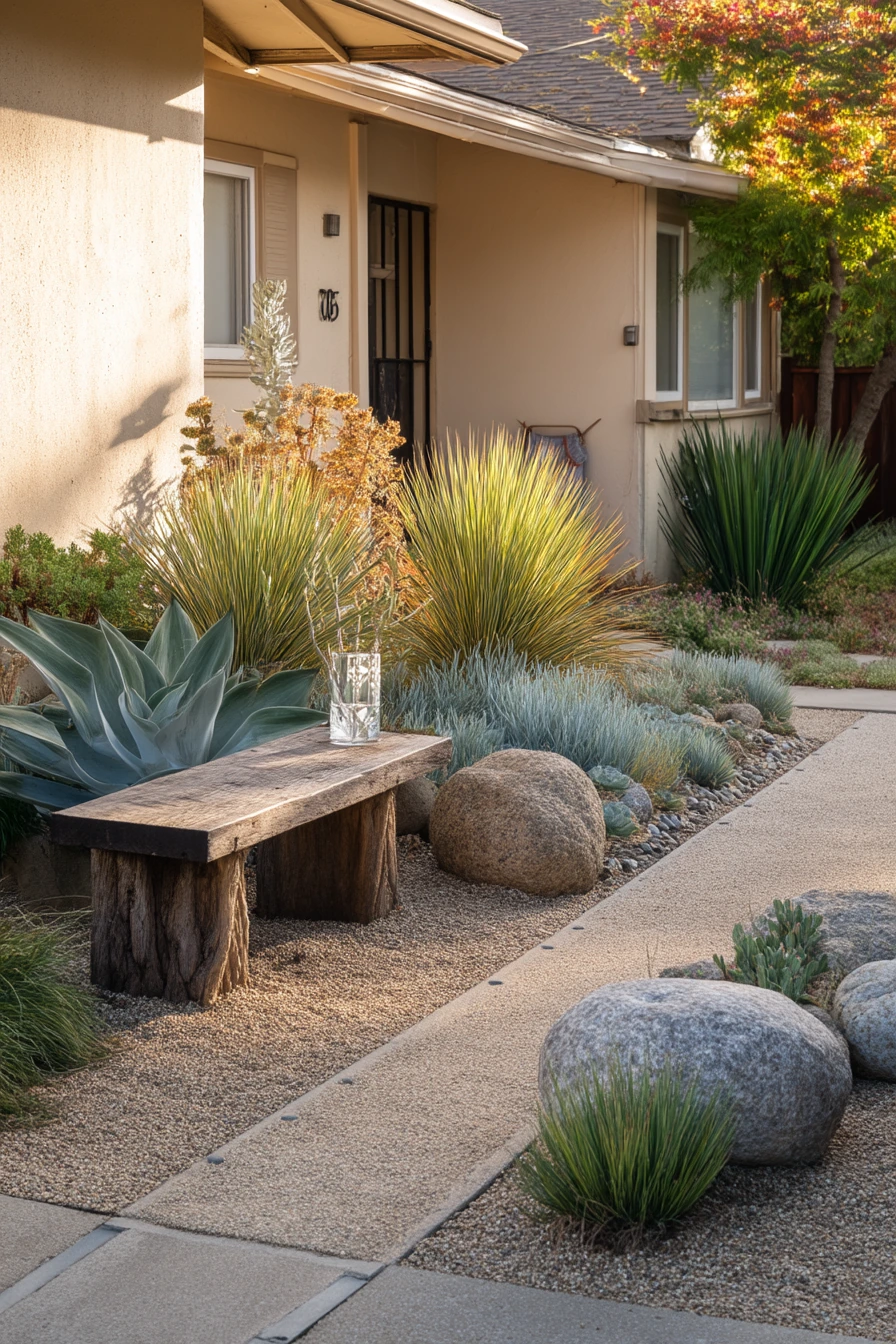
3. Drought-Tolerant Gravel Garden With Agave and Yucca
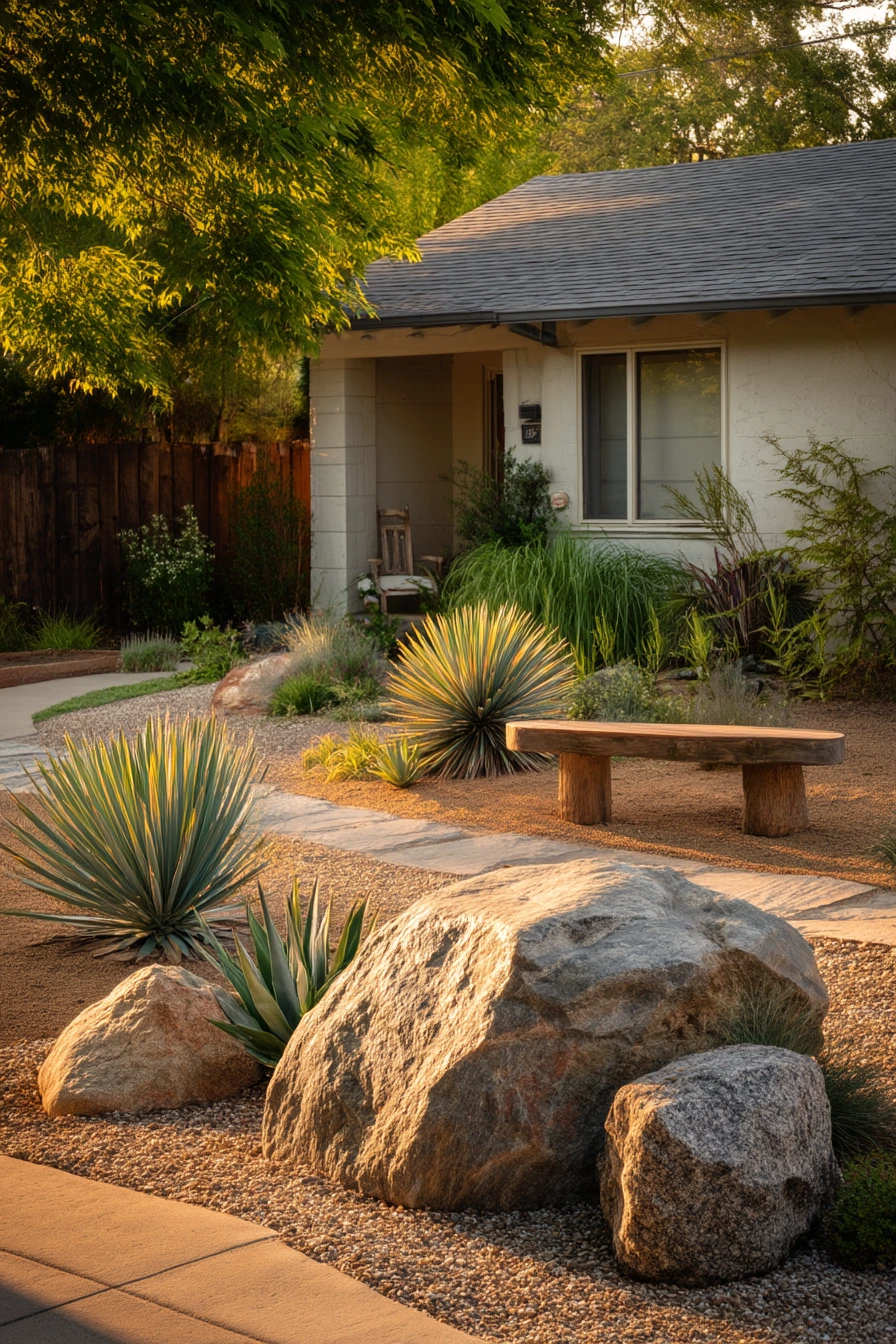

A sun-baked front yard can still look polished with a gravel garden. Use gravel as the main ground cover, then place bold plants like agave and yucca as living sculptures. Blue fescue adds a soft, grassy texture and helps the planting feel less spiky. A few sculptural boulders along the path make the layout feel planned and also reduce mowing.
Make the yard easy to maintain with visible drip irrigation lines. This is not messy, it is smart. Run the line under gravel where you can, and leave short sections visible near plants so you can check for leaks. Add a small bench near the path with gardening gloves so you can do quick weeding. A half-full water glass and a folded market tote on the porch keep the look grounded and lived in.
How to style it: repeat the same two or three plant shapes across the yard. For example, use three agaves in a triangle, then echo that with three clumps of blue fescue. Keep boulders in odd numbers so it feels natural. Choose gravel that matches your house color, like warm tan for ranch homes. Edge the gravel with metal or stone so it stays tidy after rain.
- Lay weed barrier only where needed, then cover with 2 to 3 inches of gravel.
- Space agave and yucca for mature size to avoid crowding.
- Use drip irrigation with a simple timer for consistent watering.
- Mix in a few flowering drought plants for seasonal color.
- Rake gravel lightly every month to refresh the surface.
Pro Design Tip: Create a clear path line first, then place boulders and plants to guide the eye toward the front door.
Budget Considerations: Boulders and gravel delivery can be pricey; save money by using smaller local stone and placing one statement boulder instead of many.

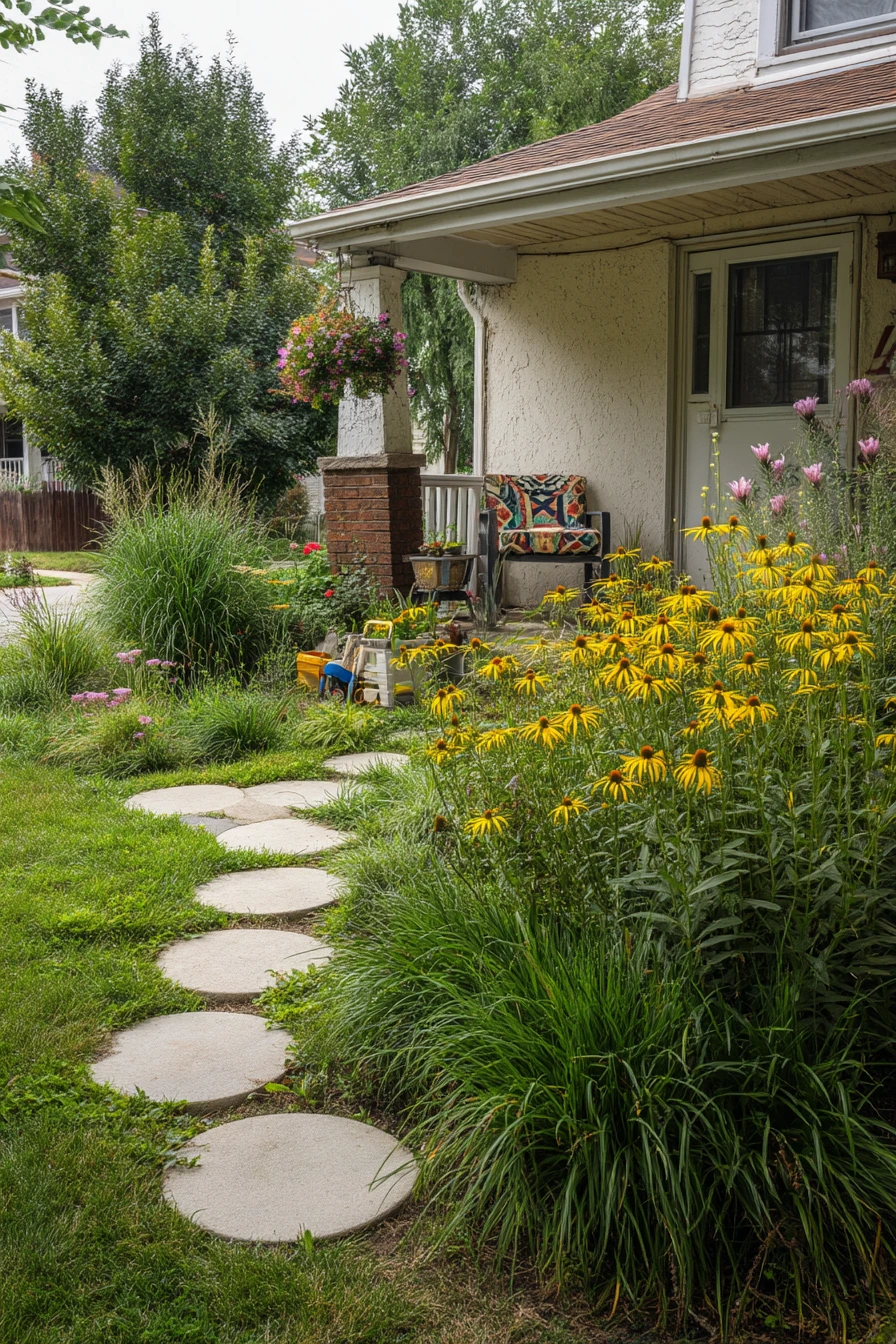
4. Kid-Friendly Pollinator Front Yard With Curved Stepping Stones


A front yard can be both playful and good for nature. Curved stepping stones create a path kids will actually use, which protects plants from foot traffic. Fill the beds with tough, bright flowers that draw bees and butterflies, like daylilies, coneflowers, and bee balm. Add a small native grass border for movement and a soft edge near the lawn.
Keep the space organized with a clear landing zone near the front door. A toy basket by the entry keeps small items off the walkway. A scooter can rest on the lawn side, not in the planting bed. Chalk marks on the path are fine, but choose stepping stones with a texture that is easy to rinse. A slightly wrinkled throw on a porch chair makes the space feel used and welcoming.
How to style it: aim for color in repeated clusters so the garden looks calm from the street. Group plants in threes or fives instead of single plants scattered everywhere. Pick one main flower color and one accent color, then let greenery fill the rest. Add a small sign or stake that says pollinator friendly near the grass border. Use mulch to keep mud down during kid play.
- Set stepping stones level with the soil to prevent trips.
- Choose long-blooming flowers for steady color.
- Leave a small open lawn patch for play and parking scooters.
- Avoid pesticides so pollinators stay safe.
- Add a shallow water dish with stones for bees to land on.
Pro Design Tip: Use a wider curve near the door so there is room for strollers, kids, and packages without stepping into the flower bed.
Budget Considerations: Stepping stones can be expensive; use budget pavers or cut flagstone pieces and space them with mulch between for a similar look.

5. Elegant Townhouse Entry With Symmetrical Urn Planters


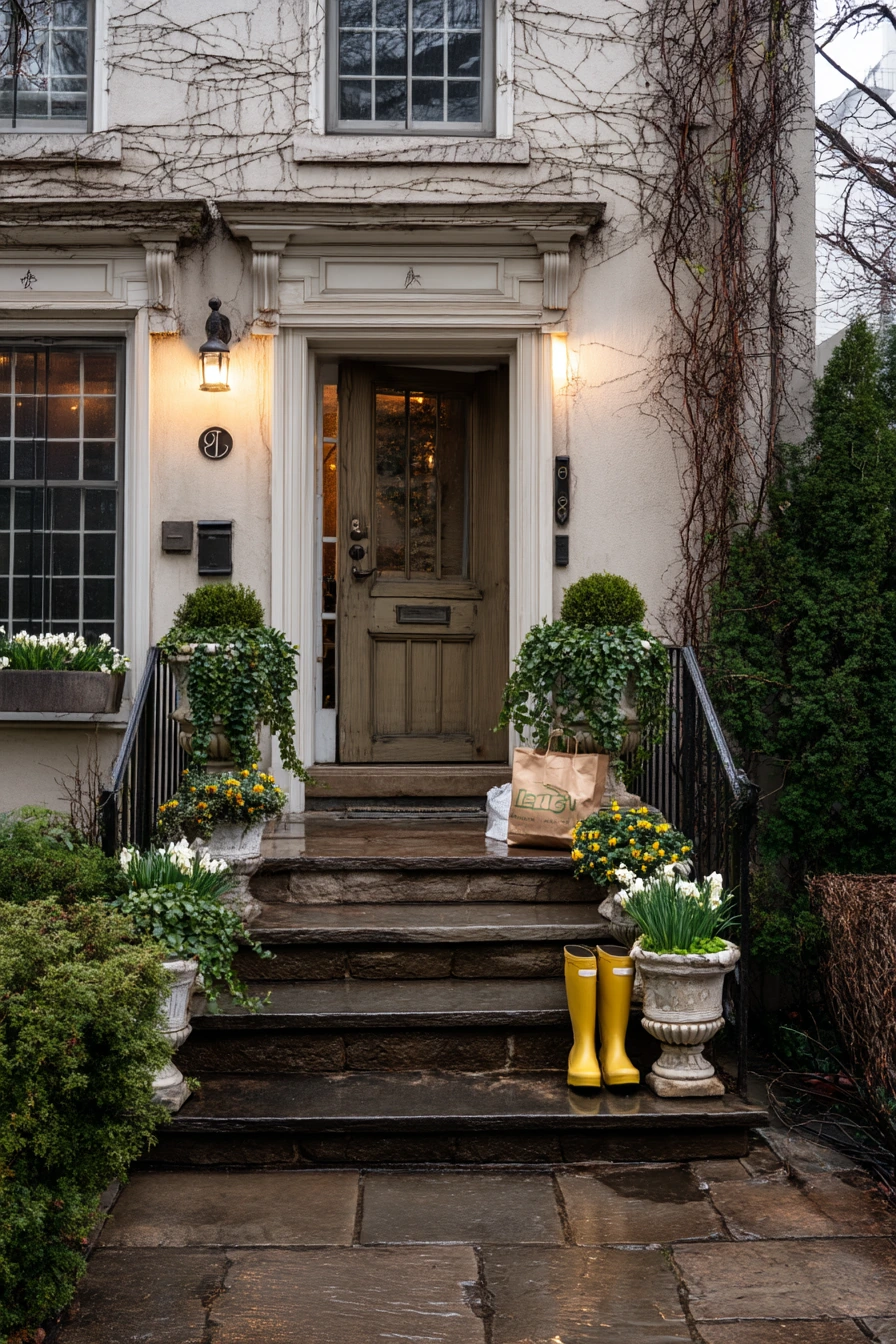
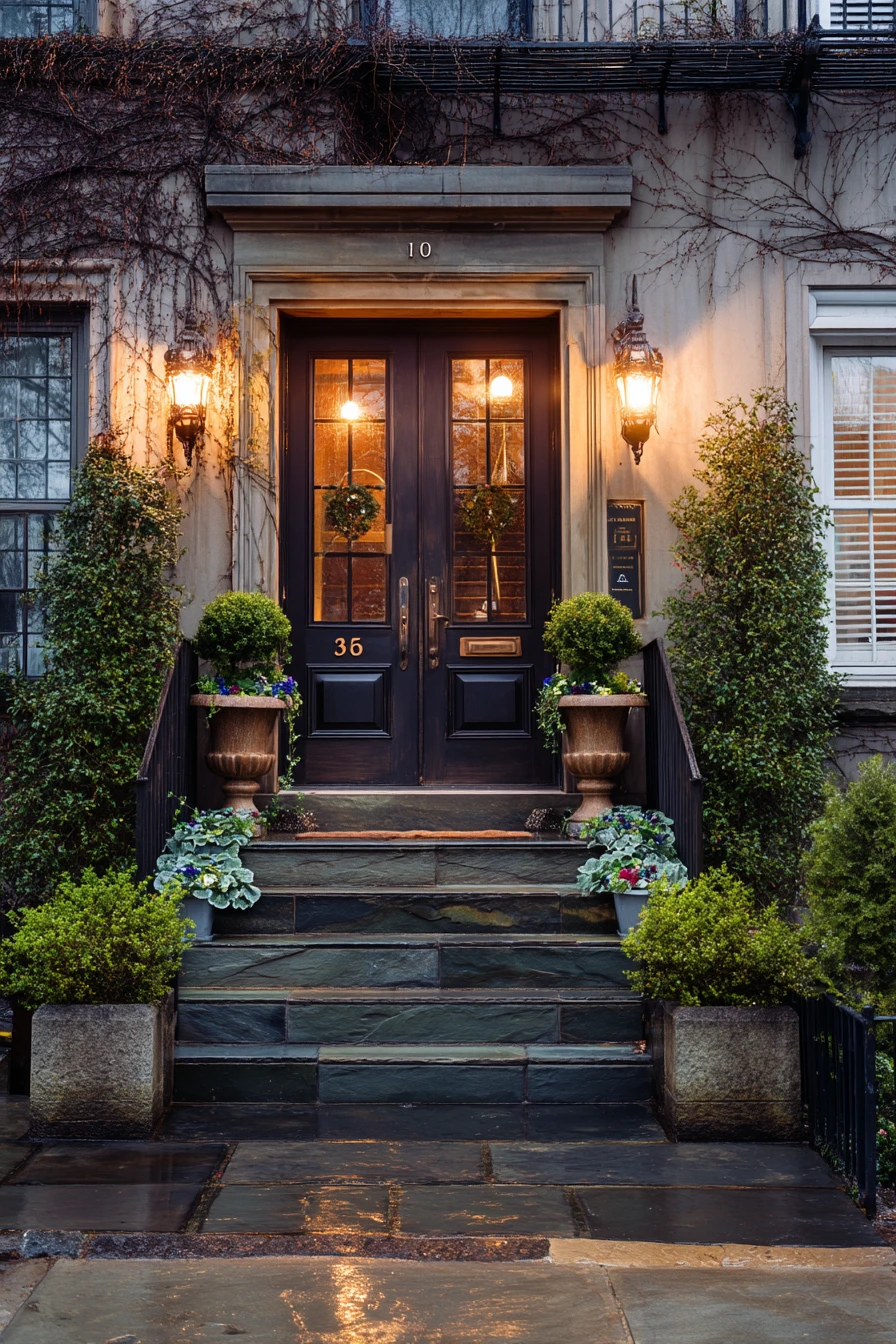
An elegant townhouse entry looks best when it feels balanced. Place two matching urns on each side of the stone steps for a clean, symmetrical look. Fill them with ivy for spill, pansies for color, and ornamental kale for texture. Add clipped evergreens nearby to keep the entry looking neat even when flowers fade.
This style works because it mixes polish with real life. Brass house numbers read well from the street and add a warm tone. Mail tucked under a planter keeps the steps tidy. Rain boots by the door and a grocery bag on the landing make the scene feel normal, not like a showroom. If your porch lamp is on in the morning, the warm light mixed with cool daylight makes the entry feel cozy.
How to style it: pick two or three colors and stick with them. Deep purple kale, white pansies, and dark green ivy is a classic set. Keep the same pot height on both sides, and rotate the urns so the fullest side faces the street. Sweep the steps often so the area stays crisp. If wind knocks pots, add gravel in the bottom for weight and better drainage.
- Use a thriller, filler, spiller mix in each urn for a full look.
- Trim ivy tips so it stays neat and does not hide house numbers.
- Choose evergreens that match your home style, like boxwood or yew.
- Add a simple doormat in a solid color for a clean base.
- Swap seasonal flowers to keep the entry fresh year round.
Pro Design Tip: Match the scale of your urns to the doorway, bigger is often better for tall townhouse entries.
Budget Considerations: Large urns can cost a lot; use lightweight resin planters that look like stone, and spend more on quality evergreens that last for years.
6. DIY Front Yard Makeover With Recycled Brick Edging

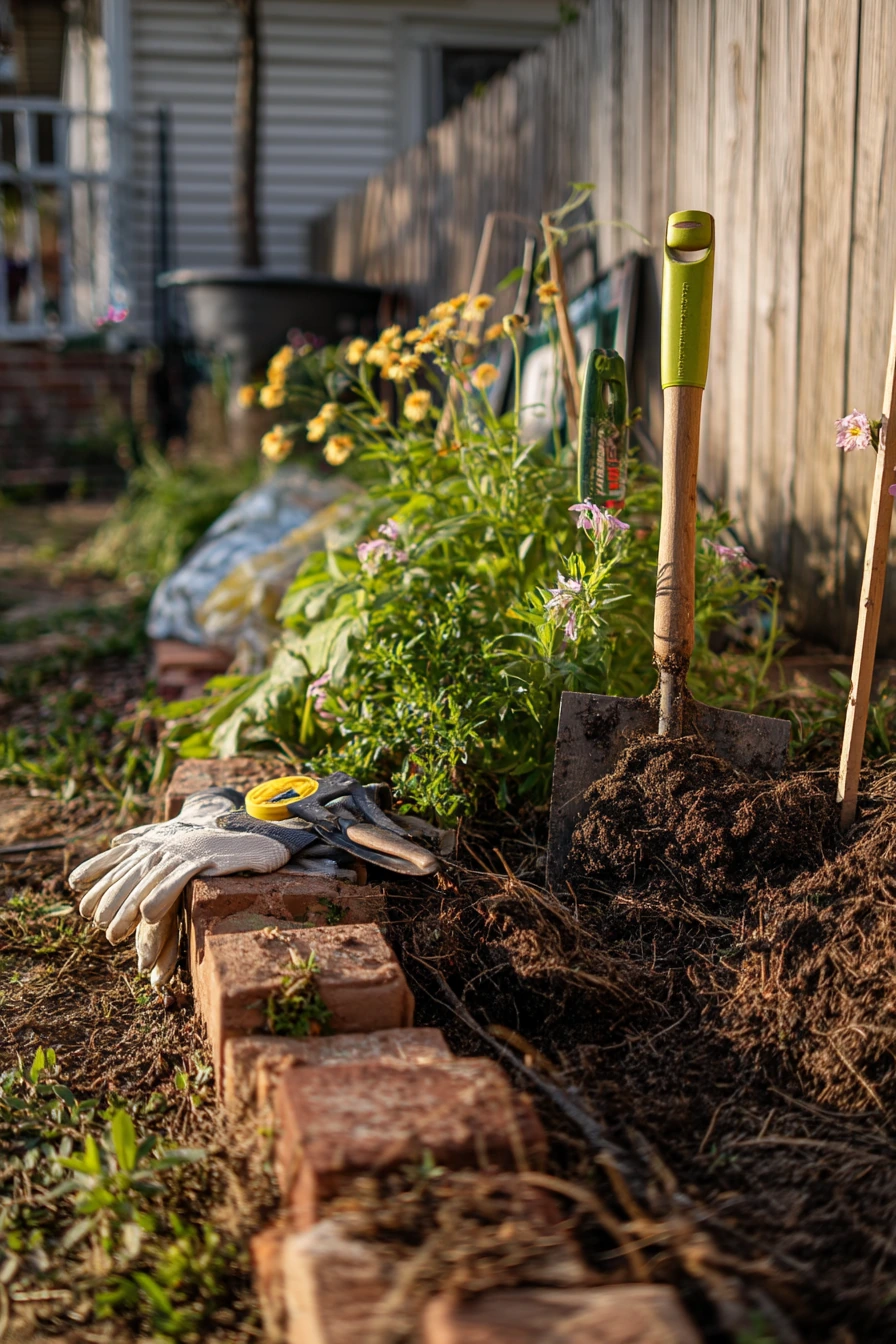
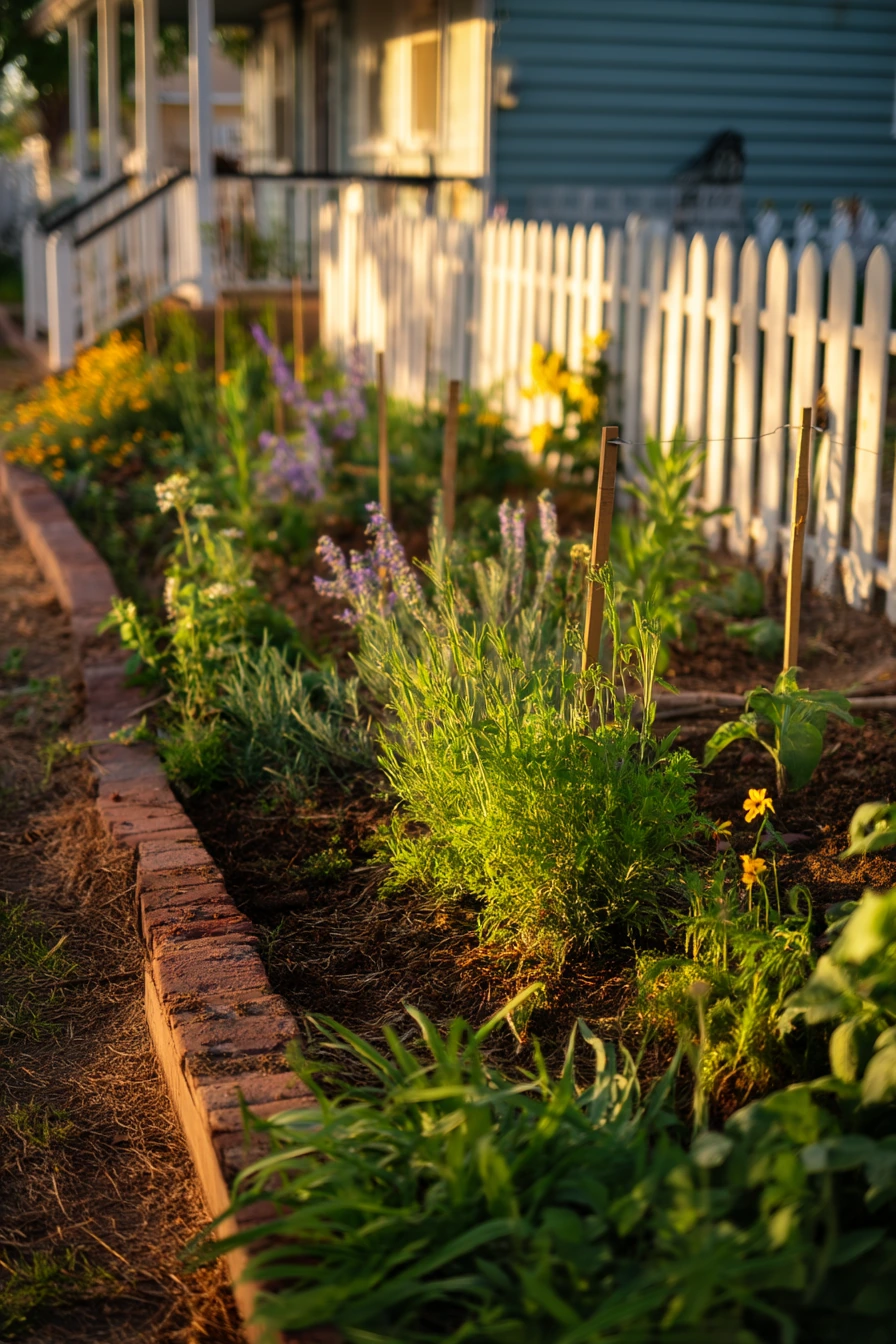
A DIY front yard makeover can start with one strong detail: recycled brick edging. It gives a clean line between beds and lawn, and it keeps mulch from spilling onto the sidewalk. Use native perennials for the main planting so the garden handles your local weather with less work. Fresh mulch from a wheelbarrow instantly makes the yard look cared for, even before plants fill in.
This is the kind of front yard that looks like a weekend project in progress, in a good way. Wood stake labels help you remember what you planted and where. A half-used bag of soil and paint-splattered gloves are normal when you are building beds. A tape measure keeps spacing consistent, and a garden rake leaning by the fence makes it easy to smooth mulch and level soil.
How to style it: plan the bed shape first with a garden hose on the ground, then set bricks along that line. Keep curves gentle so mowing is easy. Place taller perennials toward the back and low mounding plants near the edge. Repeat two or three plants across the bed to make it look intentional. Add one small accent, like a simple house number stake or a solar light, but do not overdo decor.
- Dig a shallow trench so bricks sit level and do not shift.
- Use cardboard under mulch to reduce weeds without chemicals.
- Pick native perennials that match your sun and soil.
- Water deeply after planting, then reduce watering as roots grow.
- Label plants until you learn their shapes and seasons.
Pro Design Tip: Keep edging lines crisp and consistent, because clean borders make even small plants look like a finished design.
Budget Considerations: Recycled bricks are often cheap or free; check local reuse centers, and mix similar colors so the edge looks unified.
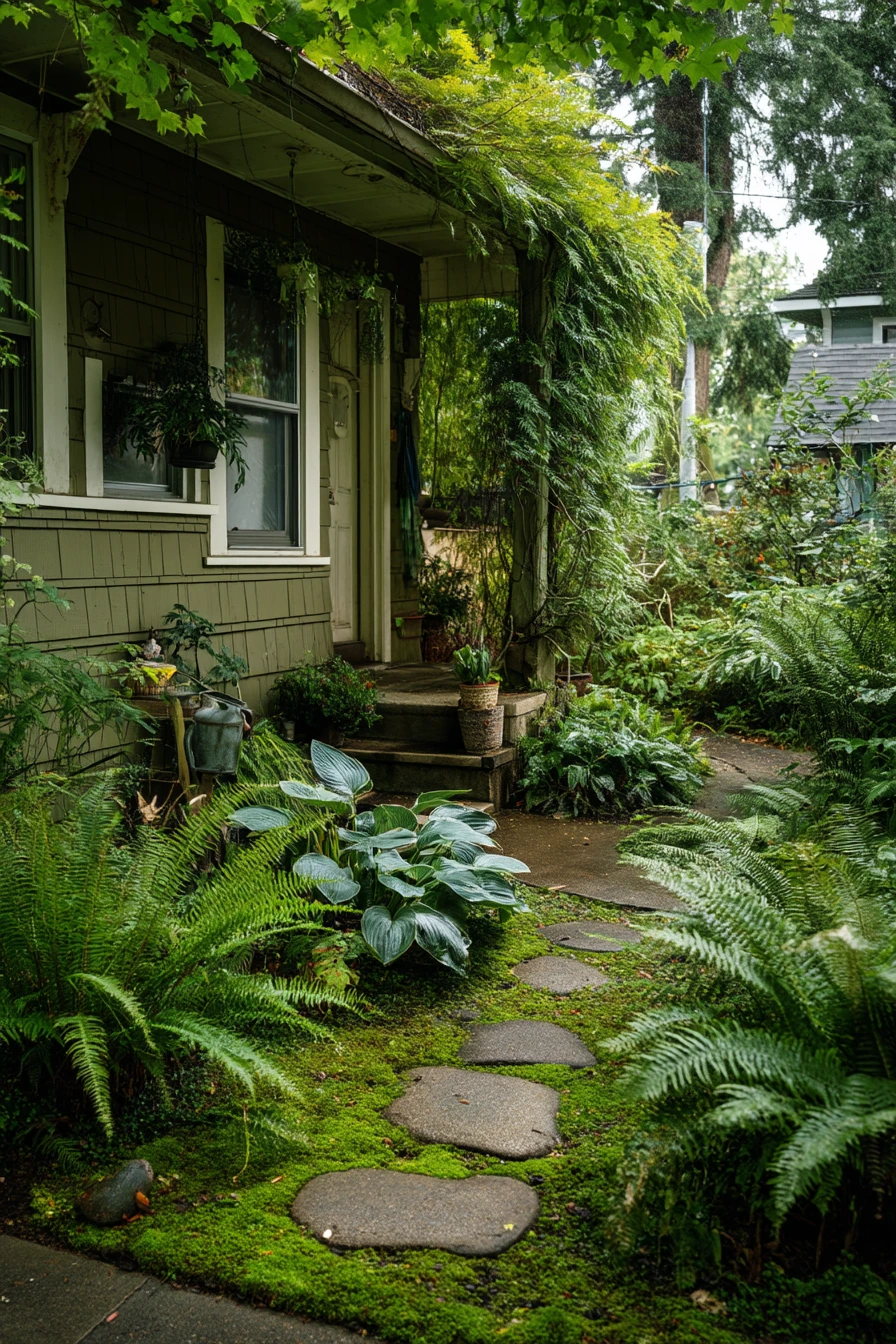
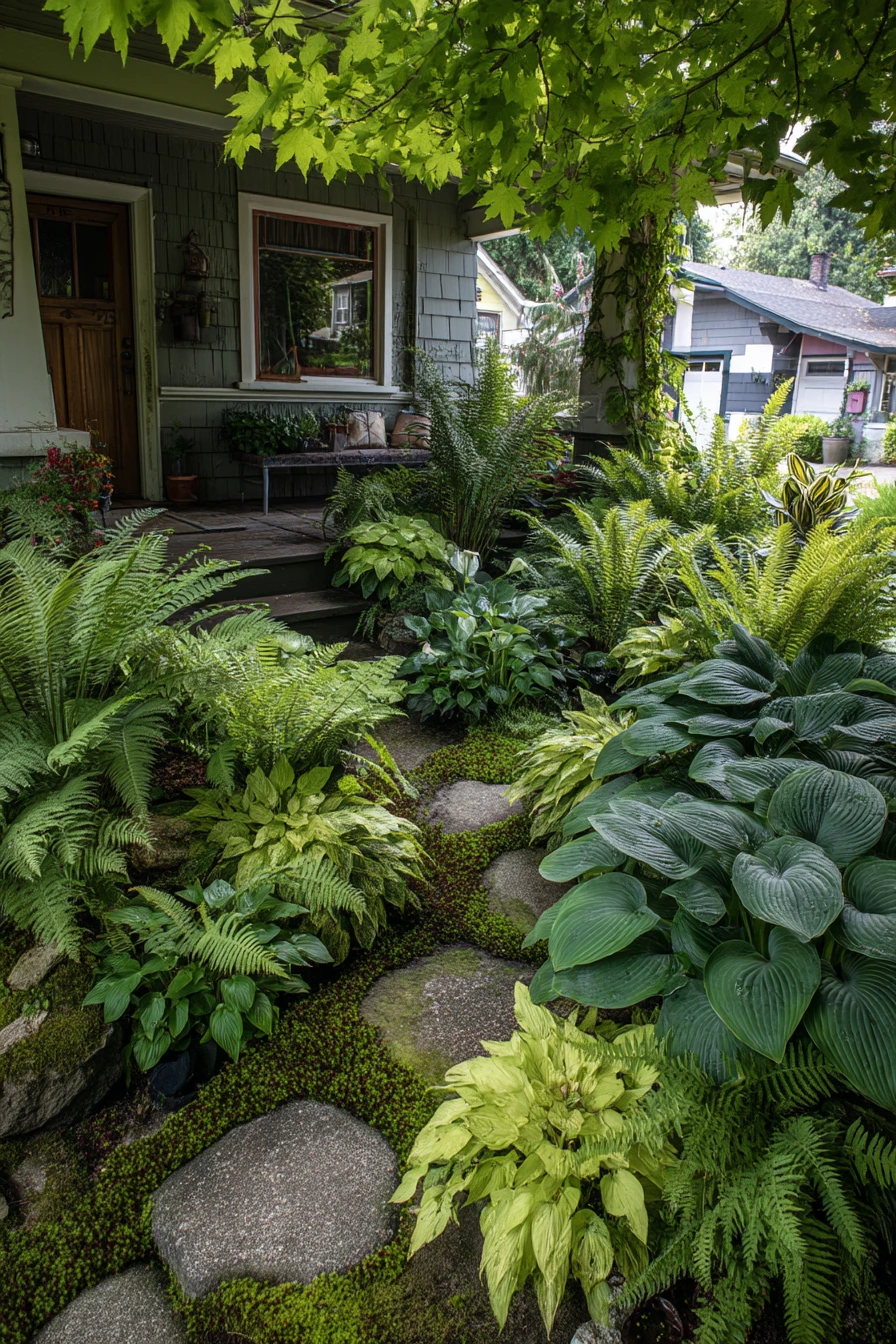
7. Shady Front Garden With Ferns, Hostas, and Mossy Stones

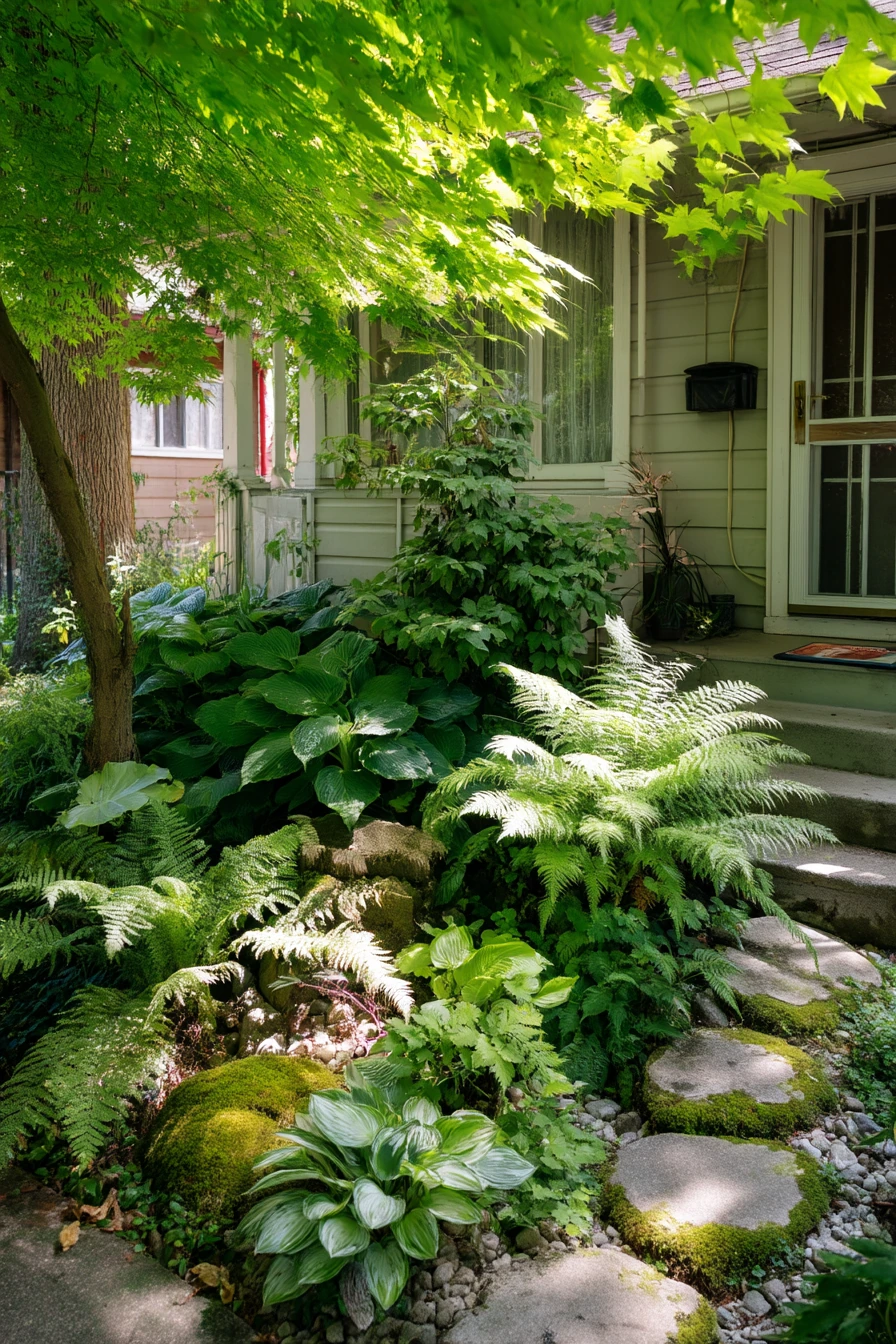
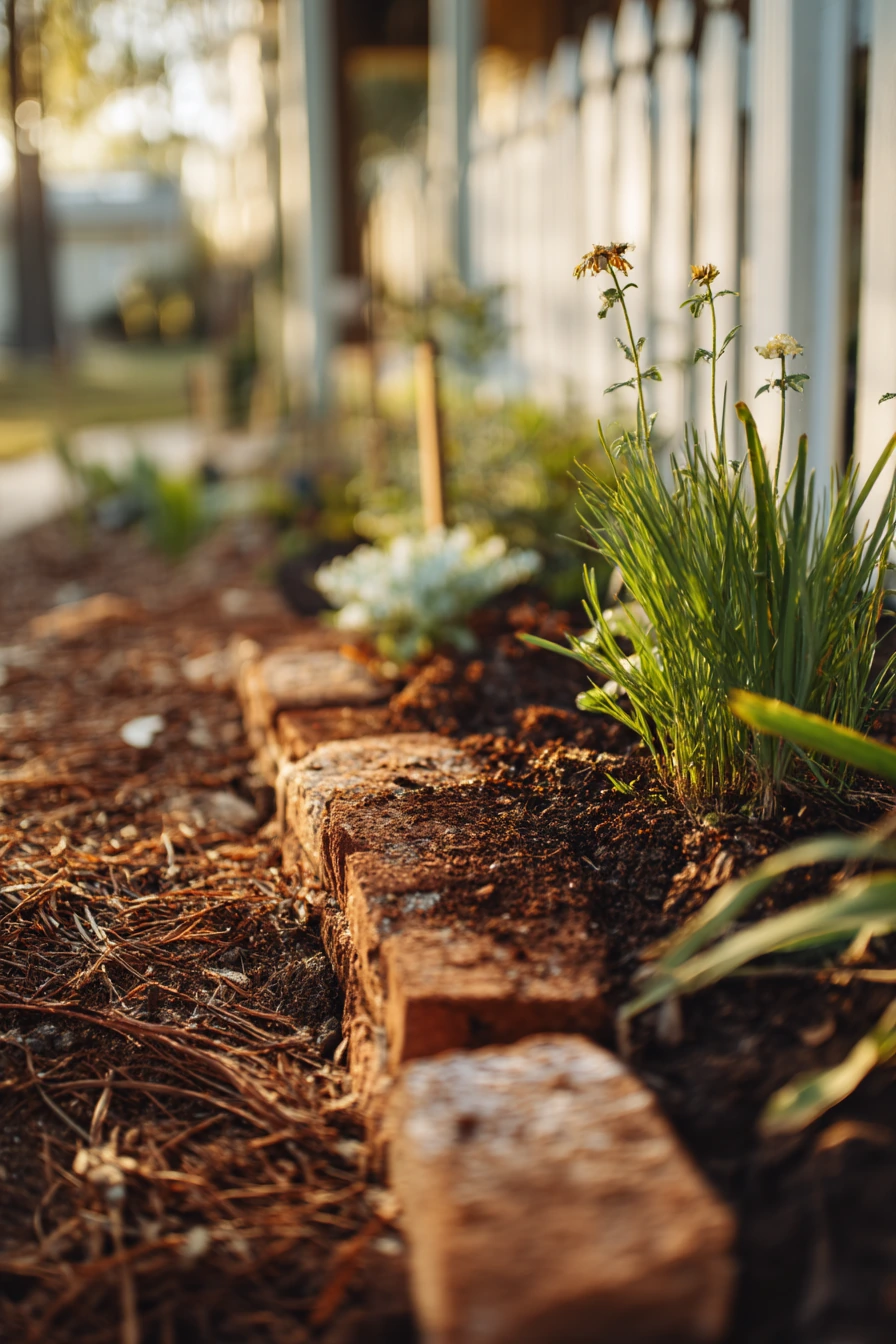
A shady front garden under a mature maple can feel cool and calm all day. Use shade plants with strong leaves, like ferns and hostas, so the garden looks full even without many flowers. Add hellebores for early-season blooms and deep green color. Mossy stepping stones create a soft path beside a quiet bungalow and help you access plants without compacting soil.
Shade gardens look best when they feel simple and tucked in. A watering can near a fern bed is practical and reminds you to water new plants. Reading glasses on the porch table and an opened paperback add a relaxed feel. Keep the doormat straight most days, but a slightly askew mat makes the entry look lived in. Cool morning window light reflecting from the house can make foliage look brighter, so plan your best views from the gate.
How to style it: focus on texture and shape instead of bright color. Mix big hosta leaves with fine fern fronds and the sturdy form of hellebores. Use two stone sizes only, one for the main stepping stones and one for smaller fillers, so it does not look cluttered. Add a dark mulch to make green leaves pop. If you want color, choose one shade flower, like white impatiens in a pot near the steps.
- Test soil moisture, shade does not always mean damp soil.
- Plant in drifts for a calm, woodland look.
- Use slug control early to protect hostas.
- Keep stepping stones stable to avoid wobble and mud.
- Add a simple porch pot for a small pop of seasonal color.
Pro Design Tip: Use one repeating ground cover or mulch color to tie mixed leaf textures together in shade.
Budget Considerations: Hostas and hellebores can be divided over time; start with a few healthy plants and expand by splitting them after a couple seasons.
8. Modern Native Grass Front Yard With Clean Stone Path
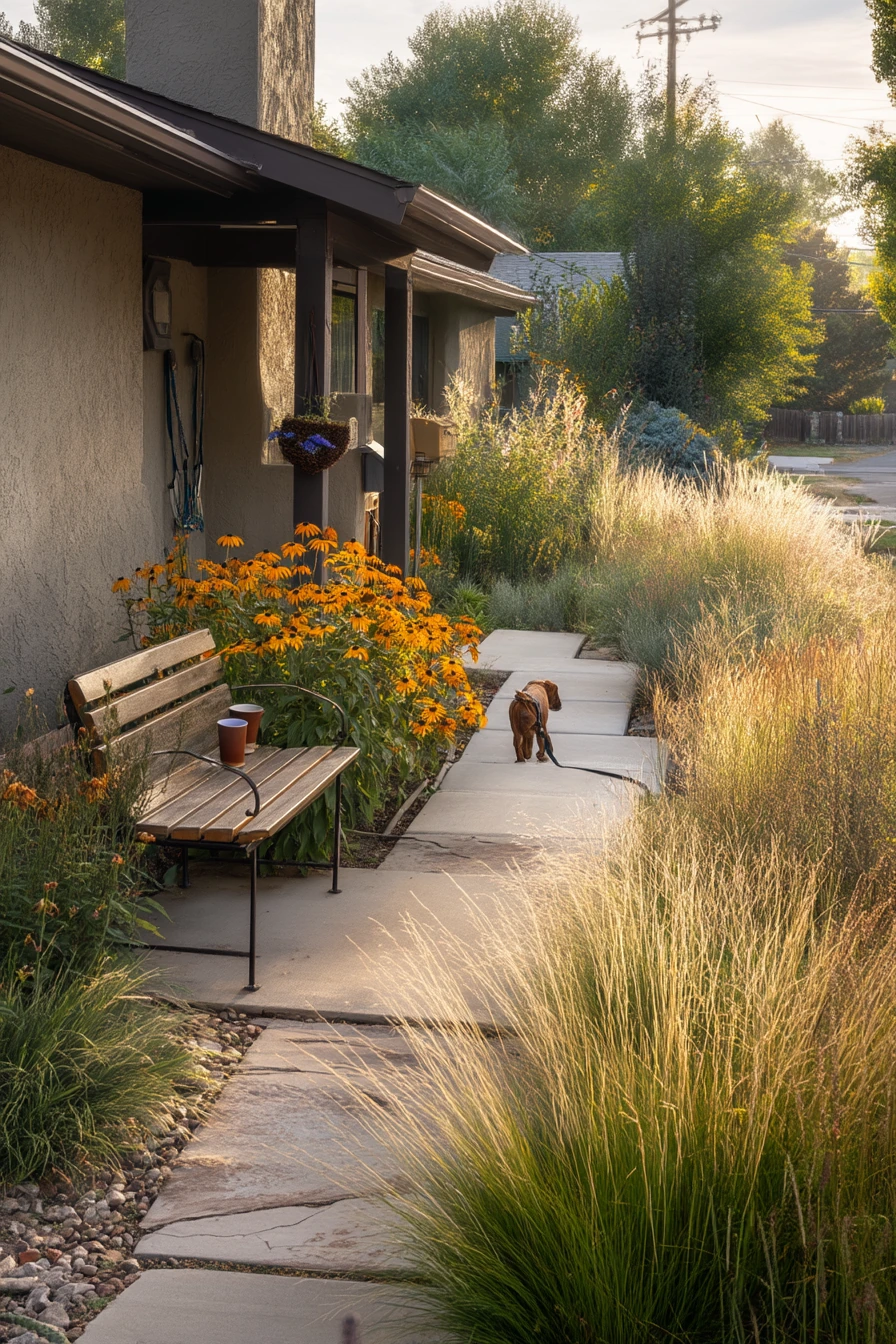
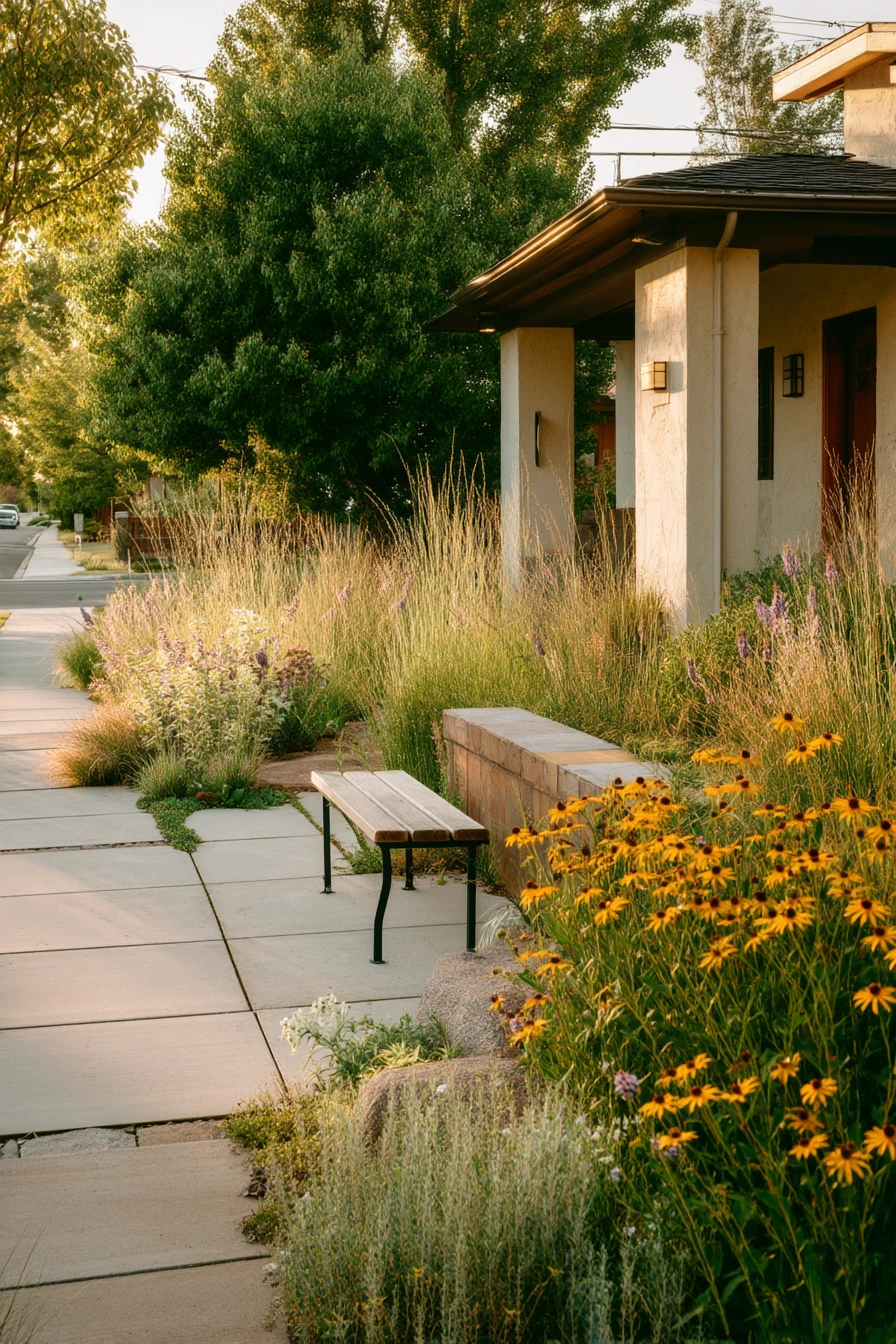
A contemporary front yard can look warm and natural when it uses native grasses and simple flowers. Start with a clean stone path leading to the entry, then plant sweeping clumps of grasses on both sides. Add black-eyed Susans for sunny color and penstemon for upright blooms that hummingbirds like. This mix looks good in morning light and stays attractive when you keep the shapes repeating.
Small daily-life items can blend into a modern garden without ruining the clean look. A bird feeder near the entry brings movement. A dog leash on a bench and a ceramic coffee cup on the step make the space feel real. Hide a subtle hose reel by the side wall so watering is easy, not a chore. Warm sunrise light tends to highlight grass blades, so keep the grasses where they catch light from the sidewalk.
How to style it: limit materials. Use one stone type for the path and one mulch type in the beds. Plant grasses in groups, then tuck flowering plants in front so you see color first. Keep the bench simple, wood or metal, and place it where you can watch birds. Trim grasses in late winter so new growth looks fresh in spring. Edge the path sharply so the modern lines stay clear.
- Pick native grasses that fit your climate and do not flop.
- Use penstemon and black-eyed Susans for long bloom and easy care.
- Space plants for airflow to reduce mildew.
- Add a bird feeder, but keep it away from the door swing.
- Use a drip line to water deeply with less waste.
Pro Design Tip: Repeat the same grass species in multiple spots so the yard reads as one design, not a collection of plants.
Budget Considerations: Grasses are affordable in small pots; buy smaller sizes and plant more of them, then add a few larger feature plants later.

9. Front Yard Edible Garden With Cedar Raised Beds
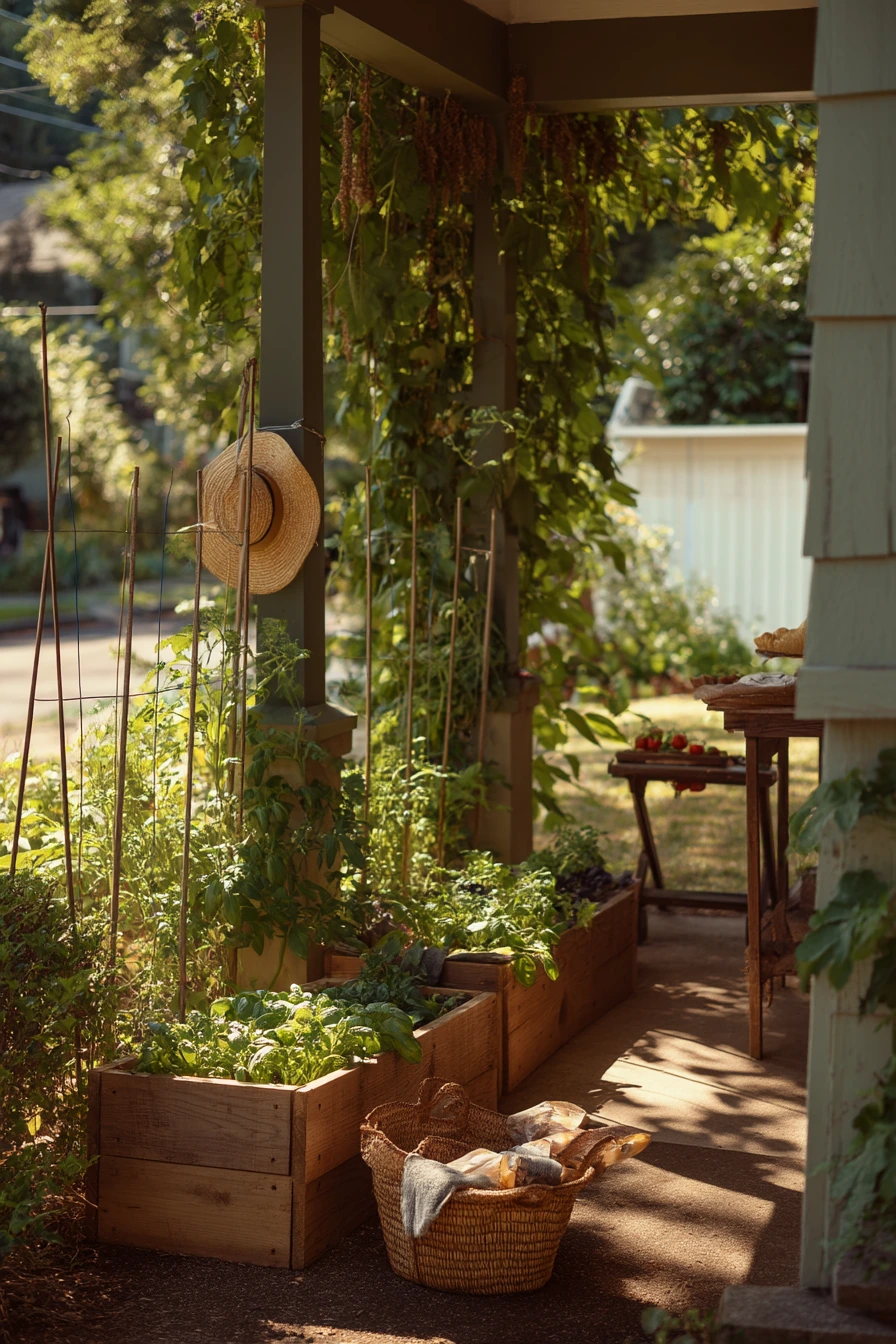
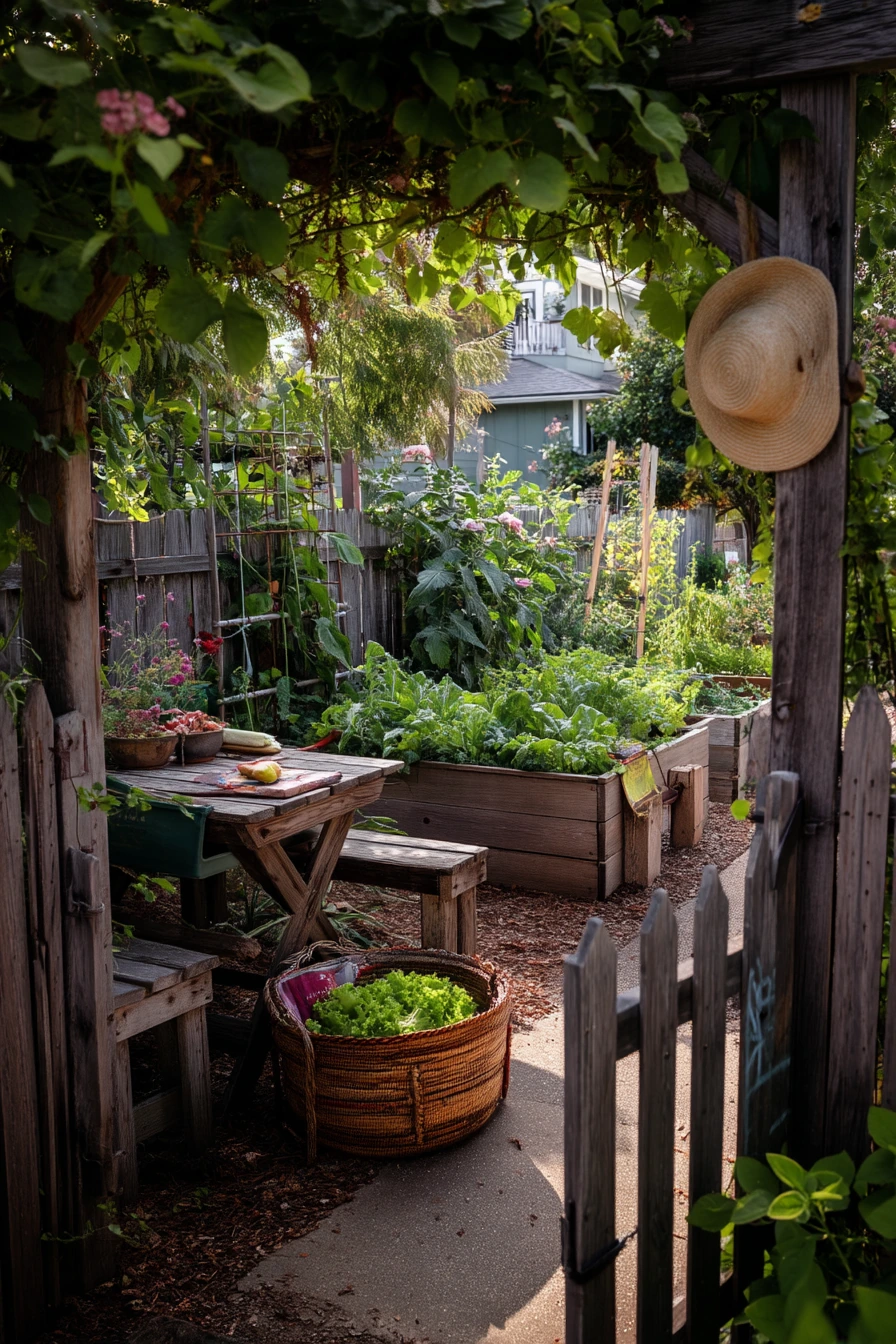
Turning the front yard into an edible garden can be practical and attractive. Cedar raised beds keep the layout tidy and lift plants for easier care. Grow tomatoes with support, basil for fragrance, lettuce for quick harvest, and strawberries for a low, spilling edge. Add a trellis by the fence so vines climb up instead of spreading across walkways.
This kind of garden works best when it looks organized from the street. Keep tools in one spot, like watering gloves near the beds and a harvest basket on a hook. A sun hat hanging by the porch is a simple reminder to check plants. Even a sandwich wrapper on the porch table can feel normal, but keep the rest of the area clean so the garden still looks intentional and neat.
How to style it: make straight lines and repeat bed sizes. Place the tallest plants, like tomatoes, in the back beds so they do not block shorter greens. Use simple labels so you can rotate crops next season. Add a narrow path of mulch or gravel between beds for clean shoes. Mix flowers into corners, like marigolds, to bring color and help with pests. Water in the afternoon only if needed, and aim at the soil to reduce disease.
- Use cedar or untreated wood for food-safe raised beds.
- Add compost each season for better harvests.
- Trellis tomatoes and vines to save space and improve airflow.
- Plant lettuce in waves for steady picking.
- Keep a small bin for garden waste to stay tidy.
Pro Design Tip: Keep bed edges aligned with the house or fence lines so the edible garden looks like part of the landscape design.
Budget Considerations: Raised beds cost more up front; start with one or two beds and add more later, or use galvanized stock tanks as a durable alternative.


10. Romantic Front Border With Peonies and Ornamental Grasses
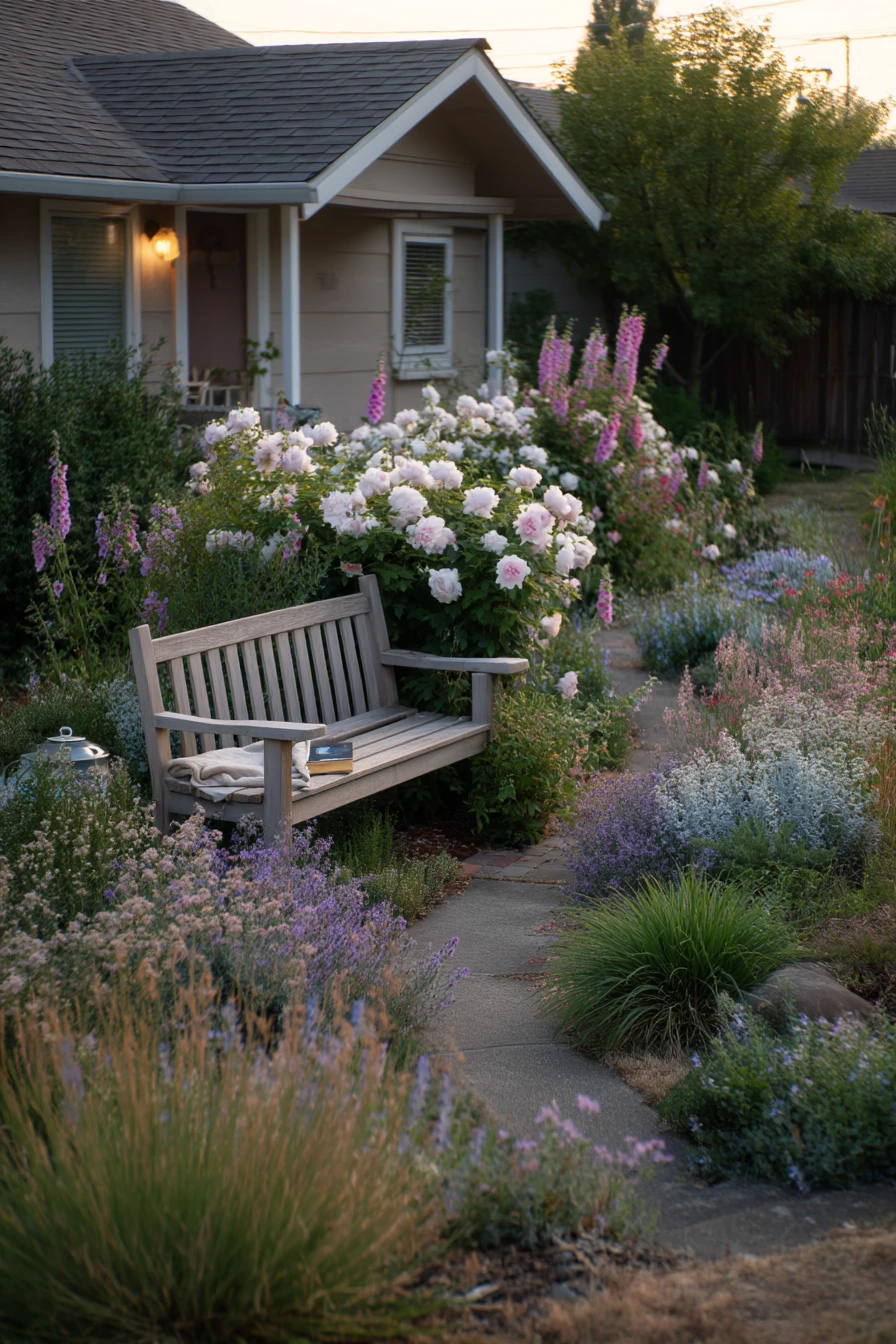

A romantic front border feels soft, layered, and calm. Use peonies for big early blooms, then add foxglove for height and cottage charm. Catmint fills in with long-lasting purple, and airy ornamental grasses spill along a curved path to soften hard edges. This style looks best beside a small suburban home where the garden can be seen up close.
Keep the mood relaxed with a few simple porch details. A weathered bench near the border invites you to sit and notice the garden. An open novel and a water glass catching light make the space feel personal. A cardigan draped over the chair adds warmth without looking staged. If a dusk lamp glow spills from inside the house, it makes the border feel cozy in the evening and helps the entry look welcoming.
How to style it: build the border in layers so it looks full from the walkway. Place peonies and foxglove behind catmint, then let grasses weave through gaps. Choose bloom colors that work together, like soft pink, white, and purple. After peonies finish, keep the foliage tidy and let catmint and grasses carry the look. Add a narrow strip of mulch along the path to keep shoes clean and to frame the planting like a picture.
- Stake peonies early so blooms do not flop after rain.
- Plant foxglove where it will not block the door view.
- Shear catmint after the first bloom for a second flush.
- Use grasses for movement and to fill gaps later in summer.
- Place one bench or chair where you can see the border at eye level.
Pro Design Tip: Mix round flower shapes with airy grasses so the border has both structure and softness through the season.
Budget Considerations: Peonies can be costly and slow to mature; buy bare roots in fall for less money, and use budget perennials like catmint to fill space fast.

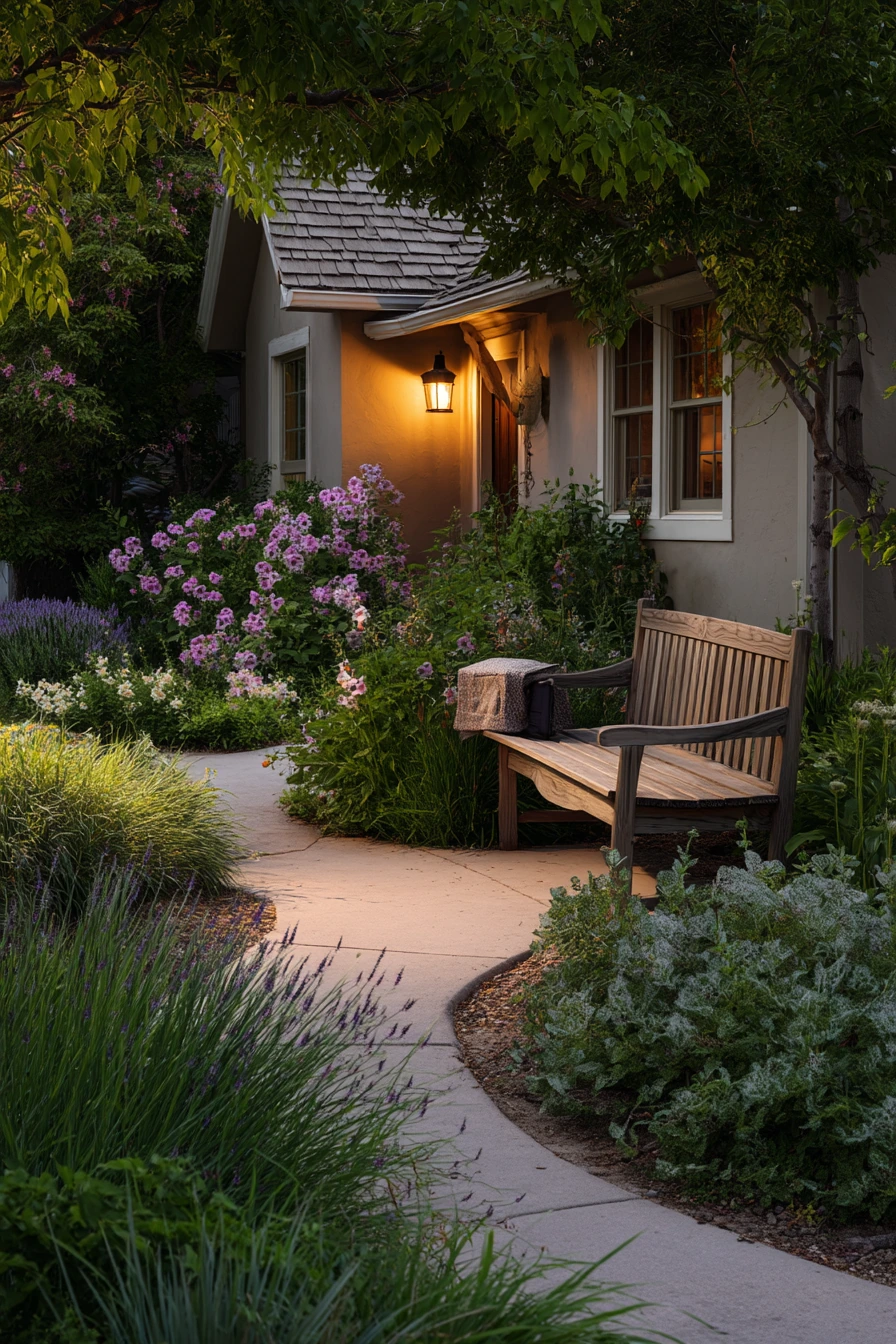
Good front yard garden ideas start with your real life needs, like a clear path, simple watering, and plants that match your sun and time.
Pick one style from this list, copy the basic layout, then add your own everyday touches so the space feels welcoming and easy to keep up.
If you want a quick win, clean up edges, add fresh mulch, and choose a few repeat plants for a calm look from the sidewalk.