
Garden border ideas help you frame a lawn, soften a fence, and make a small space feel finished. A good border also saves time because it cuts down on weeds and keeps plants from flopping into paths.
In this guide you will see border styles that match real homes, from a tidy townhouse strip with boxwood and gravel mulch to a shady side border with ferns and hostas. Each one is designed to be easy to copy with common materials like brick, timber, steel edging, and pots.
You will get planting combos, edging options, and simple ways to style the space so it feels lived in, not staged. Every section includes a pro design tip and a budget note so you can plan before you shop.
Pick one look and copy it, or mix ideas like pale gravel, mossy stepping stones, and pollinator plants to match your yard and your routine.
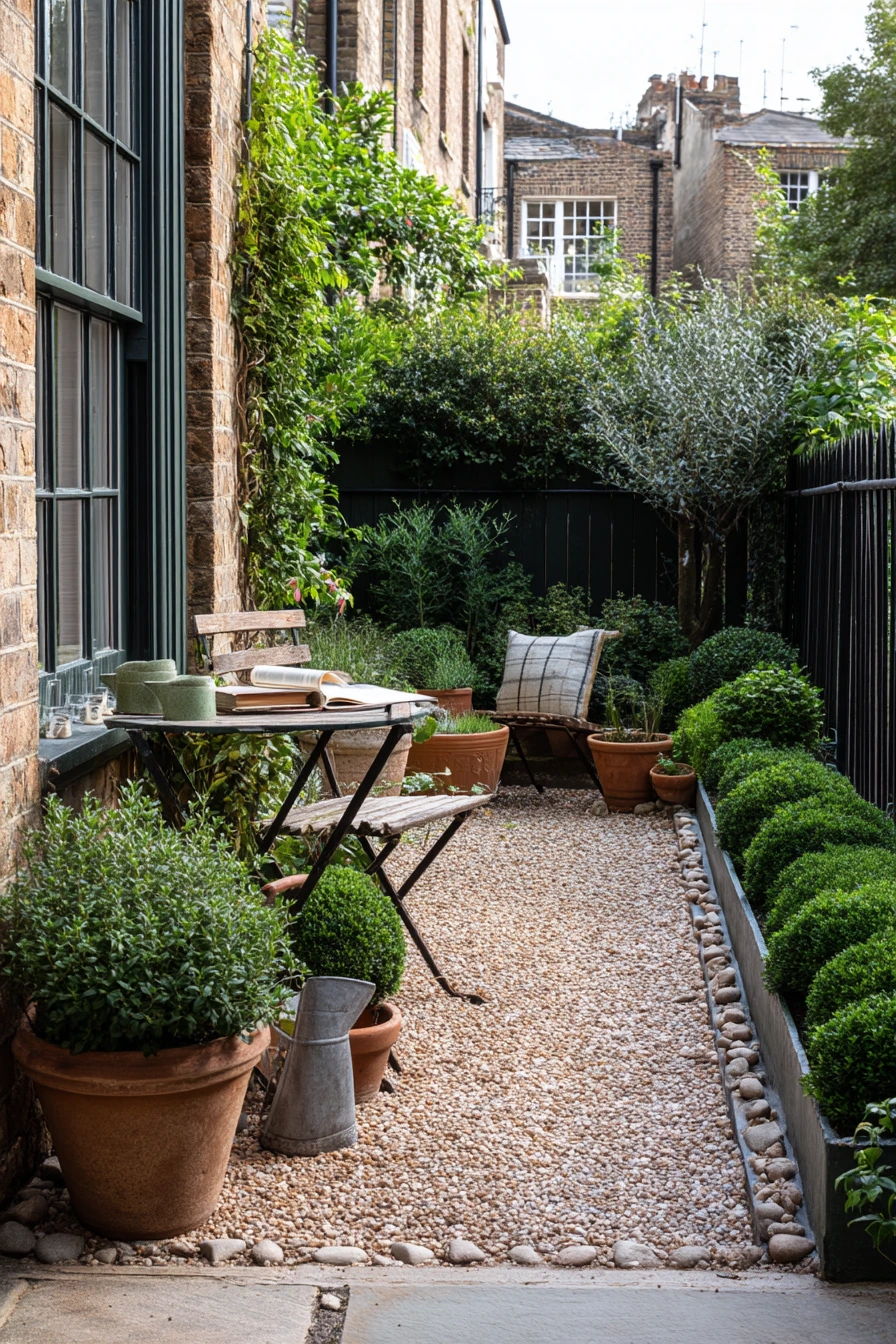
1. Tidy Townhouse Garden Border with Boxwood and Steel Edging

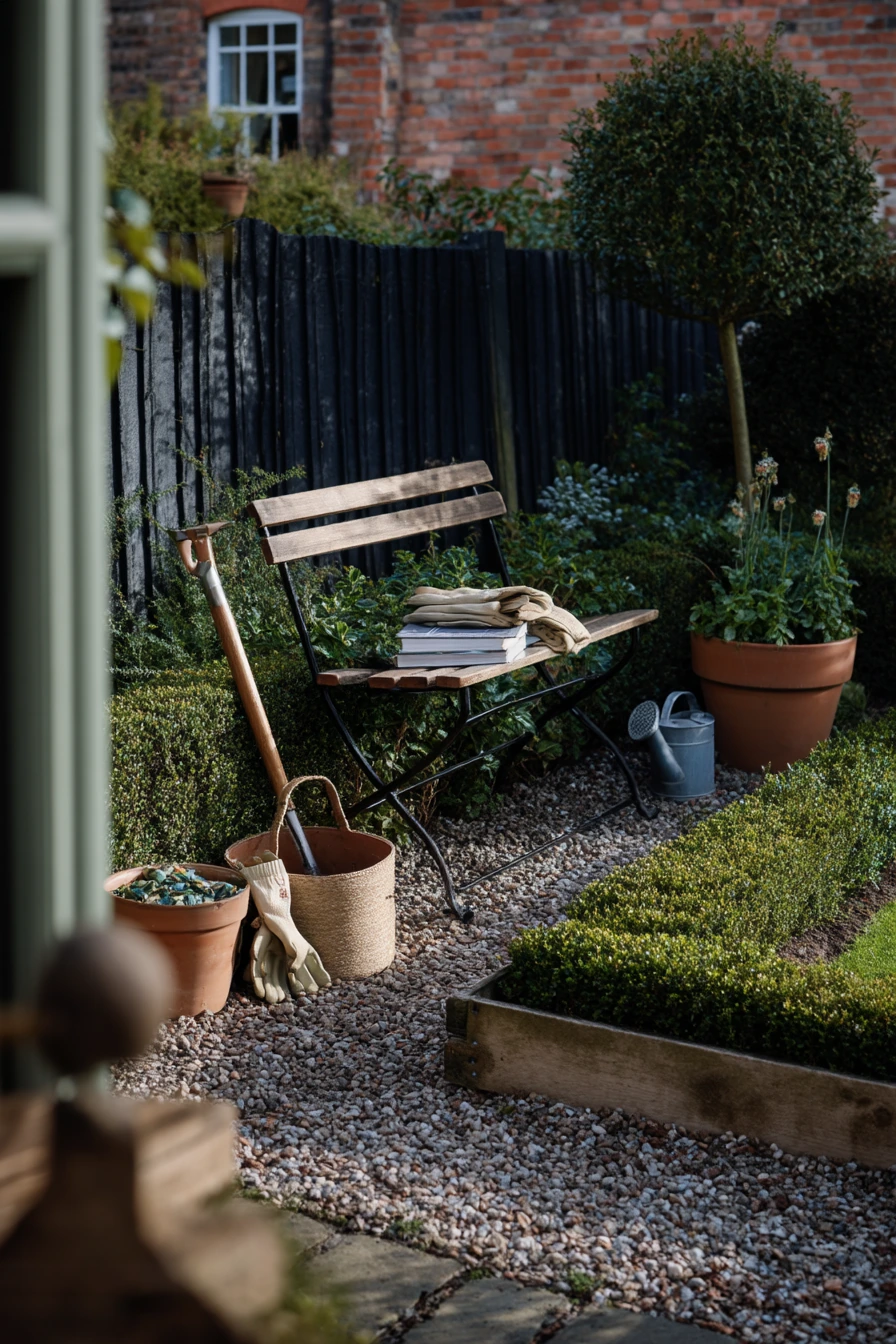
A narrow townhouse border can look clean and calm without taking hours to maintain. Start with clipped boxwood mounds spaced evenly along the edge of a small lawn. Keep the shapes simple so it still looks good when you miss a trim.
Use pale gravel mulch between plants to brighten the strip and reduce weeding. Low steel edging is a smart pick here because it keeps gravel in place and gives a sharp line against grass. Add terracotta pots near the patio for seasonal color, and group them in odd numbers so it feels natural.
To make the border feel like a real family space, leave room for daily tools. A watering can by the fence, muddy garden gloves on a hook, and a kid’s spade leaning near the gate all fit this practical setup. If you sit outside, place a paperback on the chair and keep a small tray for hand tools so you are more likely to do quick five minute jobs.
- Set steel edging first, then level the soil so the lawn line stays straight.
- Plant boxwood in a simple repeat pattern for an easy rhythm.
- Top with landscape fabric only if weeds are a big issue, then add gravel.
- Use terracotta pots for herbs or small flowers and rotate by season.
- Water deeply once or twice a week instead of a little every day.
Pro Design Tip: Keep the tallest shapes near the back fence and repeat one form, like boxwood mounds, to make a narrow border look wider and more calm.
Budget Considerations: Steel edging costs more upfront, but it lasts for years. If you need to save, use a simple spade cut edge now and add edging later.
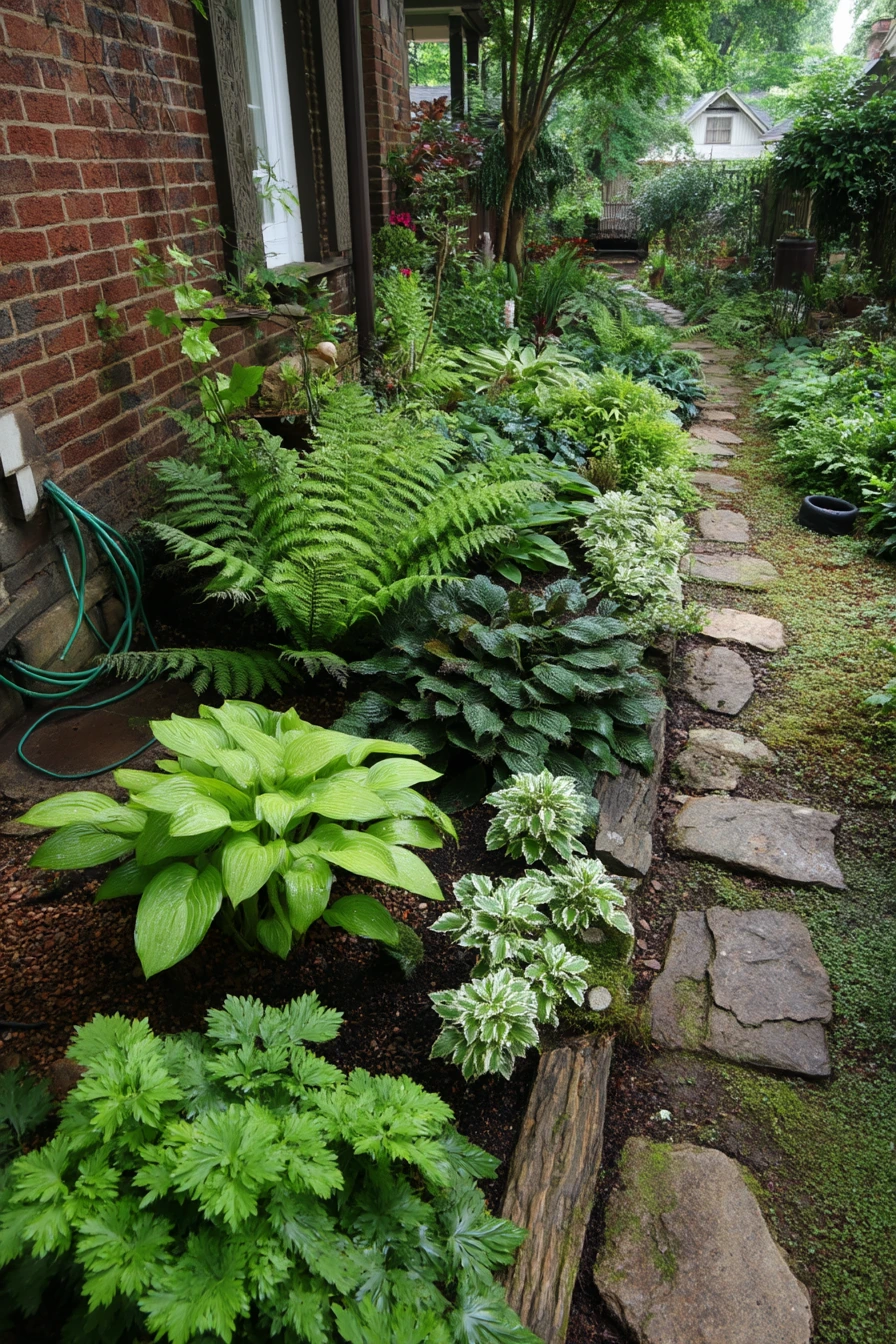
2. Shaded Side Garden Border with Ferns, Hostas, and Timber Edging


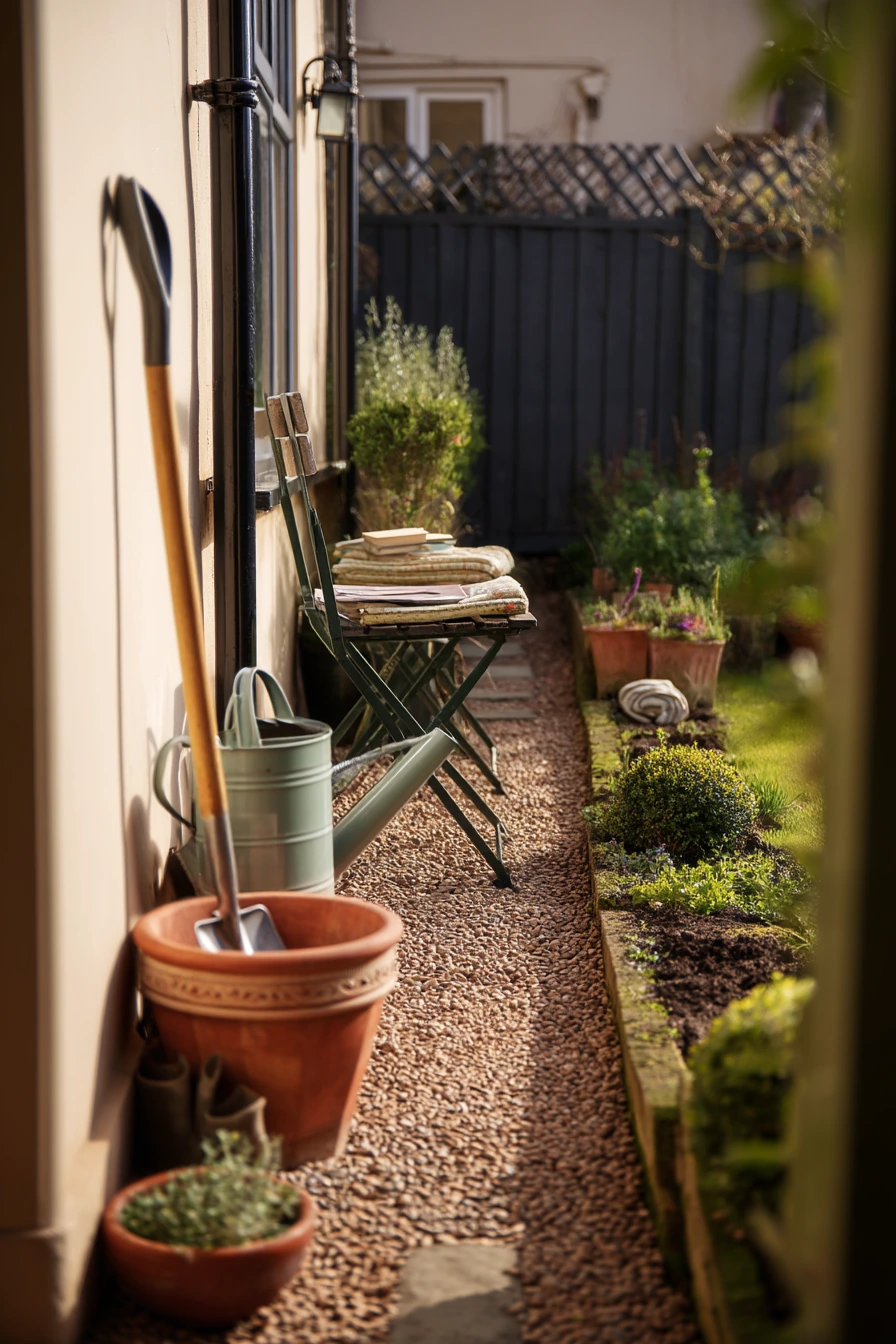
A shaded side yard can be your easiest border because many shade plants like consistent moisture and do not need constant deadheading. Layer ferns, hostas, hellebores, and silver astilbe along a narrow path so there is always texture, even when blooms are done.
Weathered timber edging works well in older brick homes because it feels soft and settled. Keep the line slightly wavy instead of perfectly straight to match the natural look of shade planting. Add mossy stepping stones through the center so you can reach plants without compacting soil, and so the path stays usable after rain.
Style it like a working garden, not a display. A ceramic mug on a small shelf, a folded garden plan on the bench, and a hose coiled loosely nearby make it feel used. In shade, leaves are the main show, so clean up torn hosta leaves and remove old fern fronds in early spring. If slugs are a problem, keep mulch a bit back from plant crowns and water in the morning so the top layer dries faster.
- Put hellebores near the front so you can see winter and early spring blooms.
- Use astilbe in small groups for a light, feathery look.
- Mix hosta leaf sizes so the border does not look flat.
- Place stepping stones where your feet naturally land when you water.
- Add a thin layer of leaf mold or compost each year to feed the soil.
Pro Design Tip: In shade, focus on leaf contrast, like fern fronds next to broad hosta leaves, and repeat that contrast down the bed for a clear, easy pattern.
Budget Considerations: Many shade plants divide well. Ask neighbors for hosta and fern divisions, and spend your money on good stepping stones that will not wobble.

3. Budget Garden Border with Reclaimed Brick and Cottage Perennials

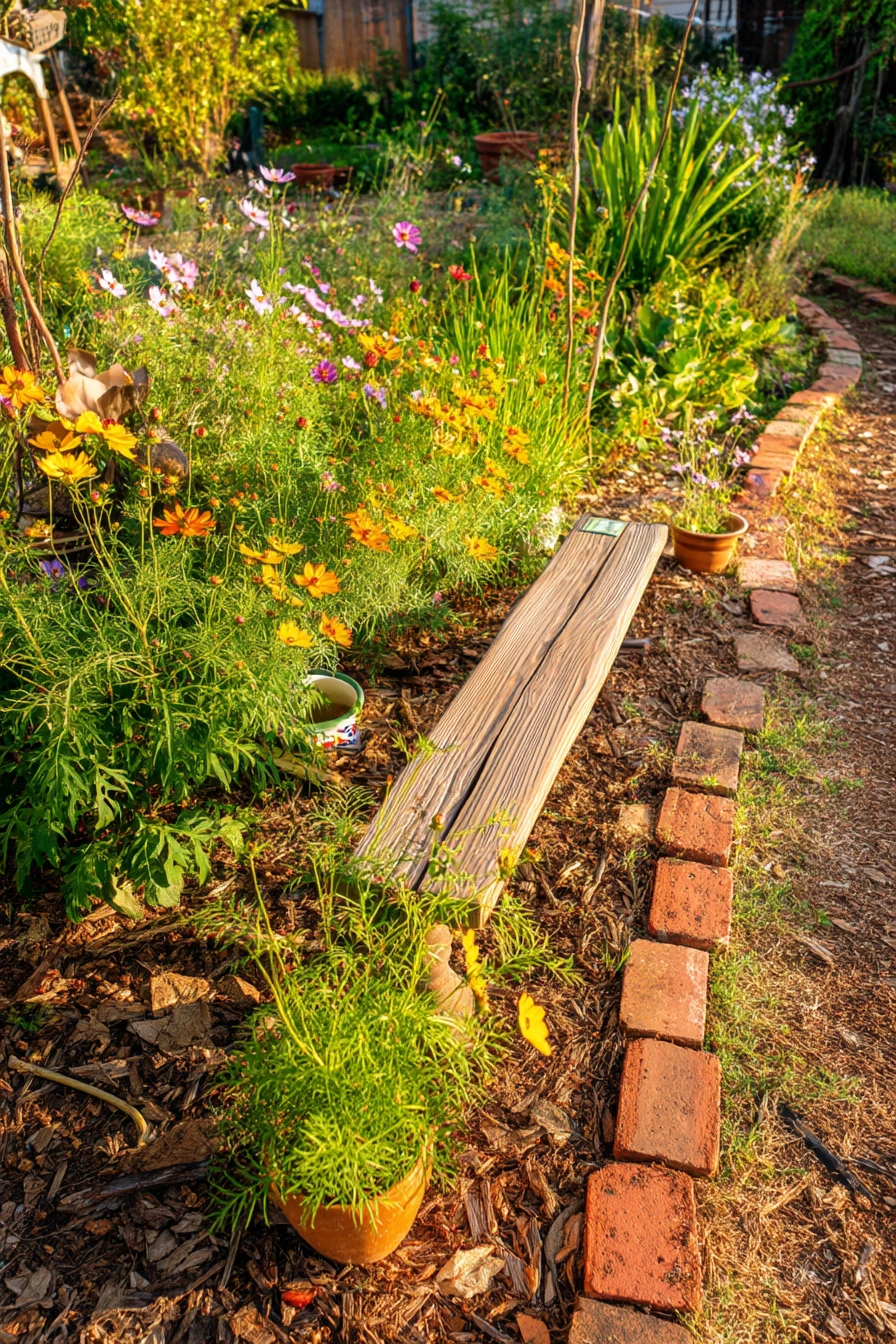
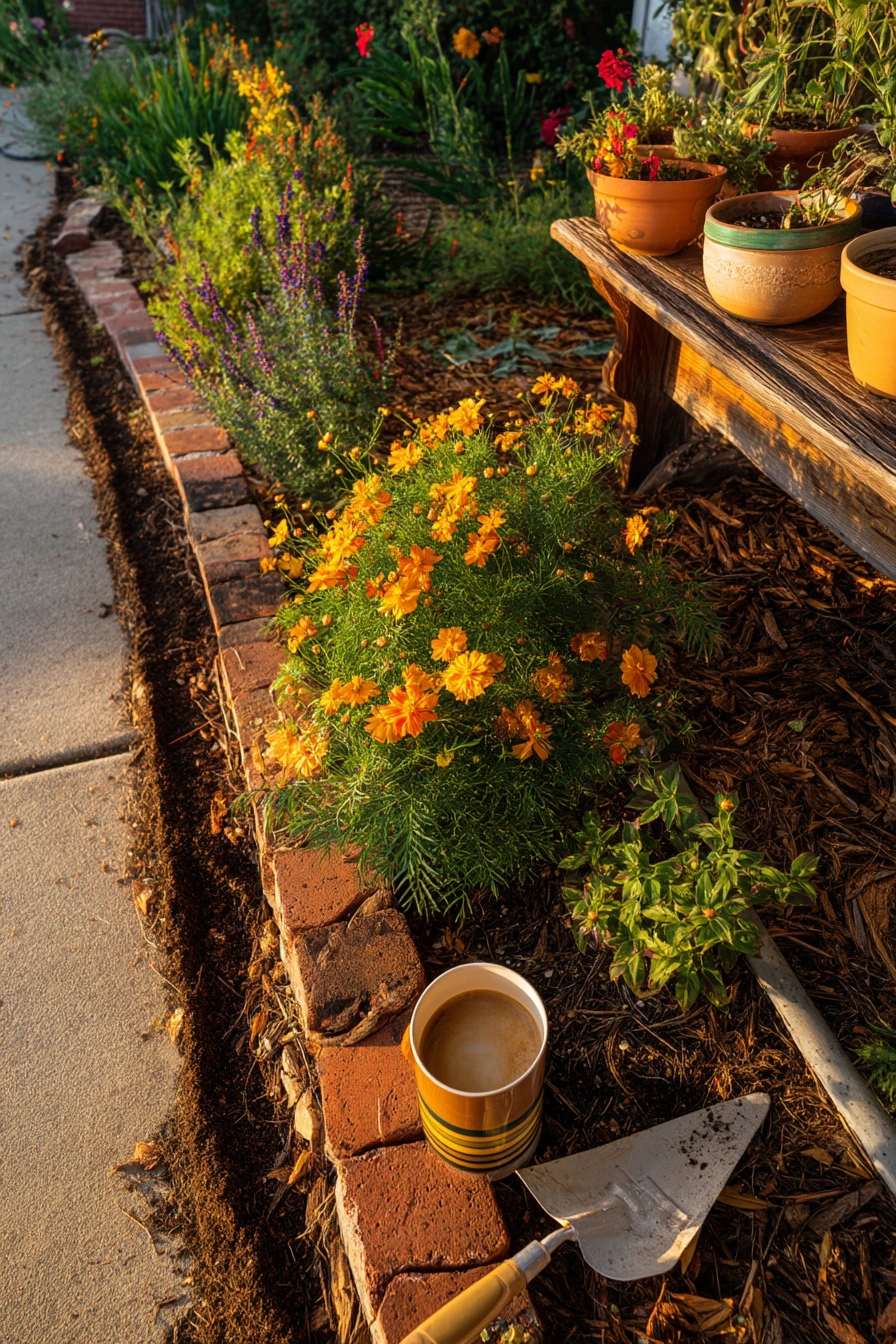
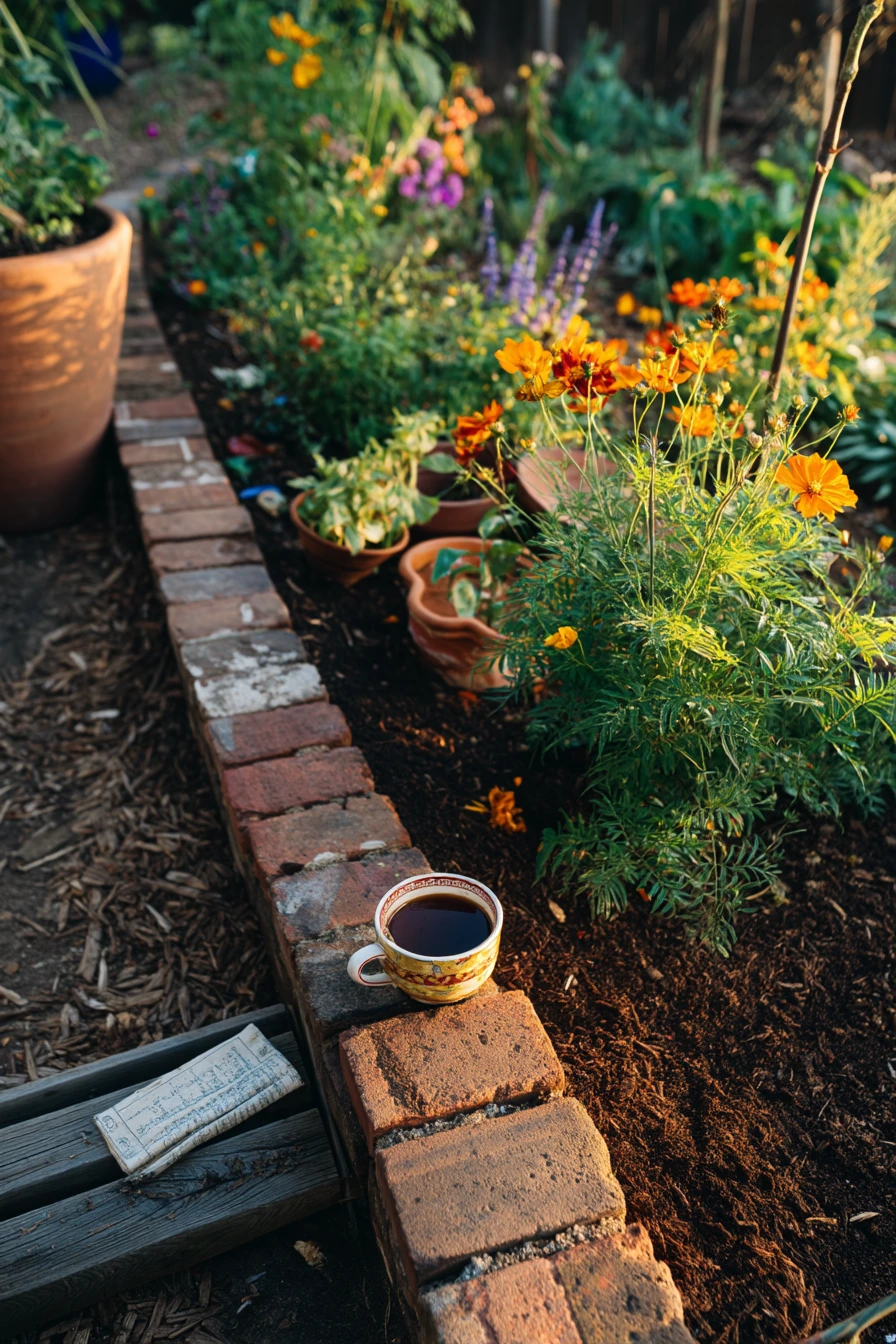
If you want garden border ideas on a budget, start with reclaimed brick edging. It looks finished even when the planting is still young, and you can add bricks over time. Set them on a firm base and keep the top edge level so mowing stays easy.
For a simple cottage feel, plant mixed perennials in loose rows so you can tell what is what. Add self seeded cosmos for height, marigolds for bright color, and salvia for long bloom and pollinators. Mulch the bed well so you water less, and use a few mismatched terracotta containers to fill gaps while plants grow.
This kind of border feels honest and handmade, and that is part of the charm. Keep your tools close, like a paint splattered trowel on a bench, and do small tasks while you drink your coffee. If you have a folded nursery receipt, use it as a reminder to note plant names and spacing before you forget. To keep the look tidy, stake tall plants early, deadhead marigolds often, and pull weeds when they are small. A simple repeat, like salvia every few feet, makes the border feel planned even if the rest is mixed.
- Lay reclaimed bricks tight together to reduce grass creep.
- Use cosmos at the back so it does not shade shorter plants.
- Plant salvia in a repeating line for structure and long color.
- Mulch 2 to 3 inches deep to cut watering and weeds.
- Fill bare spots with potted plants until the border fills in.
Pro Design Tip: Pick one “anchor” plant, like salvia, and repeat it at steady intervals. It makes a mixed border look more calm and planned.
Budget Considerations: Reclaimed brick can be free or cheap if you watch local listings. If bricks are pricey, use concrete pavers for the hidden base and place a single row of brick on top.
4. Renter Friendly Patio Border with Cedar Planters and Herbs


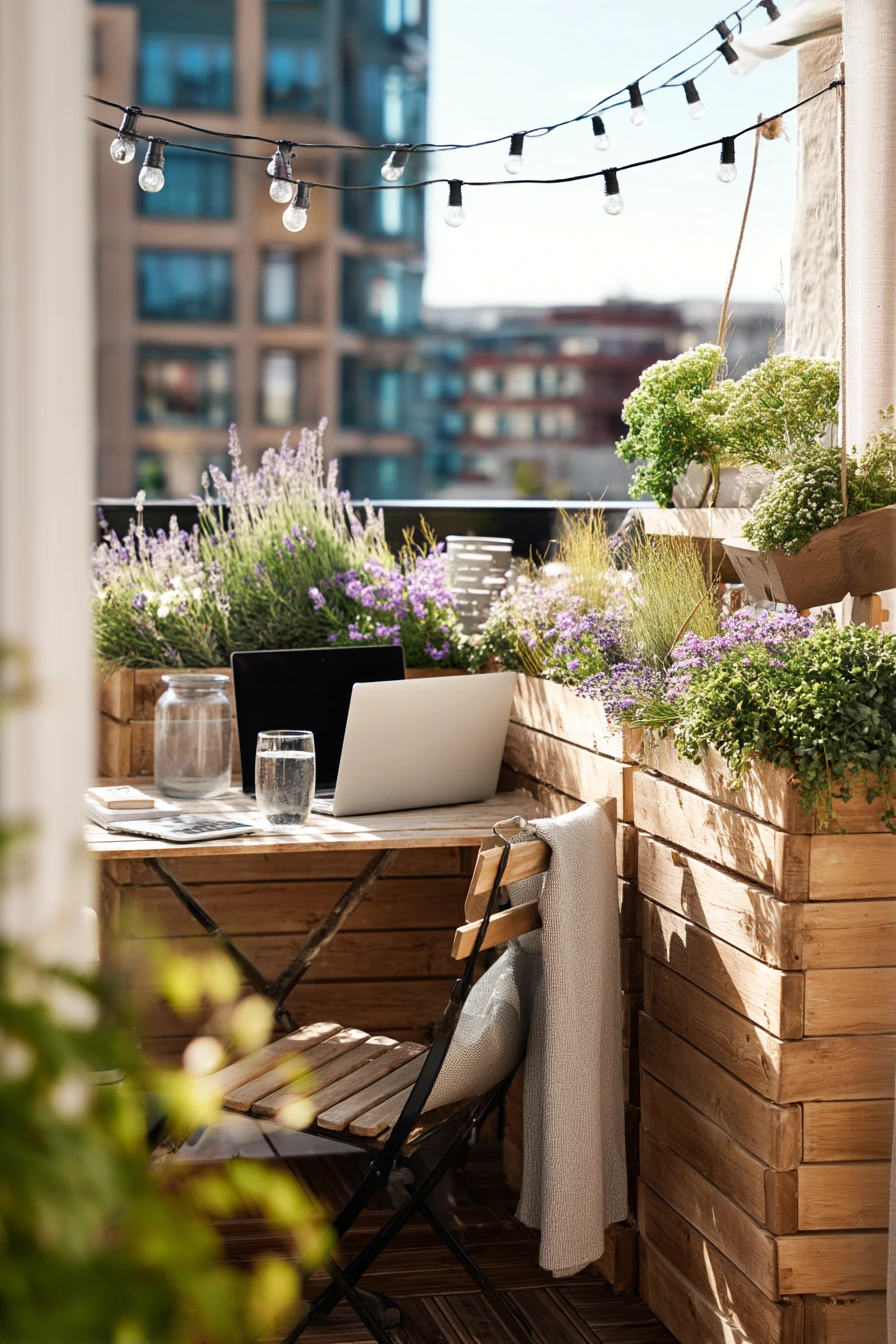
A renter friendly patio border can still look lush if you use freestanding cedar planters. This setup avoids permanent digging and lets you move the layout when you renew a lease or change sun patterns. Keep planters in a clean line to mimic a real border, and leave a narrow gap behind them for easy sweeping.
Pack the boxes with lavender and rosemary for scent and structure, then soften edges with trailing bacopa. Add dwarf grasses for movement and a neat, modern look. Choose a potting mix made for containers, and use slow release fertilizer so you do not have to feed every week.
Style this space like an after work pause. Hang a string of lights overhead, keep a folded throw on the chair, and set a water glass beside your laptop on the bistro table. Practical details matter too: put saucers or feet under planters so water does not stain the patio. Group plants by water needs, and place rosemary in the sunniest box so it stays dense. Trim lavender lightly after flowering so it does not split, and pinch bacopa tips to keep it full instead of stringy.
- Choose planters at least 12 inches deep for herbs and grasses.
- Place lavender and rosemary where they get 6 hours of sun if possible.
- Use one trailing plant per box to avoid a crowded look.
- Add drip trays or risers to protect decking and help airflow.
- Keep a small hand pruner nearby for quick shaping.
Pro Design Tip: Use one planter size and one wood finish for a modular border that looks built in, even though it is fully movable.
Budget Considerations: Cedar costs more but lasts longer outdoors. For a cheaper option, use recycled plastic planters and add a wood screen in front to get the same warm look.

5. Pollinator Garden Border Along a Fence with Summer Perennials


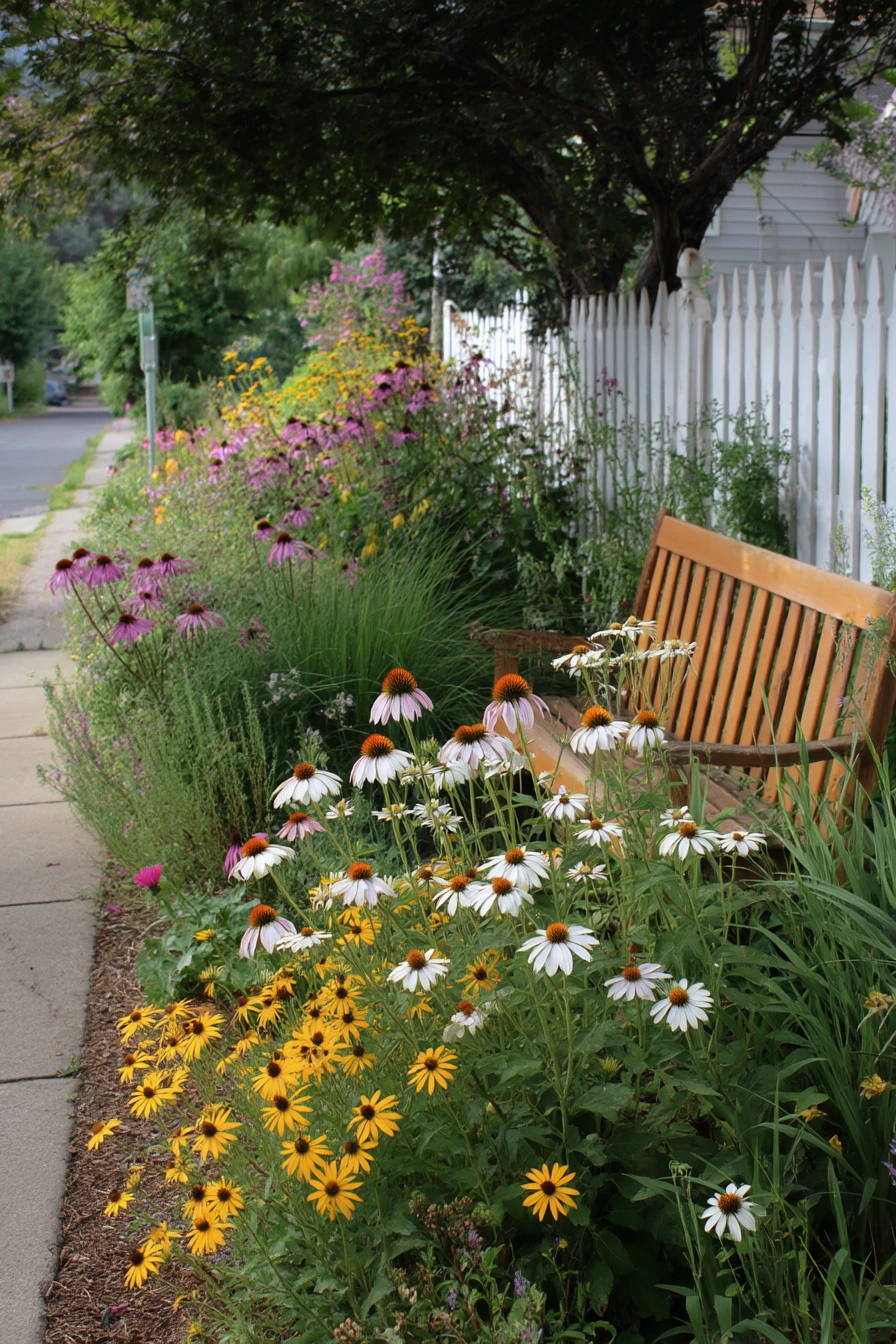
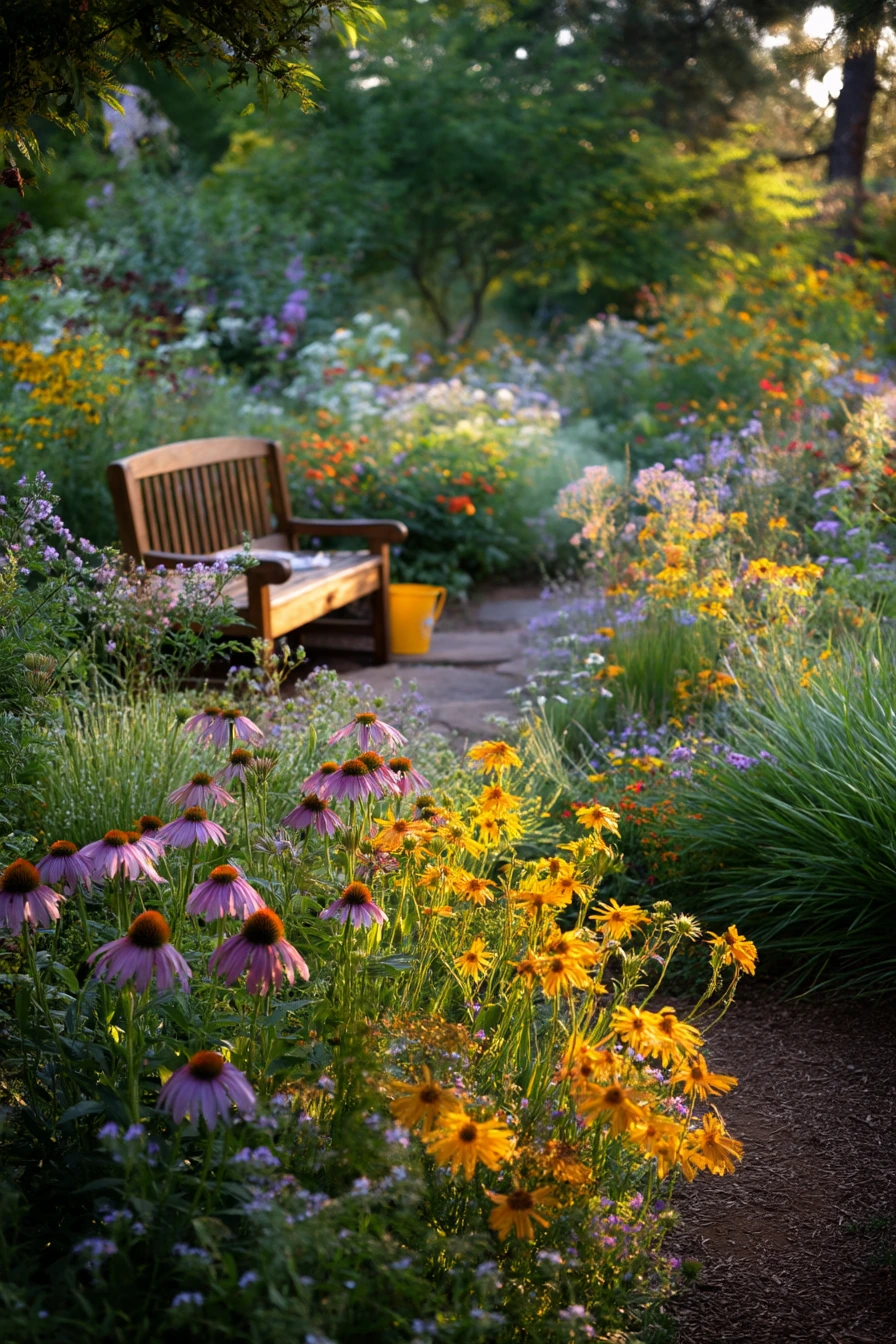
A pollinator strip is one of the best garden border ideas for an active family because it adds color, supports bees, and still stays simple. Plant along a fence in wide drifts so the border reads clearly from the house and from the yard. Use mulch paths so kids can walk along without stepping on plants.
Build the planting around long bloomers like echinacea, verbena, nepeta, and rudbeckia, then add allium for height and round shape. Nepeta can act like a soft edging plant because it spills a bit and covers bare soil. Keep taller plants toward the fence and shorter ones near the path so everything is easy to see and reach.
To keep it feeling real, let family items live nearby. A child’s bucket can be the “garden helper” tool holder, sunscreen can sit by the back door, and a half finished lemonade on the bench fits the mood. For care, deadhead rudbeckia and echinacea to extend bloom, but leave some seed heads in late summer for birds. Water deeply during heat waves, especially in the first year. If the border is buzzing, avoid spraying anything. Instead, hand pick pests and use mulch to keep plants less stressed.
- Plant in groups of 3 to 7 for stronger color blocks.
- Add a mulch path so you can weed and water without stepping into the bed.
- Use allium as a repeating accent to tie the border together.
- Choose a mix of early, mid, and late bloomers for longer interest.
- Place a small bench so you will actually stop and enjoy the strip.
Pro Design Tip: Repeat one flower color, like purple from verbena and nepeta, so the border looks connected even when different plants peak at different times.
Budget Considerations: Perennials cost more at first but return every year. Save money by starting with smaller pots and spacing with annuals until the plants fill in.
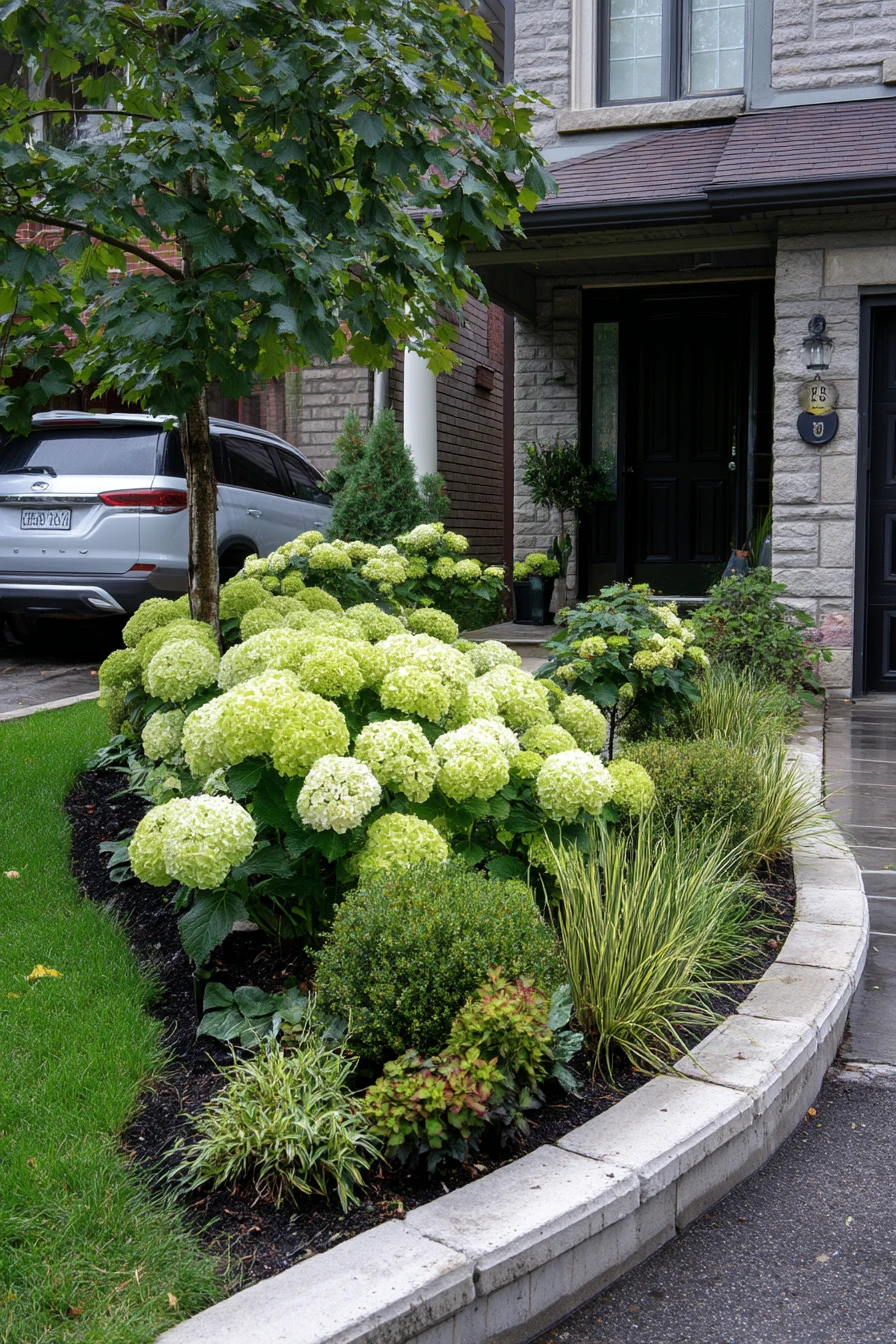
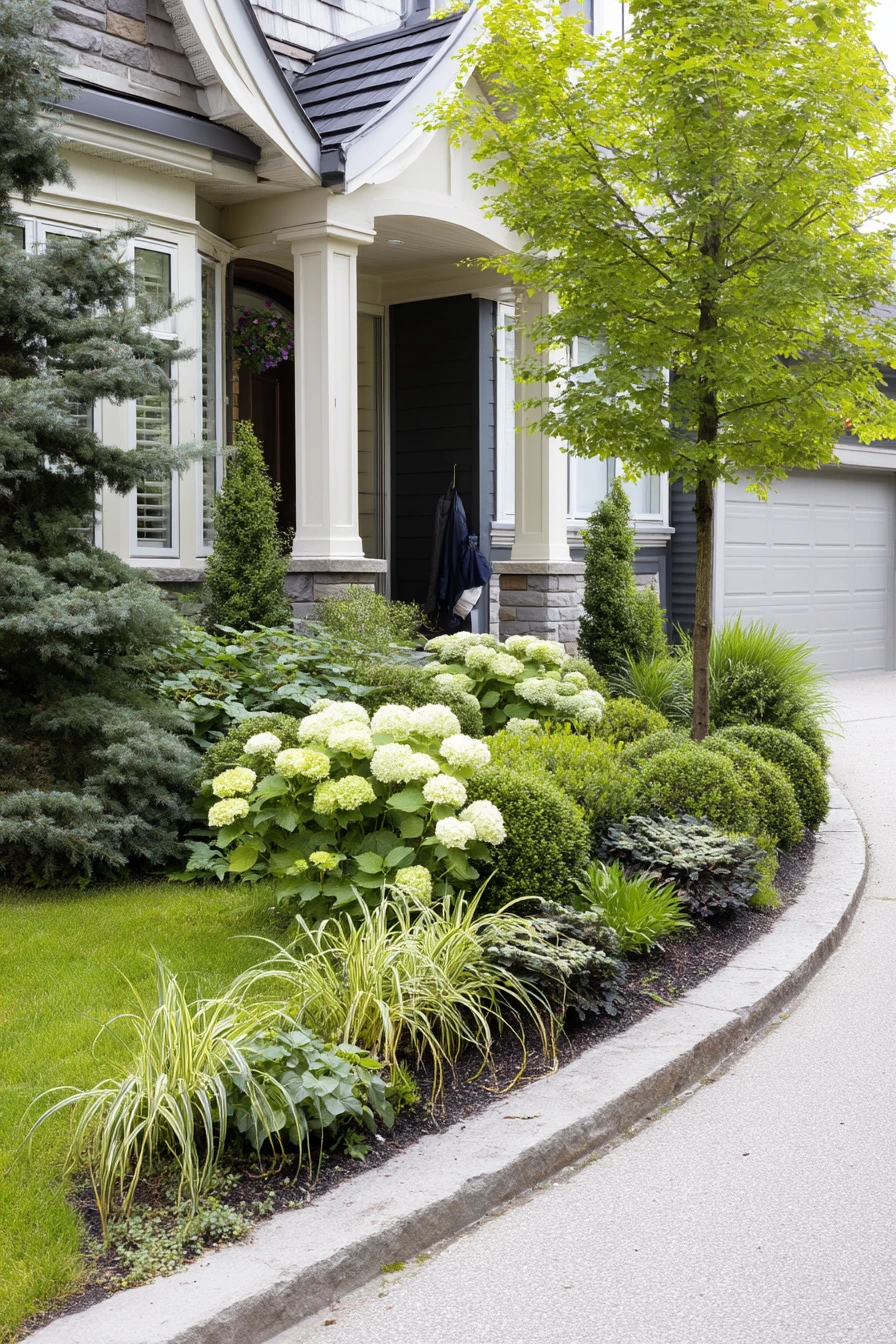
6. Front Garden Border for Curb Appeal with Hydrangeas and Stone Edging


For instant curb appeal, a front garden border needs strong shapes and a clean edge. A crisp curve beside the driveway guides the eye and makes the house look cared for. Use stone edging to define the bed, then cover soil with dark bark mulch for a neat finish that also holds moisture.
Plant dwarf hydrangeas as the main feature because they look full fast and stay readable from the street. Add yew domes for year round structure, then weave in heuchera for leaf color and ornamental grasses for movement. Keep the plant count limited so it does not look busy, and repeat each plant type in a steady pattern.
This border should work for a busy couple who want it to look good even during hectic weeks. Keep a small bin for tools by the door, and set up watering so it is easy, like a hose with a quick connect. Everyday items like keys on the sill or a delivery box by the step can exist without ruining the look, as long as the planting stays tight and the edge is clean. Trim yews once or twice a year, cut grasses back in late winter, and refresh mulch each spring to keep the border sharp.
- Mark the curve with a hose first, then adjust until it looks smooth.
- Use dwarf hydrangeas for volume without blocking windows.
- Repeat yew domes as “dots” to give the border a steady beat.
- Place heuchera near the front so leaf color is easy to see.
- Keep mulch 2 inches deep and away from stems to prevent rot.
Pro Design Tip: Use three layers, low heuchera, mid hydrangea, and taller grasses, to create depth that reads well from the street.
Budget Considerations: Stone edging can add up. If you need to cut costs, edge the bed cleanly with a spade and put money into a few larger shrubs for quick impact.
7. Drought Tolerant Garden Border with Gravel and Rough Stone Edging

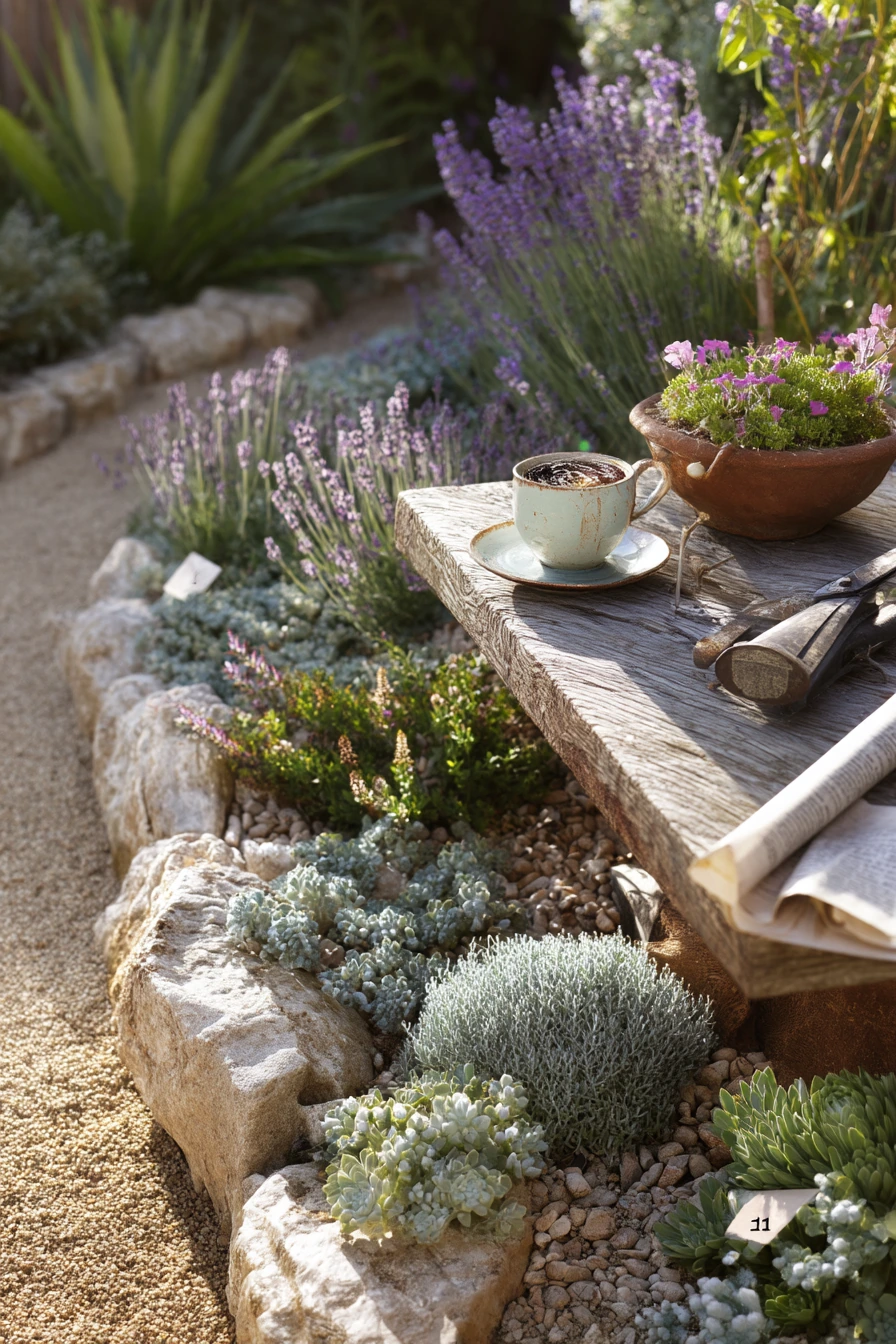
A sunny urban yard often needs drought tolerant garden border ideas that still look soft and welcoming. Start with pale gravel as a mulch to reflect light and reduce evaporation. Pair it with rough stone edging so the border feels sturdy and a bit sculptural.
Choose plants that handle heat and lean soil, like lavender, santolina, sedum, euphorbia, and salvias. Mix rounded shapes with spiky or upright forms for contrast. Lavender and santolina give a gray green base, while salvias add color for months. Sedum fills gaps and handles missed watering without drama.
Keep the look practical with simple routines. Set a small table nearby for a tea cup, pruning shears, and plant labels so you can do quick snips and stay organized. Water deeply but less often to train roots to go down. In gravel, weeds can still pop up, so pull them after rain when the soil is soft. Prune lavender after flowering, and cut euphorbia carefully with gloves since the sap can irritate skin. This border looks best when plants are spaced to show some gravel, not packed tight.
- Install a weed barrier only if your area has heavy weed pressure.
- Plant lavender on slight mounds for better drainage.
- Use sedum near the front where it can spill over the edge.
- Add one or two larger stones in the gravel for a natural feel.
- Stick to a limited color palette like purple, yellow, and silver.
Pro Design Tip: Leave visible gravel between plants so each shape reads clearly. In dry borders, negative space is part of the design.
Budget Considerations: Gravel is often cheaper than bark mulch and lasts longer, but delivery can cost. To save, pick it up in bulk bags and use gravel only on the hottest, driest section.


8. Cottage Garden Border with Flowers by a Weathered Fence
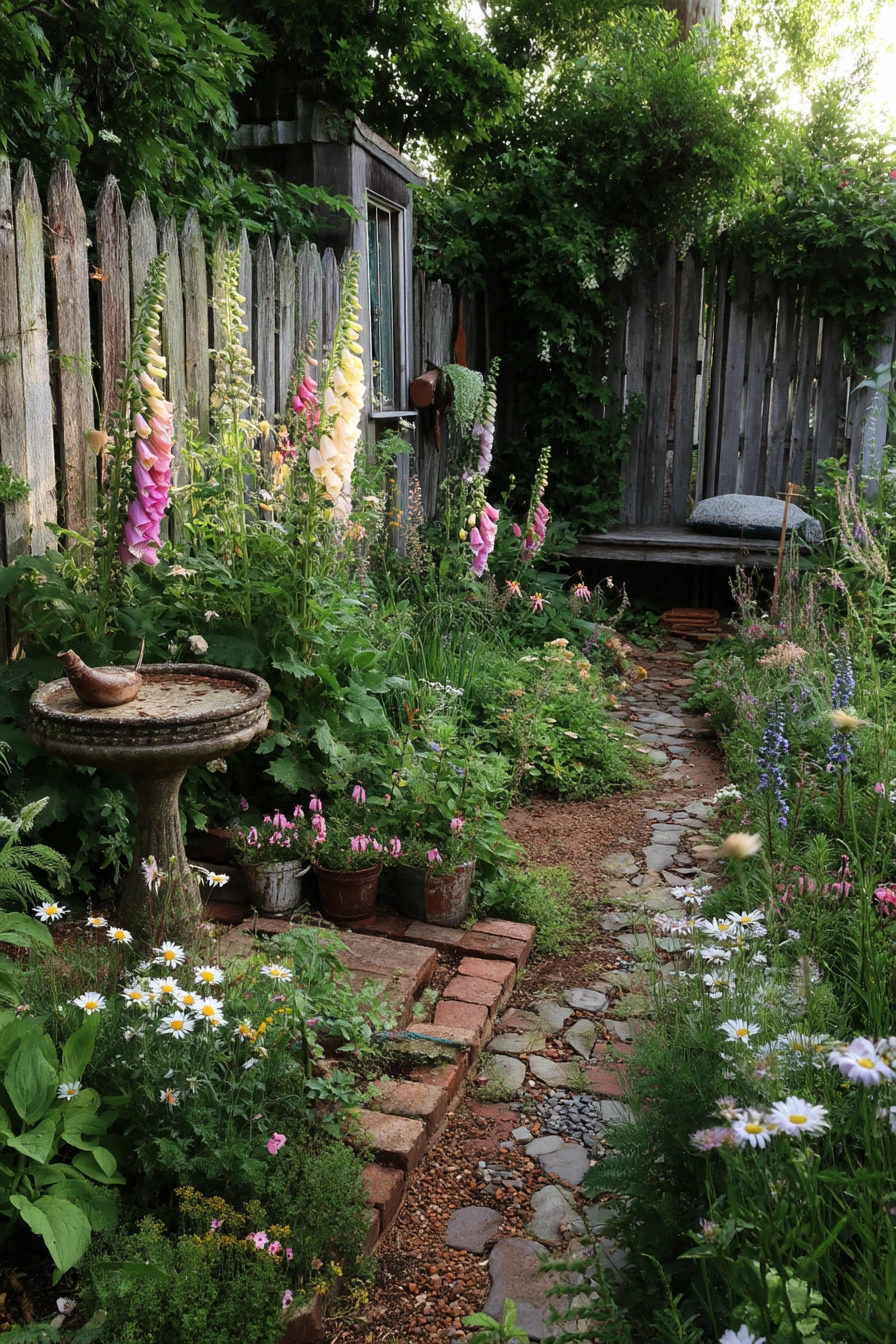
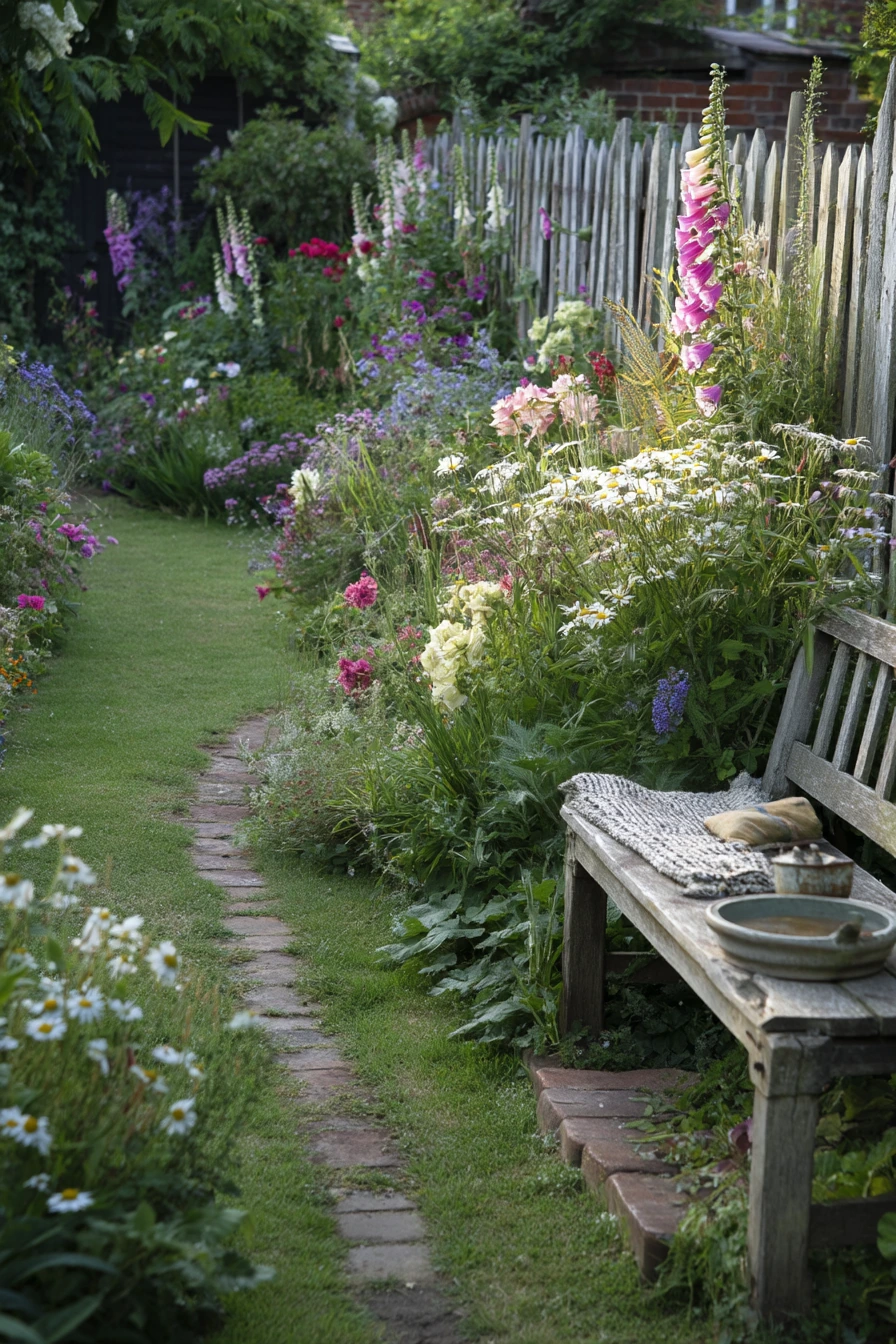
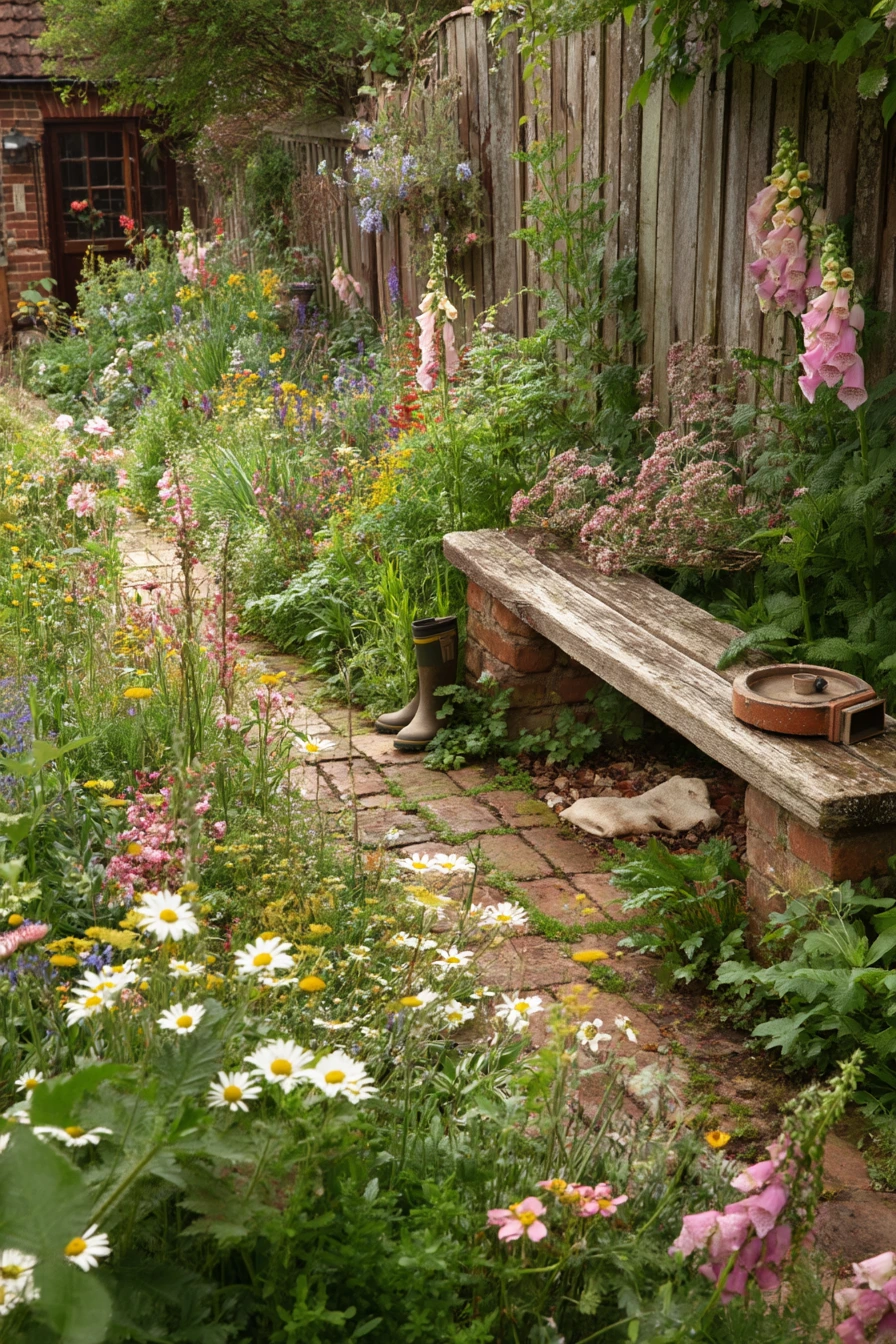
A cottage garden border looks best when it feels soft and a little wild, but it still needs a plan. Use a weathered wooden fence as the backdrop, then let foxgloves, lady’s mantle, geraniums, daisies, and roses spill toward a narrow path. Informal brick edging keeps the border from swallowing the walkway.
Think in layers. Roses give height and scent, foxgloves add tall spikes, and geraniums fill the middle with long bloom. Lady’s mantle is great at the front because it makes a tidy mound and catches raindrops. Tuck a birdbath into a corner to add a focal point and draw birds in.
To style it so it feels lived in, leave boots by the bench, keep a watering wand nearby, and add a wool throw for cooler afternoons. Cottage borders can get messy fast, so give each plant a clear job. Use roses in a few repeating spots, and fill between them with easy perennials. Deadhead daisies and geraniums to keep flowers coming. Stake foxgloves early so wind does not knock them over. If the path feels tight, cut plants back after their main bloom so the border stays friendly, not scratchy.
- Repeat roses every few feet for structure and scent.
- Plant foxgloves toward the back so spikes frame the fence.
- Use lady’s mantle as a soft edge along the bricks.
- Add a birdbath where you can see it from a window or seat.
- Trim after peak bloom to keep the path clear.
Pro Design Tip: Limit the border to two or three main flower colors, then let leaf shapes and heights add the variety so it looks romantic, not chaotic.
Budget Considerations: Roses can be expensive. If you are watching costs, start with one or two strong rose shrubs and fill the rest with easy geraniums and daisies that spread over time.

9. Kitchen Garden Border with Herbs, Strawberries, and Blueberries

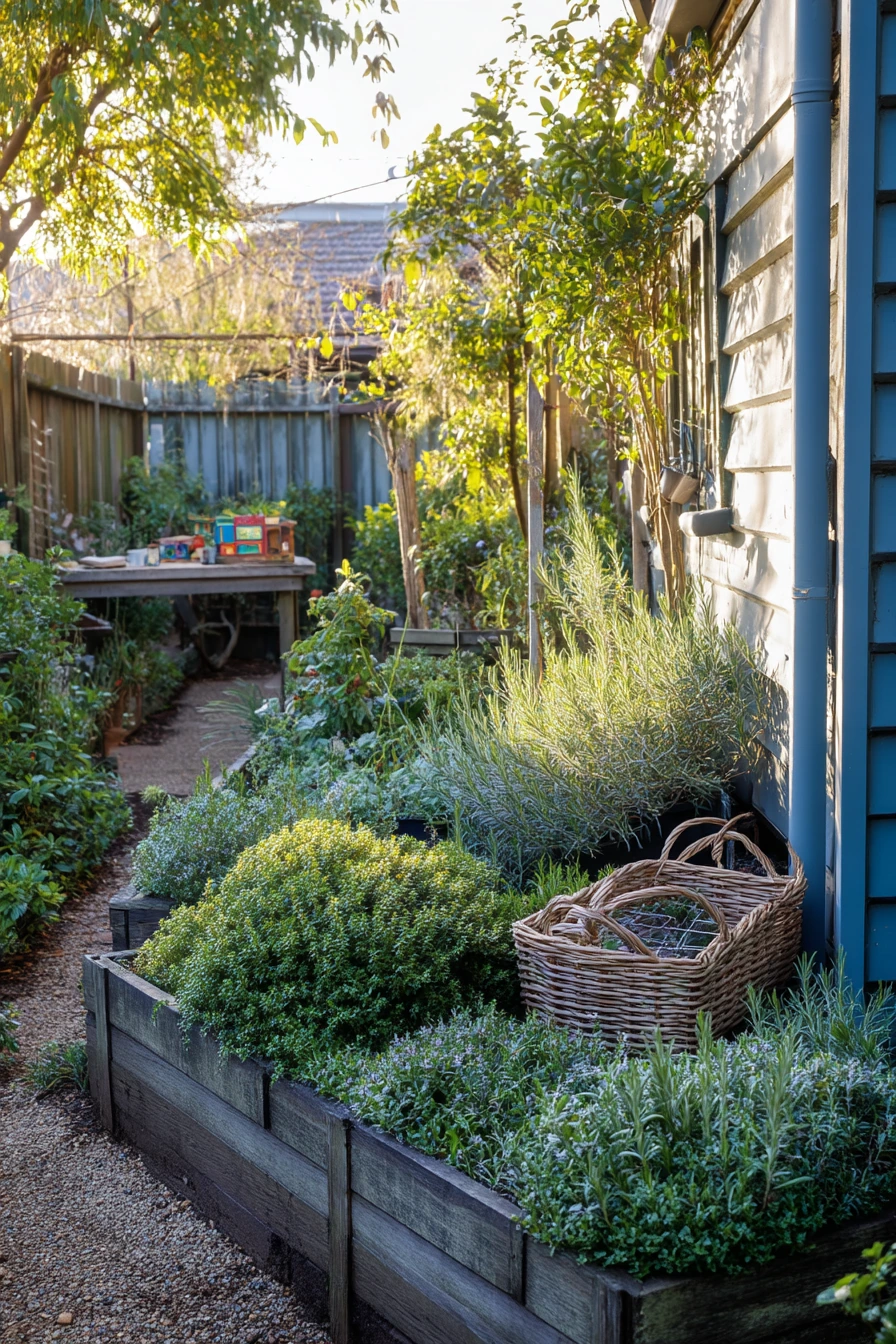
A kitchen garden border is a smart choice when you want the planting to do a job. Along a fence, build a narrow bed edged with simple timber so it feels organized and easy to expand. Place it near a small compost bin so trimmings and kitchen scraps have a clear home.
Plant a mix you will actually use. Rosemary and thyme add scent and stay evergreen in many areas. Chives come back each spring and make a neat edge. Strawberries work well at the front where runners can spill, and compact blueberry shrubs add height and fruit if you give them the right soil.
Make it family friendly by keeping daily items close. A toddler’s toy basket can sit near the bed so little kids feel included. Keep a packet of seed labels and a pencil in a jar so you remember what you planted. A chopping board on the outdoor table makes it easy to harvest and prep herbs right outside. For care, water herbs and berries separately if possible, since blueberries like consistent moisture while rosemary prefers to dry slightly between waterings. Add compost around herbs, but use an acidic mulch or soil amendment for blueberries if your soil is not naturally acidic.
- Place strawberries at the front so picking is quick and clean.
- Use chives as a border line that also deters some pests.
- Keep rosemary near the driest end of the bed.
- Mulch blueberries with pine bark if you need more acidity.
- Add a small stepping stone spot for harvesting after rain.
Pro Design Tip: Mix edibles with one repeating “tidy” element, like a straight timber edge and a consistent mulch, so the border looks neat even when plants are in harvest mode.
Budget Considerations: Blueberry shrubs cost more than herbs, and they may need soil amendments. If money is tight, start with herbs and strawberries first, then add blueberries later once you test your soil.


10. Winter Garden Border with Evergreens, Dogwood Stems, and Grasses


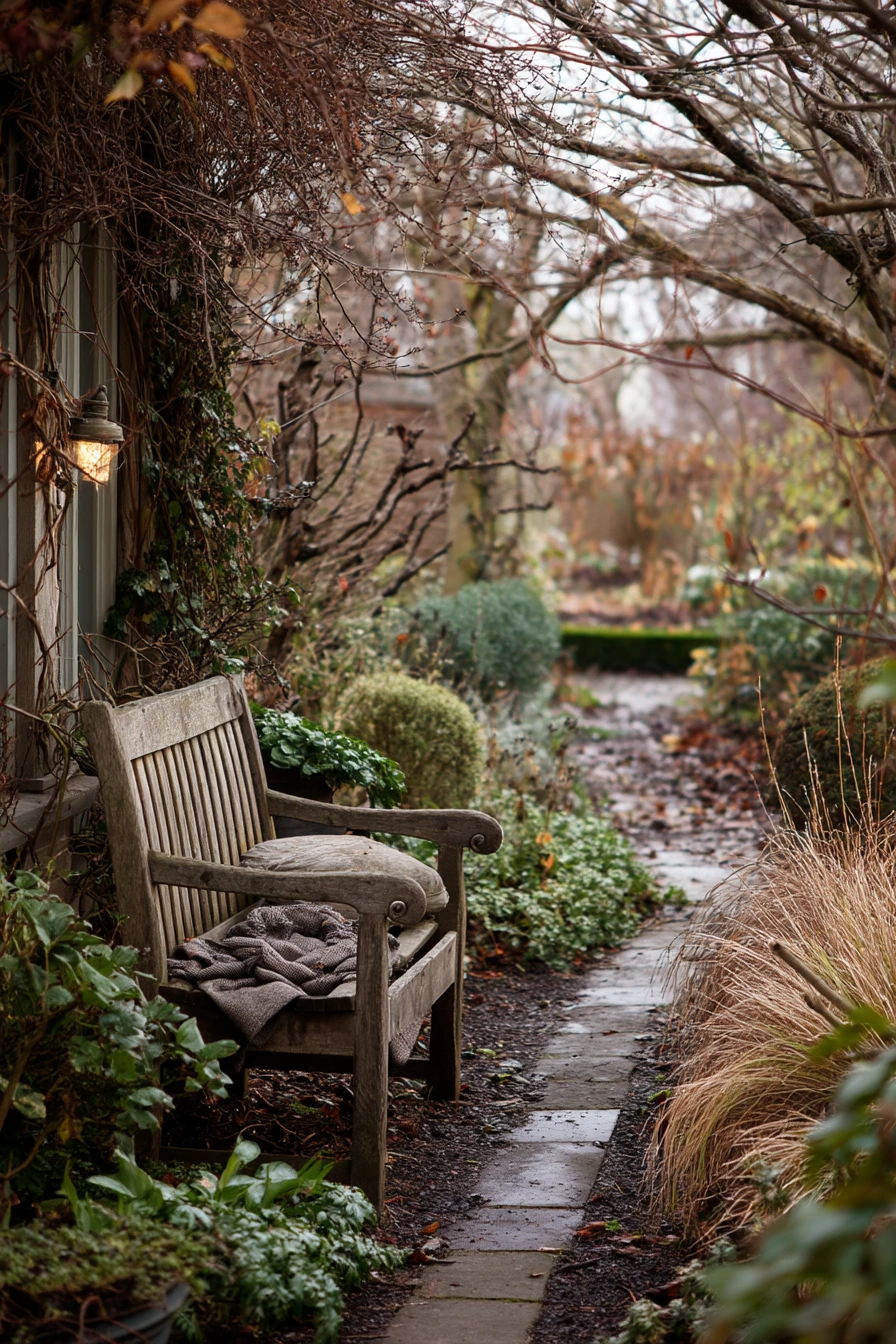
Winter garden border ideas focus on shape, stems, and evergreen leaves, since flowers are limited. Line a narrow bed with dark bark mulch and subtle stone edging to keep the space looking cared for even in cold months. This style suits couples who want year round structure without constant work.
Use ornamental grasses for movement, evergreen hellebores for low green coverage, and clipped shrubs for strong form. Add dogwood stems for winter color, especially red or yellow types, and place them where you can see them from a door or window. Keep the planting simple so it reads clearly in low light.
Styling matters in winter because you notice small details. A lantern by the bench adds warm light, and a folded scarf makes the space feel used. After pruning, muddy secateurs can rest on a tray near the door. For maintenance, cut grasses back in late winter before new growth starts. Trim shrubs to keep clean lines, and refresh mulch when it thins. Hellebores can be tidied by removing old leaves so winter blooms show. If snow falls, brush heavy snow off shrubs to prevent branches from bending.
- Choose two evergreen shrubs and repeat them for a steady pattern.
- Plant dogwood in a small clump for stronger stem color.
- Use grasses in groups so they do not look scattered.
- Keep stone edging low so it does not fight with winter shapes.
- Add one warm light source near an entry for a cozy look.
Pro Design Tip: Design for silhouettes by mixing round shrubs, vertical dogwood stems, and airy grasses, so the border looks good even from inside the house.
Budget Considerations: Winter interest shrubs can be pricey in larger sizes. Buy smaller plants and use mulch and a lantern to create a finished look while they grow.

Good garden border ideas start with a clear edge, the right plants for your light, and a simple pattern you can repeat. Steel, brick, timber, stone, and planters can all work if the line is clean and the spacing makes sense.
Use the section that matches your yard, then copy the plant mix and the small styling details. A border that fits your routine will look better for longer because you will actually care for it.
FAQ
What is the easiest garden border edging for beginners? A spade cut edge with mulch is the easiest to start. You can upgrade later with steel, brick, or stone once the shape feels right.
How wide should a garden border be? For a simple planting, aim for 18 to 24 inches. For layered shrubs and perennials, 3 to 5 feet gives room for height changes.
What plants work best for a narrow border? Compact shrubs like boxwood or dwarf hydrangea, plus neat perennials like heuchera, nepeta, and salvia. Avoid plants that spread fast into paths.
How do I make a shaded border look full? Use layers of leaf texture with ferns, hostas, and hellebores. Add stepping stones so you can maintain it without crushing soil.
What is a low water border planting plan? Combine gravel mulch with lavender, santolina, sedum, euphorbia, and salvias. Space plants so air moves and water deeply but less often.
How do I keep borders looking tidy all season? Refresh mulch, deadhead often, and trim edge plants back from paths. Repeating one plant type every few feet helps the bed look planned.
Can I make a nice border if I rent? Yes. Use freestanding planters in a straight line, pick herbs and compact plants, and add lighting and a small seating area to finish the look.