
Basement organization ideas can turn a messy catch-all space into a storage zone that works every day. When bins have labels, shelves match what you store, and items have a clear home, you save time and cut stress.
This post covers 10 practical setups, based on real basement scenes: kid toys by an IKEA-style cubby wall, renter-friendly open metal shelves, a craft and gift wrap station, sports gear hooks, laundry and linens, seasonal decor tubs, a work-from-home corner, bulk food storage, a workout area, and a DIY tool bench.
Each section shares simple steps, styling touches that still feel lived-in, and small fixes for common problems like loose charging cables, random water bottles, and “one sock on the floor” moments.
Use the ideas one zone at a time. You can start with labels and bins you already have, then upgrade as you learn what you really need.
Intro: Family Basement Toy Storage With Cubbies and Labeled Bins
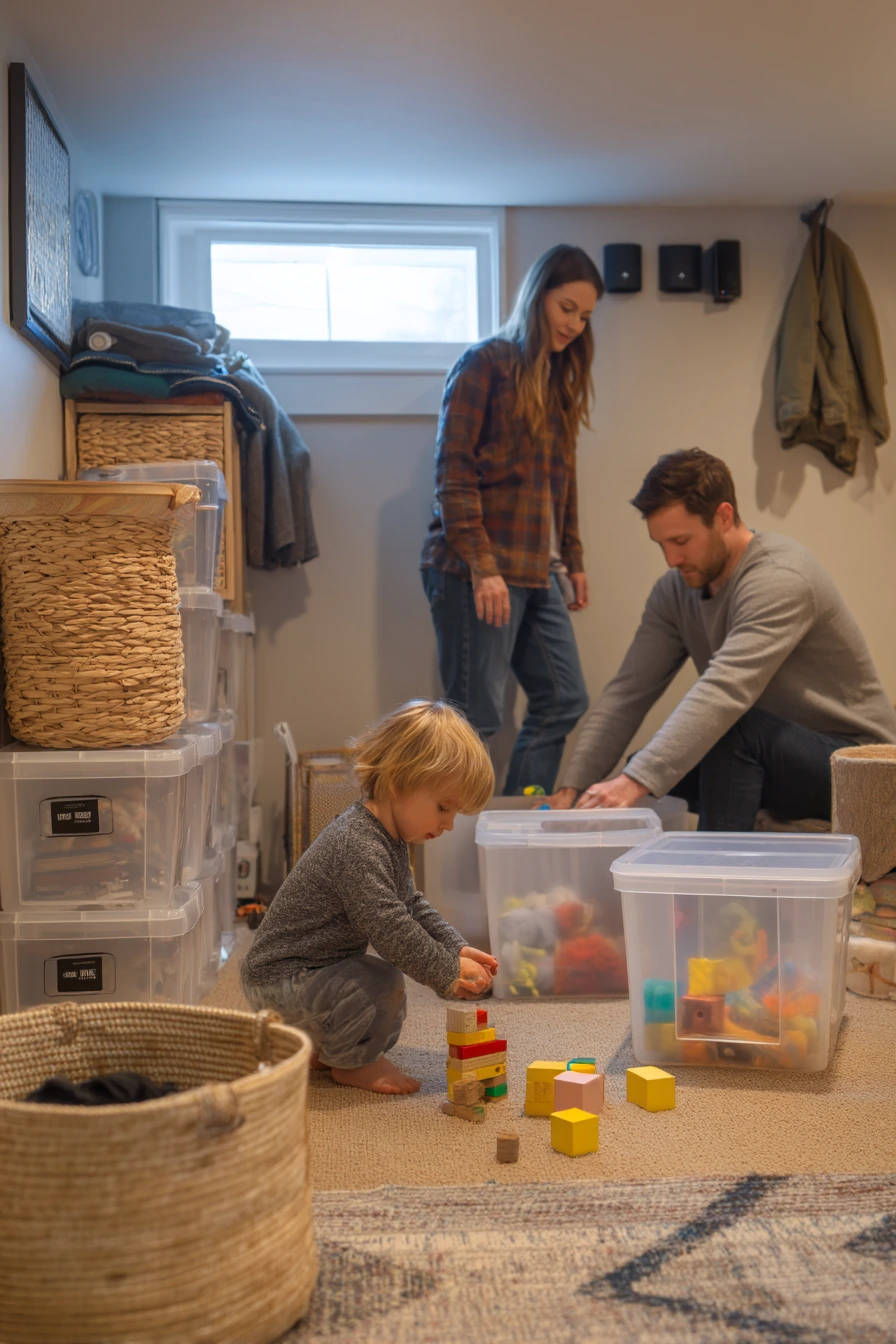

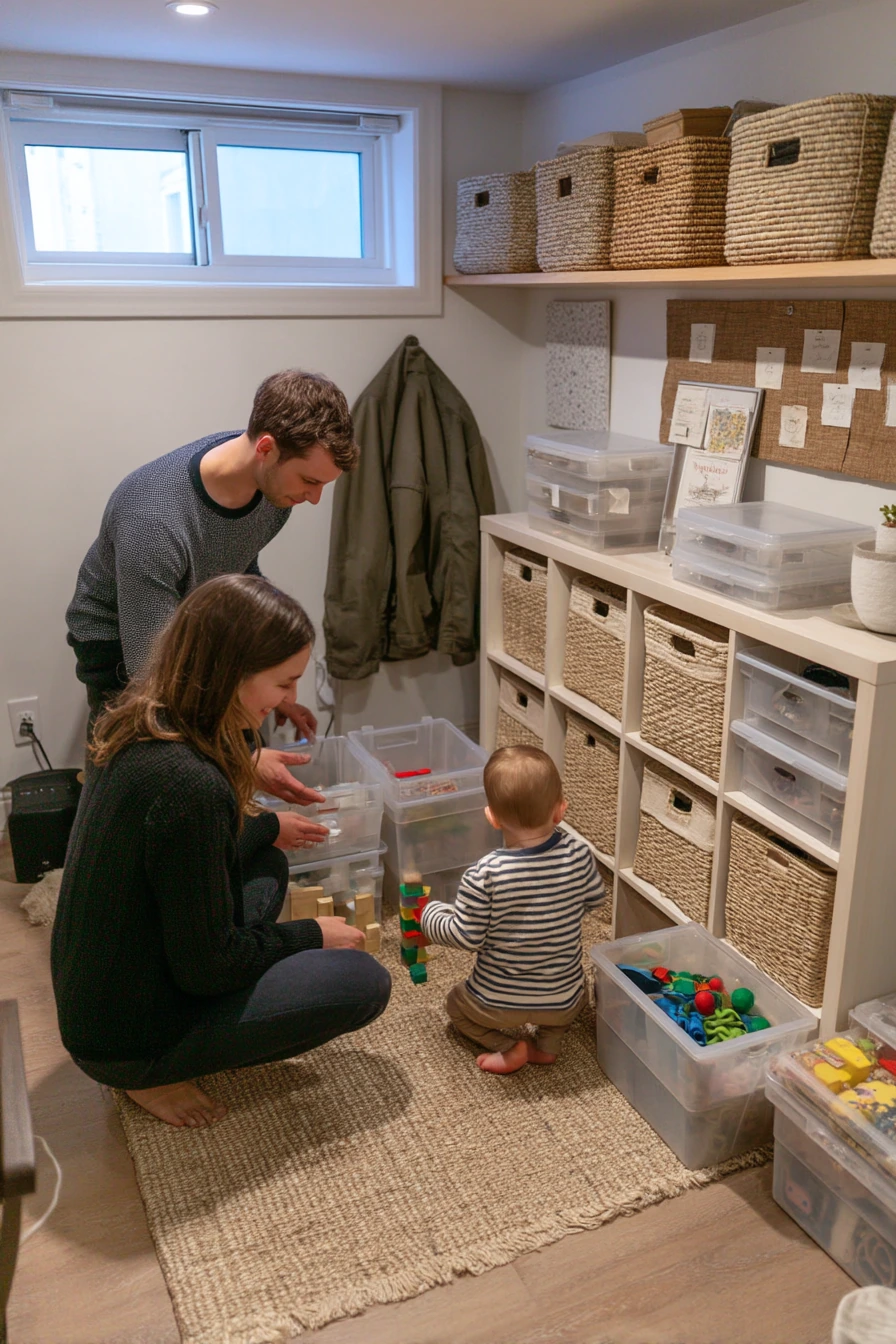
A busy family basement needs storage that is low, safe, and fast to use. A low IKEA-style cubby wall is a good base because kids can reach it, and adults can still keep the room looking calm. Add woven baskets for toys, clear storage drawers for small parts, and a few labeled bins for bigger sets. Keep the labels simple, like “Blocks,” “Cars,” and “Art.”
Plan the wall in layers. Put daily toys in the bottom cubes. Use the top row for items you want to control, like craft kits or puzzles with many pieces. Wall hooks help with jackets and backpacks, so they do not end up on the floor. If you keep a folded play mat, store it upright beside the cubbies so it can be pulled out in seconds.
Keep the room real, not perfect. A toddler might stack blocks near the bins, and that is fine. What matters is the reset is easy. Limit “misc” baskets so clutter does not hide. If you have a speaker or charging station, use a small cable box or clips so charging cables do not drape across shelves. Keep drinks like a water glass on a high shelf only, away from toys.
- Sort toys into 5 to 8 groups and label each basket to match.
- Use clear drawers for tiny pieces like figurines, cards, or crayons.
- Add hooks at kid height for jackets and at adult height for bags.
- Store the play mat upright and keep one toy basket for “today’s picks.”
- Do a 3-minute nightly reset: floor, cubbies, then hooks.
Pro Design Tip: Pick baskets in one material (like woven) for the open cubbies, then use clear drawers only in one section so the wall looks calm but still practical.
Budget Considerations: Reuse shoe boxes as drawer dividers and print labels on plain paper with tape. Add baskets slowly, starting with the cubes you use most.

1. Renter-Friendly Basement Organization With Open Metal Shelves


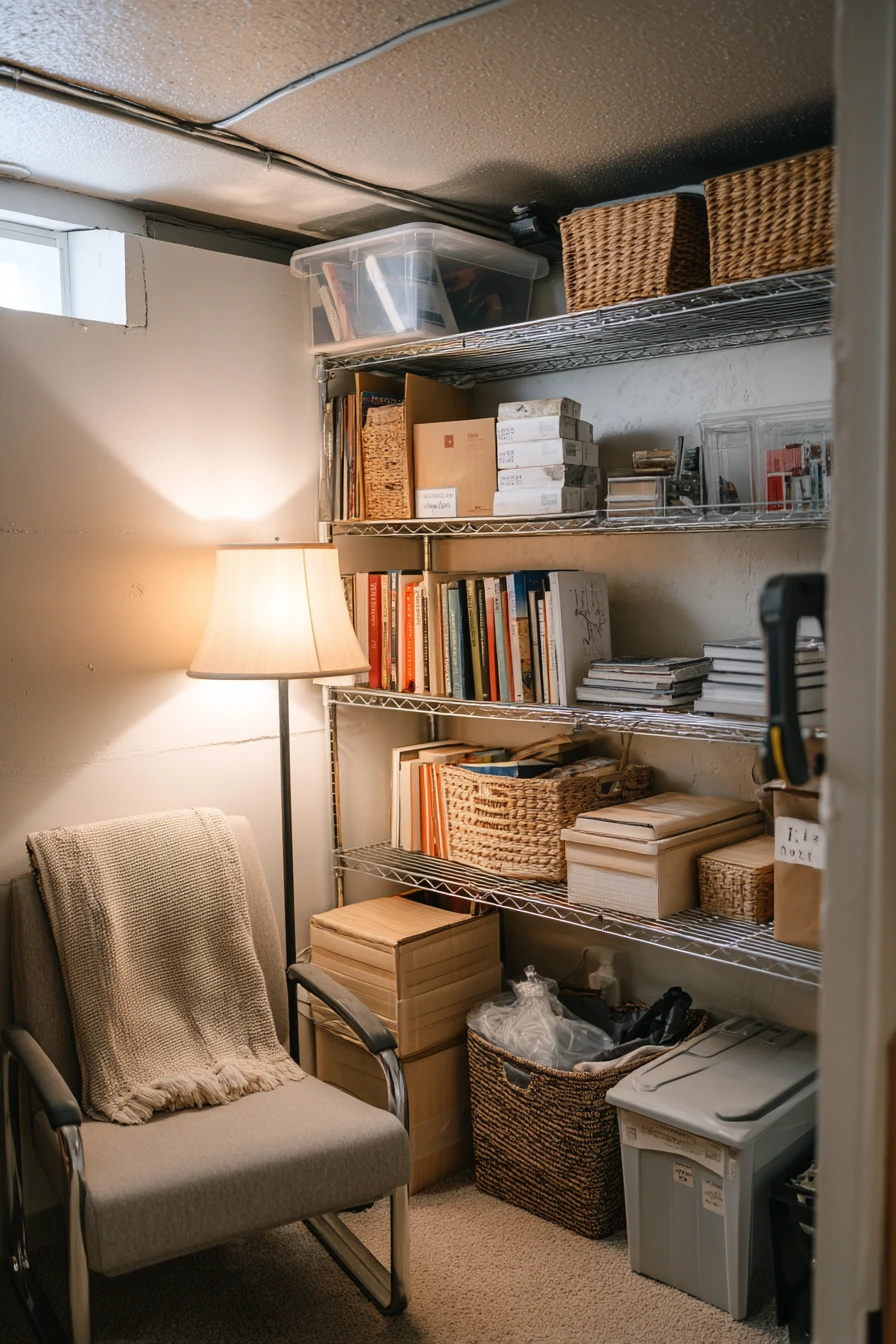
If you rent and have a small finished basement, focus on changes you can undo. Open metal shelves are strong, easy to move, and great for boxes, books, tools, and vacuum storage. Use peel-and-stick labels on bins and crates so you can relabel when your needs change. Keep heavier items low and often-used items at chest height.
Make one corner feel finished, even if the rest is utility. A compact chair with a slightly wrinkled throw can soften the space and create a spot to put on shoes or fold a sweater. Tuck a laundry basket below the lowest shelf to catch overflow. Warm lamp light helps the area feel less like storage, which can make you more likely to keep it tidy.
To avoid visual clutter, choose matching stackable crates or boxes in two colors max. Leave one shelf with open space for “incoming” items, like donation bags or seasonal swaps. Keep tools in one box with a handle, not spread across shelves. If cords are visible, use adhesive cable clips on the shelf post so they stay neat and off the floor.
- Use open shelves so you can see what you own and stop buying doubles.
- Label every box on the front and the side for corner views.
- Store the vacuum and tall tools upright with a strap or bungee cord.
- Create one “drop shelf” for mail, returns, and items to put away.
- Add a small lamp to make the corner feel clean and usable.
Pro Design Tip: Group items by task, not by type, like “cleaning,” “small repairs,” and “winter gear,” so you can grab one bin and finish a job.
Budget Considerations: Choose one sturdy shelf unit instead of several weak ones. Cardboard banker boxes with labels can work until you upgrade to plastic crates.

2. Basement Craft and Gift Wrap Organization With Pegboard and Clear Drawers

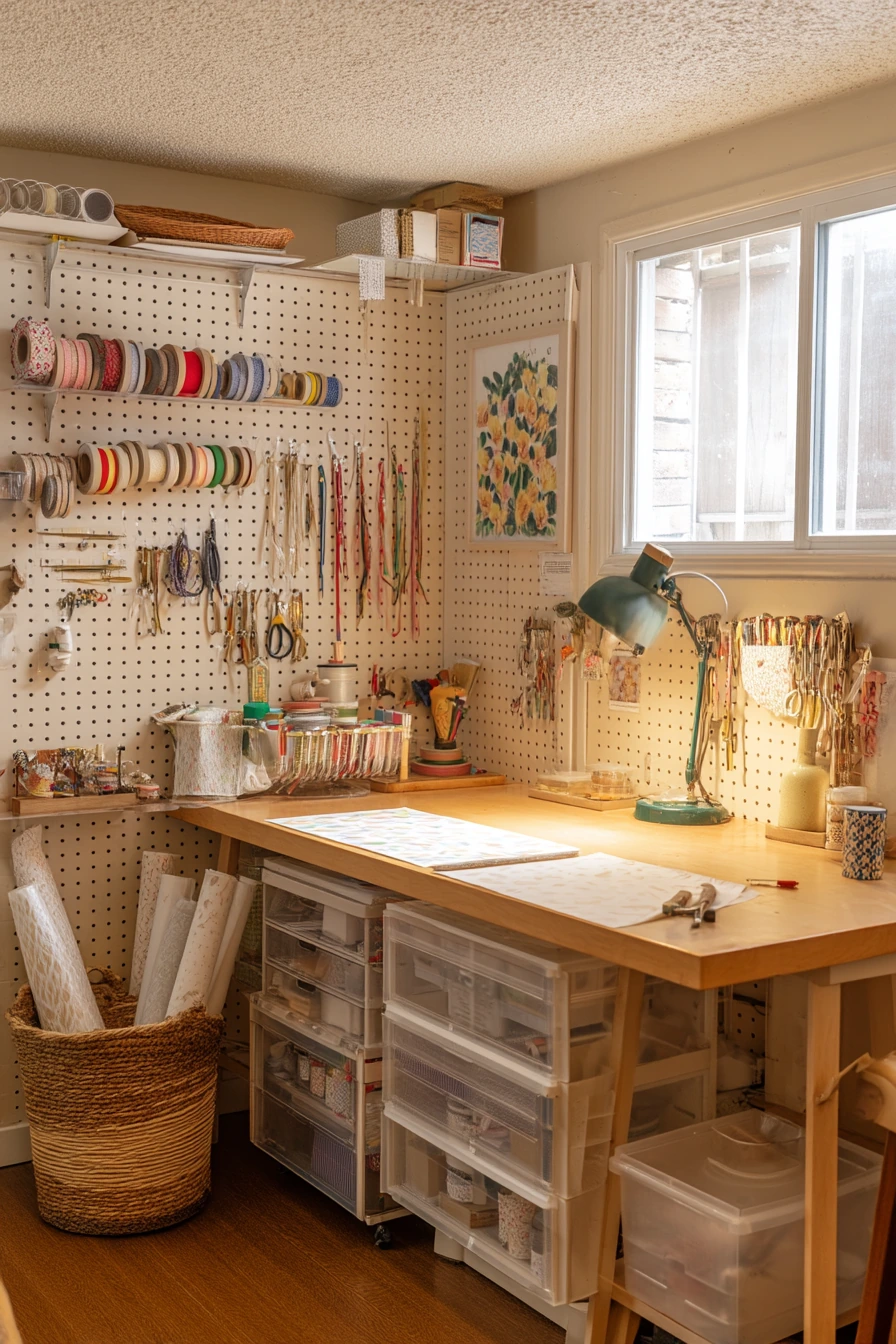
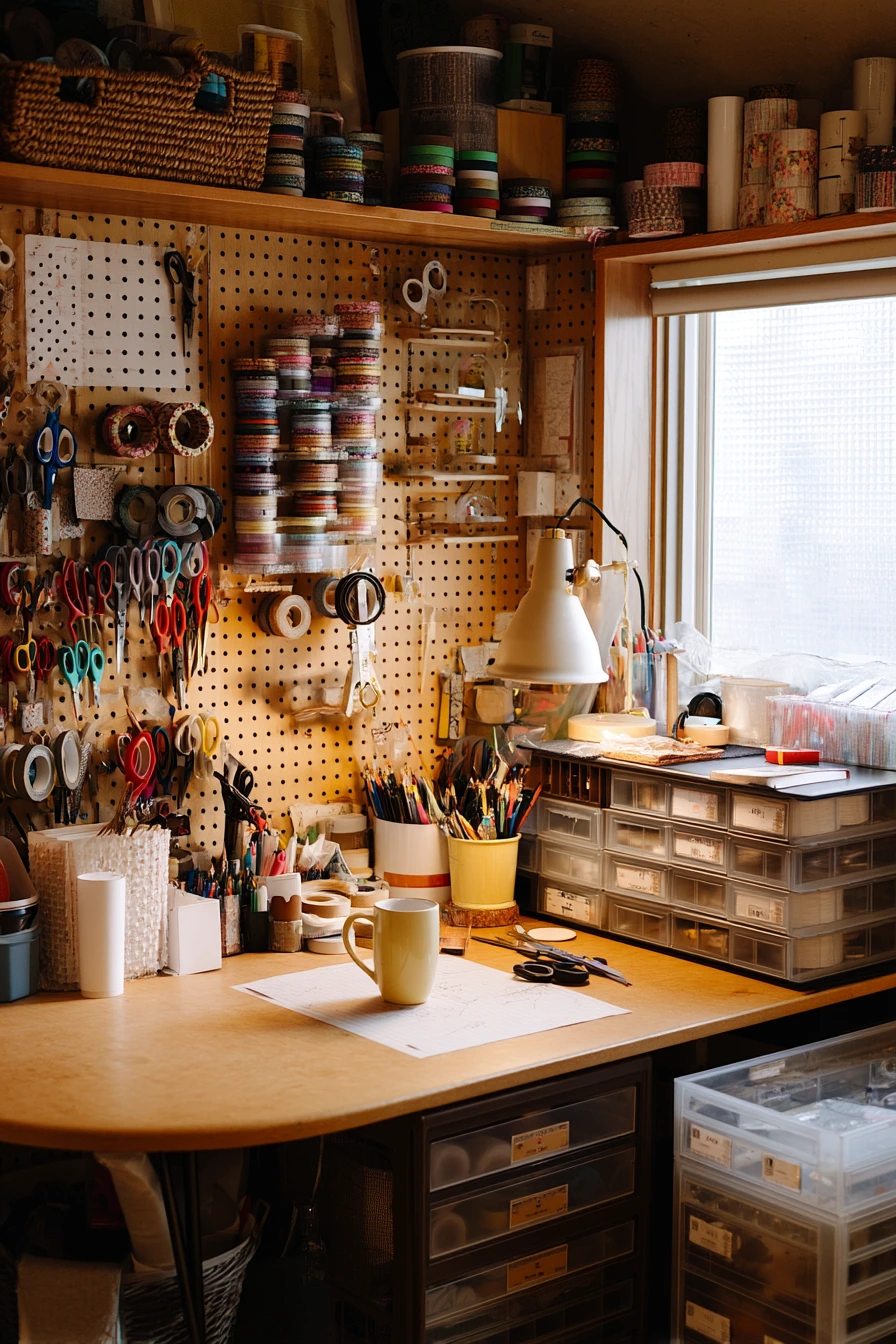
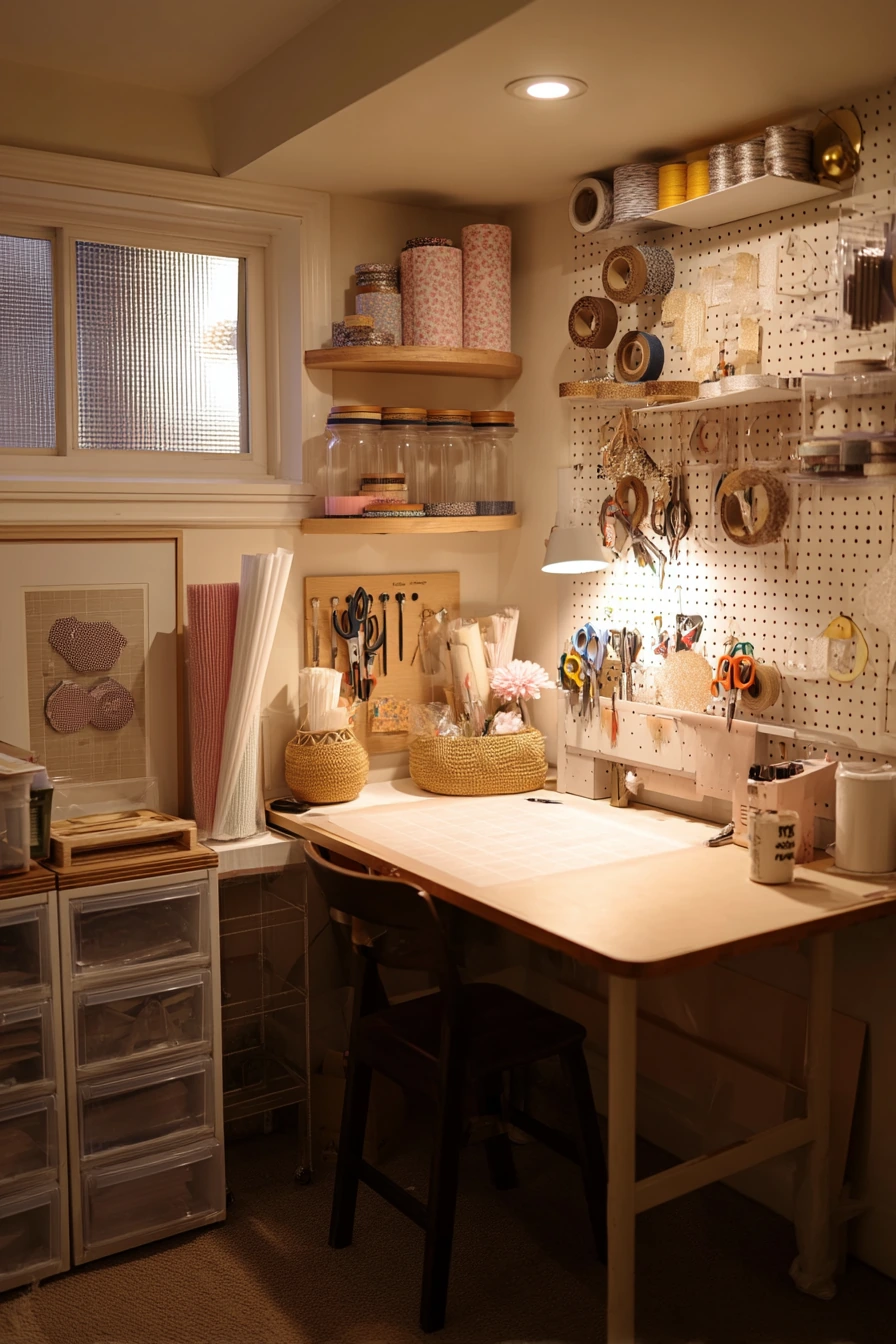
A craft basement zone works best when tools are visible and paper is protected. Start with a pegboard wall for scissors, rulers, ribbon spools, and frequently used tools. Keep the layout simple so it is easy to put items back. Place a tall basket for paper rolls so they do not bend or crease. If you wrap gifts on weekends, store wrapping paper upright and sort by color or season.
Clear drawers are great for tape, tags, cards, and small supplies. They stop the “junk drawer” effect because you can see what is inside. Keep a worktable mostly open, but allow for real-life use: a mug, paper scraps, and a half-used glue stick happen. The goal is a space you can reset in five minutes, not a showroom.
Use both soft window light and a warm task lamp. Good light makes cutting and labeling easier and reduces mistakes. Add a small tray for “in progress” pieces so they do not spread across the table. If scraps pile up, keep a lidded bin nearby and empty it weekly. For styling, choose two matching containers, like white drawers and one woven basket, so the space feels calm.
- Hang pegboard tools by category: cut, tape, tie, and measure.
- Store ribbon spools on a rod so they unwind without tangles.
- Use clear drawers for tape, tags, stickers, and gift cards.
- Keep a tray for current projects and a bin for paper scraps.
- Label drawers with short words and keep refills in one box.
Pro Design Tip: Outline your pegboard tools with a pencil or thin marker so every item has a clear “home” and cleanup becomes automatic.
Budget Considerations: Pegboard and basic hooks are low cost. If clear drawers are pricey, start with one set for tiny items and use shoe boxes for the rest.
3. Sports Gear Basement Organization With Wall Hooks and Ventilated Racks
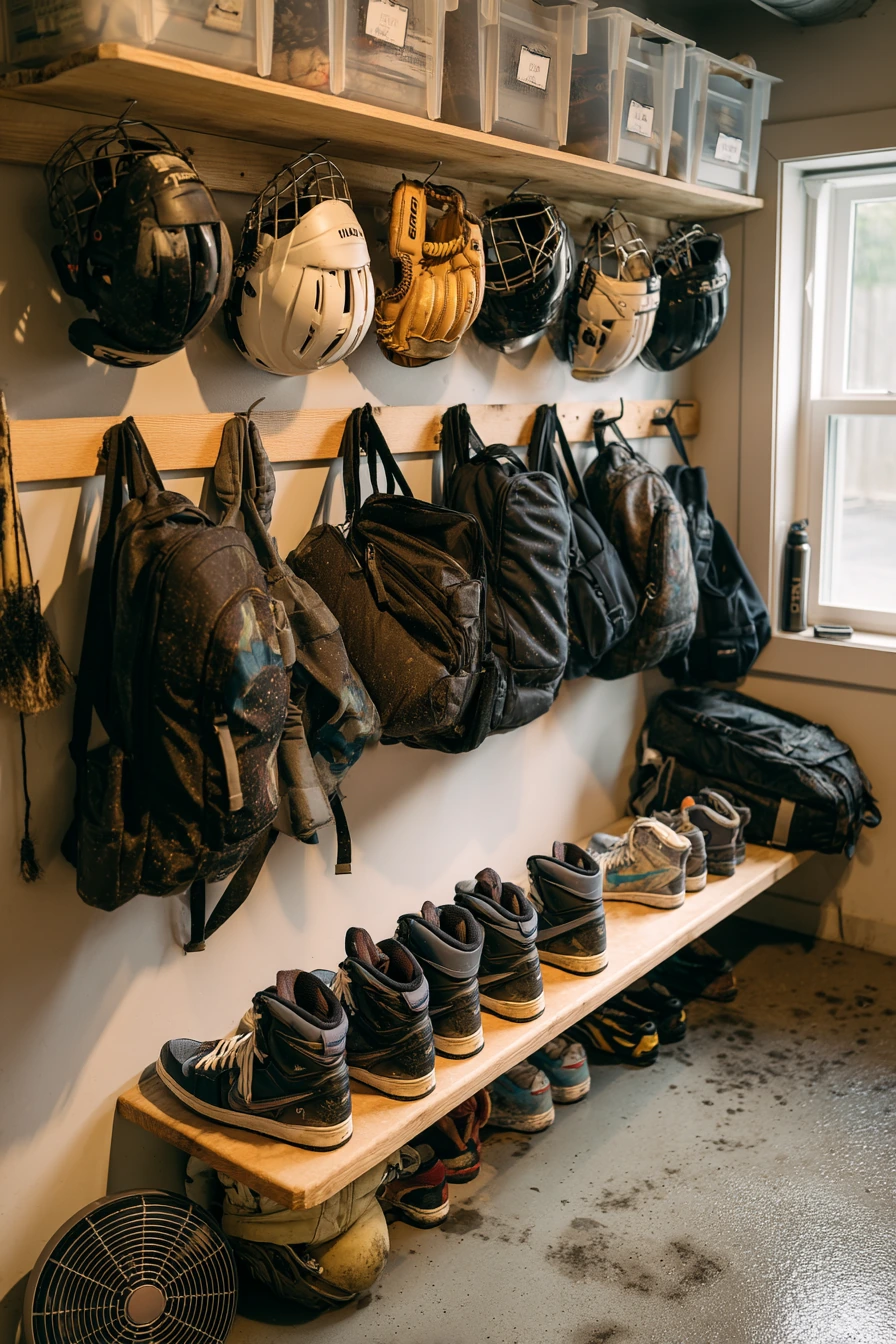
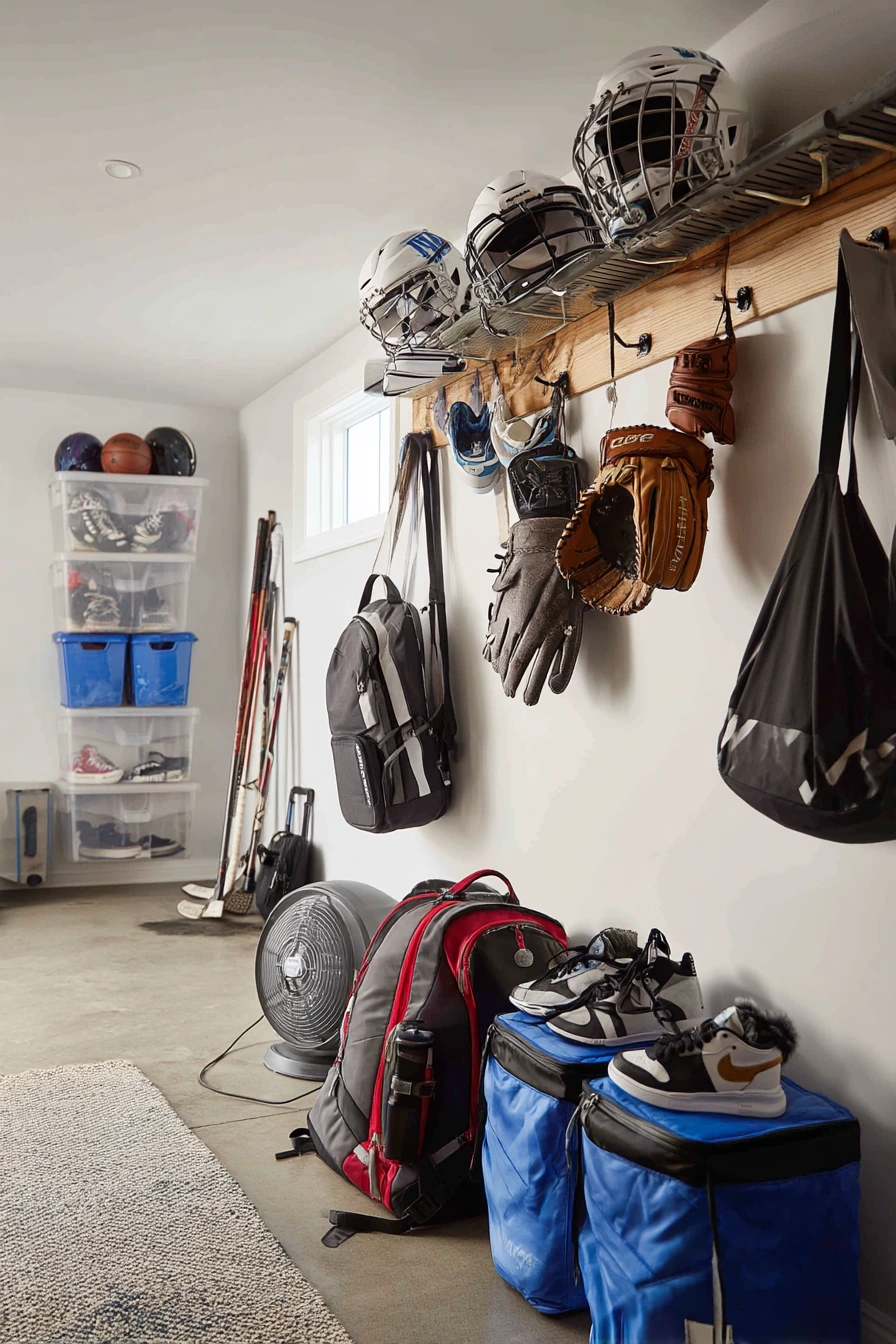
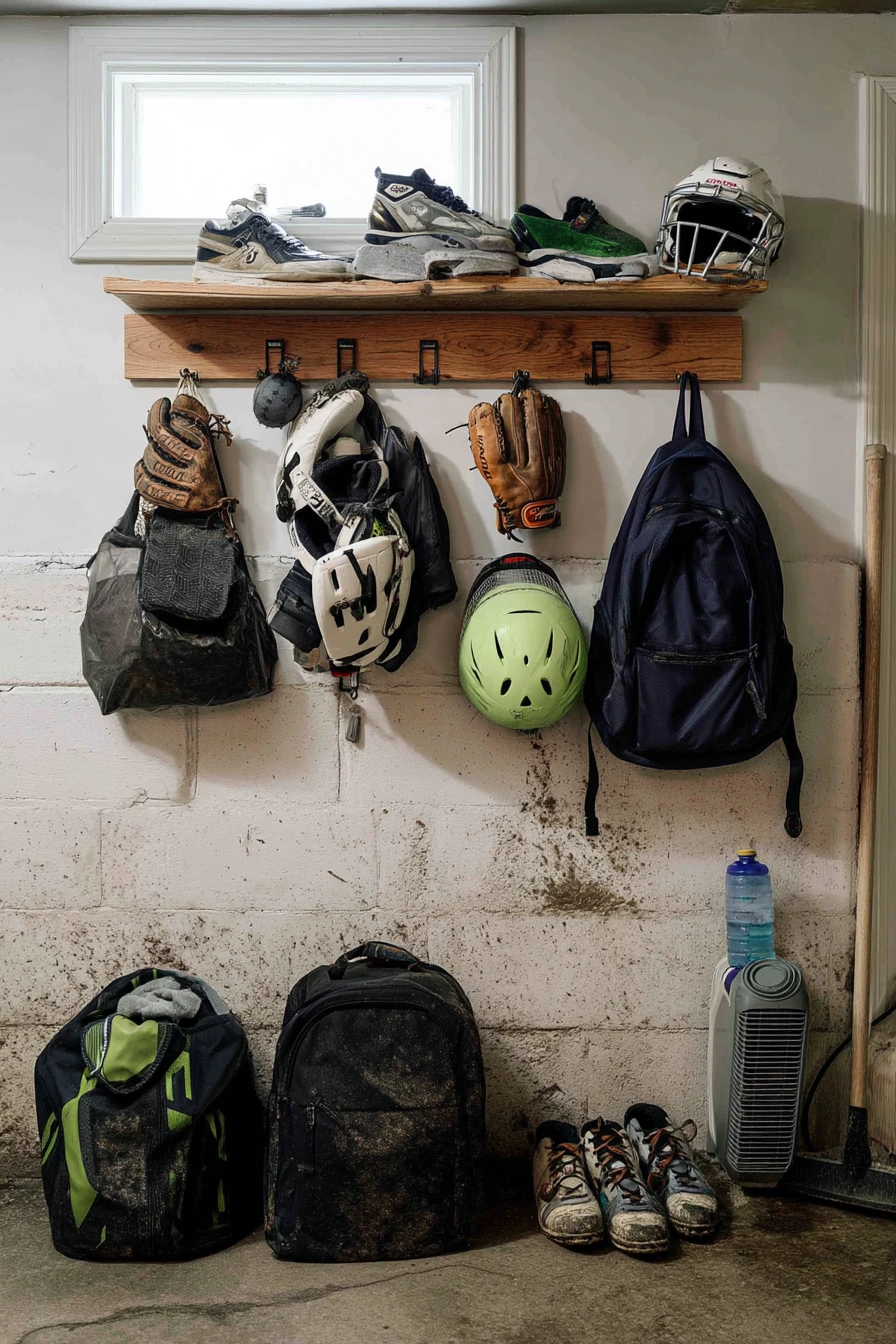
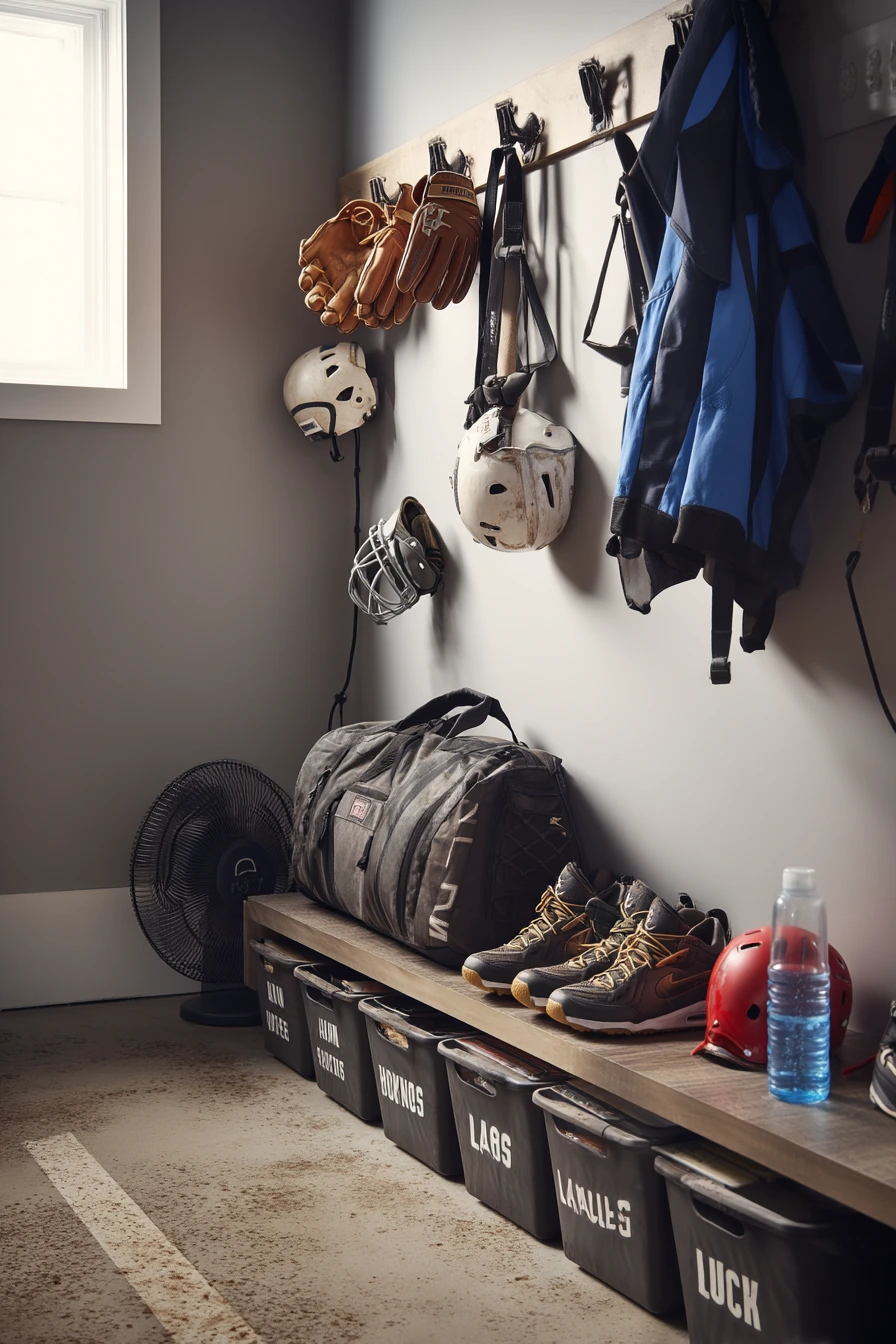
Sports-heavy basements get messy fast because gear is bulky and often wet. The best fix is to get items off the floor. Install strong wall hooks for hockey gear, baseball gloves, and duffel bags. Add labeled bins for helmets and pads so each sport has its own container. When kids can see the label, they can help reset the zone.
Drying matters. Use a ventilated rack for sneakers and place it near a portable fan if the basement stays damp. Leave space between shoes so air can move. Expect muddy turf marks and plan for them with a small mat and a wipe-down towel. Keep one water bottle shelf or a small bin so bottles do not roll around and cause clutter.
Make the setup easy to follow. Put the most used hooks at shoulder height and the heaviest bins on the lowest shelf. If you charge a fan or a speaker in the area, manage the charging cable with clips so it does not become a trip hazard. For styling, use matching bins and one simple sign like “Sports” to define the area without adding more stuff.
- Hang bags and pads on hooks to keep the floor clear.
- Use labeled bins for each sport: hockey, baseball, soccer, and extras.
- Add a ventilated shoe rack and aim a fan at wet gear.
- Keep a mat and towel nearby for quick cleanups.
- Use cable clips to keep cords tight to the wall or shelf leg.
Pro Design Tip: Create a “game day” hook row for the items that must leave the house, so nothing gets missed when you are rushing out the door.
Budget Considerations: Heavy-duty hooks and a basic wire rack are affordable. If you cannot buy bins yet, use sturdy laundry baskets with taped labels.
4. Basement Laundry and Linen Organization With Slim Cabinets and Wire Baskets
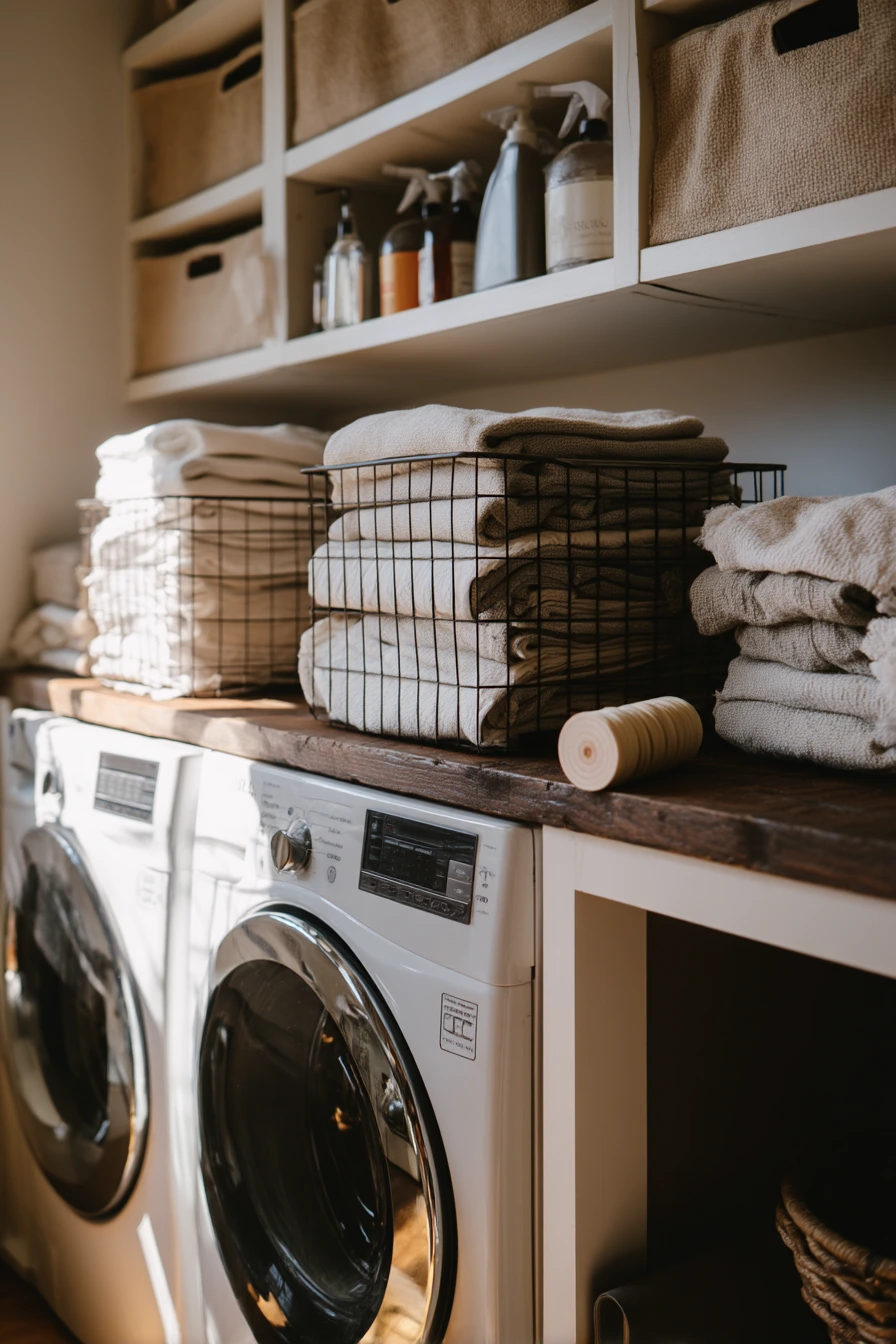
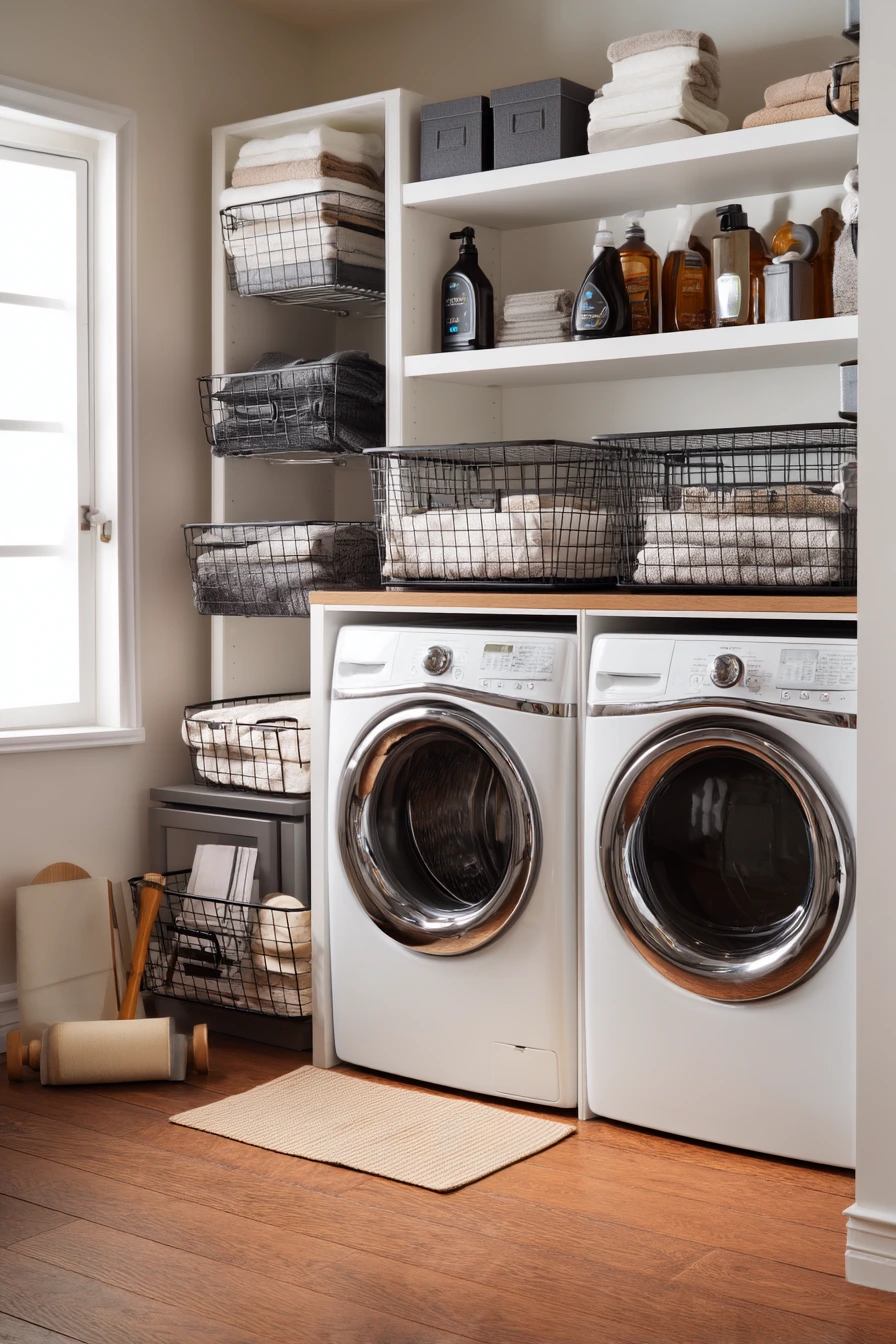
A basement laundry setup can feel calm when every item has a spot. If you have stacked front-load washer and dryer units, use the vertical space beside them. Slim cabinets hold detergent refills, stain removers, and extra toilet paper without taking over the room. Wire baskets are perfect for towels because air can flow and you can see when supplies run low.
Keep linens simple. Fold sheets into sets and store each set inside one pillowcase, then stack by size. This stops the “sheet avalanche” problem. Put daily items like lint roller sheets, dryer balls, and stain stick in a small open bin at eye level. Accept small imperfections like one sock on the floor by adding a small “found items” basket. Empty it once a week.
For a clean look, pour detergent into amber bottles or matching containers, and label them with plain words. Add one wall hook for a drying rack or hangers. Good lighting helps: a warm overhead light plus soft window spill makes the zone feel less gloomy. Style it with one simple framed print or a small plant on a high shelf, away from moisture.
- Use slim cabinets for refills and items you do not use daily.
- Store towels in wire baskets so you can grab and go.
- Fold sheet sets into pillowcases and label by size.
- Keep a small bin for lint tools, stain remover, and clothespins.
- Add a “found sock” basket and sort it weekly.
Pro Design Tip: Set up three baskets for sorting, like lights, darks, and towels, so laundry moves in one direction without piles spreading.
Budget Considerations: If cabinets are not in the budget, use a narrow rolling cart and two baskets. Reuse glass jars for pods and clothespins.
5. Seasonal Decor Basement Storage With Clear Tubs and Wreath Boxes
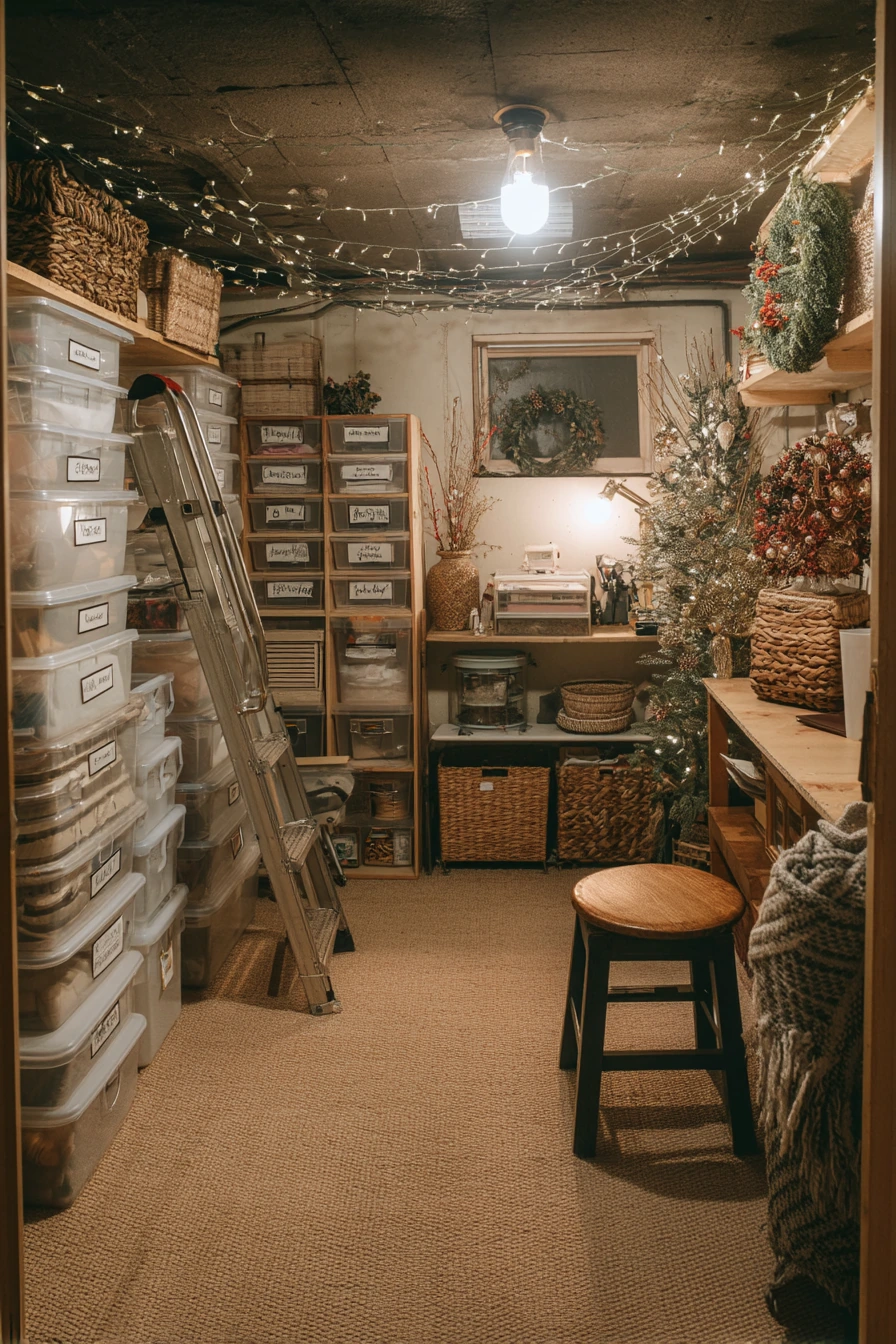

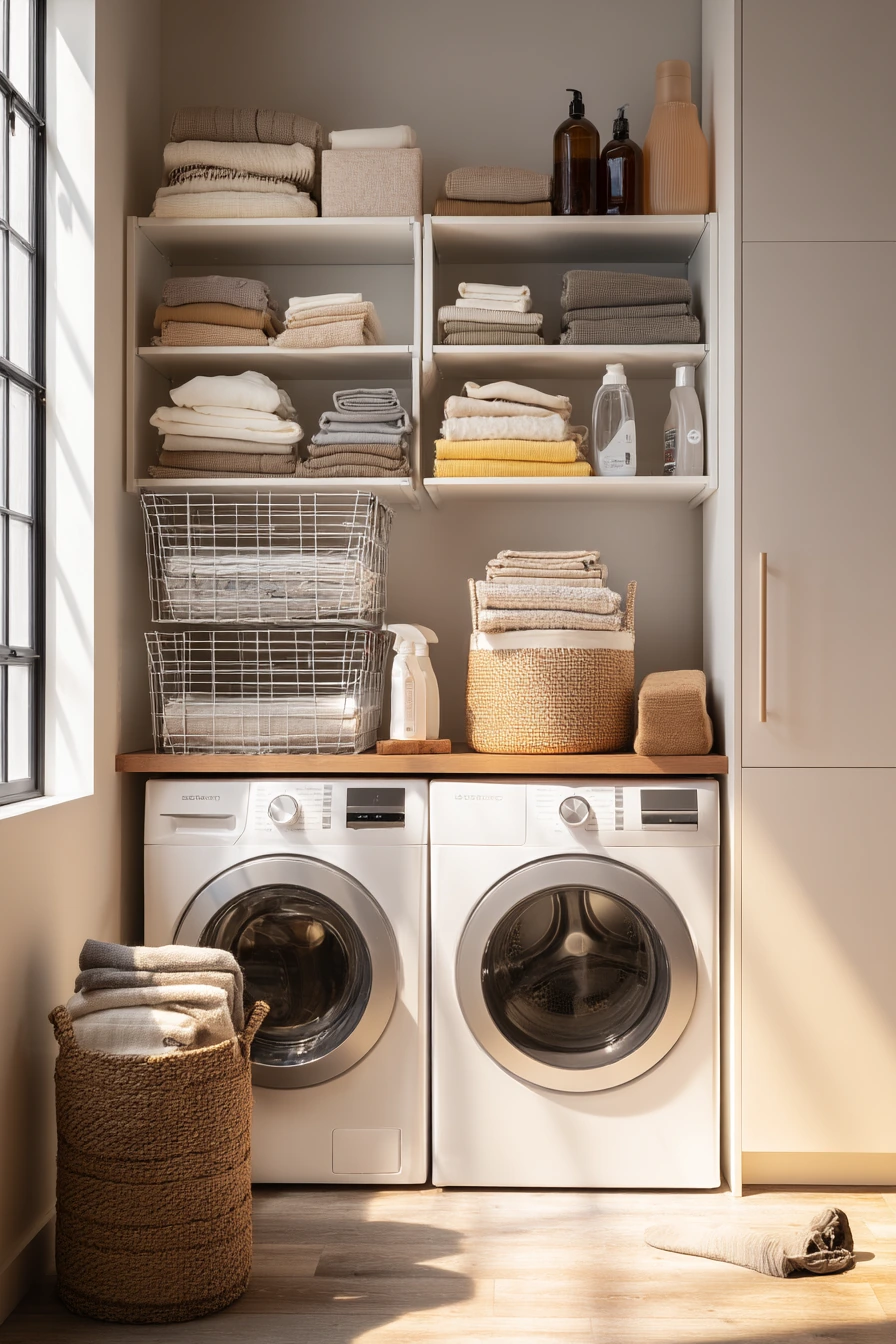
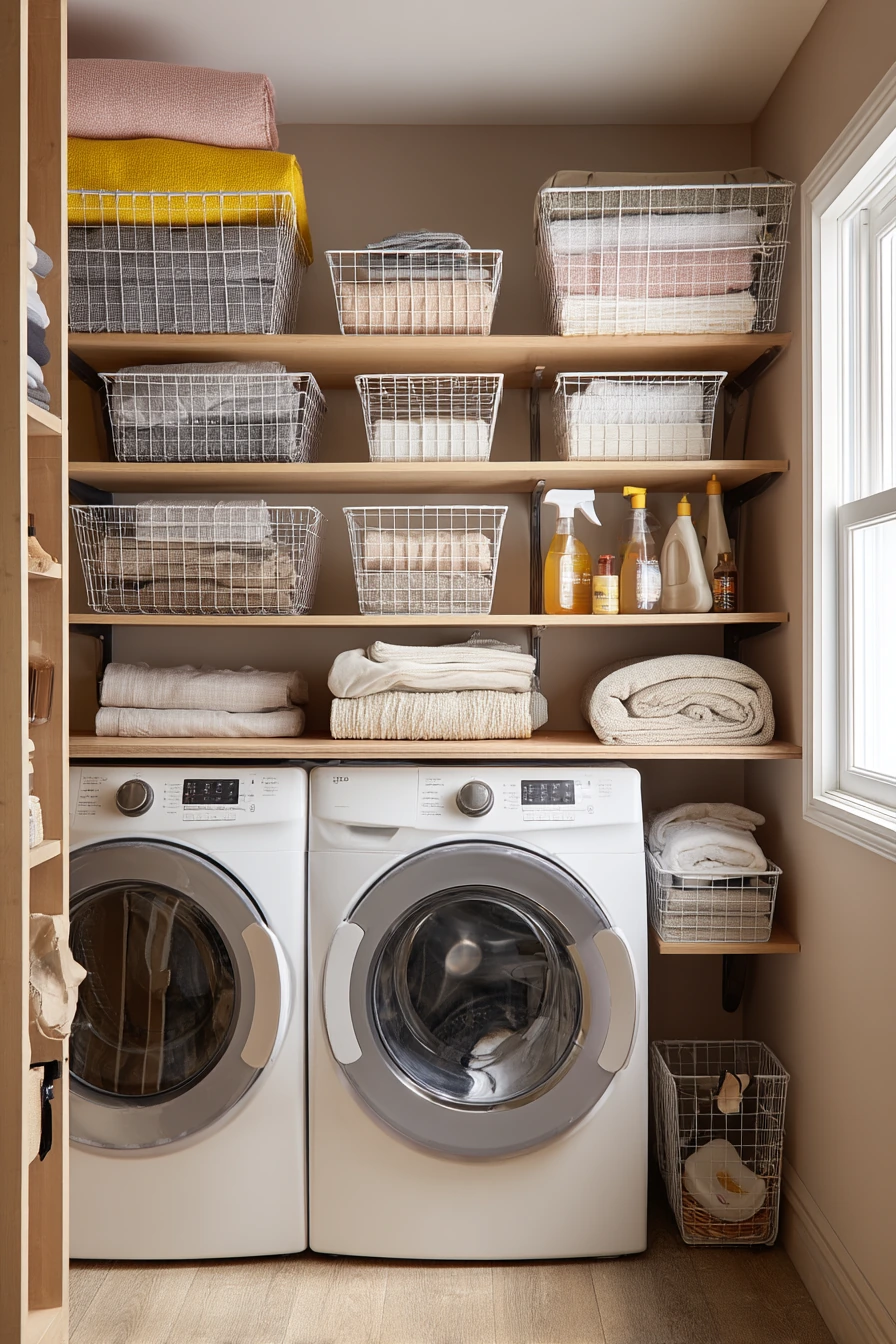
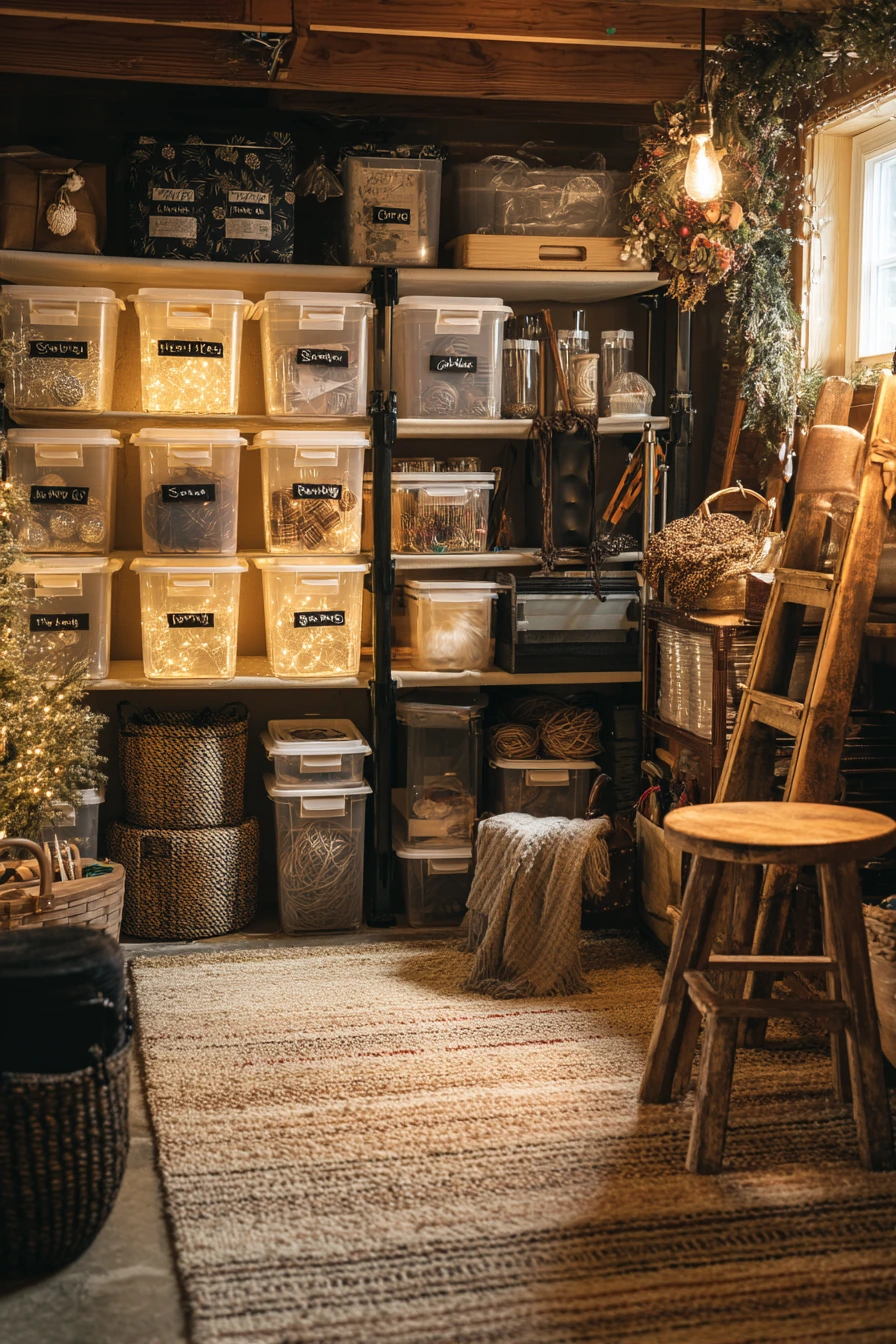
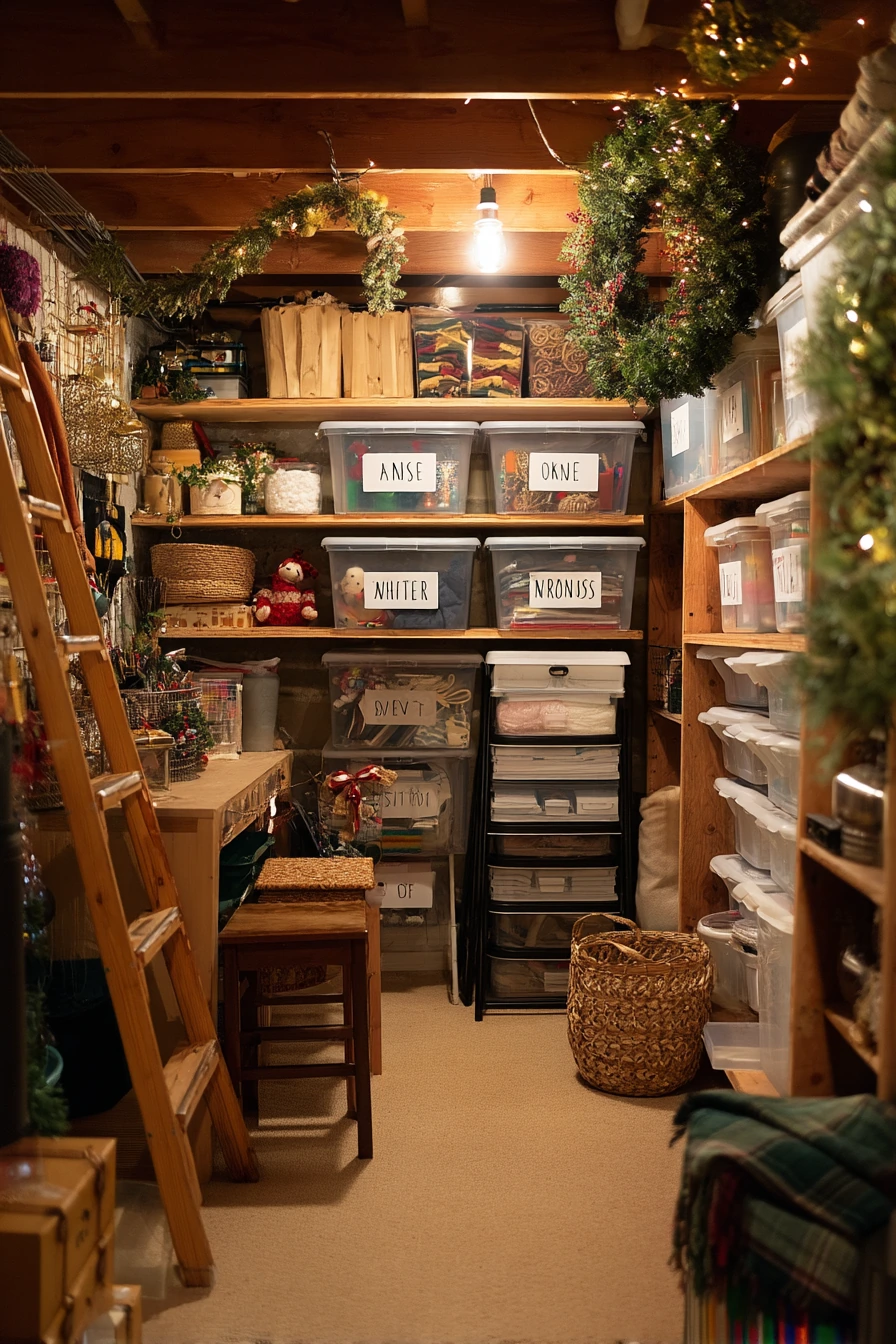
Seasonal decor takes up space, so it needs strong categories and clear labels. Tall clear tubs let you see what is inside while keeping dust out. Label by season, like “Fall,” “Holiday,” and “Spring,” and add a quick list on the label, such as “wreath, garland, table decor.” Use wreath boxes to protect shapes so they do not crush in a pile.
Store heavy tubs on the lowest shelf and lighter items higher up. If you have high shelving, a rolling ladder makes access safer than a chair. Coil garland in a basket so it does not tangle, and store ornament trays flat to prevent breakage. It is normal to find one strand of fairy lights with dust on it. Put a small “test and toss” bin in the zone to check lights before the season starts.
Keep a simple packing kit nearby. A tape gun, extra hooks, and a marker save time when you put items away. Add a small stool for quick sorting, and keep a folded scarf or spare fabric in a bin with gift wrap, not mixed with ornaments. For styling, make labels uniform and keep one shelf edge clear so the area looks tidy even when you are swapping bins.
- Use clear tubs and label by season with a short contents list.
- Store wreaths in boxes and ornaments in trays to prevent damage.
- Coil garland in a basket and tie it with soft straps.
- Keep a “test lights” bin for fairy lights and extension cords.
- Set up a small packing kit with tape gun, marker, and spare labels.
Pro Design Tip: Add a color dot system on labels, like orange for fall and green for holiday, so you can find the right tub in seconds from across the room.
Budget Considerations: Clear tubs cost more, so mix clear tubs for fragile items with solid bins for bulky decor. Reuse shipping boxes for wreaths until you upgrade.
6. Work-from-Home Basement Office Organization With File Boxes and Cable Clips
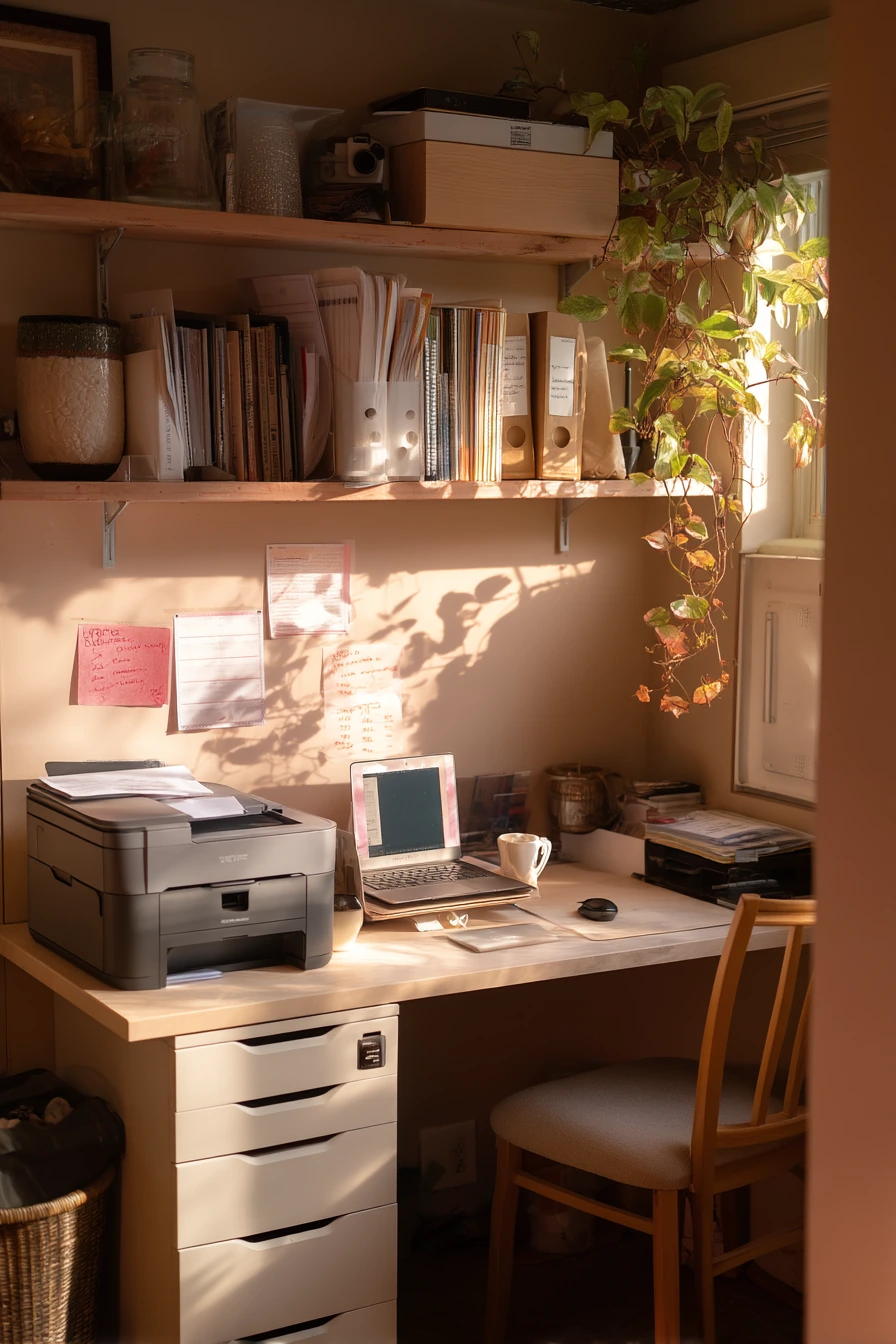
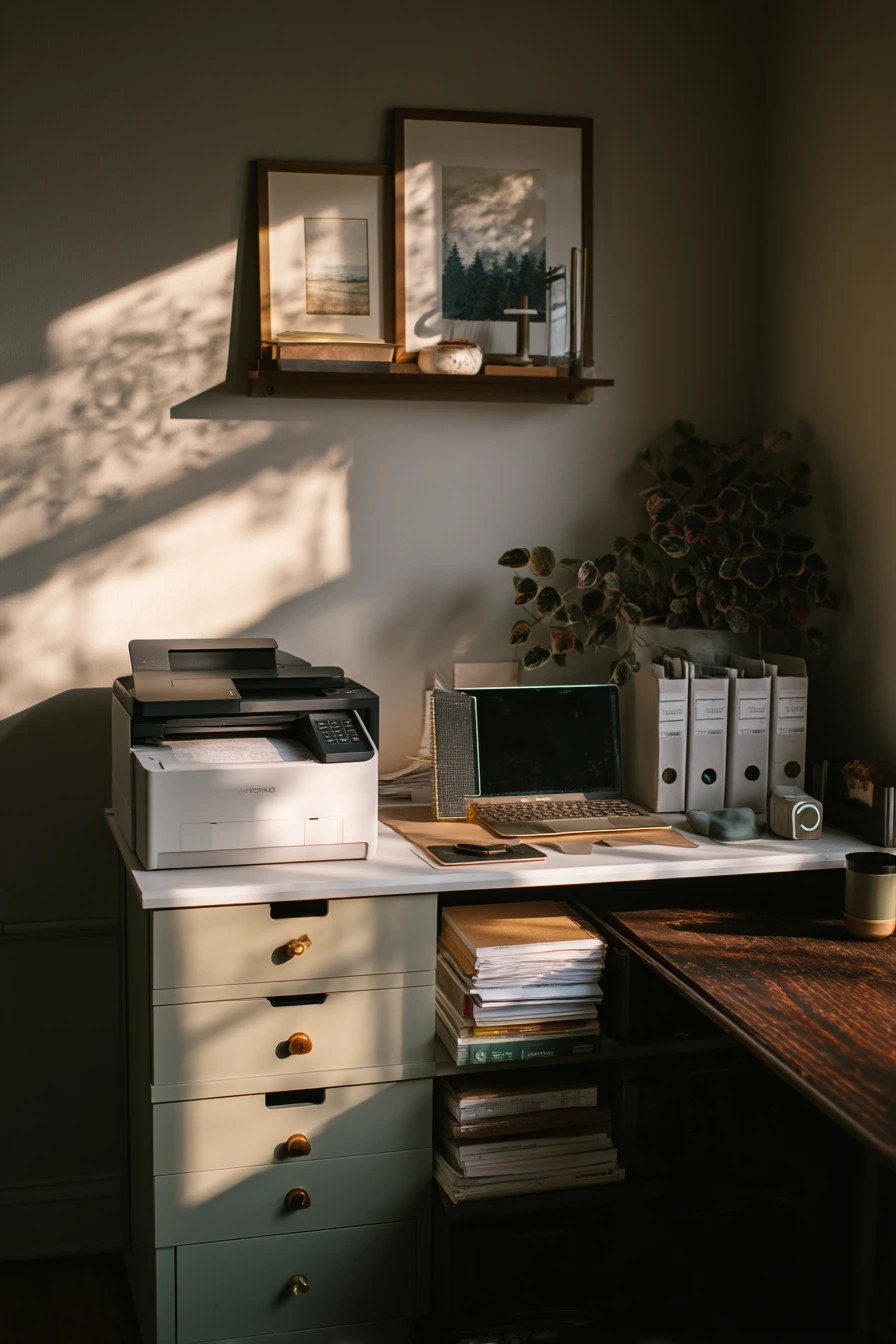
A basement work-from-home corner needs to stay focused, even if it sits near storage. Start with a compact desk and build up in zones: work surface, paper flow, and tech. Use file boxes for long-term papers and document trays for items you need this week. Keep books upright with bookends so they do not slide and look messy.
Tech clutter is usually the problem. Add cable management clips under the desk and along the back edge so your laptop charger does not tangle. Keep the printer on a shelf so you can store paper and ink below it. If you have a coffee cup ring on the desk, add a coaster and a small wipe cloth in a drawer. Small habits keep the area looking clean with little effort.
Light and mood matter in a basement. Put a plant near the window to catch soft daylight and make the corner feel more pleasant. Keep decor simple: one framed print or a small desk lamp with warm light. For styling, choose matching trays and neutral file boxes so the space feels calm, not like an overflow zone. Create a daily reset: clear the desk, stack trays, and plug in devices.
- Use document trays for “to do,” “to file,” and “to scan.”
- Store papers in labeled file boxes and keep only current work on the desk.
- Put the printer on a shelf with supplies below to save desk space.
- Use cable clips so chargers stay off the floor and out of sight.
- Add a plant and warm lamp to make the corner feel usable.
Pro Design Tip: Set one “landing zone” tray for incoming papers and do a 10-minute sort at the same time each day to stop piles from growing.
Budget Considerations: Use magazine holders as file boxes and binder clips for cords. A simple desk lamp can do more than pricey decor.
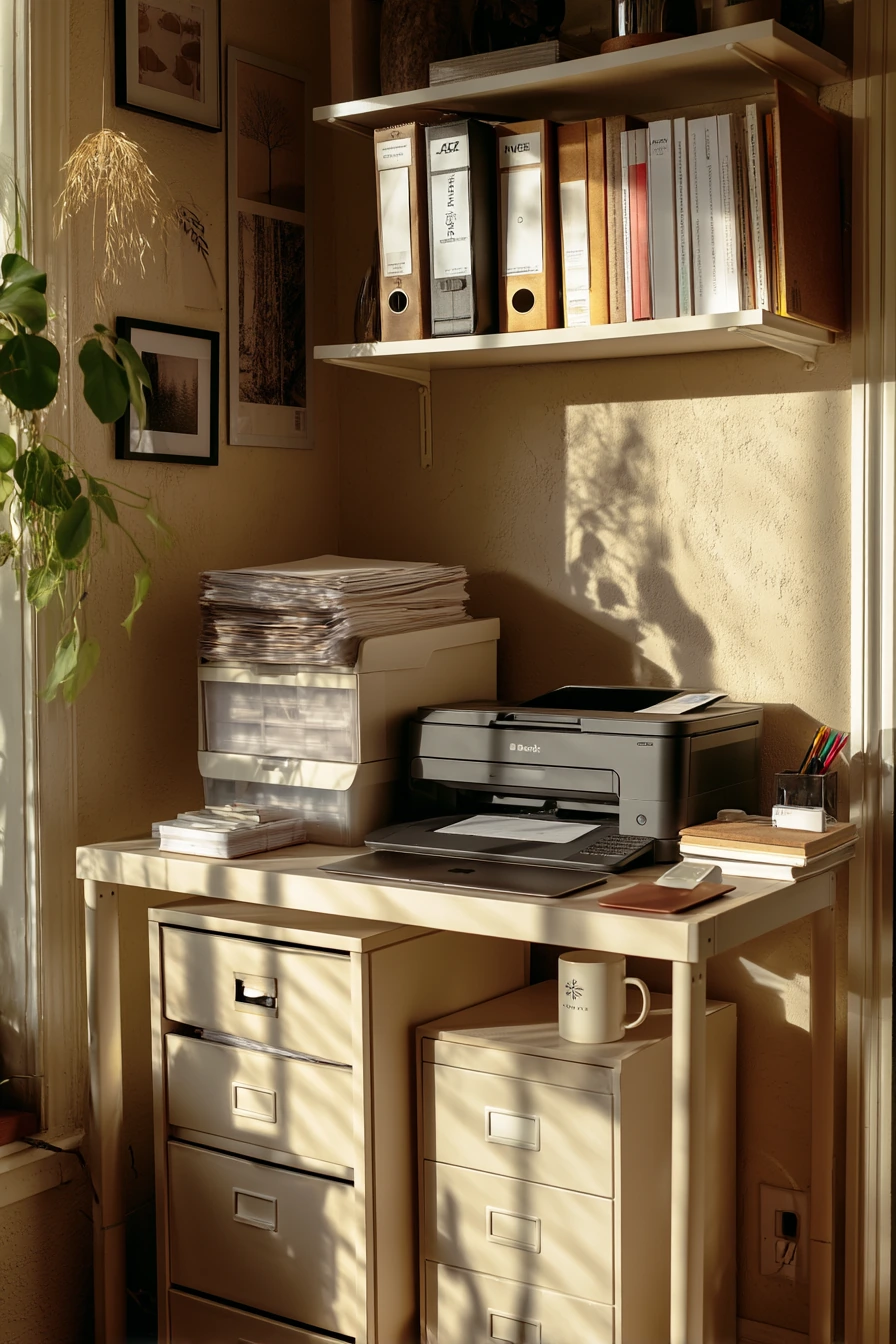

7. Basement Pantry and Bulk Food Storage With Shelving and Labeled Baskets
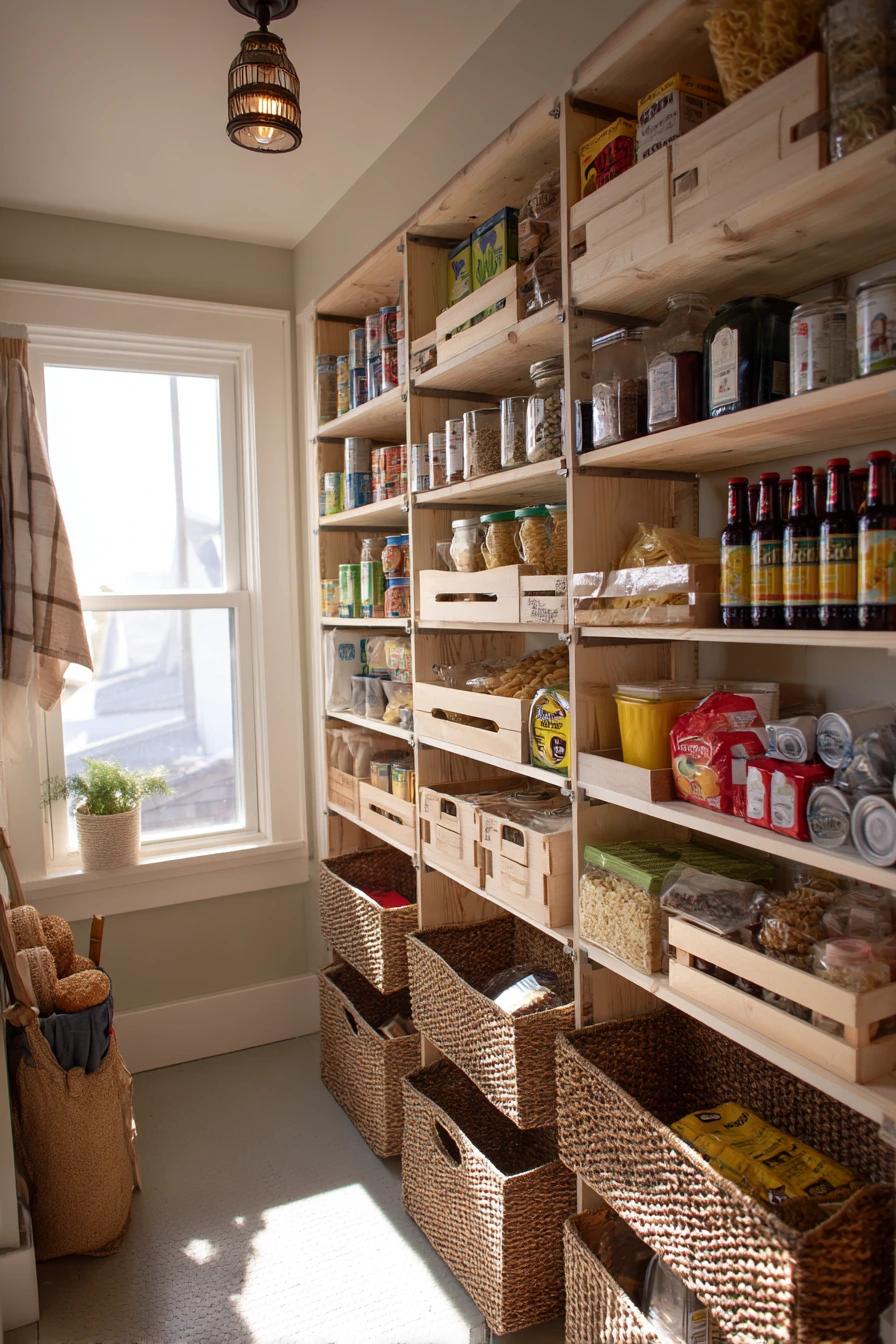

Basement bulk food storage works when it is easy to see, easy to rotate, and safe from moisture. Start with sturdy shelving and group items by type: canned goods, cereal bins, paper towels, and drinks. Use labeled baskets for snacks, baking, and backstock so family members can grab items without pulling everything out.
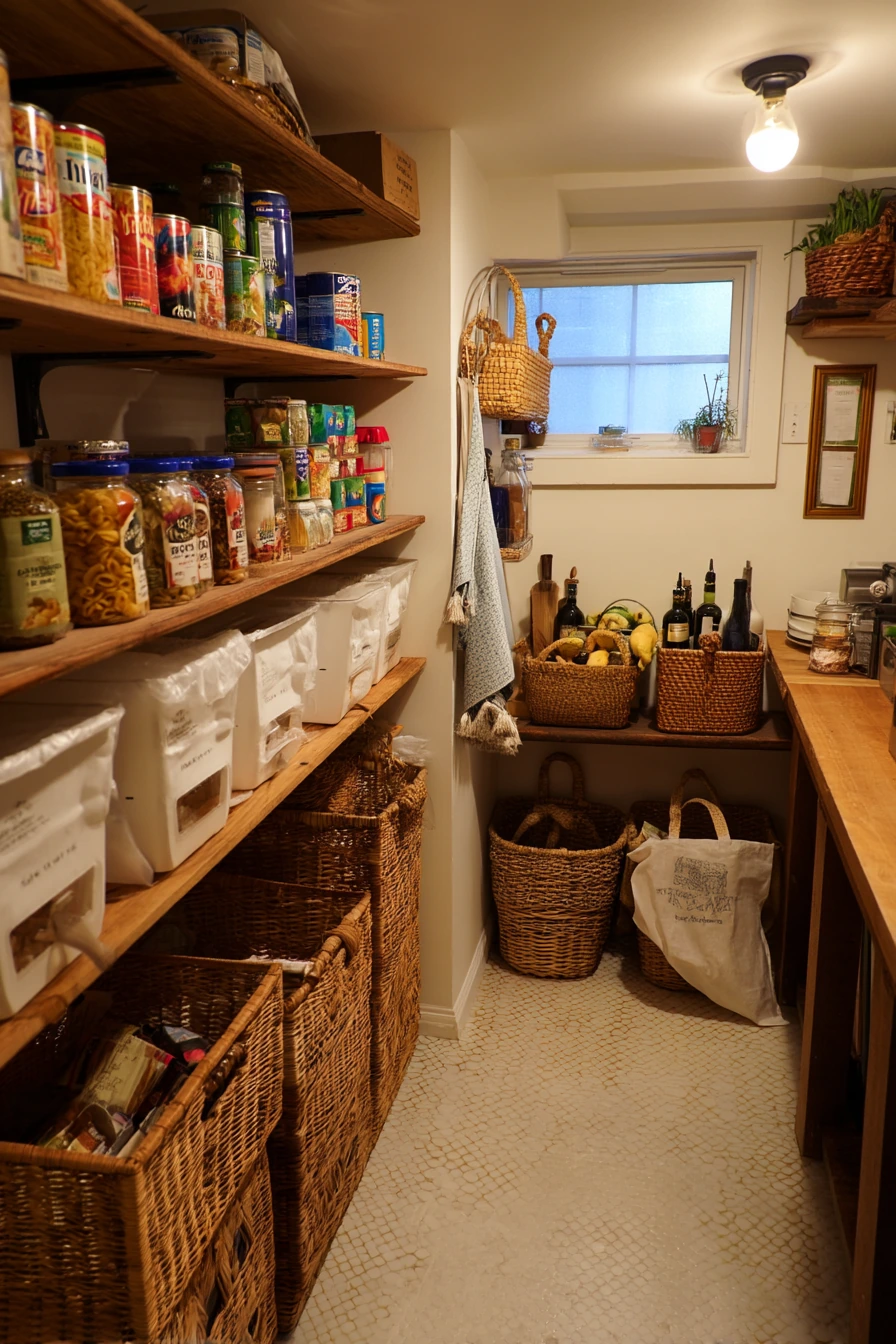
Use clear cereal bins for grains and snacks you use often. Keep heavier items, like canned goods, on the middle or lower shelves. Add wine crates or strong boxes for potatoes, onions, or bottled drinks, if the basement is dry and cool. Expect real-life moments, like one open box of pasta. Give opened packages a home in a bin so they do not tip over and spill.
Small styling details make this zone feel clean. Hang a tea towel on a hook for quick wipe-ups. Use warm under-shelf lamps with cool window light so labels are easy to read. Keep a reusable shopping bag on a hook so you can “shop” your basement before you go to the store. Add a first-in, first-out rule: place new items in the back and pull older items forward.
- Group shelves by category: cans, dry goods, snacks, and paper products.
- Use labeled baskets to contain small items and stop shelf sprawl.
- Store opened pasta and bags inside clear bins to prevent spills.
- Keep a running inventory list on a clipboard or phone note.
- Rotate stock by moving new items behind older ones.
Pro Design Tip: Keep labels large and simple, and face cans forward in rows, so you can scan the shelf quickly without pulling items out.
Budget Considerations: Start with one heavy-duty shelf and add more later. Save jars for dry goods and use cardboard dividers to separate categories.

8. Basement Home Gym Organization With Racks, Baskets, and Hooks


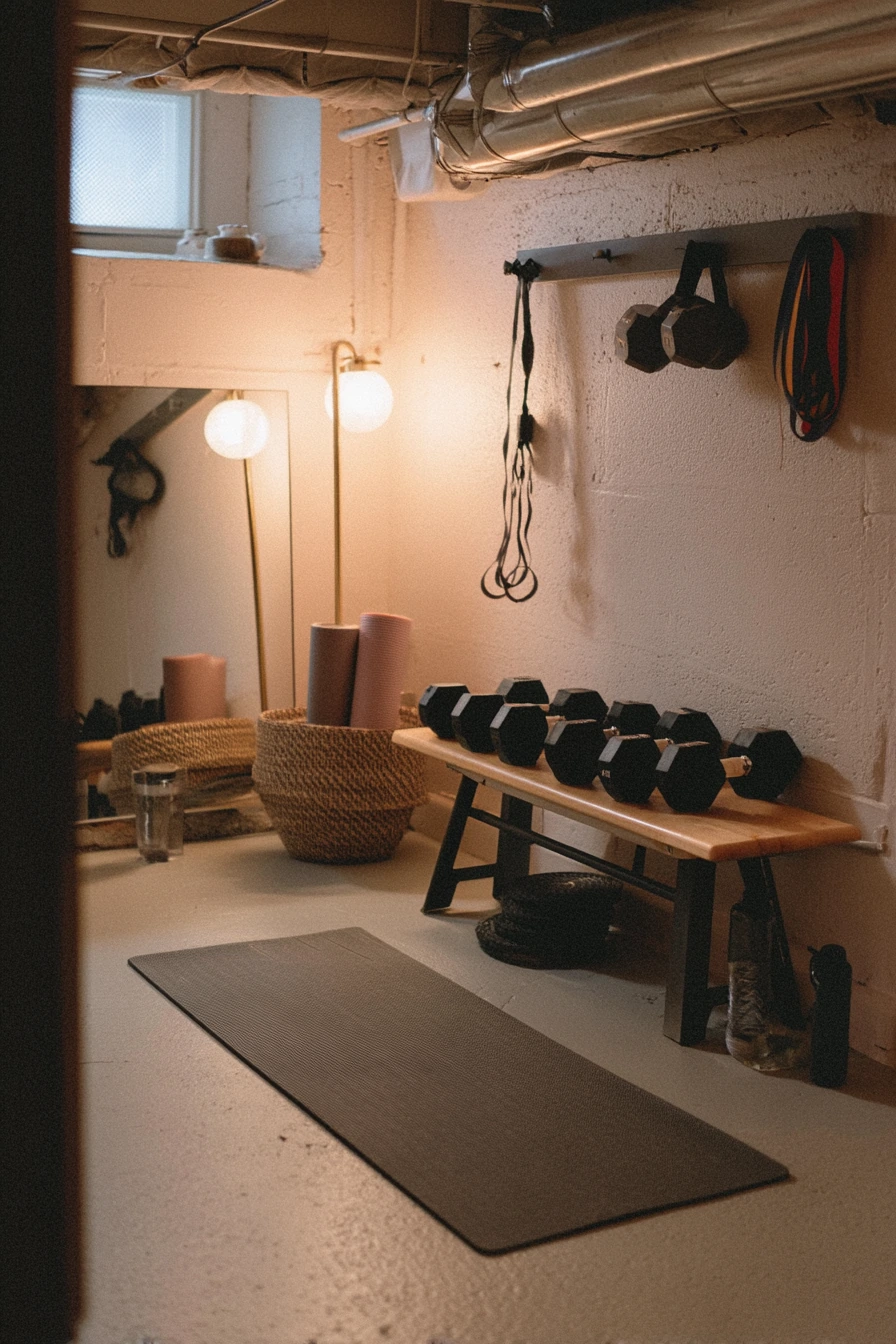
A home workout corner in the basement should feel simple and ready. The main goal is to keep gear off the floor so you can start a session without moving piles. Use a low rack for dumbbells and keep weights sorted from light to heavy. Store yoga mats rolled in a basket so they stay clean and do not unroll.
Hooks work well for resistance bands, jump ropes, and small straps. Add a small bin for extras like gloves and timers. A bench can hold a towel, water bottle, and earbuds, but keep it from becoming a dumping spot by limiting it to workout-only items. If the floor is slightly scuffed, place one mat or rug to define the zone and protect equipment.
Lighting helps motivation, especially in a basement. Use soft daylight if you have a window, plus a warm lamp for evenings. For styling, match your storage pieces, like one black rack and one neutral basket, so the corner looks clean. Keep a simple routine: after each workout, return bands to hooks, wipe the bench, and refill the water bottle.
- Use a dumbbell rack to keep weights off the floor and easy to grab.
- Store yoga mats upright or rolled in a basket to save space.
- Hang resistance bands on hooks to prevent tangles and damage.
- Keep a small towel and wipe spray nearby for quick cleanup.
- Limit the bench top to three items: towel, bottle, and earbuds.
Pro Design Tip: Use a simple zone layout, like weights on one side and stretching gear on the other, so you move through workouts without stepping over equipment.
Budget Considerations: A basic wall hook set and a sturdy basket can replace expensive gym storage. Look for secondhand racks or build a small weight shelf from scrap wood.

9. Basement Tool and DIY Organization With Hardware Drawers and a Workbench

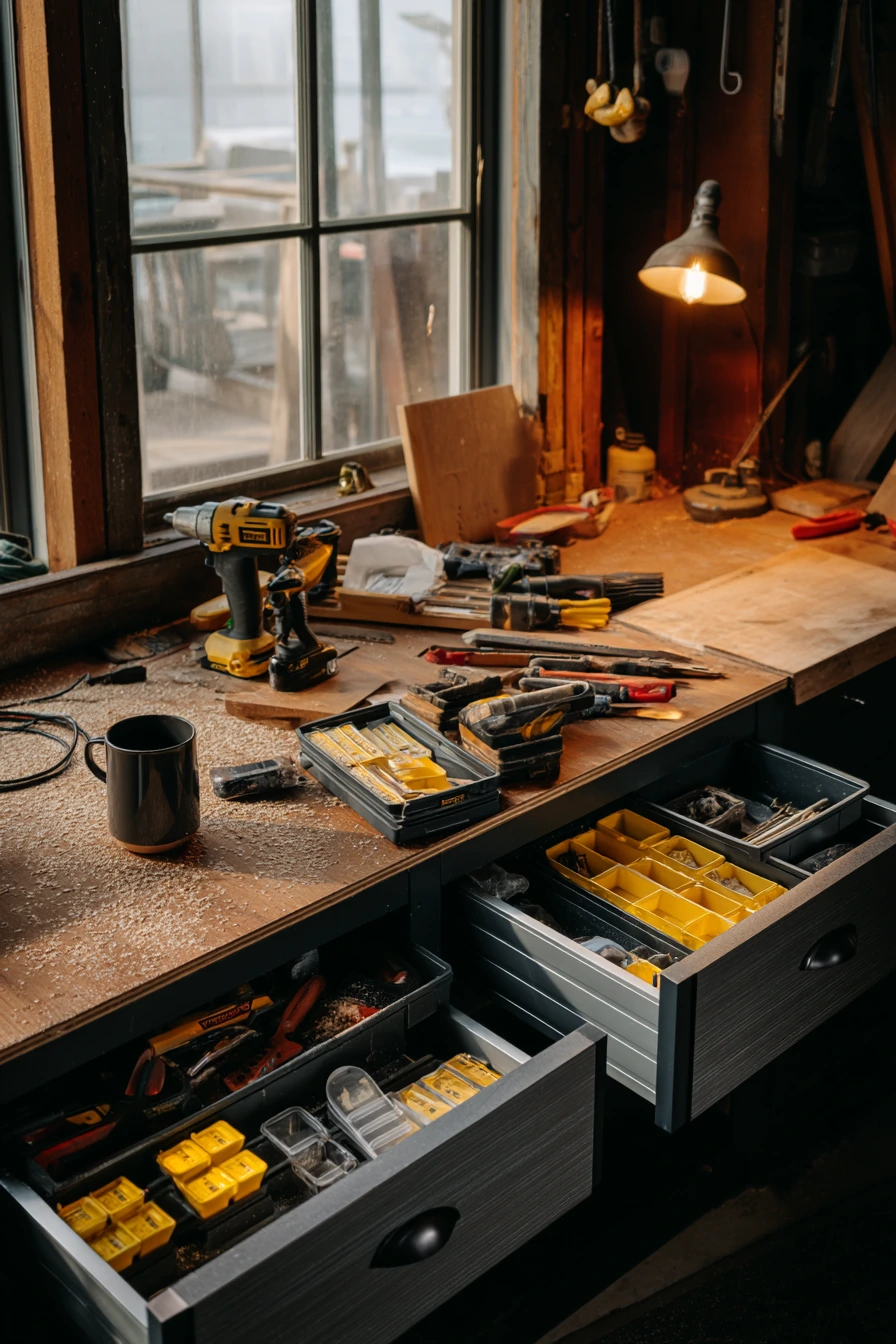
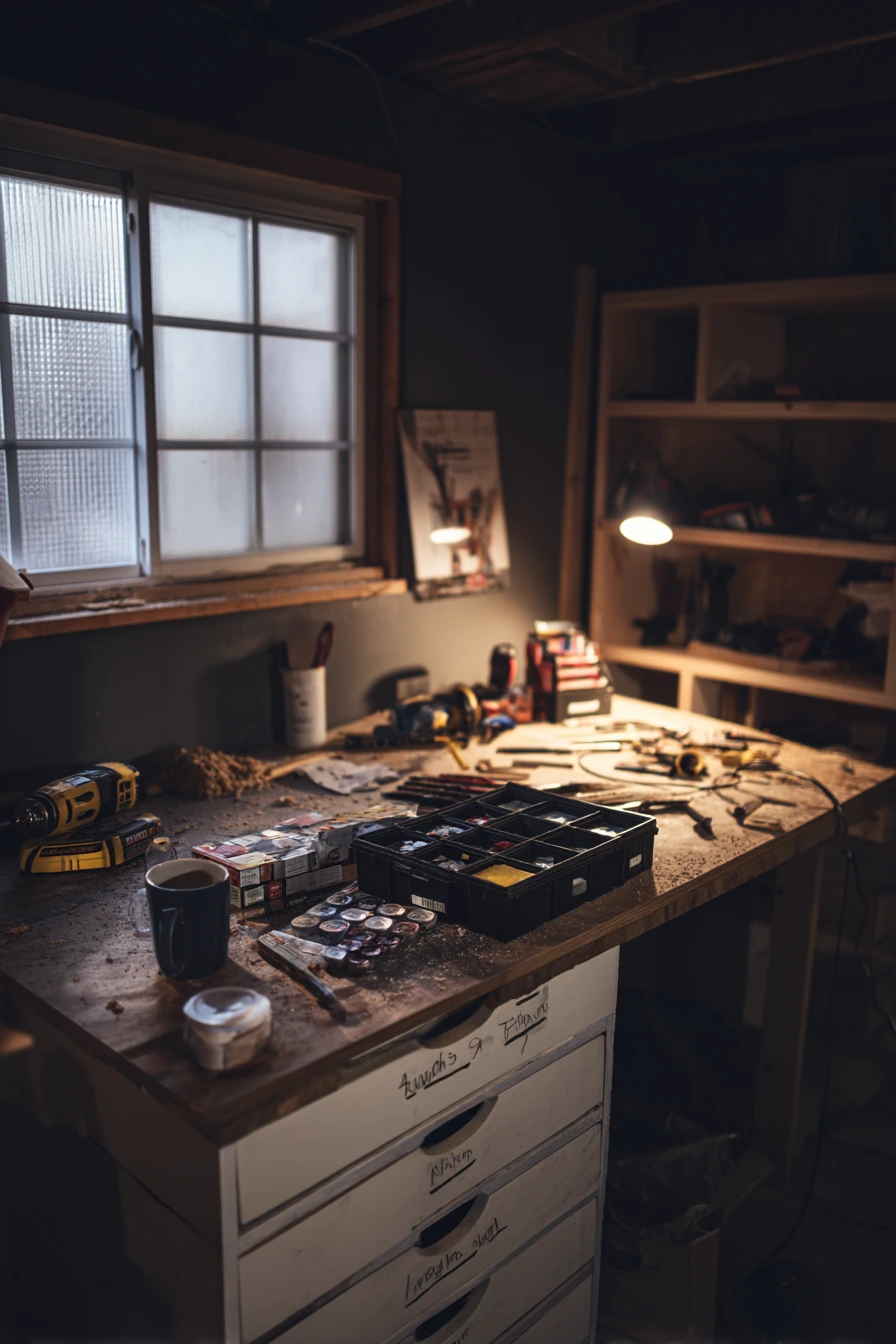
A basement tool area works when small parts are sorted and the workbench stays clear. Start with hardware drawers for screws, nails, anchors, and bits. Label every drawer with the exact item, not just “hardware.” Keep your drill case and measuring tape in a set spot so you are not searching every time.
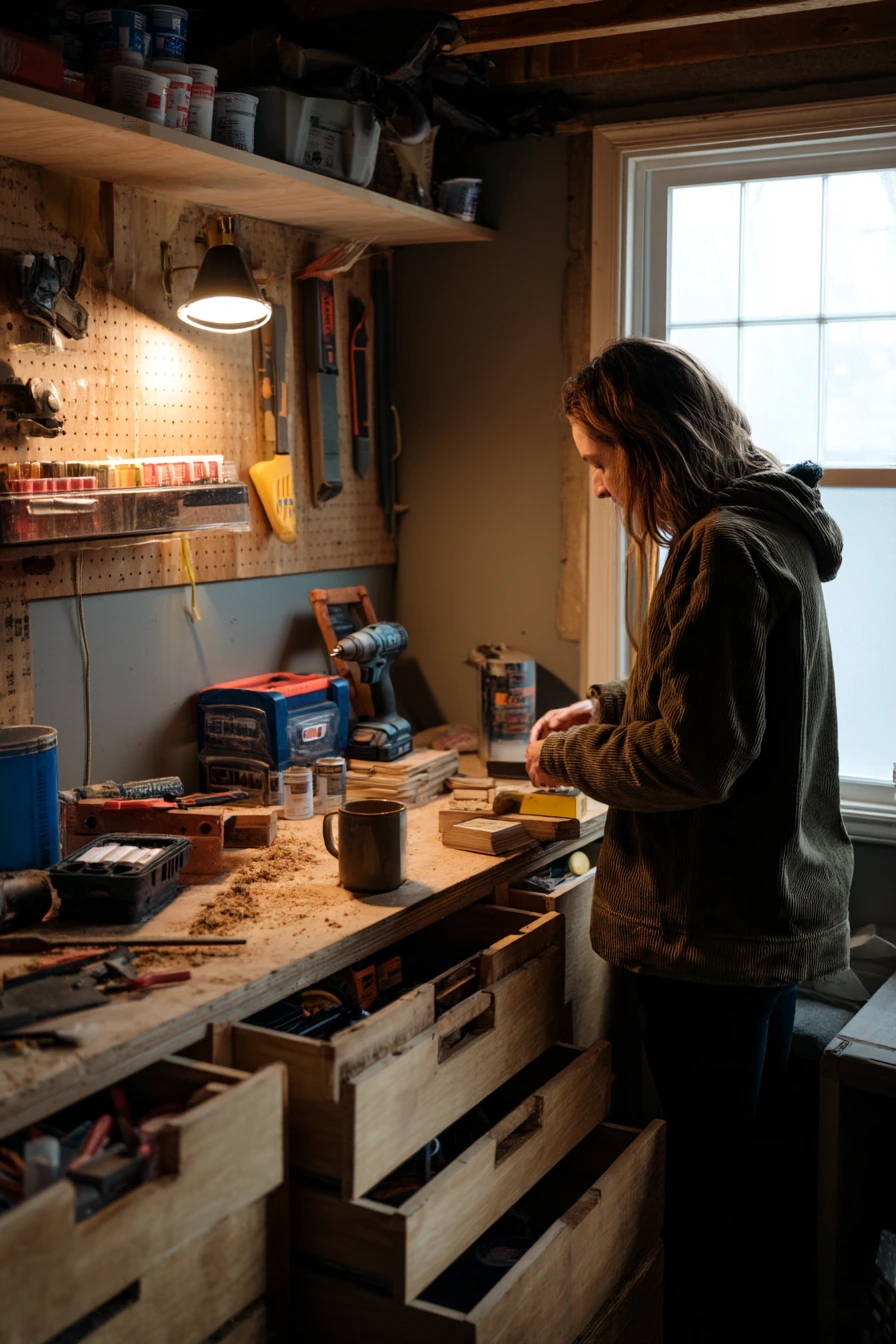
DIY projects often create a mess in the middle. A half-finished shelf leaning nearby is normal, so plan for “project parking.” Use one open shelf or wall space for items in progress. Keep paint samples in a folder or small box so they do not scatter. Sawdust traces happen, so store a small broom and dustpan near the bench and do a quick sweep after each session.
Manage the little things that create clutter. A mug on the bench is fine, but keep drinks to one corner and away from power tools. Use a clip or a mounted power strip so charging cables do not snake across the work surface. Add a warm lamp for task light and use the window for natural light when possible. For styling, choose one or two matching organizers and keep labels consistent.
- Sort screws and nails into labeled hardware drawers by size and type.
- Create a “project parking” spot for items you are building this week.
- Store drills and chargers together and mount a power strip to the wall.
- Keep measuring tools on hooks so they are visible and easy to grab.
- Set up a quick clean kit: broom, dustpan, and shop towels.
Pro Design Tip: Hang an outline board for your most used tools, like tape measure and hammer, so you can spot what is missing before you end the day.
Budget Considerations: Start with one small drawer unit for fasteners and add more as you sort. Reuse jars for nails and build simple shelves from leftover boards.
Basement organization works best when you break the space into zones and match storage to how you live. Start with one area, like toys, laundry, or tools, then build from there.
Use labels, easy-to-carry bins, and a small reset routine to keep the space from sliding back into clutter. A basement can look lived-in and still feel orderly.
FAQ
How do I start organizing a basement when everything is mixed together?
Start by sorting into broad groups like toys, sports, tools, laundry, and seasonal decor. Move each group into a temporary pile, then choose one zone to finish first.
What storage is best for damp basements?
Use plastic bins with lids, metal shelving, and moisture-resistant labels. Keep items off the floor and consider a dehumidifier if the space feels wet.
How can I organize a basement on a small budget?
Reuse boxes, jars, and laundry baskets at first. Spend money on basics that matter most, like one strong shelf, a few bins, and good labels.
How do I keep my basement from getting messy again?
Make cleanup easy with clear labels and open baskets. Do a short weekly reset and keep one “incoming” spot so items do not land everywhere.
What is the best way to store seasonal decorations?
Label bins by season and store fragile items in trays or boxes. Keep a small kit with tape, markers, and spare labels in the same area.
How do I organize sports equipment so it dries and does not smell?
Use wall hooks for gear and a ventilated rack for shoes. Add a fan if needed and keep a mat and towel nearby for quick wipe-downs.
How can I make a basement office corner feel nicer?
Add warm light, simple matching trays, and basic cable management. A plant near the window and a clear desk surface make the space feel more focused.